THE LAST SERMON (2020, doc)

December 15, 2020

 Greetings again from the darkness. In 2003, Jack Baxter and Joshua Faudem were in the process of making a documentary on Mike’s Place, a blues club in Tel Aviv located next door to the American Embassy. The purpose of the project was to show that there was more to Israel than violence and terrorism. On April 30, while they were filming, two British-born Hamas suicide bombers changed the course of the documentary and the lives of the filmmakers.

Joshua Faudem finished that documentary, BLUES BY THE BEACH, while his filmmaking partner Jack Baxter recovered from the severe injuries he incurred during the blast at the club. The two reunite in what seems to be Mr. Baxter’s personal mission to prove, in his own words that, “murder is not the essence of Islam”. He wants to understand or make sense of radicalism, and to meet with the families of the Tel Aviv bombers. While his experience makes this a logical pursuit, we know the likelihood of success is nil.

The film opens with a quote from Cervantes’ Don Quixote: “Where there’s music, there can be no evil.” Baxter, now using a cane for stability, takes this to heart and ties in music to most of the refugee camps he visits. It should also be noted that Baxter still has a piece of what he calls “organic shrapnel” embedded in his arm. Yes, it’s a bone fragment of one of the bombers. Baxter’s mission for the film takes him to many different areas of Europe, including Jerusalem, Serbia, Hungary, Berlin, Prague, Paris, and London. His meeting with the Mayor in Hungary is especially interesting, as we are informed that his country welcomes refugees, but the fence/wall he built is to show that Islamists are not welcome.

The film takes its title from the Prophet Muhammed’s Last Sermon, and it’s referenced a few times throughout as a contrast to Islamic extremists. The film succeeds as a personal journey for Baxter, but not so much as research on terrorism or discovering how so many have corrupted Islam into a call for violence. Most of the interviews and discussions with refugees, imams, and others are left at face value, so no groundbreaking occurs here, other than traveling to various areas and as a cleansing for Mr. Baxter.

Gravitas Ventures is releasing the film in virtual cinemas and VOD platforms December 15, 2020

watch the trailer


THE BEE GEES: HOW CAN YOU MEND A BROKEN HEART (2020, doc)

December 12, 2020

 Greetings again from the darkness. “Whether you’re a brother or whether you’re a mother, you’re stayin’ alive” … that instantly recognizable lyric is a bit ironic when it comes to the fascinating story of the Brothers Gibb – a story of love, ego, success, and tragedy. Director Frank Marshall delivers a heartfelt and quite detailed chronicle of the familial music group that experienced the highest highs and lowest lows. The foot-tapping “Stayin’ Alive” plays over the opening, but we soon cut to a 1979 concert in Oakland where the Bee Gees are performing the film’s title track. If somehow you are unfamiliar with their music, this beautiful performance will clue you in quickly.

Flash forward to 2019, and we hear from 73 year old Barry Gibb as he dolefully states, “my immediate family is gone”. Going back to their childhood, we see 5 year old twins Robin and Maurice joining with older (by 3 years) brother Barry to perform live shows. Contrary to popular belief, the boys were born on the Isle of Man, and only later did the family relocate to Australia. Robin’s tear-jerking voice perfectly blended with Barry’s power (and later falsetto), while Maurice was a natural harmonizer. Barry promised his younger siblings they were “going to be famous”. It’s a prediction that certainly came true.

Along the way, we hear recollections from musical luminaries such as Eric Clapton, Chris Martin, Nick Jonas, Justin Timberlake, and Noel Gallagher. Jonas and Gallagher both speak to performing with one’s brothers, and it’s Gallagher who nails it with, “Brothers singing is an instrument nobody can buy.” In comparison, Timberlake’s few comments seem to be included because of who he is rather than what he has to say. It’s noted that early work from the Bee Gees sounded very much like the Beatles, and it was music executive Robert Stigwood who truly recognized their talent and the possibilities of their stunning harmonies. Stigwood would guide them through their career peaks and valleys.

Much is made of how the brothers functioned as “one” while writing and singing, but as often happens, success brought out the egos, and in 1969 Robin quit the group due to his creative clashes with Barry … both wanted to sing lead. It’s interesting to note that Maurice married singer/actress Lulu, who most will remember as the singer on the smash hit “To Sir with Love” (she also appeared in the movie). Not surprisingly, the brothers’ first song after reconciling was “How Can You Mend a Broken Heart?”, which provided some symmetry to their own situation.

The film closely tracks their career, including resorting to performing in small clubs, and their shift in musical styles with 1975’s “Jive Talkin’”, followed by “Nights on Broadway”. The Bee Gees went through a few producers in their career, which likely explains their numerous shifts in style. Arif Mardin was followed by “hippie” Albhy Galuten, who helped create the ‘Miami sound’ and then turn them (like it or not) into disco icons when Robert Stigwood included them in his film and music vision of a little magazine article entitled “Tribal Rights of the new Saturday Night”. The movie, of course, was SATURDAY NIGHT FEVER, and the soundtrack exploded on the scene. Of particular interest here is Galuten’s explanation of how they built/wrote the song “Stayin’ Alive”. It was also around this time when the youngest Gibb brother, Andy, zoomed up the charts with three consecutive number one singles.

Of course all good things must come to end … even if by the end they aren’t so great (“Disco Duck”). Chicago DJ Steve Dahl organized “Disco Demolition Night” at Comiskey Park and the anti-disco movement was well underway. This is discussed from a historical and societal perspective with some particularly fascinating insight into what actually happened that night. Casualties of the movement and the collapse of disco, the brothers once again reinvented themselves – this time as songwriters for such performers as Barbra Streisand, Dionne Warwick, Diana Ross, Celine Dion, Kenny Rogers and Dolly Parton.

It may seem that the Brothers Gibb had more lives than a cat, but alas, tragedy struck numerous times. First to go was Andy at age 30, followed by Maurice in 2003, and Robin (cancer) in 2012. It’s a wonderful documentary for fans of the Bee Gees, as well as those just wanting to know more. I am especially grateful to director Marshall for including my favorite, “Massachusetts”. Mr. Marshall has had quite a career himself. He had a minor acting role in the classic THE LAST PICTURE SHOW (1971), has been a Producer on numerous Spielberg movies including RAIDERS OF THE LOST ARK (1981), directed ARACHNOPHOBIA (1990), and has been married to Hollywood power producer Kathleen Kennedy since 1987. Elected to the Rock and Roll Hall of Fame in 1997, the Bee Gees music can be described as: “Ah, ha, ha, ha, stayin’ alive …”

HBO Documentary premieres December 12, 2020

watch the trailer


WANDER DARKLY (2020)

December 11, 2020

 Greetings again from the darkness. By nature, an ambitious filmmaker takes risks that other filmmakers don’t, sometimes to the detriment of their own success. However, for those of us who maintain a crazy pace of movie watching, we tend to relish those who find a way to try something different – turn a familiar story into one we might not have seen before. So hats off to writer-director Tara Miele (THE LAKE EFFECT, 2010) for jolting the frequently used flashback effect and making it into an interactive experience.

Adrienne (Sienna Miller) and Matteo (Diego Luna) are a normal couple going through the kind of rough patch that many couples will relate to. They have chosen to not get married, yet they have a newborn baby and recently purchased a home (despite job situations that don’t seem to add up). The pressures of adulting have resulted in frustrations and distrust to the point that Adrienne questions if the relationship should even continue. Their solution is scheduling “date nights”, and the one we see is a date night gone bad … and then worse.

What follows is Adrienne and Matteo on a surreal trek through the hazy memories of their relationship via moments in time that play like foggy dreams. We see good moments and bad, and the two hash out what they really thinking at the time – all while Adrienne tries to make sense of her new situation. There are some similarities here to Michel Gondry’s excellent ETERNAL SUNSHINE OF THE SPOTLESS MIND (2004), but at its core, this is a heartfelt examination of trauma, love, memories, and grief as they relate and impact a relationship.

Beth Grant provides support work as Adrienne’s mother, but it’s Sienna Miller who delivers what may be a career best performance. She has always been a fine actress, but this may be the widest range of emotions she’s ever had to convey. The dialogue may be a bit sketchy at times, but we recognize every portion of this flawed relationship. Watching a couple re-live actual past situations and debate on what was said or what was meant, is a history lesson that cuts deeply. A clip from NIGHT OF THE LIVING DEAD is purposeful in its inclusion, but I won’t disclose anything further in regards to the nature of these characters and what they go through. I’ll only say that filmmaker Miele (a Grand Jury award winner at Sundance) does really nice work in showing how physical trauma and emotional trauma so often go hand-in-hand.

In select theaters and On Demand December 11, 2020

watch the trailer


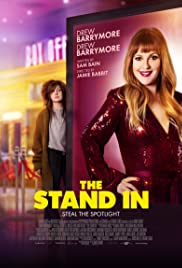
THE STAND IN (2020)

December 11, 2020

 Greetings again from the darkness. Few would understand the pressures of celebrity better than Drew Barrymore. She’s 45 years old and has been in front of the camera for 40 years. Most of us recall her as young Gertie in Spielberg’s ET: THE EXTRATERRESTRIAL (1982), and of course, her family tree spans much of Hollywood’s history – for instance, she’s the great-niece of Lionel Barrymore who played Mr. Potter in the Christmas classic, IT’S A WONDERFUL LIFE. This time out, she takes on dual roles, but Drew’s fan base deserves fair warning … it’s not the fluffy, light-hearted comedy you might be expecting.

Director Jamie Babbit (known mostly for her TV work, including “Silicon Valley” and “Gilmore Girls”) and screenwriter Sam Bain (creator of “Peep Show”) explore career success and fulfillment in life, especially as it relates to balancing celebrity status and having a meaningful personal relationship. Ms. Barrymore plays Candy Black, a pratfall comedy actress who has made a career with her catchphrase, “Hit me where it hurts”. Simultaneously, and under pounds of makeup, Drew also plays Candy’s stand-in/double, Paula, who dreams of one day being an actual actor in her own right. Candy is a high-strung addict who barely functions, while Paula is a wallflower whose income is dependent on Candy’s career.

One day on the set, Candy throws a tantrum. It’s a complete meltdown that results in an injury to a fellow actor. Of course it’s caught on video and goes viral. Just like that, Candy’s career screeches to a halt, and so does Paula’s. We then flash forward 5 years, and Candy has isolated herself inside her mansion, taking up woodwork and anonymously bonding online with fellow woodworker Steve (Michael Zegan, “The Marvelous Mrs. Maisel”). After being charged with tax evasion, Candy is sentenced to a rehab facility and cons her trusty stand-in Paula to go in her place. Once released, Candy’s much nicer stand-in continues the gig on an “apology tour” where soon she is welcomed back into the industry’s good graces (as Candy), and slowly takes over Candy’s life, including a non-virtual meet up with Steve.

Supporting work is provided by TJ Miller, Holland Taylor, Elle Kemper, Andrew Rannells, and Lena Dunham (in what’s basically a quick cameo). Things get a bit convoluted with the old Candy, the new Candy, and Steve, the guy stuck in the middle – who has secrets of his own. Despite the relatively few laughs in what is billed as a comedy, there are some pointed observations and commentary on the industry and for those whose ambition is to be famous. Soul searching and ‘finding one’s true self’ is never easy, and often our dreams may not be in sync with who we are. Drew Barrymore does a nice job in both roles, but it’s likely her fans will be expecting a different style movie. It’s also likely the message here could have been better delivered by choosing either a comedic approach or a dramatic one, as the blend doesn’t quite work on either front.

AVAILABLE IN SELECT THEATERS, ON DEMAND, AND DIGITAL ON DECEMBER 11, 2020

watch the trailer


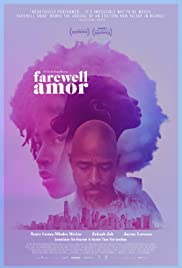
FAREWELL AMOR (2020)

December 11, 2020

 Greetings again from the darkness. Awkwardness abounds in the opening scene as Walter, his wife, and their teenage daughter reunite at JFK airport. The Angolan family has been separated for 17 years, and reality hits as the threesome grasp that they don’t even really know each other. The reunion gets more uncomfortable as they try to settle into Walter’s cramped one bedroom apartment. He’s been living and working in New York City as a taxi driver while the paperwork was processed to allow his family to join him.

This is the first feature film from writer-director Ekwa Msangi, and she expands her 2016 short film FAREWELL MEU AMOR. Ntare Gum Mbaho Mwine stars as Walter, the taxi driver and husband/father with a secret. His wife Esther is played by Zainab Jah, and it’s her religious zealousness that complicates things for the reunited family. Their daughter Sylvia is played by newcomer Jayme Lawson, a teenager whose simmering energy and passion for dancing is masked by her quiet demeanor. In fact, it’s dancing that links the three characters and ultimately breaks down barriers.

Ms. Msangi cleverly utilizes individual chapters for the three main characters within the larger story. We quickly get a feel for the difficulties and challenges each is facing during this transition. Walter is struggling with the separation from Linda (Nana Mensah), a nurse he had grown quite fond of. Esther is reacts to her husband’s independence by praying louder and harder and sending money to her church. Sylvia’s story is perhaps the most interesting. As an immigrant, she’s an outcast at school, and only the kindness of classmate DJ (Marcus Scribner) allows her to create her space with a terrific dance off. There is also an interesting interaction between Esther and a neighbor (Joie Lee), one of the few who knows the full story and tries to help.

Cultural upheaval is on display, and there are quite a few touching scenes. Walter and Esther have dinner out at a nice restaurant, and it’s a scene filled with conflicting feelings and emotions … handled extremely well by the actors. There is a gentleness and sincerity to the film, and we find ourselves hoping things will work out well for all three. Perhaps it’s a stretch to think dancing might be the key to a smoother transition, but the way it plays out is quite pleasant to watch. It’s a terrific first feature from Ekwa Msangi.

In Theaters and On Demand December 11

watch the trailer


WILD MOUNTAIN THYME (2020)

December 10, 2020

 Greetings again from the darkness. While I have Irish ancestors, the uproar of the Irish press over the accents in the film is a bit puzzling to me. Any frequent movie watcher can tell you that cinema history is filled with actors giving difficult accents their best shot – and the results have ranged from ‘spot’ on to ‘not even close’, and everything in between. As a Texan, I can vouch for the sometimes cringe-inducing ‘not close’ efforts, but I’ve never judged a film by such trivial matters. Why do I start with this? Only to get it out of the way in order to have a more meaningful discussion of the latest film from writer-director John Patrick Shanley (DOUBT, 2008, and an Oscar winner for the MOONSTRUCK screenplay, 1987). It’s based on his 2014 Broadway play, “Outside Mullingar”.

After the breathtaking shots of the Irish countryside over the opening credits, we learn of two neighboring farms belong to the Muldoons and the Reillys. Rosemary Muldoon (Emily Blunt) and Anthony Reilly (Jamie Dornan) have known each other their entire lives, and it’s been assumed by locals that they would someday marry each other. Their elderly parents are dying off, yet what prevents the relationship from deepening beyond “Good morning to ya’” is Anthony’s bizarrely awkward social skills compounded by his constant bickering with his father (Christopher Walken), and his belief in a family curse. The two men still mourn the passing of Anthony’s mother, and Rosemary has her own sadness to deal with … while growing a bit antsy waiting for Anthony to come around.

Anthony’s father is concerned that the family name is in danger of ending, due to his reticence to marry. Because of this, dad decides to give the family farm to another relative. The fun kicks off when Adam (Jon Hamm) arrives. Adam is the stereotypical “Yank” – arrogant and showy, with only a romantic notion of what being an Irish farmer means. If that’s not bad enough news for Anthony, Adam also sets his sights on Rosemary and convinces her to visit him. He can’t imagine how the excitement of New York City contrasted with daily life in Ireland won’t win her over.

We don’t actually see any real farming in the movie, and Anthony’s sullen act gets a bit tiresome, but the message is conveyed well by Ms. Blunt and Mr. Dornan. Filmmaker Shanley has delivered more of a romantic drama than romantic comedy, but there are humorous moments included, not the least of which being Anthony’s practice proposal to a donkey. Ms. Blunt proves again what a fine actor she is, and her sequence inside her home in the final act is terrific. As for the accents, Mr. Dornan’s holds up the best, while Mr. Walken’s downright comical, but the story and characters are what we remember when this one ends … unless, of course, you are part of the Irish media.

In theaters and On Demand November 11, 2020

watch the trailer


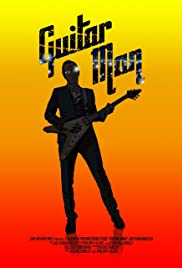
GUITAR MAN (2020, doc)

December 7, 2020

 Greetings again from the darkness. It’s a trivia question likely to stump most of your friends: Who has more number one Blues albums than anyone else? The answer is guitarist extraordinaire Joe Bonamassa, and co-directors Phillippe Klose and Kevin Shirley serve up a documentary to remove some of the mystery for those familiar with Smokin’ Joe, and an unveiling for those who aren’t. If you are asking yourself, “Joe who?” you should know that he opened for BB King … as a 12 year old prodigy!

I’ve got to go become the other guy.” Joe B confesses that’s his approach to prepare for a gig. He’s been described as bi-polar (not a clinical diagnosis) as he alternates between Joe in blue jeans and a ball cap, and Joe Bonamassa on stage in a suit and shades. And what a transformation it is. Joe is such a laid back guy that his Los Angeles home is nicknamed “Nerdville”, yet when his stage presence and music is explosive and beloved by his audiences.

A treasure trove of concert clips is provided, including a few from Joe’s early years. We learn of his struggles within the music industry, including his time with the band, Bloodline, which featured the offspring of legends Miles Davis, Robbie Krieger, Berry Oakley, and Sammy Hagar. Joe’s agent and partner Ray Weisman provides a great deal of background on the difficulty associated with helping Joe find his niche, and the risks and rewards of their founding their own record label in order to “own” Joe’s music. It’s fascinating to hear how a guy so talented faced so many challenges in discovering the right path.

Speaking of clips, we see Joe perform at such hallowed venues as Radio City Music Hall, Carnegie Hall, The Greek Theater, and Royal Albert Hall … with Eric Clapton. A personal favorite is the clip of Joe performing as the great Paul Rogers (Free, Bad Company) sings lead. A concert at the stunning Red Rocks Amphitheater in Colorado shows up a couple times, and we see Joe and his producer Kevin Shirley (also co-director on this film) make a trip to the “Crossroads”, where the legend of Robert Johnson was born. Other influences for Joe include Albert King, Freddie King, BB King, and Muddy Waters.

Joe Bonamassa natural talent likely stems from his family of musicians. His great-grandfather and grandfather played trumpets, while his own father was a guitarist. His progression through producers and collaborators includes Miami Steve Van Zandt, Phil Ramone, Tom Dowd, and, Kevin Shirley. Of course neither genetics nor affiliation explains Joe’s extraordinary work ethic and obsession with challenging himself.  We see his joy in music as he’s interviewed in front of a wall of Fender amps … the same amps he once dreamed of owning.

Arriving December 8, 2020 on VOD from Paramount Home Entertainment

watch the trailer


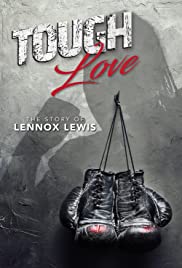
LENNOX LEWIS: THE UNTOLD STORY (2020, doc)

December 7, 2020

 Greetings again from the darkness. After winning a fight, Mike Tyson spouted, “Lennox Lewis, I’m coming for you.” That fight didn’t occur for a few years, yet that match is central to the Lewis story in this biography from co-directors Seth Koch and Rick Lazes. When the Lewis vs Tyson fight finally did happen in 2002, it certainly wasn’t the peak form Tyson that had taken the boxing world by storm years earlier. The generational ties between Tyson and Lewis are stressed here, well, because outside of a tremendous boxing career, Lennox Lewis is not terribly interesting as the subject of a documentary, other than as an anomaly in the boxing world.

Dr. Dre narrates the story, and we must respect Lennox for overcoming a childhood where he was abandoned, at least for a few years. Boxing gave him the structure and purpose to avoid the life on the streets that would typically occur in this situation. Much is made of his tangled roots. Lewis’ parents were from Jamaica, though he was born in England, and raised in Canada. We trace his boxing background from juniors to the amateur ranks, including two Olympics (1984 and 1988), and finally on to his professional career. We are told that “The Heavyweight Champion of the World” is the most coveted title in sports, though minimal attention is given to boxing’s numerous scandals and less than stellar reputation. Being mostly a tribute to Lewis, we do see a man who reached the pinnacle of an industry of which he was mostly an outsider.

Quite reserved as an adult, and lacking the bluster commonplace in the sport, Lewis is the polar opposite of the constantly posturing and bellowing of Don King, the longtime face of boxing promotions. We see King via numerous archival footage clips, and it is interesting to note how since Lewis opted not to sign with King, the megaphone-mouthed promoter always seemed to work extra hard against him. It’s actually Lewis’ selection of Brit Frank Maloney that provides the most fascinating aspect of the story, but that’s a twist best left unspoiled.

Lewis’ boxing career is chronicled, including his Olympic Gold Medal, being ‘robbed’ in the first fight against Evander Holyfield, and losing and regaining his title within the same year. Unifying the titles/belts in 1999 was an impressive accomplishment, but also goes straight to the unorthodox structure of a sport, and that first Holyfield fight left us wondering just how deep corruption ran. But that’s not the movie Koch and Lazes have made. Instead it’s about how Lewis retired as champ in order to spend more time with his lovely wife Violet and his family … just one more thing that sets him apart from the stereotypical boxer.

The documentary begins on Amazon, Apple TV/iTunes, and numerous VOD platforms on December 8, 2020.

watch the trailer


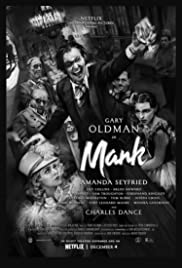
MANK (2020)

December 3, 2020

 Greetings again from the darkness. “Just a writer.” The line made me laugh. How many times have writers not received the recognition they deserved, or were underestimated, only to have their words create a lasting impact? Hollywood often likes to portray writers as socially-awkward, loner types who rarely contribute much during conversations. Not this time. The subject is Oscar winning screenwriter Herman J Mankiewicz, who was as quick with a dinner table zinger as he was writing the script to CITIZEN KANE (1941) while bedridden.

More than 20 years in the works, this is director David Fincher’s first film since GONE GIRL (2014), and it’s based on a screenplay written by his late father, Jack Fincher. Dad receives sole writing credit here, though David and producer Eric Roth (Oscar winner for FORREST GUMP, 1994) admit to some polishing. It’s a film seemingly designed for us film nerds, but likely entertaining and interesting enough for expanded appeal. CITIZEN KANE is often regarded as the “best” movie of all-time, though the origin of the film is much debated. We do know that struggling RKO Pictures gave 24 year old wunderkind Orson Welles free reign over his first film, and the result was something quite special. Director Fincher’s film offers up three distinct aspects here: a look at Mankiewicz’s writing process for ‘Kane’, some background on Mankiewicz’s career, and a somewhat fictionalized dissection of 1930s Hollywood politics.

Oscar winner Gary Oldman (DARKEST HOUR, 2017) stars as Herman J “Mank” Mankiewicz, an international correspondent-turned NYC cultural critic-turned playwright-turned screenwriter. Herman was the older brother of Joseph L Mankiewicz, a four time Oscar winning writer-director (ALL ABOUT EVE, 1950), and grandfather to Ben Mankiewicz, a well-known host of Turner Classic Movies. Herman was also renowned as a boozer and gambler, and in 1940 (where this movie begins), he was a bedridden mess recovering from a car accident. Herman was part of the sphere of the infamous Algonquin Round Table, and in most of this film, he talks like he’s still at one of those gatherings.

Mank is taken to a desolate ranch house in Victorville, California, along with his assistant Rita Alexander (Lily Collins), his nurse (Monika Gossman) and his handler John Houseman (Sam Troughton). Orson Welles (Tom Burke) has given Mank 60 days to finish the script, and his only guidance seems to be “write what you know”, and don’t drink. The result was a controversial, yet brilliant script that Welles and his crew (Oscar winning Cinematographer Gregg Toland, Editor Robert Wise, a 4-time Oscar winner) turned into a classic film that still holds up 80 years later.

We immediately start seeing flashbacks, as noted by old style on-screen typing. Ten years prior, Mank was the Head Writer at Paramount, where his staff included Ben Hecht, George S Kaufman, and Charles Lederer … writers whose work would later include NOTORIOUS (1946), multiple Marx Brothers movies, and GENTLEMEN PREFER BLONDES (1953), respectively. Lederer was also the nephew of starlet Marion Davies (played here by Amanda Seyfried), who was the long time mistress of media mogul William Randolph Hearst (Charles Dance). Are you starting to see how this wicked web all fits together? Of course, Hearst was the model for Charles Foster Kane in Welles’ classic movie, while Ms. Davies was supposedly the inspiration for Kane’s wife, Susan. Other key players in these flashbacks are Producer David O Selznick (Toby Moore), Irving Thalberg (Ferdinand Kingsley, son of Oscar winner Ben), MGM founder Louis B Mayer (Arliss Howard), Mank’s brother Joseph (Tom Pelphrey), and Mank’s wife “Poor” Sarah (Tuppence Middleton).

Director Fincher’s masterful film features a couple of standout sequences. The first involves the initial meeting between Mank and Hearst, while Marion Davies is filming a scene on the grounds of San Simeon (Xanadu in CITIZEN KANE). Rapid fire dialogue, multiple characters, and terrific editing with Mank keeping pace as Hearst overlooks the filming. Much later there is a scene following Mank and Marion as they stroll through the manicured gardens with the nearby exotic animals on display. The scene is fascinating to watch, while also reinforcing the kindred spirits of Mank and Marion – both talented, yet not quite allowed in the “club”. Beyond those two sequences, we also get a quite funny segment where Mank and his Paramount writers are improvising a pitch to Selznick and director Josef von Sternberg, plus a telegram sent by Mank to Lederer that states, “Millions to be made here and your only competition is idiots” (a sentiment some believe still holds true today).

Quite a bit of the film is focused on Hollywood politics of the 1930s, both in the studios and nationally. In particular, the 1934 Governor’s race focuses on the campaign of writer and socialist Upton Sinclair (played by Bill Nye, the Science Guy), and the concerted efforts by Hearst and studio capitalists to prevent Sinclair from being elected. The symmetry and contrasts of modern day Hollywood and politics cannot be overlooked. Also made abundantly clear is the disconnect between studio heads, directors, and writers – quite the mishmash of disrespect.

The brilliance of Fincher’s movie is that it can be relished from multiple perspectives. Is Mank attempting to salvage a near-dead career or is he settling a grudge against Hearst? Did Welles intend to hold firm to Mank’s contract and prevent him from receiving a screenwriting credit? And then there is the filmmaking side. Superb performances from Oldman and Seyfried highlight the terrific cast. It’s filmed in black and white by cinematographer Erik Messerschmidt (“Mindhunter”), but not the razor-sharp images we are accustomed to these days, rather soft and hazy in keeping with the look of the times. The production design from Donald Graham Burt takes a couple of viewings to fully appreciate, and the music from Trent Reznor and Atticus Ross is spot on, as usual. Even the opening credits provide nostalgia, as does the 1942 Academy Awards ceremony, which neither Mank nor Welles attended. Netflix delivers another winner, and one likely to receive awards consideration.

watch the trailer


THE PROM (2020)

December 3, 2020

 Greetings again from the darkness. The success of his TV series “Glee” and “American Horror Story” has delivered Ryan Murphy the creative freedom to explore other projects. This time out he directs the cinema version of a Tony-nominated musical, and blends star power with newcomers in an extravaganza meant to fill the gap left by the darkened stages of Broadway during the pandemic. Created by Jack Viertel, with a book and screenplay from Bob Martin and Chad Beguelin, it’s a story of homophobia and narcissism, and the battle to defeat both.

Meryl Streep stars as Dee Dee Allen, and along with James Corden as Barry Glickman, their opening night exuberance for “Eleanor! The Eleanor Roosevelt Musical” fades quickly when the reviews hit. Licking their wounds at Sardi’s, the two are told by the producer that nobody likes narcissists. Joined by chorus girl Angie Dickinson (played by Nicole Kidman) and Julliard-educated actor/bartender Trent Oliver (Andrew Rannells), they decide what’s needed to revamp their careers is a ‘cause celebre’. Thanks to Twitter trends, they locate the plight of Emma Nolan (newcomer Jo Ellen Pellman), whose Indiana High School PTA has just voted to cancel prom rather than allow Emma to bring another girl as a date.

As you would imagine, becoming an activist for the wrong reasons (publicity) can make things messy. These flamboyant city slickers aren’t exactly welcomed with open arms by Midwestern folks. Plenty of touching moments occur between Barry and Emma, Barry and Dee Dee, Angie and Emma, Dee Dee and school Principal Mr. Hawkins (Keegan-Michael Key), and mostly, Emma and her closeted girlfriend Alyssa (Ariana DeBose, who will also star in Steven Spielberg’s upcoming remake of WEST SIDE STORY). PTA leader and leading homophobe Mrs. Greene (a fiery Kerry Washington) does a nice job as a bigot and caring parent.

So while a story exists and messages are conveyed, this is, more than anything, a glitzy musical covered in primary colors as only Ryan Murphy can. Each of our main players gets a featured song, with Ms. Streep’s campy “Not About Me” a highlight, along with Ms. Kidman’s Fosse-esque “Zazz”. Mr. Corden probably gets more than his fair share of screen time, while Ms. Pellman and Ms. DeBose shine brightly in their numbers, and both possess lovely voices. Young Ms. Pellman is especially impressive holding her own on screen with Oscar winners Streep and Kidman.

There likely aren’t many gay teen rom-com musicals set in middle-America, especially ones with a Tina Louise reference, but leave it to Ryan Murphy to make it work. There is some quality humor, though it’s likely the song and dance segments are what will draw the audience. Choreographer Casey Nicholaw takes full advantage of the athletic youngsters and fills the screens with backflips and leaps – complimenting the dance moves of the stars. It’s a shame inclusivity must still be addressed, but at least it can be battled in a fun and colorful way.

Opening in theaters December 4, 2020 and on Netflix December 11, 2020

watch the trailer