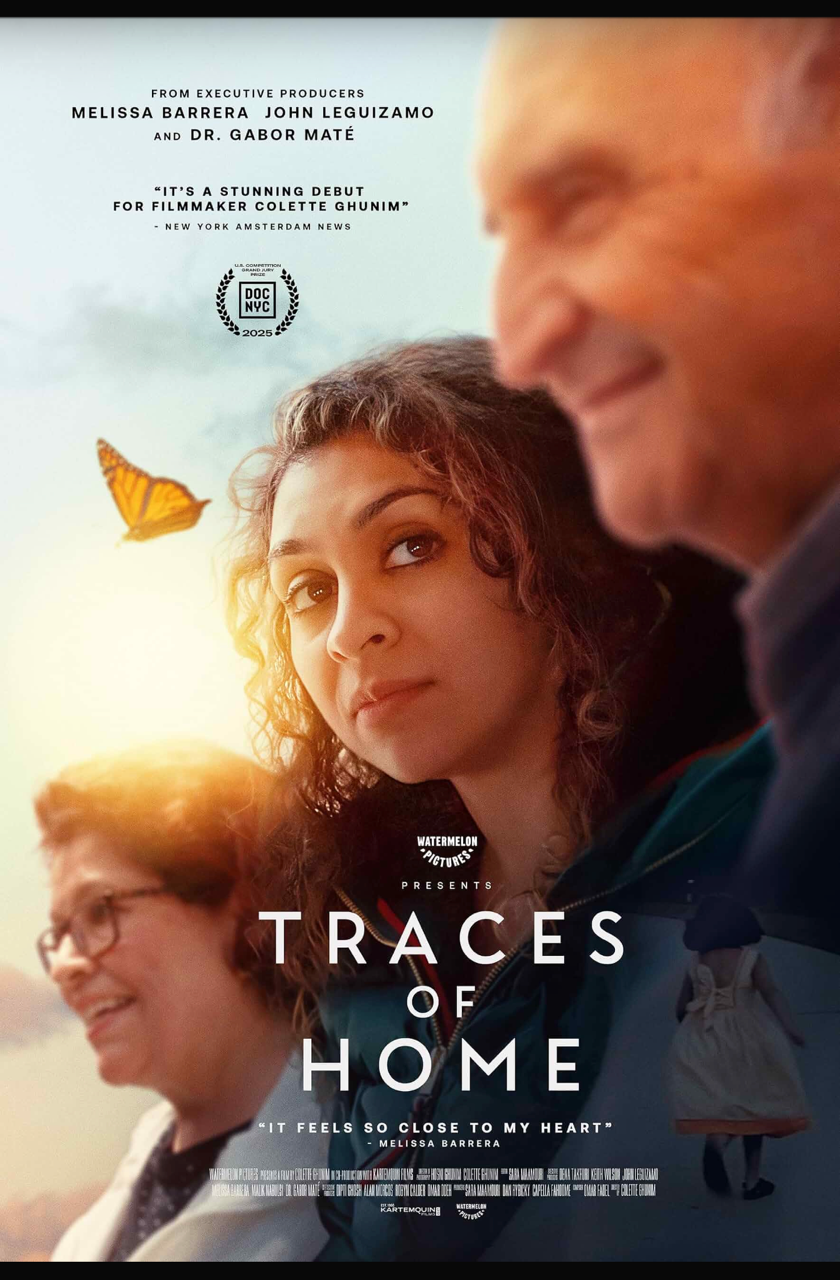
TRACES OF HOME (2026, doc)

September 17, 2026

Greetings again from the darkness. The risk a filmmaker runs by producing a documentary to make sense of their own family is that it might easily turns into family therapy and/or personal therapy. However, in this case, it appears that’s exactly what Colette Ghunim was trying to do. She never had the close bond with her parents that she desperately wanted, so she set out to find out why those emotional defense mechanisms were in place. As with any therapy, the hope is that things get better, while the possibility exists that things get worse.
We first see Colette in a family video at Christmas in 1977. A grown Colette is not only the director of this film, she’s also the narrator … and she spent five plus years on the project. Her mother Iza is of Mexican descent, while her father Hosni was born in Palestine. Colette states she and her older brother Ramsey lived what appeared to be a typical suburban sitcom style childhood in Schaumburg, Illinois. Her complaint is that she never felt especially close to either of her parents, despite admitting they simply wanted to provide an American upbringing to the kids. Dad Hosni wanted to be a director, so he was rarely without a camera – providing plenty of clips of the kids from their childhood. Some of those clips show Mom Iza and Colette exchanging glances that carried silent messages.

Remarkably, Colette arranges a couple of family trips so that the parents can re-trace their roots. A trip to Palestine (Safed) finds Hosni emotional, despite cloudy memories of his time as a four-year-old, escaping war with his family. The sojourn to Mexico not only allows Iza to experience the joy of locating a childhood home, but also the pain of learning just how much her mother sacrificed in taking the kids from a dangerous environment. The emotions are rampant and that includes Colette’s own reactions.

Family dynamics are often bumpy, and we can’t help but wonder if Colette’s project was more for her than for her parents. Clearly, it was difficult for all. As viewers, we feel like eavesdroppers most of the time, and intruders some of the time.

Opens in theaters September 18, 2026 in NYC and September 25th in Los Angeles.

WATCH THE TRAILER


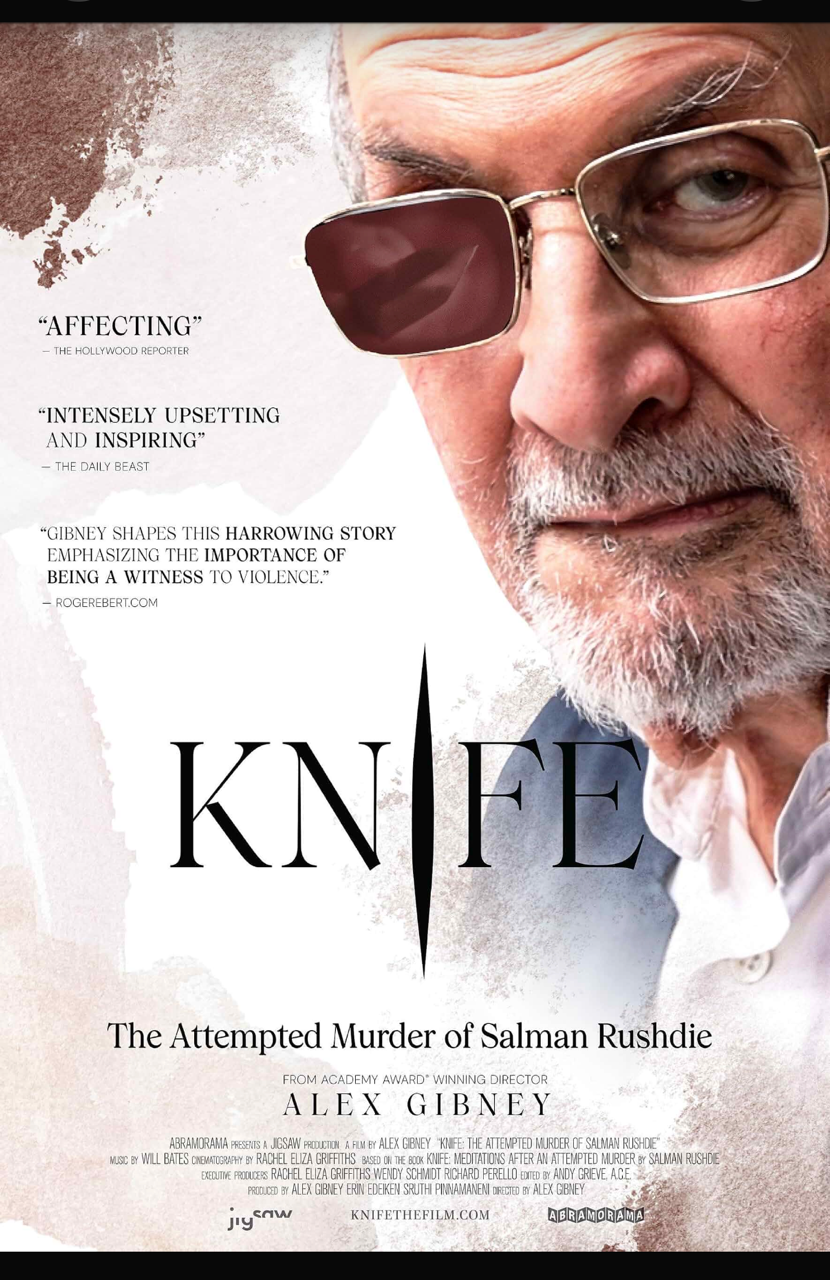
KNIFE: THE ATTEMPTED MURDER OF SALMAN RUSHDIE (2026, doc)

September 17, 2026

Greetings again from the darkness. Seeing someone get violently attacked is horrifying, whether that be live or a video replay. An additional adjective can be added, ‘shocking’, when the attack occurs on a public figure in a public place. Such is the case when author Salman Rushdie was ambushed on stage at Chautauqua Institute (NY) in 2022. The attacker used a knife to stab Rushdie 14 times. One of the best documentarians working today, Alex Gibney (ENRON: THE SMARTEST GUYS IN THE ROOM, 2005; and an Oscar winner for TAXI TO THE DARK SIDE, 2007), brings this story to the screen based on Rushdie’s 2024 memoir “Knife: Meditations After an Attempted Murder”.
Salman Rushdie makes for quite an eloquent narrator of his own story, and you are likely familiar with him as the target of Iranian Ayatollah Khomeini-issued fatwa in 1988, after Rushdie released his book, “The Satanic Verses.” A bit of quick math tells you that, at the time of this attack, Rushdie had lived more than thirty years with a death threat following him around. Mr. Gibney structures the film in intertwined pieces, including the attack, Rushdie’s hospital and recovery stint, the recordings by his wife, his earlier background as a writer, and his post-attack return to writing.

The film opens with Rushdie on stage at the event that would change his life, yet miraculously, not end it. Gibney elects not to show the video of the attack until much later in the film, however, the early images of Rushdie in the hospital bed make it clear just how violent this attack was. Rachel Eliza Griffiths is a renowned writer and Rushdie’s fifth wife. The video and photos she took of him in the hospital are incredibly personal, while also documenting his amazing recovery from a near-death attack. She understands the importance of documenting his recovery, and it’s clear these two adore each other.

Rushdie tries to recall those early days in the hospital, and one of his most vivid memories is a dream sequence involving Death from Bergman’s 1957 THE SEVENTH SEAL (a clip is included), and we also get scenes from TWELVE ANGRY MEN (1957) and PSYCHO (1960), two classic movies in which knives played a prominent role. Our first look at Rushdie’s injured eye is stunning, and as we learn more about his severe injuries, we can’t help but wonder just how he recovered so quickly and maintained such a positive outlook.

This is a man who uses language at an elevated level, and despite living most of his adult life under threats, his writings are often inspirational and about freedom of expression, especially in regard to religion. The archival footage of his early years provides a profile of a man who has always had the courage to write and say what he felt needed to be expressed. Amazingly, he was cleared to leave the hospital after six weeks, and Gibney films Rushdie’s return to the very stage (on Day 401) where the attack took place. It’s an emotional moment, and one Rushdie says brings him full circle and allows him to make peace … although neither Rushdie nor his wife mention the attacker’s name (a young man likely to spend the rest of his life in prison). Perhaps the most powerful words come not from the filmmaker or either of the talented writers, but rather when Rushdie recalls a lesson learned from his parents: “What can’t be cured, must be endured.”

Opening in theaters on September 17, 2026

WATCH THE TRAILER


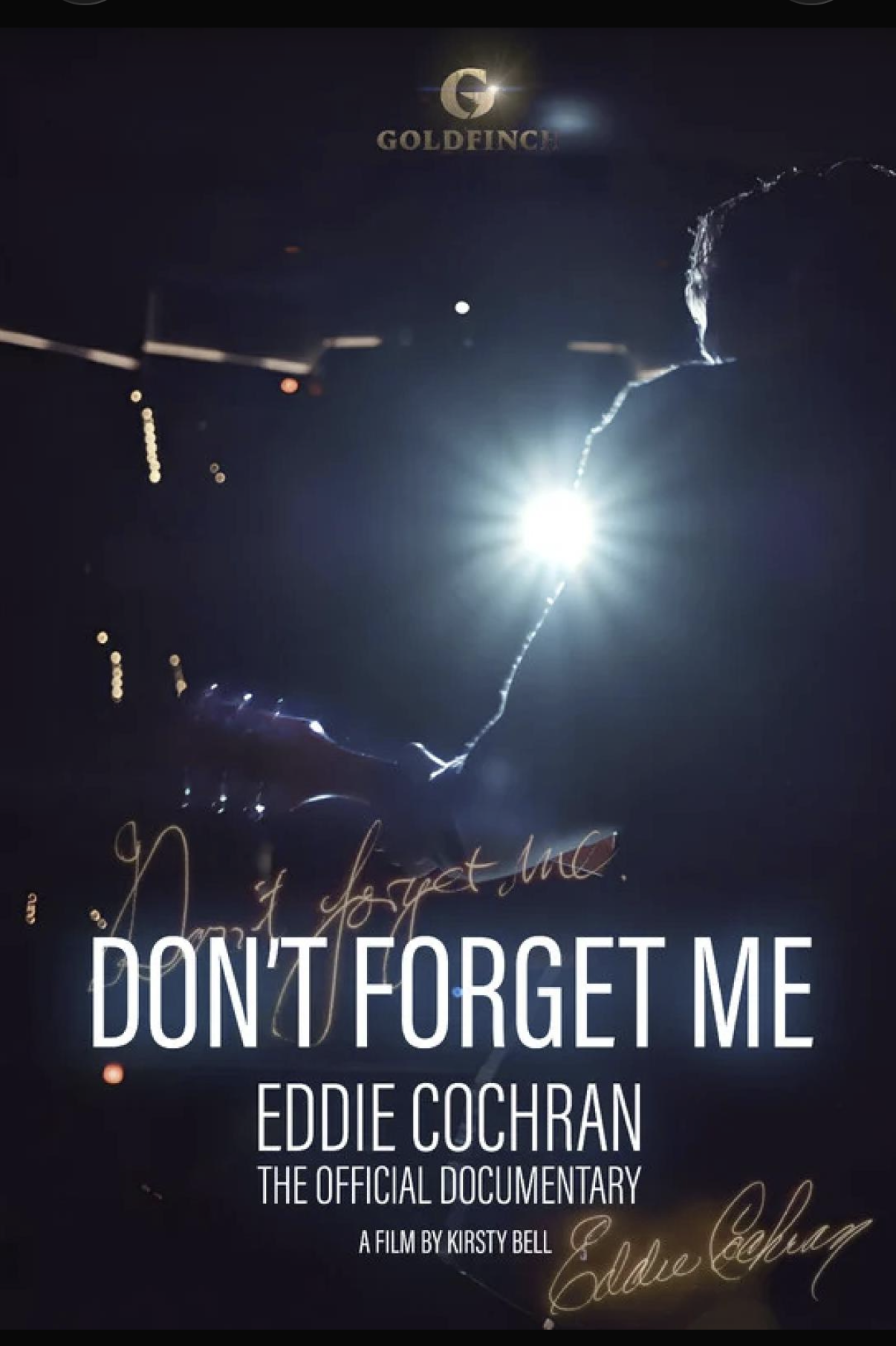
DON’T FORGET ME: EDDIE COCHRAN (2026, doc)

September 9, 2026

Greetings again from the darkness. With new music being created every day, it’s important to keep alive the history of those early musicians who, decades later, are still influencing contemporary songwriters and musicians. This is exactly what Kirsty Bell accomplishes with her informative profile of Eddie Cochran, a young man whose stardom and artistic pursuits were cut short by a fatal car crash at age 21.
Most are familiar with “the day the music died”. On February 3, 1959, a plane crash in Iowa killed Buddy Holly (age 22), Richie Valens (17), and JP “The Big Bopper” Richardson (28), each a talented and rising star. Not as many are familiar with the car crash that killed Cochran barely one year later, on April 17, 1960. Cochran wrote and performed the classic “Summertime Blues”, which charted for him, and has since been recorded and performed by many artists, including The Beach Boys, Blue Cheer, The Who (yes, at Woodstock) and Alan Jackson.

Filmmaker Bell serves up a true profile of Eddie Cochran, going back to his childhood and his formative years in music (studio sessions). Jack Harris appears periodically as Eddie in reenactments and as narrator, as does Frances Barber as his beloved mother. Eddie’s older sister is interviewed, reminding us that not only is his story musical history, it’s also a personal tragedy. We learn Cochran’s guitar playing was influenced by Chet Atkins and that he was enamored with the music of Ray Charles. He not only befriended Gene Vincent (of “Be-Bop-A-Lula” fame, and another too-soon passing), but also the aforementioned Buddy Holly, with whom he had a friendly competition that found the two passing musical notes and ideas to each other.

The list of icons interviewed here includes Keith Richards, Albert Lee, Ronnie Wood, Peter Frampton, Alice Cooper, Cliff Richard, John Waters, Suzi Quatro, Garry Tallent, Yungblud, Rod Stewart, Roger Daltrey, Sting, and Kiefer Sutherland (among others). It’s a partial lineup that demonstrates just how influential and respected Eddie Cochran was, despite his unfortunately short career. Of course, I’ve only mentioned “Summertime Blues”, but Cochran left other memorable tunes, including “C’mon Everybody”, and “Twenty Flight Rock”. Because of his age, we will never know what directions he might have gone – music production, film acting, and/or continued songwriting and performing.

The film travels back to Cochran’s hometown of Albert Lea, Minnesota and also goes into detail about his 1960 European Tour with Gene Vincent. We are fortunate to have the 1956 movie, THE GIRL CAN’T HELP IT, which features a performance from Eddie (and others). In a remarkable twist of fate, it was Police Officer Dave Dee who found Cochran’s guitar after the fatal crash. This police officer went on to be part of Dave Dee, Dozy, Beaky, Mick & Tich, an English rock band from the 1960’s (and mentioned in Quentin Tarantino’s DEATH PROOF). The message delivered by Kirsty Bell’s film and Eddie Cochran’s story is that good music connects the generations … even if tragedy strikes far too often.

The film opens in UK cinemas on September 11, 2026

WATCH THE TRAILER


WHO MOVES AMERICA (2026, doc)

September 9, 2026

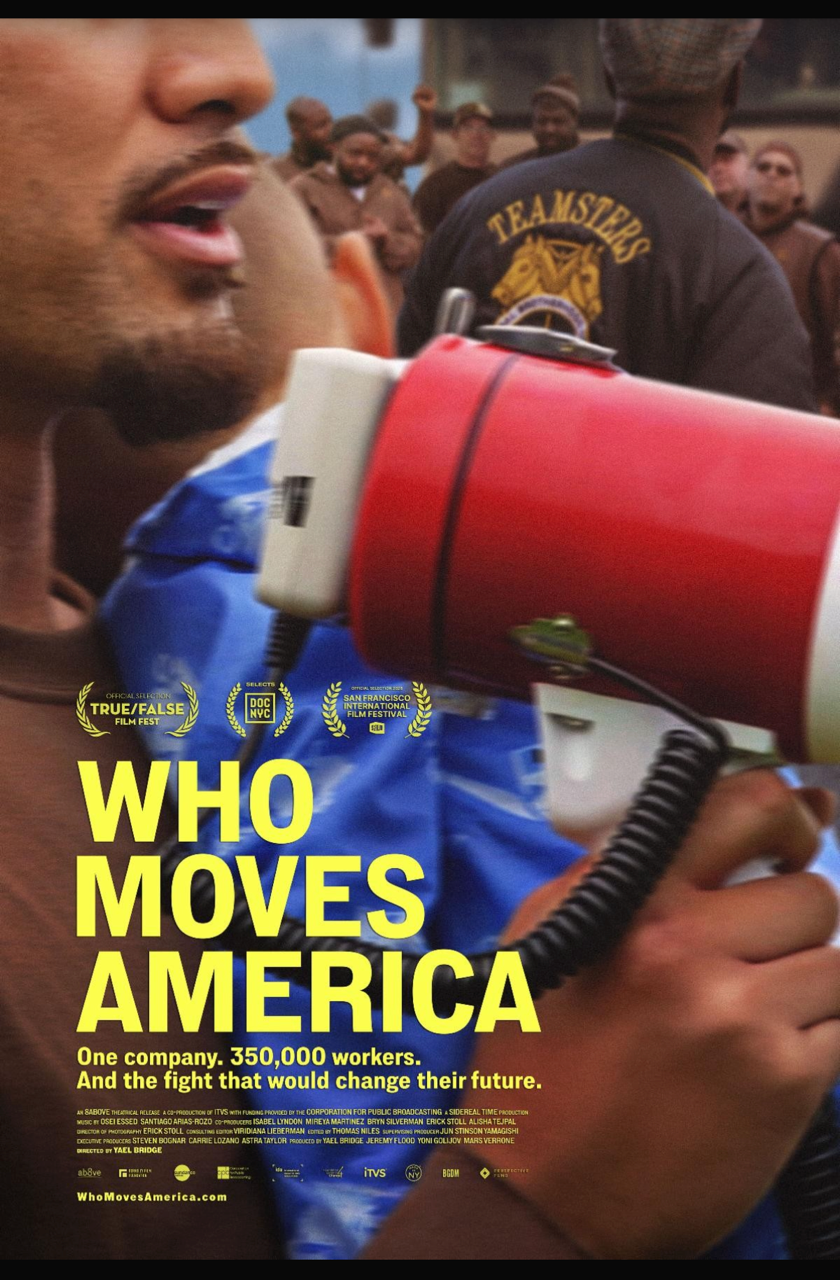
Greetings again from the darkness. Whether it’s flight attendants, dock workers, or Amazon, we tend to think about, and dread, the inconvenience a labor strike will cause us personally. Documentarian Yael Bridge gives us a rare peek inside … sometimes behind closed doors … to show us how a potential work stoppage (strike) could affect those workers and their families. This time, the company is UPS, which according to the film handles approximately six percent of all goods in the United States.
The film opens with some archival footage of the first UPS strike in 1997, before jumping to 2023 when the 340,000 UPS workers are preparing for collective bargaining on a new contract. Coming off the post-COVID era where UPS profits soared, the Teamsters union members are requesting and expecting many favorable changes. Filmmaker Bridge focuses on three people: a relatively new UPS driver in California, a long-time New York employee who was around during the 1997 strike, and a struggling part-timer in Kentucky. It should be noted that part-timers make up about 60% of the UPS workforce, and based on some of what we learn here, the company may have been skirting legalities in this area.

Solidarity is built through education and communication, and it’s a slow process when the workers are spread throughout the country and the expectations vary widely. At the time, drivers averaged $39 per hour and part-timers averaged $16 per hour. Of course, higher wages were one demand, but so were better working conditions (breaks, holidays, etc). It’s pretty interesting to hear these discussions, and even more enlightening to see which employees take a leadership role. The Teamsters’ national President, Sean O’Brien, makes the rounds and provides video updates for the employees. He’s also the one who announces a ‘tentative agreement’ (one that not every employee loves) that is subject to voting passage. Since each subsequent labor contract is built upon previous negotiations, generations of workers play a role … and this time it appears the union will plan ahead for the next round coming in five years.

The film opens September 9, 2026 in NYC’s IFC Center, kicking off a nationwide release that expands to Los Angeles on September 24, followed by Philadelphia, Boston, Encinitas, and additional cities throughout the fall.

WATCH THE TRAILER


OCCUPATIONAL HAZARD: THE FIRST CORAL REEFERS (2026, doc)

September 3, 2026

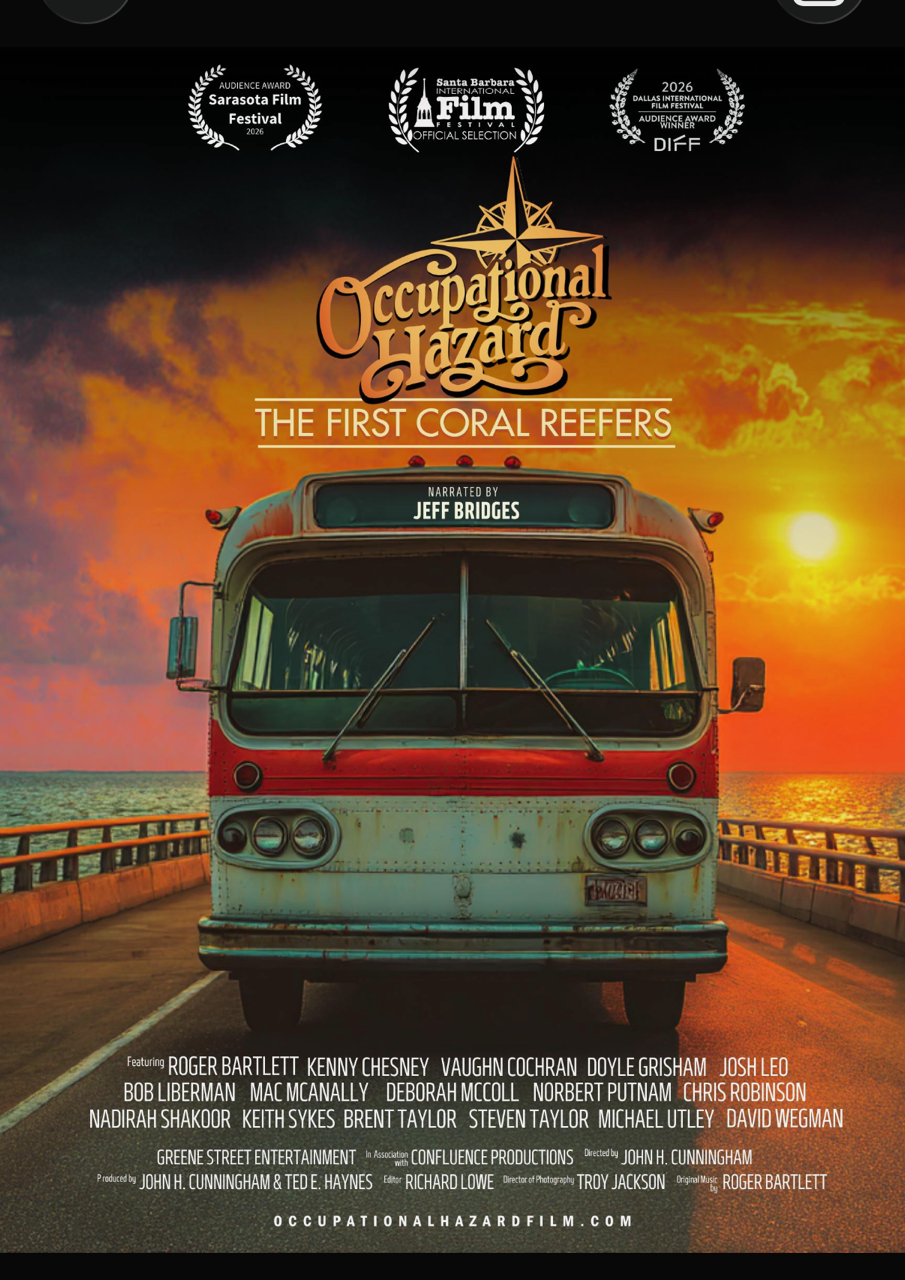
Greetings again from the darkness. With the mere mention of Jimmy Buffett, we immediately envision a sea of ‘Parrot heads’ sipping margaritas and having a blast as they sing along to the feel-good coastal tunes being played at a sunny outdoor venue. The beloved singer passed away three years ago, and now documentarian John H Cunningham provides an in-depth look at the early days. This is the origin story of the cultural phenomenon that Buffett built with his band … The Coral Reefers.

Oscar winner Jeff Bridges is a fitting narrator, and throughout the film we hear from former band members, those who were influenced by Buffett, and those who collaborated. A partial list includes guitarist Roger Bartlett, singers Deborah McColl and Mac McAnally, music producer Norbert Putnam, songwriter Keith Sykes, and country music star Kenny Chesney. What is immediately obvious is the respect these folks had for Buffett and their appreciation for having been associated with him, and his role in creating his own genre of music.

The stories from the 1970’s are fascinating. Sure, partying was central to the lifestyle – especially after Buffett relocated from Nashville to Key West, but it’s the associations and exchanges between musicians of the era that really strike a chord. Connections with Glenn Frey of The Eagles and the great James Taylor were important, and in fact, legend has it that Timothy B Schmitt was the first to use the ‘Parrot heads’ moniker. Filmmaker Cunningham is correct in titling this ‘The First Coral Reefers’, because there was certainly band turnover – some of it caused by the excessive partying of the time.

What the film does best is recount the foundation of the music, the band, the early albums, the changes in attitude (get it?), and the growth of a loyal fan base. The film ends with a list of former Coral Reefers who have ‘sailed on’, and Cunningham’s film will live on as a history of how Jimmy Buffett’s music became synonymous with “fun”. That’s not such a bad legacy.

The film will begin its theatrical release in major cities in early September timed to Jimmy Buffett Day (September 4, 2026) with a TVOD/ digital release to follow in November in the US/Canada.

WATCH THE TRAILER


THRESHOLD (2026, doc)

August 27, 2026

Greetings again from the darkness. We envision the makeup of a champion to be confident, fearless, and to possess the heart of a lion. Documentarians (and brothers) Lars Brinkema and Torsten Brinkema profile legendary cross-country skier Jessie Diggins who courageously shatters that myth while telling her very personal story.

Jessie begins by informing us of her desire to be perfect from a very early age. We assume this is going to be the tale of PA – Perfectionists Anonymous. Of course, her story takes a much different path. She’s from Afton, Minnesota, and trains there when she’s not traveling for events. Her parents, Clay and Deb, show us Jessie’s baby photos and family videos. They are clearly supportive … not just of her athletic endeavors, but also of her personal challenges.

Winning her first high school varsity race as a 7th grader “changed everything” for Jessie. She became obsessed with being the best, and defined that by working harder than anyone else and suffering for her art/sport/goals. In the 2018 Olympics, Jessie won the first ever Cross-Country Skiing gold medal for the United States. She also became the World Champion, widely acknowledged as the sport’s best. However, Jessie tells us that despite her successes and global adoration, she was facing issues with body image and an eating disorder. With the courage of a champion, she decided to go public.

The reason Jessie’s story is so important is because it acts as a cautionary tale. Until she went public, no one knew her struggles. We hear from her parents, her husband Wade, and her team coach Matt Whitcomb. These are the people closest to her and the ones who cared more for getting her ‘well’ … Jessie refers to it as being “sick”. Racing became the reason Jessie wanted to beat this. In fact, the race footage is stunning. This highly trained athlete experiences exhaustion at a level that more than 99% of human beings will never know. She builds up her body only to tear it down. Imagine doing this while battling a eating disorder and mental health issues. Jessie often hid behind a mask of big smiles, yet once the truth was known, those smiles could not be trusted. I go back to cautionary tale – know the truth about yourself and your loved ones.

Available on VOD beginning August 28, 2026

WATCH THE TRAILER


NEVER STOP CHASING (2026, doc)

August 19, 2026

Greetings again from the darkness. Some folks are just made differently. As a kid, Reed Timmer was afraid of storms. Because of this, he watched The Weather Channel religiously. This drove his knowledge and interest, and he eventually became the foremost storm chaser in the United States. Director Ken Cole has followed Timmer for more than twenty years, as they have collaborated on the 2004 PBS movie TORNADO GLORY, and the 2013 series, “Tornado Chasers”. Additionally, Timmer has appeared on The Discovery Channel’s “Storm Chasers”. This latest takes viewers directly into storms with Reed’s team.

It’s likely every viewer will know in the first seven minutes whether this is a documentary experience they can make it through. The photography is simply too amazing to describe in words as Reed Timmer and his storm chasing team take on the 2013 El Reno Tornado – widely accepted as the largest in history. Fearless is not the right word, but courageous certainly is. They understand the danger of intercepting storms, and it’s the experience, knowledge, and technology that protects them … along with quite a bit of luck. There are also memories of colleagues and friends who were less fortunate.

The contrast between the chasers and TV studio meteorologists is almost comical. The chasers live for the adrenaline rush and display kid-like excitement, while the TV broadcasters remain calm and collected while passing along details and videos. The cameras and this “Dominator” team with their customized vehicle take us inside storms. In the process, they prove that this is not just some crazy hobby. They are compiling crucial data for science with the intention of further improving warnings – saving as many lives as possible.

The scenes of devastation from the May 2024 Greenfield, Iowa tornado are painful to watch, yet the historic drone coverage allowed for never-before obtained data … all from the relative (un)safety of a rental car (after the Dominator rig was damaged). A New York Times photographer goes along for the ride, and her reactions are fascinating to watch. The intensity of these storms only slightly exceeds the intensity of pursuit exhibited by Reed Timmer and his team. For most of us, this is certainly as close as we ever want to come to a tornado, and we owe thanks to those willing to lay it on the line for science.

In theaters nationwide beginning August 21, 2026

WATCH THE TRAILER


AN EYE FOR AN EYE (2026, doc, Iran)

August 11, 2026

Greetings again from the darkness. This can’t be right.  It doesn’t seem real. Yet, it’s possibly the harshest form of reality. Documentarians Tanaz Eshaghian and Farzad Jafari managed to gain access to two families during a process most of us westerners can’t fathom. I had to keep reminding myself this is a documentary and these are real people from real families. Theirs is a true story … a legal and cultural and family thriller with real consequences.

In Tehran, a man discovers a corpse buried in the floor of his kitchen. The previous tenants included Taherah, who was then arrested, convicted of murder, and sent to prison for fourteen years. Her defense for killing her husband was his drug abuse led to his violence towards her … as evidenced by hospital visits for treatment of injuries incurred. She had requested a divorce, but in Iran, divorce is typically only granted when instigated by the husband. So, Taherah, along with her daughters, did what they felt was needed to protect themselves. The other two were pardoned, and Taherah served her 14 year prison sentence.

Now you may think that story is tragic … and you’d be correct. However, it’s just the beginning here. Saria Law in Iran states the family of the murder victim decides between execution and forgiveness (accompanied with diya, or blood money). This is AFTER the prison sentence is served. In this case, the decision falls to Taherah’s in-laws, specifically Bashir, her brother-in-law. Her fate is in his hands. The elderly mother-in-law demands execution, but again, this is Iran, so it falls to the man.

The Quran promotes “an eye for an eye”, while also claiming forgiveness is better. An anti-execution advocacy group is brought in to assist with the negotiations, and a hefty sum is settled upon. It’s a shocking amount of money for the poor family and if they can’t raise it, execution is the only step. In another twist of fate, Bashir’s eldest son must assume the negotiations, and he takes a hardline approach despite the efforts of the advocacy group and the pleas from Taherah’s son, Mohsen.

It’s remarkable just how much of this process the filmmakers capture for us to witness. We are often inside private homes or in closed door negotiations … truly eavesdropping on life and death matters. The stress and tension will be felt by each viewer as negotiations and the courtroom drama play out. Eshaghian and Farzad have delivered a terrific documentary that will certainly take most viewers out of their comfort zone and open eyes to a world we struggle to comprehend.

Opens in theaters on August 12, 2026 and will be available digitally on Jolt.film beginning August 14, 2026

WATCH THE TRAILER


COOKIE QUEENS (2026, doc)

August 6, 2026

Greetings again from the darkness. “Would you like to buy some Girl Scout cookies?” It’s a familiar pitch we hear every year at grocery stores, our front doors, and even at the office as co-workers spread the word on behalf of their scouting daughters. With an annual hankering for Thin Mints, we gladly exchange our cash for a box … or two or three. Documentarian Alysa Nahmias takes an unusual approach to this ritual of local Girl Scouts selling sweets. For historical perspective, the film opens with archival footage covering decades of boxed goodie transactions initiated by girls in the familiar vests.

Should anyone doubt the size of this venture, we are informed that Girl Scouts sell $800 million in cookies over the six-week period each year. The $6.00 per box is divided up into shares for the cookie bakers, the Girl Scout corporate offices, the Girl Scout councils, and $1.10 goes to the Girl Scout troops, and yes, the individual Girl Scouts (through prizes). Nahmias makes this a personal story by following four girls of varying ages as they work their way through cookie season.

Olive lives in North Carolina. She’s twelve years old and holds the record by selling more than 8000 boxes. We hear her teaching younger scouts about ‘upselling’, and then Olive answers a customer’s question by stating she wants to become a Supreme Court justice. She’s remarkably well-spoken and media savvy. Her dad video records her personal pleas for cookie sales and then uploads the videos to her dedicated website.

Chino, California is where we find nine-year-old Nikki, who desperately wants a trophy like the one her older sisters, Nyah and Nala, won for being top cookie sellers in the area. A trip to Europe is now on the line, and it’s interesting to watch as the older scouts position ‘cute’ Nikki to draw in customers, many who think the older girls are too old for scouting.

Shannon Elizabeth is eight years old and has a goal of selling 2750 boxes in El Paso so that she can attend this year’s summer camp. It’s in this house where we see the burden carried by parents becomes crystal clear. Lastly, we have five-year-old Ara in San Diego. She struggles with diabetes and is whip-smart, although her tiny frame struggles to pull her red wagon loaded with cookies. Ara’s original goal is 45 boxes, but that shifts to 55 as the weeks go by.

Rather than ooh and ahh at the girls giggling their way through group activities, we are left feeling the weight of cookie selling – both on the girls and their families. There is definitely an upside to the life lessons of setting goals, possessing the self-confidence to talk to adults, and developing a work ethic and commitment to individual and team objectives. But according to the film, families must now financially commit to a certain number of cookie boxes, and then those are either sold by the girls or the parents are on the hook. This is a change from the old days when it was common for friends and family to place orders ahead of time, and the troop would order extra product for the public booth sales. It’s a bit nerve-racking to see what these parents and kids go through, whether they are selling thousands of boxes or a few dozen. The interactions between the parents and girls is quite something to behold.

One of the benefits of Girl Scouts is the push for being a well-rounded person, and we see young Ara as she does Pilates and plays the piano. By the end of the film, Olive’s activism has her leading the charge for a bigger share of proceeds going to the girls at the troop level … this after her own emotional crisis and battle with her mother over whose goals they have set. There is a lot going on in this film and I recommend a crunchy Do-Si-Dos to calm your nerves while watching.

Opening in theaters on August 7, 2026

WATCH THE TRAILER


BABY DOE (2026, doc)

July 16, 2026

Greetings again from the d arkness. While I certainly value the importance of fiction and creativity, I choose to watch so many documentaries because I’m also a fan of real life and the truth. However, the truth is often anything but uplifting and such is the case with this film from Jessica Earnshaw as she tells the story of Gail Ritchey and the “Geauga’s Child” case.

DNA evidence links Gail to a horrific unsolved case thirty years prior, in 1993. A dead newborn baby was found roadside in rural Ohio.  Gail is a mother, a wife, and a grandmother. While being interrogated, she says she did not know she was pregnant and claims the stillborn baby dropped in the toilet, catching her by surprise. It was her religious community, and the fear of repercussions, that led her to bag and dispose of the baby … keeping the secret all these years. Most crime documentaries would focus on the case and setting Gail up for life in prison; however, Earnshaw’s approach is much more complex.

All parties involved are provided with the opportunity for input. This includes her husband Mark, their daughter Courtney, her neighbors, fellow church goers, law enforcement, medical providers, and the psychologist who explains the phenomenon of ‘pregnancy denial.’ Hearing from family, church, and community delivers a much different perspective for viewers than a simple courtroom drama answering whether she do it or not.

We see Gail in many different situations, and some may even find her sympathetic at times. The film digs into the power flex of religion, especially on youngsters when it comes to pre-marital sex. Gail’s mental state at the time seems fairly clear as she and Mark secretly skirted church rules, and a later disclosure from Gail almost assuredly removes whatever sympathy one might have held for her. The key with this film is in our perception and understanding of Gail at the time … and that makes it much more thought-provoking than initially thought.

Available in select theaters July 10-16, 2026, at DCTV (New York City), July 14 at Laemmle Glendale (Los Angeles), July 15 at Laemmle Noho (Los Angeles), and July 19th at The Roxy (San Francisco)

WATCH THE TRAILER