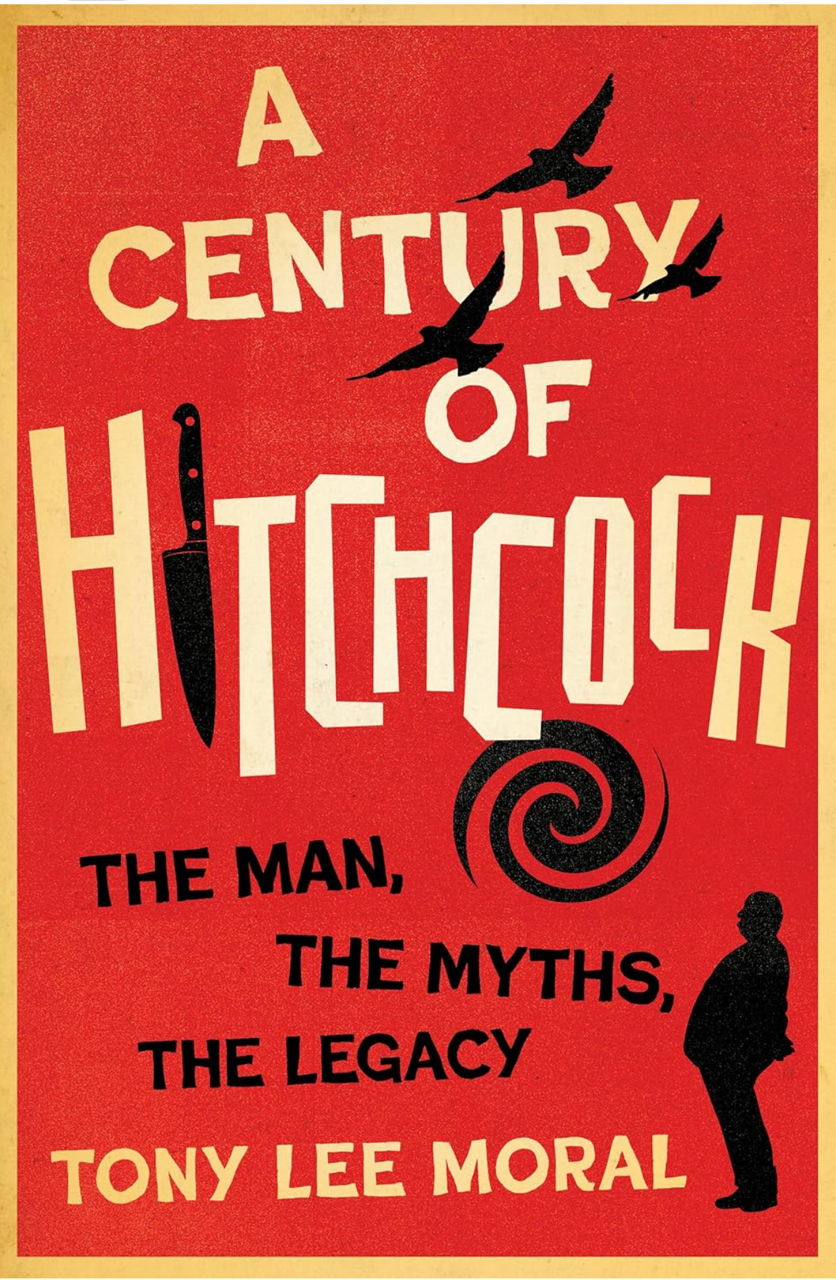
Book Review- A CENTURY OF HITCHCOCK: THE MAN, THE MYTHS, THE LEGACY by Tony Lee Moral

June 1, 2026

Alfred Hitchcock certainly earned the moniker ‘The Master of Suspense’.  Through his many classic films and superb TV show, “Alfred Hitchcock Presents” (1955-62, 268 episodes), Hitch consistently built tension that frayed our nerves to the point that we could neither look away, nor hardly wait for the next film or episode. The list of filmmakers influenced by his work is endless, and as film lovers, we are continually drawn back to his movies due to emotions and nostalgia. While all of that remains true one hundred years after his debut feature film, the reputation of Alfred Hitchcock the man was forever changed/damaged with the unauthorized biography by Donald Spoto and the memoir of actress Tippi Hedren.
Author Tony Lee Moral, a British filmmaker and film historian, has devoted countless hours to research in offering a counterpoint, or rebuttal, to the previous accusations hurled at Hitchcock. His interviews and real-world examples provide a profile of a genius filmmaker who was described (in various ways) by his co-workers as an often quiet gentleman dedicated to maintaining structure on his sets. Since Hitchcock passed away in 1980, unable to defend himself against the later accusations, Mr. Moral offers perspective from the other side. Moral’s book is less about the fascinating films Hitchcock directed (there are literally hundreds of publications dedicated to this), and more about his personality, demeanor, and approach to the work – as recalled and documented by those he worked with.

Part 1 of the book details young Alfred’s rise through German, British, and ultimately, American filmmaking. Part 2 dives into the psychology of Hitchcock – both real and perceived, specifically the allegations brought by Ms. Hedren, and Francois Truffaut’s role in providing a contrasting prospective. Part 3 provides context to Hitchcock’s overall legacy and how revenge, greed, the need for attention, and changing social mores likely played a role in shifting attitudes. It’s important to note that this book is not designed to provide critical film analysis or a creative breakdown of any of film in the Hitchcock oeuvre. Rather, at its core, this is an author and film historian providing a measured and detailed response to the attempted character assassination of a deceased man. Moral even provides substantial information on what was possibly behind the words of Mr. Spoto and Ms. Hedren.

As a film lover and film critic, I’ve long been an admirer/fan who obsesses over Hitchcock’s body of work. I’ve also been fascinated by how he turned himself into an iconic public figure through film cameos, measured interviews, and especially, the hosting of his TV series. Author Moral lays out the memories of many who worked with Hitchcock, and includes the importance of the director’s long-time wife and frequent collaborator, Alma Reville. We also learn of Hitchcock’s penchant for practical jokes … a trait that contrasts with his meticulous approach to structure on the set. It’s likely many will find interest in Hitchcock’s intent to create a new movie star out of a beautiful model with little acting experience. His success in this venture may be best judged by the films they made together, THE BIRDS (1963) and MARNIE (1964) … as well as her acting career post-Hitchcock. The legacy of Alfred Hitchcock is certainly more complex now than it was at time of his death. The MeToo# movement played a part in the shift, while the movies and words of all collaborators must be considered. This book from Tony Lee Moral helps us do so.

The book is available on Amazon beginning June 9, 2026


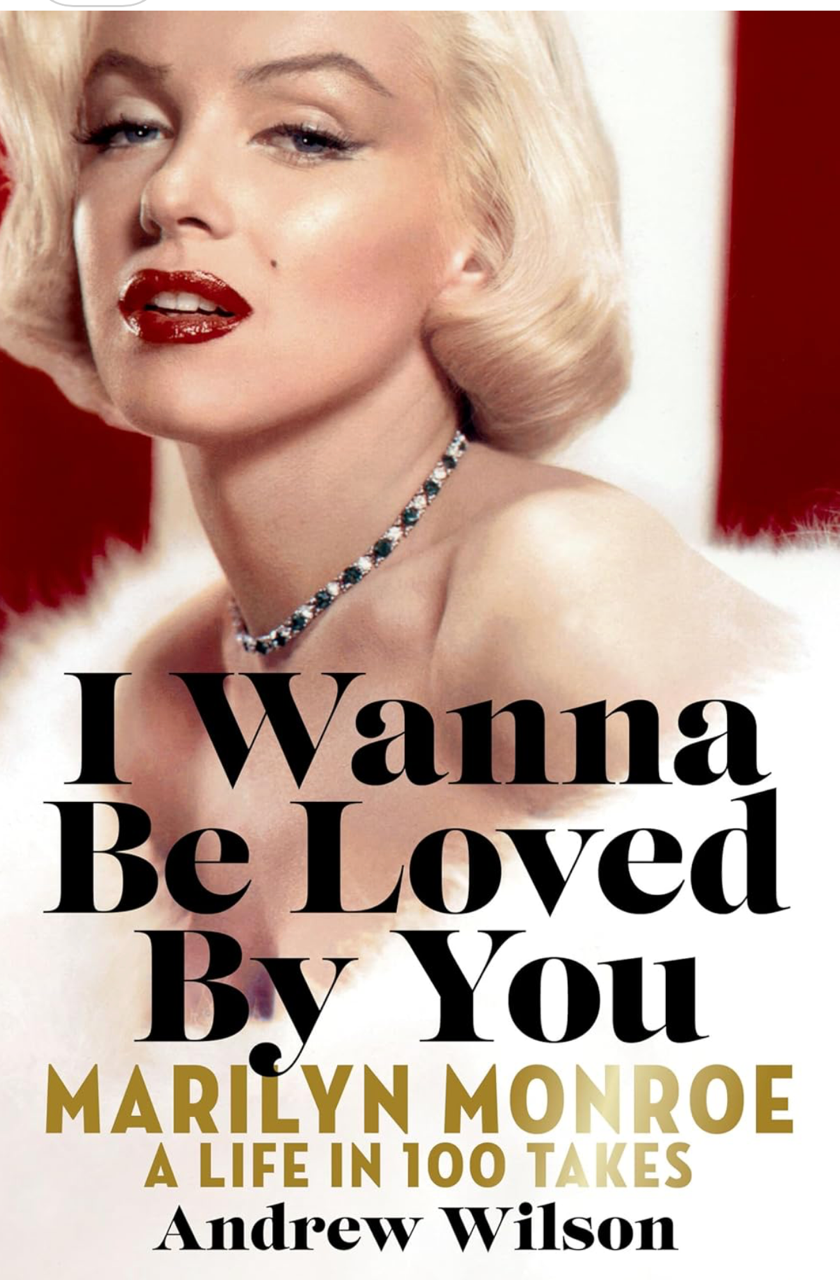
Book Review- I WANNA BE LOVED BY YOU: MARILYN MONROE: A LIFE IN 100 TAKES by Andrew Wilson

May 29, 2026

Glamour is the descriptive word that comes to mind when we think back to Hollywood’s Golden Age. The stars shone brightly in the days of Cary Grant, Clark Gable, Grace Kelly, and Elizabeth Taylor. However, many would agree that the brightest star and the most glamorous was Marilyn Monroe. She might also have been the most tragic. This detailed and intricately researched book from author Andrew Wilson pulls back the curtain on Marilyn’s façade of glamour, while serving up specifics about her childhood, her desire to be loved, and her recurring depression. The book may not be a traditional tribute, but in fact it serves as proof of how she struggled to overcome her personal challenges.
Wilson’s book is timed to release in celebration of what would have been Marilyn’s 100th birthday. Of course, it’s a tragedy that she only lived for 36 years, and we discover even more tragedy and sadness as the book guides us through a childhood (as Norma Jeane) we wouldn’t wish on anyone … foster homes and orphanages. This led to her foundation of fear and insecurity. Wilson describes how her need to be loved and wanted was often at odds with her public image of glamorous blonde bombshell, as was her commitment to reading and learning – despite being a high school dropout.

As proof of her iconic image as a movie star and celebrity, it’s truly fascinating to note the number of legends, rumors, and conspiracies linked to Marilyn. Wilson discloses his access to the archives (tapes, interviews, documents, letters) of 1985 biographer Anthony Summers, who wrote “Goddess: The Secret Life of Marilyn Monroe”. Additionally, Wilson researched so much more on his own, making this work truly stand out despite the dozens of books already published profiling Marilyn. What we learn is that stories and tales and memories of Marilyn are easy to come by. The difficult part is separating fact from fiction, especially when so much of the fiction has been fed to us over the years. Wilson lays out the facts and admits when he’s drawing his own conclusions. This is in stark contrast to how he feels about Norman Mailer’s 1973 “Marilyn: A Biography”, which Wilson describes as ‘sloppily researched.’

When it comes to beloved icons, the real money makers are conspiracy theories and rumors when trying to sell one of those many Marilyn books. Wilson methodically addresses the facts as applied to such items as her being sexually assaulted as a minor, the white piano, multiple miscarriages, her endometriosis, the clashes with Laurence Olivier, the ‘wrong door raid’, her conversion to Judaism, that infamous dress from “Happy Birthday, Mr. President”, her three marriages (the first at age 16), brothers John and Bobby Kennedy (each get their own chapter), and of course, her death at such a young age and under mysterious circumstances. Also included is the story behind Hugh Hefner obtaining the Marilyn photos he used in the 1953 launch of “Playboy” magazine.

For those interested in Marilyn’s three marriages, Wilson includes plenty. First husband Jim Doughterty, a police officer, wrote two books about her, while neither Hall of Famer Joe DiMaggio nor Pulitzer Prize winner Arthur Miller did. In fact, the latter two remained quite close-lipped when it came to discussing Marilyn after her death. Specifics on the marriages are included, and as you’d suspect, it wasn’t all rosy for Marilyn. Other romances and rumored romances are part of her story. This includes Frank Sinatra and Yves Montand, as well as screenwriter Jose Bolanos, supposedly her final lover.

Famed acting coach Lee Strasburg not only worked with Marilyn, but also became one of the few she trusted implicitly. Wilson covers her lifelong connection to therapists, including her time with Anna Freud, daughter of Sigmund. Marilyn’s struggles with mental health and depression were a constant battle, and given her childhood and fame, it’s actually understandable. Arthur Miller is quoted as telling her, “You’re the saddest girl I ever met.” Compare that to what Oscar winning director Billy Wilder said: “When I met her, she did not impress me. When I saw what the camera saw, I knew she was special.” Wilder directed Marilyn on THE SEVEN YEAR ITCH (1955) and SOME LIKE IT HOT (1959), the former included the iconic scene of Marilyn standing on the grille as the wind blows her skirt up. It’s that transformation in front of the camera that Wilson notes a few times.

Clark Gable passed away twelve days after filming wrapped on THE MISFITS (1961 screenplay by Arthur Miller), and it became the final feature film released for both Gable and Marilyn Monroe. The last public photos of her were taken at Dodger Stadium for a charity game with kids, and yes, writer Andrew Wilson covers her death and funeral and how those have been analyzed and debated since. It’s interesting to note that Marilyn lived in more than fifty different places during her short life, and the only house she purchased had an inset in the tiled doorway that read “Cursum Perficio”, translated to ‘My journey ends here’. And what a journey it was … despite ending much too soon. Marilyn’s cover story is glamour, but Andrew Wilson separates the person from the star.

The book by Andrew Wilson is available on Amazon beginning June 2, 2026


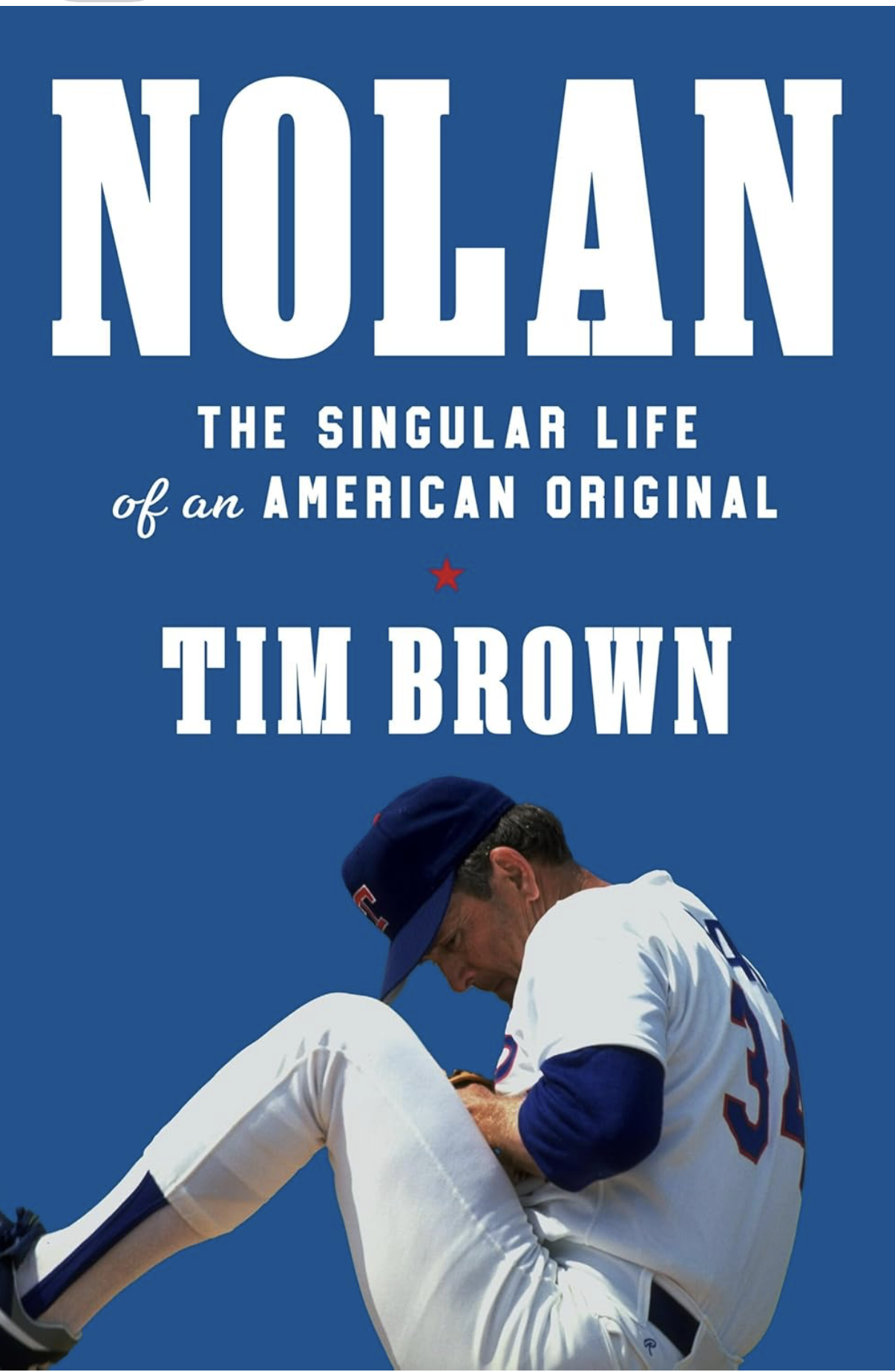
Book Review- NOLAN: THE SINGULAR LIFE OF AN AMERICAN ORIGINAL

May 15, 2026

Author: Tim Brown

The Ryan Express. Tex. Nolie. However you refer to Lynn Nolan Ryan, he was without question one of the most exciting players and dominating pitchers in Major League Baseball history. Sure, he had some detractors, but few of those are knowledgeable baseball fans or among those who were lucky enough to see him pitch. Renowned sportswriter and author Tim Brown serves up plenty of ‘inside baseball’ here as it relates to Nolan’s career, yet some of the most interesting bits and pieces are in regard to Ryan as a man.
Some standard biographical information is included, with an emphasis on Ryan’s childhood in Alvin, Texas (born in Refugio) and his lifelong connection to the area. He’s been married to local girl Ruth Holdorff since 1967 and if anything, Ruth’s continued support of and importance in Nolan’s career might be slightly underplayed in the book. We are talking about a woman who would gear up and catch Nolan Ryan pitches in the offseason. Still, this is a book about Nolan, and some terrific stories are recollected. This includes that incredible baseball career of 27 seasons, and also the post-playing career, which led to his continuing need to scratch the competitive itch.

We learn the importance of Red Murff (an entire chapter), the baseball scout who discovered Nolan and so believed in his potential, that he persuaded the New York Mets to draft him … leading to his MLB debut at age 19 and his only World Series appearances in 1969 for the legendary “Miracle Mets.” After the 1971 season, the Mets traded the young fireballer to the Angels, where he pitched some of his most dynamic and spectacular games. Eight seasons later, Nolan seized the chance to play near his hometown of Alvin for the Houston Astros. With this move, he became the first major leaguer to earn more than $1 million per season. After nine seasons in Houston, Nolan jumped to the Texas Rangers, where he would end his playing career five years later … at the age of 46.

Those are the numbers and years, yet as Tim Brown’s book stresses, there are more pertinent ways to capture Nolan Ryan, the man. A consistent theme appears at the point of those career moves. Ryan felt disrespected by the owners/management teams of the Angels, Astros, and ultimately the Rangers (after he became a part-owner and Team President). In keeping with the ‘strong, silent type’, Ryan demanded respect and saw no need to put up with anything less. The true way to judge a man’s character is by hearing what others say about him, and Brown’s book excels at telling such stories and laying out the foundation of why Nolan Ryan remains a Texas and baseball legend.

Some numbers are crucial in further understanding Ryan’s legacy. You should know that his 27-year career resulted in 324 wins, seven no-hitters, 12 one-hitters, 18 two-hitters, and 5714 career strikeouts. An obvious Hall of Famer, Ryan refused to rest on his laurels after his playing career ended. Instead, his resume includes rancher (with a beef business), banker, spokesperson, college baseball assistant coach and part owner (with his son) of Ryan Sanders Sports and Entertainment (owner of minor league Round Rock Express). All of this was after his time as President/CEO/part owner of the Texas Rangers and Special Assistant to the Houston Astros.

Brown devotes a full chapter to a breakdown of each of Nolan’s seven no-hitters, including naming the catcher, providing the final score, and the number of strikeouts and walks. Other chapters speak to the important figures in his career: Gene Autry, Bobby Valentine, Tom Grieve, Tom Seaver, Phil Garner, Tom House, Tim Purpura, and (not in a good way) John McMullen. Of course, the Robin Ventura episode is detailed, as is the underreported meeting between the two men a few years later (again, true character shining through). Hardcore baseball traditionalists will find immense pleasure the “The Bow Tie” chapter which speaks directly to Nolan’s use of intimidation while on the mound … or hulking around the mound … or reacting to batter’s bunts or smiles.

As a young kid just getting into baseball, I first saw Nolan pitch in the 1969 World Series for the Mets (on TV). Through the 1970’s, 1980’s, and early 1990’s, I was fortunate enough to see him in person as he pitched for the Angels, Astros, and Rangers. Each outing began with anticipation and excitement over what ‘might’ happen, and the confidence of knowing it would be memorable, regardless of the outcome. Brown’s last few chapters detail how Ryan has spent his time since retiring. There is also a section on how it’s possible the Texas Rangers might have folded and/or relocated if not for the timely addition of Nolan Ryan to the roster, and his subsequent impact in the front office. When the franchise finally secured a World Series win in 2023, those conversations and thoughts resurfaced.

Of course, there have been quite a few previous books written about Nolan Ryan. Even today, young pitchers can learn from “Nolan Ryan’s Pitcher’s Bible” (co-written by Ryan and Tom House). Still, it’s this latest book from Tim Brown that is so thorough and comprehensive. It covers so many aspects of the man. The legacy of Nolan Ryan remains massive from a baseball perspective, yet his lasting impact is that of being a man of principle, a man of honor, a devoted husband and family man, the ultimate competitor … and a final description that seems all too rare these days … a worthy role model.

The book releases on May 19, 2026

Amazon link to order


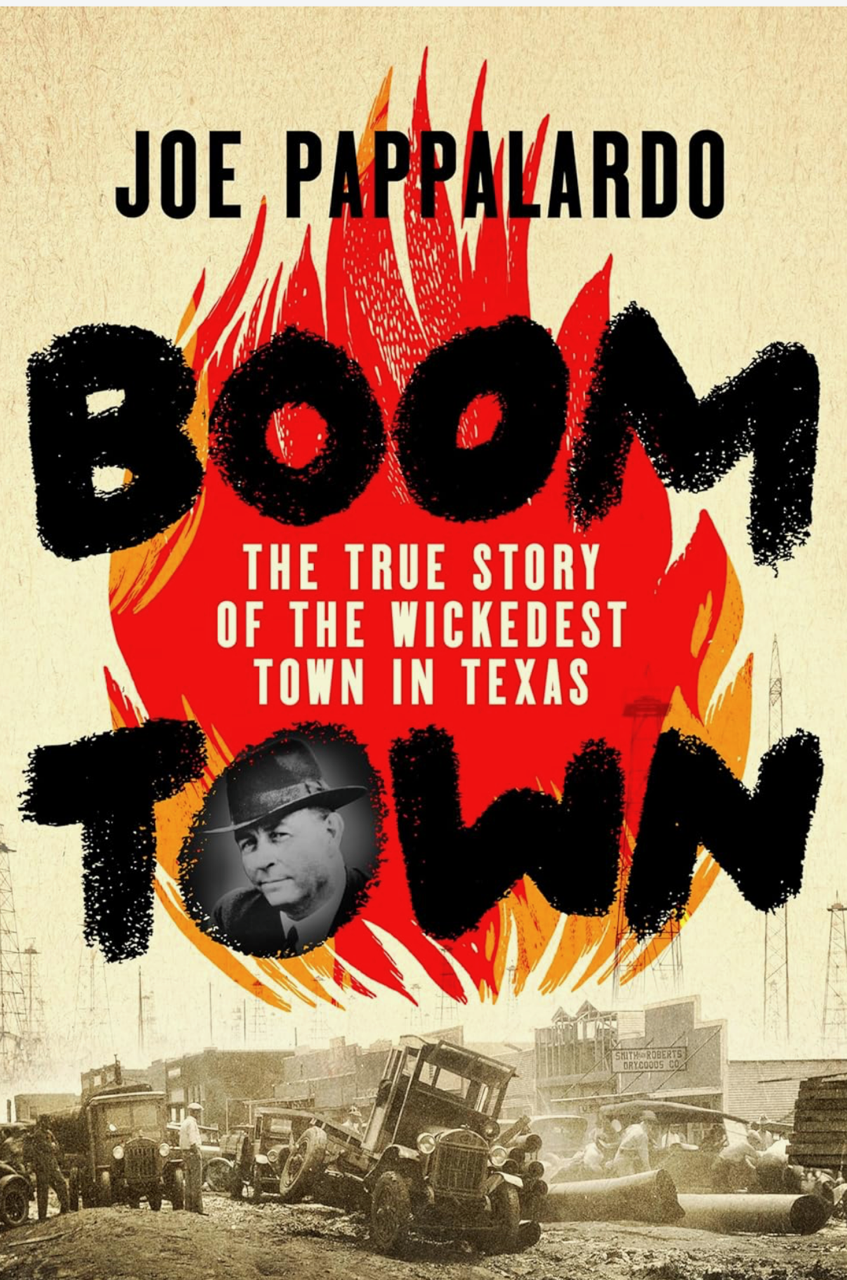
Book Review- “BOOMTOWN: THE TRUE STORY OF THE WICKEDEST TOWN IN TEXAS”

April 19, 2026

author: Joe Pappalardo

release date: April 21, 2026

It’s possible, even likely, that I’ve been more surprised by a book than I was by this latest from Joe Pappalardo (a freelance journalist and critically acclaimed author), but I don’t recall when or by what book. While it’s understandable that many readers would initially muster little interest in a true story that took place 99 years ago in a small town located in the Texas panhandle, that’s where the surprise comes in. The Borger, Texas population may be significantly smaller now than it was then, yet the story includes politics, violence, corruption, brothels, moonshine, sports gambling, greed, and the evolution of America … many of the elements that keep us glued to the book’s pages and sometimes stunned by what we are reading.
Author Pappalardo structures the book much like a journal, detailing occurrences on specific days between February 1927 and August of the same year. Some days even warrant multiple entries (morning, evening, etc). He also goes to great lengths to explain that much of the dialogue and conversation presented between these real-life folks has been ‘imagined’ to fill the gaps. If that technique bothers you, please understand that the book and the story and people involved have been meticulously and extensively researched by the author. It’s fair to say that no living person knows more about 1927 Borger, Texas than Joe Pappalardo … the 366 footnotes prove it.

Bootleggers, gamblers, and corrupt politicians all served the up-and-coming oil workers congregating in the up-and-coming boomtown of Borger, dubbed ‘the wickedest town” in Texas. Rarely has a town sprung up so quickly (it was founded only a year earlier), and the daily recounting of events is sometimes startling. If you are thinking this story needs a hero, well how about Frank Hamer, the Texas Ranger Captain best known for leading the search that led to the end of the Bonnie and Clyde crime spree in 1934. Hamer’s story itself is enough to fill a book … actually two: one in 1968 by H. Gordon Frost and John H. Jenkins, and another in 2016 by John Boessenecker.

This is a rare glimpse into what America looked like a century ago. Of course, this is not the big cities of New York or Chicago, but rather the dusty plains that would ultimately create incalculable wealth and a booming industry. By recounting specific days, the author avoids generalities to focus on details and specifics … and yes, there’s a murder mystery as well. Individual personalities become familiar, and things play out like the developing story it was. Were the numerous incredulous events and colorful characters not part of actual history, Pappalardo’s book would excel as a page-turning novel of fiction. Instead, we are privy to the historical record.

St. Martin’s Press is releasing the book on April 21, 2026. Here is the Amazon link:


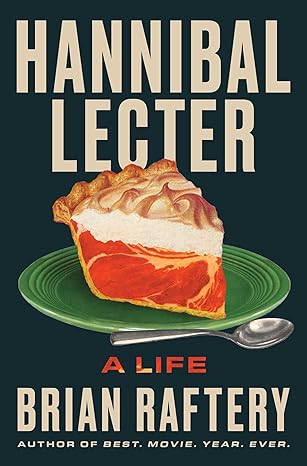
Book Review- “HANNIBAL LECTER: A LIFE” by Brian Raftery

February 7, 2026

Analyzed too closely, our fascination with serial killers could (and should) be considered disturbing. Novels, stage plays, movies, and TV series have long focused on the criminals who both frighten society and manage to long elude law enforcement. This is not referring to the demented appeal of scumbag shoot-the-CEO-in-the-back murderers with bushy eyebrows, but rather those whose intellect and psychological profiles allow them to stay one step ahead of those seeking justice – at least for a while. Included on the list would be such recognizable names as Jack the Ripper, Ed Gein, Ted Bundy, Jeffrey Dahmer, Aileen Wuornos, and the Zodiac Killer. Capitalizing on the public’s fascination led Thomas Harris to write “Red Dragon” in 1981, his first novel featuring Hannibal Lecter. Three more Lecter novels followed, and it’s Mr. Harris’ many Lecter works, and the projects influenced by them, that drove this detailed and expertly researched book from author Brian Raftery.

It’s tempting to call this a biography of Hannibal Lecter, a fictional character – despite his being referred to as “the late, great, Hannibal Lecter” during the most recent Presidential campaign (and a few times since). Yet, the biography label feels insufficient since Raftery also delves into Thomas Harris’ writing process, interviews with FBI agents, and serves up some behind-the-scenes details of the movie and TV projects of which ‘Hannibal the cannibal’ was a part. For many readers, including yours truly, gaining some insight into Harris is reward enough. The ever-reclusive bestselling author (more than 50 million books sold) is renowned not just for his outstanding storytelling, but also for his ability to avoid the spotlight and most anything resembling an interview (for decades).

Of course, the public fascination lies not with bestselling authors, but instead on serial killers. Harris’ work on Lecter has permitted us to get up close and (too) personal with this brilliant and dangerous character. It’s the mind games that draw us in … much more so than the grisly murders or cannibalism. This is what makes Raftery’s book so special. He guides us through the various incarnations of the enigmatic Hannibal Lecter. Harris’ four Lecter novels are “Red Dragon” (1981), “The Silence of the Lambs” (1988), “Hannibal” (1999), and the prequel “Hannibal Rising” (2006). Releases of the four novels spanned twenty-five years, fitting properly with Harris’ devotion to the character and his process. The novels fed the cinema with MANHUNTER (1986), THE SILENCE OF THE LAMBS (1991), HANNIBAL (2001), RED DRAGON (2002), HANNIBAL RISING (2007), and the TV series “Hannibal” (2013-15). Author Raftery divides the books/films into sections to facilitate our understanding of Lecter and how the projects came together.

Easily the most popular and widely seen version of Lecter is from the 1991 film version, THE SILENCE OF THE LAMBS. It won five Oscars: Best Picture, Best Director (Jonathan Demme), Best Adapted Screenplay (Ted Tally), Best Actress (Jodie Foster), and Best Actor (Sir Anthony Hopkins). Raftery gives the novel and the film its due, and includes quotes from Hopkins on his pride in portraying the character. For film lovers, Raftery also includes some juicy details around the early decisions on script, director, and casting. There are plenty of surprises throughout the book, yet this section probably contains the most. Raftery doesn’t shy away from the fading interest in Lecter in the later versions, however, the overall success rate and longevity is quite impressive.

Whether you are drawn to Hannibal Lecter through the Thomas Harris novels, the frightening on screen portrayal by Sir Anthony Hopkins, or a general interest in the criminal mind, Brian Raftery’s book will surely exceed expectations, while offering valued insight into one of the most intriguing literary villains of all-time.

Published by Simon & Schuster, available February 10, 2026

Amazon order link


Book Review: A STAR IS REBORN by Robert Hofler (2026)

January 24, 2026

As we experience this age of cinematic sequels, spinoffs, remakes, and reboots, author and historian Robert Hofler reminds us how a good story lends itself to being reimagined for different eras. He does this by taking us through the incredible history of the various film projects for A STAR IS BORN – on the 50th anniversary of the 1976 version. The book is subtitled: “The Most Filmed Hollywood Story of Love Found and Lost”.

Hofler does more than take us “behind the scenes” … he takes us deep inside Hollywood and reveals the inner workings, negotiations, and strategies involved with bringing the projects to the big screen. And what about those projects? Hofler researches the foundation, which takes us back to WHAT PRICE HOLLYWOOD? (1932) – based on the tumultuous marriage of silent movie star Colleen Moore and film producer John McCormick. This core story, with five credited and three uncredited writers, became the basis for four (so far) movies entitled, A STAR IS BORN. The years were 1937, 1954, 1976, and 2018. You likely think of them as Janet Gaynor/Frederic March (1937), Judy Garland/James Mason (1954), Barbra Streisand/Kris Kristofferson (1976), and Lady Gaga/Bradley Cooper (2018).

Even as an acknowledged cinephile, I was taken aback by the drama generated by each of these productions prior to them ever hitting the silver screen. Whether it’s the powerful David O Selznick controlling all aspects in 1937 (often to the frustration of William Wellman), or the challenges incurred by working with uber-talented and often-medicated Judy Garland (and how it relates to Cary Grant), or the truly absurd dynamics of Barbra Streisand and her ambitious boyfriend (and hair stylist to the stars) Jon Peters, or the (to me) shocking revelation of the original director and female lead for the 2018 version, every chapter delivers eye-opening, and often jaw-dropping revelations about the film productions. On a personal note, the 1976 version is easily my least favorite (although I believe Kristofferson deserves more credit than he receives), yet I was so immersed in the details of that section of the book that I read through without once coming up for air.

Hofler’s book is not written for the casual movie fan. It’s for those who thrive on pulling back the curtain on the hard work and personal and professional drama that goes into the magic we see on screen. The ideal reader will be exhilarated (as I was) at learning how the script and screenwriting faced so many obstacles over the past 90 years or so – each attempt to modernize taking the challenges head-on. Even the climactic turn of events and final scenes were built to speak to an audience of the times. The most striking example of this was Bradley Cooper using a specific tragic event in rock music to shift his own film. For those looking for backstage details and a few lessons in Hollywood history, Robert Hofler has written the book for you. It certainly won’t trash your life.

The book is available beginning January 27, 2026


Best of 2025

January 21, 2026

Better late than never, right?? The TOP 10 list is now posted, and as tradition demands, I have also included some bonus films and categories so that you might find something a bit out of the comfort zone to watch periodically. I watched 231 films in 2025 and I promise you … some were as expected, some were less than expected, and some were pleasant surprises. Here is the link to the list:

BEST OF 2025


Book Review- REFLECTIONS: ON CINEMATOGRAPHY

November 9, 2025

By Sir Roger Deakins

For most moviegoers, what makes or breaks a particular film is a combination of the story and the characters. Not much (if any) thought goes into how the film was made, what techniques or technology was utilized, or how many folks were involved in the process. That’s OK, and in fact, it’s the goal of most filmmakers – produce a film that entertains or enlightens, while keeping the magic behind the curtain. Of course, that ‘magic’ is actually hard work by a large crew after a significant amount of planning and preparation. For those who do care about such things (cinephiles, aspiring filmmakers), this latest book from Sir Roger Deakins is one to read and one to absorb.

Deakins is a two-time Oscar winner and 16-time nominee. Any list of the greatest cinematographers would include his name. An early interest in photography led to a start with documentaries, and then to this legendary career in feature films. He has worked with some of cinema’s most distinguished directors and on some of the best films since the 1980’s. The directors include the Coen Brothers, Martin Scorsese, Sam Raimi, and Denis Villeneuve. The films include BLADE RUNNER 2049 (2017), SKYFALL (2012), TRUE GRIT (2010), NO COUNTRY FOR OLD MEN (2007), A BEAUTIFUL MIND (2001), THE BIG LEBOWSKI (1998), FARGO (1996), THE SHAWSHANK REDEMPTION (1994), and SID AND NANCY (1986). Of course, these lists are partial … the full lists would include more than a dozen directors and more than 70 films.

One of the remarkable things about Deakins’ latest book (he also published “Byways”, a book of his photographs in 2021) is that nearly every film he’s worked on gets at least a mention, although the breadth and detail of the write-ups vary significantly. It’s so rare and such a privilege to have one of the film industry’s giants take us on a mostly chronological journey through his career. Though not billed as a memoir, the book does include bits and pieces of his childhood in Torquay, England and personal life … especially the collaborations with his wife, James, herself a well-respected script supervisor. However, most of this deals with his approach to lighting and shooting and his collaboration with directors and crew.

Nearly 400 pages and 32 chapters are filled with Deakins recollections, as well as photographs/stills from the films, and sketches detailing individual shots from those films. We have all seen storyboards that directors use to plan a project, but for me, these are first diagrams I’ve ever seen on camera and lighting placements for specific scenes and settings. Deakins takes us through the scouting and preparation, and doesn’t shy away from discussing the directors who are most open to suggestions and recommendations. It’s difficult to imagine any filmmaker not encouraging input from a man with such a pedigree, yet it’s a reminder that egos are certainly prevalent in Hollywood.

Deakins has traveled the world with his work, and he is especially forthcoming on his time in Africa. Still, it’s his work on Hollywood films that has made him famous, and he credits his early work in documentaries for influencing his style. Some of the more detailed chapters are devoted to NO COUNTRY FOR OLD MEN, SKYFALL, and BLADE RUNNER, three very different films where the lighting seemed especially challenging. Surprisingly, every chapter offers interesting and valuable insight into the making of films, and specifically the shooting of individual scenes.

Cinematography is a blend of art, science, creativity, and experience. Deakins shies away from the term “craft”, but what he accomplishes is pretty much the definition of a craft … and he’s an expert. As we would expect, this renowned cinematographer who excels at visual storytelling has included a hefty number of visuals to go along with his descriptions and journal-type entries. The book acts as an education, a memoir, and a tribute to the man who has contributed so much to our moviegoing pleasure over the past 40-plus years.

REFLECTIONS: ON CINEMATOGRAPHY releases on November 11, 2025 and is available in bookstores and Amazon

Amazon order


Book Review- FEVER: THE COMPLETE HISTORY OF SATURDAY NIGHT FEVER (2025) by Margo Donohue

October 26, 2025

Book Review- FEVER: THE COMPLETE HISTORY OF SATURDAY NIGHT FEVER

by Margo Donohue

For many, SATURDAY NIGHT FEVER is remembered as that disco movie from the 1970’s where John Travolta danced to music by The Bee Gees. And they are correct. However, this common description is missing what made the film resonate with me and so many others. Author Margo Donohue understood the gap and her new book excels at connecting the dots for these two sides. In the process, she expertly serves up some inside scoop on the filmmaking process, the actors, and the era.

Author Donohue explains why opinions on the film are so widely varied. First of all, there are two versions … an R-rated version released theatrically, and a PG version that ran in prime-time television. The differences go much deeper than cleaning up the profanity. Some of the topics addressed in the original are so glossed over in the TV version that one would be excused for being unaware. At its core, the story is about a young man searching for a path to adulthood that doesn’t limit him in ways that remaining in the neighborhood would.

For film buffs, Donohue details how little faith the studio had in the film, the budgetary limitations, the change of director from John G Avildsen (coming off his Oscar win for ROCKY, 1976) to John Badham (coming off THE BINGO LONG TRAVELING ALL-STARS & MOTOR KINGS, 1976), and the concerns about whether “Welcome Back, Kotter” star John Travolta could transition his popularity from TV to the big screen. She also breaks down some of the most memorable scenes – that iconic opening strut swinging a paint can, and the significant and relatable family dinner, among others. Donohue also spills the beans on Travolta’s dance training and the choreography during filming.

Some of the best writing and research is found in the segments (seemingly) directed at those who tend to off-handedly dismiss this as just a disco dancing film. Donohue drills down into the manner in which Donna Pescow made her Annette into such a complex character. It’s a shame that the author wasn’t able to interview Travolta for the book, but many of his past quotes about playing Tony in the film are included. Personally, I always struggled with Tony choosing Stephanie as his dance partner (when she appeared to be a mediocre dancer) yet I found Stephanie to be so familiar as a person – wanting to be an adult and desperate to make herself seem so important. Both female characters are heartbreaking in their own way and Donohue provides a great deal for us to chew on.

In writing the book, Margo Donohue makes the point that much of what’s in the film would not be included were it to be remade today. Racism, misogyny, abortion, suicide, religion, family dysfunction, and sexual abuse are key elements to Badham’s true version (R, not PG). It’s a gritty street movie that offsets poverty and other less desirable attributes with some historically popular music and some stunning dance sequences. In addition to the heaviness, there are also moments of levity: “Attica!”, Marisa Tomei’s line is always good for chuckle, as is, “He hits my hair!”. My personal favorite occurs while the group is at White Castle, and they ask, “Don’t you never chew, Tony?”. If a writer chooses to take on a movie that has had a lasting impact on so many, there better be some valuable insight and some behind-the-scenes intel that pack a punch. Margo Donohue has succeeded in delivering all of that and more. Unfortunately, Ms. Donohue passed away unexpectedly earlier this year at the age of 58, and her legacy is her writing and the influence of her podcast.

Amazon link for the book


Book Review- “REAR WINDOW: THE MAKING OF A HITCHCOCK MASTERPIECE IN THE HOLLYWOOD GOLDEN AGE” by Jennifer O’Callaghan

September 28, 2025

Writing a book about a beloved movie is a tricky undertaking. Viewers who love the movie typically have their own memories and perspectives regarding what they saw on the big screen … why the film had such an emotional impact. On the other hand, anyone who hasn’t bothered to watch a movie that was released more than seventy years ago either has no interest in it, or isn’t likely to take the time to read a book to determine if they should watch it now. So, while the market for potential readers may not be massive, author Jennifer O’Callaghan is surely very aware that anyone reading her new “Rear Window” book is likely a raving fan of the movie and excited to learn as many ‘behind-the-scenes’ details as possible.

Yours truly is certainly one of those raving fans of REAR WINDOW (1954) and of its director, the legendary Master of Suspense, Alfred Hitchcock. Ms. O’Callaghan delivers all the scoop fans of the film could possibly want, yet after reflecting on the content, I believe it fair to state that the book’s title actually undersells what has been researched and reported here. Readers will benefit from numerous history lessons on Hollywood (not just the movie), as well as various personal profiles. In other words, cinephiles and classic film lovers will likely be as absorbed in these stories as I found myself.

Author O’Callaghan chooses an unusual structure for the book. While the timeline and stories bounce around, she always ties a particular detail or person to the film, REAR WINDOW. This results in something much broader than the “making of” projects that have become so prevalent these days. An argument could be made that Hitchcock’s wife, Alma, deserves a bit more attention, or that their daughter Patricia could have provided additional familial anecdotes (she has 2-3 quotes included); however, this is offset by the fascinating personal and professional elements – especially for stars Jimmy Stewart and Grace Kelly.

Of particular interest to this reader was the profile of the luminous Grace Kelly. Most of us are aware that she left Hollywood when she married Prince Rainier of Monaco, and we learn that although she embraced her duty to her new country, she also held on to the hope that she could someday return to acting … even going so far as considering the lead in Hitchcock’s MARNIE (1964), a role that ultimately went to Tippi Hedren, who also starred in THE BIRDS (1963). We learn that Grace left home after high school, determined to pursue an acting career. She was one of many famous tenants of the Barbizon Hotel for Women in New York, before heading to California for movie roles … her first being Henry Hathaway’s FOURTEEN HOURS (1951). Grace Kelly’s eleven movie career included three films with her favorite director, Alfred Hitchcock: DIAL M FOR MURDER (1954), REAR WINDOW (1954), and TO CATCH A THIEF (1955). Consistent throughout her film career was how highly her directors and lead actors spoke of her – adoration that was later shared by the citizens of Monaco.

This gives you a pretty good idea of the type of insight to expect from this book. Just know that the details provided also cover some of Hollywood’s power structure, and insight into the realization that what we saw on screen with Jimmy Stewart was basically the man he was when the cameras weren’t rolling. The comparison to Tom Hanks seems apropos. Stewart’s military service and influence are also outlined, and alone would have made him a hero and idol. Some of Hitchcock’s renowned ego is touched on, including a spat with one particular writer – an interesting reveal that won’t be spoiled here.

Of course, this is a book about one of the all-time great movies, REAR WINDOW, and author O’Callaghan never loses sight of that. The remarkable Greenwich Village apartment set is detailed, as are the supporting characters that make the film such an emotional deep dive. Details on the great Thelma Ritter (who plays wise-cracking Stella) are provided, and we get some inside info on Raymond Burr (the villain Lars Thorwald) and Wendell Corey (Detective Doyle). Just as interesting as those key characters is the breakdown of the other residents who have become so familiar to us: dancer Georgine Darcy (as Miss Torso), Judith Evelyn (as Miss Lonelyhearts), and Ross Bagdasarian, a real-world composer who also created “Alvin and Chipmunks” and the corresponding popular Christmas song.

 This may not be the book for casual movie fans, but for those who revel in the history of cinema and behind-the-scenes secrets, you’ll very much appreciate the bits of previously unknown facts, data, and trivia. It also works as a better understanding of how Alfred Hitchcock worked on his films, how he put them together, and his strategy during the era of The Hays Code and blacklists. Entertainment Journalist Jennifer O’Callaghan has researched and written a book that will surely be treasured by cinephiles and Hitchcock fans.

Available beginning September 30, 2025

Amazon Book Order