 This is the 21st annual HollyShorts Film Festival. For the years I have covered the festival, I have always come away impressed with the quality of films and stories. What really stood out in the group I watched this year was the quality of production. Nothing looked cheap or amateurish, and I have so much respect for how the overall quality of these short films has improved over the years. There are filmmakers who specialize in Short Films and there are filmmakers hoping their Short Film will garner enough attention to shift them into Feature Film mode. Both are passionate about what they are doing. Time prevents me from covering even more of the lineup, however, here’s a recap of those I watched. These are not in order of preference, as there’s not a dud in the batch.
***** FIVE STARS (7:49)
The line between reality and fantasy has been blurred thanks to the proliferation and popularity of social media, on-line porn, and violent high-def video games. Writer-director-producer Todd Wiseman Jr nabbed a prime opening night slot for the film’s premier at the festival.
With the byline, “a French teenager racks up death and destruction in Florida, before dinner”, Wiseman’s film provides a vivid example of how glorified violence in video games has become accepted as fun and entertainment. Milo Machado-Graner (ANATOMY OF A FALL), stars as the teenager who is evaluating the latest and greatest game release. The visuals, and his reactions, are disturbing to watch … especially for those of us who don’t partake in this type of game. There is certainly a message here for anyone who will listen.
A FRIEND OF DOROTHY (21:24)
The directorial debut of writer-director Lee Knight takes full advantage of the always interesting Miriam Margolyes (a 60-year tacting career), who stars as an 87-year-old widowed grandmother (Dorothy) living alone, surrounded by her beloved books and plays. Like so many of the elderly, she’s lonely in her daily routine of medication and crosswords. In fact, opening that day’s can of prunes has turned into her biggest challenge.
An accidental kick of his football into Dorothy’s garden sends 17-year-old JJ (Alistair Nwachukwu) knocking on the front door. His then simple gesture of kindness lights the fuse to an unlikely friendship that blossoms. The two, separated by at least a couple of generations, find much to share with each other. A late scene features Stephen Fry (Harry Potter franchise) as an attorney and Oscar Lloyd (“Emmerdale Farm”) as Dorothy’s cocky and entitled grandson, Scott. The ending shows just how important friendship and kindness is for the elderly … they want to be seen. It’s a stark reminder to us all.
HALFWAY HAUNTED (16:36)
How about a ghost story that’s scary and funny and insightful all wrapped up in a satirical commentary on some of today’s social issues? Writer-director Sam Rudykoff and co-writer Bryn Pottie manage to deliver a most entertaining short film, while also forcing us to think about certain topics.
The film opens with stressed out Jess (Hannah Younis) rehearsing for a crucial job interview. If she lands the job, she might finally be financially stable enough to move out of the haunted flat she’s in. And by haunted, I mean … she shares the space with a ghost. Her stress level skyrockets when a knock at the door reveals her new landlord, Stephanie (Sugar Lyn Beard), and a two-month notice to evacuate so the building can be torn down and replaced with condos. Stephanie’s electric smile hides her contempt for Jess’ situation.
What follows is a negotiation between Jess and the ghost (Kristian Bruun, READY OR NOT, 2019). The first rule of negotiating with a ghost is … don’t trust the ghost. They seem to be on the same team, and this ghost is very convincing (and deceitful). There are twists and turns, giving us a wild ride that takes us places we don’t expect. Horror-comedy is tough to pull off, but this one does so very well … and leaves us wondering if a feature might be next.
IT’S OUR BALL (11:20)
David Morrison is a long-time cinematographer, and this is his first official time in the director’s chair. His film caught my eye immediately by opening with a quote from legendary coach John Wooden, who loved “the purity of women’s basketball.” But don’t mistake this for a profile of Caitlin Clark. Instead, this is about the passion and pure joy of senior women playing hoops.
We don’t really see much game action during the film. Rather than focus on the court, Morrison interviews a handful of women who explain what the game means to them. When contrasting to the way men play the game, one of the women states, matter-of-factly, in their Sunday games, there are no ball hogs. Anyone who has ever played the game knows exactly what she means.
Every hobby should bring as much joy and satisfaction as these women receive from playing the game. It’s no exaggeration when they claim you can tell a lot about a person by how they play the game. How refreshing to hear they don’t feel old, and when on the court, “I am myself.”
JAMES HYDE – THE VERY THOUGHT OF YOU (10:12)
World War II produced many heroes, and the tales of these individuals remain fascinating and inspiring all these years later. Fortunately, filmmakers like Benjamin Uttley and Simon Uttley are committed to telling the stories of these courageous folks who helped save the world. This film is based on the true story of James Hyde.
He was a man from Trinidad, one of many who volunteered for the RAF. Hyde flew 71 missions, and this is the story/reenactment of his final dogfight. For historians, it was the Operation Market Garden in Holland where Hyde and his fellow airmen were ambushed by 30 Nazi pilots. Uttley puts us in the cockpit of a 1944 Spitfire with Hyde (portrayed by David Jonsson, “Industry”), and we experience his flashbacks to memorable times with his wife, Mary (Margaret Clunie, “Victoria”).
The film features stunning camera work for the dogfight over Nijmegen, where on September 25, 1944, Hyde was shot down. It’s not just his bravery that the film recalls, but also his humanity.
NERVOUS ENERGY (15:24)
As youngsters, we are counseled to ‘follow your passion.’ Of course, we learn that the road to success is bumpy with potholes and wrong way streets. The commitment required sometimes approaches superhuman levels. To top it off, there are no guarantees for success, regardless of passion, commitment, or even talent.
Writer-director Eve Liu presents the story of Jay (Lucie Zhang, PARIS, 13th DISTRICT, 2021) and Kiki (Sonia Yuam, DRIVE MY CAR, 2021). They are best friends with a shared dream, “Let’s make beautiful films.” They re-evaluate their lives and the stasis on the death of art. Doubt and disincentive are everywhere … even between each other. Collaboration proves to be yet another obstacle. The break of a friendship can be more painful than the end of a dream.
RIVER OF GRASS (17:27)
The challenges faced by returning war veterans are many and have been the focus of numerous movies over the years. This has not softened the impact of their stories, and likely hasn’t caused much improvement for them once they are back. Writer-director Derek Magyar and co-writers Jon Bloch and Chad Christopher bring us the story of one vet caught in a particularly cruel net.
Young Larry (Dylan McTee, “Roswell, New Mexico”) returns from the Vietnam War and receives a less-than-warm welcome from his Florida Everglades family. No longer the high school football hero, Larry takes some grief from his gruff older brother Robert (Victor Webster, “Continuum”), who says to him, “You almost look like a man now.”
The 4th of July fireworks bring out Larry’s PTSD, but when the family matriarch (Marceline Hugot, BLOW THE MAN DOWN, 2019) insists he join the family’s criminal business, Larry has no choice. This is a deep rural family that views college as a place that corrupts with liberal agenda. The family expectations serve also as the limitations for a man changed by war.
SUNDAY SAUCE (14:25)
It’s a Sunday family dinner. What could go wrong? Well, what if it’s a boisterous Italian family? What if unexpected guests have been invited? What if the tomato sauce is on the verge of boiling over … but it’s not the hottest part of this gathering? Over just a few minutes, writer-director Matt Campanella delivers an awkwardly comedic scenario that stirs in multiple spicy topics.
Brace yourself for the first awkward scene as the film opens with a gentleman taking some ‘personal’ time in the bathroom while on a dating app. As this is progressing, the family matriarch (the great Cathy Moriarty) is cooking dinner and loudly expressing opinions and explaining the reason for inviting the guests. The gent from the bathroom must face an incredibly awkward situation when the other end of his dating app shows up as one of the invited guests.
A burnt hand, lobster claw, the need for salt, heavy guilt and embarrassment, and repenting for sins come into play, and Campanella brilliantly sets a family argument to Pavarotti. It’s a risqué film filled with comedic and ticklish moments.
SUSANA (15:24)
One has to admire a middle-aged American woman who is brave enough and independent enough to fly solo on her vacation to Mexico City. Susan is portrayed by familiar face Bonnie Hellman (AMSTERDAM, 2022) as the tourist making her way around, despite her state of melancholy, bordering on outright loneliness.
Co-writers/directors Gerardo Coello Escalante and Amandine Thomas show us how Susan perks up when she joins up with a group of younger Americans. Despite the generational differences, her energy level jumps up and a smile crosses her face as she drinks, dines, and dances with the youngsters. Of course, reality tends to rear up when things are a bit too good to be true. It’s never too late for another life lesson.
THE PAINTING & THE STATUE (20 min)
It’s not really forbidden love. It’s more like inexplicable love … or at least the worst of luck. A statue is clumsily relocated to a grand room in a palatial estate where a lovely painting is already hanging on the wall. Over the next 200 years, various circumstances prevent the eyes of the painting from meeting the eyes of the statue.
A chandelier, the positioning of the painting, a threatening war … all conspire to prevent this meeting of artistic works from across the room. Frequent actor Freddie Fox (“The Great”) steps behind the camera to direct his second short film, and it’s a gem. A couple of familiar faces, British actors Mark Gatiss and Fenella Woolgar, have multiple roles through the years, and when, after a couple of centuries, the art world concedes, we have Tanya Reynolds as the painting and professional dancer Andrew Monaghan as the statute giving their best shot at life.
THE PEARL COMB (20 min)
If you are familiar with the mythical legends of mermaids, you know quite well that the tales are rarely of the Disney variety. Writer-director Ali Cook (his debut as director) offers an early tease of the Disney tone, and then quickly shifts towards the mystical version that borders on folk horror.
The film was inspired by the story of the Edinburgh Seven, women who sought access to medical education in the 19th century. Set in an 1893 Cornish fishing village, the story finds old man Lutey (Simon Armstrong, “Game of Thrones”) encountering the mermaid (Clara Paget, “Black Sails”). The gift of a pearl comb leads Betty Lutey (Beatie Edney, “Poldark”) to cure a local of consumption/tuberculosis. This ‘miracle’ sends a stuffy doctor, who happens to be a Lutey relative, to investigate and disprove this surely false claim.
The production value here is top notch. The cliffside of the sea and the set design of the Lutey house are of a big budget feature, and beyond that, the story is exceptional both in execution and the multiple levels upon which it works (a woman’s place). This is a superb short film in all aspects … and the siren of the sea and the corresponding magical power provides added bonus.
THE SECOND TIME AROUND (12:17)
Most of us appreciate a creepy little mystery. That’s what made Rod Serling’s “The Twilight Zone” so popular. This latest from prolific short film creator (writer-director) Jack Howard is certainly in that mode, and it works very well thanks in no small part to the setting and the acting.
It’s a dark and rainy night (of course) when an old lady (Caroline Goodall, THE DRESSMAKER, 2015) knocks on the door of a closed coffee bar. A young waitress named Elle (Hannah Onslow, EMPIRE OF LIGHT, 2022) takes pity on the woman and allows her to come in and warm up. Elle has a remarkably welcoming demeanor and lends a kind ear as the woman tells her tale and re-visits a distant and crucial memory.
Their time together is brief, and the dots are connected after the woman leaves and a young woman named Joan (Genevieve Lewis, “Doctors”) shows up. Rod Serling would likely be impressed. I certainly was.
TRAPPED (15:12)
We’ve all had one of those days. That’s what came to mind watching Joaquin (Javier Molina, ABSOLUTION, 2024), a high school janitor attempting to go about his business. On a evening where family circumstances have forced him to bring along his young kid, things spiral out of control to the point that Joaquin could lose his job.
Co-writers, co-directors, and brothers, Sam and David Cutler-Kreutz present their follow up to last year’s superb Oscar nominated short, A LIEN (2024). Their filmmaking style seems to thrive with tension, as evidenced by both films. Joaquin’s evening sinks into turmoil thanks to some entitled students and their ‘senior prank’. Wisdom and experience play a role here, as does the desperation involved when someone fears losing something they value. It’s a taut suspenseful short film that rewards the viewer.
WHITCH (5:42)
It seems like everyday someone posts that their Amazon or Uiber-Eats order was delivered to the wrong house. This latest short film from writer-director Hoku Uchiyama (made a name with his music videos) finds Aura, (Alicia Blasingame) a young mother, reading a bedtime story to her daughter. Afterwards, she confronts a strange woman in her living room.
The intruder is persistent about having Aura join her in some type of bloody ritual before the clock strikes midnight. Despite the blood and the overt visuals with the elderly lady and the rabbit, this little short film provides a couple of chuckles to go along with the setting and tone of horror.
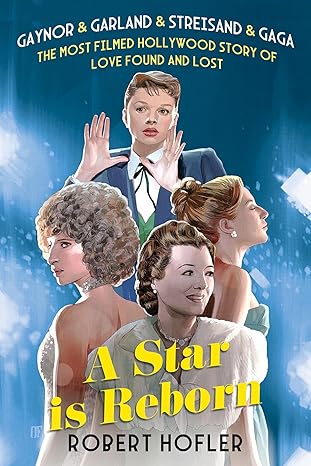 As we experience this age of cinematic sequels, spinoffs, remakes, and reboots, author and historian Robert Hofler reminds us how a good story lends itself to being reimagined for different eras. He does this by taking us through the incredible history of the various film projects for A STAR IS BORN – on the 50th anniversary of the 1976 version. The book is subtitled: “The Most Filmed Hollywood Story of Love Found and Lost”.


 Posted by David Ferguson
  Better late than never, right?? The TOP 10 list is now posted, and as tradition demands, I have also included some bonus films and categories so that you might find something a bit out of the comfort zone to watch periodically. I watched 231 films in 2025 and I promise you … some were as expected, some were less than expected, and some were pleasant surprises. Here is the link to the list:
 For most moviegoers, what makes or breaks a particular film is a combination of the story and the characters. Not much (if any) thought goes into how the film was made, what techniques or technology was utilized, or how many folks were involved in the process. That’s OK, and in fact, it’s the goal of most filmmakers – produce a film that entertains or enlightens, while keeping the magic behind the curtain. Of course, that ‘magic’ is actually hard work by a large crew after a significant amount of planning and preparation. For those who do care about such things (cinephiles, aspiring filmmakers), this latest book from Sir Roger Deakins is one to read and one to absorb.
 For many, SATURDAY NIGHT FEVER is remembered as that disco movie from the 1970’s where John Travolta danced to music by The Bee Gees. And they are correct. However, this common description is missing what made the film resonate with me and so many others. Author Margo Donohue understood the gap and her new book excels at connecting the dots for these two sides. In the process, she expertly serves up some inside scoop on the filmmaking process, the actors, and the era.
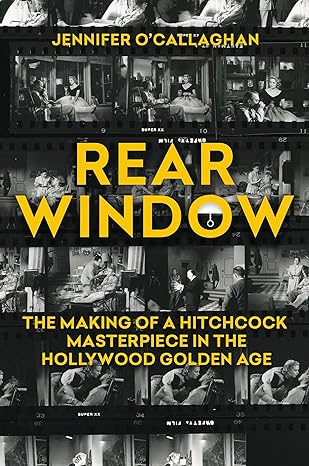 Writing a book about a beloved movie is a tricky undertaking. Viewers who love the movie typically have their own memories and perspectives regarding what they saw on the big screen … why the film had such an emotional impact. On the other hand, anyone who hasn’t bothered to watch a movie that was released more than seventy years ago either has no interest in it, or isn’t likely to take the time to read a book to determine if they should watch it now. So, while the market for potential readers may not be massive, author Jennifer O’Callaghan is surely very aware that anyone reading her new “Rear Window” book is likely a raving fan of the movie and excited to learn as many ‘behind-the-scenes’ details as possible.
 “READY FOR MY CLOSE-UP”, author David M Lubin
 These days the name Andy Warhol invokes images of the zany 1960’s and a cultural icon of the 1970’s. To hear the name Warhol more often evokes a snapshot of an era, rather than the legacy of the person. Images flash through our mind of Marilyn Monroe, Campbell’s Soup, Brillo Pads, and even celebrity photos from Studio 54. Author and biographer Laurence Leamer has an impressive track record of documenting the entourages and close ties of the women associated with celebrity men in some of his previous books: “Capote’s Women”, “Hitchcock’s Blondes”, “The Kennedy Women”, and this latest follows the travails of the women who took a swim through Warhol’s Factory.
 The blogathons administered by
  It’s been almost ten years since this film from director James Gray was released, and I’ve recommended it many times to folks who were unfamiliar or unaware. The film is expertly photographed by cinematographer Darius Khandji (a two-time Oscar nominee) and is based on the book by the absurdly talented David Grann, whose books also include one of my personal favorites, “Killers of the Flower Moon”. The screen is filled with green and golden hues (similar to OUT OF AFRICA), providing a sense of realism and a touch of romanticism to the true adventures of the bold explorer, Percy Fawcett.
 There may be no such thing as a Free Lunch, but thanks to the USA Film Festival, there is something even better … FREE MOVIES! Of course, not all screenings are held at no charge, yet this remains an affordable and entertaining festival experience for all film lovers.
 This year’s opening night event on April 23 is “The World of Nancy Kwan – A Salute to Nancy Kwan”. The breakout star of THE WORLD OF SUZIE WONG (1960) will participate in a book signing and an on-stage conversation, following a career retrospective including clips of her performances in film and television. Also on opening day, there is a Salute to renowned director Jon Avnet with a screening of his new film, THE LAST RODEO. Mr. Avnet will attend along with the film’s co-stars, Neal McDonough and Mykelti Williamson. All three were involved with the fantastic TV series, “Justified” and “Boomtown”, and Mr. Avnet is known for having directed FRIED GREEN TOMATOES (1991), as well as Broadway plays.
