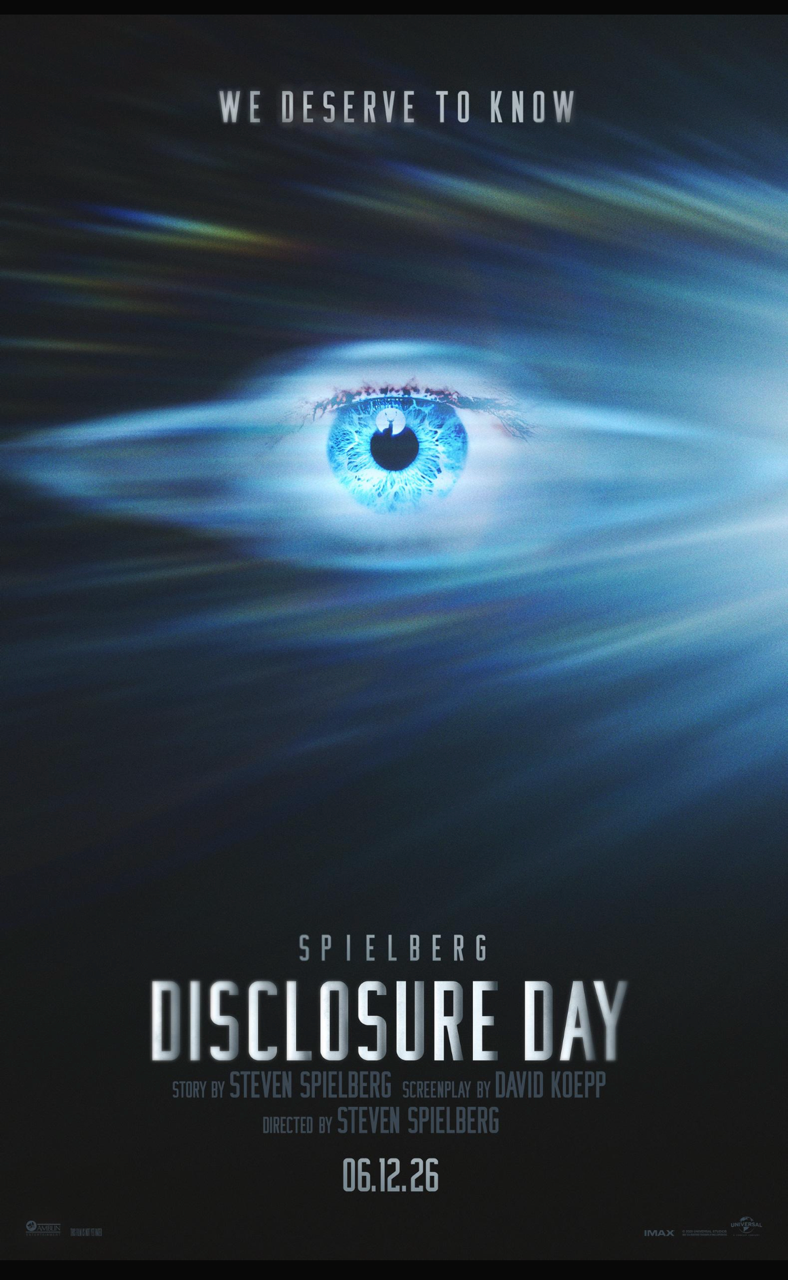
 Greetings again from the darkness. Three-time Oscar winner Steven Spielberg readily admits to a lifelong fascination with life beyond Earth. Two of his most iconic films (plus a couple of others) dealt with just that topic: CLOSE ENCOUNTERS OF THE THIRD KIND (1977) and ET: THE EXTRATERRESTRIAL (1982). Now, more than forty years later, he uses 79 years of collective data to question how humanity would react to full ‘disclosure’ of alien activity. What’s interesting is that Spielberg and co-writer David Koepp present the story as a high-octane action-thriller of conspiracy rather than in a traditional science fiction format.
The film’s opening catches us off-guard. Why are we watching close-ups of sweaty body slams during a WWE match? It turns out Dr. Daniel Kellner (Josh O’Connor) is in the crowd as a rendezvous point to exchange his backpack for his captured girlfriend, Jane (Eve Hewson). Oscar winner Colin Firth plays Noah Scanlon, the leader of WARDEX, a private company that has worked closely with the government and military to safeguard the most confidential information on interactions with interplanetary life. Kellner, an IT and math whiz, stole the data and then bolted from his desk at WARDEX. He now finds himself in a predicament that would have likely gone much worse if not for the powerful tool/weapon/device of interstellar origin he uses to safely escape Scanlon’s henchman – taking Jane and the data along with him.
The Kellner – Jane side of the story turns into a chase movie, and in the meantime, we learn surprising and quite disparate details of each of their backgrounds. The ‘other side’ of the story involves Kansas City TV meteorologist Margaret Fairchild (Emily Blunt) and her musician boyfriend Jackson (Wyatt Russell). One morning a cardinal (bird, not ballplayer) lands on their kitchen table and proceeds to have a staring contest with Margaret prior to again taking flight. Not only does this encounter leave Margaret with a very particular set of skills, but it also sends her on the road to track down Kellner. It’s a connection and reason she can’t explain to average guy Jackson, who does his best to support a girlfriend he’s convinced is going bonkers (hey, we’ve all been there).
Once Kellner and Margaret meet up, yet another chase sequence occurs and this one is even bigger, noisier, and more high-powered than the others (not one, but two speeding trains!). Their movements are directed by the calm, smooth-talking leadership of Hugo Wakefield (Colman Domingo), who is masterminding the whole mission of public disclosure. There is a lot going with the various stories, and Spielberg and Koepp are asking the audience to keep up … even while a potential World War III brews in the background. The film is set up to elicit discussion around numerous topics such as religion, politics, technology, corporate greed, and especially empathy (a topic that too often seems lacking these days).
Despite keeping us (and the characters) on the run for most of the film, Spielberg and Koepp wrap things up at the end, allowing viewers to determine if they believe the right steps were taken. Two frequent collaborators stand out here: cinematographer Janusz Kaminski (with a constantly-moving camera) and composer John Williams. Ninety-four-year-old Mr. Williams, a five-time Oscar winner, came out of retirement for the job on his 30th Spielberg film and proves yet again why he’s an all-time great. As with most of Spielberg’s films, the ensemble cast is strong. O’Connor’s Kellner is easy for us to relate to. Firth’s villainous corporate head is especially effective when he’s doing the mind-control thing, while Domingo contrasts perfectly. Ms. Hewson shows again why she’s one of the more underrated actors working today, and though Wyatt Russell might be a bit miscast as Blunt’s beau, he always makes it fun. The true star here is Emily Blunt. She’s had many standout scenes in her career, yet it’s this role that comes across as an actor who was all in. She is outstanding.
Of course, a Spielberg film wouldn’t be complete without discussing the legend himself. His love of cinema is so obvious here, and his complete understanding of how to grab an audience and leave them fully entertained has never been better. There may be segments that don’t hit as hard as others, and at times the story line seems a bit forced, but the ride is wild and enjoyable and sure to please many movie goers. As for alien life, Mulder told us, ‘The truth is out there’. But then a certain colonel once said, “You can’t handle the truth!” Perhaps it’s best if we just … “listen.”
Opens in theaters on June 12, 2026


 Posted by David Ferguson
  Greetings again from the darkness. Today’s CGI and special effects can be stunning and awe-inspiring, and clearly movie audiences have come to embrace this approach as evidenced by the success of Star Wars and superhero franchises, as well as plenty of other blockbusters over the past couple of decades. In contrast, stuntman-turned-director David Leitch (BULLET TRAIN, 2022, ATOMIC BLONDE, 2017, JOHN WICK, 2015) and screenwriter Drew Pearce (MISSION: IMPOSSIBLE – ROGUE NATION, 2015) have delivered a throwback by adapting the TV series from creator Glen A Larson, which ran for 112 episodes in the 1980’s.
 The year of “Barbenheimer” concluded with one of the best and best-paced Oscars ceremonies in recent history. Of course, there were ups and downs … even an awkward Best Picture finale (which isn’t far off from becoming a tradition). Despite the bumps, the show served up plenty of entertainment for movie lovers and very few surprises for followers of the awards circuit.
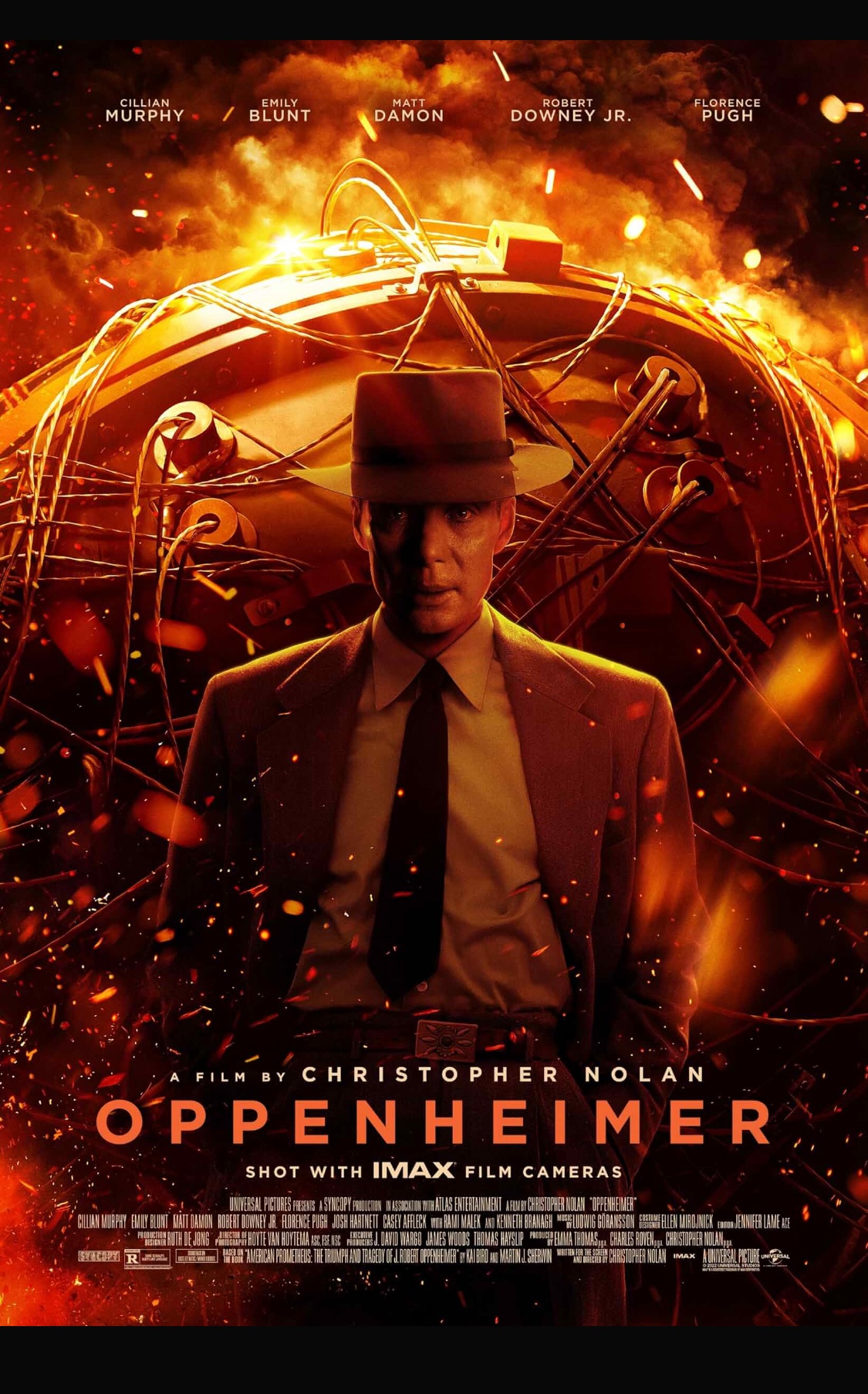 My favorite movie of the year, OPPENHEIMER, was the night’s big winner with 7 Oscars, including Best Picture. Christopher Nolan’s film is quite an achievement, juggling history, a deep roster of actors, and an era that now seems foreign to most people under 40. However, this film is only half of the “Barbenheimer” label, and the BARBIE faction delivered the showstopper thanks to sparkly pink suit attired Ryan Gosling and his rousing “I’m Just Ken”. It was the kind of spectacle and audience participation moment that will go down in Oscars lore.
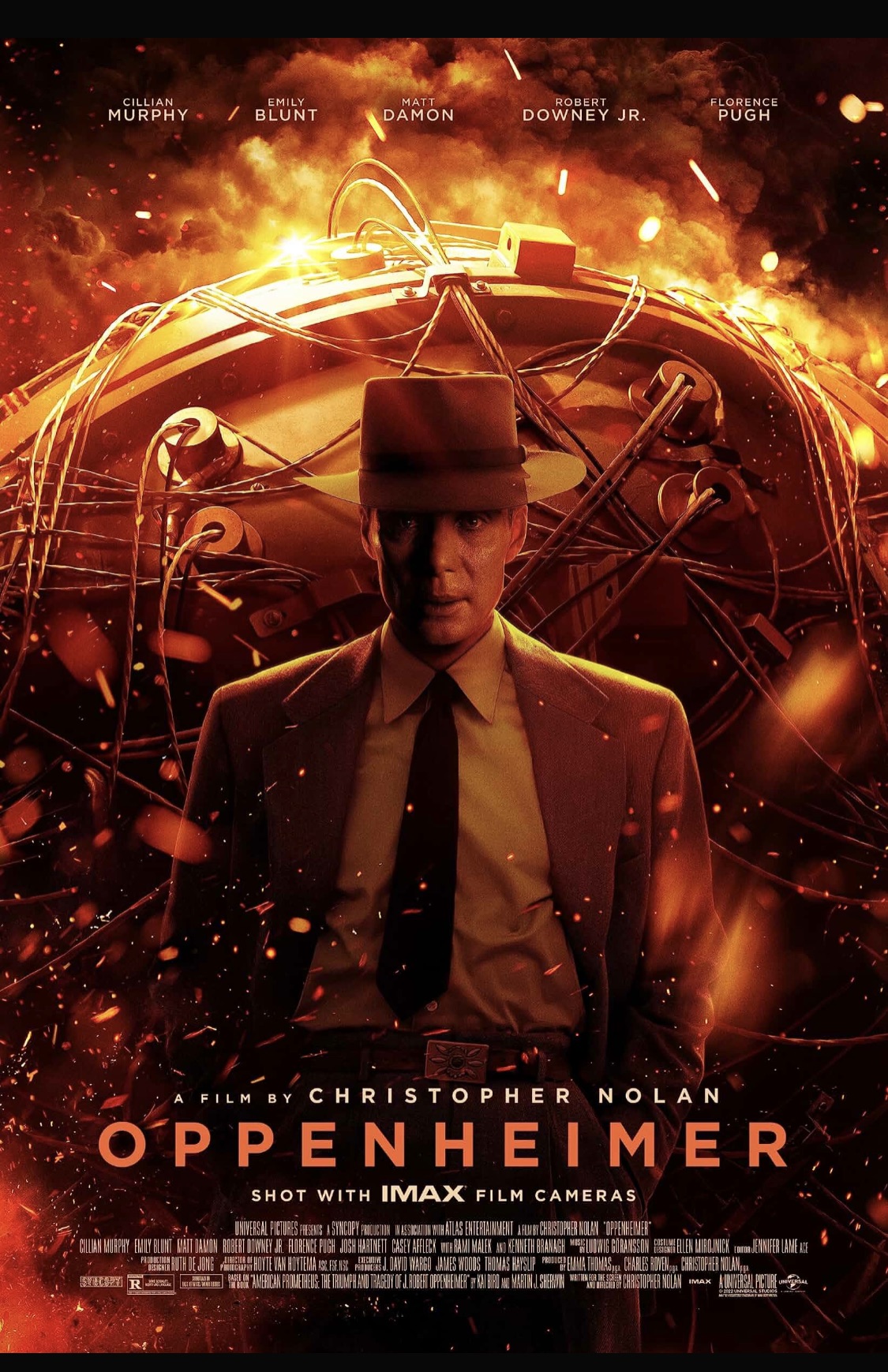 Greetings again from the darkness. As pupils slouched in our school desks during history class, we easily and naturally disassociated with the many stories of war. World War II was lumped in with WWI, the Civil War, and The Revolutionary War. There were names and dates to memorize for quizzes and final exams, yet even with relatives recounting stories of kin, a personal connection was rare. As we aged and experienced modern-day warfare, the personal connection became all too real. Reality struck that soldiers are human beings with families, and despite their missions and marching orders, most are as innocent as the ‘tragic civilian casualties’ reported on the newswires. Along these lines, an aspect of war that has often remained overlooked is the behind-closed-doors decision-making of politicians and military leaders. Filmmaker-extraordinaire Christopher Nolan takes us behind those doors through the eyes of J Robert Oppenheimer, the Father of the Atomic Bomb. What we see is quite frightening.