author: Joe Pappalardo
release date: April 21, 2026
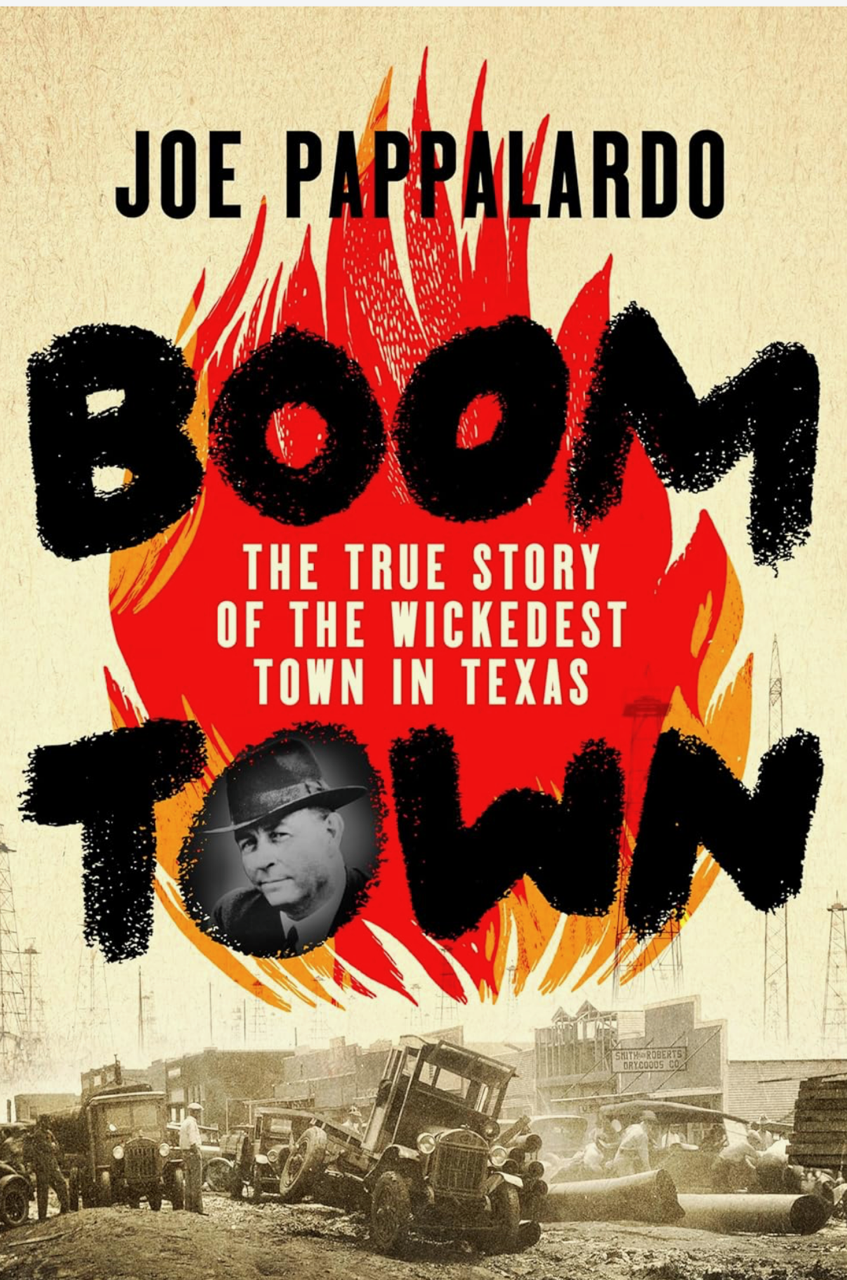 It’s possible, even likely, that I’ve been more surprised by a book than I was by this latest from Joe Pappalardo (a freelance journalist and critically acclaimed author), but I don’t recall when or by what book. While it’s understandable that many readers would initially muster little interest in a true story that took place 99 years ago in a small town located in the Texas panhandle, that’s where the surprise comes in. The Borger, Texas population may be significantly smaller now than it was then, yet the story includes politics, violence, corruption, brothels, moonshine, sports gambling, greed, and the evolution of America … many of the elements that keep us glued to the book’s pages and sometimes stunned by what we are reading.
Author Pappalardo structures the book much like a journal, detailing occurrences on specific days between February 1927 and August of the same year. Some days even warrant multiple entries (morning, evening, etc). He also goes to great lengths to explain that much of the dialogue and conversation presented between these real-life folks has been ‘imagined’ to fill the gaps. If that technique bothers you, please understand that the book and the story and people involved have been meticulously and extensively researched by the author. It’s fair to say that no living person knows more about 1927 Borger, Texas than Joe Pappalardo … the 366 footnotes prove it.
Bootleggers, gamblers, and corrupt politicians all served the up-and-coming oil workers congregating in the up-and-coming boomtown of Borger, dubbed ‘the wickedest town” in Texas. Rarely has a town sprung up so quickly (it was founded only a year earlier), and the daily recounting of events is sometimes startling. If you are thinking this story needs a hero, well how about Frank Hamer, the Texas Ranger Captain best known for leading the search that led to the end of the Bonnie and Clyde crime spree in 1934. Hamer’s story itself is enough to fill a book … actually two: one in 1968 by H. Gordon Frost and John H. Jenkins, and another in 2016 by John Boessenecker.
This is a rare glimpse into what America looked like a century ago. Of course, this is not the big cities of New York or Chicago, but rather the dusty plains that would ultimately create incalculable wealth and a booming industry. By recounting specific days, the author avoids generalities to focus on details and specifics … and yes, there’s a murder mystery as well. Individual personalities become familiar, and things play out like the developing story it was. Were the numerous incredulous events and colorful characters not part of actual history, Pappalardo’s book would excel as a page-turning novel of fiction. Instead, we are privy to the historical record.
St. Martin’s Press is releasing the book on April 21, 2026. Here is the Amazon link:


 Posted by David Ferguson
  Analyzed too closely, our fascination with serial killers could (and should) be considered disturbing. Novels, stage plays, movies, and TV series have long focused on the criminals who both frighten society and manage to long elude law enforcement. This is not referring to the demented appeal of scumbag shoot-the-CEO-in-the-back murderers with bushy eyebrows, but rather those whose intellect and psychological profiles allow them to stay one step ahead of those seeking justice – at least for a while. Included on the list would be such recognizable names as Jack the Ripper, Ed Gein, Ted Bundy, Jeffrey Dahmer, Aileen Wuornos, and the Zodiac Killer. Capitalizing on the public’s fascination led Thomas Harris to write “Red Dragon” in 1981, his first novel featuring Hannibal Lecter. Three more Lecter novels followed, and it’s Mr. Harris’ many Lecter works, and the projects influenced by them, that drove this detailed and expertly researched book from author Brian Raftery.
