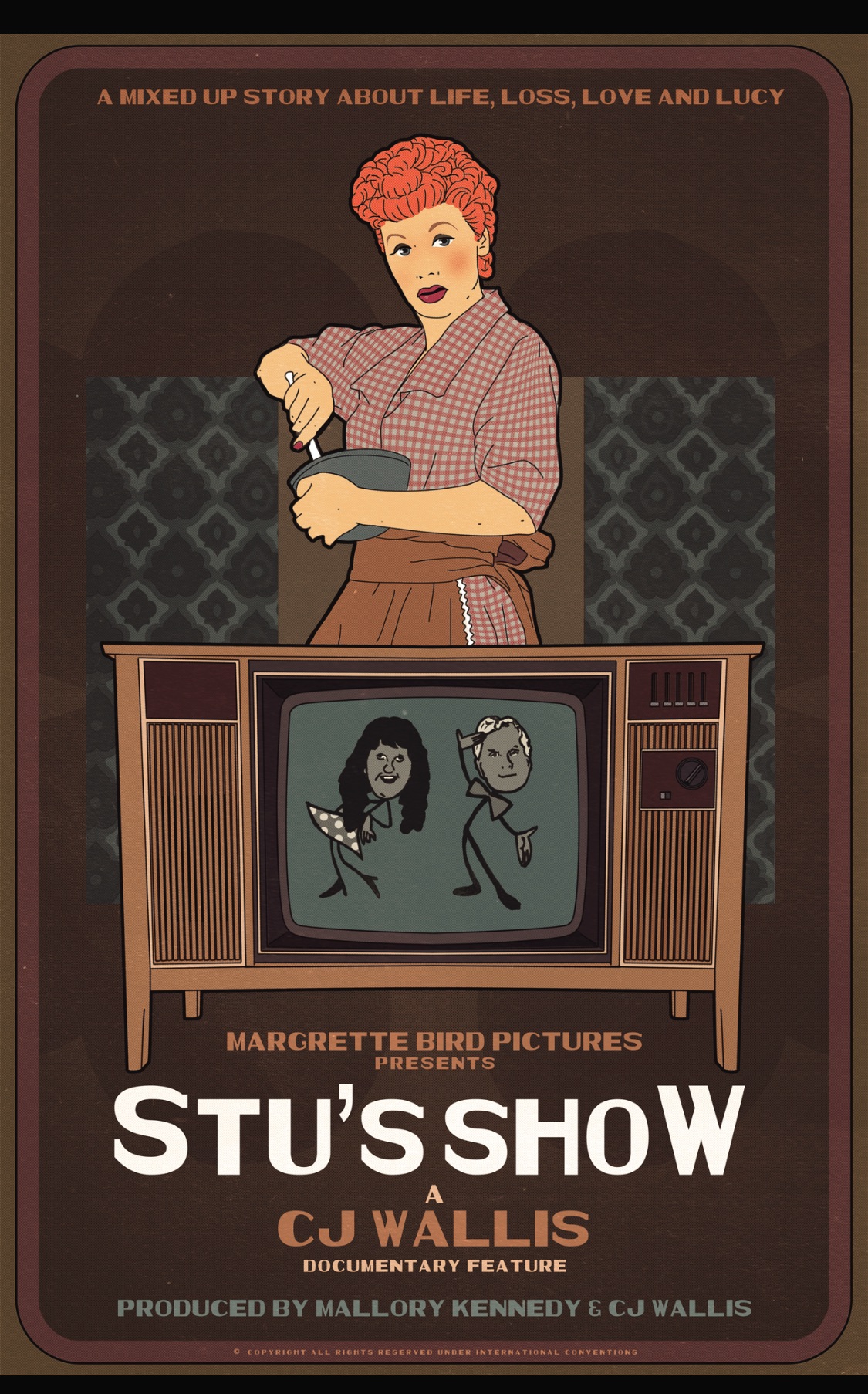
 Greetings again from the darkness. We tend to pay little attention to historians and archivists until we need them. By then, their importance cannot be overstated. If you know the name Stuart Shostak, it’s likely you assume this documentary from CJ Wallis will be about Stu’s internet talk show and his commitment to preserving ‘classic’ TV shows. If that’s your assumption, you will be partially correct, but also in for quite a surprise. Much of the film is dedicated to Stu’s personal life … a life that sets a strong example on how to hustle and how to care for loved ones in need.
“Stu’s Show” serves as both the title of this documentary and the title of Mr. Shostak’s internet talk show where the format involves interviewing those who were involved in television during the 1950s through the 1980s. Stu is a staunch believer that these folks (many of whom the industry has long ago forgotten) deserve to tell their stories, and we benefit from hearing them. Stu himself takes us on the tour of his studio and warehouse, both of which are located in his home. He points out shelf after shelf of archival footage in a variety of formats – from film to digital. This is no casual collection. Rather it’s 50-plus years of work from the man who served as the personal archivist for none other than Lucille Ball over the last 10 years of her life.
Stu walks us through the early days of how he started working as a ticket hawker/procurer for TV shows – the guy responsible for making sure the audience seats were filled (this was in the days when many shows were filmed in front of a live studio audience). He then worked as the warm-up act ahead of filming episodes for shows like “Diff’rent Strokes” and “Silver Spoons”, prior to his affiliation with the legendary Lucy on her final TV series. All of this is documented through clips and interviews from those that were there. Many of the recollections focus on Stu’s personality. “Exuberant” and “enthusiastic” are often used to describe him, and it seems what appealed to Lucy was his willingness to hustle after what he wanted (a trait they shared).
Classic TV lovers will appreciate Stu’s dedication to keeping the past alive; however, it’s the second half of the film that gives us the real reason to respect him as a person. After Lucy died in 1989, Stu co-founded a “Loving Lucy” convention, and one of the most loyal attendees was Jeanine Kasun. Stu and Jeanine shared a love of classic TV and would quote dialogue back and forth, thus establishing a bond that was quite special. For many years, the two were very close, though choosing to live apart in recognition of their individual quirks. But things changed quickly when Jeanine suffered a brain aneurism and was rushed to the hospital with her life in danger. Despite an extended coma and being written off as soon-to-die, Jeanine hung in. Equally impressive is how Stu became her advocate. He turned his penchant for excitable talking into ensuring that his beloved Jeanine received the treatment she needed, in spite of the challenges faced by her situation and the state of the healthcare system.
Most of us have experienced some frustration and a swell of emotion when visiting a loved one in the hospital. But Stu rallied friends and the stream of visiting celebrities surely did not go unnoticed by hospital personnel. Jeanine’s recovery was a slow process involving multiple hospitals and caregivers, and Stu spent as much time with her as possible. Bookending the film is video from their wedding … a ceremony with the look of a classic TV reunion attended by many of the celebrities Stu had interviewed over the years, including Tony Dow (Wally in “Leave it to Beaver”) as the Best Man. You may recognize many of the faces interviewed here, but you’ll surely recognize the love Stu showed for Jeanine.
Available On Demand beginning May 2, 2022


 Posted by David Ferguson
  Greetings again from the darkness. Barely five minutes in, we have concluded that Anais is a whirlwind of activity. She’s behind on her rent and yet turns the conversation with her landlord to fruit juice and a smoke alarm. This is the first feature film from writer-director Charline Bougeois-Tacquet who benefits greatly with the presence of lead actor Anais Demoustier. I have no idea if the name is a coincidence or whether this was written with her in mind, but we quickly realize that Anais is a mess … a charming mess and one for which hope remains.
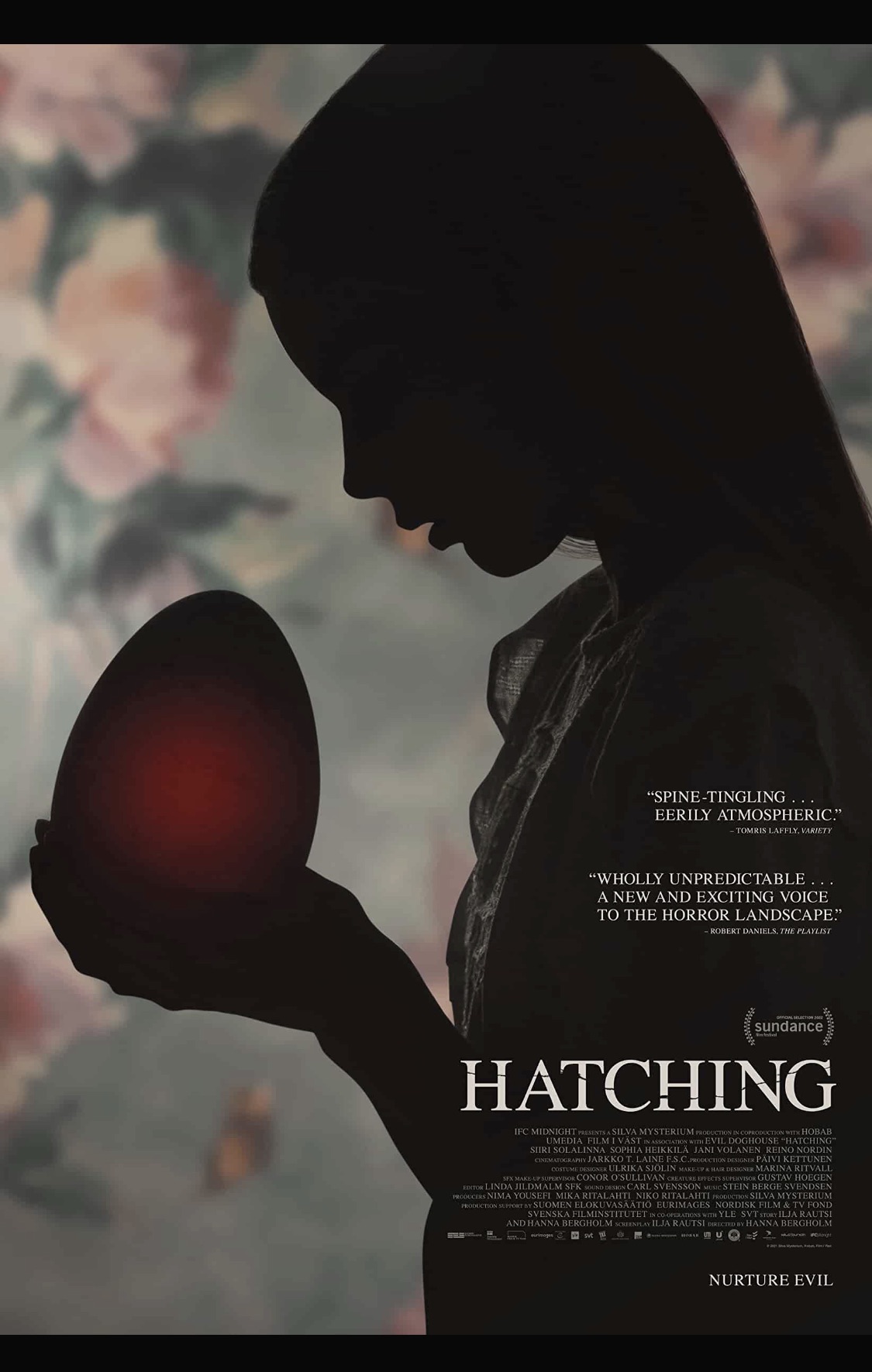 Greetings again from the darkness. The exceptionally creepy creature leads us to believe this could be a terrific new addition to the creature feature genre. However, director Hanna Bergholm and screenwriter Ilja Rautsi expend so much time and energy on the metaphor aspect that we feel a bit bludgeoned by the end. Despite some wonderful horror elements, we find ourselves thinking, ‘alright, already … just stick with the creepy stuff!’
 Greetings again from the darkness. It made headlines in 1961. Francisco Goya’s ‘Portrait of the Duke of Ellington’ was stolen from London’s National Gallery. Director Roger Michell, with a screenplay from Richard Bean and Clive Coleman, dramatize the story so that it’s part comedy and part love story, and thanks to screen veteran James Broadbent, full of charm.
 Greetings again from the darkness. After filming their award-winning documentary PENGUINS (2019) in Antarctica, co-directors Alastair Fothergill and Jeff Wilson re-teamed and headed to Norway, not far from the North Pole, to capture life and the fight for survival by polar bears in this feature for Disneynature.
 Greetings again from the darkness. After two incredible arthouse films that earned the label “visionary filmmaker” for Robert Eggers, some would not have been surprised to find him cashing in on a huge payday for the next colossal superhero movie. But for those of us who adore and respect him for THE WITCH (2015) and THE LIGHTHOUSE (2019), we knew Mr. Eggers was not the comic book type. Instead, he secured a hefty budget (still less than $100 million) and with his co-writer, Icelandic author Sjon (writer of last year’s mesmerizing LAMB), created the most epic Viking movie to date … while firmly maintaining his artsy stylings.
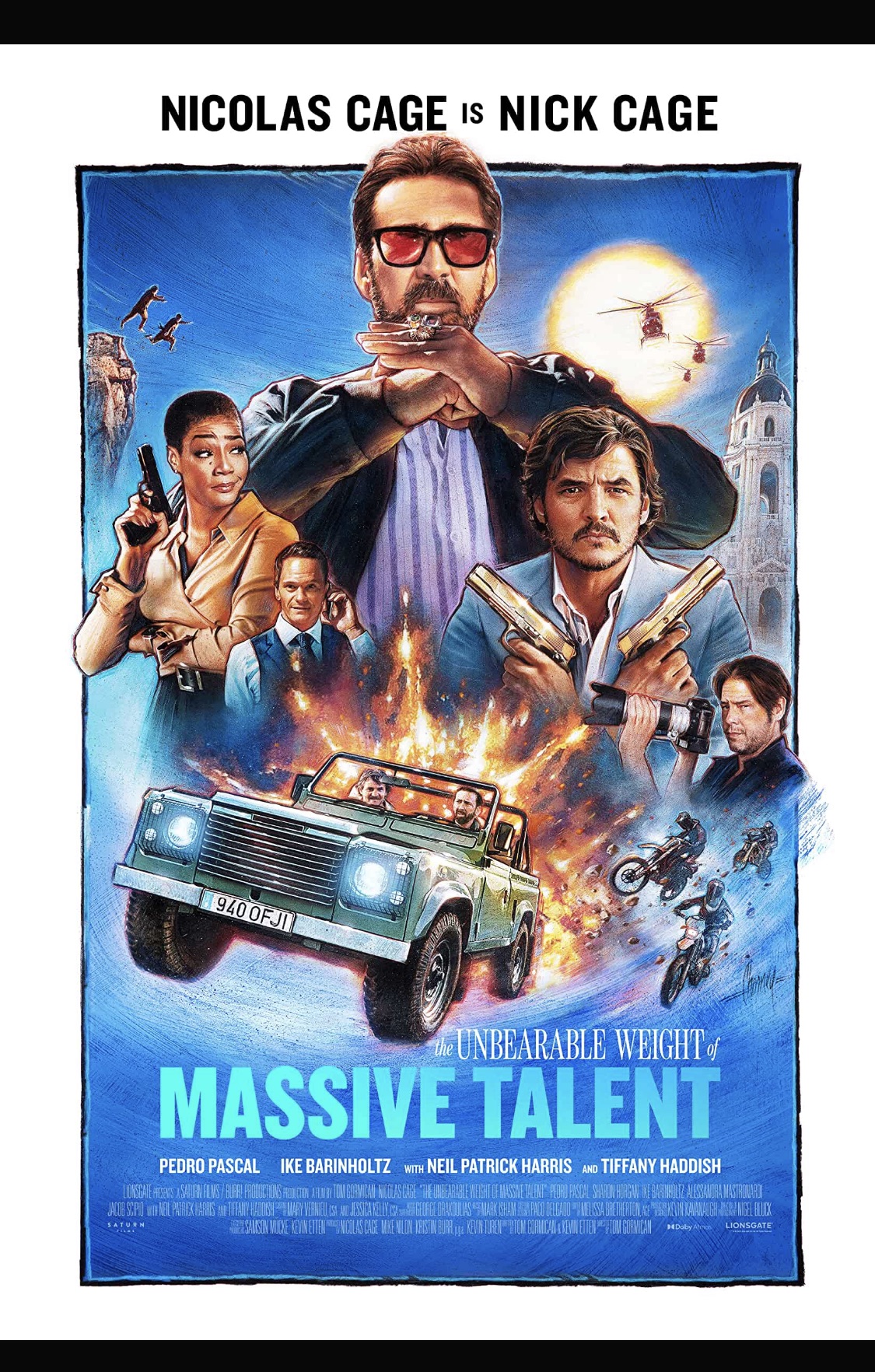 Greetings again from the darkness. Calling all Nicolas Cage fans! Put the bunny back in the box and get ready for the most fun you’ll ever have with Nicolas or Nic or Nick or Nicky. And if one Cage isn’t enough for you, you’re in luck. This film has Nicolas Cage playing the (somewhat) fictional Nick Cage, and Nicolas Kim Coppola (Nicolas Cage’s birth name) playing imaginary alter-ego Nicky, a younger version of Nicolas Cage from the WILD AT HEART era who spends the movie constantly reminding Nick that he’s a movie star.
 Greetings again from the darkness. Who among us doesn’t enjoy a nice, leisurely bike road around the neighborhood? Taking in the fresh air while getting a little exercise is good for the mind, body, and soul. While golf has been described as “a good walk spoiled”, after watching this documentary, I believe it’s safe to say that the Race Across America (RAAM) is “a good ride spoiled.” RAAM is an ultra-endurance bicycle race that begins in Oceanside, California and winds across the continent to the finish line in Annapolis, Maryland.
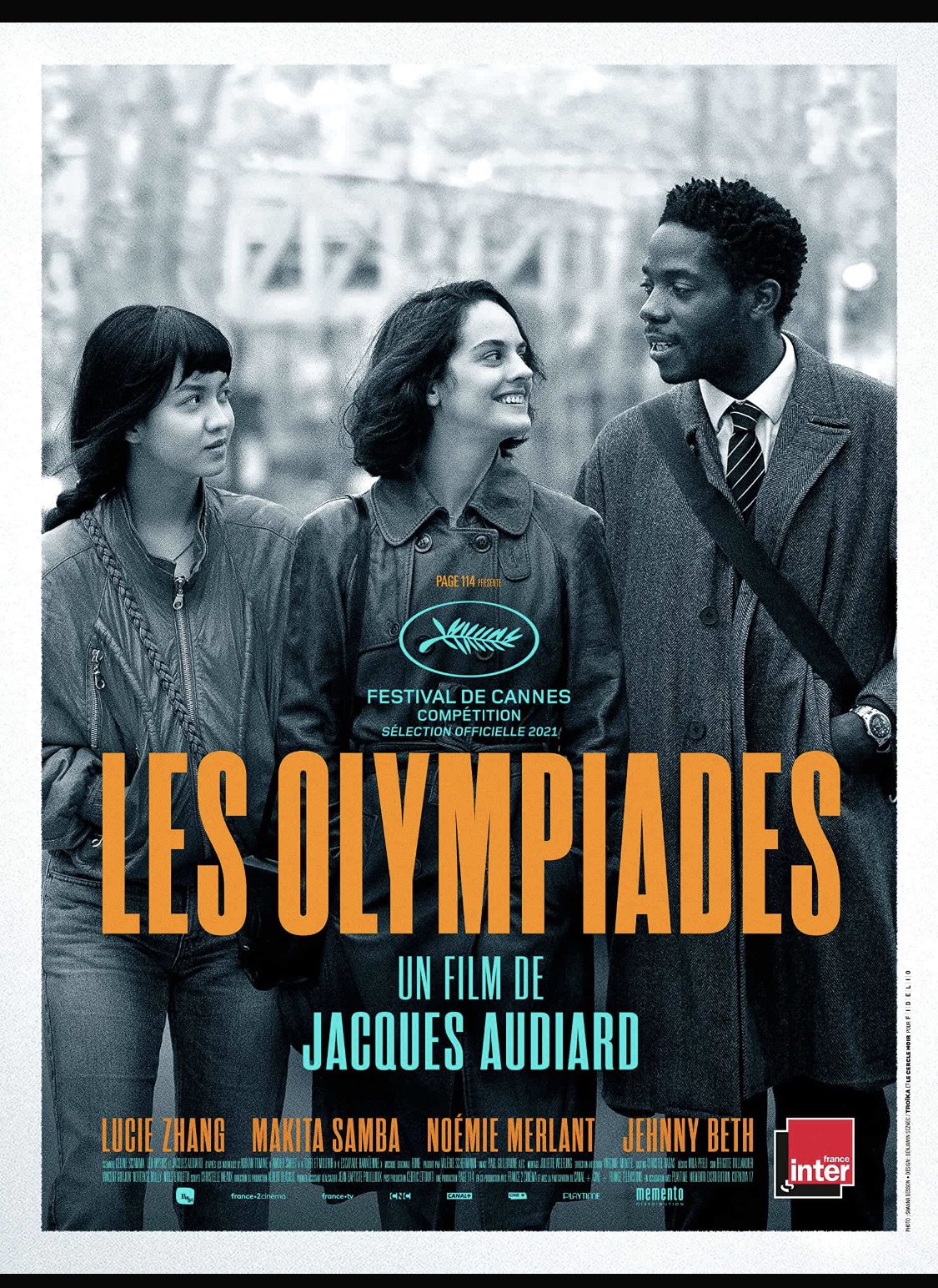 Greetings again from the darkness. Jacques Audiard is one of the filmmakers who has won my cinematic loyalty through his consistently thought-provoking and entertaining films. His five features since 2005 have all been excellent: THE BEAT THAT MY HEART SKIPPED (2005), A PROPHET (2009), RUST AND BONE (2012), DEEPHAN (2015), THE SISTERS BROTHERS (2018). This latest is a different kind of story for Audiard, and it’s based on the stories from animator Adrian Tomine. Audiard adapted the screenplay with Nicholas Livecchi, Lea Mysius, and Celine Sciamma (writer and director of PORTRAIT OF A LADY ON FIRE, 2019). The result is a unique vision of modern-day love set in an area of Paris that is rarely featured in films.
 Greetings again from the darkness. Well, if you are going to make a movie about redemption and bettering one’s self, who better to cast than Mark Wahlberg and Mel Gibson? Both men are stars who on multiple occasions have needed redeeming. Writer-director Rosalind Ross’ first feature film is based on the true story of Stuart Long, and Mr. Wahlberg was so committed to the project that he funded production when others chose not to.
 Movie Reviews from the Dark