 Greetings again from the darkness. “Check out the brain on Brad!” There may or may not have been a ‘Brad’ on the NASA team we follow in Ryan White’s documentary, however Samuel L Jackson’s famous line from PULP FICTION certainly holds true for the rest of the team that helped execute the Mars Exploration Rover (MER) mission. A brief overview outlines the attempts to gain approval, followed by the design and planning and testing to ensure the window for launch was met. See, the launch was scheduled according to a planetary alignment that only occurs every 26 months. A late arrival would have been costly, and possibly ended the program before it really started.
The mission was to send a rover to Mars and have it procure samples from around the red planet in hopes of finding evidence of water, which would likely mean proof of past life. We see some of the design stage as the engineers note the human characteristics, though most movie fans will immediately notice physical similarities to WALL-E. The team created two “twin” robotic rovers named “Spirit” and “Opportunity”. The expectation was that each would have a 90-day lifespan and send scientifically significant data back. The race was on to meet the launch date in 2003, and the two rovers were launched three weeks apart – and to different areas of the planet.
After the 6-and-a-half-month flight time to travel 300 million miles, the two rovers were successfully landed, which only kicked off some of the challenges back on Earth in mission control. It’s here, and with the numerous interviews of team members, that we really get a sense of the emotions running through these folks who had invested so much time and energy into making the mission a reality. Computer engineered reenactments (stunning work from Industrial Light & Magic) help us visualize what happened on Mars, while the archival footage from inside the NASA control room conveys the palpable tension as they helplessly wait for the next signal to arrive.
Although Mr. White’s documentary centers on scientific achievement, much of the focus lands on the human element. We are there to witness first the relief, and then the jubilation as that first signal from Mars is received. Scientists, designers, engineers, and drivers all experience the rollercoaster of emotions driven by the intense camaraderie and teamwork involved. Should you ever doubt whether the smartest people on the planet experience human emotions, you need only look at the faces as daily ‘wake-up songs’ are played, including “Roam” by the B-52s, “SOS” by Abba, “Born to be Wild” by Steppenwolf. Additionally, after the 90-day window has closed, the annual “cocktail napkin” records each team members prediction about rover survival over the coming year.
Emotions and accomplishments go hand in hand for these NASA types, as do the challenges presented by harsh winters and dust storms that put west Texas to shame. It’s remarkable that Spirit lasted more than 7 years, and Oppy (the “lucky rover”) went for 15, before finally being shut down while Billie Holiday sang “I’ll be Seeing You.” Wisely, director White ends on a high not with the 2020 launch of the new rover, Perseverance. What an inspiring trip this is.
Opens in US theaters on November 4, 2022 and on Prime Video November 23.


 Posted by David Ferguson
  Greetings again from the darkness. It’s likely that the vast majority of folks ten years of age and older have heard, and are familiar with, Louis Armstrong’s “What a Wonderful World”, “Hello Dolly”, and “When the Saints Go Marching In”. In director Sacha Jenkins’ homage to this icon of American music, Wynton Marsalis states Armstrong deserves even more credit for his influence in jazz. The film offers an in-depth look at Armstrong’s life through his own personal archives – a library of audio tapes and years of meticulous scrapbooking.
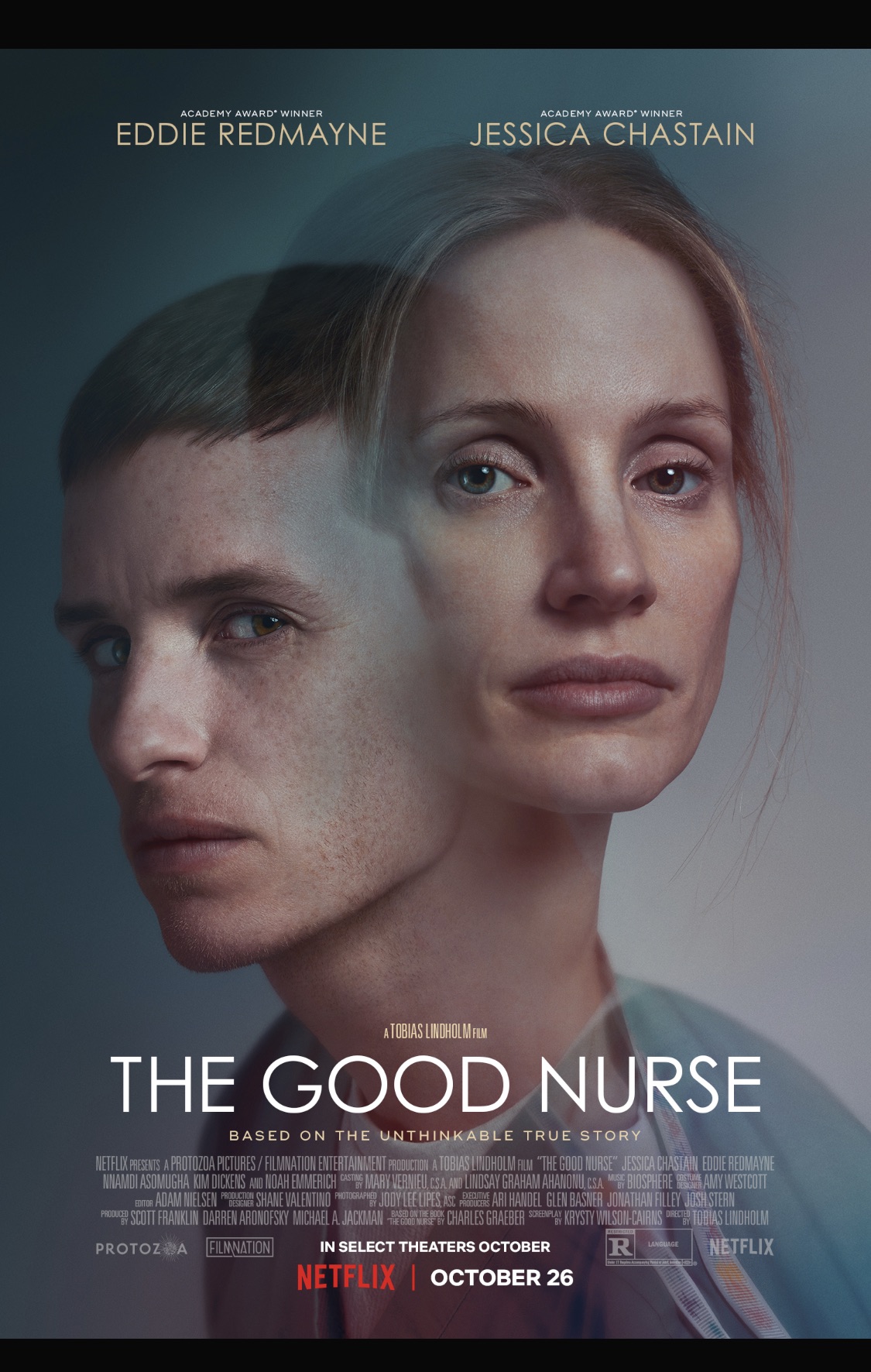 Greetings again from the darkness. A film focusing on a single mom who works as a dedicated and caring and overworked ICU nurse, and who is diagnosed with a heart condition requiring a transplant, and who is trying to hang on to her job long enough to secure medical insurance, and who is a loving mom to her two young kids, would normally have enough drama and stress to carry the story. But that’s not nearly enough for filmmaker Tobias Lindholm, who has written three outstanding screenplays: THE HUNT (2012), A WAR (2017), and ANOTHER ROUND 2020). Here he’s directing a Krysty Wilson-Cairns (LAST NIGHT IN SOHO, 2021) adaptation of Charles Graeber’s book about the man who may very well be the most prolific serial killer in history.
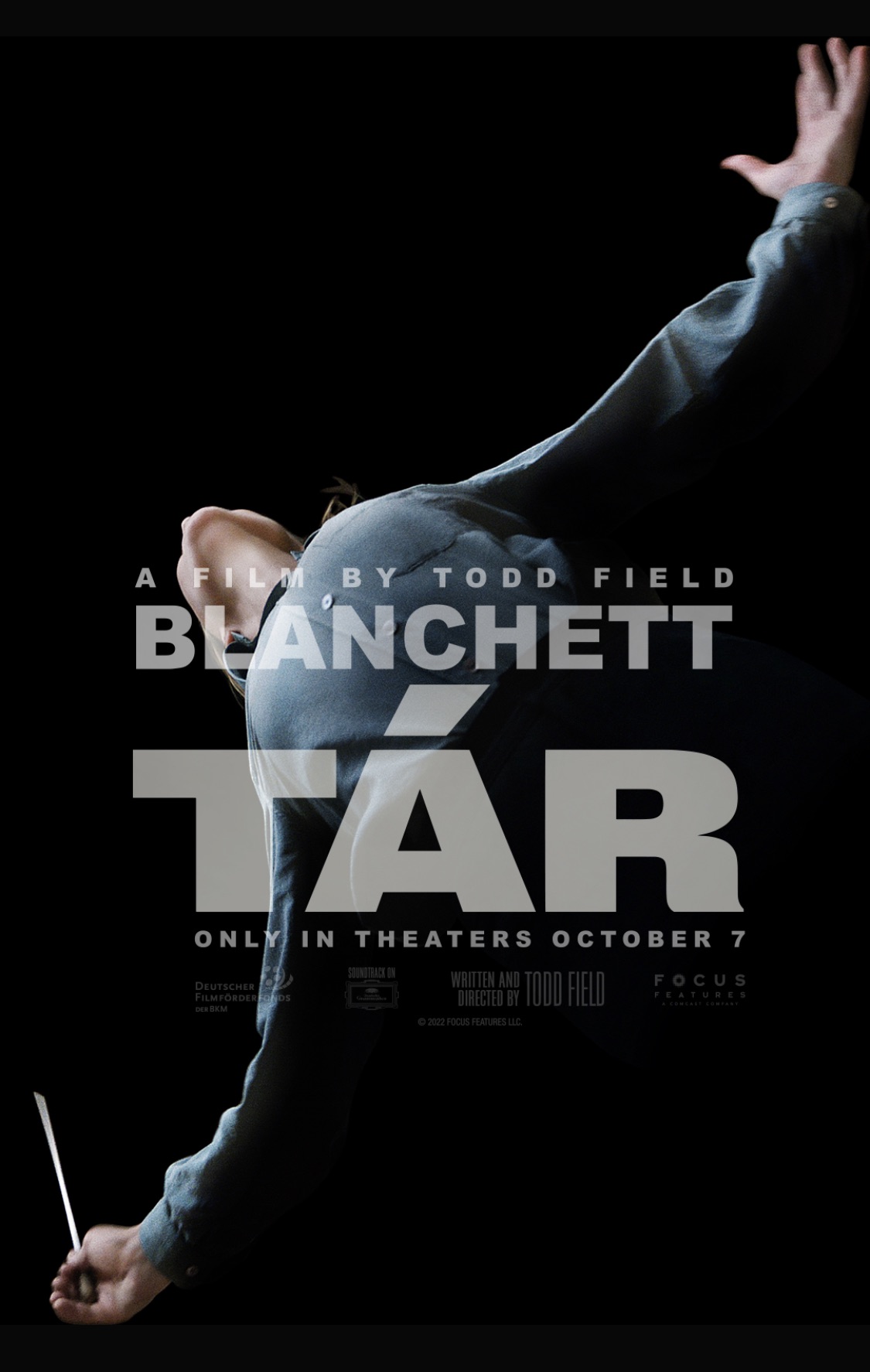 Greetings again from the darkness. I seriously doubt that I’ll ever skip a Cate Blanchett movie. She’s won two Oscars and has been nominated six times. She’s consistently the best part of her movies, and often the best in a full year of movies. Here she stars in the first film in 16 years from the remarkable writer-director Todd Field. His two previous films, LITTLE CHILDREN (2006) and IN THE BEDROOM (2001) combined for eight Oscar nominations, and more importantly, established Mr. Field as a rare and unique filmmaker of great depth. Having Field reappear and cast Blanchett generated a heap of excitement from this film nerd.
 Greetings again from the darkness. I’ll begin things with a personal note, followed by a more objective and professional review. From the personal side: Writer-director Ol Parker (MAMMA MIA! HERE WE GO AGAIN, 2018) has delivered the textbook example of the type of movie that, while I understand why they get made, I find the hollowness and predictability to be anything but entertaining. On a more objective note, George Clooney and Julia Roberts are huge movie stars and will almost certainly lead the way to box office success.
 Greetings again from the darkness. This is one of those prestige movies that simply isn’t as important as it portends to be. That doesn’t mean it’s unwatchable, only that it lacks the emotional weight and depth to which it strives. Director Michael Grandage (GENIUS, 2016) is working from a script that Ron Nyswaner (PHILADELPHIA, 1993) adapted from the 2012 book by Bethan Roberts … itself inspired by the true story of writer EM Forster.
 Greetings again from the darkness. Don’t look away. Whether referring to Mamie Till-Mobley telling family members to look at the disfigured boy in the casket, or to the general counsel to all citizens in this day of division, the sentiment is the same … see with your own eyes so that you understand the injustice. Writer-director Chinonye Chukwu (CLEMENCY, 2019) and her co-writers Michael Reilly and Keith Beauchamp allow us to see the tragic story of Emmett Till through the eyes of his mother, and it’s a powerful approach. It’s Mr. Beauchamp who has diligently researched this story for almost 25 years, and was the driving force behind the 2005 documentary, THE UNTOLD STORY OF EMMETT LOUIS TILL.
 Greetings again from the darkness. Hey, you know that Dad we hated … the one that ruined our lives? Well, he died and I need you to come with me to the funeral. Writer-director Rodrigo Garcia (ALBERT NOBBS, 2011) starts his film in this manner by having Raymond knock on the door of his half-brother Ray’s cabin door in the middle of the night. They haven’t seen each other in five years, but their shared bond is an ill will towards the father who stirred such misery during their childhood that neither have made much of their time since.
 Greetings again from the darkness. There has been no shortage of conspiracy theories, either recently or historically, that have left non-believers bewildered at how ‘the other side’ held firm. Writer-director Arthur Harari and his co-writers Bernard Cendron and Vincent Poymiro bring the remarkable struggle of Hiroo Onoda to the screen. Onoda was a Japanese soldier who refused to believe WWII ended, and instead, continued his mission of resistance by spending thirty years in a Filipino jungle.
 Greetings again from the darkness. When is it too soon to look back? We all experienced the pandemic, and yet, things aren’t quite normal again … at least not the ‘old’ normal. Talented writer-director Peter Hedges (the underrated PIECES OF APRIL, 2003) shows us the various ways in which the pandemic affected folks, and how zoom and other virtual connections became the lifeline to the outside world for many.
