WHITE BOY RICK (2018)

September 13, 2018

 Greetings again from the darkness. When “based on a true story” appears, we can usually bank on either a hero or criminal as the subject. A good person, or a bad one. With this story, we get a teenager who is basically a good kid, but one who does bad things for what he believes are good reasons. It’s likely to test your empathy and judgment. Director Yann Demange (’71) brings us the story of young Richard (Rick) Wershe, Jr through a script from writers Andy Weiss and brothers Noah and Logan Miller.

We begin in 1984, the height of the “Just Say No” era, when Rick (a terrific debut by newcomer Richie Merritt) is a 14 year old living near poverty with his dad and older sister. Mom walked out years ago. Rick helps his dad in the firearm resale business (some legal, some not). Richard Wershe, Sr is played by Matthew McConaughey, who is outstanding as the dreamer who desperately wants a better life for himself and his kids. Unfortunately, the man simply lacks the capacity to do better. Sister Dawn is played by Del Powley (THE DIARY OF A TEENAGE GIRL), and Dawn is an addict who leaves/escapes home with her boyfriend. This is most definitely not “The Brady Bunch”.

Detroit was in the midst of a rapid and tragic decline, and the east side where Rick lived had already hit bottom with crime, violence, drugs and poverty. Rick’s teenage resume would read firearms dealer, known gang associate, FBI informant, gunshot victim, cash-flowing drug dealer, baby daddy, rescuer of sister, and server of life sentence. It was quite a run for someone who hadn’t yet celebrated birthday number 20.

Director Demange shows us how two sides were played against the middle, with Rick being stuck in the middle with no hope for escape. We even see a TV clip of SERPICO for a bit of foreshadowing into life as an informant. What makes the film work, beyond the remarkable true story, is how each of the main characters is humanized to the point that we understand what makes them tick. Dad (McConaughey) is a dreamer who thinks he can sell enough guns to finance a chain of video stores that will be successful enough to keep his family together. Daughter Dawn tries to escape her “loser” dad by numbing herself with drugs and running off with the first guy that will take her. Son Rick takes advantage of his ability to create trust by trying to serve his father, a drug kingpin, the FBI, and himself. These three all seem to have good hearts and best intentions, but nothing every really works out for them – despite dad being a glass-half-full kind of guy

This is also a story of contrasts … especially between black and white in many situations. We learn the difference between ‘black jail time’ and ‘white jail time’, and the FBI obviously chose Rick because he was a white kid who infiltrated a black crime ring – he even gets invited to the local skating rink to hangout, and to Las Vegas for a Tommy Hearns fight. There is also the way Richard Sr sees himself as “above” the criminals as he protests the proliferation and danger of drugs, while then turning around and selling guns to those who peddle drugs. Selective morality.

The FBI recruits Rick to feed them information by threatening to arrest his dad. He is coerced into the world of selling drugs and then later railroaded by the Feds so that they could wash their hands and walk away “clean”. Because of their influence, Rick is later sentenced to life in prison for non-violent offenses. Of course, he was surrounded by violence, and even the victim of it, but it begs the question of whether the punishment fit the crime. We are never sure if we should feel empathy for Rick, disgust at the system, or frustrated and fed up with a society that set this into motion.

The supporting cast runs deep. Bruce Dern and the rarely seen Piper Laurie are Rick’s grandparents, while Jennifer Jason Leigh and Rory Cochrane play the influential FBI agents. This marks a 25 year reunion for McConaughey and Cochrane from their appearance in DAZED AND CONFUSED (1993). Also appearing are RJ Cyler (“I’m Dying Up Here”) as Rick’s friend Boo, Brian Tyree Henry as a detective, and Eddie Marsan and Jonathan Majors as drug dealers.

A surprising amount of humor is mixed in with the gritty crime stuff and family struggles. There is even a comical FOOTLOOSE moment at the drive-in – providing yet another contrast between blacks and whites. Cinematographer Tat Radcliffe (“71) works wonders in some of the least appealing settings you’ll likely find in a movie, and his approach perfectly complements our personal conflicts on who to pull for throughout this quagmire.

watch the trailer:


THE CHILDREN ACT (2018)

September 13, 2018

 Greetings again from the darkness. There are some actors who are so talented that they elevate most any material to a watchable status. Emma Thompson is one of the few. She is an Oscar winner for Best Adapted Screenplay (SENSE AND SENSIBILITY) and for Best Actress (HOWARD’S END), and her career is comprised of interesting characters … many made so because of her performance. The film is directed by Richard Eyre, who has two terrific films in NOTES ON A SCANDAL (2006) and IRIS (2001), and adapted from his own novel by Ian McEwan (ATONEMENT, ON CHESIL BEACH).

We are introduced to British High Court Judge Fiona Maye (Thompson) as she announces her opinion on a case involving conjoined twins. As an expert in family law cases, Judge Maye is respected for fairness and decisiveness. Just as the reality of her crumbling marriage to Jack (Stanley Tucci) hits, she is drawn into yet another case where emotions (and media) are running high. Adam (Fionn Whitehead, DUNKIRK) is in dire need of a blood transfusion, which his Jehovah’s Witness religion and parents will not allow.

It’s at this point that we believe we are in for a stressful courtroom drama facing religious intricacies. However, there is very little to the court case – only the highly unusual step of the judge visiting the sick minor in the hospital. The highly anticipated moral dilemma never unfolds, and instead we get an oddball friendship, ever-creepier stalking sequence, and emotional unmasking. It’s a bit of a letdown. Are we to believe that Judge Fiona Maye is conflicted about anything?  She doesn’t appear to be. She made up her mind to focus on work, and only seemed to have forgotten to mention this to her husband, whose wants push him towards infidelity.

Jason Watkins has a terrific turn as Nigel, the judge’s meticulous assistant who is there in good times and bad. The story could be viewed from a woman’s perspective on how the dedication to career comes with a cost, but that same cost would likely be paid by a man in this situation as well. The title of the film is specific to a British law in dealing with aspects of minors, making the court case even less suspenseful than we might think. It’s not a courtroom drama per se, and it doesn’t dive deep enough to be a look at a dysfunctional marriage, and it’s simply too bland to be the study of a workaholic carrying guilt over never having kids – shouldn’t this issue have been resolved by now, given the age of this couple? It’s a crazy “R” rating over one line of dialogue, and it’s really Ms. Thompson’s performance that provides the only reason to see the film.

watch the trailer:


A SIMPLE FAVOR (2018)

September 13, 2018

 Greetings again from the darkness. In the vein of Gillian Flynn/David Fincher’s GONE GIRL and Paula Hawkins/Tate Taylor’s THE GIRL ON THE TRAIN comes yet another vanishing woman mystery. This latest is based on Darcey Bell’s novel (screenplay by Jessica Sharzer), only this time the biggest twist comes with the selection of Paul Feig as director. That’s right, the director best known for BRIDESMAIDS and other comedies, tackles a ‘whodunit and what did they do’.

Neurotic Mommy Vlogger Stephanie (Anna Kendrick) is a widowed mother to a young son, and she’s the overly perky and perfect mom that causes other parents to sneer and snark behind her back. She’s also so desperate for human connection that she’s willing to befriend Emily (Blake Lively), the martini-guzzling fashion industry executive who is a hands-off mother to Stephanie’s son’s friend. We soon learn that martinis and playdates shouldn’t be mixed.

Stephanie and Emily share dark, personal secrets. Emily discusses the financial woes she and her husband Sean (Henry Golding, CRAZY RICH ASIANS) are experiencing, even though they live in an ultra-modern mansion. He had success with his first novel, but has been hit with writer’s block since marrying Emily. Those secrets pale in comparison to what Stephanie unloads, leading Emily to anoint her with a crass (though quite accurate) label that no one would relish. Of course we later uncover Emily’s truly dark (and deadly) secrets go far beyond possible late payments on the mortgage.

As the two ladies bond, we get the feeling that Emily is playing some type of game with the always-cheerful Stephanie, though to what end we aren’t sure. One day, Stephanie does Emily a “favor” and then Emily disappears without a trace or word. The days pass and a sexual energy develops between Stephanie and Sean, while Stephanie users her Vlog as a tool in her amateur sleuthing.

It’s tough enough to pull off a mystery, but a mystery-comedy is nearly the unicorn of cinema. Director Feig is at his best in the comedic moments – especially those featuring banter between Ms. Kendrick and Ms. Lively. Their scenes together are the highlights of the film … well, those and the French pop soundtrack, including “Ca S’est Arrange” over an opening credit sequence that is itself, worthy of admission. The film is oddly structured, yet still entertaining. Act I is really a dark comedy and budding friendship between polar opposite personality types, while the rest is a messy mystery with some interesting elements.

Strong support work comes courtesy of Andrew Rannells, Aparla Nancherla, Kelly McCormack, and Jean Smart, though two standouts are Rupert Friend (“Homeland”) as Emily’s boss and a character seemingly straight out of ZOOLANDER, and Linda Cardellini (“Bloodlines”) as an unhinged artist tied to Emily’s past. The downside is that most of these scenes add to the comedy-sketch feel, which clashes so harshly with the mystery element that the sharp edge needed in the script becomes quite dulled.

Most every director dreams of being Hitchcockian, and that dream tends to push them towards this genre. Unfortunately, most end up disappointed, their films end up disappointing, and the genius and difficulty of what Hitchcock achieved is reinforced. It’s clear Director Feig is a fan of the genre, as he includes nods to DIABOLIQUE, GASLIGHT, DOUBLE INDEMNITY, and even Nancy Drew. However, acknowledging classic noir isn’t enough to qualify for the label. The film has its moments, Ms. Kendrick is once again stellar in her role, and most viewers will find it entertaining despite the messiness.

watch the trailer:


ANOTHER TIME (2018)

September 13, 2018

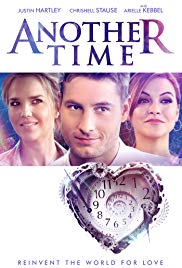
 Greetings again from the darkness. Dating back to H.G. Wells’ 1895 book and 1960 film THE TIME MACHINE, time travel has long been a favorite and familiar trope for filmmakers and writers. It’s been a central topic for comedies (BILL & TED’S EXCELLENT ADVENTURE, HOT TUB TIME MACHINE), science fiction (LOOPER, INTERSTELLAR), oddities (PLANET OF THE APES, DONNIE DARKO), adventures (BACK TO THE FUTURE, MIDNIGHT IN PARIS), and romance (SOMEWHERE IN TIME, ABOUT TIME).

Since time travel has crossed many genres, it only makes sense that a filmmaker looking to tackle the topic would understand something new must be brought to the party, if a new project can hope to have any appeal. Director/writer Thomas Hennessy and co-writer Scott Kennard attempt to blend romance with a dose of science and philosophy, but unfortunately, even as a low budge B-movie, it just comes across as a lackluster effort with a too-simple script. I’m not familiar with director Hennessy’s TV work on “Bugmashers” and “Ten for the Chairman”, but his background as a cinematographer should have at least resulted in a more visually impactful film.

Justin Hartley (“This is Us”) stars as Eric Lazifer, a successful Account Manager who saves his money, watches science shows on TV, and is easily “bored” by the married women who hit on him in bars. So, Eric is a fiscally conservative Brainiac who looks like a male model … clearly a rough way to go through life. Eric’s best bud Kal (James Kyson) serves as the comic relief, and is one of the few who bring some energy to their role. A recent company acquisition has Eric’s boss (Mark Valley) mandating he iron out the details with that firm’s leader Julia, played by Crishell Stause (Mr. Hartley’s real life wife).

It’s pretty easy to see where this is headed. Eric falls hard for Julia. However, she fails to swoon for his ice cream-philosophy-romance recipe since she is already engaged to a great guy. So Eric does what any guy would do … he tracks down disgraced Physics professor  Dr Joseph Goyer (Alan Pietruszewski) so that Eric can travel back in time to meet Julia before she connects with her fiancé. It’s a solid and logical plan with very little chance for something to go wrong (!). If the story was ever on track, it’s here that it really flies off the rails. Watching Eric assist the Physics expert with solving unsolvable equations is just a bit too much.

On the bright side, this segment allows Eric to meet a bartender named Ally, played by Arielle Kebbell. Ms. Kebbell definitely brings a welcome screen presence to this otherwise uninspired project. The soap opera look and feel likely relegate this one to the world of streaming, where, if it’s lucky, it might find some time travel obsessed viewers.

watch the trailer:


THE WIFE (2018)

August 31, 2018

 Greetings again from the darkness. THE STEPFORD WIVES was stocked with some men’s ideal of the perfect spouse … attractive, dutiful, always ready to serve. In director Bjorn Runge’s adaptation of the novel by Meg Wolitzer (screenplay by Jane Anderson), Joan Castleman is all of that and more as she constantly caters to her literary giant of a husband, writer Joe Castleman. It’s 1992 in coastal Connecticut, and in only a few days, things will change dramatically for Mr. and Mrs. Castleman.

When we first meet this long married couple, they are in bed – she’s sleeping soundly, while he’s full of anxiety and anticipation over a phone call that may or may not happen. See, Joe is up for the Nobel Prize in Literature, and when the early morning call from Stockholm does come, Joe eagerly prompts Joan to listen in on the extension (it’s 1992, so these are land lines). As the authoritative voice on the other end announces Joe’s prize, it’s the look on Joan’s face that tells us that, for her, this is no celebratory moment. The facial expression is quite powerful, and it’s our first inclination that 6 time Oscar nominee Glenn Close (as Joan Castleman) is delivering a performance as memorable as her work in DANGEROUS LIASONS and FATAL ATTRACTION (only this time there’s no bunny).

Jonathan Pryce is spot on as the narcissistic Joe Castleman. He’s clearly addicted to the pedestal upon which he sits and the corresponding adoration from worshipping fans. He’s the type of guy who thinks he’s doing Joan a favor by mentioning her in his speeches and calling her over to be part of his oh-so-important conversations. But as good as Mr. Pryce is, this is a tour de force from Ms. Close. She’s always a step ahead of her husband – finding his glasses, ensuring he takes his pills, and monitoring his diet and sleep. It’s the Nobel Prize phone call that stirred some long-suppressed feelings; lighting a fuse that will leave us anxiously awaiting the fireworks.

Max Irons (Jeremy’s son) plays an aspiring writer and son to Joe and Joan. David’s bitterness towards his father is evident throughout and his desperate attempts to gain his father’s respect are nothing short of heart-breaking. Christian Slater plays Nathaniel Bone, a would-be biographer of Joe Castleman … if only Joe would give him the time of day. Nathaniel is often quite intrusive in his pursuit of the truth – at least what he hopes it would be since it would make a fantastic book. Karin Franz Korlof plays Linnea, a young photographer assigned to Joe during the Sweden trip. It’s an odd role as none of the other winners have their own photographer … but not as odd as the small talk amongst the various category Nobel winners. Those scenes, and the verbal exchanges, are as awkward as one might imagine.

Director Runge utilizes flashbacks to 1958 Smith College to provide us a foundation and narrative for the relationship between Joe and Joan. She was once a budding star writer under the tutelage of the young, married professor. Her flirting, babysitting and writing all worked to win Joe over, and they were soon married. Young Joe the professor is played by Harry Lloyd (great-great-great grandson of Charles Dickens), and young Joan is played beautifully by Annie Stark (Glenn Close’s real life daughter). These early days and an encounter with a broken female writer (played terrifically by Elizabeth McGovern) lead Joan to surrender her writing dreams and put her support behind her husband. Shooting down the purity of “a writer must write”, McGovern’s beaten down character instead says “a writer has to be read”.

Glenn Close will likely receive much Oscar chatter for her role. Her transformation from dutiful sidekick to self-enlightenment is a performance laden with subtle and nuanced signs of resentment. Her early disquiet could be compared to a volcano – the inside building towards eruption while the outside remains strong and majestic. Living a lie never becomes truth … even after 30 plus years.

watch the trailer:


OPERATION FINALE (2018)

August 29, 2018

 Greetings again from the darkness. Historical dramas, by definition, carry added depth and weight to stories that sometimes seem almost beyond belief. Such is the true story of the 1960 Mossad mission to capture Adolph Eichmann, the noted architect of the Final Solution, who was hiding in plain sight in Argentina. You might think there have already been enough Holocaust movies, but director Chris Weitz (ABOUT A BOY) hones in on the personal aspects of loss and anger, and the need for justice.

Matthew Orton’s first screenplay benefits greatly from a terrific cast, especially the two main characters played by Ben Kingsley (Adolph Eichmann) and Oscar Isaac (Mossad agent Peter Malkin). Sir Ben is notably restrained in his performance of the last surviving mastermind of the Holocaust, and one of the most despised men on the planet. His subdued performance aligns perfectly with the “ordinary” man of which we’ve since read. Mr. Isaac adds the element of psychology in his “good cop” approach to getting Eichmann to crack.

Playing much like a heist movie, we see the team assembled and the quite convoluted plan devised. The high risk strategy underscores the desperation so many felt in their need to see Eichmann pay for his atrocities. The manhunt required some political tip-toeing, and we even gain a history lesson on the role of the Catholic Church. A tip from a “secret” Jewish daughter (Haley Lu Richardson) and her father (Peter Strauss) set things in motion. Sylvia (Ms. Richardson) actually dates Klaus Eichmann (played by Joe Alwyn), who is a picture-perfect Aryan carrying on the horrid Nazi tradition of hatred.

Of course, Klaus is the son of Adolph, and the one who spills the beans about his father being “a big deal” in the war … thereby ruining the quiet and mostly unassuming life they have been living with Adolph’s wife (a nearly unrecognizable Greta Scacchi). Sylvia and Klaus meet at a movie when she shushes him and his friends. Director Weitz even includes a clip of IMITATION OF LIFE (1959), a film that not coincidentally stars his mother, Susan Kohner. It’s a nice touch.

Much of the film takes place in the safe house where Adolph Eichmann is blindfolded and spoon-fed. It’s here that the psychological games and political maneuverings begin. Supporting actors who add strength to the film include team members Melanie Laurent (Hanna), Michael Aranov (chief negotiator Zvi), Lior Raz (as the demanding team director), Nick Kroll, and Simon Russell Beale (as Prime Minister David Ben-Gurion). There is a history of bumpy romance between Hanna and Peter, though it adds little to the story.

Alexandre Desplat’s score is terrific, especially during a creative and informative opening credit sequence. “Who did you lose?” is a recurring question throughout, as it’s 1960 and everyone involved lost someone – a driving force behind their persistence and commitment to the cause. The film is focused on the mission to capture, not the details of the subsequent trial; however it does close with archival photos of the actual trial – adding historical relevance to this fine dramatization.

watch the trailer:


AN ACTOR PREPARES (2018)

August 29, 2018

 Greetings again from the darkness. Does a kid ever lose hope that what was once a horrible/absentee parent might magically evolve into a dependable, caring parent – even as an adult? Is it ever too late for that parent to make amends? Director Steve Clark co-wrote this story with Thomas Moffett about a narcissistic actor (is there any other type?) and his feeling-slighted grown son being forced to take a road trip that likely won’t lead to bonding, but could result in their better understanding each other.

The film opens with a sweeping overhead shot of the Hollywood sign and the glittering lights below. It’s fitting since a big part of the story is the level of entitlement and garish ego proliferating the industry that put the town on the map. Legendary actor Atticus Smith is being presented a lifetime achievement award. We see that his career has been widely diverse with project titles ranging from the legitimate sounding “The Language of Men” to those with significantly more shock value like “Throwdown at Bitch River”. His speech is quite awkward, but it serves well as our introduction to the character which Jeremy Irons makes his own.

Mr. Irons goes over-the-top to play Atticus. His blustery mannerisms, ever-present scarf, and center-of-attention-seeking personality dominate much of the film and allow us to understand why his grown son Adam (Jack Huston) carries such a grudge for the man who never really tried to be his father, and who readily admits that the younger daughter (Mamie Gummer) is his favorite. It’s really the only empathy we can muster for Adam, since he early on establishes himself as a pretty unlikeable and quite annoying professor of film. In his first scene, he actually tries to lecture a class of female students on the real meaning of feminism (the class is “Cinema through a Feminist Lens”). The next time we see him, he’s being rude to his father Atticus, who has just suffered a heart attack. You know the type.

It’s that heart attack that puts these men together on the road – initially in a luxury tour bus, and later in a classic Plymouth Barracuda. Their destination is the daughter’s wedding, and the trip includes stops at the Chateau Marmont and The Drake Hotel in Chicago. Along the way, we see a bit more of a post-shower Atticus than we would prefer, watch one of the worst baseball scenes in movie history, and witness Atticus sneaking booze and porn on the bus, and then finally drugging his son.

The title of the film comes from a book by acting teacher Konstantin Stanislavski, which makes total sense once we realize these two men have been acting their way through life. Adam is terrified of becoming a parent like his father, keeps his own health issues a secret, and is apparently inept at documentary filmmaking, which he claims as his profession. On the trip, Atticus is prepping for his next role – he is to play God, which he seems to think is perfect casting … although the studio and his manager (Ben Schwartz) are quite concerned about his health.

Mr. Huston does finally bring his character along to the point where he seems more tolerable, and the film might surprise you on where it ends. There is some decent comedy and a yin and yang with father and son that adds enough entertainment value, as long as you can enjoy the flamboyant approach taken by the venerable Mr. Irons.

Watch the trailer:


PAPILLON (2018)

August 23, 2018

 Greetings again from the darkness. It seems like most every remake that comes around begs the question, “Why?” This is especially true when the film being remade is a favorite such as 1973’s PAPILLON. The original was directed by Oscar winner Franklin J. Schaffner (PATTON, THE PLANET OF THE APES, THE BOYS FROM BRAZIL), and starred two legendary actors, Steve McQueen and Dustin Hoffman. The screenplay was written by Dalton Trumbo and Lorenzo Semple Jr, and was based on the Henri Carriere books “Papillon” and “Banco”. Mr. Carriere was, of course, the titular Papillon himself, and though the specifics of his stories have been met with skepticism over the years, he nonetheless delivered some fascinating material.

So why make the film again 45 years later? Well this is a kinder, gentler version and features two of today’s most popular actors: Charlie Hunnam (“Sons of Anarchy”) and Rami Malek (“Mr. Robot”) as Papillon and Louis Dega, respectively. The screenplay from Aaron Guzikowski (PRISONERS) focuses more on the friendship and less on the brutal prison environment. Director Michael Noer (I’m admittedly unfamiliar with his previous work) delivers a movie that looks very good and works as an example of loyalty and bonding.

The film opens in 1931 Paris and we witness Papillon (so known because of the butterfly tattoo on his chest) doing what he does … safecracking for a powerful mobster. He seems to be living the good life with his girlfriend (played by Eve Hewson, Bono’s daughter) and they have plans to escape this life of crime – always an ominous sign in movies. Sure enough, he is framed for murder and sent to the penal colony in French Guiana. It’s there that he meets Louis Dega (Malek), a master counterfeiter. Dega is a soft and slight man, and the wad of cash hidden in his nether-regions puts a target squarely on his back. So Papillon’s brawn and need for cash to grease the wheels of his escape, and Dega’s need for protection, make this the match made in heaven (or in this case, hell).

Being a man of eternal optimism, Papillon never loses faith that he will escape, even when the warden (a terrific Yorick van Wageningen from Fincher’s THE GIRL WITH THE DRAGON TATTOO) explains that hope is his enemy. The years spent in solitary confinement rob Papillon of years and weight, but never hope. A final stint on Devil’s Island reunites the two men who share a bond that only such harsh circumstances could build. Since we know that Henri Carriere wrote the manuscripts for the books in 1969, the ending is known before we start; however it’s the telling of the story that allows us to come to know both Papillon and Dega.

This latest script does a better job of developing the friendship, as well as providing Papi’s past and reason to live. The original nailed a man’s commitment to surviving, while this one makes hope more of a philosophy. Lacking the magic of McQueen, Mr. Noer’s version doesn’t quite compare, but for those who have never seen the 1973 film, this one should prove quite engaging – even if we old-timers don’t buy into the kinder/gentler approach.

Watch the trailer:


BLAZE (2018)

August 23, 2018

 Greetings again from the darkness. “When the legend becomes fact, print the legend.” “I don’t want to be a star, I wants to be a legend.” The first quote comes from THE MAN WHO SHOT LIBERTY VALANCE and the second is drawled by Blaze Foley as he snuggles with his muse and lover in the back of a pickup truck. We can imagine the first quote inspired many stories over the years by those who knew Blaze, and it might also have served as a driving force for writer/director Ethan Hawke as he crafted this graceful tribute to an underappreciated songwriter and his too short life.

Mr. Hawke is a 2-time Oscar nominee as an actor, and his best known previous turn as director was for CHELSEA WALLS (2001). He (a distant relative of Tennessee Williams) has also been twice Oscar nominated as a writer (BEFORE SUNSET, BEFORE MIDNIGHT), and his movies are often music related or influenced. His latest is a biopic of a mostly unrecognized country-folk artist, and Hawke collaborated with Sybil Rosen to adapt her memoir “Living in the Woods in a Tree: Remembering Blaze Foley”. It’s Ms. Rosen who shared the bed of that pickup referenced in the first paragraph above.

Ben Dickey plays Blaze and Alia Shawkat plays Sybil. Not only does Dickey capture the spirit and sound of Foley’s music, but the scenes with Blaze and Sybil as a couple are some of the most touching and realistic relationship sequences we’ve seen on screen. We understand their connection … and their disconnection. It’s proof that two people can be both ‘made for each other’ and ‘wrong for each other’. Director Hawke utilizes different time periods, as well as a framing device in the form of a radio interview. None of this works in traditional biopic manner as the interview features the great troubadour and musical poet Townes Van Zandt (played exceptionally well by Charlie Sexton) recollecting the times (both good and bad) he spent with his friend Blaze. He’s joined by another Foley friend and collaborator, Zee (Josh Hamilton) as the two color in the blanks to ensure the legendary status desired by Blaze. The DJ is voiced by Ethan Hawke, who is only seen from behind.

In addition to the radio interview and the relationship with Sybil, we also have multiple scenes of Blaze’s final live show being recorded at the old Austin Outhouse. The nearly two hours of music and philosophizing were turned into a record release that remains (nearly 30 years later) a mesmerizing listen. These 3 very distinct pieces fit together to bring Blaze into focus as both a songwriter and troubled man – one who found himself in too many fights and, ultimately, on the wrong end of a gunshot in 1989.

Philosophy and homespun wisdom and catchphrases flow from Blaze during his songs and even when he’s just hanging with his buddies or Sybil. The real Sybil Rosen plays her own mother in a scene where Blaze meets the parents, and there is a touching moment in the film where Blaze plays for his estranged dad (a wonderful, albeit brief performance from Kris Kristofferson), the founder of The Singing Fuller Family where Blaze got his musical start. It’s these kind of touches that elevate the film into a must see whether you are familiar with Blaze Foley or not.

BLAZE FOLEY: DUCT TAPE MESSIAH is a 2011 documentary that would nicely compliment Mr. Hawke’s film, although this version contains much more humor – including cameos by Steve Zahn, Richard Linklater and Sam Rockwell as Zephyr Records executives. With Louis Black (founder of SXSW and a former film class TA of yours truly) as an Executive Producer, and songs by Blaze Foley and Townes Van Zandt, this little gem is likely to awaken viewers to a bygone era of music that tends to be remembered only for Willie, Waylon, Jerry Jeff and Merle.

watch the trailer:


CRAZY RICH ASIANS (2018)

August 16, 2018

 Greetings again from the darkness. With so much attention on this being a rare mainstream movie with an “all Asian cast”, it’s possible to lose sight of the fact that it’s much more than this generation’s THE JOY LUCK CLUB (1993). Director John M Chu has delivered a very entertaining, though a bit slick and glossy, crowd-pleasing romantic comedy with touches of cultural awareness. It also features a few noteworthy performances, including a star-making turn from Constance Wu (“Fresh Off the Boat”).

Based on the best-selling novel by Kevin Kwan, the screenplay is written by Peter Chiarelli (THE PROPOSAL) and TV writer Adele Lim. Rachel Chu (Constance Wu) is an energetic, American-born Chinese economics professor, and her boyfriend Nick Young is played by big screen newcomer Henry Golding. A successful and confident person on her own, Rachel, having been raised by a hard-working single mother (who fled China while pregnant), assumes her charming and handsome boyfriend is equally grounded. It’s not until she agrees to accompany him to Singapore for his best friend’s wedding that she begins to pry the truth – most of the truth – out of him. See, Nick and his family are quasi-royalty in Singapore … one of the wealthiest families in the city and country.

Upon arriving, Rachel quickly learns that Nick’s mother is certainly not open to the idea of her son, the company’s heir-apparent, having anything to do with a woman lacking the required pedigree – namely money and a Chinese legacy. Michelle Yeoh (CROUCHING TIGER HIDDEN DRAGON) plays the icy Eleanor Young, and is quite elegant in her disdain for Rachel, and in capturing the relationship between Asian mother and son. Some of the best scenes are the interactions between Rachel and Eleanor – each so eager to succeed in their polar opposite missions. Facing widespread accusations of gold-digging, Rachel retreats to the comfort of her old college friend Goh Peik Lin, played by a fast-talking and quite hilarious Awkwafina (OCEAN’S 8).

The humor is prevalent throughout, with some of it being quite outrageous. Ken Jeong and Koh Chieng Mun play Peik Lin’s parents … the caricatures of new money. Jimmy O Yang is the high-roller never-grown-up frat boy type responsible for the outlandish bachelor party; Nico Santos is Oliver, the self-titled ‘rainbow sheep of the family’; and Ronnie Chieng is the obnoxious family member everyone avoids. The comedy provided by this group prevents the dramatic elements from ever being too weighty for viewers. This holds true even with the short-changed sub-plot featuring Nick’s beautiful sister Astrid (a scene-stealing Gemma Chan) and her disintegrating marriage to another “outsider”.

Opulence and obscene wealth is on full display, leaving us a bit unsure (by design) exactly where the emphasis should be placed on the title. Although it has the required elements of a fairy tale, it’s certainly not run-of-the-mill. Cinderella allowed a kind-hearted woman to be rescued from slave labor and a basement bed. This Cinderella story doesn’t exactly rescue Rachel, who is a strong, self-made woman. Instead, it ups the ante by having her harshly judged … while in fact, she is the one who should be sitting in judgment – first of a boyfriend who was never honest, and then with a family who assumes she’s not good enough to be one of them.

In a tip of the cap the aforementioned THE JOY LUCK CLUB, Lisa Lu (now 91 years old) plays Kevin’s grandmother, the matriarch of the family, and one who has played a role in making Eleanor the protector of family and tradition. Eleanor’s guiding philosophy and contempt towards Rachel is summed up in her line, “All Americans think about is their own happiness”. It’s one of the moments where we do wish the film would dig a bit deeper and further explain the traditions and cultural differences that cause such venom spewing towards Rachel.

Director Chu has had a stream of poorly reviewed films (NOW YOU SEE ME 2, JEM AND THE HOLOGRAMS, G.I. JOE: RETALIATION, STEP 2), but that likely stops here. His social media montage early in the film is a visual feast, and the camera work (by Vanja Cernjul) over Singapore is stunning. The soundtrack offers Asian versions of some well-known songs, including Cheryl K singing “Money (that’s what I want)”, a Berry Gordy song which we are accustomed to hearing sung by John Lennon. Credit goes to casting as well, since Ms. Yeoh and Ms. Lu are Asian acting royalty, and Ms. Wu and the dashing Mr. Golding are sure to see their careers skyrocket.

The director and producers are also to be commended for making the rare decision of choosing art over money. They were so committed to the film finding a theatrical audience that they turned down huge bucks from Netflix for the rights. It’s a risk that will likely payoff for them. Is it a simple love story made complicated by family, economics, tradition, and class differences … or is it a story of tradition and wealth that attempts to salvage the purity of a love story regardless of class? Either way, it’s a relatable story and one that will surely entertain most anyone who watches. As a bonus, you’ll pick up a banana joke that you’d best not repeat.

watch the trailer: