WILD (2014)

December 14, 2014


Wild Greetings again from the darkness. The best movies expertly provide a visual representation of quality writing. However, the film medium is somewhat limited, and especially struggles, in displaying the complexities of human introspection … something the best writers are able to capture with words on a page. Director Jean-Marc Vallee (Dallas Buyer’s Club) and writer Nick Hornby (An Education, High Fidelity) are simply unable to capture the guts of Cheryl Strayed’s memoir “Wild: Lost to Found on the Pacific Crest Trail” – despite the likely Oscar nominated performance of Reese Witherspoon.

It’s quite likely, given the steady stream of rave reviews, that my lack of connection with the film is firmly planted in a small minority of movie goers and film critics. On the bright side, it’s a real pleasure to see Reese Witherspoon follow-up her no frills supporting role in Mud with a strong portrayal of uber-flawed Cheryl.

The story picks up with Cheryl getting ready for her 1100 mile hike of the Pacific Crest Trail in the summer of 1995. Her lack of trail experience is obvious from the unwrapped, shiny new contents of her “monster” backpack. While walking alone with her thoughts, memories are triggered by such things as a song, a horse, and even a phrase. It’s through these flashbacks that we learn the reasons for Cheryl’s trek towards self-discovery. The illness and death of her beloved mother, a childhood marred by an abusive father, her own crumbled marriage brought on by her promiscuity (“I cheated on him a lot”), and her attempts to dull the pain through heroin abuse, have led Cheryl to the trail head of re-discovering her true self.

Cheryl’s mother is played by Laura Dern (a terrific performance) and while her inspiration is obvious, there is one especially poignant scene that takes place in the kitchen … Bobbi tells Cheryl that she fully understands their plight, and refuses to let that define her life. That powerful scene is negated by the awkward and unexplained relationship Cheryl has with her ex-husband (Thomas Sadoski), the underdeveloped best friend support shown from an intriguing Gaby Hoffmann, and the voice mail connection with her brother (Keene McRae). More of these key people and fewer flashbacks might have allowed us to better relate to Cheryl as a person, rather than someone who hasn’t dealt well with a few life obstacles.

The familiar guitar strumming of Simon and Garfunkel’s “El Condor Pasa” is heard throughout, as are numerous literary quotes that Cheryl used to leave her mark in the trail journals. There are, of course, similarities here to other films such as Into The Wild, 127 Hours, and Eat Pray Love. Also present is the element of a solitary woman in the wilderness … every male presence is greeted with anxiety from Cheryl, especially in contrast to the warm greeting she offers another female hiker.

The biggest missing link for me was Cheryl’s apparent epiphany. We witness a couple of emotional breakdowns along the trail, plus big time blisters, damaged toenails, rain and snow, and nature’s beauty. What’s not explained is her personal growth and self-discovery – the moment when Cheryl put the past behind and went “above her nerve”.  While her desire and efforts are commendable, the real story would be her inner thoughts … those conversations going on inside her brain (and in the book) that led to a conclusion of which we aren’t privy.

SEE THIS MOVIE IF: you want to see a likely Oscar performance from Reese Witherspoon (including frequent use of the F word)

SKIP THIS MOVIE IF: a damaged toenail makes you nauseous

watch the trailer:


EXODUS: GODS AND KINGS (2014)

December 12, 2014

Exodus Greetings again from the darkness. Two huge Old Testament epics in one year (Noah being the other) is quite unusual in this era of superhero overload. But then, if you squint just right, there is a dash of superhero in both Noah and Moses, and each of their stories plays equally well as an action-packed adventure or bible scripture. If you are the type to analyze all the religious errors, you might first consider that the three male leads are played by an Australian, a Welsh, and a Knighted Sir. So a grain of salt is in order; and you should understand that director Ridley Scott (Gladiator, 2000) is more interested in the cinematic “wow” factor than he is in biblical accuracy.

Moses (Christian Bale) and Ramses (Joel Edgerton) are raised as brothers in Egypt circa 1300 BCE. Ramses’ father is the ruling Pharaoh Seti (John Turturro) who believes Moses to be the better leader of people than his own son. But in those days, blood ruled, and soon after discovering that Moses is actually Hebrew rather than Egyptian, Ramses cast him into the desert.

A few years later Moses chats it up with God (actually Metatron archangel that looks like a schoolboy), and the next thing we know, fish are dying in poisoned waters, giant crocodiles are chomping on fisherman, an impressive onslaught of frogs and locusts attack, followed by massive swarms of flies, and finally the darkness of death. Ramses finally ends the streak of plagues by agreeing to free the Hebrew slaves. Moses then leads the masses on the infamous trek … a not so enjoyable trip that peaks with the parting of Red Sea – a very impressive movie effect, even when compared to the wall of water seen recently in Interstellar.

The movie is dominated by Bale and Edgerton, with only minor supporting roles from John Turturro, Sigourney Weaver (maybe 3 lines of dialogue), Aaron Paul as Joshua (lots of quiet eye-balling of Moses), Sir Ben Kingsley as Nun, a hilarious Ben Mendelsohn, the always energetic Ewen Bremner, and the very classy Hiam Abbass.

Director Ridley Scott has dedicated this one to his brother Tony, and it’s sure to be one of those movies that some critics will enjoy bashing, just because they can. And there will be the nostalgic viewers who fondly recall Cecil B DeMille’s The Ten Commandments (either version), and the pomposity displayed by Charlton Heston and Yul Brynner. But for those movie goers looking for an adventure movie in the form of a throwback biblical epic with eye-popping special effects, it seems the answer will be a resounding “yes” to the question of … “Are you not entertained?”

SEE THIS MOVIE IF: you are really into special effects and plagues OR you were a fan before “the pictures got small”

SKIP THIS MOVIE IF: you are looking for a literal interpretation of bible scripture OR you expect anyone other than the extras to bear even a slight resemblance to ancient Egyptians

watch the trailer:


THE COLOR OF TIME (2013)

December 11, 2014


color of time Greetings again from the darkness. It’s either a most unusual biopic on Pulitzer Prize winning poet CK Williams, an example of how director Terrence Malick has influenced the next wave of filmmakers, or a self-congratulatory exercise disguised as a class project. Regardless of your final take, most cinephiles will muster at least a modicum of interest in a film with 11 directors and 12 writers … each NYU film students during James Franco’s time on campus as an adjunct professor.

We see the life of CK Williams through the flashbacks and memories of James Franco (as an adult Williams prepping for a reading of “Tar”). Williams as a child, as an adolescent, and as a college student (played by Henry Hopper, son of Dennis) offer a glimpse into the girls and events that helped shape his poetry. The sequence of Williams as a child is so similar to Malick’s Tree of Life, that we viewers experience our own flashbacks … right down to Jessica Chastain recreating her scenes from that movie (this time as Williams’ mother).

Mila Kunis plays Catherine, Williams’ second and current wife, and it’s clear – in a modern expressionist kind of way – that they are very happy together. There are a couple of disjointed sequences that come across as created simply to provide an outlet for Zach Braff and Bruce Campbell. However, when dealing with poetry, rules don’t apply … at least that seems to be what this group of young filmmakers would have us believe. The washed out colors, fuzzy focus, shots of nature, and muted emotions dotted with monotone dialogue are all elements of artsy films. Whether these are the foundations of artsy films is a separate topic. Interspersed throughout are a couple of clips of CK Williams with his own readings.

Experimental filmmaking is always a risk and should not be discouraged. It’s given us every advance in the medium for a century. It is a bit worrisome, however, when experimental film appears so similar to the work of a current master. Let’s hope that’s just the first step in the process of developing filmmakers. This one also acts as a reminder that turning poetry into actual images often defeats the purpose of the written words.

watch the trailer:


CALLOUSED HANDS (2013)

December 4, 2014

calloused hands Greetings again from the darkness. Writer/director Jesse Quinones exorcises a few personal demons with this presentation based on his own childhood. While sharing in his therapy, we find ourselves smack dab in the middle of the chaotic dysfunction of 12 year old Josh, his mother, and her live-in boyfriend.

Josh (newcomer Luca Oriel) is a mixed race boy who shows some potential as a young baseball player, but he is being pushed hard by his mother’s boyfriend Byrd (Andre Royo, “The Wire“). In this case, pushed hard can be defined as abused and bullied in an extreme manner. See, Byrd is the kind of guy who expects the impossible from everyone else, while expecting almost nothing from himself. He is an overbearing mentor who physically and mentally abuses Josh, and doesn’t think twice about cursing out kids or adults. Byrd can be described kindly as a frustrated man chasing the American Dream vicariously through Josh. A more accurate description would be a sorry excuse for a human being.

In this type of situation, one would hope the mother would step in to protect her son. However, Byrd is just as abusive and domineering towards Debbie (Daisy Haggard), and given her mostly absent relationship with her father (Han Howes), she seems to be attracted to those who treat her poorly. When Debbie comes begging for a $10,000 loan, her dad has one condition … Josh is to prepare for a Bar Mitzvah. It seems an odd request, but Josh is soon spending time with Rabbi Brookstein (Sean McConaghy) who brings out an intellectual curiosity in Josh that had not previously been seen.

It’s a bit unusual for a film to tackle a character so apparently lacking in morality as Byrd. Andre Royo doesn’t blink in his portrayal of a guy who hits his girlfriend, beats her son, drinks excessively, steals from her so he can buy drugs, and puts very little effort into earning money to help pay for things like food, the mortgage, or utilities. It’s also unusual for a film to go directly after the challenges of racial, ethnic, class, and religious stereotypes. That said, it would have been nice to show more interaction between Josh and the Rabbi, rather than the relentless stream of “family” dysfunction. The Sandy Koufax history lesson was a good touch and helped tie in the Jewish theme with baseball, but we were much more interested in the process of building Josh’s self-confidence to the point where he could stand up to Byrd.

Baseball. Why can’t filmmakers understand that if you are going to show a sport, some care needs to go towards the details. Luckily, there aren’t many baseball scenes, but a home plate umpire without a protective mask is an unforgivable mistake. Slightly less annoying is the poor technique in Josh’s swinging a bat or fielding ground balls. Overlooking those issues leaves us with pretty interesting performances from Royo, Haggard, Howes and McConaghy. With a better script, this group, and Mr. Quinones’ direction, could have elevated the movie to something more than direct to video. In this current state, it still works as an example of perseverance, and the importance of solid mentors and a safe home for kids.

watch the trailer:


THE HOMESMAN (2014)

December 1, 2014

homesman Greetings again from the darkness. We have come to expect our Westerns to be filled with stoic heroes and nasty villains, but this film delivers a pious, yappy leading lady paired with a selfish, no frills drifter. Based on the 1988 novel from Glendon Swarthout, it’s also the second directorial outing from Tommy Lee Jones (The Three Burials of Melquiades Estrada, 2005).

Hilary Swank plays Mary Bee Cuddy, a name repeated so many times that it will surely stick with you … even if the movie doesn’t. Thirty-one years old and unmarried, Ms. Cuddy is not without talent. She works the plough horses, cooks up fried chicken, and plays a mean fake piano. As is pointed out to her a couple of times, she is also “bossy” and “plain” looking … neither trait especially appealing to men in the wild west.

Ms. Cuddy volunteers to take three local women to Iowa. The three women (Grace Gummer, Miranda Otto, Sonja Richter) have each gone insane, and somehow Iowa is the most civilized place within a wagon ride’s distance. Cuddy teams up with a low-life drifter played by Tommy Lee Jones, after they strike a deal that allows him to escape certain death. The verbal clash of cultures and personality between the two main characters provides most of the action on screen, as the three women being escorted are mostly muted and either locked in the back of the wagon or tied to a wagon wheel during riding breaks.

The film is at its best when focusing on the harsh realities of frontier life. Cinematographer Rodrigo Prieto (Brokeback Mountain) does a nice job of capturing the wide expanse and stark vastness of the landscape, while also tossing in some artsy silhouettes and proof of abruptness of this life. Director Jones utilizes some haphazardly timed flashbacks to help us better understand the plight of the three women, but this could have been done much more effectively. Courage, inner-strength, and morality all play a role here, and the contrast between frontier and civilization was most distinct.

Much of the film plays like an oddball buddy picture – think Nolte and Murphy in 48 Hours, or Bogart and Hepburn in The African Queen. If you find the interaction between Swank and Jones to be realistic, then you will probably buy into the whole film. If not, the lack of flow and choppiness of scenes will jump out. There seems to be a never ending stream of little more than cameos from a tremendous line-up of actors: Barry Corbin, William Fichtner, Jesse Plemons, David Dencik, Evan Jones, John Lithgow, Tim Blake Nelson, James Spader, and Hailee Steinfeld. There are even a couple of scenes near the end featuring Meryl Streep (her daughter Grace Gummer plays one of the 3 insane women). The slew of familiar faces actually detracted from the story for me, because the Swank and Jones characters just couldn’t hold my attention.

The ending seems quite odd and a bit out of place for what we have just watched, and I’m still confused by the line of dialogue addressing the difficult “winter” they must have had on the wagon trip … it’s clearly stated that the trip began in May and would take a few weeks. Even in Nebraska, May and June can’t be considered winter. If you enjoy Hilary Swank on a soapbox or Tommy Lee Jones dancing a jig, then perhaps the pieces will fit better for you than they did for me.

SEE THIS MOVIE IF: you are intrigued by a long, mostly uneventful wagon trip where 3 of the 5 people don’t speak and one rarely shuts up.

SKIP THIS MOVIE IF: Tommy Lee Jones dancing a jig (twice) or Hilary Swank playing air piano just aren’t enough to pull you away from holiday shopping.

watch the trailer:


FOXCATCHER (2014)

November 30, 2014


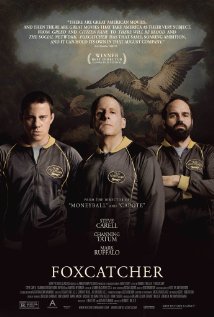
foxcatcher Greetings again from the darkness. The 1996 newscast remains vivid in my mind. It was captivating due to the bizarre circumstances and the tragedy involving an athlete whose Olympic career I had followed closely. Initially, I had trouble reconciling the story of this popular world class athlete and the mentally troubled billionaire who was part of one of America’s richest and most iconic families. This movie fills in some of the gaps.

Director Bennett Miller (Capote, Moneyball) is a meticulous filmmaker and is never in a hurry as a story teller. He allows the characters to develop on screen at their own pace … and this time the pace is excruciatingly slow – in a brilliant, yet painful to watch manner. The lead characters are a diverse trio of men. Mark Schultz (Channing Tatum) won Olympic Gold in 1984, but he is shy and withdrawn to the point of being socially awkward and unable to capitalize on his victory. His older brother Dave Schultz (Mark Ruffalo) also won a Gold Medal in 1984, and is very engaging family man who helped raise Mark, while building endorsements and job opportunities for himself. The triumvirate is completed by the incredibly odd billionaire John duPont (Steve Carell), who proclaims himself a wrestling coach after building a state of the art training facility on his family estate. The ultra rich can do such things.

John duPont was never able to live up to his mother’s (Vanessa Redgrave) standards. She even paid the chauffeur’s son to be John’s friend as they were growing up. With Mark always in the shadow of his more popular brother, duPont seizes the opportunity to capitalize on Mark’s vulnerability and invite him to lead his Foxcatcher wrestling team (named after the family estate which is near Valley Forge). duPont’s ultimate goal is to also have Dave join them, but it’s a tougher sell for various reasons.

The mommy issues and brother issues drive the need for validation and are at the core of story here, as are ego, “patriotism”, and ultimately delusion. Steve Carell sports a nose apparatus that captures the reason DuPont nicknamed himself the “eagle”. He also kicks his head back, while slumping his shoulders, in physically capturing duPont’s unorthodox movements. But that’s nothing compared to the eerie aura he puts off whenever he must deal with another person. He sends up red flags to anyone even minimally aware of their surroundings, but to a lost soul like Mark, he becomes a father figure and “coach”.

A wrestling movie would figure to be male dominated, but even with that, Sienna Miller (as Dave’s wife) and Vanessa Redgrave (as Jean duPont) are almost non-existent as the only female characters. Anthony Michael Hall has a brief supporting role, and it’s nice to see Guy Boyd back on screen as well. However, most every scene is some mixture of Carell, Tatum and Ruffalo, and they each deliver. It’s a side of Carell we have never before seen (many of the greatest comics have a dark side), and Tatum is spot on as the hulking, sulking Mark, while Ruffalo captures the easy charm and sensitivity of Dave.

The story offers further proof that life can be stranger than fiction … especially when it involves an insecure and mentally unstable billionaire who envisions himself as a leader of men.

SEE THIS MOVIE IF: you are familiar with the 1996 story OR you want a lesson in how not to act once you become a billionaire

SKIP THIS MOVIE IF: you are expecting a typically comedic Steve Carell performance (he is creepy in a not-funny way)

watch the trailer:


THE HUNGER GAMES: MOCKINGJAY – PART 1 (2014)

November 27, 2014

mockingjay Greetings again from the darkness. I’m now even further removed from the target demographics than for the first two Hunger Games movies. Regardless, I have read all 3 books from Suzanne Collins’ trilogy and have seen all 3 movies based on her books. Oh, wait. There will be FOUR movies, not three, from her source material. Hello Lionsgate profits! By definition, The Hunger Games: Mockingjay Part 1 is a warm-up act … it’s setting the stage for the finale which will be released in one year.

So for this one we get a Hunger Games movie with no Hunger Games. In fact, there is very little combat action at all. Instead, we are witness to the strategic planning and “selling” of a war (think Wag the Dog), replete with short promo videos featuring Katniss (Jennifer Lawrence) as the Mockingjay … the rallying symbol of the rebels. There is a terrific scene featuring four great actors: Jennifer Lawrence, Julianne Moore (as President Coin), Jeffrey Wright (as Beetee) and the late Philip Seymour Hoffman (as Plutarch). Four great actors in harmony elevating a movie based on YA novels. Pretty cool.

With no actual Hunger Games, the color palette of the film is almost entirely grays and browns. Even Julianne Moore’s famous red tresses are toned down to a streaked gray. The bleak look reminds of the Metropolis (1927) set, and also makes President Snow’s (Donald Sutherland) vivid white wardrobe and beard stand in contrast to rest. Mr. Sutherland has another juicy scene flashing his devilish grin and twinkle. He’s another example of the perfect casting, which extends to Elizabeth Banks (Effie), Woody Harrelson (Haymitch), Stanley Tucci, and Mahershala Ali (as Boggs). You should expect much less Josh Hutcherson (Peeta) this time, but a little more Gale (Liam Hemsworth).

Jennifer Lawrence proves again that her recurring role as Katniss is underrated from an acting perspective. She is now best known as an Oscar winner, but that doesn’t affect the sincerity, emotion and tenacity that she exhibits here.

This ending of Part 1 feels a bit awkward, but the break comes at the right time considering how the book is written. If you are a fan of the franchise, just accept that you will be buying a ticket for this move as well as next year’s finale.

**NOTE: Fans of Face Off will pick up a nod to that film

**NOTE: Philip Seymour Hoffman passed away with less than two weeks remaining in the filming schedule. He will appear in the finale, but his last few scenes were re-written to account for his absence. I will say it again next year, but his death leaves such a void for us movie lovers.

watch the trailer:


THE THEORY OF EVERYTHING (2014)

November 18, 2014

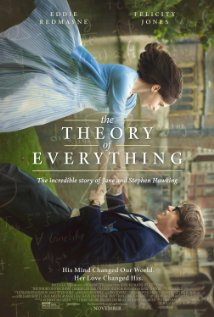
theory of everything Greetings again from the darkness. Stephen Hawking would most certainly make anyone’s list of the most fascinating people to have overcome severe obstacles in life to achieve greatness. Even today, at age 72, Hawking remains one of the foremost physicists and cosmologists. His extraordinary mind now 50+ years trapped inside a body that failed him, and as we learn, should have killed him by the time he was 23.

Director James Marsh is known for his work on two documentaries: Project Nim, and Man On Wire. His flair with reality in those two films is mostly kept in check with this conventional biopic. Based on Jane Hawking‘s book “Travelling to Infinity: My Life with Stephen”, the film does a nice job of showing us the stages of his motor neuron disease, while never digging too deep into the resulting hardships for Stephen or Jane (his wife).

Eddie Redmayne (Les Miserable, My Week with Marilyn) delivers the type of performance that often results in awards. His physical contortions capture the Hawking we have all seen, yet he also emotes the charm and wry humor that accompanies his genius. Jane is played by Felicity Jones (so terrific in Like Crazy) and since it’s based on Jane’s book, we are provided a glimpse into her strength and tenacity as she refuses to give up on Hawking or their relationship.

Some basic science is touched upon here – mostly through beer foam on a table or the glowing embers from a fireplace, but it’s highly recommended that you read Hawking’s best selling book “A Brief History of Time” if you have not already done so. It’s written using language so clear and concise, that even I almost understood it! Much more than science, this film is about the tenacity of Jane and her ability to keep Stephen moving forward while still pursuing her own studies and raising their three kids.

The evolution of their relationship is deftly handled, even as they each drift away towards others. When the break eventually occurs, it is the one moment in the film where heartfelt emotion is on full display. Oddly enough, it’s more relief for both parties than disappointment. In light of the doctor’s original estimate of two years to live, this moment is quite poignant.

Excellent support work comes courtesy of David Thewlis as Hawking’s professor and mentor, Emily Watson as Jane’s mother, Simon McBurney as Stephen’s dad, Charlie Cox as Jonathan (Jane’s second husband), and Maxine Peake as Elaine (Stephen’s second wife). Also of note, Harry Lloyd plays Stephen’s classmate and friend Brian. Mr. Lloyd is the great, great, great grandson of Charles Dickens.

You can see this one without being intimidated by the science, and instead get a glimpse at Hawking’s challenges and the strength of Jane.

SEE THIS MOVIE IF: the personal relationship and struggles of Hawking and his wife are of interest to you.

SKIP THIS MOVIE IF: you are looking for some in-depth analysis of Hawking’s genius

watch the trailer:


THE WAY HE LOOKS (Hojo Eu Quero Sozinho, Brazil, 2014)

November 14, 2014

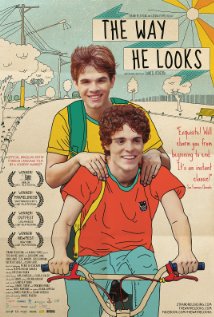
the way he looks Greetings again from the darkness. This is Brazil’s official entry for the 2015 Academy Awards, and it’s the feature film debut of writer/director Daniel Ribeiro. With some similarities to Truffaut’s Jules and Jim (1962), it’s a coming-of-age story focused on the adolescent desire for independence, and the awkwardness and curiosity associated with first love.

As the film opens, we meet best friends Leonardo (Ghiherme Lobo) and Giovani (Tess Amorim) as they lazily chat while hanging out by the swimming pool. Their innocent discussion about romance and a first kiss bring to light the naivety of their age and situation. Giovani carries a torch for Leo, but he is clueless to her desire. His blindness since birth is a major reason, but the arrival of new student Gabriel (Fabio Audi) slowly uncovers another obstacle to any future romantic link for Gi and Leo.

To his credit, Mr. Ribeiro never emphasizes Leonardo’s handicap and instead allows the three teenagers to struggle through daily existence riding the roller coaster of emotions so typical for the age. Sure, Leo gets bullied a bit at school by the insensitive jerks we all know so well, but he struggles more with his overprotective mother who has yet to come to grips with her son’s maturity and desire for the next level of independence. The real core of the story involves the fine line between fragility and strength of friendship, as well as the realization of one’s sexuality. These issues are handled expertly and without sermon or grandstanding.

The film has been exceptionally well received at LGBT Film Festivals, and has crossover appeal for those interested in a grounded look at the basic challenges of adolescence.

watch the trailer:


BESIDE STILL WATERS (2013)

November 14, 2014

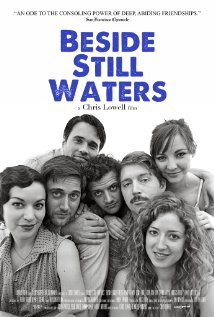
beside still waters Greetings again from the darkness. Director Chris Lowell co-wrote the story with Mohit Narang, and there is really no other way to describe it than a modern day redux of The Big Chill (1983). If you are familiar with that film from 30+ years ago, you remember the narcissism, strained friendships, and emotional turmoil that were offset by a best-selling soundtrack. Three decades later we witness narcissism run amok and a crumbled version of friendship, this time offset by the guzzling of alcohol.

Daniel (Ryan Eggold, TV’s “The Blacklist“) has organized a reunion of his childhood friends back at the cabin on the lake where they shared many a summer. Daniel’s parents recently died in a car accident, and none of his “friends” showed up for the funeral … hence, the crumbled version of friendship. As they begin arriving at the cabin, we immediately categorize each: Tom (Beck Bennett, “Saturday Night Live“) is the wise-cracking slacker, James (Brett Dalton) is the TV Reality Show celebrity, Martin (Will Brill) and Abby (Erin Drake) are the high school sweethearts stuck in a strained marriage, and Charley (Jessy Hodges) is the free-spirited chick with a lust-filled history. The arrival of Daniel’s old flame Olivia (Britt Lower) is offset by her fiancé Henry (Reid Scott). May the oddballs be ever in your favor.

Sounding like the old man I am quickly becoming, this generation of thirty-somethings left me quite saddened. What made The Big Chill work, was the actual bond that tied the group together. Remember, they all showed up for a funeral … rather than being summoned for skipping one. The original group had charm, personality and was interesting; whereas this group remains focused on their own problems – oblivious to the needs and feelings of others. They find the bottom of a bottle or drugging an adversary to be actual solutions, rather than resorting to the effort involved with intimacy or conversation. Yes, sad I am.

Despite my issues with the possibility of this being an accurate portrayal of this generation, there are plenty of positives with the film. Lovell truly has a photographer’s eye and uses it for much of the camera work … it’s beautifully shot. Also, each member of this ensemble jumps right in to their character and does a superb job (especially Reid Scott). There is also a terrific segment of three conversations edited together that play off each other like some kind of wonderful parlor game. It’s the highlight of the film.

While much of the film plays like a passive-aggressive expose’, the script leaves no room for interpretation or analysis … Daniel actually spells out his true misguided mission. Beginning a movie with references to Gertrude Stein and Ernest Hemingway is often a good start. However, Hemingway’s theory that all generations are lost, doesn’t mean that some aren’t more lost than others. The game of Whisky Slaps works not just as a scene, but also as a metaphor for watching this movie.

watch the trailer: