ROSEWATER (2014)

November 14, 2014

Rosewater Greetings again from the darkness. A surefire method to get attention for a movie is “the feature film directorial debut of Jon Stewart”. The popular comedian/commentator/talk show host makes an exceptional living getting people to laugh and think, so a politically charged story based on real life events should be right in his proverbial wheelhouse. Mix in the fact that Stewart and his show are linked to those events, and now you have some real intrigue.

Maziar Bahari was a Newsweek political correspondent sent to cover the 2009 Presidential election in Iran. His experience led him to write the book “Then They Came For Me: A Family’s Story of Love, Captivity and Survival”, on which the film is based. Bahari was a young husband who left his pregnant wife at home for what he thought would be an assignment lasting but a few days. Instead, by the time he returned home, he had been held captive in Evin Prison for 118 days – suspected of being a foreign spy, and incessantly interrogated and subjected to psychological and physical torture.

Gael Garcia Bernal plays Bahari with a naïve and amiable spirit that contrasts sharply with what we might envision as the traits necessary for success in his line of work. It does work well to allow the viewer a quick connection with the character as we later pull for him during the toughest moments. The film brings light to the importance of a free press, and the dangers inherent otherwise. As the Iranian government accuses Bahari of being a spy, it’s easy for us to understand the blurred line between spy and journalist. Those with the most to hide are often the most paranoid.

When Bahari first arrives in Iran, happenstance leads him to cross paths with a taxi driver who enthusiastically introduces him to the “educated” … the “not Ahmadinejad” faction. These are the revolutionaries working to bring enlightenment to the government through their candidate. As you are probably aware, the election instead brought what Bahari’s mother (Shohreh Aghdashloo, House of Sand and Fog) calls “the same old sh**”. In other words, despite seemingly overwhelming support, their candidate lost in what they can only assume was another fixed election.

Bahari’s personal story is the focus of the film much more than an investigative look into Iranian elections. He films the protests of the election aftermath, and the next morning he is awakened to a search of his personal belongings. The accusations begin with such laughers as having his “Sopranos” DVD classified as a pornography collection. Laughs are short-lived though, as Bahari is arrested and swept away to the prison. The torture he faces is nothing like what we witnessed in Zero Dark Thirty, but the psychological warfare waged by his interrogator (Kim Bodnia) is designed to break down Bahari emotionally so that he admits to being a spy (an enemy of the government).

We certainly gain insight into Bahari’s personal struggle to maintain his hope and position. Visions of his father and sister appear to him in his cell and provide advice. These apparitions seem more level-headed and passionate than Bahari was even before his arrest. And therein lies the biggest issue with the movie. We know how the story ends, so the suspense is non-existent. Instead, we are somehow to relate to the daily misery endured by Bahari, but that just isn’t captured in a two hour movie. The closest we get is a remarkable sequence where Mr Bernal (as Bahari) moves to the music (in his head) of Leonard Cohen’s “Dance Me to the End of Love”. This is a man clinging to hope for his future with memories from the past. It’s a very touching moment.

The need for a free press is obvious from this story, but it’s unclear whether another point made in the movie was intentional. Bahari has his camera holstered during the violent election aftermath until he is disparaged by one of the rebels … something along the lines of “you have a weapon and choose not to use it”. This moment raises the question of whether these political correspondents are so concerned about personal danger that they let that affect the stories they tell and the pictures we see. This may be the most powerful question raised by the film, and one not easy to answer.

Lastly, it does seem at times that the movie plays as Jon Stewart’s tribute to Maziar Bahari, which makes us wonder whether Stewart’s burden of guilt from his (unintended) role in Bahari’s capture was the driving force behind the making of the film. It comes across a bit light on issues and heavy on hero-worship (apology). Still, mixing in actual news footage and the role of social media, keeps us from forgetting that this is a real man plunged into a dangerous situation simply because he was trying to show and tell the truth.

watch the trailer:


THE PLAYBACK SINGER (2013)

November 14, 2014

playback singer Greetings again from the darkness. Kickstarter campaigns will not allow every wannabe director to realize their filmmaking dream, but it did allow writer/director/producer Suju Vijayan to make her first feature. The film has deservedly enjoyed some success on the second tier Film Festival route, and it’s done so as a pleasant viewing experience without the exaggerations typically seen in the cultural battles of indie productions.

Priya (Navi Rawat from TV’s “Numb3rs”) and Ray (Ross Partridge) are a happily married couple who seem relatively content with their life in Van Nuys, California. She is an immigration lawyer who takes her job to heart, while he is a former teacher searching for his place in life … currently designing a jungle gym (he dropped out of architecture classes) while juggling the demands of beer drinking and pot smoking.  One morning Priya informs Ray that her 20 year estranged father will be staying with them for awhile during his concert tour with other musicians from India.

Ashok (Piyush Mishra) is an obstinate man who proceeds to interrogate the couple on such hot topics as the size of their home, their status as renters, Ray’s lack of a job, Priya’s fashion and work outside of the home, and of course, the couple’s decision not to have kids. The cultural and generational differences are handled in a grounded, believable manner with a tinge of humor as well as insight. Ashok’s overblown ego and pride take a direct shot when it’s discovered that the concert tour is not what he expected. It’s this development that takes the story in an interesting direction … an obvious ending in sight … but interesting still.

Ray and Ashok are forced to spend time together while Priya works, and it’s kind of funny to spot their similarities. Ashok’s marital and relationship track record illustrates a similar self-centeredness and lack of direction to what we witness with Ray. Soon enough, these two are bonding over wine and the creative nature they share.

The story is familiar enough, and carries the banner for the “he’s family” motif. Despite this, the marital strife and family emotions and personality traits are all well written and well performed. Mr. Mishra’s work is especially delightful to watch, and Mr. Partridge bears a striking resemblance to Dermot Mulroney, including the corresponding slacker style. The film covers no new material, but does provide an enjoyable look at family life complicated by cultural and generational differences.

watch the trailer:


FORCE MAJEURE (2014, Sweden)

November 2, 2014

force majeure Greetings again from the darkness. No one has sung the words “I’m a MAN” better than the great Muddy Waters, but even he would have been unable to bounce back from the ramifications of the split-second reaction of Tomas when things go awry at a mountainside family lunch.

Writer/director Ruben Ostlund delivers an intriguing and thought-provoking look at gender roles and the definition and expectations of masculinity, especially within a family. What makes a real man? What is a hero? Is our predilection of survivalist or protector hard-wired into our DNA? And what happens to a relationship when the foundation of respect crumbles? Would you believe this film tackles these emotional issues, and does so in such a brilliant manner, that we often find ourselves chuckling (albeit with a tinge of guilt)?

A family vacation in the French Alps takes a turn when, while lunching on a veranda overlooking the ski slopes, a controlled avalanche goes wrong and the café is threatened. Tomas (Johannes Bah Kuhnke) grabs his phone and goes scurrying for protection, while his wife Ebba (Lisa Loven Kongsli) covers the kids and calls for his help. Both are instinctive reactions, and while one recalls George in a “Seinfeld” episode, the other is more in line with what we expect from a parent.

Although the avalanche turns out harmless and the family members are physically fine, the emotional shockwaves of Tomas’ actions reverberate through the family … and even through another couple (Kristofer Hivju, Fanni Metelius). There is a exceptional dinner party scene with the two couples which brings the issue to a head, and it’s excruciatingly painful and funny to witness. This is terrific story telling and filmmaking and acting.

The film is Sweden’s submission for Best Foreign Language Oscar, and it must be considered a favorite so far. Though I’m not a huge fan of the final 10-15 minutes, that doesn’t take away from the questions as the characters try to come to grips with the situation. The filmmakers provide some really nice contrasts between dark humor, disappointment and broken trust.  I challenge you to find scenes of toothbrushing that generate more tension and relationship insight.

**NOTE: I wasn’t familiar with the actors who play Tomas and Ebba, but they reminded me very much of Stephen Dorff and Bridget Moynahan

watch the trailer:


BIRDMAN or (The Unexpected Virtue of Ignorance) (2014)

October 28, 2014

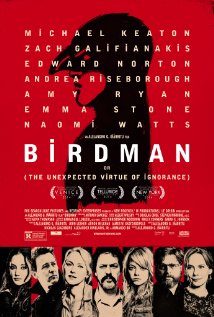
birdman Greetings again from the darkness. Hollywood versus Broadway. Screen versus Stage. It’s always been a bit Hatfield’s and McCoy’s. The basic argument comes down to celebrity versus artistic merit. Director Alejandro Gonzalez Inarritu blurs the lines with his most creative and daring project to date. It’s also his funniest, but that’s not really saying much since his resume includes Babel, 21 Grams and Amores Perros.

The basic story involves a former Hollywood actor well known for playing a superhero (Birdman) many years ago. Riggan is played by Michael Keaton, who you might recall garnered fame playing Batman many years ago. While the parallels are obvious, it’s quickly forgotten thanks to a majestic performance from Mr. Keaton. Riggan is trying to prove something to himself and the world by writing, directing and starring in a stage production of Raymond Carver’s short story “What We Talk About When We Talk About Love”.

Riggan’s quest runs into every imaginable obstacle, not the least of which is his own internal struggle with his ego … voiced by his former Birdman character. This could have been a more detailed exploratory view of the creative ego, but we also have money issues, casting issues, personal issues, professional issues and family issues.

Zach Galifianakis plays Riggan’s best friend-agent-lawyer, and is the film’s most grounded character. Yes, you can read the sentence again. A slimmed down Zach perfectly captures the highs and lows of the guy charged with juggling the creative egos and the business requirements of the production. Naomi Watts plays the exceedingly nervous and emotional film star making her stage debut, while her boyfriend and co-star is played by Edward Norton who, well, basically plays Edward Norton … a critically respected method actor who is known to be a royal pain in the keister. Riggan’s current squeeze, who is also an actress in the play, is played by Andrea Riseborough who gleefully blindsides him with an announcement that is unwelcome and untimely. Riggan also receives visits from his ex-wife (Amy Ryan) and is employing his fresh-from-rehab daughter (Emma Stone) in an assistant role. As if all of this wasn’t enough, a tipsy Riggan botches a pub interaction with an all-powerful stage critic (Lindsay Duncan), and the two trade incisive insults regarding each other’s vocation. So all of these characters and worlds collide as the production nears the always stress-inducing opening night.

After all of that, it’s pretty easy to state that the script is somehow the weakest part of the film. Instead, the directing, cinematography, editing and acting make for one of the most unique movie experiences of all time. Director Inarritu and famed cinematographer Emmanuel Lubezki and the editing team, deliver what appears to be a single take for mostly the entire run of the film. Of course we know it can’t possibly be a single take, but it’s so seamless that the breaks are never obvious to us as viewers. We have seen a similar approach by Alfred Hitchcock in his 1948 film Rope, but this time it’s a frenetic pace, and the maze-like setting in the bowels of NYC’s St James Theatre that makes this one a spectacular technical achievement.

Lubezki won an Oscar for his camera work on Gravity, and he has also worked on multiple Terrence Malick films, but this is the pinnacle of his career to date. It’s impossible to even comprehend the coordination required for the camera work, the actor’s lines and marks, the on que jazz percussion score from Antonio Sanchez, and the fluidity of movement through the narrow halls and doorways of backstage. It’s truly a work of art … whether a stage critic thinks so or not! Most every cinephile will see this one multiple times, but mainstream appeal will certainly not grab ahold. Reality, fantasy, insanity, and morbidity all play a role here and frequently occupy a character simultaneously. These aren’t likable people, and the film’s crucial scene forces Mr Keaton to speed-walk through Times Square in only his tighty-whities, leaving his character in the proverbial “naked on stage” situation. It’s rare to see such unflattering looks at both the stage and screen worlds, and it’s also rare to see such fine performances. Three standouts are Keaton, Norton and Stone. If the industry can avoid presenting awards to itself for “cartoons and pornography“, these three should all capture Oscar nominations.

Beyond that, director Inarritu, cinematographer Lubezki, and composer Sanchez deserve special recognition for their incredibly complex technical achievements. For those who complain that Hollywoood only produces re-treads, sequels and superhero movies, take a walk on the wild side and give this one a shot. You may not love it, but you’ll likely admire it.

SEE THIS MOVIE IF: it’s creative filmmaking you seek OR you want to see a tour de force performance from Michael Keaton OR you seek the challenge of identifying the scene cuts (good luck)

SKIP THIS MOVIE IF: you hear enough voices in your own head and prefer not to take on those from Birdman

watch the trailer:


CATCH HELL (2014)

October 28, 2014

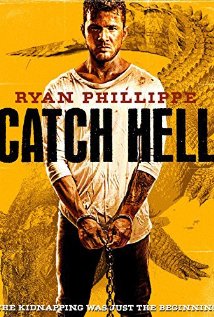
catch hell Greetings again from the darkness. Ryan Phillippe has hit the big Four-O, so it makes sense that he would want to explore the other side of the camera with writing, directing, and producing. He’s had a pretty successful acting career given what could be termed a minimal lack of range and a quiet screen presence. His feature film directorial debut (Direct-To-Video) utilizes a script he co-wrote with Joe Gossett, capitalizing on Phillippe’s lot in Hollywood right now … the once promising star looking to recapture the magic with a “game-changer”.

The film opens with a dramatic shot of actor Reagan Pearce’s (RP … get it?) stunning mansion. We see him catch a flight to Shreveport, Louisiana and take a meeting with a slightly spastic director and blow-hard producer. He decides to stick with the project in an effort to re-establish his career … he’s just out of rehab (of course). The next morning, things go really badly as Reagan is kidnapped by a couple of Louisiana hillbillies and locked up in a swamp cabin.

Brutal torture scenes follow and we soon enough learn that one of his captors (Ian Barford) is seeking revenge for Reagan’s dalliance with his wife on the set of a movie. The plan is to destroy Reagan’s reputation and then kill him once he is hated by all. The script attempts some Hollywood satire and makes some obvious commentary on the whole tabloid and celebrity world, but mostly it comes off as a bit self-indulgent for Mr. Phillippe.

There are some flashes of interesting moments, mostly involving Stephen Grush as the second hillbilly with homosexual overtures towards Reagan. Unfortunately, the film does not take advantage of the colorful swamp setting and instead takes place almost entirely within the run down cabin. You will note dashes of Deliverance, Black Snake Moan, and Misery, but this one isn’t at that level. Instead it comes off like a bucket list item for Phillippe … director/writer/producer/star of his own film.

watch the trailer:


WHIPLASH (2014)

October 26, 2014

whiplash Greetings again from the darkness. The pursuit of greatness is not always pretty. No matter if your dream is athletics, dancing, music or some other; you can be sure hard work and sacrifice will be part of your routine. You will likely have a mentor, teacher or coach whose job is to cultivate your skills while pushing you to new limits. This film questions whether the best approach is intimidation or society’s current preferred method of nurturing.

Miles Teller plays Andrew, a first year student at an elite Manhattan music conservatory. Andrew dreams of being a great jazz drummer in the vein of Buddy Rich. When offered a rare shot at the top jazz orchestra, Andrew quickly discovers the conductor is a breed unlike anything he has ever encountered. The best movie comparison I can offer for JK Simmons’ portrayal of Terence Fletcher is R Lee Ermey’s Drill Instructor in Full Metal Jacket. This is no warm-hearted Mr Holland’s Opus. Fletcher bullies, intimidates, humiliates and uses every imaginable form of verbal abuse to push his musicians, and especially young Andrew, to reach for greater heights.

Andrew and Fletcher go head to head through the entire movie, with Fletcher’s mental torment turning this into a psychological thriller … albeit with tremendous music. We witness Andrew shut out all pieces of a personal life, and even take on some of Fletcher’s less desirable traits. Andrew’s diner break-up with his girlfriend (Melissa Benoist) is much shorter, but just as cold as the infamous opening scene in The Social Network. At a small dinner party, Andrew loses some of the sweetness he inherited from his dad (Paul Reiser), and unloads some Fletcherisms on some unsuspecting family friends.

Writer/Director Damien Chazelle has turned his Sundance award-winning short film into a fascinatingly brutal message movie that begs for discussion and debate. The open-ended approach is brilliant, though I found myself initially upset at the missing clean wrap that Hollywood so often provides. What price greatness? Is comeuppance a reward? Are mentors cruel to be kind? For the past few years, I have been proclaiming that Miles Teller (The Spectacular Now) is the next John Cusack. Perhaps that bar is too low. Teller just gets better with each film. His relentless energy draws us in, and we find ourselves in his corner … even though this time, he’s not the greatest guy himself. Still, as strong as Teller is, the film is owned by JK Simmons. Most think of him as the dad in Juno, or the ever-present insurance spokesman on TV, but he previously flashed his bad side as the white supremacist in “Oz“. Even that, doesn’t prepare us for Simmons’ powerhouse performance … just enough humanity to heighten his psychological torturing of musicians.

You should see this one for Simmons’ performance. Or see it for the up-and-coming Teller. Enjoy the terrific music, especially Duke Ellington’s “Caravan”. See it for the talking points about teachers, society and personal greatness. See it for any or all these reasons – just don’t tell director Damien Chazelle “good job“.

SEE THIS MOVIE IF: you want to see JK Simmons in a likely contender for the Best Supporting Actor Oscar OR you have been waiting for someone to prove a drum solo can actually be worthy of your attention

SKIP THIS MOVIE IF: you have no interest in exploring what is involved in attaining greatness, regardless of the talent or skill

watch the trailer:


ST. VINCENT (2014)

October 19, 2014

st vincent Greetings again from the darkness. Moments after Bill Murray’s Vincent cracks a rare on screen “Chico and the Man” reference, we get our first glimpse of scrawny Oliver (newcomer Jaeden Lieberher), and we immediately know where this story is headed. The fact that we never lose interest is thanks to Mr. Murray, the rest of the cast and writer/director Theodore Melfi (his first feature film).

Though this is ultra-predictable and even strains credulity, we nonetheless connect to Murray’s Vincent – a grumpy, drunken, slobby, chain-smoker who has a bond with a pregnant Russian prostitute/stripper (Naomi Watts). Melissa McCarthy plays Oliver’s mom Maggie, who has separated from her philandering husband, and is intent on making a life for her son. It’s here where it should be noted that Ms. McCarthy plays the role straight – none of her usual funny-fat moments. Instead, she excels in a scene with an emotional dump on Oliver’s principal and teacher (a standout Chris O’Dowd).

Surprisingly, this could even be described as a message movie. Vincent quickly notices that Oliver is lacking street smarts and sets out to correct this. The story reminds us that all people are multi-faceted. The good have their rough edges, and the “bad” likely have a back-story and some redeeming value. Vincent is so cantankerous that it takes a kid as appealing as Oliver to balance the story. Even knowing a feel good ending is coming, we as viewers don’t mind being dragged through the sap.

Murray is outstanding, and if the script had a bit more heft, he would probably garner some Oscar consideration. McCarthy deserves notice for going against type, and Naomi Watts flashes some real comedic timing (maybe the biggest surprise of all). O’Dowd has some of the best one-liners in the film, and shows again that he is immensely talented. Terrence Howard seems a bit out of place as a loan shark, but he has limited screen time, as does Ann Dowd as the nursing home director.

Prepare for the feel-bad-then-good ride, culminating in a school auditorium event that reunites the key characters, and allows the child actor to draw a tear or two from the audience. Good times that end with classic Murray over the closing credits.

SEE THIS MOVIE IF: you have missed the fully-engaged Bill Murray last seen in Lost in Translation (2003)

SKIP THIS MOVIE IF: unpredictable endings are why you see movies

watch the trailer:


KILL THE MESSENGER (2014)

October 13, 2014

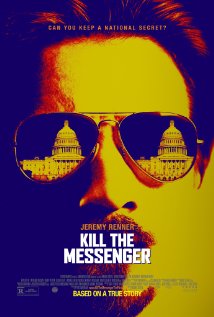
kill the mesenger Greetings again from the darkness. This is one of those true stories that probably works better as a drama than as a documentary. Jeremy Renner brings passion and believability to his role as infamous journalist Gary Webb. This allows us to gain insight into Mr. Webb as a father, husband and man, rather than only as a fiery investigative reporter.

You likely recall Webb’s published story (San Jose Mercury News) from 1996, when his research uncovered the likelihood that cocaine imported into the US was sold as crack cocaine and the profits had funded arms for the Contra rebels in Nicaragua in the prior decade. The kicker being that the CIA was well aware of these activities.

The film presents Webb as an idealist, too naive to comprehend that the story would have ramifications to his employer, his family and his self. The use of actual news footage adds a dose of reality, as does the inclusion of Ronald Reagan, Oliver North, John Kerry … and even the role Bill Clinton and Monica Lewinsky played in outshining the ultimate redemption of Webb’s work.

The underlying message here … beyond the governmental cover-up … is the lack of a truly free press. Of course, the issue remains front and center today, but in this particular instance, it’s surprising to see the influence and pressure applied by outside forces. It’s further proof that any hope for checks and balances from our news outlets was snuffed out many years ago.

The movie is based on two books: Gary Webb’s own “Dark Alliance” and Nick Shou’s “Kill the Messenger”. The frustration as a viewer is derived from the fragmented presentation brought on by steady stream of new characters who mostly appear in only one or maybe two scenes. The list of known actors is impressive: Rosemary DeWitt, Oliver Platt, Robert Patrick, Tim Blake Nelson, Michael Sheen, Mary Elizabeth Winstead, Paz Vega, Barry Pepper, Michael Kenneth Williams, Andy Garcia, Gil Bellows, Lucas Hedges, Richard Schiff, and Ray Liotta. That should help explain what I mean by fragmented.

The story is an important one and the film is worth seeing. Director Michael Cuesta’s approach makes it impossible to not think of All the President’s Men while watching. The Granddaddy of crusading journalism continues to produce heirs … those that are a black eye for the newspaper industry and our government.

watch the trailer:


THE JUDGE (2014)

October 11, 2014

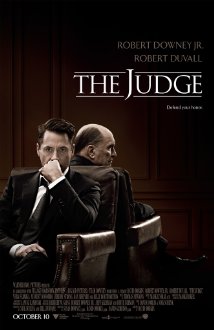
judge Greetings again from the darkness. It’s hard to beat a good on screen courtroom drama for tension and conflict. Despite centering around a long time judge accused of manslaughter and being defended by his estranged son, a hotshot defense attorney, this one eschews gritty courtroom action in favor of uncomfortable and explosive family dynamics. And thanks to the acting abilities of Robert Duvall and Robert Downey Jr, that’s a good thing.

Mr. Downey’s Iron Man/Tony Stark character has ingrained in movie goers his motor-mouthed smart-aleck persona that fits very well with the lacking-a-conscience cocky defense attorney who only defends the type of white collar criminals who can afford his unmatched courtroom savvy. When Hank (Downey) returns home for the funeral of his mother, we quickly witness the strained relationship with his demanding-perfection magistrate father (Duvall), and the historical family details slow-drip for the next couple of hours.

Hank’s older brother (Vincent D’Onofrio) was once a promising baseball player whose career was cut short after an automobile accident (with a crucial component). Hank’s younger brother (Jeremy Strong, who played Lee Harvey Oswald in Parkland) is a mentally handicapped young man attached to his video camera. Hank also (of course) runs into his high school sweetheart (Vera Farmiga) and her daughter (Leighton Meester), as a reminder of what he left behind in his quaint hometown when he chose fortune and big city life.

John Grisham has made a career, actually two (books and movies), dissecting lawyers and courtrooms. As you might imagine, director David Dobkin (Wedding Crashers, Fred Claus) doesn’t have Grisham’s eye and ear for the courtroom, so the script often slips into manipulative melodrama during the trial (think Grisham-lite). But the scenes between Duvall and Downey more than make up for the fluffy parts. The kitchen confrontation and the bathroom sequence couldn’t be any more different, or any more powerful. One is the exorcism of a parent-child relationship gone bad, and the other is a vivid depiction of old age and disease.

This is old-fashioned mainstream movie-making. It’s about relationships and family and personality and life choices. There are no explosions or CGI or car chases. Even the key crime happens off screen. It’s also not breaking any new ground, and if not for the acting, could be just another TV movie. A perfect example is Vera Farmiga, who brings an edge to a role that otherwise would be superfluous. Same with Hank’s brothers. Both roles are severely underwritten, but D’Onofrio and Strong somehow make them work. Billy Bob Thornton brings a presence to an otherwise not-believable role as a slick special prosecutor wearing $1000 suits. Even Dax Shepard plays his comic relief country-bumpkin attorney slash furniture re-seller in an understated (for him) manner.

Other support work is provided by Ken Howard as the judge, Emma Trembley (Hank’s daughter), Balthazar Getty as the deputy with a grudge, Grace Zabriske as the victim’s vengeance seeking mother, David Krumholtz as a District Attorney, and Denis O’Hare as Duvall’s doctor.

In better hands, the script could have become much sharper and the film much crisper. Prepare for cheese and schmaltz, but it’s difficult to imagine more fun than watching Duvall and Downey go nose to nose and toe to toe. If you stay for closing credits, you’ll hear Willie Nelson wobbly warble through a Coldplay song.

SEE THIS MOVIE IF: you want to see two excellent actors battle each other as only resentful father and sons can

SKIP THIS MOVIE IF: even a single teaspoon of courtroom schmaltz is more than your movie doctor recommends

watch the trailer:


HECTOR AND THE SEARCH FOR HAPPINESS (2014)

October 8, 2014

hector Greetings again from the darkness. Don’t you feel sorry for the smart, rich doctor with the beautiful and successful wife, luxury apartment and appointment book full of patients?  What about when he loudly humiliates one of those patients for expressing her feelings? We are supposed to want Hector to be happy. But do we? Personally, I didn’t give a rip about Hector.

Based on the novel by Francois Lelord, the movie stars Simon Pegg as Hector, a psychiatrist bored with the every day rituals he has set up for himself. A rare two minutes of soul-searching leads Hector to pause his life and embark on a mission to discover the true meaning of happiness. See, Hector believes he can no longer help his patients until he helps himself. My take is that Hector can’t help his patients because he isn’t even trying … he is a narcissist and a jerk who can’t appreciate the moments that make life grand. My disgust towards people like Hector made his journey much less entertaining and enlightening than if the character were someone I cared for.

If all that weren’t bad enough, the first person Hector meets on his trip is an obnoxious business man (Stellan Skarsgard) whose key feature is that he is much richer than Hector. The two grown men tour Shanghai and the night is capped with the gift of a prostitute with a heart. This is no spoiler because Hector is the only one who doesn’t know she is a prostitute. After this, he hangs out with Tibetan monks and sets up their Skype (so he can use it).

Along the way, Hector’s OCD traits cause him to maintain a journal filled with self-help one-liners and funny drawings of his sights. His spontaneous travel itinerary and endless budget take him next to “Africa” – quotations for the generic and clichéd approach the film provides. When Hector is imprisoned by rebels, there was glimmer of hope for the movie, but soon enough, a previous favor for a drug lord (Jean Reno) pays dividends.

Somehow the movie has less insight than the similarly themed EAT PRAY LOVE, and certainly less creativity than The Secret Life of Walter Mitty. Hector’s approach even blatantly borrows from the “Tintin” stories, and makes no apology for doing so. The only moment with any emotional depth comes when Toni Collette lashes out with armchair psychology and tells Hector exactly what he is. In all fairness, the movie is directed by Peter Chelsom, who also directed Hannah Montana: The Movie, so perhaps any expectations were too high.

Despite all of the short-comings, I will always pay admission if a movie includes a 3 minute monologue from the great Christopher Plummer, an especially welcome sight here. Simon Pegg, though an incredibly gifted comic actor, is over the top miscast here. His persona is distracting to the point that we never once believe he could be a psychiatrist or that Rosamund Pike would find him appealing. But the single biggest obstacle is that an audience finds it difficult to root for a narcissistic protagonist who believes that there must be some magic potion for happiness … maybe sweet potato stew.

SEE THIS MOVIE IF: you always root for the spoiled, rich guy to win in his battle against a mid-life crisis

SKIP THIS MOVIE IF: your local cinema has a rule against throwing items at the screen during especially annoying parts

watch the trailer: