Greetings again from the darkness. Kate Beecroft’s first feature film as writer-director can be accurately described as a biographical-drama, yet we can’t help but wonder if a straight documentary could have been equally interesting. In no way is that meant as a criticism of the film, it’s just that most of the cast (with only a couple of exceptions) is made up of non-actors playing versions of their real-life selves … and each one of them holds our attention, leaving us wanting to know even more.
Tabatha Zimiga is a tough-looking mom who runs a 3000 acre horse farm near the Badlands of South Dakota. She’s a horse trainer and trader, and is known as a ‘horse whisperer’ (her abilities are so renowned, some even jokingly refer to her as a witch). The auction prices on her horses have dropped recently, adding stress to Tabatha’s existence. Not only did her husband die, leaving her to run the farm, but she’s also the one who welcomes local kids to live at her place when things don’t go well at their own home. As noted by the signs of blight in the area, poverty is commonplace, and some folks can’t handle the added burden of kids. In fact, Tabatha currently has seven teenagers and her own three-year-old son to care for – so the reduced price for horses puts many in peril.
One of the teenagers is Tabatha’s fourteen-year-old daughter, Porshia, a champion rider who markets the horses on TikTok … while also going through the moods of a teenager who no longer has her dad. Also on the farm are Tabatha’s mother Tracey (played by the always excellent Jennifer Ehle, SAINT MAUD, 2019) and Tabatha’s boyfriend Clay. Tracey seems best suited to smart-aleck remarks as she brews her own moonshine. Tabatha calmly and firmly runs the show, knowing full well how dependent the kids are on her.
After one of the auctions, Roy Waters (Scoot McNairy, A COMPLETE UNKNOWN, 2024), a cocky rancher from Fort Worth, Texas makes an offer to Tabatha. He will buy the ranch and allow her and the kids to continue living and working there to build the horse trading business. He recognizes the value in having a horse whisperer of Tabatha’s caliber. One can imagine how angry this makes Porshia, as it’s the only home she’s ever known, and the farm carries all memories of her late father. It’s here where the film slips a bit, as the interaction between Tabatha, Porshia, and Roy seems a bit clunky, leaving us to fill in a few too many gaps.
Cinematographer Austin Shelton does a terrific job at capturing the unique terrain of the area, as well as the near chaos of the energetic kids. Periodically, the music is a bit too strong for the scene, but there is something true and honest here as we ask ourselves, “what makes a family?” It certainly seems like Tabatha knows.
Greetings again from the darkness. As a nineteen-year-old college dropout, Robert Zimmerman traveled from his hometown of Hibbing, Minnesota to New York City so that he could play music and visit his folk hero, Woody Guthrie, who was hospitalized with Huntington’s Disease. Of course, Zimmerman became known as Bob Dylan, and his musical genius continues to this day – more than 60 years and counting. Those early formative years are recounted here by writer-director James Mangold (WALK THE LINE, 2005; 3:10 TO YUMA, 2007; FORD V FERRARI, 2019) and co-writer Jay Cocks (GANGS OF NEW YORK, 2002), who used Elijah Wald’s 2015 book, “Dylan Goes Electric! Newport, Seeger, Dylan and the Night that Split the Sixties” as inspiration.
Timothee Chalamet perfectly captures the essence of young Bob Dylan – one who was driven to write songs, and one destined to change the music scene. Was he focused? Absolutely. Was he arrogant? Without a doubt. Was he talented? So much so that for decades he has inspired other musicians and songwriters. Edward Norton is uncanny as folk icon and activist Pete Seeger, even nailing the distinctive accent and mannerisms, while Scoot McNairy plays legendary Woody Guthrie (“This Land is Your Land”), already robbed of voice by disease. The two men are taken aback by the first song Dylan plays for them – providing just the boost of confidence the young man needed to take to the streets and clubs, honing the sound that would bring joy to so many.
We get a sense of Dylan’s journey and rise to fame, as well as a couple of his romantic dalliances – specifically, artist Sylvie Russo (an odd name change for a character clearly based on Suze Rotolo) and activist and fellow folk singer Joan Baez. Elle Fanning plays Russo/Rotolo, who appeared with Dylan on the cover of his “The Freewheelin’s Bob Dylan” album, and Monica Barbaro plays Baez and gets to showcase her own lovely voice on stage a few times (as well as Baez’s frequent frustration with Dylan). Other supporting roles include Boyd Holbrook as Johnny Cash, Charlie Tahan as Al Kooper, Dan Fogler as Albert Grossman, and Norbert Leo Butz as Alan Lomax. All of these were key players in the development of Dylan.
Dylan’s obsession with writing is established – at the expense of most personal relationships. However, the crux of this story is the moment that transformed Bob Dylan from a folk music favorite to a musical icon. A good deal of time is spent showing the number of people who assertively fought against Dylan turning electric for the 1965 Newport Folk Festival. It’s such a classic example of an institution trying to protect its territory from change … as if the plugging of a guitar into an amp could ruin music that has constantly evolved over many centuries. Contradictory reports claim Dylan was booed mercilessly while he played that day, while other reports claim there were a few in the audience upset, but most reacted warmly to the new style. I don’t believe the film mentions that Dylan was backed that day by a good chunk of The Paul Butterfield Blues Band, but we do get to experience the new sensation, “Like a Roling Stone”.
Chalamet surprises here with his depth of performance, as well as his musical ability – singing and guitar playing. Rabid Dylan fans will surely find fault with some details, but most music fans will embrace the look at Dylan’s musical roots and the development of his genius and songwriting prowess.
Greetings again from the darkness. J.D. Salinger once wrote, “Mothers are all slightly insane.” Rachel Yoder’s critically acclaimed 2021 novel has been adapted for the big screen by writer-director Marielle Heller, and it seems to confirm the Salinger theory. Ms. Heller has previously directed A BEAUTIFUL DAY IN THE NEIGHBORHOOD (2019), CAN YOU EVER FORGIVE ME? (2018), THE DIARY OF A TEENAGE GIRL (2015). She excels in projects that focus on human nature.
Amy Adams jumps into the role with both feet (or is it four paws?). Having been previously nominated for six Oscars, her seventh would certainly not be surprising. She plays a renowned artist-turned-stay-at-home mom, and proceeds to convey the frustrations and anxiety that accompany such self-sacrifice. We watch as her feelings result in an unusual transition that finds her with a heightened sense of smell, an innate dislike of cats, and an inordinate ability to attract and run with the neighborhood canines. There are even some physical attributes that occur, further blurring the line between fantasy and reality. At times, it’s a bit surreal.
We are clued-in to her inner-dialogue early on when she meets a professional acquaintance at the grocery store. With her son (played by twins Arleigh and Emmett Snowden) in the buggy seat, we hear both what this mother is thinking and then what she actually says out loud. It’s a terrific shortcut for viewers. When she finally lashes out at her husband (Scoot McNairy), he reacts in the typically clueless, though well-meaning manner we’ve come to expect from dads in this situation.
The movie has a relatively short runtime (barely 90 minutes), and we gain insight into her frustrations through mom-groups (Zoe Chao, Mary Holland, Archana Rajan), exchanges with the librarian (Jessica Harper), flashbacks to her childhood, and of course, the ‘real’ moments with her husband. The inner-dialogue moments could have been used even more frequently, and the canine moments are effective despite not really pushing the envelope as far as we’d have liked.
Losing one’s self is perhaps the biggest threat from motherhood, and we aren’t certain whether to classify the ending as redemption or reclamation. Either way, the motherhood path is absurdly challenging physically, mentally, and emotionally. Loving one’s child and spouse is not enough to maintain a sense of sanity and self, and the film picks up on all of this from a personal perspective, while also giving a glimpse at how the outside world (former colleagues) simply can’t understand. The film lends itself to further discussion and analysis, but that’s enough for now.
Greetings again from the darkness. Not all filmmakers have something to say about human beings and human nature, but writer-director Mike Mills does … and he continues to prove it. His three previous feature films are all excellent. 20th CENTURY WOMEN (2016) was based on his experience being raised by his mother, while BEGINNERS (2010) was a tribute to his father. THUMBSUCKER (2005) focused on teen angst, and his latest is inspired by interactions with his own son and Mills’ documentary projects.
From the mouths of babes. Early on, we watch and listen as radio journalist Johnny (Oscar winner JoaquinPhoenix, JOKER, 2019) interviews kids in Detroit to get their opinions on all aspects of life and the world, including their hopes and expectations for the future. This and additional segments and the kids’ responses seem real, not staged, presenting a documentary feel – especially since everything is filmed in Black and White. In a rare phone call with his estranged sister Viv (Gaby Hoffman, who will always be remembered as Ray’s daughter in FIELD OF DREAMS, 1989), Johnny offers to take care of Viv’s 9 year old son, Jesse (Woody Norman), while Viv assists Jesse’s father, Paul (Scoot McNairy), who battles ongoing mental health issues.
Viv is reticent to leave Jesse with Uncle Johnny, an unmarried man with no kids of his own. But she’s desperate for the help. Most of the film revolves around Johnny and Jesse spending time together and getting to know each other. Circumstances take the story from Detroit to New York City to Los Angeles to New York City to New Orleans. It’s a terrific journey that lacks any jaw-dropping cinematic elements. These two aren’t mountain climbing or spelunking. They simply walk and talk. This allows Jesse to experience a father-figure that’s been lacking in his life. For Johnny, he gains a perspective on parenting, which contrasts with his professional work interviewing kids. Jesse is whip smart and funny, but also manipulative and confused and downright quirky. The two of them together is quite something to watch as their relationship develops.
Viv shows up mostly in phone calls with Johnny and Jesse, but flashbacks help us understand the emotional break that occurred between she and Johnny. As the two siblings mend their relationship despite the distance, Mills and cinematographer Robbie Ryan effectively use the black and white palette to negate the excitement of big cities and travel, so that we focus on the personal interactions of the characters. The photography may be beautiful to look at, but it also reminds us that to a kid, a city is a city is a city, and what matters is an emotional bond and sense of security.
Young Woody Norman is a revelation as Jesse. He perfectly portrays a normal kid with normal issues in a grown up world. Gaby Hoffman doesn’t have as many scenes as we’d like, but we certainly wish she would work more frequently. As for Joaquin Phoenix, it’s a welcome change of pace and tone after JOKER. He plays a man learning to deal with his own vulnerabilities, and he really gets to show off his extraordinary acting talent. The script is filled with psychology and philosophy, but in a grounded manner – ways we recognize from our own lives. It’s a reflective film that shows the balance of trying to protect kids and shield them from some adult stuff, while also allowing them to explore and find themselves. The impact of adults on kids and the impact of kids on adults is on full display, but it’s also just a couple of guys getting to know each other. And that’s pretty special to watch.
The film had a limited opening on November 19, and expands to more cities and theaters on November 24, 2021
Greetings again from the darkness. Hippies, westerns, short skirts, pompadours, catchy pop songs … all have (mostly) disappeared from our world. Back to save the day and the memories, and twist a little history, is Quentin Tarantino, the ultimate film geek. His latest reminds us of a bygone era of movie stars and old school filmmaking … a once beloved industry which has been described as being on life support. There have been plenty of big screen love letters to Hollywood, but few if any, were filmed with so many personal touches and call-backs to the director’s own films.
In keeping with the request from Mr. Tarantino, this review will not include any spoilers or details that might negatively impact anyone’s initial viewing of the film. It’s a reasonable request since the film is so unique and literally packed with nostalgia, sight gags, and historical bits and pieces – some accurate, some not so much. There is a lot to take in and process, and the full impact of the initial viewing might result in awe, shock or disgust … and maybe even all of the above. So this will be a pretty simple overview peppered with some insight that should enhance rather than spoil the experience.
The film covers about 6 months in 1969, but in reality, it all takes place (at least what we see on screen) in 3 days. Leonardo DiCaprio (possibly his best ever performance) plays Rick Dalton, an actor who had a hit (fictional) TV western series in the 50’s and 60’s entitled “Bounty Law”. Since the show ended, Rick has been unable to make the successful transition to movies. For comparison, think of Clint Eastwood, Steve McQueen and Burt Reynolds – all actors in TV westerns who found greater career success in movies. Brad Pitt (the epitome of cool) stars as Cliff Booth, Rick’s stunt double, friend, driver, handyman, etc. While Rick is desperate to find the next stage of his career and fend off being forgotten, Cliff, a Vietnam vet, is accepting of his lot in life. Rick lives in a swanky Hollywood Hills home next door to hotshot director Roman Polanski and his starlet wife Sharon Tate; and Cliff lives in a trailer behind the Van Nuys Drive-In with his well-trained Pit Bull Brandy.
There are multiple parallel stories to follow, and a key one involves the aforementioned Sharon Tate. Margot Robbie nails the role and bounces about town with the energy and sweet aura that we imagine she possessed. All 3 of the lead actors – DiCaprio, Pitt, Robbie – have knockout scenes that I’d love to be able to discuss, but I’m not sure how without giving away too much. What I can say is that each of these three talented actors prove that movie stars still exist.
This is Tarantino’s 9th film as a director (he counts the 2-part KILL BILL as one film), and he claims he will stop making films after number 10. There are multiple features we can count on in a QT film, and a ridiculously deep supporting cast is one. Going through each of the characters played by actors you will recognize would take a page and a half, so I’ll cover only a few here. Margaret Qualley is a scene stealer as Pussycat, one of the Manson family girls. You likely remember her from the recent “Fosse/Verdon” or “The Leftovers”, and here she fully embraces the hippie look and spirit. Emile Hirsch plays hairdresser Jay Sebring, one of those in the house with Ms. Tate on that fateful night, and Mike Moh plays Bruce Lee so convincingly that I was momentarily confused when he took off his sunglasses. Also making appearances are some Tarantino regulars: Kurt Russell (as a stunt coordinator and narrator), Michael Madsen (as an actor), and Bruce Dern as George Spahn (a late replacement after Burt Reynolds passed away). Others of note include Maya Hawke (Uma Thurman’s daughter), Austin Butler (recently cast in the title role of Baz Luhrmann’s Elvis biopic) as Tex Watson, Rumer Willis (Bruce’s daughter) as actress Joanna Pettet, Damian Lewis as Steve McQueen, Al Pacino as agent Marvin Schwarzs, Dakota Fanning as Squeaky Fromme, and the late Luke Perry as actor Wayne Maunder (“Lancer”). 90 year old Clu Gulager (“The Virginian”, THE LAST PICTURE SHOW) makes an appearance, and Nicholas Hammond (Friedrich from THE SOUND OF MUSIC) tears into his role with gusto as director Sam Wanamaker. There is even a TV Guide cover featuring the late great character actor Andrew Duggan (“Lancer”). Some of these, and many more, are like cameos, but it’s still fascinating to see the faces.
1969 was 50 years ago, and Tarantino does a remarkable job of recreating the look of Sunset Boulevard, Hollywood Boulevard, Cielo Drive, and studio backlots. Much credit goes to Production Designer Barbara Ling and Set Decorator Nancy Haigh (frequent Coen Brothers collaborator and an Oscar winner for BUGSY). Arianne Phillips does a tremendous job with the costumes that look natural for the time period, and not like something right off the wardrobe racks. Three-time Oscar winning Cinematographer Robert Richardson (HUGO, THE AVIATOR, JFK) is back for his 6th Tarantino film, and he captures the look and feel and vibe of a time that is so personal to the director.
It’s been three and a half years since THE HATEFUL EIGHT, Tarantino’s most recent film, and probably his worst received. This one is clearly personal as it captures the time and place that he fell in love with movies. The dichotomy of rising starlet and fading cowboy as neighbors is a brilliant way to make a point about times changing. This was a time of transition in the United States – a new culture was upon us, and whatever innocence remained, was surely snuffed out on a hot August night in 1969. As usual, his use of music serves a purpose. We are treated to Roy Head, The Royal Guardsmen, and Paul Revere and the Raiders, among others. QT also shows us plenty of bare feet (another trademark). What is unusual is that the film lacks the trademark mass dialogue. This one kind of meanders … right up until it doesn’t.
Quentin Tarantino is a living, breathing film geek (that’s a compliment) who has earned the right to make the movies he wants to make. This one took him a lifetime to live, 5 years to write, and it will take you 161 minutes to watch. It was warmly received at Cannes, but no one can expect to “catch” everything Mr. Tarantino has served up in one viewing. That said, one viewing will likely be one too many for quite a few folks (especially many under 40 who have no recollection of this Hollywood). Some will categorize this as an overindulgent nostalgia trip for movie nerds. And they are likely correct. But for those of us who complain that too many movies are remakes, re-treads and comic books, there is no denying Tarantino delivers a unique and creative viewing experience – and it’s not meant for everyone.
Greetings again from the darkness. The rogue/burned-out cop obsessed with an old case or particular criminal nemesis is something we have seen many times before. Ordinarily there would be no reason to seek out yet another movie on the subject; however, this time the reason is obvious … Nicole Kidman.
Ms. Kidman, an Oscar winner for THE HOURS (2002), is an excellent actress and has had a wonderful career, but this is something altogether different for her. She plays LAPD Detective Erin Bell, a worn-down, emotionally shattered shell of the idealistic cop who, 17 years earlier, was part of an undercover operation that went tragically and violently wrong. Director Karyn Kusama (JENNIFER’S BODY, 2009) bounces back and forth on the timelines – sometimes we are viewing Erin’s undercover work with her partner Chris (Sebastian Stan), and others we get the haggard Erin of present day. The contrast is stark.
The ghost of case past has returned, and we witness what has haunted her these many years. Past decisions and actions have rotted her spirit, while alcohol has since destroyed her body. She is a wreck – physically and emotionally, and her reputation within the force is shot. It wouldn’t be totally accurate to describe her as self-destructive since she has already destructed. The only thing keeping her going is booze and a desire for revenge.
Flashbacks take us through her early work with the crime gang led by Silas (Toby Kebbell), a master of psychological manipulation (think Charles Manson). We also see Erin’s too-close connection to partner Chris, and a terrific bank heist scene explains how things went down. Now it’s 17 years later, and Silas has resurfaced. Erin wonders why. We also see Erin’s feeble attempts to be a mother to her 16 year old daughter (do the math) Shelby, played by Jade Pettyjohn. The two have only a sliver of a relationship as Shelby lives with Erin’s ex Ethan (the eternally underutilized Scoot McNairy).
Other support work is provided by Tatiana Maslany as one of Silas’ gang, and Bradley Whitford as a scummy defense attorney. Erin has a sequence with the latter that emphasizes just how alone she is. When asked where her partner is, we realize she has no partner with her and no back-up on the way … she is a lonely, desperate, rogue cop with a murky plan and a head clouded by booze.
Writing partners Phil Hay and Matt Manfredi (known for CLASH OF THE TITANS and RIDE ALONG) deliver very few surprises with the script, leaving the burden on Ms. Kidman to keep us interested. And despite her character’s train wreck of a life, the performance is quite something to behold … her look, her gait, and even her whispered voice – all point to a woman hanging on by a thread and lacking basic daily energy to show any signs of hope. Director Kusama adds texture by showing many non-touristy areas of Los Angeles, and filming the two timelines in such a way that the structure works – although the Erin in shambles is far more intriguing than the younger one. On a separate note, there should be a special Oscar for the make-up team that managed to make the usually glamorous Ms. Kidman look realistically shattered.
Greetings again from the darkness. One of my first favorite TV shows as a little kid was “Voyage to the Bottom of the Sea”. Each week I sat wide-eyed in front of the tube (yes, it was actually a cathode ray tube back then) anxiously awaiting underwater adventure. It wasn’t until later that I discovered Irwin Allen’s 1961 movie of the same name, and more importantly, Jules Verne’s novel “Twenty Thousand Leagues Under the Sea”, which featured the wild exploits of Captain Nemo and the Nautilus. Since then, count me in for just about any movie based aboard a submarine (Down Periscopebeing a rare exception).
Director Kevin MacDonald is best known for his excellent 2006 film The Last King of Scotland(with Forest Whitaker’s Oscar winning performance as Idi Amin). This time he works with a script from playwright Dennis Kelly to deliver a gritty, tense thriller that is lacking any traditional Hollywood fluff … it’s a down and dirty look at greed, desperation and the survival instinct.
Inherent to a story based aboard a submarine is the immediate and constant threat of claustrophobia and death. This one adds another element of danger by blending a crew of Russians and Brits with the goal of bringing back millions of dollars in gold locked away on a sunken German U-Boat in the Black Sea waters. Lest you think the Russians are just another group of southern California actors faking the accent, director MacDonald confirmed that he cast actual Russian actors – including Grigoriy Dobrygin (A Most Wanted Man), Konstantin Khabenskiy (one of the most popular actors in Russia), and three others named Sergey, which MacDonald acknowledged contributed to on-set confusion. This decision elevates the onboard tension between adversarial characters to an armrest-gripping level. Yet another slightly psychotic Ben Mendelsohn (Animal Kingdom) role doesn’t hurt, either.
Jude Law continues the second phase of his career – far removed from his pretty boy early films – as a tough, revenge-seeking sub captain fired by his long-time employer. Should you doubt Law’s acting range, I would recommend not just this film, but also last year’s Dom Hemingway(a raucous ride). Law’s performance here is very strong as he transforms from a p.o.’d former employee to an eye-on-the-prize, win-at-all-cost treasure seeker. The onboard tension mounts every time there is interaction between the Russians and Brits, and Law’s character attempts to mediate. The progression of this three-way dynamic is fascinating to watch as it unfolds.
To provide that true underwater feeling, MacDonald filmed some scenes onboard an old Soviet submarine that is moored in the River Medway in Kent (UK). We never have that feeling of Hollywood soundstage; instead we as viewers share in the tight space and constant dread. This combination of characters, setting and mission deliver an intense thriller that is sure to please, and feels uncommonly welcome this early in the year.
The pinnacle of submarine movies is Das Boot(1981), a must-see for any movie lover. Other popular sub films include Crimson Tide(1995), The Hunt for Red October(1990), and K-19: The Widowmaker(2002), and for those of us who are fascinated by life (and possible death) under the sea, we gladly welcome a new entry to the sub-genre, especially one as well made and tension-packed as Black Sea.
Greetings again from the darkness. One of the benefits of seeing so many movies is the ability to readily ascertain whether the appeal is to specific movie-goers (teens, romantics, et al), to mass audiences, or perhaps only to film critics and cinephiles. The downside is that when one of the rare mass appeal thrillers hits theatres, my enjoyment of the twists and surprises tends to suffer. Such is the case with director David Fincher‘s version of Gillian Flynn‘s best-selling novel.
Whether or not you are a devotee of Ms. Flynn’s novel, you are likely to find guilty pleasure in this pulpy, neo-noir thriller featuring Ben Affleck as the man who may or may not have killed his missing wife (Rosamund Pike). This is less “whodunit” and more “did he do it?”, at least for the first half. When Nick (Affleck) returns home to discover his wife (Pike) is missing, we hear Amy’s voice guiding us through her journal as we go from blossoming romance to crumbling marriage. Nick’s perspective is derived from his work with the detectives (Kim Dickens and Patrick Fugit) and conversations with his sister (Carrie Coon).
This story-telling structure is beautifully executed, and when combined with director Fincher’s fascination with the dark side of people (The Social Network, Zodiac, Se7en, Fight Club), and the terrific camera work and lighting, we witness elevated technical filmmaking. Watch how Fincher uses lighting and shadows to change the tone of the film as the noose tightens on Affleck’s character.
Much has been made of the critically acclaimed performances of Affleck and Pike, so I’d prefer to focus on a couple of others. Carrie Coon steals every scene as Nick’s twin sister Margot. She is the moral compass of the film, and gives the absolute best performance. Kim Dickens provides the necessary screen presence and wry humor to prevent the stereotypical detective role from emerging. This is a real person working a complicated case. Also of note is Missi Pyle‘s obnoxious Nancy Grace style TV reporter clearly attempting to build ratings by guiding the sheep (everything we hate about the media, but continues to draw big ratings). Lastly, and most surprising, Tyler Perry‘s slick and slimy headline-grabbing defense attorney provides a punch when the film needs it.
The second half of the film transitions from mystery to anatomy of a scheme, and features one of the most brutal and bloody on screen murders you will ever see. It also provides more excellent support work from Lola Kirke and Brad Holbrook as a couple of trailer park opportunists, and Scoot McNairy and Neil Patrick Harris (against type) as Amy’s former lovers.
The wicked fun in this movie is derived mostly from the misdirection and personalities of Nick and Amy. It’s nice to see a female lead character with some real scene-chewing, even though I believe many actresses would have been better picks. When I hear talk that it could be best movie of the year, I certainly hope that’s off base. This one is at the level of other mainstream thrillers such as Fatal Attractionand Basic Instinct, and it’s not difficult to imagine Michael Douglas in the lead, were this 1988. Adding to the fun is the satire and social commentary … especially on the current trend of media speculation in place or reporting. So enjoy the twists and ask yourself just how much you really know about your spouse.
***NOTE: for those who read the book, this would be considered a faithful adaptation … unlike some of the early rumors led us to believe
SEE THIS MOVIE IF: you enjoy your thrillers with a dose of social commentary OR you want a glimpse of the new Batman body in progress.
SKIP THIS MOVIE IF: an exceptionally gruesome and bloody murder scene is something you prefer to avoid
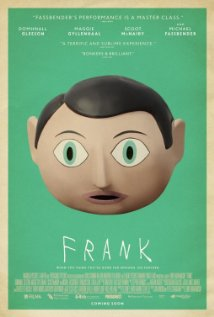
Greetings again from the darkness. Most movies fit pretty easily into a genre: drama, comedy, action, etc. This latest from film festival favorite Lenny Abrahamson is tough to classify. It begins with silly and funny inner-dialogue from an aspiring musician/songwriter (Domhnall Gleeson), transitions into a dark dramady with complex characters and dialogue, and finishes as a bleak statement on mental illness and the music business.
That’s more than I would typically disclose, but some have described the film as an outright comedy and I find that unconcsionable. If you are expecting a laugh riot, you will not only be disappointed, but are likely to miss the unique perspective provided.
The screenplay is written by The Men Who Stare at Goats collaborators Jon Ronson and Peter Straughan. Clearly inspired by the late British comedian and musician Chris Sievey (and his character Frank Sidebottom), Mr. Ronson’s work with Mr. Sievey is the driving force. It’s also the reason Gleeson’s character is emphasized over Michael Fassbender‘s titular character who dons the paper mache head for the bulk of the movie. This script decision probably keeps the film from reaching greatness.
The exceptional and attention-grabbing first 15 minutes set up a movie that dissolves into an exploration of the creative process within mental illness … Franks states numerous times that he has a certificate (certifiable). There is also an ongoing battle between art and commerce, as waged by Maggie Gyllenhaal‘s character and that of Gleeson. Social Media power is on full display as this avant-garde performance art band gathers a huge following prior to ever really producing any music.
Fassbender is somehow exceptional in his “masked” performance, and it’s very interesting to see Ms. Gyllenhaal in a different type role. Gleeson lacks the charisma to carry the film, but the supporting cast of Scoot McNairy (who I think should have played the Gleeson role), Francois Civil, Carla Azar (Autolux drummer) and Tess Harper all deliver and prevent the film from drooping.
Without seeing Frank’s facial expressions, we witness his transformation from mystic/guru to an unstable and socially uncomfortable dude striving for likability, but unsure what the term really means. Must artists suffer for their art? Why does society latch onto the newest social media gimmick? What is creative success and why are so many afraid of it? The film begs these and other unanswerable questions. Certainly interesting, but definitely not 90 minutes of laughter.
SEE THIS MOVIE IF:you have always had a secret desire to be a rock star wearing a giant paper mache head at all times (and who hasn’t?) OR you have an interest in the role of creativity in treating mental illness.
SKIP THIS MOVIE IF: you are expecting some gimmicky comedy like Ted … though this one is funnier than Howard the Duck.
Greetings again from the darkness. This is Australian writer/director David Michod’s follow-up to his excellent 2010 film Animal Kingdom– one of my favorite films that year. While that film took us inside an Australian gangster family, this one is set in a dystopian Outback ten years after what the film terms “the collapse”.
Michod’s script from a Joel Edgerton story goes pretty light on the details and depends heavily on the shared scenes with Guy Pearce and Robert Pattinson. Both deliver the goods, and Pattinson in particular is quite something to behold … his gun shot wound plays second fiddle to the most bizarre speech pattern and accent we have heard in awhile. Initially appearing somewhat flawed in his mental aptitude, Pattinson brings his character through a full cycle of emotions; which is the polar opposite of Pearce’s character who though quite stoic, leaves no doubt that he is angry at 3 goons for stealing his last possession – his car.
The mood of the film and the tone of the character keep us in suspense on why this blasted car is so important to Pearce, and it’s not until the final sequence that the mystery is solved. The more interesting scenes occur when Pearce and Pattinson are facing off – their relationship evolves from adversarial to something kind of oddly touching.
The usually dependable Scoot McNairy plays Pattinson’s brother, but really isn’t given much to do except for his final scene with Pattinson. The most interesting supporting role comes courtesy of screen veteran Gillian Jones as the inquisitive Grandma. She leaves the impression that a film about her would be much wilder than the minimalistic landscape and dialogue of our feature.
Michod’s latest is not at the level of Animal Kingdombut it does offer a couple of intriguing characters and vastly toned down Mad Maxflavor. It’s beautifully photographed and the sparse soundtrack is the perfect compliment.
 Greetings again from the darkness. Kate Beecroft’s first feature film as writer-director can be accurately described as a biographical-drama, yet we can’t help but wonder if a straight documentary could have been equally interesting. In no way is that meant as a criticism of the film, it’s just that most of the cast (with only a couple of exceptions) is made up of non-actors playing versions of their real-life selves … and each one of them holds our attention, leaving us wanting to know even more.


 Posted by David Ferguson
 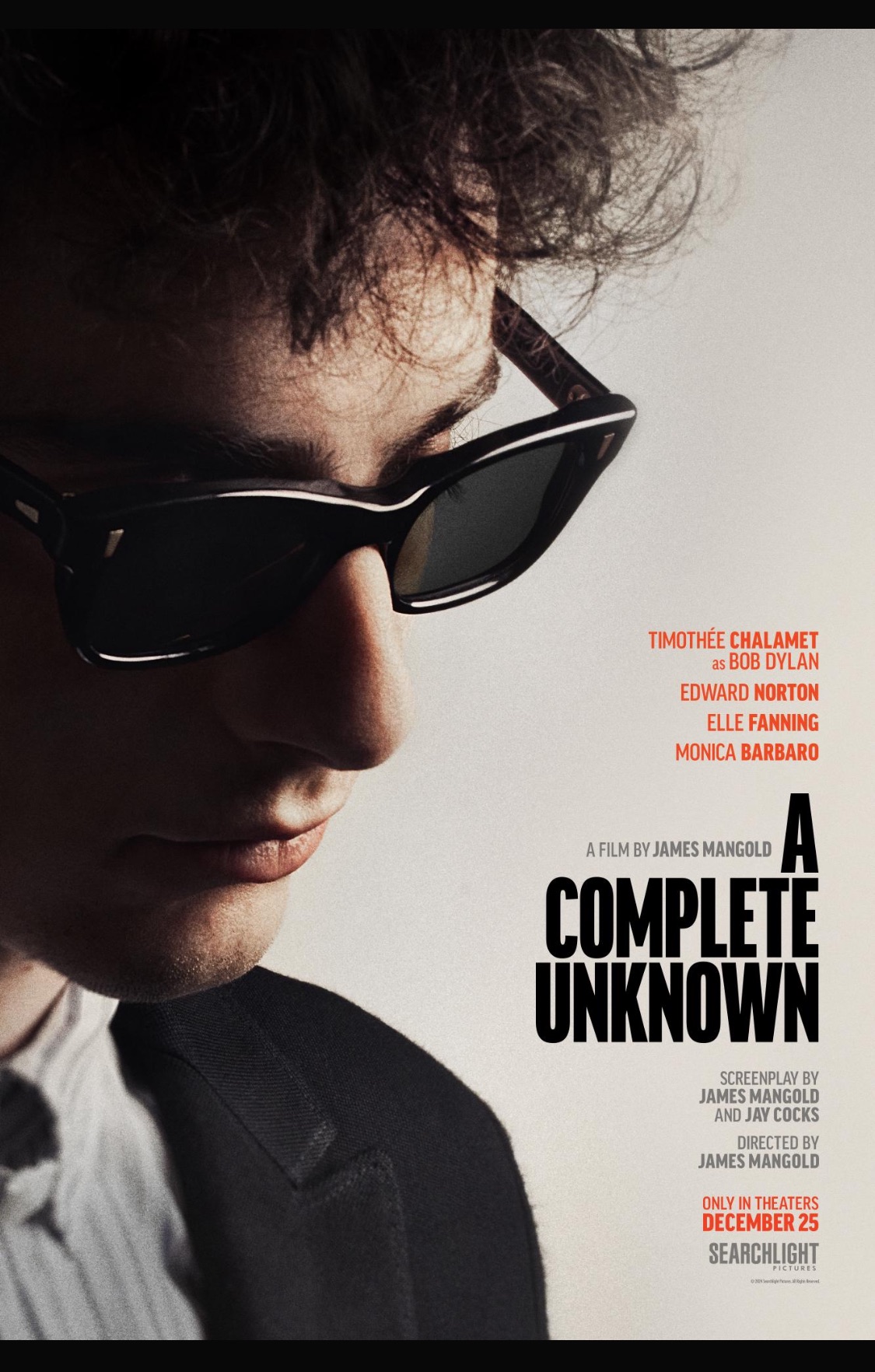 Greetings again from the darkness. As a nineteen-year-old college dropout, Robert Zimmerman traveled from his hometown of Hibbing, Minnesota to New York City so that he could play music and visit his folk hero, Woody Guthrie, who was hospitalized with Huntington’s Disease. Of course, Zimmerman became known as Bob Dylan, and his musical genius continues to this day – more than 60 years and counting. Those early formative years are recounted here by writer-director James Mangold (WALK THE LINE, 2005; 3:10 TO YUMA, 2007; FORD V FERRARI, 2019) and co-writer Jay Cocks (GANGS OF NEW YORK, 2002), who used Elijah Wald’s 2015 book, “Dylan Goes Electric! Newport, Seeger, Dylan and the Night that Split the Sixties” as inspiration.
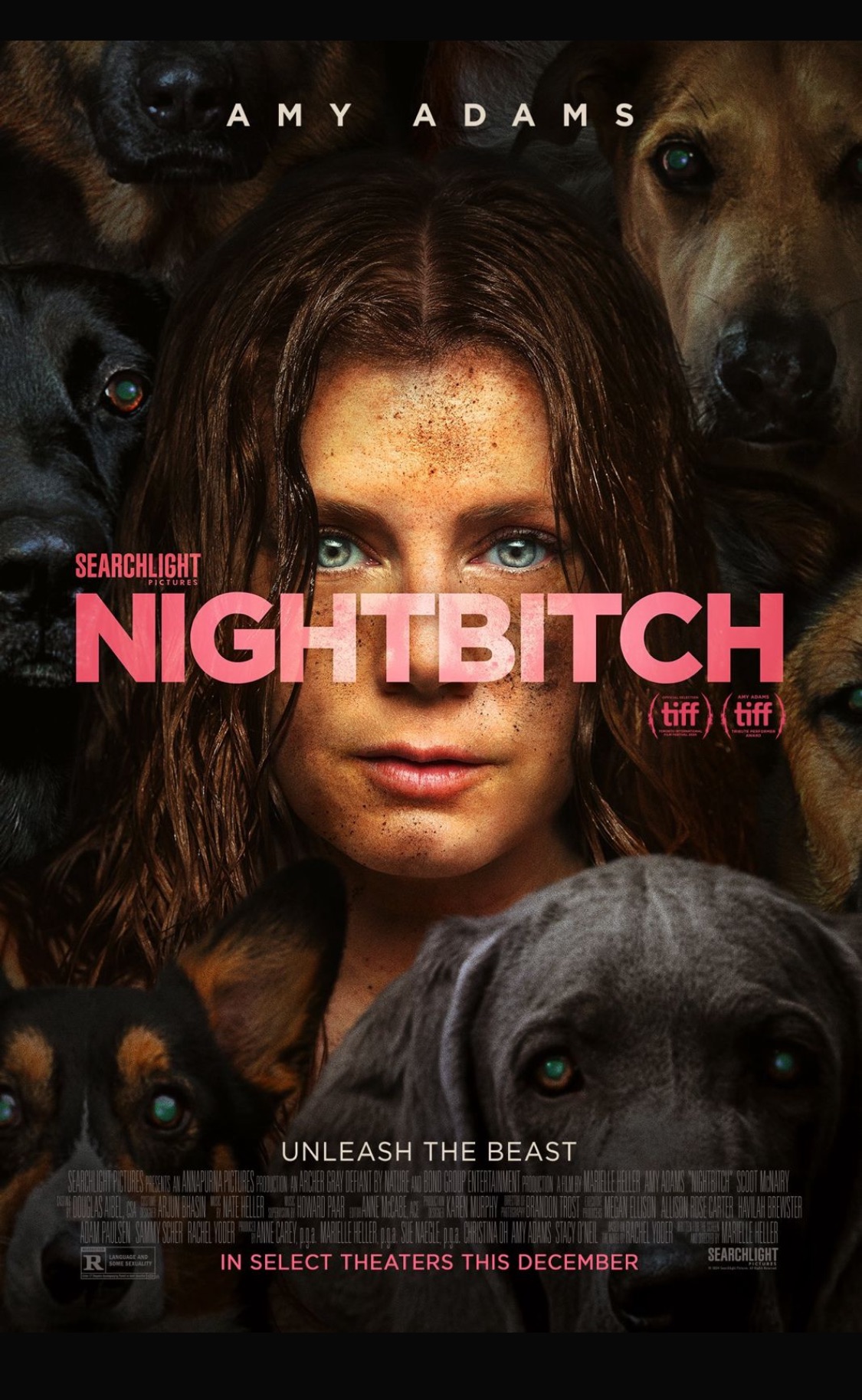 Greetings again from the darkness. J.D. Salinger once wrote, “Mothers are all slightly insane.” Rachel Yoder’s critically acclaimed 2021 novel has been adapted for the big screen by writer-director Marielle Heller, and it seems to confirm the Salinger theory. Ms. Heller has previously directed A BEAUTIFUL DAY IN THE NEIGHBORHOOD (2019), CAN YOU EVER FORGIVE ME? (2018), THE DIARY OF A TEENAGE GIRL (2015). She excels in projects that focus on human nature.
 Greetings again from the darkness. Not all filmmakers have something to say about human beings and human nature, but writer-director Mike Mills does … and he continues to prove it. His three previous feature films are all excellent. 20th CENTURY WOMEN (2016) was based on his experience being raised by his mother, while BEGINNERS (2010) was a tribute to his father. THUMBSUCKER (2005) focused on teen angst, and his latest is inspired by interactions with his own son and Mills’ documentary projects.



 Movie Reviews from the Dark