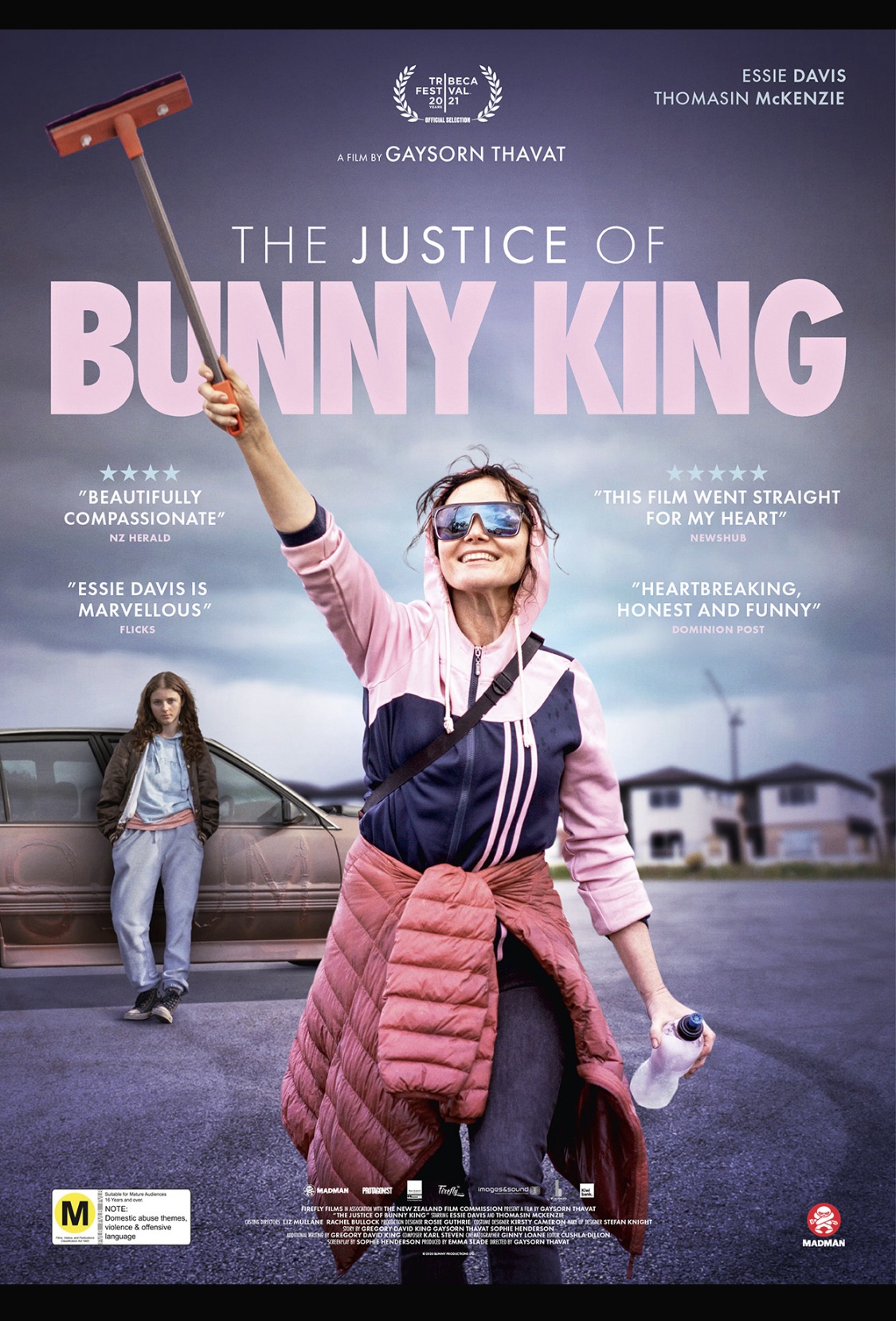
 Greetings again from the darkness. Most of us are quick to judge others. Often too quick. This superb (and bleak) feature film debut from writer-director Gaysorn Thavat reminds us that our initial judgments might just be an easy “out” for us so that we may go on about our way, oblivious to the struggles of others. There is observational commentary here on what it means for a parent to love their kids so deeply, for someone to believe in themselves whole-heartedly, and for the pain an institution can cause under the guise of doing the right thing.
Essie Davis (THE BABADOOK, 2014) delivers a ferocious and authentic performance as Bunny, who is much stronger than we might originally think. Is she more determined or desperate? We aren’t sure. She’s also very clever at times, though sometimes unable to control her emotions. Bunny’s focus is on securing housing so that Social Services will permit her kids to live with her. Currently, she’s only allowed supervised visits, and we see loves them intensely. Shannon (Amelia Baynes) is a disabled 5-year-old who loves her back, while Reuben (Angus Stevens) is an angry and frustrated 14-year old who just wants a ‘normal’ life that doesn’t involve foster homes.
Bunny is perpetual motion. She describes herself as self-employed, spending days as a “Squeegee Bandit” cleaning windshields at stoplights for loose change. She’s saving that change in a soda bottle that she keeps in the linen closet of her sister’s house. It’s here where she cleans house, cooks dinner, does laundry, and watches kids all for the benefit of getting to sleep on the couch. Her sister Grace (Toni Potter) is a late shift nurse whose husband Bevan (Errol Shand) is a d-bag in so many ways. In fact, Bevan is at the center of an incident with Bunny’s niece Tonyah (Thomasin McKenzie, JOJO RABBIT, 2019; LAST NIGHT IN SOHO, 2021) that cuts right to the heart of Bunny’s character. We see how she reacts and begin to understand how she arrived at this particular lot in life.
Thavat’s co-writers Sophie Henderson (BABY DONE, 2020) and Gregory King center much of Bunny’s actions around the birthday party she has promised daughter Shannon for her upcoming birthday party. Is Bunny fit to be a mother? Most of the time we think she is devoting every waking moment to reuniting with her kids. However, in her worst moments, she lashes out and displays poor judgment, leaving us and Social Services with serious doubt. The past is brilliantly unfolded and never dwelled on because Bunny wakes up every morning optimistic about what lays ahead. There is a terrific sequence involving her attire, and Ms. Davis just nails the shift in tone. Hers is an award-worthy performance, if only enough people will see the film (which is doubtful). This New Zealand production expertly sets the stage with 4 Non Blondes “What’s Up” and then bookends with a different version by Willa Amai.
Opens in theaters on September 23, 2022


 Posted by David Ferguson
  Greetings again from the darkness. We watched it play out on television, seemingly getting worse and more tragic and more convoluted by the day. It was painful to watch the United States evacuation of Afghanistan, and now, Jamie Roberts documents what actually happened with previously unseen archival footage supplemented with remarkably candid personal interviews.
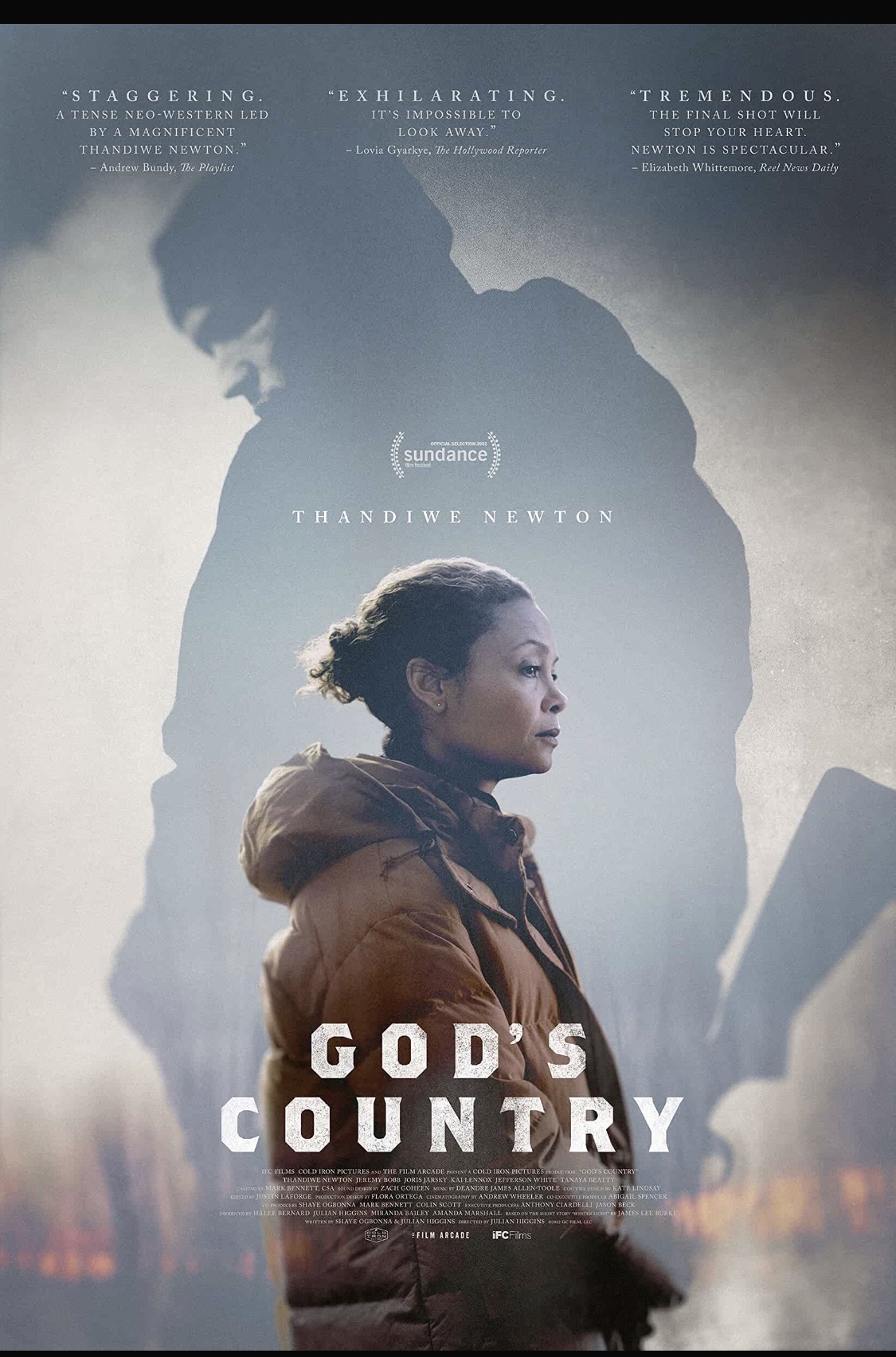 Greetings again from the darkness. Do you ever have that feeling that if no one’s going to do something then “I guess I will”? These days it seems our systems and institutions are failing us, and that’s at the heart of what is eating at Sandra (Thandiwe Newton), a college professor living in a remote house in the mountains. When the film opens, she is at the crematorium for her recently deceased mother. Soon after, two hunters park on her land, and their reactions after she politely asks them not to, tells us where this story is headed.
 Greetings again from the darkness. It’s 1953 in London’s West End and the cast of “The Mousetrap” is celebrating its 100th performance. Of course, Agatha Christie’s play with the twist ending would go on to be the all-time longest running show in the West End, interrupted only by COVID restrictions in 2020. This is the first feature from director Tom George, and the screenplay by Mark Chappell involves a murder mystery wrapped around the murder mystery play.
 Greetings again from the darkness. Twins often have their own language or way of communicating. However, sisters June and Jennifer Gibbons of Wales took this to a new level, creating a mysterious dark connection that no one else every understood. Andrea Siegel has adapted the screenplay from Marjorie Wallace’s book, and Polish director Agnieszka Smoczynska (THE LURE 2015) delivers the style and creep factor, while missing out on answering the questions raised with the story.
 Greetings again from the darkness. A couple of old sayings came to mind while watching this. “The more things change, the more they stay the same.” This ties together what we see from the 1960’s with what we’ve seen very recently in the U.S. Next would be, “You made your bed, now sleep in it.” This references the manner in which our government reacted to civil unrest in the 1960s has affected our society for the past 50+ years.
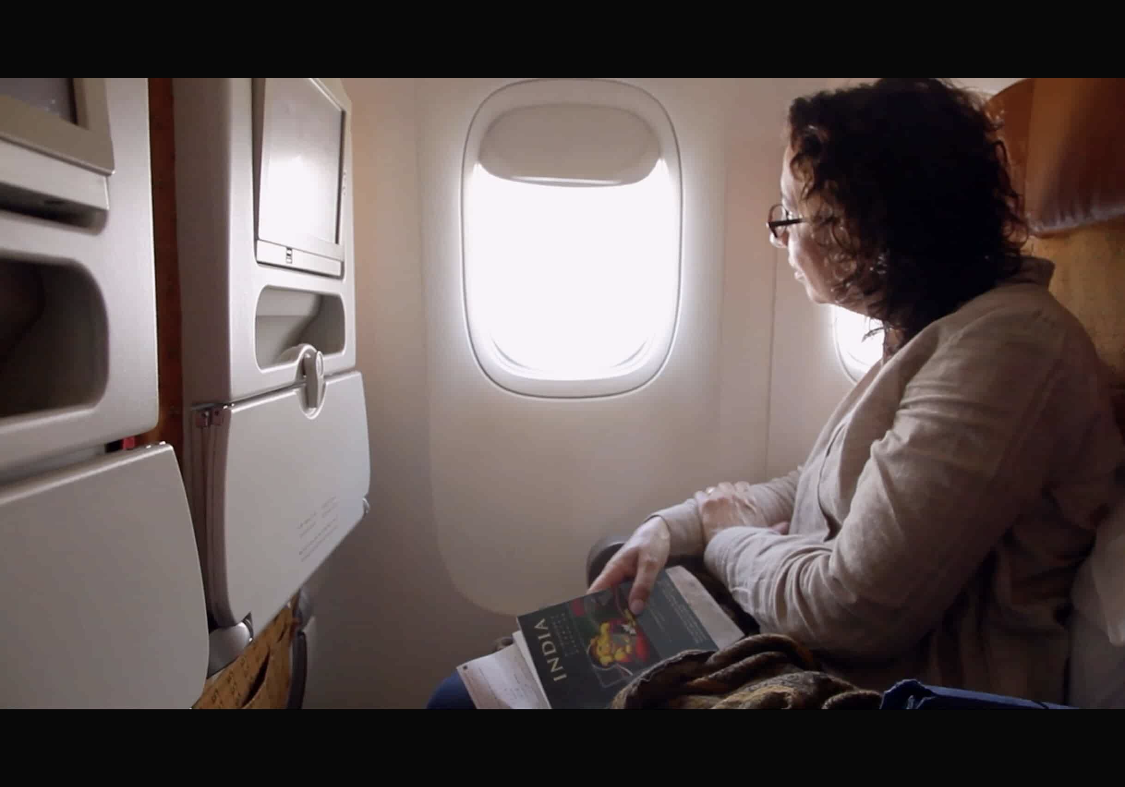 Greetings again from the darkness. We don’t often get tales in documentaries, but that’s the interesting approach documentarian Kavery Kaul takes here. Rather than reporting only the results, Ms. Kaul travels with Fatima Shaik as she pursues answers to the questions of her family’s roots.
 Greetings again from the darkness. It’s a dark, stormy night. If that’s not scary enough, Tess is in Detroit. She hops out of her car and dashes to the front door only to find the key is missing from the lockbox. Her Airbnb has been double-booked and a confused and sleepy man answers the door. When Tess agrees to ‘come in’, we veterans of the horror genre know exactly where this movie is headed. The only problem with our theory is that writer-director Zach Cregger has made it his mission to mess with our heads – and the genre – by confounding us at every turn.
 Greetings again from the darkness. There are some actors I follow simply because I admire their work. Ben Foster earned that loyalty with his performances in such films as LEAVE NO TRACE (2018), HELL OR HIGH WATER (2016), and 3:10 TO YUMA (2007). Here he is cast as Jan Zizka, the legendary 15th century Czech icon whom historians have pegged as having never lost a battle. At the helm is Czech writer-director Petr Jakl whose previous films did not come close to this scale. The list of credited screenwriters includes director Jakl, his father Petr Jakl Sr, Marek Dobes, Michal Petrus, Kevin Bernhardt, and Petr Bok. I don’t pretend to know which of these writers had the greatest impact, but what I can report is that the film looks great and includes some of the best battle scenes you’ll find in any film set in the Middle Ages.
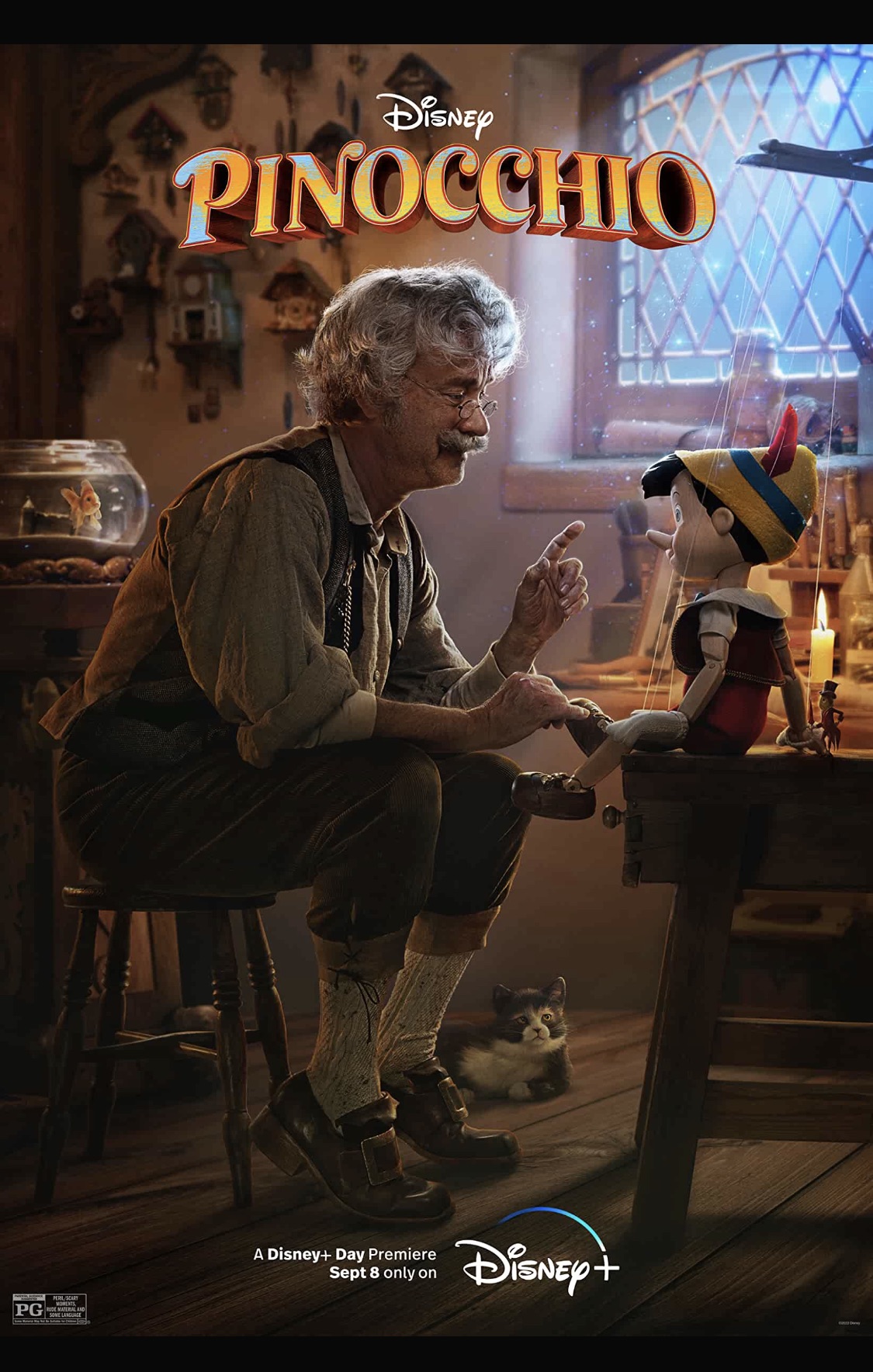 Greetings again from the darkness. Once upon a time … in 1880 (or so) … writer Carlo Collodi (aka Lorenzini) had his original “Story of a Marionette” published. The story of his character Pinocchio has since been told to countless children through just about every possible form of media. The classic Disney animated feature film from 1940 won two Oscars (song, score) and the recent 2019 Italian film version received two Oscar nominations. So why is it that we continue to find new ways to tell the story? Well, because the messages are crucial for kids to understand: pay attention to your conscience, beware of temptations, and decisions have consequences. Of course, anytime a filmmaker re-imagines a classic, folks will line up to shout about how unnecessary it is. However, with a kids’ movie, we must recognize that expectations and tastes have shifted. It’s a bit more challenging to get today’s kids to pay attention for 90 minutes.
 Movie Reviews from the Dark