 Greetings again from the darkness. It’s pretty obvious these times are quite tumultuous when it comes to political views, as well as social and religious beliefs. Of course, differences of opinions have always existed, however the focus by media attention has created new types of monsters … the vocal types who yell into microphones and cameras about how anyone who disagrees with their extreme view is a danger. Most of us understand that the real danger lurks in the things that get decided ‘quietly’ … legislation that impacts people just trying to live their lives and do their jobs.
Documentarian Julia Bacha presents an extraordinary look at this exact topic … legislation that restricts civil liberties guaranteed by the Constitution. We are informed that 33 states passed some form of legislation outlawing the boycotting of Israel, and punishing individuals and companies that don’t abide. Three specific cases are presented: a newspaper editor in Arkansas, a speech pathologist in Texas, and a lawyer in Arizona. Through this, we learn a great deal about how legislation affects those with viewpoints outside the accepted norm.
Bahia Amawi is a speech pathologist and mother of five in Austin Texas. She is also Palestinian. She refused to sign a document promising to never boycott Israel, and was subsequently fired from her position. Alan Leveritt is the founder and publisher of “Arkansas Times”, a free community paper that survives on advertising revenue. He refused to sign a document promising to never boycott Israel, and his advertising revenue from state colleges and organizations immediately stopped. Mikkel Jordahl was part of a state-sponsored program in Sedona, Arizona offering legal representation for inmates. He refused to sign a document promising to never boycott Israel, and he was fired. Jordahl began offering free counsel while his case made its way through the courts.
Brian Hauss, an ACLU lawyer labels this as a First Amendment issue, and explains that boycotts (whether politically motivated or even something as foolish as a fan boycotting a sport or team) have long been a crucial part of this country’s freedom, and a legal way to debate controversial issues. The 1955 Montgomery bus boycott lasted more than one year, and was a protest against racially segregated seating. This consumer-led boycott resulted in change for fairness and equity.
The difference here is that the legislation is politically driven to support Israel, a United States ally, in its occupation of Palestine. This tangled web brings antisemitism and political favoritism into the same argument. The BDS movement (Boycott, Divestment, and Sanctions) is a Palestinian movement with the intent to pressure Israel regarding its Palestinian occupation. The support of Israel may make sense for the federal government, but for a Palestinian mother living in the U.S. to lose her job because she won’t give up her right to boycott the Israeli presence seems to make little sense.
Ms. Bacha’s documentary is so effective because three smart people are able to clearly vocalize how this legislation requires them to carry an unfair burden. Watching Arkansas state senator Bart Hester explain his stance is painful and ludicrous, and offers little support for our trusting of politicians to understand issues prior to voting. This is certainly not a Republican versus Democrat issue, and it’s a solid reminder of Americans’ right to debate and disagree. Most of us agree that antisemitism is despicable, but freedoms are the fiber of the country. The use of music here is often annoying, but a tremendous amount of information is packed into these 70 minutes. It’s quite an education.
Premiering March 1, 2023 on AppleTV and Prime Video


 Posted by David Ferguson
  Greetings again from the darkness. Dorothy Gale from Kansas may have been worried about ‘Lions and Tigers and Bears”, but even with a wicked witch and flying monkeys chasing her, she never faced anything as fierce as Cocaine Bear! The story is inspired by true events in 1985 when a plane load of cocaine was inadvertently dropped over a national forest in Georgia. Screenwriter Jimmy Warden takes that premise and imagines what would happen if a ferocious bear had ingested mass quantities of the drug and then rampaged while on the ensuing high. Elizabeth Banks, known mostly for her acting (THE HUNGER GAMES), adds this to her growing list of directorial outings (CHARLIE’S ANGELS, PITCH PERFECT 2), and her latest is sure to find a place in cinematic lore.
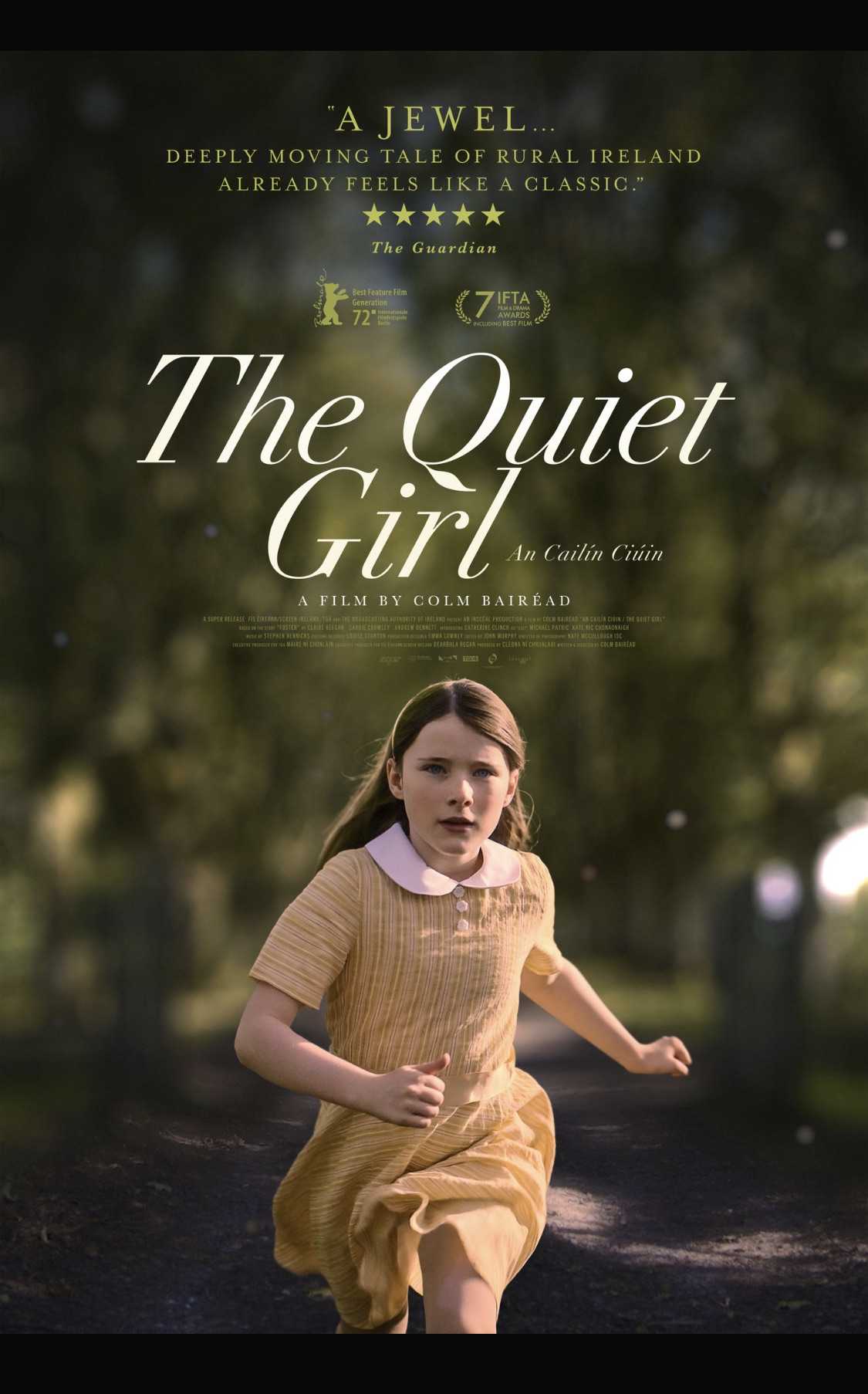 Greetings again from the darkness. What a treat to watch a film that doesn’t drown us in the obvious or spell out each character’s precise thoughts. There are no explosions or action sequences, and these folks are ever so believable and grounded in life. With the depth of emotions relayed, and the unhurried pacing, it’s remarkable that this is a first feature film. Writer-director Colm Bairead has based his debut on “Foster”, a story by Claire Keegan.
 Greetings again from the darkness. A tale as old as time. No, this first feature film from writer-director Matthew J Seville is not a new spin on ‘Beauty and the Beast’, however it is a story that has a familiar feel, and one made more meaningful through terrific acting and expert cinematography. We are engaged through characters rather than plot, and in fact, we grow to care about two of these people after initially finding both a bit abrasive.
 Greetings again from the darkness. When it comes to death, everyone hopes to go out on their own terms. Perhaps that’s at an advanced age surrounded by family. Or maybe it’s before the loss of physical or mental capacities. And then there are those who just want to pass quietly while sleeping. Whatever terms one might envision, the odds are we will have little say in when, where, or how. Co-directors Tal Granit and Sharon Maymon previously collaborated on THE FAREWELL PARTY (2014), and here they are working on Rona Tamir’s adaptation of the stage play by Anat Gov.
 Greetings again from the darkness. These days, it seems like we know entirely too much about the personal and professional lives of writers, actors … well, just about everyone. Of course, it wasn’t always like that. And taking that to an extreme is the all-too-brief life of Emily Bronte. Imagine if someone wrote a book today as popular and terrific as “Wuthering Heights”. We would likely know the name of their pet, their spouse, and where they eat lunch. For Emily Bronte, the details are not only scarce, but also not totally trustworthy, given that much of it comes from her older sister who had a touch of envy, or at least a competitive edge.
 Greetings again from the darkness. The great Raymond Chandler created the now iconic Private Investigator, Philip Marlowe. Over many years, we have gotten to know Marlowe through novels and film adaptations. Actors as varied as Humphrey Bogart, Robert Montgomery, Dick Powell, Robert Mitchum, and Elliott Gould have played the cynical P.I., and now Oscar winning writer-director Neil Jordan (THE CRYING GAME, 1996) has added Liam Neeson to the list. Oscar winning writer William Monahan (THE DEPARTED, 2006) adapted the screenplay from John Banville’s (writing as Benjamin Black) 2014 novel, “The Black-Eyed Blonde”.
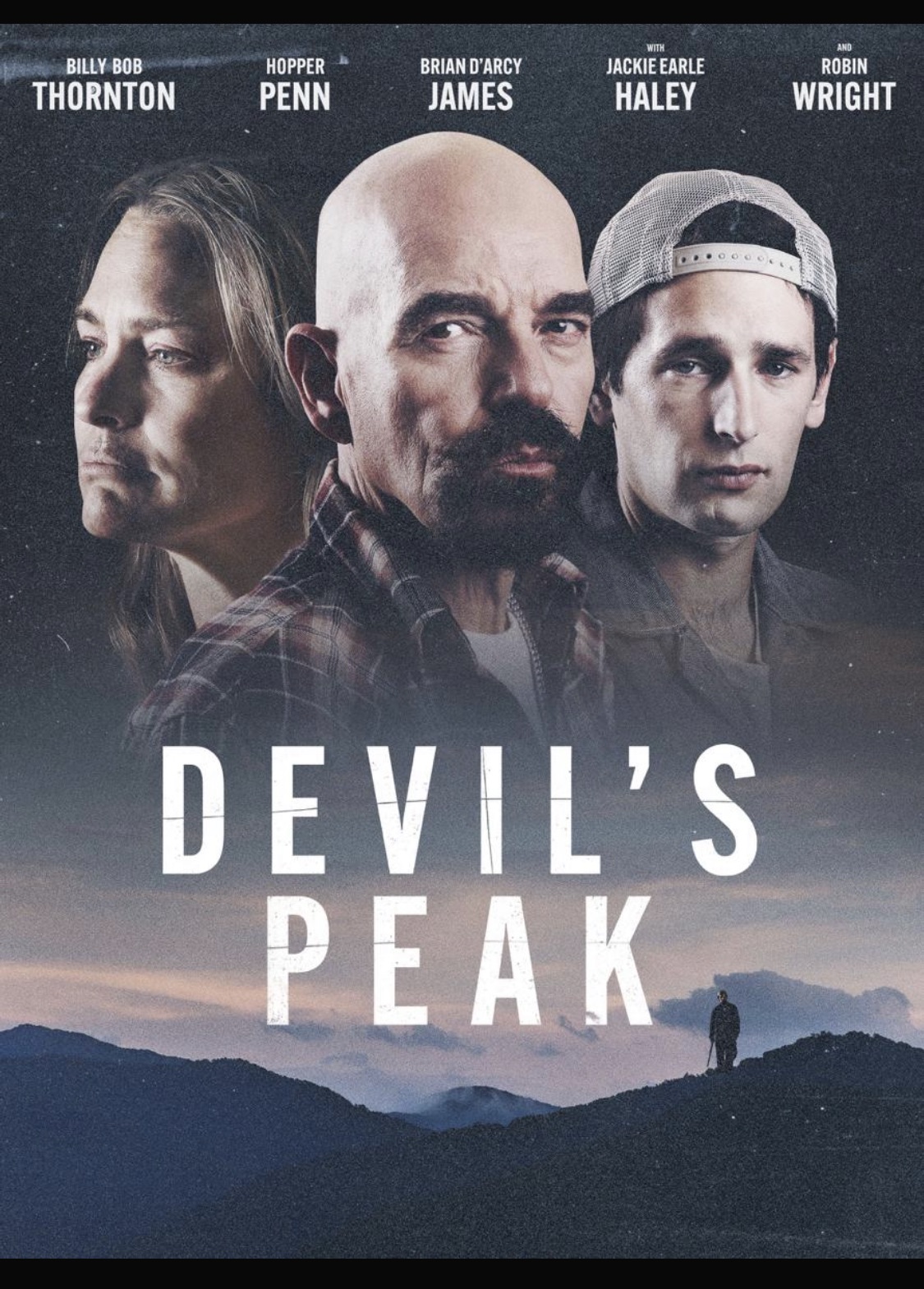 Greeting again from the darkness. It’s been (crudely) stated that one can pick their nose, but not their family. That sentiment has been the basis for many movies over the years, and it’s the driving force behind the latest from director Ben Young (HOUNDS OF LOVE, 2016) working from a script that Robert Knott (APPALOOSA, 2008) adapted from David Joy’s 2015 novel, “Where All Light Tends to Go”.
 Greetings again from the darkness. One of my (many) pet peeves involves movies where we are supposed to believe a couple finds eternal love after barely spending any time together. Now I fully understand some artistic license must be taken in love stories, as there are only a couple of hours to work with, but the challenge is making the audience believe it. For the films that do it right, it’s a thing of beauty.
 Greetings again from the darkness. We’ve seen just about every kind of con on the big screen. Heck, we’ve even seen a wide variety of cons play out in real life through politicians and corporate types. The fictional cons provide some entertainment value, as we get to use our sleuthing and deductive skills in an attempt to figure out what’s happening before it actually does. Solving the mystery is often one of the fun pleasures of cinema; however, sometimes, the filmmaker manages to weave such a tangled web that we are better off just sitting back and letting things unfold.
