Greetings again from the darkness. Always a bit partial to films based on a true story, I would have to label this as a fictionalized historical period piece, and a step above most costume dramas (though the costumes here are quite stunning). While it’s a very attractive movie to look at, I was a bit frustrated at the multi-directional approach that just skimmed many topics.
The movie could have focused on the relationship between cousins Dido Elizabeth Belle (Gugu Mbatha-Raw) and Lady Elizabeth Murray (Sarah Gadon). Or it could have zeroed in on the unusual complexities raised by the illegitimate mixed race Belle being raised in British Aristocracy. Still another option would have been digging into the historical impact of Zong massacre and the subsequent arguments, court trials and appeals. Instead, we get a splash of each … which leaves the viewer wanting more detail on all three.
The cast is very strong and features Tom Wilkinson as Lord Mansfield, Lord Chief Justice of the King’s Court … he raises Belle at the request of his nephew (her father). Lord Mansfield’s wife is played well by the always excellent Emily Watson. Also featured are Miranda Richardson, Matthew Goode, Penelope Wilton (always entertaining), James Norton, Sam Reid, and Tom Felton – who creates yet another despicable character to go with his Draco from the “Harry Potter” series.
Maybe the best term for this is historical melodrama, as the courtroom decision comes across as anti-climatic, with more third act attention paid to Belle’s love interest (Mr. Reid). Very little is known of the actual Dido Elizabeth Belle, but it seems clear that her role in the Zong trial was dramatically enhanced for the purposes of the film. In fact, more drama may have played out for the film’s writing credit between the director Amma Asante and the WGA. Though the director lost the writing credit, she can be proud enough of the final product. The two cousins are featured in the famous 1779 painting (see below) that inspired the story.
Greetings again from the darkness. It’s been more than 50 years since this one was released, so it seems a good time to offer up some thoughts and observations. Let’s start with the fact that you probably read Edgar Allen Poe’s poem “The Raven” in high school. Director Roger Corman and writer Richard Matheson take Poe’s work as a starting point in a most unique story of their own.
If you aren’t familiar with Roger Corman, he is one of the most prolific and entertaining “B” movie makers of all time. His writer here, Mr. Matheson, is best known for his work on numerous episodes of “The Twilight Zone“. Poe – Matheson – Corman would be enough, but we also get Vincent Price, Peter Lorre, Boris Karloff, Hazel Court and a young and not yet well known Jack Nicholson. Price is always a treat to watch (especially in horror films), Lorre appeared in 3 of the greatest movies of all-time (M, The Maltese Falcon, Casablanca), Karloff is the master of monster (and much more), Ms Court was one of the first stars of Hammer Films, and of course, Nicholson (fresh-faced here) went on to become one of the most successful actors in movie history.
Price, Karloff, Lorre and Nicholson offer up four of the most unique and recognizable voices ever heard in movies, and they each partake in the fun provided by Corman here. Yes, I said fun. This is almost slapstick comedy, and at a minimum, it’s a parody of the much darker series of Poe films. If you consider it as an influence of the 1960’s “Batman” TV series, you wouldn’t be wrong. Even the music (heavy on the tuba) has an air of comedy.
Watching Peter Lorre as a matador is pretty funny, as is Nicholson as the frenetic stagecoach driver. Some of the back-and-forth with Lorre and Nicholson as father and son is clearly ad-libbed, but the classic comedic sequence occurs when Price and Karloff take their wizardry duel to the death and turn it into a special effects highlight reel.
This may be the only time you hear the phrase “precious viper” used to describe a woman, and if that, combined with all of the above reasons, isn’t enough to motivate you to seek this one out, then maybe you will never discover why so many adore the films of Roger Corman. Compared with films of today, this style is nevermore.
Greetings again from the darkness. It’s easy to understand how frequent movie goers develop an affinity for certain directors, however, it’s important to not blindly praise based on a name. Korean auteur director Joon-ho Bong has previously delivered a couple of artistic and interesting genre movies with The Hostand Mother. His first (mostly) English language film is a sci-fi, politically-oriented action thriller that is based on a French graphic novel, and utilizes well known actors from the U.S. and U.K. This is definitely “world cinema”.
The basic premise is that a man-made experiment to “fix” severe global warming change goes bad, leaving the earth as an uninhabitable frozen tundra … even worse than Green Bay. The only survivors are those aboard a perpetual motion train that circles the earth year after year. Onboard is a class-segregation system (ala The Hunger Games) with the richest 1% at the front (first class) of the train and the 99% lower class bringing up the rear (steerage). This case of haves vs have-nots leads to the expected rebellion by the oppressed lower class.
As the rebels make their way towards the front of the train, each car brings new obstacles … in fact, each car plays like a new level in a video game – each different and more challenging than the previous. In between are a wide variety of creative fight scenes that allow the director to show off his visual acumen in close-quarter battles – some quite violent.
Comic relief is provided by a near clown-like Tilda Swinton. Her appearance and delivery are hilarious and seem better fit for a Wes Anderson movie … well, if not for the fact that I found the entire movie works better as a comedy than the political commentary it’s meant to be. Each of the main characters provide a bit of interest on their own: Chris Evans as the main rabble-rouser, Jamie Bell as his right-hand man, John Hurt as the old-timer and Octavia Spencer as the wronged-mother. Actually the best story line involves Nam and Yono (Song Kang-ho and Ko Ah-sung respectively) as a father-daughter team with skills integral to the rebellion, as well as their own agenda.
While the fight scenes were well-staged, I couldn’t help but think of beer commercials every time the camera provided an exterior shot of the train. Luckily these shots and the abundance of posturing and lame dialogue kept me chuckling enough that it overshadowed the high number of ridiculous sequences … not the least of which is the final introduction to the Wizard of Oz-like train engineer in the front car.
Director Joon-ho Bong continues his technical advancements in visual and action effects, but he will need to deliver much tighter stories to capture a large U.S. audience. In fact, more drama was delivered by his real-life “final cut” battles with Harvey Weinstein than the on screen uprising.
***NOTE: I think having Ed Harris wear his beret from The Truman Show would have been a nice effect.
SEE THIS MOVIE IF: you want to see a true “world cinema” production featuring talent from Korea, France, the United States and the United Kingdom.
SKIP THIS MOVIE IF: you believe class warfare (even with a stop off at a sushi bar) is a topic best suited for real life
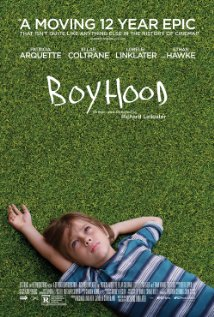
Greetings again from the darkness. The trick here is to convey enough without ruining anything. No, it’s not a movie filled with twists and mystery, but rather it’s a journey unlike we have previously seen on screen. Director Richard Linklater is known for his fascination with time as a key element in movies. Of course, that’s obvious in his “Before” trilogy (the same two characters from 1995-2013), but think also of Dazed and Confused, School of Rock, and Bernie. The passage of time is crucial in each, but Boyhood takes it to a whole new level.
Linklater and the 4 main characters have congregated and filmed a few days each year … for 12 years. We watch a fictionalized family mark the passage of time. You might be familiar with director Michael Apted’s excellent “Up” documentary series, where he reunites with his same group of people every 7 years. In Linklater’s experiment, we watch Mason (Ellar Coltrane) and Samantha (Lorelei Linklater, Richard’s real life daughter) progress from adolescence to college age in under 3 hours. If you are a parent, you have experienced the quick passage of time when it comes to watching your kids grow. It’s incredibly emotional to watch a young, fresh faced Mason grow into a college aged young man right in front of us.
Linklater certainly got lucky with the two kids he cast at young ages. Their development and commitment to the project is the heart of the film. And if that weren’t enough, we also see Patricia Arquette and Ethan Hawke as their mom and dad through the years. Although they are separated when the film begins, we witness the changes each go through in their own lives. This is evolution, not creation. We don’t get a new actor at each stage, instead we witness the transformations of all four.
Patricia Arquette’s character is a solid mom, while at the same time attempting to figure out her own life. Her less-than-stellar choices in men have quite the influence on Mason and Samantha … the most dramatic being Ted (Steven Chester Prince) who sinks deeper into frustration, depression, alcoholism and anger. It’s a thankless role, but it’s a guy we have all known in life.
So the film is about parenthood, childhood, adulthood, and family relationships. It’s about the moments in time – the snapshots that become the fiber of our being. The shaping of people is an ongoing process and adult drama plays a role for all ages. As character flaws are exposed, choices are made that have a lasting impact.
The passage of time is relayed not just through the kids looking older, but also through the usage of technology, music and pop culture. All 4 of the main actors are excellent, but Patricia Arquette and Ellar Coltrane are truly exceptional. Though the film is not a traditional narrative, it would be wonderful if both received some awards attention. They are that good.
A nod of appreciation should go out to IFC for taking the risk on such an unusual project. Linklater offers up an experiment WITH time, rather than an experiment IN time. Most studios would not be patient for 12 years, but their risk clearly pays off with something that must be experienced to be understood. My hope is that many will give this one a shot, and feel appreciative of all those involved for their willingness to put up funding … or just as importantly, their time.
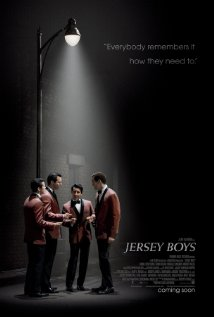
Greetings again from the darkness. Two upfront disclosures are in order. I have never seen the mega-smash Broadway show, and I’ve always been a huge fan of The Four Seasons’ music. These are pertinent because they impact one’s reaction to the film version.
Director Clint Eastwood says he knew immediately he wanted to bring the Broadway show to the movies. In fact, his decision to cast 3 of the 4 main stage actors proved crucial in this successful transition. The rags-to-riches story of four guys from New Jersey is not only true, but it’s believable because they scrap and battle just like we would expect. The mob ties are on full display, as is the struggle to maintain any semblance of normal family life while on the rocket ship to stardom.
John Lloyd Young is spectacular as the great Frankie Valli. While I fully anticipated cringing during the songs, his voice never once faltered. He is clearly the main reason the Broadway show (he won a Tony award) and the movie work. Erich Bergen plays songwriter Bob Gaudio and Michael Lomenda plays bassist Nick Massi … both are solid. The only crack was in the casting of Vincent Piazza as Tommy DeVito. Piazza is well known from “Boardwalk Empire“, but he is just a bit too slick as the guy who scammed the other band members, digging a massive hole of debt – mostly to a mob loan shark named Norm Waxman (played by Donnie Kehr in an excellent performance).
Other support work is provided by Mike Doyle as record producer and all-around flamboyant guy, Bob Crewe; Renee Marino starts strong as Mary (Frankie’s future wife) but is given little to do (other than booze and yell) as the story progresses; Joseph Russo captures the quirks of a young Joe Pesci, who introduces Gaudio to the band; and the always entertaining Christopher Walken slightly underplays local made guy Gyp DeCarlo who is instrumental in protecting Frankie in those early years … proving that in Jersey, Talent = Respect. It should also be noted that the band’s accountant is played by Barry Livingston, who you might remember as Ernie from “My Three Son’s“.
Eastwood is now 84 years old and he wisely takes a pretty conventional route with the film version. In fact, the argument could be made that since it doesn’t have the edge of most R-rated movies, taming the language could have resulted in a PG-13 rating, making it more accessible to families. The screenplay is from Marshall Brickman (Annie Hall, Manhattan) and Rick Elice, also co-wrote the book for the musical. This movie has not been popular with critics and it’s probably because of this relatively safe approach to an entertaining and fun story. It’s not cutting edge cinema, but if you enjoy The Four Seasons music, you will enjoy the movie.
***NOTE: Two surprising notes on cameos: Clint Eastwood makes a brief appearance on a TV set showing an episode of “Rawhide” where he portrayed Rowdy Yates; but the bigger question is WHERE WAS FRANKIE VALLI? After numerous appearances on “The Sopranos“, and being listed as here as an Executive Producer, it seems working Mr. Valli into a scene would have been a nice tribute … or, as reader Goldy suggested … how about showing actual Hall of Fame induction footage at the end?
***NOTE: If you are in the mood for a different type of Christmas song this year, check out The Four Seasons version of “Santa Claus is Coming to Town” … always one of the more challenging sing-alongs!
Greetings again from the darkness. I’ve said it many times – my expectations for documentaries are quite high. Either pick a side (ala Michael Moore) or tell the whole story. Anything less is a let down. That holds true even if your subject is a colorful curmudgeon with what might be an interesting back story.
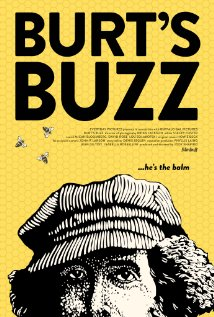
You are probably familiar with the Burt’s Bees brand of personal care items, and you have probably noticed the bearded guy logo. Yes, that’s the real Burt and director Jody Shapiro introduces us. Admittedly, I got caught up in the Burt show … watching him bounce between his life of seclusion and minimalism in Maine, and the near-rock star status he enjoys on a PR tour of Taiwan. It wasn’t until afterwards that the holes and unanswered questions started piling up.
The Burt Shavitz story traces his initial drop out from a promising photojournalism career in New York to selling jugs of honey from his truck on the side of the road. A chance meeting and initial attraction to single mom Roxanne Quimby brought forced ambition to Burt’s quiet life and the next thing he knew, he was spending his days behind a desk helping run a company.
Burt and Roxanne had a massive fallout after the company relocated to North Carolina and the movie only hints at the real reason. It also leaves open-ended the question of whether Roxanne shrewdly maneuvered the company away from Burt or whether the decision to part ways was mutual. Whatever the story, she later sold it for almost $1 billion to the Clorox company.
It’s pretty obvious Roxanne refused to participate in the film, and instead sent her son to answer questions. Because of this, the guts of the story are never determined. Instead, we follow Burt around as he fulfills his requirements to the company that he no longer owns. We don’t get any details on his arrangement, who pays for his personal assistant, or what Burt thinks about the business side. Instead he ruminates about the importance of land, and how he lives a life without hot water or hardly any other of life’s modern conveniences. Well, except for when he is staying in 4 star hotels while touring for the company. These contradictions are fascinating, but of course, go unexplored.
Burt doesn’t appear to be a very complex man, and it’s easy to accept his words at face value. He is almost 80 years old and seems to be quite satisfied hanging out with his dog … but he also gets a kick out of the recognition and applause from his promotional tours. With all of the unanswered questions, this would have been better served as an hour long “Biography”.
Greetings again from the darkness. Writer/director Pawel Pawlikowski (My Summer of Love, 2004) films in his homeland of Poland (set in 1962) and presents a familiar topic from a most unusual perspective. This film has been very well received on the festival circuit and it’s easy to see why: it’s beautifully photographed, very well acted, includes terrific music and presents an emotional story for thoughtful viewers.
We first meet Anna as a novitiate nun on the verge of taking her vows. Her Mother Superior has one requirement: Anna must visit her lone surviving relative. Her Aunt Wanda is everything Anna is not: worldly, cynical, direct. In the first few minutes of their visit, Wanda (Agata Kulesza) informs Anna (Agata Trzebuchowska) that though she is a nun-to-be, she was born Jewish with the name Ida, and she was sent to a Catholic orphanage when her parents were killed.
After this bombshell, the two set out on a journey to discover the truth and trace their family roots. It’s a journey of discovery not just for Ida, but also for Wanda, who carries her own burden. Questioning one’s faith and one’s true identity is nothing new, but this makes for quite an unusual buddy road trip. Wanda is rarely without a drink in hand and Ida has had no previous exposure to the real world outside the convent.
This is the debut of Agata Trzebuchowska and her porcelain look and big eyes convey a quality with which we find ourselves comfortable with, while Ms. Kulesza evokes empathy from the viewer despite her harsh edge and beaten down outlook on life and people. Hers is a standout performance.
Two exceptional pieces of music are used to perfection: Coltraine’s “Naima” and Mozart’s “Jupiter” symphony. The storytelling and look of the film might be austere (stunning black and white photography) but this music hits us hard in two separate scenes. For those who appreciate dramatic art films, this is one to see .
**NOTE: there is an appearance from real life singer Joanna Kulig
Greetings again from the darkness. This is Australian writer/director David Michod’s follow-up to his excellent 2010 film Animal Kingdom– one of my favorite films that year. While that film took us inside an Australian gangster family, this one is set in a dystopian Outback ten years after what the film terms “the collapse”.
Michod’s script from a Joel Edgerton story goes pretty light on the details and depends heavily on the shared scenes with Guy Pearce and Robert Pattinson. Both deliver the goods, and Pattinson in particular is quite something to behold … his gun shot wound plays second fiddle to the most bizarre speech pattern and accent we have heard in awhile. Initially appearing somewhat flawed in his mental aptitude, Pattinson brings his character through a full cycle of emotions; which is the polar opposite of Pearce’s character who though quite stoic, leaves no doubt that he is angry at 3 goons for stealing his last possession – his car.
The mood of the film and the tone of the character keep us in suspense on why this blasted car is so important to Pearce, and it’s not until the final sequence that the mystery is solved. The more interesting scenes occur when Pearce and Pattinson are facing off – their relationship evolves from adversarial to something kind of oddly touching.
The usually dependable Scoot McNairy plays Pattinson’s brother, but really isn’t given much to do except for his final scene with Pattinson. The most interesting supporting role comes courtesy of screen veteran Gillian Jones as the inquisitive Grandma. She leaves the impression that a film about her would be much wilder than the minimalistic landscape and dialogue of our feature.
Michod’s latest is not at the level of Animal Kingdombut it does offer a couple of intriguing characters and vastly toned down Mad Maxflavor. It’s beautifully photographed and the sparse soundtrack is the perfect compliment.
Of course with so many current Dallasites being from some other place, the odds are pretty good that your mother wasn’t originally from Oak Cliff. Mine was. In those days, Aunt Stelle’s Sno-Cones were the pinnacle of area culture. Today, Aunt Stelle’s is still serving up the syrupy frozen delights, and the OC is booming with commercial re-development, residential renovation, and an ever-expanding number of cultural options. A significant part of this is The Oak Cliff Film Festival … now in its third year!
Three years is an extremely “young” film festival (Cannes Film Festival began in 1946), however, if the age were not advertised, most attendees would never know. Full credit to the four co-founders: Barak Epstein, Eric Steele, Adam Donaghey and Jason Reimer … they also run the historic Texas Theatre (historic because it’s old and because of Lee Harvey Oswald). Recognition also goes out to Mary Katherine McElroy, the Festival Coordinator (and a whirlwind of energy). Normally, my film festival recap would not mention the people who run it, but this isn’t a “normal” film festival. It’s run by people who love all aspects and all types of film – they are obsessed with movies, not money.
Rather than reviewing specific films shown, let’s look at my 8 critical elements of Film Festivals, and how OCFF stacks up:
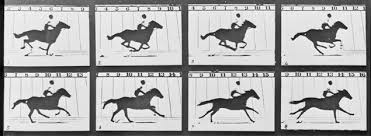
SELECTION OF FILMS:This is the make-or-break category for festivals. The approach of OCFF is the deeper the cut, the better. The more independent, the better. A respect of film history is evident, as is the driving force of showing films that haven’t really had a shot yet. The historical element was on display with the repertory (and 35mm print) screening of Dog Day Afternoon(followed by The Dogdocumentary on the real life bank robber John Wojtowicz); The Talking Heads’ Stop Making Sense; Director Michael Powell’s Peeping Tom and the 1975 documentary Eadweard Muybridge, Zoopraxographer. While history plays its part, the real value of this festival comes courtesy of the widely disparate selection of shorts, documentaries and narratives from extraordinarily passionate filmmakers.
VENUES: My schedule limited my viewing to the Texas Theatre, the art-deco Kessler Theatre (normally a live music venue), and the new Bishop Arts Theatre Center. The first two have been restored and are a visual treat to explore, while BATC is more modern and very comfortable – though it’s “no food or drink” policy is borderline torturous for a festival. Saturday night’s screening on the Jefferson Tower rooftop offers some insight into the creativity of the OCFF group. All events and parties were held at area locales known for their unique flavor, including the historic Turner House.
THE CROWDS: There is nothing more disheartening at a festival than standing in a long line and still not being admitted to a screening of interest. The number of venues and the overlapping schedule prevented this from being an issue at OCFF, though my understanding is the rooftop screening was at full capacity. The Texas Theatre lobby did get pretty tight at times as the sound/picture checks took place, but the inconveniences were brief. Another thing that helped, was that most of the attendees were there for films, not just to be seen at the scene (I’m talking to you L.A.)
TRANSPORTATION:Unfortunately, the three main screening venues required driving for access, and there was no van or bus service provided. This was a minor issue as street parking was readily available most of the time. For out-of-towners, this could be a minor challenge.
SPECIAL GUESTS: Given the type of films on the schedule, this category is crucial for the success of OCFF, and oh how they delivered! These deep cut film projects beg for Q&A and production backstory. A very high percentage of the screenings allowed for personal interaction with the passionate filmmakers. This is a treat for the viewer and a nice reward and opportunity for the filmmakers. Thom Anderson, the director of the 1975 Muybridge documentary spent quite a bit of time onstage, as did director AJ Edwards for his Sundance film The Better Angels. Especially interesting was PF Kluge, who wrote the original “Life Magazine” article that inspired Dog Day Afternoon. However the most fun was hearing from the first time filmmakers and learning of their inspiration and struggles. No matter where their careers lead, they will always have shown their finished project to a live audience.
FESTIVAL VOLUNTEERS: There was no shortage of volunteers and they were friendly and available to assist. There did seem to be some issues tracking the badges as doors opened for screenings, but that was very minor.
LOCAL FLAVOR: While the perfect set up would allow for walking distance between all screening venues and sponsor restaurants and cafes, the driving distance was only a few minutes between a very wide choice of local spots … these aren’t chain restaurants, but rather the independent spirit of the Bishop Arts District, which corresponds nicely to the OCFF. This entire festival is about flavor … especially local flavor.
PERKS FOR FESTIVAL ATTENDEES: Swag was non-existent, but there were creative and unique events and parties, and even an online video contest to win a bicycle. The marketing plan for OCFF is to make sure all attendees want to tell their friends about the films, the venues, the music and the parties. It’s not a festival for the masses, but this group is exceptional at what they do.
Personally, I absolutely love the odd combination of history and cutting edge offered up by the Oak Cliff Film Festival. Learning more about familiar films (Dog Day Afternoon), while having our senses challenged by new material (Yakona), is about as good as it gets for movie lovers.
As you might expect, I spent a great deal of my time with documentaries – both the shorts and feature lengths. The two stand-outs both won Grand Jury Awards: A Man without Words(doc short by Zack Godshall) and Yakona (a beautifully photographed doc feature by Paul Collins and Anlo Sepulveda). My personal connection to both of these films led to warm and colorful conversations with the filmmakers.
Director Michel Gondry’s latest visual feast Mood Indigofeatured other-worldly art design and set design, and the choice of The Better Angelsas the festival’s closing film was spot on. The Terrence Malick influence on director AJ Edwards is unmistakable and the artsy look at Abe Lincoln’s childhood in Indiana left me wanting more. Because of all this … I can’t wait for OCFF number 4!
If you are in the Dallas area, check out The Texas Theatre:
Greetings again from the darkness. It’s been 30 years. The movie hasn’t changed. I remember every scene. So that means it’s ME that has changed. While I really liked the movie on its 1984 release, it’s only now that I truly appreciate the brilliance of the script, the music, the direction, the photography and the acting … much less the wide range of emotions released in the smallest ways possible.
Director Wim Wenders has long been a favorite at Cannes Film Festival, and this one took home the prestigious Palme d’Or. Since then, the film has often been mentioned as one of the best movies of the 1980’s, and after this most recent screening (courtesy of the Dallas Film Society), I wholeheartedly concur.
Opening in a most unusual manner … the lead character comes stumbling out of the Texas dessert and doesn’t utter a word for the first 20-25 minutes … this film immediately strikes you as something unique –definitely not cookie cutter. Trying to outguess the script is a waste of time. It’s best to just watch it unfold in a believable and sometimes awkward way.
In a rare lead role, long time character actor Harry Dean Stanton plays Travis. We soon enough learn that Travis disappeared four years ago leaving behind a wife and young son. We also learn that his brother Walt (Dean Stockwell) and Walt’s wife Anne (Aurore Clement) have been taking care of the boy, and Hunter (Hunter Carson) considers them his parents (his mom ran off too).
Walt and Anne invite Travis to stay with them and re-connect with his son, but they are caught off guard when the two really click and they take off to find Jane, the wife/mother. Their charming (but less-than-professional) stakeout leads to the discovery that Jane is working in a sex shop, spending her days talking to a 2 way mirror with lonely men she can’t see. One of the most remarkable on screen soliloquies ever seen occurs on Travis’ final trip to see Jane (Natassja Kinski). He tells her a heartfelt story that plays out as an explanation, an apology, and a plan for moving forward. She slowly realizes it’s their story he is telling. It’s his way of making reparations and finally doing the right thing (as he sees it).
As with most classic films, the backstory offers some interesting tidbits and the players are fun to catch up with. This story was originally written by the great Sam Shepard. Mr. Shepard is a Pulitzer Prize winner, an award winning playwright, and well known actor (Oscar nominated for playing Chuck Yeager in The Right Stuff). Director Wenders then brought in L.M. “Kit” Carson to add and revise the script while on set. Carson’s son (with actress Karen Black) Hunter plays the boy in the film, and he delivers one of the best, least affected, child performances of all time. Kit went on to write the screenplay for The Texas Chainsaw Massacre 2 (1986) and had a significant acting role in Running on Empty(1988). His son Hunter is still a working actor today. Mr. Wenders was one of the German New Wave of directors along with Herzog and Fassbinder, and his Wings of Desire(1987) would make a terrific double feature with this one. Mr. Stockwell was a very successful child actor in the 1940’s and is best known for his work in Blue Velvetand TV’s “Quantum Leap“. Ms. Kinski is the daughter of Klaus Kinski and is fondly remembered for her roles in Tess (1979) and Cat People(1982), though she still works today as well.
Harry Dean Stanton is now 88 years old. He served in WWII and was present during the Battle of Okinawa. His acting career began in the 1950’s and he still works periodically today. In addition to nearly 200 acting credits, he has had a pretty nice career as a musician. His band built a large cult following. Some of his most popular acting roles have been in Cool Hand Luke, The Godfather II, Alien, Repo Man, Escape From New Yorkand, of course, as the dad in Pretty in Pink.
The music in the film is provided by Ry Cooder, who is a tremendous slide guitarist and has worked with some of the all-time greats in the music business – The Rolling Stones, Van Morrison and Neil Young, among others. Cooder is a multi-Grammy winner and re-teamed with Wenders for the Oscar nominated Buena Vista Social Cluba few years later. The music is an exceptional compliment to the movie, as is the camera work of Robby Muller, who also works frequently with Wenders.
This story of loss and loneliness is an easy one to overlook, but when a film holds up well for 30 years … and affects you differently depending on your own lot in life … its legacy is secure.
***NOTE: those of a certain age will get a kick out of the use of a Muse Air jet
 Greetings again from the darkness. Always a bit partial to films based on a true story, I would have to label this as a fictionalized historical period piece, and a step above most costume dramas (though the costumes here are quite stunning). While it’s a very attractive movie to look at, I was a bit frustrated at the multi-directional approach that just skimmed many topics.


 Posted by David Ferguson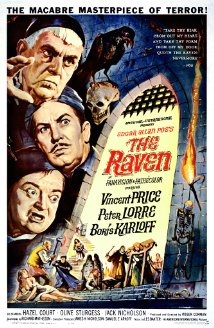





 Movie Reviews from the Dark