2040 (doc, 2020)

June 4, 2020

 Greetings again from the darkness.  Where do you see yourself in “X” years? That’s a common job interview question, and with a slight twist, it’s the question Damon Gameau asks himself and us … only his question is about our planet, and it’s meant to have us consider life for the next generation. Mr. Gameau makes it personal by structuring this as a (future) video letter to his 4 year old daughter Velvet, and describing what the world could be when she turns 25. What we immediately notice is that Gameau takes an optimistic approach, in contrast to the doom-and-gloom versions of climate change that we’ve come to expect. Rather than scare tactics, Gameau dishes hope.

In 2015, Australian Gameau delivered a documentary (THAT SUGAR FILM) where he dove mouth-first into the evils of sugar in our diet, and it’s his experience and training as an actor that allows him to come across as ‘one of us’ as he finagles his way through complicated topics. This time out, he tackles climate change and the environment, and he does so by focusing on the solutions and approaches that already exist. This is designed to prove to us that making a better tomorrow is within our grasp, and there’s no need for a miracle – and no excuse for waiting for one.

We follow along to different countries, and hear from many experts. The topics include carbon off-set, the oceans’ acidity level, solar-powered microgrids in Bangladesh, soil regeneration, on-demand self-driving electric cars, and doughnut-hole economics. Along the way, Gameau lets us hear from the experts, as well as a group of school kids who tell us what they’d like their future world to look like.

Science is discussed, but true science geeks may find this a bit too light on data and research. Gameau chooses instead to give us a glimpse into some available solutions from around the globe. We do learn that the oceans absorb heat and carbon, so carbon off-set through sequestering carbon and reducing emissions is essential. We learn that one-third of farmland is used to grow food for animals, so the advantage to growing more food is obvious – and it also leads to interesting discussions of soil regeneration. Given our current structure, it’s difficult to imagine if many parking lots and roads could be converted to greenspace again, and the on-demand self-driving electric cars segment was quite enlightening.

Kate Raworth wrote the 2017 book “Doughnut Economics: Seven Ways to Think like a 21st Century Economist”, and the Gameau gives us an animated overview of what this means. Whether it’s a practical solution is unclear, but Gameau has enlisted passionate people to his cause of focusing on existing solutions to provide a better future. Even though his ‘imagined’ year 2040 features him with grey hair, and the score throughout is quite obtrusive, Damon Gameau is to be commended for an entertaining and positive look at what we can do right now to ensure a better tomorrow. There is hope.

The film is available VOD on June 5, 2020, and for more information: https://whatsyour2040.com/

watch the trailer:


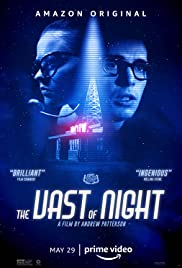
THE VAST OF NIGHT (2020)

May 28, 2020

 Greetings again from the darkness. “There’s something in the sky.” We’ve heard the line, or something similar, in most every UFO/Alien invasion film for the past 70 years. However, while employing a few conventional tropes of the genre, the brilliant directorial debut from Andrew Patterson is somehow simultaneously familiar and inventive. The director seems to thrive on serving up a story that proceeds as expected, with an innovative style that marks a true visionary.

We open on an early model television set as an exceptional Rod Serling impersonator introduces ‘Paradox Theater’, a riff on the classic series “The Twilight Zone.” Tonight’s episode is “The Vast of Night.” The black & white picture dissolves into color and we find ourselves in the late 1950’s outside the Cayuga, New Mexico high school gymnasium. A terrific opening sequence, filled with rapid-fire and overlapping dialogue, introduces us to Everett (Jake Horowitz) and Fay (Sierra McCormick). Everett arrogantly struts through the venue as he assists with the electrical issue, pranks the band’s trombone player, and begins chatting with Fay about her new tape recorder.

The two characters remain on the move through the gym and back out into the parking lot, where Everett tutors Fay on the basics of recording interviews. See, Everett is the evening DJ at WOTW, the local radio station, and director Patterson uses their journey through the gym and parking lot, and back into town, to not just introduce us to Everett and Fay, but also give us a feel for the town and its people. As Everett heads to the station for his shift, Fay resumes her evening job as the switchboard operator. In yet another terrific sequence, we watch as Fay handles the calls and the bizarre ‘sound’ she hears. Again she enlists Everett’s help and he plays the sound over the radio. This elicits a call from Billy (Bruce Davis), who recognizes the sound from his days on a secret military mission, and from a shut-in elderly lady (Dallas’ own Gail Cronauer) who wants to tell her creepy story directly to Everett.

The fun here comes not so much from the story, but rather HOW it’s told and how it’s performed by Mr. Horowitz and Ms. McCormick, who both wreak of energy and youthful spirit. The latter is exceptional with her giddy and nervous approach as eager Fay, while donning her cat-eye spectacles. She is mesmerizing in a 10 minute uncut shot of her executing the switchboard. Director Patterson and cinematographer M.I. Littin-Menz (RESISTANCE, 2020) employ long takes a few times, and none is more breath-taking than when they take us through town, into the basketball game, out the gymnasium window and back to the radio station. I was left wondering how they pulled it off, yet impressed at how it visually informed us that the town was almost deserted during the big game.

Not only is this director Patterson’s first film, it’s also the first screenplay from co-writers James Montague and Craig W Sanger. They have worked together to capture the feel and atmosphere of the era in the sets, the costumes, the Soviet Union concerns, and the attention to UFOs and aliens. JJ Abrams’ SUPER 8 (2011) may be the closest comparison, and there’s also bits of Spielberg’s CLOSE ENCOUNTERS OF THE THIRD KIND (1977), “The X-Files”, and even George Lucas’ AMERICAN GRAFFITI. Rarely does a first time director burst on the scene with such craftsmanship and innovative vision, and it wouldn’t be surprising to find Mr. Patterson hired for a significantly higher budget movie project very soon. This one is pure joy for us movie lovers who thrive on creative approaches … from “a realm between clandestine and forgotten.”

Available on Amazon Prime Video May 29, 2020

watch the trailer:


THE HIGH NOTE (2020)

May 28, 2020

 Greetings again from the darkness. Who better to play an aging diva at the crossroads of a hugely successful singing career than the daughter of Diana Ross? Of course, nothing is ever that easy and if Tracee Ellis Ross wasn’t ultra-talented herself, the film wouldn’t work at all. Now, please understand, director Nisha Ganatra’s follow up to last year’s LATE NIGHT is excessively formulaic and predictable, but it’s a pleasure to watch Tracee Ellis Ross (“Black-ish”) as singer Grace Davis and to hear her sing for (I believe) the first time on screen.

The film is from the first (and previous Black List) screenplay by Flora Greeson, a former personal assistant in the music industry, and it follows Maggie (Dakota Johnson, “Fifty Shades” franchise) as Grace Davis’ hard-working assistant. While spending most of her time running errands in her Chevy Nova for her celebrity boss, Maggie dreams of becoming a music producer. See, she studied music composition in college and listened to the radio growing up … and she bobs her head when listening to music she likes. So obviously she’s “qualified.” Maggie is as ambitious as she is lacking in self-confidence and experience.

The aforementioned crossroads Grace is facing has to do with choosing whether to record her first new album in a decade, or taking the safe and financially secure route of accepting a long-term Las Vegas residency. Her agent, Jack Robertson, is played by Ice Cube in full tough-guy mode, as he pushes Grace to bank the cash. Although her career is stuck in recycle gear with live albums and greatest hits, Grace longs to record new music, though she also understands the realities of the music business (and explicitly states the history for anyone not following along – including Maggie).

Maggie oversteps her position with Grace by urging her to write and record new songs. Maggie re-mixes some of Grace’s music and butts heads with the hotshot producer (played by Diplo) Jack brings in to turn Grace’s hits into thumping dance beats. “Is that dope or is that dope? Trick question, it’s dope!” (Diplo nailing the punchline). June Diane Raphael adds her comic flair as Gail, the career moocher who lives in Grace’s pool house, and offers up advice to Maggie on how to milk the situation.

All it takes is a chance encounter at the local market for Maggie to have a career opportunity fall in her lap. She meets charming and smooth David Cliff (Kelvin Harrison Jr, WAVES), and after some classic music banter, she hears him sing and is convinced she can produce his music. The only problem … she lies to him about her profession and experience. Lying and misrepresentation may have played a key role in the music profession over the years, but it creates a real mess for Maggie and David.

When things go sideways for Maggie in every aspect of her life, she retreats to the security of her dad’s (Bill Pullman) humble home/studio on Catalina Island. He’s a DJ and the one who taught Maggie her love for music. His home also leads to the reconciliation that allows the film to move towards the ending it was meant to have. It should also be noted that Zoe Chao and Eddie Izzard have brief roles as Maggie’s roommate and a veteran pop singer, respectively … both talented performers underutilized here.

The film has a similar structure to THE DEVIL WEARS PRADA minus the biting dialogue and insightful commentary on a high profile industry. It briefly touches on ageism, sexism, and nepotism, as well as the ‘money vs art’ question, but the purpose here is entertainment, not enlightenment. True artists have an incessant need to create, often risking a comfortable position to stretch themselves … showing the iconic Capitol Records building a few times, and contrasting Maggie’s Nova with Grace’s Bugatti, doesn’t quite make the philosophical statement that we’d expect for a deeper message. Instead, it’s a feel good movie. It’s comfort food, and it’s delivered with a crisp bow on top. Expect a romantic fantasy, where the love partner is music, and enjoy the talents of Tracee Ellis Ross. And let’s hope they got clearance from Michael B Jordan for his mention.

Available VOD on May 29, 2020 at https://www.focusfeatures.com/the-high-note/on-demand/

watch the trailer:


END OF SENTENCE (2020)

May 28, 2020

 Greetings again from the darkness. The pandemic has put most blockbusters and mainstream releases on hold, allowing the projects of many first time filmmakers to jump to the front of the line for exposure to critics and streaming platforms. Director Elfar Adalstein’s first feature film stems from a screenplay by Michael Armbruster (BEAUTIFUL BOY, 2010) and covers familiar ground in an unfamiliar manner, enhanced by gorgeous scenery and a couple of terrific performances.

Frank Fogel (John Hawkes, WINTER’S BONE, 2010) and his wife Anna (Andrea Irvine) are visiting their son Sean (Logan Lerman, THE PERKS OF BEING A WALLFLOWER, 2012) in an Alabama prison. Sean is serving time for stealing a car, and his mother is there to tell him goodbye. Frank and Sean are estranged, so there is no father-son visit. After the funeral, Frank shows up on Sean’s day of release to convey the mother’s death bed wish … father and son are to travel together and spread her ashes on her favorite lake in Ireland. Sean has no interest in traveling with dad and only wishes to get to California for a fresh start.

Of course there would be no movie if the two men didn’t eventually take the trip together, and we notice immediately that Frank, though a man of conviction, doesn’t appear to have a strong backbone. Sean, acting the jerk, clearly holds a grudge against the father he views as not protecting him from an abusive grandfather during childhood. These are deep wounds that may go deeper if there is to be a chance for healing. A wake in mom’s Ireland hometown reveals secrets of her past, and results in the men taking in Jewel (Sarah Bolger, one of the young daughters in Jim Sheridan’s excellent IN AMERICA, 2002) as a hitchhiker. Jewel has her own secrets and agenda, and seems to both further divide father and son, while also helping pull them together. This segment is very well written and acted.

The father-son road trip is really nothing new, though the setting of Ireland, with its stunning countryside captured by cinematographer Karl Oskarsson make it a visual treat. But more than that, the basic story is elevated thanks to the work of Mr. Hawkes (a previous Oscar nominee) and Mr. Lerman. The two excellent actors make the strained relationship seem real, rather than hokey or manipulative. We sense Frank’s pain in discovery, and Sean’s pent-up frustration that softens when he learns more of the history. On the downside, three musical/song interludes is two too many, but fortunately the performances overcome these storytelling shortcuts. Self-discovery, the acceptance of others, and the importance of family ties are all at play here, in addition to some quirky life philosophy: “Sometimes you’re the pigeon. Sometimes you’re the statue. That’s life.”

Available VOD on May 29, 2020

watch the trailer:


THE TRIP TO GREECE (2020)

May 21, 2020

 Greetings again from the darkness. Now is either the absolute best time to release this movie, or it’s the worst. During a pandemic with directives to stay home, you would be excused for classifying a cinematic travel trip by funny buddies as either a harsh prank or a welcome fantasy. Director Michael Winterbottom is back for his fourth film in the franchise featuring wise-cracking pals Steve Coogan and Rob Brydon. The first three were: THE TRIP (2010), THE TRIP TO ITALY (2014), and THE TRIP TO SPAIN (2017), and each were edited into feature films from their respective BBC Television series.

The players remain the same, as does the formula. Only the location provides a change-up. Beginning in Turkey near the historical site of Troy, complete with the photo op at the Trojan Horse monument, Coogan and Brydon are on a 6 day assignment to cover (mostly) the 10 year journey of Odysseus in Homer’s “The Odyssey.” The symmetry is noted in the film as this marks the tenth year since they first began traveling together.

The men make their way to Stagira (now Macedonia), the birthplace of Aristotle, as well as Hydra, Athens, Delphi, and Ithaca. Of course, at each destination, the boys stop for a ridiculously upscale gourmet meal at a world class restaurant that features a breathtaking view. It’s during these savory meals, and in the car during the trip, and well, just about any other time, Coogan and Brydon continue their never-ending game of one-upsmanship. Impersonations, punchlines, and spirited verbal sparring are all done with the hope of making the other person laugh, or admit defeat. While the Michael Caine impersonation never makes an appearance, we do get dueling Mick Jaggers and Dustin Hoffmans, as well as moments for Werner Herzog, Ray Winstone, and Barry Gibb/Bee Gees (with “Grease” and “Staying Alive”).

Stunning scenery and historic locations provide ammo for some of the banter between the two comics, including whether Alexander the Great was an original gangster. However, there is also an underlying message here. The two argue over who should wear the respective masks of comedy and tragedy while they are on the hallowed grounds of an ancient Greek Theatre, and Coogan makes the point that “Originality is overrated. Everything is derivative.” This commentary applies not just to their own “Trip” franchise, but also to many other elements of society.

Perhaps there are a few too many aerial shots of their Range Rover traveling down a road, but the back country is so beautiful, we can’t complain. The same goes for those restaurants. Sure it’s torture to watch as they enjoy delicious food, but the scenery is unique to their locale. As we wonder when, or even if, we will ever be able to travel the globe again, perhaps the best lesson here is to value our time with friends and loved ones. A personal crisis is used for this series finale, though it also leaves us with the proclamation that that these trips have been “Mostly fun and games.” So, “already enjoy.”

Available on Digital Platforms and VOD May 22, 2020

watch the trailer:


THE PAINTER AND THE THIEF (2020, doc)

May 21, 2020

 Greetings again from the darkness. Artists think differently than the rest of us. Not only do they see the world with an offbeat or skewed vision, but they process life events in ways we sometimes can’t fathom. For instance, if a crime were committed against you – say, your property was stolen – your natural response would be anger, or a desire for justice for the perpetrator. In Norwegian director Benjamin Ree’s documentary, Czech artist Barbora Kysilkova reacts much differently when her two most valuable paintings are stolen. She befriends the thief.

We see the security video footage. Karl-Bertil Nordland and another man break into Oslo’s Galleri Nobel and then walk out with Barbora’s paintings. Upon being apprehended, the painter and thief have a chat in the courtroom. Bertil confesses that he chose the paintings because they were “beautiful.” The artist is intrigued and invites the thief to pose for a portrait when he is released from jail. As if this situation isn’t bizarre enough, Bertil claims he has no idea where the stolen paintings are, and has no memory of what happened. Yes, he’s also a drug addict.

It’s a bit uncomfortable to watch post-prison Bertil lounging on Barbora’s sofa as she sketches him and they converse about philosophies of life. Slowly, their relationship builds into a friendship. It’s an unlikely connection through art. We get a rare glimpse of an artist at work, as we see Barbora in her studio working on her pieces. Of course, she is also saddened by the loss of the two unrecovered pieces, and we also witness the artist struggle with the commerce/business side of art, as she faces frequent rejections from galleries as she attempts to display her work. This is on top of the lectures from her boyfriend … lectures delivered in the manner a parent would talk to their kid.

One of the more surreal moments occurs when the camera films Barbora at Bertil’s place, and she sketches him and his girlfriend in a provocative pose. During all of this, we hear Barbora discussing why she finds Bertil interesting, despite his junkie-criminal lifestyle. After all, he is the kind of guy who scores a fix on his way to rehab. Things get very interesting … in a weird way … when Ree turns the tables and films Bertil analyzing Barbora.

These two have studied each other over the years, and may have a better understanding of their friend, than they do of themselves. Watching Barbora act as caregiver for an injured Bertil is a confusing development to process, but it goes back to how artists see the world through their own eyes. Her paintings may be ultra-realistic, but her life barely qualifies as our reality … at least until the rent is past due. The connections through the circle tattoo may come across as somewhat creepy, and we find ourselves a bit skeptical of many scenes where the camera is present, but there is no denying this works as a remarkable character study of two people we wouldn’t normally categorize as friends.

Neon is presenting this via Virtual Cinema beginning May 22, 2020

watch the trailer:


A TOWERING TASK: THE STORY OF THE PEACE CORPS (2020, doc)

May 21, 2020

 Greetings again from the darkness. The PSAs that frequently popped up on my childhood TV are vivid memories, though it took many years before I had any concept of what the Peace Corps was, how it was formed, and what it did. Director Alana DeJoseph, herself a Returned Peace Corps Volunteer (RPCV), and writer Shana Kelly want to make sure we all know the history of the organization, what its mission has been for almost 60 years, and most importantly, that the Peace Corps still exists today.

William J Lederer and Eugene Burdick co-wrote the 1958 political novel “The Ugly American”, and the best-seller had a surprising effect on John Kennedy’s ability to get The Peace Corps established not long after he became President of the Unites States.  In 1961, President Kennedy named his brother-in-law, Sargent Shriver, as the organization’s first director. Shriver was a passionate leader and served as the director into 1966. We see archival footage and photographs of Shriver’s time with the Peace Corps, and learn that a memo from his task force was responsible for the phrase “A Towering Task”, a recurring reference over the years, and the title of this film.

From the beginning, there were vocal skeptics. An escape plan for ‘draft dodger’ is how many cynics labeled The Peace Corps, and it was a difficult label to shake. We learn that in the beginning, four out of every five applicants was denied admission, and the footage of those early training regimens looked more like the Marines than a volunteer service organization. Still, many were attracted to the stated mission: Promote World Peace and Friendship, a mission that remains in place today.

In addition to the treasure trove of archival footage and speeches, there are many interviews with authors, former volunteers, and many of the directors who have served. We view some of the recruiting films and PSAs and travel through the procession of US Presidents from Kennedy through Trump, and explore the various challenges faced by the Peace Corps. One of the more in-depth segments involves the longest-serving former director Loret Miller Ruppe, who was director from 1981-89. Her recounting the story of the Prime Minister of Fiji and his words to Ronald Reagan are a highlight.

Ms. DeJoseph and Ms. Kelly have delivered a most-informative history of the Peace Corps in a matter-of-fact manner. Four-time Oscar nominee Annette Bening serves as the narrator, and her work is serviceable, though lacking in energy. The film is neither propaganda nor a hard sell for volunteers, and it’s not what one would call entertaining. Instead, it serves as a detailed timeline of this important agency, and that is an important step for posterity.

Available in Virtual Cinema beginning May 22, 2020

watch the trailer:


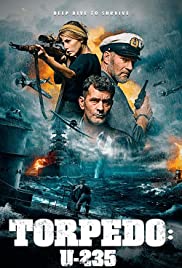
TORPEDO: U-235 (2020)

May 18, 2020

 Greetings again from the darkness. “Desperate times, desperate measures” is a phrase that dates back to ancient Greek physician Hippocrates (he of the Hippocratic Oath), and has been applied in many and varied situations since … war strategy being one of the most common. We hear the phrase a couple of times in the War Room during an early scene in the feature film directorial debut of writer-director Sven Huybrechts submarine movie. The term “submarine movie” is used with the utmost respect, as I’m a huge fan of the sub-genre.

Opening with a well-orchestrated attack on Nazi soldiers, we are soon in the midst of a group of resistance fighters – a rag tag bunch committed to wiping out as many Nazis as possible. In the War Room scene, this group is referred to as “The Bad Eggs”, and everyone from all sides seems to want them stopped. However, there is a problem – this group is made up of the only ones crazy enough to accept the current ‘suicide’ mission: delivering a Uranium filled submarine from the Belgian Congo to the United States, where the cargo will be used for the Manhattan Project.

The cast is excellent, led by the ongoing conflict between two outstanding and renowned leads: Belgian actor Koen De Bouw as Nazi-hater Stan, and German actor Thure Riefenstein as captured U-Boat Captain Franz Jager. Co-writers Huybrechts and Johan Horemans effectively use the dangers and claustrophobia of the submarine, and are truly expert in their pitting Stan against Jager. Stan’s beautiful (and sharpshooter) daughter Nadine (Ella-June Henrard) is also on the mission, but it’s Stan’s tragic backstory (which we see in tension-filled flashbacks) that have filled him with a lust for revenge and over-protectiveness.

Training for submarine crews typically lasts a year, and this group of misfits has only three weeks to prepare. Some of the early soundtrack reminds of the iconic Elmer Bernstein theme to THE MAGNIFICENT SEVEN, which comes across a bit misplaced, but that’s a minor quibble for a film that gets most everything else right – except for a too-good-to-be-true sequence near the end. Along the way, we see vivid images of the brutality and cruelty of Nazis, which helps us understand why all of these folks are so committed to the mission.

Working with a low budget, the film still manages to deliver the danger and tense situations we expect from a submarine during WWII. There is even a sub vs sub battle for some underwater action. The lineup of other worthy submarine movies over the years include: Jules Verne’s 20,000 LEAGUES UNDER THE SEA (1954), THE ENEMY BELOW (1957) with Robert Mitchum, RUN SILENT, RUN DEEP (1958) with Clark Gable and Burt Lancaster, ICE STATION ZEBRA (1968)  based on the Alistair MacLean novel, the nerve-rattling DAS BOOT (1981) from Werner Herzog, THE ABYSS (1989) from James Cameron, THE HUNT FOR RED OCTOBER (1990) from Tom Clancy’s novel starring Sean Connery, CRIMSON TIDE (1995) pitting Denzel Washington against Gene Hackman, U-571 (2000) with the great Thomas Kretschmann, and BLACK SEA (2014) with Jude Law. And let’s not forget the 1968 classic featuring The Beatles animated, YELLOW SUBMARIINE.

This latest begins in 1941 and the final scene takes place on August 6, 1945. Huybrechts’s film could be described as a cross between INGLORIOUS BASTERDS and DAS BOOT, and it includes plenty of material for conversation on race, religion, nationality, and duty.

Available VOD beginning May 19, 2020

watch the trailer:


AMERICAN TRIAL: THE ERIC GARNER STORY (2020)

May 18, 2020

 Greetings again from the darkness. We open on a blank screen, but immediately recognize the audio. “I did nothing.” Producer-Director Roee Messinger slowly brings up the all-too-familiar video of Eric Garner being wrestled to the ground by multiple police officers. Mr. Garner is heard to say “I can’t breathe” eleven times during the cell phone video. Those were to be his last words.

His death was ruled a homicide, but a Grand Jury refused to indict NYPD Officer Daniel Pantaleo. Filmmaker Messinger presents a “What if?” there had been a trial. This is Messinger’s first feature film, and it’s non-scripted … a mock trial featuring former NY state prosecutors, practicing attorneys, actual witnesses, field experts, Garner’s wife, and actor Anthony Altieri playing the role of Officer Pantaleo. We see Mr. Pantaleo in consult with his attorneys, but the vast majority of the film is spent in the courtroom as we watch the proceedings, and hear testimony.

For those of us whose time in a courtroom is limited to mandatory appearances for jury duty, it’s very interesting to see how a trial is conducted; though we should keep in mind that the pace is a bit faster in an edited movie version than what would occur in real life. Still, listening to the experts – a Medical Examiner and Pathologist offering conflicting opinions on the evidence drives home the point of what a challenging job jurors would have had with the case. And then there is Mr. Garner’s friend who testifies that he witnessed the whole thing while standing just a few feet away. His reason for not getting involved was fear of being arrested himself. Of course, the most emotional testimony comes from Esaw Snipes Garner, Eric’s wife of 26 years. She’s defensive and impassioned while on the stand, and her frustration and distrust of the system is palpable.

In the film, Officer Pantaleo is charged with Manslaughter and Strangulation. When he takes the stand, we learn some of his background and police training. We hear the definition of a chokehold versus “necessary” force in bringing a suspect under control. Mr. Garner was a large man – approximately 395 pounds. He made it very clear to the officers on the scene that he was not going to cooperate with being arrested. Was it a chokehold? Was it necessary force? Was Garner really unable to breathe? All of these questions are addressed, as was the reason police approached him in the first place – suspicion of illegally selling cigarettes (“loosies”) on the streets of Staten Island.

Just like cameras and recording devices, we aren’t allowed to witness the jury deliberations. In fact, the purpose is to have viewers act as jurors in the case – listen to the evidence and testimony and arguments, and then make your own decision. Famed Harvard Law Professor Alan Dershowitz serves up his thoughts, and we learn of Mr. Garner’s many underlying health issues (asthma, high blood pressure, sleep apnea) while making up our own mind on what happened that day, and what Garner’s death should have led to.

Opens in Virtual Cinemas May 18, 2020

watch the trailer:


SEBERG (2020)

May 15, 2020

 Greetings again from the darkness. “Who is Jean Seberg?” A reporter asks the question to her, just before the movie star’s agent escorts him away as she prepares for publicity shots on PAINT YOUR WAGON, the outlandish 1969 musical-comedy in which she co-starred with Clint Eastwood and Lee Marvin. It’s also a question we expect a film entitled SEBERG to answer, though it never really does. Oh sure, we get the basics: small town girl (Marshalltown, Iowa), Hollywood starlet, activist, target of FBI, and tragic ending. Unwisely, the film tries to cram in too many other pieces of a puzzle – a puzzle plenty interesting on its own.

Kristen Stewart stars as Jean Seberg, the breakout star of the French New Wave Cinema in Jean-Luc Godard’s BREATHLESS (1960). Ms. Stewart brings much more than a short haircut to the role. It’s not a stretch to imagine Ms. Stewart has experienced some of the downside to fame that Ms. Seberg experienced during her career, so it’s no surprise that the moments of torment and frustration and anxiety are the film’s best. Even as a teenager in Iowa, Ms. Seberg showed signs of an activist-in-development. She ran off to Hollywood and was discovered by director Otto Preminger and cast in the lead role for his SAINT JOAN (1957). Seberg actually suffered severe burns during the filming of a key scene – one which is reenacted by Stewart for this film.

Director Benedict Andrews working with a script from Joe Shrapnel (grandson of actress Deborah Kerr) and Anna Waterhouse (they also co-wrote THE AFTERMATH and RACE), focuses mostly on the period of 1968-1971. We see Seberg’s first encounter with Hakim Abdullah Jamal (Anthony Mackie) on a commercial flight, and her follow-up pose with the Black Panthers for a publicity shot on the tarmac. This kicks off an FBI investigation, as well as an affair between Seberg (married to novelist and filmmaker Romain Gary, played by Yvan Attal) and Jamal (married to Dorothy, played by Zazie Beetz). We see how Seberg landed on Hoover’s FBI watch list, and how she was sincerely trying to help what she saw as a worthy cause.

We watch the FBI meticulously build a file on Seberg, albeit illegally under the COINTELPRO (counter-intelligence program) program. Surveillance was used to work towards their goal of running a smear campaign against Seberg due to her support of the Black Panther Party. Jack O’Connell plays FBI Agent Jack Solomon, and Vince Vaughan plays his partner Carl Kowalski. Family dinner time at the Kowalski home is anything but leisurely fun, and it’s an unnecessary scene meant to contrast Kowalski’s character with that of Solomon. It’s here where the film falters. An inordinate amount of time is spent on Agent Solomon and his conscience and his med-student wife Linette (a sinfully underutilized Margaret Qualley).

The film would have been best served by focusing on either Seberg or Solomon. The two stories dilute the effectiveness, and beyond that, the Black Panther story line fades, as does the whole celebrity-as-an-activist subplot. Instead, Seberg’s breakdown and Solomon’s second thoughts share center-stage. The film does succeed in exposing the extremes Hoover’s organization would go to in order to discredit someone whose beliefs might not have meshed with what was deemed proper for the times. What happened to Seberg was a tragedy, and according to Mr. Gary, led to the loss of her career and eventually to her death.

The film bounces from Paris to Los Angeles, and the set decorations and costumes are picture perfect for the era. There are actual Black Panther clips shown, and Ms. Stewart also reenacts a scene from BREATHLESS. Regardless of the script and story issues, Kristen Stewart delivers a terrific performance as Jean Seberg, and keeps our attention the entire time. We like her and feel for her as she slips. The real Ms. Seberg was found dead in a car at age 40, and suicide was suspected, though mystery still surrounds her death to this day. Lastly, just a piece of free advice … if you are looking to do good things in life, having a marital affair is rarely the right first step.

Available on Amazon Prime beginning May 15, 2020

watch the trailer: