BABYTEETH (2020)

June 18, 2020

 Greetings again from the darkness. There is no logical explanation for how an Australian indie film, the first feature from director Shannon Murphy, can contain so many elements: a terminally ill teenager, first love, addiction, music lessons, questionable parenting, comedy, a small time drug dealer, a defensive smoking pregnant neighbor, a clueless classmate, a school formal, multiple wigs, a music teacher, a smorgasbord of prescription and illegal drugs, a doctor and dog both named Henry, a bad haircut, and a broken 4th wall … all kicked off by a bloody nose during the ‘meet cute’ at the train stop.

The best explanation for how this crazy jigsaw fits together is the extraordinary work from director Murphy, the tremendous performances from the talented cast, and the exceptional script (her first screenplay) from Rita Kalnejais, which she adapted from her own play. That cast is made up of screen veterans Ben Mendelsohn (always great) and Essie Davis (the mother in THE BABADOOK, 2014), as well as rising star Eliza Scanlen (so memorable in “Sharp Objects”), and relative unknown (but probably not for long) Toby Wallace. Support work is provided by Emily Barclay, as the neighbor mentioned above, and Eugene Gilfedder as the music teacher.

Sixteen year old Milla (Ms. Scanlen) has terminal cancer. Her resigned demeanor turns to excitement when she meets Moses (Mr. Wallace), a gangly hyper-active ball of energy who looks her in the eye through his own blood-shot peepers. She falls quickly and hard. When Milla invites Moses to dinner, her parents Henry (Mr. Mendolsohn) and Anna (Ms. Davis) are as shocked and confounded as any parent would be – and least of all at her haircut. They forbid Milla to see Moses, and we all know how well that approach works for parents.

Henry is a psychiatrist who walks to work, which sometimes leads to an exchange with his new neighbor Toby – the one who has a dog named Henry, and whose defense of her smoking while pregnant stuns us and Henry (the man, not the dog). Milla’s mother Anna was a musician, and now suffers from bouts of depression. She’s heavily medicated thanks to her husband who can legally prescribe drugs for her. Moses has been cast out by his own mother in an effort to protect her younger son, and Milla views Moses as a way to live life before dying.

Director Murphy uses segment/chapter titles to distinguish the bouts of dysfunction, and to allow time to skip ahead. Initially we find ourselves asking the same question Henry and Anna ask, why would Milla go ‘slumming’ for a guy like Moses? We all slowly come around to accept what’s happening. It’s all about feeling as much as possible and experiencing what she can before it’s all over. Time remaining is her motivation.

There are some terrific moments throughout – some easier to watch than others. Milla’s clueless classmate’s selfie is excruciating for us and Milla, and when Anna tells Henry, “This is the worst possible parenting I can imagine”, every parent can relate. The actors are in fine form here, each making their character relatable without being showy – even Milla’s breaking the 4th wall is understated. The film teeters between pain and underlying humor, and balances on the edge of melodrama without tipping. The closest film I can recall in tone and style is Mike Mills’ underrated THUMBSUCKER (2005). With characters that come across as sincere and organic, director Murphy offers up a heartbreaking celebration of living while you are able. Chaos is inevitable, so we might as well accept it.

IFC Films presents this On Demand and in some theatres June 19, 2020

watch the trailer:


TAINTED (2020)

June 18, 2020

 Greetings again from the darkness. Filmed in Canada with a mostly Canadian cast by a Canadian director, we are reminded how challenging it is to make a low budget action-thriller. Writer-director Brent Cote delivers a masterclass in genre clichés, yet there’s enough here to keep anyone initially interested around for 90 minutes.

Alan Van Sprang (SAW III) stars as Lance, the rare Neo-Nazi with ties to both the Aryan Brotherhood and Russian mafia who is also the good guy in the story. Lance has recently been released after serving 15 years in prison, and he’s just trying to live out a quiet life by surrounding himself with pictures of beautiful scenery as he dreams of escaping the world he’s known. He clocks in and out at work, and mostly avoids chit-chatting with others, except for his friendly neighbor Anna (Sara Waisglas), who happens to sing at the local lounge where Lance periodically buys a bottle.

Of course, it’s only a matter of time (maybe 10 minutes) before Lance’s old world catches up with his new one. Gregor (John Ralston, READY OR NOT, 2019), his old Russian handler, needs him to kill a few guys that have been infringing on the meth business. So, are you keeping score on clichés? We have an ex-con trying to start over. We have ‘one last job’. We have a girl caught in the middle … there’s always a girl! We have the Aryan Brotherhood versus the Russian mob. Plus, we have the underling trying to earn his stripes. In this case, it’s Gregor’s nephew Malik (Aaron Poole). There’s even an imposing Russian mobster named Vladimir (John Rhys-Davies from two huge franchises – Lord of the Rings and Indiana Jones).

The film begins with a Pope Francis quote about evil and violence, but ironically, the film’s best segments involve neither evil nor violence. Despite his past, Lance is a brooding type who listens to blues music, and serves up inspiring words to Anna. The film offers a new and very quick (though surely indescribably painful) method for removing swastika tattoos from one’s chest, although you should know the violent scenes are few in number and brief in runtime. Gregor’s philosophy towards Lance is that “a fighter needs to fight”, but we actually enjoy Lance’s time with Anna more than the gangster bits. Filmmaker Cote may follow the checklist for this genre, however, we do hand it to him for a twist at the end.

watch the trailer:


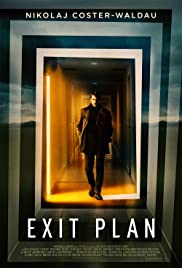
EXIT PLAN (2020)

June 11, 2020

 Greetings again from the darkness. Euthanasia, ‘Dignity in Death’ or assisted suicide. Whatever you prefer to call it, those against the idea have likely never been in the situation where medical treatment provides no hope. Max Isaksen (Nikolaj Coster-Waldau, “Game of Thrones”) is an Insurance Investigator. After his most recent scan, the doctor informs him that his brain tumor is growing and surgery is not an option. His bodily functions will slowly and mercilessly dissolve until death takes him.

Max is a non-descript kind of guy. The usually dashing Coster-Waldau is hidden behind old style wire-rimmed glasses and a mustache. He’s happily married, but can’t bring himself to tell his lovely wife Laerke (Tuva Novotny, ANNIHILATION, 2018) about the tumor or his inner thoughts. He’s frustrated that the special diet and app monitor didn’t ‘save’ him, so now he’s suffering with speech issues, headaches, and other ailments that serve as a reminder of the ultimate outcome.

While working with one of his clients, Max learns about the choice her husband made – Hotel Aurora, which promises “a beautiful ending.” It’s an enterprise that excels in secrecy and efficiency. Their sales pitch is an end to life that fulfills your fantasy. Just know that once you execute the agreement, there is no changing your mind. Instead, you are immediately given a sedative and put on a private plane where you are whisked away to the Danish-modern hotel in a remote, stunning setting. Support work is provided by Kate Ashfield (SHAUN OF THE DEAD, 2004) as the fake mother, and Jan Bijovet as Frank, the director of Aurora.

Denmark-born director Jonas Alexander Arnby and writer Rasmus Birch worked together on WHEN ANIMALS DREAM (2014) and here they explore an existential question about life and death, and whose choice it is. There is also the question of saying goodbye to loved ones and choosing the terms at the end. It’s a somber story that twists reality and dreams, and we can’t help but find some similarities to Yorgos Lanthimos’ THE LOBSTER (2015), although that one was infinitely more bizarre. There are a couple of moments of levity – such as asking for tips on tying a noose, and we do learn that Poppy Tea tastes best with lemon. Speaking of beverages, I lost count at the number of scenes featuring wine, juice, water or some other ingestible liquid. Sometimes it’s a bonding experiencing with a toast, while other times, it’s a biological need. Whatever the reason, taking a sip is somehow tied into the circle of life. As The Eagles sang in “Hotel California”, ‘you can check out any time you like, but you can never leave.” Welcome to the Aurora, where we never have to ask, ‘how was your stay?’

Available on VOD June 12, 2020

watch the trailer:


SOMETIMES ALWAYS NEVER (2020)

June 11, 2020

 Greetings again from the darkness. “That’s not a word.” “It’s a word.” Anyone who has ever played Scrabble has both shrieked the phrases and been the target of those same screeches from opponents. Word play is in full effect during the feature film debut of director Carl Hunter (a former British pop star). The script comes from the short story “Triple Word Score” by writer Frank Cotrell Boyce, who also wrote the screenplay for the excellent and underrated MILLIONS (2004).

The basic premise has a father searching for his long-missing oldest son. The son stormed out during a hotly contested family game of Scrabble, so dad thinks he can track him down by playing the game online many hours each day. Bill Nighy plays Alan, the owner of Mellor’s Tailor Shop (though he rarely seems to work) and the aforementioned father-on-a-quest. Somewhat annoyed by his father’s pursuit, though still supportive as much as possible, is Alan’s youngest son Peter (Sam Riley, Mr. Darcy in PRIDE AND PREJUDICE AND ZOMBIES, 2016). Peter refers to himself as “not the Prodigal Son”, which is the underlying theme of the story and the father-son relationship.

“Very Quadrophenia” Alan says as he walks by a group of scooter-riding folks. It’s just one of the whip-smart lines Bill Nighy sneaks in. Mr. Nighy has always had a unique on screen energy – one that keeps us off-balance yet eager to see where he leads. He’s perfectly cast for a film that delicately balances deadpan and offbeat humor with awkward relationships and dark moments. Alan is the type of guy who will Scrabble-hustle (and maybe even cheat) a grieving dad for 200 quid, and then turn around and take his gamer-grandson Jack (Louis Healy) from an anti-social to a quite “spruce” young man capable of flirting with his bus stop fantasy Rachel (Ella-Grace Gregoire, “The Five”).

Grief and family dynamics are the core of the story, and the father-son wranglings between Alan and Peter are especially crucial. The film has a somber tone spiced with whimsy to serve up an unusual feel. To go along with that, Production Designer Tim Deckel and Set Decorator David Morison conjure up the visuals we might expect from Wes Anderson or early Tim Burton … colorful wallpaper and vivid furnishings … right down to the knick-knacks and even a label-maker. The aesthetic choices by the filmmaker and crew really combine nicely with the performances in a film that may arrive at a predictable ending, but only after a most interesting journey. We do learn what the title means, and it’s important not to mix up, confuse, or muddle this one with the recent teen abortion drama, NEVER RARELY SOMETIMES ALWAYS.

Virtual Cinema June 12, 2020 and On Demand July 10, 2020

watch the trailer:


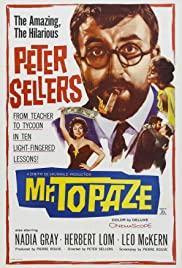
MR. TOPAZE (1961) re-release

June 11, 2020

 Greetings again from the darkness. This is the only feature film to have Peter Sellers credited as a director, and it was released in 1961. Retitled “I Like Money” for its United States release, it seems that regardless of the title or continent, the film can only be labeled a box office flop and disappointment to viewers and critics alike. Considered “long lost” and unseen for decades, the only surviving 35mm print has been restored by the British Film Institute, so that new generations can be disappointed … or perhaps appreciate it from a ‘history of cinema’ perspective (which I certainly do).

Peter Sellers directs himself, as he stars as Albert Topaze, a provincial schoolteacher of the highest integrity. We get a good feel for Topaze in the scenes playing under the opening credits. He’s a dedicated teacher, but not one the students respect. Topaze has a crush on fellow teacher Ernestine (played beautifully by Billie Whitelaw, whom you’ll recall as the nanny in THE OMEN, 1976). The obstacle here is that Ernestine is the daughter of the bellowing Headmaster Muche (Leo McKern, A MAN FOR ALL SEASONS, 1966), Topaze’s demanding boss. Topaze’s loyal friend and landlord is Tamise (Michael Gough, BATMAN, 1989), another fellow teacher.

Topaze is a timid fellow, though of the highest moral principles. When the Baroness (fiery Martita Hunt) flashes what today we would call entitlement by demanding Topaze change her grandson’s grade or be fired, Topaze finds himself out of work. It’s here where scheming Suzy (Nadia Gray, forever a part of cinematic lore thanks to her unforgettable cameo in LA DOLCE VITA, 1960) and Castel Benac (Herbert Lom, Sellers’ memorable co-star in the “Pink Panther” franchise and THE LADYKILLERS, 1955), entice Topaze into their shady business … hoping to fend off legal inquiries given the reputation for honesty Topaze brings to the enterprise.

Can money corrupt even the most upstanding character? The story comes from renowned French writer Marcel Pagnol and his 1933 play with Raymond Massey in the lead. Pagnol also wrote the novels “Jean De Florette” and “Manon of the Spring”, the sources of two excellent films from director Claude Berri. There have been at least three other film versions of ‘Topaze’, two 1933 projects including one starring John Barrymore and directed by Harry d’Abbadie d’Arrast, and a 1951 version directed by Pagnol himself with Fernandel in the lead.

Mr. Sellers is in fine form here, and in the first half he displays some of the physical comedic traits that defined his Inspector Jacques Couseau in the ‘Pink Panther’ series a couple of years later, and this film was released three years prior to the all-time classic DR. STRANGELOVE OR: HOW I LEARNED TO STOP WORRYING AND LOVE THE BOMB. It seems the real issue with the movie, and why it was so poorly received, is that Sellers plays such a challenging character. Initially Topaze is a sympathetic, likable man and he transitions to one we have little interest in – one to whom viewers simply can’t relate.

Still, despite the obstacles within the story, it’s fascinating to go back almost 60 years and discover a previously unseen Sellers project that features not just the stellar cast listed above, but also John Neville (THE ADVENTURES OF BARON MUNCHAUSEN or for fans of “The X-Files”, he known as “the well-manicured man”), British film veteran John Le Mesurier as a blackmailer, and the only film acting gig for Michael Sellers, the son of Peter (he plays young Gaston).

Nadia Gray sizzles in singing “I Like Money”, a song written by Herbert Kretzmer, and Herbert Lom gets an instant classic line, “He’s an idiot. I like him.” Is this a comedy? Certainly the first 20 minutes bring laughs, but by the end, those laughs seem quite distant. Watching a man lose his soul and his friends is painful. Can money buy happiness? Topaze has his answer, but as viewers we aren’t so sure he’s correct.

Available June 12, 2020 via Film Movement’s Virtual Cinema

watch the trailer:


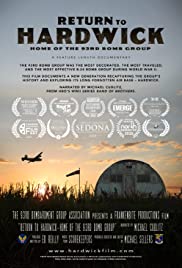
RETURN TO HARDWICK (2020, doc)

June 9, 2020

 Greetings again from the darkness. ‘The greatest generation.’ Some might consider it an overused colloquialism, but watching this documentary from Michael Sellers proves yet again just how true that “greatest” description is. Mr. Sellers blends the history of the 8th Air Force, 93rd Bombardment Group, the personal stories of those who served, and the airfield that was so crucial to their record number of missions … Hardwick Aerodrome 104 in East Anglia.

As the grandson of John L Sullivan, a bombardier/navigator in the 93rd, Sellers has followed the group closely, and decided to make a film on the 2015 reunion as veterans and family members visited Hardwick. The result is a touching tribute that weaves personal stories with WWII history. Opening with the beautiful prose written by Ed Reilly, a radio operator with the 93rd, on his 1975 (30 years after the war) trip to Hardwick, we then shift to the narrator, actor Michael Cudlitz (“Band of Brothers”) and this trip to Hardwick 40 years after Reilly’s.

Sons, daughters, grandchildren and surviving unit members make the trip, and we are told that the 93rd Bomb Group was the most decorated, most traveled, and most effective of the WWII bomb groups. With much of the airfield now farm land, it would be easy to classify Hardwick as ‘forgotten’, but that’s simply not the case. The main runway was bulldozed years ago, and many of the structures are long gone, but there is a group of locals who maintain a museum dedicated to Hardwick and those who served. There are multiple albums with organized photographs, and remnants including what’s left of a pilot’s jacket after a horrific plane crash. That pilot’s nephew is on the trip, seeking any details he might discover.

It’s that kind of personal touch that grabs us. There is even a love story – one that either blossomed due to WWII, or in spite of it. The daughter of the woman who fell in love and got married is on the trip. The museum’s albums hold a photo of her parents that she’s never seen, and she gets to visit the local chapel where their service was help. We hear from locals who recall watching the airfield being constructed, and how appreciative they are of 1942 when the US Air Force joined the Allies in the fight against Hitler.

Interviews are shown with those who served (Navigators, Pilots, Gunners, Ground Crew), their families, and those keeping the memories and history alive. We see photos, personal letters, and archival video of a time that truly changed the world. Director Sellers uses animated graphics to superimpose images of the original airfield and structures over today’s topography so that we have a visual of what Hardwick once was. The 93rd is credited with flying 396 missions, the most in the Air Force, including air sport over Normandy on June 6, 1944. As if all of the personal tales weren’t emotional enough, Sellers takes his camera to the Memorial Day ceremonies at Cambridge American Cemetery and Memorial. It’s quite a sight. Finally, we learn that hot dogs were the “hurry up food” for those headed to their next mission!

DVD and Digital Download via iTunes on June 9, 2020

watch the trailer:


HERE AWHILE (2020)

June 8, 2020

 Greetings again from the darkness. Political opinions don’t appear in my reviews very often, but I can’t help wonder if many of those opposing ‘Death with Dignity’ might feel differently if they found themselves in Anna’s situation. The film opens with her in a doctor’s office obviously receiving the most dreaded of news. The camera remains on her face. There is no dialogue, only her last moment gasp before we move to the opening credits.

Anna Camp (“True Blood”) stars as Anna, diagnosed with terminal cancer. She has explored every possible treatment, including those in the experimental stage. Since none are an option for her, she has decided to move back to Oregon, where death with dignity is an option. She shows up unannounced on the front porch of her younger brother Michael’s (Steven Strait) house. The two haven’t seen each other in many years – not since their father kicked her out for being a lesbian. The father is now deceased and his ashes are in a file box in Michael’s spare room.

The once close siblings re-connect quickly as the pain of the past is released. They laugh, reminisce and get caught up. Michael works in IT, and Anna is an established artist in Salt Lake City, where she’s a homeowner with her partner Luisa (Kristin Taylor). Over the course of a few days, Anna meets Michael’s girlfriend Shonda (Chloe Mason), and his neighbor Gary (Joe Lo Truglio, “Brooklyn Nine-Nine”). Gary has Asperger’s, plus a few other afflictions, and often pops in for a scoop of Michael’s sugar.

Anna is not prepared for Michael’s backlash to her decision, and that leads to heartfelt conversation, as well as an initially defensive Luisa when she arrives. It’s touching to see how Shonda and Gary react, and to see Michael’s emotional evolution. Of course, he doesn’t want to lose his beloved sister – the one he’s only just reconnected with. We can all relate to his feelings. But as Anna says, it’s her decision and she would rather go out on her own terms, than in a cold hospital with tubes sticking out.

This is the directorial debut and first screenplay from Tim True, who shares ties to Oregon with his co-writer Csaba Mera. Of course this is a tough and controversial topic. We witness Anna’s labored breathing and the other effects of late stage cancer, and the heaviness is offset a bit thanks to Gary’s t-shirts and coffee mugs. An alternative title to the film could be ‘the long goodbye’, but Anna’s farewell is handled very well by the actors and filmmakers. Anna recites a poem (from Mary Lee Hall) with the line, “Turn again to life, and smile”, and we realize she’s made the decision that’s right for her. Perhaps that’s all that matters.

Available on Digital and On Demand June 9, 2020

watch the trailer:


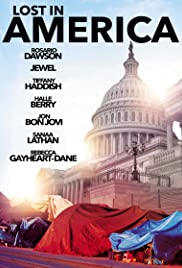
LOST IN AMERICA (2020, doc)

June 8, 2020

 Greetings again from the darkness. The thought of anyone being homeless should not sit well with any of us. And whether you are a parent or not, the thought becomes even less tenable when kids are involved. Director Rotimi Rainwater accomplishes two goals with his project: making it personal, and revealing the scope.

“These are their stories.” Director Rainwater introduces us to several young homeless folks around the country and allows each to explain their situation in their own words. As you might expect, the stories are painful to tell and excruciating to hear. The project spans about four years (2013-2017) and Rainwater revisits some of these folks more than once. In addition to hearing from these homeless youngsters, we learn how little data exists, and how, as a country, we seem to be pretending the problem is minor and not worthy of more attention. With youth homeless estimates ranging from 48,000 to 2.8 million, one need not be a statistical analyst to recognize faulty and incomplete data.

We simply don’t know how many homeless youths live on our streets, and we don’t have the background information to know why they are there. Celebrity activists interviewed include Halle Berry, Jon Bon Jovi, Mylie Cyrus, Tiffany Haddish, and Sanaa Lathan, as well as co-producers Rosario Dawson and Jewel. Additionally, we learn about the efforts of Senator Patrick Leahy (D, Vermont) and Senator Susan Collins (R, Maine) as they promote their bi-partisan “Runaway and Homeless Youth and Trafficking Prevention Act” to re-authorize and update the specifics of the “Runaway and Homeless Youth Act” first passed in 1974.

The film breaks down into four key elements faced by homeless youths: the failure of the Foster Care system, Sex Trafficking, LGBT affiliation, and the underfunding and scarcity of shelters. Actress Tiffany Haddish recounts her experience with Foster Care. We learn that 300,000 youths are targeted for sex trafficking each year, and the average age is 12. Surveys report that 40% of homeless youths identify as LGBT, and this one issue has prevented additional government funding.

The most poignant sections of the film occur when we hear directly from the homeless. The word “safe” is utilized numerous times, because being alone is scary and dangerous. One of those interviewed states, “When the sun goes down, it’s a completely different atmosphere.” Chilling words. The only misstep for the film comes from Rainwater’s decision to include entirely too many talking heads. We simply can’t keep up with who is talking and what their relationship to the homeless situation is. He does make the point that many are aware of the issue and that 5000 homeless youths die each year, but it’s the personal accounts – including his own – that make an impact. It’s also the first film this year where someone uses “burrito” as a verb. As the film concludes, Jewel’s song “No More Tears” plays as the director provides updates on the individuals we met. Happy endings are not typical.

Available on DVD and Digital June 9, 2020

watch the trailer:


BECKY (2020)

June 6, 2020

 Greetings again from the darkness. Actress Lulu Wilson is not yet 15 years old (13 when filming this one), and yet her resume is already quite impressive, featuring roles in such high profile projects as “The Haunting of Hill House” (2018), “Sharp Objects” (2018), and ANNABELLE: CREATION (2017). She’s clearly on the path to stardom, so seizing the lead role in a low budget ultra-violent home invasion flick provides her some fun and shows off her range.

If you are going to have a young teenage girl go full ‘Rambo’, you might as well have her facing off against some neo-Nazi escaped convicts. You might question the casting of Kevin James as the gang leader – a dead-eyed hulk with shaved head, long beard, and swastika tattoos (on his scalp). James typically plays a funny schlub like Paul Blart or a loveable simpleton like his character on “The King of Queens.” Not this time. His Dominick is relentless and lacking all compassion in his quest for the key – a key that we never really learn the purpose of or the reason it’s hidden where it is.

Co-directors and Design School buddies Jonathan Milott and Cary Murnion bookend the story with scenes of Becky being interrogated by the Sheriff after all the audacious events. So we know going in that Becky will survive – we just don’t know about the others. Some fancy editing trickery has us bouncing between Becky at school and Dominick in the prison yard. The escape of he and his three buddies is chronicled alongside Becky’s dad (Joel McHale, “Community”) taking her and their two dogs to the family lake house. She’s happy until Kayla (Amanda Brugel, “The Handmaid’s Tale) and her young son Ty (Isiah Rockcliffe) pull up.

Becky is still grieving her beloved mother who died of cancer. We see flashbacks of their final days together. Becky is not ready for her dad to re-marry, and when she envisions the merged family, she bolts from the dinner table into the woods. Soon after Dominick and his boys knock on the door and take everyone else hostage. Becky dons what appears to be a knitted chipmunk cap (it’s her nickname), and arms herself for battle. It doesn’t take long for us to see that this is a rare, ultra-violent gore-fest featuring a rampaging teenage girl. One might compare to Kevin in HOME ALONE, but it’s more similar in tone to READY OR NOT (2019) and THE HUNT (2020).

The script was written by Nick Morris and the husband and wife team of Ruckus Skye and Lane Skye. While there are some memorable moments, we do find ourselves wishing that the film veered a bit more in one direction – either more ominous or more tongue-in-cheek/outlandish. Perhaps a bit of background on Dominick, or some prep work on how Becky turns so quickly from angry teenager to murderous psychotic with an instinct for violence and mayhem. Dominick admits “Becky is a little more than we bargained for”, and she’s probably a bit more than we can accept.

Still, the scenes between Kevin James and Lulu Wilson are enough to keep us watching, and the cinematography from Greta Zozula (the excellent LIGHT FROM LIGHT, 2019) delivers the visuals to keep us cringing. For those who enjoy violence and gore served in bulk, you’ll likely be satisfied.

Now available on RedBox OnDemand

watch the trailer:


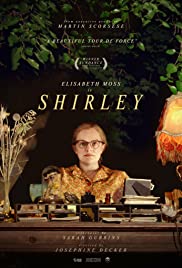
SHIRLEY (2020)

June 4, 2020

 Greetings again from the darkness. “Thrillingly awful”. That’s how Rose describes the feeling she had from reading Shirley Jackson’s 1948 short story “The Lottery.” It’s also a likely reaction many will have to watching director Josephine Decker’s (MADELINE’S MADELINE, 2018) mostly fictionalized biography of the author known for her widely diverse novels, short stories and articles. The film is uncomfortable to watch and challenging to process, yet thanks to the performances and fascinating interactions, we remain enthralled the entire time.

As the film opens, Rose (Odessa Young, ASSASINATION NATION, 2018) is on the train reading Jackson’s divisive story. We gain some insight into her personality as she allows a sly grin to cross her face, and then gets frisky with her husband Fred (Logan Lerman) in a train cabin. Soon they arrive at the home of Ms. Jackson (Elisabeth Moss) and her husband Stanley Edgar Hyman (Michael Stuhlbarg), a professor and literary critic. Shirley is suffering through a bout of depression brought on by writer’s block, and though she’s initially against the young couple staying with them, she slowly finds a use for Rose. It doesn’t take long for us to realize everyone here wants something from the others. Stanley is worried about Shirley’s mental stability, so he convinces Rose to take on the domestic chores. Fred hopes Stanley will bless his thesis so that Bennington College will hire him. Stanley seizes on Fred’s ambition by having him take over some of his teaching load. Rose endures some harshness from Shirley, but the two ladies end up with an awkward bond which has Rose serving as a quasi-muse for Shirley’s new novel.

The new novel is “Hangsaman”, which Shirley actually wrote years before this story is set. It’s about the disappearance of a college student named Paula, and it’s at this point where the visions and/or projections begin. Things get a bit hazy for us … and for Rose. At times, Shirley is downright creepy. Are we watching something supernatural?  Is she a good with or a bad witch … or something else altogether? At times, Shirley appears to be unraveling – and possibly bringing Rose down with her. But then we hear another of the razor sharp verbal sparring matches between Shirley and Stanley. These are works of art. Stanley needling her just enough to inspire more writing. Shirley fires off cutting remarks as brutal as any wounds a knife fight might cause. It’s an advanced course in the creative mind vs the pompous academic. Stanley understands that allowing her to become unhinged is all part of the process, and will likely lead to her best work.

Multiple dynamics between characters creates chaos for viewers. Shirley and Stanley have their gamesmanship, while Shirley and Rose are going down an entirely different twisted path. And then there is odd relationship between pregnant Rose and husband Fred, and again between Fred and Stanley. And we haven’t even gotten to what the outside world thinks of Shirley, and how Stanley’s disclosed infidelities keep a fire burning inside Shirley, despite her humiliation. There is a lot to take in – domestic life in the era of “little wifey”, the strains of starting and maintaining a career, and the inner-demons of the creative mind. One of the key elements that sticks out is how each character is striving desperately to establish their own identity, and given the times, this should be much easier for the men.

Sarah Gubbins’ first feature film screenplay is based on the 2014 novel “Shirley” by Susan Scarf Merrell. Again, this is mostly fiction, albeit with nuggets of Shirley Jackson’s real life mixed in. Of course Shirley’s and Stanley’s four kids are nowhere to be found, allowing for more focus on the contrasting featured couples. In fact, Ms. Young’s Rose is the perfect “opposite” for Ms. Moss’ Shirley, both in looks and demeanor. It’s impossible to miss the similarities between this and director Mike Nichols’ classic WHO’S AFRAID OF VIRGINIA WOOLF? (1966) starring Richard Burton and Elizabeth Taylor. That one had more yelling, but this one cuts just as deeply. One of the best ever onscreen jabs occurs when Stanley sourly describes Fred’s thesis as “terrifically competent”, and then adds in a disgusted tone, “There’s no excuse for that.”

Special notice should be made for the music and cinematography. Composer Tamar-kali (MUDBOUND, 2017) pierces us with music often limited to plucks of cello and/or piano, adding a near-horror element to the frightening interactions we are watching. And with most of the film taking place in the creaky, book-filled house, cinematographer Sturla Brandth Grovlen (WENDY, 2020 and VICTORIA, 2015) expertly captures the harrowing glares of Shirley and the bemused smirks of Stanley in close quarters. The camera work adds to the constant immediacy of each moment.

Shirley Jackson’s most famous full-length work was “The Haunting of Hill House” (1959), which was adapted into director Robert Wise’s 1963 film THE HAUNTING, as well as another version in 1999. Most recently, it was the source material for the very popular Netflix limited series in 2018. Ms. Jackson did suffer with anxiety issues and agoraphobia, and her writing influenced many who came along later. While Mr. Lerman is a bit short-changed, the other three leads are superb in this film that likely will have very little appeal to the masses … you know … those people who can’t find pleasure in almost two hours of misery and a head-scratching ending. The end result is a story about Shirley written in a manner that we can envision it as one of Shirley’s own.

Neon will release SHIRLEY on Hulu, VOD, Virtual Cinemas and participating Drive-Ins June 5th, 2020

watch the trailer: