Greetings again from the darkness. Joachim Trier continues to deliver projects with his frequent writing partner and collaborator Eskil Vogt that cause us to take note of their intriguing and always (so far) interesting filmmaking. They may not be the fastest workers – OSLO, AUGUST 31came out in 2011 and it has been over two years since LOUDER THAN BOMBS– but we can’t help but appreciate their original stories and unique vision.
A chilling opening of a father/young daughter hunting trip sets an uneasy tone for the rest of the film. We then flash forward to that young girl heading off to college. Eili Harboe is excellent as Thelma, a quiet young woman leaving home and her protective parents for the first time. Thelma has had a restrictive Christian upbringing and she’s now a withdrawn, socially inept college student, simultaneously anxious to explore her new freedom and guilt-ridden with every new experience.
The school library is the setting for the first chance encounter between Thelma and Anja (Kaya Wilkins). We witness Thelma’s blushing and uneasiness, and soon birds are crashing into the windows as Thelma writhes on the floor in full seizure. The girls cross paths again and the flirtations are followed by a heavy dose of Thelma prayers. This independence and sexual attractions leads Thelma down the ever-progressive road of dancing, booze, drugs (sort of), and sex – the only thing missing is rock ‘n roll. An awkward dinner with her parents (Ellen Dorrit Peterson and Henrik Rafelsen) leads to more guilt and more seizures, as the two appear connected.
Director Trier’s film is not easily categorized. It’s part drama, thriller, romance, supernatural horror, and religious commentary. There are some supernatural similarities to two films from the 1970’s – CARRIE and THE FURY, and the abundance of religious imagery leans heavily towards the former.
Some unusual camera angles and shots add visual interest to what for much of its runtime is an amorous courtship between the two leads. There is an always present cloak of uncertainty courtesy of the extreme helicopter parents and Thelma’s unpreparedness in dealing with adult feelings. We instinctively realize there’s more going on than the parents let on, but these are essentially quiet people who hold much inside. That theme carries over to the movie as a whole, which is a quiet, but sneaky film on the power of thought … both positive and negative.
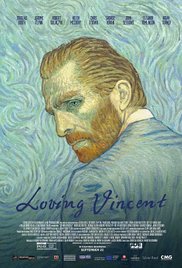
Greetings again from the darkness. For those skeptics who scoff when filmmaking is described as an art form and labor of love, co-directors Dorota Kobiela and Hugh Welchman invite you to take in their nearly decade-in-the-making project. It’s the first fully hand-painted on canvas feature film – experimental filmmaking crafted by more than 100 artists and including an estimated 130 paintings, with 65,000 individual shots/frames.
The spectacular visuals were created by painting over the images … both of actors performing scenes and van Gogh’s paintings. By adding to and amending images, even 10 times or more, the scenes come to life with movement and a pulsating psychedelic feel. The familiar colors of his paintings create a level of connection, while black & white images are used for flashbacks and reenactments.
Though we have never seen this look on screen before (this goes beyond Linklater’s WAKING LIFE), the stunning visuals are accompanied by what can be described as a detective story or murder/suicide mystery. It picks up in 1891, one year after van Gogh’s suspicious death. A local Arles postman holds one last letter from Vincent to his beloved brother Theo. Having held onto it for much too long, he asks his son Armand Roulin to hand-deliver the letter to Theo. Sporting the yellow blazer so recognizable from his portrait, the angry and skeptical Armand heads to Paris. Little does he know, this is only the beginning of his journey … a journey that finds him researching Vincent’s life and a journey that helps him discover more about himself.
There have been many movies made focusing on this amazing artist: LUST FOR LIFE(1956), VINCENT (1987), VINCENT & THEO(1990), and VAN GOGH(1991). This one is filled with contrasting and conflicting stories, theories and recollections, and descriptions of events from those who crossed paths with the artist on a daily basis. We listen right along with Armand as he spends time in Avers-sur-Oise … where Vincent lived, painted, and died.
Many of the actors involved are recognizable even in this artistic format: Chris O’Dowd is the postman, Douglas Booth is Armand, John Sessions plays art supplier Pete Tanguy, Eleanor Thompson is the innkeeper’s daughter Adaline, Jerome Flynn is the controversial Dr. Gachet, Saoirse Ronan is Gachet’s daughter Margarita (recognizable from her piano portrait), Helen McCrory plays the disgruntled Gachet housekeeper, Aidan Turner is the boatman, and Robert Gulaczyk is Vincent. Since these folks were all part of van Gogh’s artwork, we are fascinated to see them come to “life”.
Vincent van Gogh picked up a brush for the first time at age 28. He was dead at age 37, and left behind approximately 800 paintings of portraits and landscapes – many among the most famous pieces in the world today. Did he try to commit suicide as he claimed or was there a more sinister explanation for his death? Of course the filmmakers only hint at possible answers and can’t solve a mystery that is approaching two centuries. Understanding the man is challenging, and perhaps our best hope is through the work he left behind. This is a compelling cinematic experience and we have certainly benefitted from the filmmaker’s labor of love. Clint Mansell’s score leans heavily on strings and piano, and is perfect accompaniment for the story. One could question the closing credits use of Lianne La Havas’ version of “Vincent” (renamed “Starry Starry Night”) rather than Don McLean’s, but one mystery per day is plenty. Spot the paintings, play detective, and mostly enjoy the visuals built on the works of a complex, talented, and tragic figure.
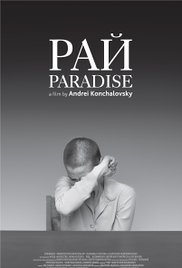
Greetings again from the darkness. Hollywood, and the movie industry as a whole, absorbs a fair amount of criticism for the perceived lack of originality and creativity in this era of remakes and sequels. However, filmmakers also deserve some credit for constantly finding fresh stories associated with The Holocaust and World War II – seemingly endless sources of material for new movies. As Russia’s official Oscar Foreign Language entry, this film from director Andrey Konchalovsky (co-written with Elena Kiseleva) offers up three distinct perspectives of the same tumultuous period.
Julia Vysotskaya plays Olga, a former Russian Countess and member of the French resistance. Ms. Vysotskaya is the wife of director Konchalovsky and has a screen presence somewhat reminiscent of Ingrid Bergman with her ability to appear alternatingly tough, loving, sensitive and stubborn. Her character Olga has been arrested for sheltering two Jewish boys. Philippe Duquesne is Jules, the lead detective assigned to Olga’s case. His questionable loyalties are accompanied by a weakness of the flesh that is all too common among those in a position of power. Christian Clauss plays Helmut, a nobleman and German SS officer who is emotionally torn between his personal desires and his duty to the cause of his country.
The story is told from the perspective of each character through a blend of flashbacks and interviews. Harsh lighting, stark surroundings, and their respective wardrobes during the interviews appear to show each being held captive as they are interrogated by an entity that remains unheard and unseen. The interviews provide some insight into the characters, but almost seem intent on keeping us off-balance as the film progresses. It’s really the flashbacks that are the most interesting and provide the fascinating details for Olga, Jules, and Helmut.
Beautifully filmed in black and white with an excellent use of lighting effects by cinematographer Alexander Simonov, the tangled web of paths intersecting during war time offers some terrific sequences: a father and son on a morning walk, an isolated and guilt-ridden officer in a fog-draped forest, the immediate scavenging after an unexpected prisoner death, the excruciatingly emotional deportation of Jews, and a remarkable sequence involving a meeting with Himmler and Helmut’s subsequent mission to audit the concentration camps.
The brief flashes of joy are usually crushed by the weight of despair and bleakness, yet by the end, we believe we know each of these characters – and what motivates them. Director Konchalovsky’s film is an unconventional, creative, and ambitious combination of The Holocaust, Germany’s quest for perfection, and the greed and daily desperation of those involved. The interviews might not be what you assume, yet cause us to wonder how might our own interview sound while reminding us that, no matter the circumstances, we can always choose to do good.
Greetings again from the darkness. Director Stephen Frears has enjoyed a long career by focusing on the interesting stories of people, rather than the salient specifics of history or politics. He received Oscar nominations for THE QUEENand THE GRIFTERS, and helmed other crowd-pleasers such as MRS. HENDERSON PRESENTS, PHILOMENA, HIGH FIDELITY, and FLORENCE FOSTER JENKINS. While purely entertaining movies are always welcome, it’s important to note the filmmaker’s approach when the story is entwined with historical importance.
“Based on real events … mostly” is Mr. Frears’ cutesy way of kicking off the film and asking us to enjoy the unusual story of connection between a Queen and a servant, and cut him some slack on the historical depth. For most of us, the real enjoyment will be derived from watching yet another standout performance from Oscar winner (and 7 time nominee) Dame Judi Dench as the longest-reigning monarch, Queen Victoria in her elderly years. It’s a role she played twenty years ago in MRS. BROWN, and her relationship with John Brown (presented in that film) has some parallels to what we see here with Abdul Karim (Ali Fazal). Dame Judi is the rare actress who can capture both the loneliness and tiresome burden of six decades of rule and the re-invigorated woman we see learning a new language and new religion. She plays weary and spunky with equal believability.
Victoria was Queen of the United Kingdom of Great Britain and Ireland and Empress of India, and in 1861 her beloved husband Prince Albert died. This film picks up in 1887 with the pomp and circumstance of the Golden Jubilee – a celebration of her 50 years of rule. The early scenes tease us with obstructed views, and the comedic element becomes quite obvious as we see her so carelessly slurping her soup at the formal lunch. Part of the celebration includes the presentation of an honorary coin by two Indians peasants Abdul (Fazal) and Mohammed (Adeel Akhtar), the first chosen because of his height, and the second as a last minute fill-in.
Lee Hall (Oscar nominated for BILLY ELLIOT) wrote the screenplay based on the book by Shrabani Basu. The journals of Abdul Karim were only discovered in 2010, a hundred years after his death. Some of the less favorable moments of this era are mentioned, but most of the Queen’s lack of knowledge or awareness is attributed to the “boring” reports from her advisers. This leads to some awkward moments later in the film regarding the Muslim mutiny and the subsequent Fatwa.
Rather than dwell on history, the film prefers to focus on the unconventional friendship and the re-awakening of the Queen. Abdul becomes her “Munshi” – a spiritual advisor and her teacher of Urda and the Koran. As you would expect, this is all quite scandalous and frustrating for those such as Prime Minister Lord Salisbury (Michael Gambon), Lady Churchill (Olivia Williams), Victoria’s son Bertie (Eddie Izzard), and the royal staff: Sir Henry (the recently deceased Tim Pigott-Smith), her physician Dr Reid (Paul Higgins), and her quivering maid Miss Phipps (Fenella Woolgar). There is even a comical sequence with the great singer Puccini (Simon Callow) as the Queen herself belts out the Gilbert and Sullivan song “I’m Called Little Buttercup”.
Balmoral, the Isle of Wight, and Windsor Castle are all part of the breath-taking scenery, while the absurdity of the royal status is viewed through the eyes of the Indian servants. Most of the focus is on Victoria’s transformation from joyless, isolated monarch to the anything-but-insane (an Oscar worthy scene) and eager to engage elderly woman (one who has an entire era named after her) falling back in love with life as she fights off “the banquet of eternity”. Come for the laughs and the performance of Dame Judi … just not for a history lesson.
Greetings again from the darkness. A nice story set-up is always welcome, and this one delivers a creative attention-grabber that draws us in pretty quickly. Brothers and long-time filmmaking collaborators Jean-Pierre Dardenne and Luc Dardenne (TWO DAYS, ONE NIGHT, THE KID WITH A BIKE) edited the film a bit after its Cannes screening, and the result is a quiet little whodunit with an interesting lead actress performance.
A doctor and her intern have a disagreement at closing time, and opt not to answer the clinic door when a young lady rings after hours. The doctor’s guilty conscience leads her to become obsessed with finding out the name of the lady when she turns up murdered the next morning. It’s passionate and amateur sleuthing at its most awkward, unconventional, and dangerous.
Dr Jenny Davin has recently accepted a post at the prestigious Kennedy Hospital, replacing a retiring doctor. The tragedy causes a change of mind on the job so that she may focus on the case and on continuing patient care through her clinic. The filmmakers initially wanted Marion Cotillard for the role (what filmmaker wouldn’t?), but Adele Haenel (LOVE AT FIRST FIGHT) brings her own approach, and though she doesn’t come across as the warmest person, it’s quite apparent that she is a dedicated doctor who cares very much for her patients. Even when she tells her intern Julien (Olivier Bonnaud) that “a good doctor must control his emotions”, she is ever-stoic with her delivery.
The story is missing the usual Dardenne brothers’ twist, and instead, at its core is an ill-advised detective story and a case of morality, guilt, and the drive to do the right thing. The house calls and open communication with doctors will confound some U.S. viewers, but the various vignettes during Dr. Davin’s gumshoe work keep us engaged. The sub-plot with Dr. Davin reigniting intern Julien’s passion for medicine also maintains the minimalist approach and restrained performances … all with a very grounded approach with mostly handheld cameras.
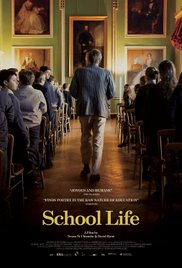
Greetings again from the darkness. With all the talk about statues these days, maybe it’s career teachers like John and Amanda Leyden who deserve their bronzed images displayed in public so that we may all pay proper respect. The film follows the married couple during their 46th and final year as educators at Headfort School, the only remaining primary boarding school in Ireland. These two have been inspirational and influential to so many students over the years, and now they find themselves in a quandary about how to leave the only life they’ve known since becoming adults.
Co-writers and co-directors Neasa Ni Chianain and David Rane, along with script consultant Etienne Essery, use a loose structure in documenting the daily activities, and the blending of traditions with modernity, within the somewhat imposing walls of Headfort. We find it pleasurable to focus on passionate, dedicated teachers rather than on what’s broken with today’s education system.
John’s hard line stance and frequent use of sarcasm (“That wasn’t entirely bad”) effectively masks his caring nature and desire to help students learn and improve. He teaches Latin, Math and coaches the student band that plays many familiar rock songs. He considers this just as important as any class. Amanda takes a more traditional approach in teaching Literature. She uses a well-refined mixture of encouragement and books to facilitate the lessons and motivate students to read more.
The past and present are always on display here … with both the institution and this couple. School and home are blurred lines for the students as well as for John and Amanda. “If we don’t come here, what’ll we do all day?” This line speaks to the uncertainty and wariness that are weighing on the couple as their career end approaches.
As viewers, we must keep in mind that these are privileged children, all of whom are likely to move on to elite secondary schools. In fact, the arrival of selection letters plays a role near year end. When alone at home, we hear John and Amanda complain about students, not unlike you probably complain about your co-workers. The difference here is that this man and woman are truly dedicated to helping each student become their best self.
The film style allows the day-to-day challenges to appear as they may, and while little is learned about individual students, it’s clear that John and Amanda are lost about leaving the only working life they’ve experienced … a devotion to helping kids develop. In fact, the Headmaster, Dermot Dix, is a former student of the Leyden’s. The film’s original title, In Loco Parentis, translates to “in place of parents” … we wish these pseudo-parents nothing but the best in the biggest transition of their life. They certainly have earned happiness, and maybe even a statue.
Greetings again from the darkness. The 1947 Partition of India is personally important and influential to director Gurinder Chadha (BEND IT LIKE BECKHAM), though we don’t understand exactly how until the closing credits roll. Until that point, we find ourselves questioning why Ms. Chadha and her co-writers Paul Mayeda Berges (her husband) and Moira Buffini attempt such an obvious crowd-pleasing structure for this historical saga. Perhaps the strategy was to educate as many as possible on the events from 70 years ago.
An opening quote tells us “History is written by the victors.” Is this true? If so, who are the victors in this story? The British Empire ruled India for three centuries and their last Viceroy, Lord Mountbatten (great-grandson of Queen Victoria), was charged with structuring a peaceful transition to independence. The near impossibility of this challenge should have been readily apparent given the deep divisions created by religious and cultural differences, plus the immense friction between Hindus, Sikhs and Muslims. “Giving a nation back to its people” is not so simple when dealing with 20% of the world’s population.
Hugh Bonneville and Gillian Anderson play Lord Louis and Lady Edwina Mountbatten, respectively. Despite managing what history has proven to be a disastrous decision, he is treated quite kindly by the filmmakers. Seemingly with his heart in the right place, Lord Mountbatten is presented as a pawn for the real power broker in England. His wife, on the other hand, is quite progressive and appears sincere in her efforts to better understand the Indian citizenry. In fact, as the most intriguing figure in the film, more focus on Edwina would have been welcome.
Michael Gambon plays General Hastings Ismay, while Tanveer Ghani is Jawaharlal Nehru (India’s first Prime Minister) and Denzil Smith plays Muhammed Ali Jinnah (Pakistan’s leader). These are the key players in negotiations, while inexplicably, the filmmakers choose to veer from history and offer up the worst kind of cinematic melodrama: star-crossed lovers in the vein of Romeo and Juliet.
As a metaphor for the Partition, the two lovers being torn apart by forces beyond their control is quite simply an unnecessary distraction. Mani Dayal (so good in THE HUNDRED FOOT JOURNEY) plays Jeet, a Hindu servant (one of 500) at the Viceroy House, while Huma Qureshi plays Aalia, the beautiful Muslim daughter of Ali (the late great Om Puri). Furtive glances are about as close as the two come to an actual relationship, but the film spends an inordinate amount of time on their wishes to be together.
There are too many cringe-inducing moments for the film to be considered a serious historical epic. Gandhi gets some screen time and is absurdly described as “The British Empire brought to its knees by a man in a loincloth”. Other moments seem all too relevant today. The promise that “Muslims will not be treated as second class citizens” could easily be heard on a current newscast. The decision to split Pakistan and India seems motivated by Britain’s design on oil and geographic protection from Russia … both contemporary motivations for many decisions these days.
The closing credits highlight the effects of the Partition: 14 million people migrated with approximately one million dead. We also get actual newsreel footage of the key figures from the story, as well as the documented reasoning of why this was so personal for director Chadha … perhaps too personal.
Greetings again from the darkness. There is something hypnotic about the hand-drawn animation of writer/director Sunao Katabuchi’s film based on the 2007-09 Japanese manga (comic) by Fumiyo Kouno. With some similarities to Takahata’s 1988 classic Grave of the Fireflies, it’s more than a wartime drama – it’s a story of the human spirit.
It’s 1935 and Suzu is a young girl who lives in Eba, a town in Hiroshima. She is an exceptional artist with a vibrant imagination and an adventurous approach to life. Her innocence and pleasant childhood existence is rocked when, as a teenager, she receives an out-of-the-blue marriage proposal from a stranger. Life with his family in Kure forces Suzu into a daily routine of cleaning, mending and cooking – all while longing for her family in Eba.
The film clicks through the months and years, and provides a history of war time from the perspective of a family and village. While the date of August 6, 1945 hovers on the viewer’s mind, we experience how family dynamics are affected by war time. For Suzu, her daily routines such as food preparation provide a necessary structure and distraction, despite the ever-worsening shortage of food and supplies. These stresses are compounded by air raid warnings over the radio and Suzu suffers through vivid nightmares.
We so easily connect with Suzu as she continually fights through hardships – both physical and emotional – because of her determination to live a good life and overcome all obstacles. This is such expert story telling with a beautiful presentation, that the film periodically reminds us that war is close by. Even in a war torn country, the people must find a way to go about daily life while treasuring the rare moments of joy and understanding the strength of togetherness. It’s rare that an animated movie can deliver such a humanist look at fully formed characters and their feelings … all within a historical setting.
Greetings again from the darkness. Director Nicole Garcia (The Adversary, 2002) takes the best-selling novel from Milena Agus and harkens back to good old-fashioned movie melodrama – with a French twist. Of course, most any project is elevated with the beautiful and talented Marion Cotillard in the lead role. Few can suffer on screen as expertly as Ms. Cotillard, and she conveys that disquiet through most of this story.
What is love? You’d best not look to Gabrielle (Cotillard) for clarification. As a young woman, her search for love and sexual fulfillment follows the fantasies of the novels she reads (Wuthering Heights). Her corresponding inappropriate behavior teeters between delusion and hysteria. It’s the 1950’s in rural France, so her actions and attitude are not much appreciated, and her parents bribe Jose (Alex Brendemuhl), a local bricklayer, to marry Gabrielle. She is then given the choice of (an “arranged”) marriage or a mental institution.
As a romantic dreamer whose blurred reality expects love to mirror those romance novels, Gabrielle’s self-centeredness and failure to grasp reality results in a loveless marriage – and easily one of the most uncomfortable lovemaking scenes in the history of French cinema. Beyond that, severe kidney stones make it impossible for her to bear children. In hopes of “the cure”, she is sent for treatment to a spa in the Alps (it’s the same spa from Paolo Sorrentino’s 2015 film YOUTH).
While at the spa, she meets handsome Andre (Louis Garrel), a gravely ill soldier from the Indochina War. Gabrielle imagines Andre to be everything she dreamt a lover should be (except for that whole sickness thing). The contrast between the two love-making sessions is startling, and it seems as though Gabrielle has found her bliss.
The years pass after her release from the spa, and Gabrielle makes one mistake after another … blind to what and who is right in front of her … while holding on to the dreamer’s dream. She is certainly not a likeable person, and is downright cruel to her loyal (and extremely quiet) husband Jose. However, Ms. Cotillard is such an accomplished actress that we somehow pull for Gabrielle to “snap out of it”.
The novel was adapted by Jacques Fieschi, Natalie Carter and director Garcia, and you’ll likely either be a fan or not, depending on your taste for old-fashioned melodrama. Despite numerous awkward moments, it’s beautifully photographed by cinematographer Christophe Beaucame. Additionally, the music plays a vital role here – both composer Daniel Pemberton’s use of the violin, and the duality of Tchaikovsky’s piano concerto that connects Gabrielle’s two worlds. You may say she’s a dreamer, but I hope she’s the only one.
Greetings again from the darkness. Even for us frequent movie-goers, a truly great film is a rare and emotional experience. Leave it to Christopher Nolan, one of the finest film makers working today, to deliver a World War II masterpiece centered on a remarkable and historic evacuation, rather than one of the epic battles that more directly led to an Allied victory. The result is a spectacular, stunning and relentlessly intense assault on our eyes, ears and emotions … it’s a horrific thing of artistic beauty.
Mr. Nolan chooses a triptych approach to tell the May/June 1940 Dunkirk story from three distinctly different perspectives: The Mole, The Sea, and The Air. The Mole (term for protective sea walls) is the “by land” segment, and it shows nearly 400,000 soldiers lined up on the beach – nervously waiting to be either rescued or massacred. The Sea puts us not on the deck of the Navy destroyers, but rather alongside the citizen volunteers who answered the call to ferry men off the beach with own pleasure vessels. The Air plops us inside the Spitfire cockpits of two Royal Air Force pilots battling low fuel as they attempt to protect their fellow soldiers below. This 3-part film harmony expertly captures the disorientation of war by shuffling between the three segments, and varying the timelines and sequence of each.
This all happened pretty early in the war, as Winston Churchill had only become Prime Minister a few weeks prior. It should be noted that Mr. Nolan purposefully avoids the usual war room blustery (we see neither Churchill nor Hitler, and there is little mention of the infamous Halt Order) and allows the action to tell the story. Instead, his focus on the (very) young men being sent to battle makes a clear political statement on the absurdity of war. One of “The Sea” volunteers (an excellent Mark Rylance) delivers the message when he states it’s the old men running the war, so he can’t be expected to just sit back as young sons are sent to fight and die.
Despite the epic look, feel and sound of the film and the massive scale of the event, this film is surprisingly at its best in the small moments of heroism and the dogged determination of individuals to survive. Minimal dialogue allows the horrors of war to take center screen. Danger and death are at every turn – bombings, torpedoes, drowning, gunfire, and most any imaginable peril is ever-present. We witness PTSD (shell-shock) in the form of Cillian Murphy’s shivering rescued soldier, and are reminded that every young man present will be either dead or scarred for life. No one escapes war unscathed.
The opening sequence finds young Fionn Whitehead and his squad being targeted with gunfire as German leaflets fall from the sky. The leaflets are maps outlining the hopelessness as German forces have them surrounded. The film is meticulously researched and historically based, though the few characters we get to know are fictionalized accounts. The practical effects throughout are breath-taking and much of it was filmed on location at the Dunkirk beach. There will likely be some complaints regarding the scarcity of female characters and those of color, but the technical aspects of the film are beyond reproach – although the French might have preferred their military receive a bit more attention. Hans Zimmer’s score is unique and searing as it perfectly captures the intensity of the film. His use of a ticking watch only perpetuates the constant feeling of running out of time. Cinematographer Hoyte Van Hoytema and Editor Lee Smith prove why they are among the best at their profession.
Given the spectacle of the action (if possible, see it in IMAX or 70mm), it’s remarkable how we still manage to get to know some of the characters. From The Mole segment, Fionn Whitehead, Aneurin Barnard and Harry Styles represent the young soldiers, while Kenneth Branagh and James D’Arcy play officers. Tom Hardy and Jack Lowden are piloting the Spitfires, while Mark Rylance, Barry Keoghan, Tom Glynn-Carney, and Cillian Murphy are aboard the rescue yacht. Nolan regular and good luck charm Michael Caine can be recognized as the voice on Air Force radio. There is a 1958 film with the same title, and it stars John Mills and Richard Attenborough. The connection (other than the Dunkirk title) is Sir Attenborough’s grandson Will appears in this current film.
The horrors and impact of World War II continue to be an abundant garden – ripe for the picking when it comes to movies. Over the past 70 years there have been numerous approaches to telling part of the story that redefined the world: Judgment at Nuremberg(legal aftermath), Casablanca (romance), I Was a Male War Bride (comedy), Tora! Tora! Tora! and From Here to Eternity (Pearl Harbor), Shoah (documentary), Schindler’s Listand Son of Saul(holocaust), Downfall (Hitler), The Great Escape(entertainment), Patton (bio), The Pianist(personal), Saving Private Ryan(Normandy), Das Boot(U-boat), The Thin Red Line(Guadalcanal), and Letter From Iwo Jima(two opposing perspectives). Each of these, and many others, have their place in War movie history, and now Christopher Nolan’s film belongs among the best.
 Greetings again from the darkness. Joachim Trier continues to deliver projects with his frequent writing partner and collaborator Eskil Vogt that cause us to take note of their intriguing and always (so far) interesting filmmaking. They may not be the fastest workers – OSLO, AUGUST 31 came out in 2011 and it has been over two years since LOUDER THAN BOMBS – but we can’t help but appreciate their original stories and unique vision.


 Posted by David Ferguson