The Dallas International Film Festival ran March 31 through April 9 (it will return for its 12th year in 2018)
 This is the end. The final day of DIFF 2017. Despite periodically feeling more like a marathon than entertainment, it’s always a bit sad when the closing credits roll on the festival’s final movie. My tally for this year’s festival is 30 films watched, 14 of which were documentaries. Just like every year, the DIFF programming provided a diverse schedule of films from around the globe, and a deep lineup of documentaries that range from biographical to social interest. For a list of the winners, please visit www.dallasfilm.org Below is a recap of the three films I watched on Sunday April 9, 2017:
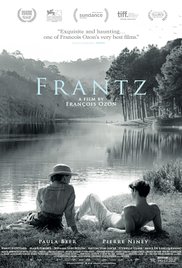
FRANTZ
Director Francois Ozon won me over as a fan for life with his 2003 writing-mystery Swimming Pool. His latest stands in stark contrast to that gem, as there are no mind games for the viewer, other than those the characters play on each other. Actually, this is quite a straightforward story of romance, loss and hope; and it’s an example of expert filmmaking from a director in full control of story, setting, character and camera.
It’s 1919 in historic and ancient Quedlinburg, Germany. WWI has recently ended and the loss of her soldier fiancé is still so fresh for Anna (an excellent Paula Beer) that she makes daily treks to lay flowers on the grave of Frantz. She spots an unknown foreigner paying respects to Frantz, and since it’s a small town, the two are soon enough sitting together in the parlor of Frantz’ parents’ house where Anna lives. It’s an awkward encounter between a grief-stricken German family and a Frenchman paying respects to the family of a fallen “friend”.
That these folks are so quick to accept and encourage these recollections of Adrien (Pierre Niney) speaks loud and clear to human nature in times of grief – we desperately cling to any connection, positive memory, or new strand of information. Then again, Adrien’s perspective is every bit as interesting as that of the parents and Anna. He seeks forgiveness and inclusion, yet is unable to come clean on his motives and past.
More human nature is on display as we initially see how the Germans treat the (outsider) Frenchman, and then later as Anna travels to France, we see how the French treat this (and presumably all) German. Anger, mistrust and deceit are ever-present amongst this group of people who seemingly only want a touch of happiness, and it’s fun to note the parallels between the initial story in Germany and the later time in France.
Director Ozon flips between black & white and the periodic use of color when hope and new direction exists. It provides a personal and dramatic look to the film, along with visual clues as to what’s really occurring on screen, and is nicely complemented by the flowing score from Phillipe Rombi (Swimming Pool, Joyeux Noel). Ozon also selects one of Manet’s lesser known paintings, Le Suicide, as a link between the past and the terrific ending that reinforces the movie’s message, “life goes on”.
STEP (documentary)
Director Amanda Lipitz proves that a documentary can be both inspiring and sad. She takes us inside the Baltimore Leadership School for Young Women and introduces us to the senior girls on the Step dance squad known as the “Lethal Ladies”. The school was founded in 2009 with the goal of sending every student to college, in spite of the challenges and barriers faced in this inner city community. This is the school’s first senior class, and everyone – students, teachers, parents, administration – is on edge.
Emotions overflow throughout the film. The normal roller coaster ride that accompanies high school girls is somehow magnified when the pressures of becoming the first one in the family to attend college collide with such harsh realities of poor grades, no food in the fridge, no power in the home, and inconsistent support from parental units. There is also the goal of winning the year-end Step competition against schools that have a more successful track record, and who likely don’t face the extremes of Baltimore street violence and poverty that is normal for these girls each day.
Ms. Lipitz’ film, a Sundance award winner, never backs away from the emotion of the moment and yet still manages to maintain the long-game perspective of trying to get each of these students graduated and accepted into college. She dives into the home lives of a few of these girls and though all of the parents want the best for the kids, it’s quite obvious that the type of home support and structure varies widely even amongst these few we follow.
The real beauty of this environment is that the school provides structure, guidance and support all along the way. The Step coach pushes them hard daily towards being the best they can be going into the competition. The girls push themselves and each other, and overcome some personality conflicts, all for the sake of a stronger team. The school principal has one-on-one meetings to light a fire when necessary, and you’ve likely never seen a more dedicated high school college counselor who doles out hugs and motivation in whatever dosage is necessary.
The key message here is that it takes a combination of inner-strength and drive, and a support system of family, teachers, coaches, administrators and friends for kids to have a chance at finding a way to succeed at life … whether that’s at Johns Hopkins or a local community college program. This is a special film with a real-world case study of students looking for a way up, and of those looking to provide the necessary boost.
ABACUS: SMALL ENOUGH TO JAIL (documentary)
We are all sick and tired of the phrase “too big to fail”. The 2008 financial crisis very nearly crippled the United States economy, and regardless of how you feel about the bailout funded by taxpayers, there is no question that some of the participants got off with nary a scratch … and some even received giant bonuses in spite of their fraudulent activities. All of that has been written about and reported on ad nauseam. Highly acclaimed documentarian Steve James (Hoop Dreams, The Interruptors) turns his camera not on “too big to fail”, but rather “small enough to jail”.
The only financial institution to be criminally indicted in the wake of the 2008 crisis was a small community bank in New York’s Chinatown. Thomas Sung founded Abacus Federal Savings Bank and his daughter’s have been running it for years. We learn that Mr. Sung was partly inspired to give up his law profession in order to serve the Chinese community by watching George Bailey (James Stewart) do the same thing in the classic film It’s a Wonderful Life.
Once we see how the 5 year legal process and more than 2 month long trial wrap up, it’s pretty tempting to call this a witch hunt for the purpose of publicity by New York District Attorney Cyrus Vance, Jr. So much of what occurred seems to have been done for the TV cameras and the newspaper headlines … especially the humiliating and public chain gang walk in shackles that, as one journalist pointed out, has never been done before and could not have been done with another minority group. Mr. Vance clearly needed a conviction as a political stepping stone. His biggest mistake was in choosing the wrong target. Of course he couldn’t attack the numerous giant financial institutions based in NYC, but he was unprepared for the fight and backlash that he received due to the Abacus pride and principles, and beliefs in one’s people.
Director James doesn’t focus so much on the incompetence of the DA office as he does the far more interesting bank owners and family members. Their determination and conviction to having run their business in the right way goes beyond inspiration and dips into reverence. It’s not David vs Goliath but it is a clash of contradictory values. It would have been interesting to hear even more from the journalists who covered the process and trial, but we get enough to understand their surprise at how the case was handled by the government.
We depend on our government to do the right thing, and when it doesn’t, we deserve to get angry. This film is one of those that will generate some fiery post-movie discussions … discussions that need to be had.
 Greetings again from the darkness. It has been quite a while since the last film adaptation of Albert Camus’ 1942 novel “L’Etranger”, and filmmaker Francois Ozon (behind one of my favorites, SWIMMING POOL, 2003) went to Albert’s daughter Catherine to get approval for this project. Previous adaptations include THE STRANGER (1967, Italy) and FATE (2001, Turkey). Ozone and Phillippe Piazzo collaborated on this updated screenplay (including some variations from the source material).


 Posted by David Ferguson