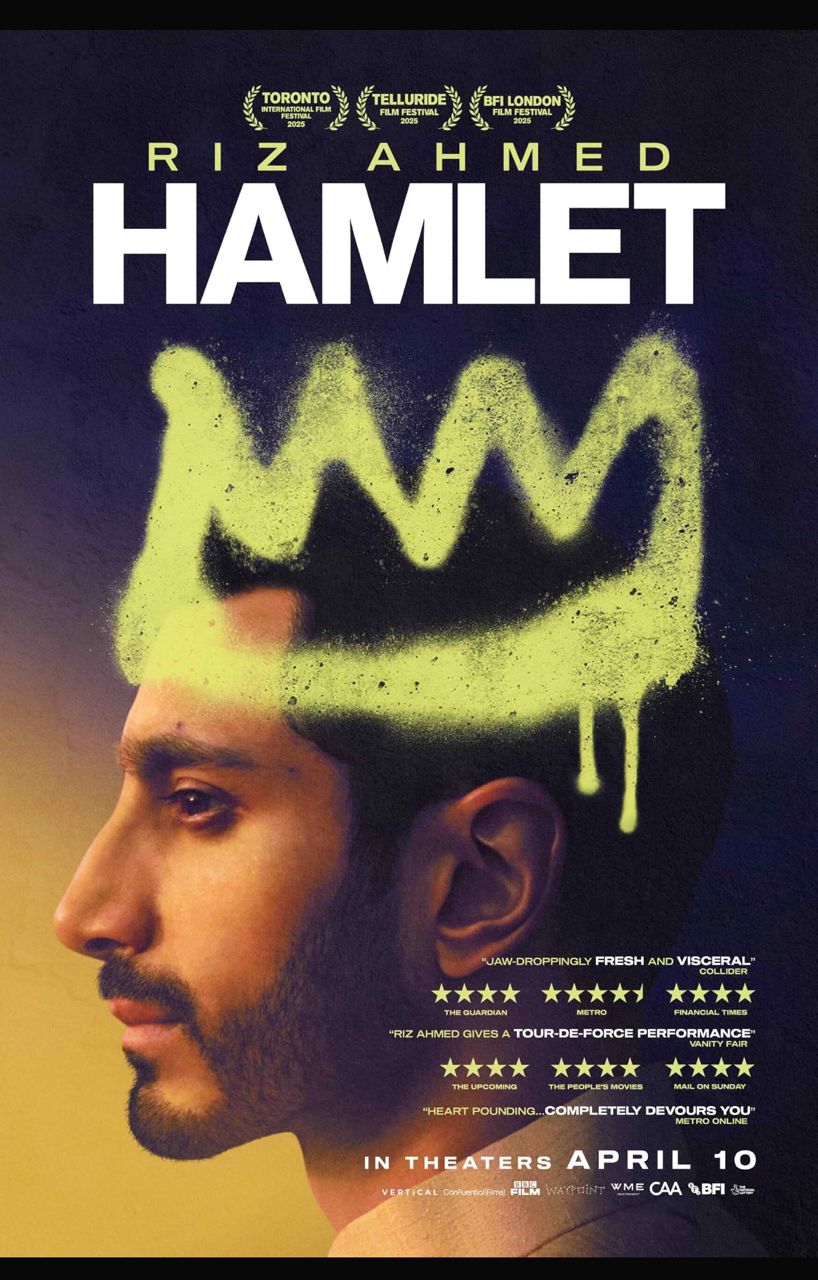
 Greetings again from the darkness. Evidence of the greatness of William Shakespeare has been provided so many times and in so many ways over so many years. Books, live theater, movies, and the work of influenced artists have made their way to various audiences, and regardless of the specific project, the source material stands tall. Director Aneil Karia and actor Riz Ahmed previously shared an Oscar for their excellent short film THE LONG GOODBYE (2021) and now they have collaborated again on an adapted screenplay by Michael Lesslie (MACBETH. 2015 with Michael Fassbender and Marion Cotillard) for a new version of Shakespeare’s “Hamlet”.
The timing may seem a bit odd as Chloe Zhao’s HAMNET (2025) was nominated for Best Feature Film, yet to describe this one as a twist on the story is certainly an understatement. Rather than Denmark, the setting is modern day London’s South Asian community. Hamlet (Riz Ahmed, SOUND OF METAL, 2019) has returned home to see the body of his father being prepped for cremation. Soon after, he’s stunned to learn that his mother Gertrude (a terrific Sheeba Chaddha) is already engaged to marry his uncle Claudius (Art Malik, THE WOMAN IN CABIN 10, 2025). Of course, all of this rings true to The Bard, however, some shifts, cuts, and changes take place due to time and setting. None more startling than what we see with Ophelia (Morfyyd Clark, SAINT MAUD, 2019) … plus Laertes (Joe Alwyn, who also appeared in last year’s HAMNET), and Polonius (Timothy Spall, WICKED LITTLE LETTERS, 2024). At least Mr. Spall gets a worthy dying scene.
In this contemporary imagining of the story, Elsinore is a corporation rather than a castle. In keeping with this, Hamlet follows his father’s spirit to the roof of an office building so that the key information can be passed along, leading to Hamlet’s mission of revenge. The iconic lines are included – often in ways that catch us off guard. “To be or not to be” is delivered in such a crude manner, it may be enough to disappoint traditionalist fans … the most famous dialogue is delivered by Hamlet as he’s behind the wheel in a high-speed game of chicken on the highway. “Rotten” is displayed as graffiti on the side of a building, rather than referencing Denmark, and “The play is the thing” does lead us to a highlight of the film … a new dance sequence designed to publicly indict Claudius at the wedding reception.
As you would expect, the contemporary setting also lends itself to modern day music, and the soundtrack is definitely that. There is a bit too much shaky-cam for my tastes, and as brilliant as Riz Ahmed is an actor, some of his dialogue is somewhat challenging to absorb, especially in the first act. For those into bold choices, Anna Karia’s film may work.
In theaters beginning April 10, 2026


 Posted by David Ferguson
 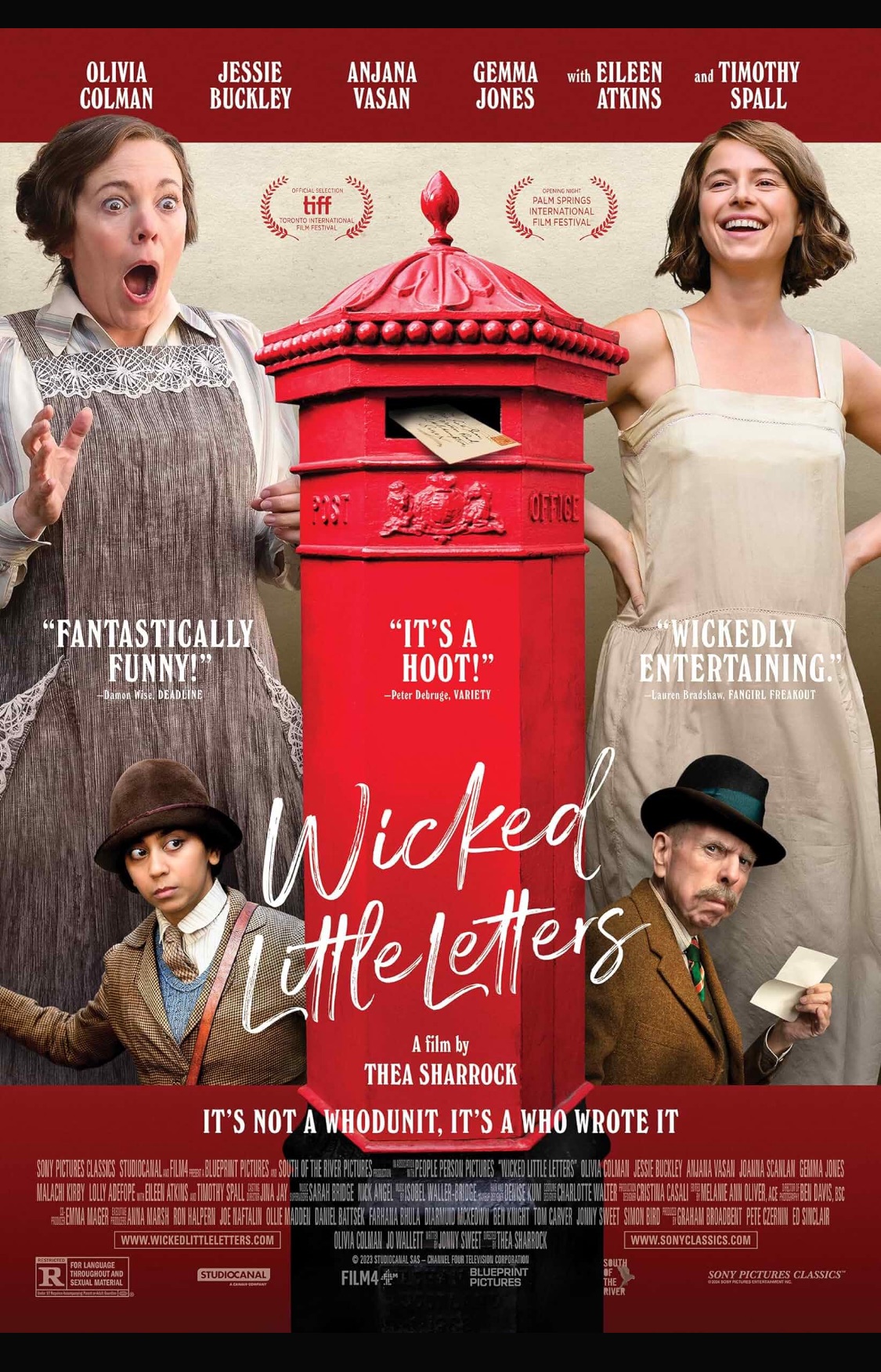 Greetings again from the darkness. “This is more true than you’d think.” Director Thea Sharrock (ME BEFORE YOU, 2016) kicks off the film with this statement. The movie then proceeds to twist and stretch and outright change many of the details from the actual story and case outlined in the 2017 book, “The Littlehampton Libels: A Miscarriage of Justice and a Mystery about Words in 1920’s England” by Christopher Hilliard. However, from an entertainment perspective, the script from Jonny Sweet combined with the stellar British cast works pretty well as a glimpse of that era’s patriarchal society, as well as the need for attention from someone who has been stifled for far too long. And it even includes a few laughs along the way.
 Greetings again from the darkness. This is Scott Cooper’s sixth film to write and direct, and I have found each of them interesting. He has a style that leans towards atmospheric with meticulous pacing, and this latest fits the mold. Cooper’s films include CRAZY HEART (2009) and this will make his third collaboration with Oscar winner Christian Bale (HOSTILES, 2017, and OUT OF THE FURNACE, 2013).
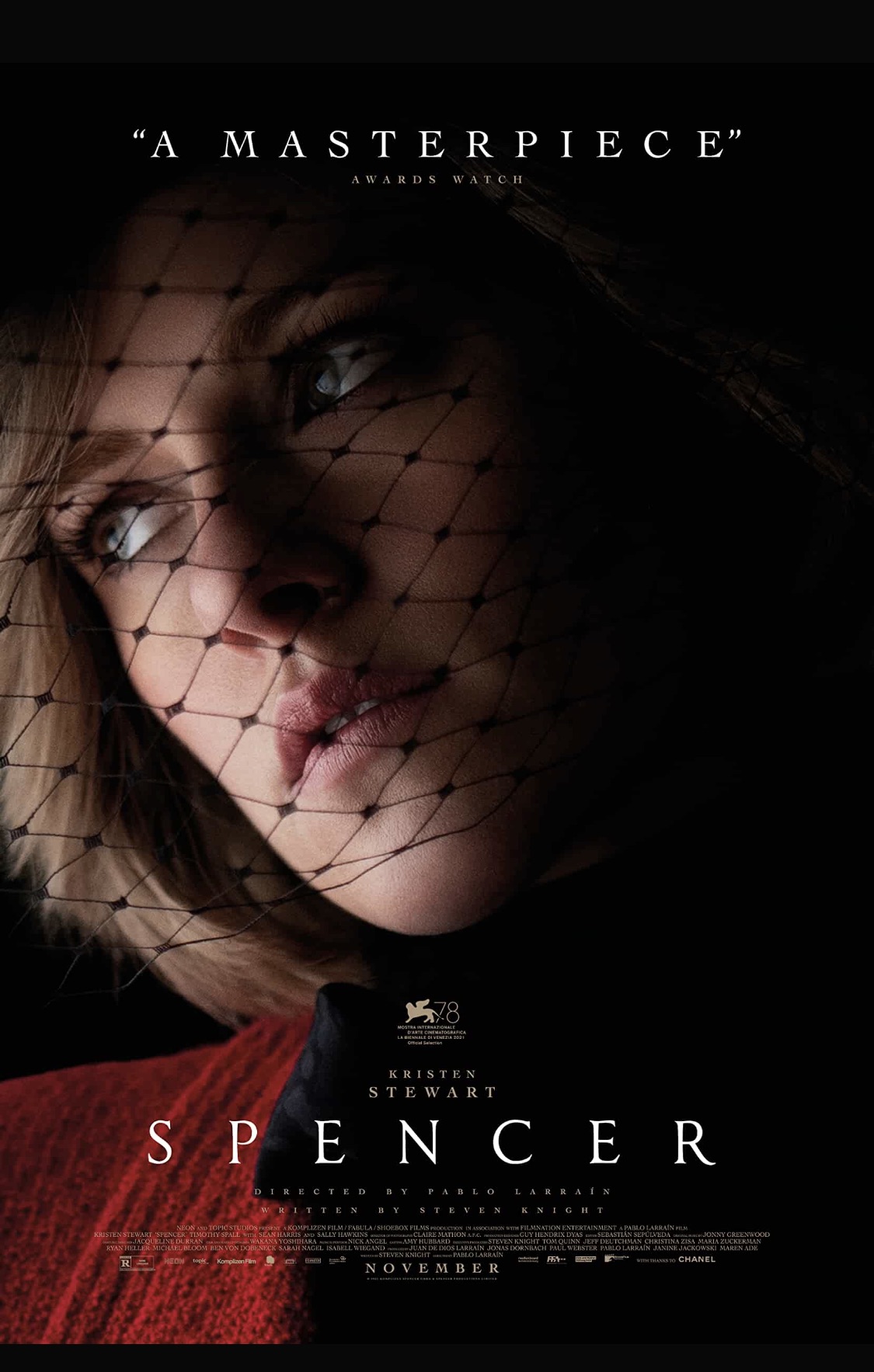 Greetings again from the darkness. “A fable of a true tragedy.” Such is the cautionary sub-heading that director Pablo Larrain begins his latest film. As in his 2016 film, JACKIE, the director turns his lens to an icon of which both too much and too little is known. The screenplay is written by Steven Knight (DIRTY PRETTY THINGS, 2002), and it takes place in the early 1990’s not long before the official marital break of the Prince and Princess of Wales. Much of this movie occurs in the muddled mind of Lady Diana through surreal dream sequences and imagined internal mental imagery.