DARA OF JASENOVAC (2021, Serbia)

February 4, 2021

 Greetings again from the darkness. Knowing that kids are resilient doesn’t lessen the impact of their mistreatment or abuse. Director Predrag Antonijevic and writer Natasa Drakulic (who also stars) focus their film on the fascist Croatian Ustase government during WWII. Croatia housed the only extermination camp run by non-Germans in Europe during the war. The purpose was to preserve the purity of Croatian blood by murdering Serbs, Jews, and Roma. There was even a camp at the Jasenovac complex specifically for kids.

The film opens with armed soldiers marching Serb citizens across the countryside to the awaiting trains. The men are separated from the women and children, and the film mostly follows 10 year old Dara (Biljana Cekic). She is traveling with her mother, older brother, and younger brother Bode, who is not yet two years old. Dara is quiet and strong, and exceedingly observant for her age.

We see bodies being dumped in the river, and then at Gradina Concentration Camp, we watch in horror as the military forces the prisoners into a morbid game of musical chairs. The sole purpose of this is simply to add a level of excitement for the executioners. Even the visiting Nazis seem appalled by this. The film periodically bounces to the camp where Dara’s father is digging mass graves and dumping bodies … at gunpoint, of course. He’s desperate in his attempts to find out if his family is still alive – almost oblivious to how close he is to death himself.

This is young Biljana Cekic’s first screen credit, and she’s remarkable in her ability to convey so much thought and emotion, while maintaining the stone-face necessary to avoid drawing unwanted attention. Her Dara sacrifices much as she kicks into protective mode after tragedy strikes. We’ve seen other Holocaust movies where the day-to-day will to survive is this strong, but the stories are rarely told through the eyes of a 10 year old girl. The Croatian fascists are portrayed as eager sadists, and the healthy boys are brain-washed into “little Serbs”, while the sick children are allowed to die … with Nuns as accomplices.

The frantic actions of the Red Cross are shown as one of the ways we see that even in the worst possible conditions, good-hearted people find a way to help. For Dara, everyone in her life gets taken from her, and we watch relentless misery, dread, pain, and suffering unfold on screen. It’s a reminder of the evils of fascism and the dangers involved with looking down on others due to race or religion. For non-Serbs, this is mostly and unknown and untold story of atrocities and cruelty – upwards of 100,000 were killed. Now that we know of this “Balkan’s Auschwitz”, and we think of modern day Balkan conflicts, we can’t help but wonder what purpose it served. It’s a tough watch, and yet another reminder of the importance of remembering history.

In select theaters February 5, 2021

WATCH THE TRAILER


THE MAN WHO SOLD HIS SKIN (2021, Tunisia)

January 28, 2021

 Greetings again from the darkness. Lao Tzu wrote, “Being loved deeply by someone gives you strength, while loving someone gives you courage.” But to what extreme would you go for true love, and how far is too far? Writer-director Kaouther Ben Hania offers an early scene on a commuter train as Sam Ali and Abeer flirt and tease to the point that he publically, and loudly, proclaims his love for her. Unfortunately for him, his outburst occurs in Syria, where human rights are always in peril. In fact, this love story is burdened with the weight of human rights, individual choices, and the power of art.

Ms. Ben Hania bookends her film with a choreographed art installation coated in a blizzard of white walls and white gloves. It’s 2011, when a distant relative in law enforcement assists Sam Ali (Yahya Mahayni) with his (quite creative) escape from Syria to Lebanon – after a painful slap of reality accompanies Sam’s goodbye to his beloved Abeer (Dea Liane in her first screen credit). As Sam flees for his life, Abeer is pressured by her family into an arranged marriage.

We then flash forward one year to find Sam working in a Beirut chicken factory. He scrounges for food at the buffet of local art galleries until one day he is spotted by Soraya (a blond Monica Bellucci), the agent for acclaimed artist Jeffrey Godefroy (Koen De Bouw). When Sam and Godefroy meet, the artist tells him that art is “alive” and, more precisely, “I want your back”. A Faustian deal is cut. Godefroy turns Sam Ali into a living piece of art by tattooing his back, and Sam gets the travel visa he desperately needs to reunite with Abeer.

With Sam basically a commodity (there are even T-shirts of his back in the gift shop), there are protests to his being exploited – this despite Sam enjoying the nice hotels, room service, and promise of the visa. Of course, as with any commodity, it’s only a matter of time before the almighty dollar comes into play, and soon Sam is auctioned off to a collector. Subtle humor has a role throughout much of the film, and Mr. Mahayni is quite believable as a Syrian refugee sacrificing for love. Ms. Ben Hania’s film is inspired by “Tim”, an original artwork tattoo by Wim Delvoye sold to a collector in 2008. Mr. Delvoye, a controversial Belgian artist, even makes a brief appearance here as an insurance agent. This is a thought-provoking love story, survival tale, and commentary on the bent side of the art world. When is a man truly free? We don’t typically think of Tunisia as a hotbed for cinema, but this film deserves attention.

This is Tunisia’s entry for the Foreign Language Oscar

WATCH THE TRAILER


BABY DONE (2021)

January 21, 2021

 Greetings again from the darkness. “I don’t want to not have a baby.” This is just one of the zingers Zoe rattles off during this charming, and often quite funny film from director Curtis Vowell and writer Sophie Henderson. Fellow New Zealander Taika Waititi is an Executive Producer, and his influences are apparent (and always welcome). In a light-hearted way, while still maintaining plenty of heart, the film explores the fear of losing or compromising one’s true self when parenthood strikes.

Rose Matafeo delivers a terrific performance as Zoe, a tree-climbing arborist by profession, and a thrill-seeking adventurer by choice. Her partner in life, and in the tree-trimming business and in the thrill seeking, is Tim (Matthew Lewis). They are the type of couple who go to a friend’s baby shower and peek into the gender reveal box before dominating the party games. Zoe is fed up with losing friends, and describes the life cycle as “Married, house, baby, done”, implying that people aren’t the same after having completing these steps and no longer want to hang out with free-wheelers and the unencumbered like her and Tim.

Denial. That’s the best description of how Zoe reacts to finding out she’s pregnant. Besides not telling Tim (a major relationship gaffe), she continues on with tree-trimming and pursues the “Tree Climbing Championship” she has qualified for (I still wonder if that’s really a thing). When Tim and her friend Molly (Emily Barclay) find out about the secret, feelings are hurt and emotions wreak havoc. Comedy is provided through the prenatal/antenatal class instructor, as well as through Zoe’s new acquaintance Brian (Nic Sampson) whom she connects with online. See, Nic … well, he, uh … has a thing for pregnant women. Not babies, mind you. But pregnant women – which by definition seems to limit the prospects of a long-term relationship.

The always-great Rachel House makes a brief appearance as the headmaster at a local school, and much of what we see is a mess created by pregnant Zoe as she attempts to stay focused on her “bucket list”. The film excels at presenting two versions of anxiety with Zoe and Tim, and it’s loaded with relatively small moments that are quite relatable – some funny, some more serious. Like it or not, parenthood creates life changes, and the topic benefits from New Zealand wit, and a cast that perfectly complements the sharp and insightful script.

In select theaters and VOD on January 22, 2021

WATCH THE TRAILER


THE LAST VERMEER (2020)

November 19, 2020

 Greetings again from the darkness. Knowing the film is based on Jonathan Lopez’s 2008 book, “The Man Who Made Vermeers” removes some of the mystique from the story; however Dan Friedkin’s (stunt pilot on DUNKIRK) directorial debut is an enticing look at a blending of art history and world history. The screenplay was co-written by John Orloff, Mark Fergus, and Hawk Ostby.

It’s May 29, 1945, three weeks after the fall of Hitler’s Reich, and the Dutch military is on a mission to reclaim valuable art and collectibles confiscated by the Nazis during the war. Some of these were hidden in Austrian salt mines by order of Hermann Goring, actions also depicted in the 2014 film, THE MONUMENTS MEN. After serving in the war, Captain Joseph Piller (Claes Bang, “Dracula” 2020) is tasked with tracking down those who stole the art, and those who sold the art to Germans. It’s a task meant to preserve his country’s culture. One particular piece, “Christ with the Adulteress” held special significance, as it was billed as ‘the last Vermeer’, a long lost painting by Dutch master Johannes Vermeer (“The Girl with the Pearl Earring”), for which Goring had paid a record price.

Investigation on this painting led Piller and his assistant Minna (Vicky Krieps, PHANTOM THREAD 2017) to Han Van Meegeren (played with panache by Guy Pearce and his stylish eyebrows). Piller is also helped by his friend Esper Vesser (Roland Moller, ATOMIC BLONDE 2017) who supplies a bit of muscle and brawn. Van Meegeren has a fancy manner of speech, and Piller determines he’s the key to the case, and to unlocking what occurred and how. At the same time, the Ministry of Justice (August Diehl, INGLORIOUS BASTERDS 2009) is after Van Meegeren for conspiracy, and the parties end up in court.

Piller and Van Meegeren existed in real life, and though some dramatic license is taken, much of what we see actually happened. Art experts and politics collided. And it’s not surprising that egos ruled the day (not unlike today). The twist may or may not be a shocker to those who know the story, but it’s still fascinating that folks would risk their lives in such a manner during the darkest of times. It seems opportunists exist regardless of the era. Mr. Bang and Mr. Pearce are both excellent here, and it’s quite fun to watch their verbal wranglings. Director Friedkin adds an Epilogue that will surely bring a smile to most viewers.

Opening in theaters November 20, 2020

watch the trailer


HEARTS AND BONES (2020)

November 19, 2020

 Greetings again from the darkness. How would you feel if someone photographed the worst moment of your life, and then exhibited it for the world to see? That question is at the heart of this drama, the first narrative feature from writer-director Ben Lawrence. His co-writer is Beatrix Christian, who also wrote the screenplay for JINDABYNE, an excellent 2006 film directed by Ben’s father, Ray Lawrence.

Daniel Fisher (Hugo Weaving, “The Matrix” and “The Lord of the Rings” franchises) is a renowned war photographer, and we first see him on assignment in 2018 Iraq. When he returns home to the Western Sydney suburbs, his longtime partner Josie (Hayley McElhinney, THE BABADOOK 2014) surprises him with news that she’s pregnant. They still struggle with the pain of losing their previous daughter, Eve. On top of that, Fisher’s work is scheduled to be the centerpiece of a high profile exhibit coming soon. The stress manifests itself physically through shaking hands and fainting spells.

Fisher is a bit of a mess when he’s tracked down by Sebastian Ahmed (the screen debut of Andrew Luri), who requests that Fisher not include photographs of the massacre which occurred in his south Sudan village 15 years prior. Sebastian says the memories are too painful, as he lost his family during that time. He’s now a refugee building a new life for his pregnant wife Anishka (Bolude Watson) and their young child. Sebastian works as a taxi driver and in a commercial laundry, and when he pushes Anishka to let him buy a house for their family, she says matter-of-factly, “We work. That is our life. It’s all we do.” It’s a frustrating dose of reality for Sebastian who sees a house as confirmation that they belong.

There is so much going on in what, on the surface, appears to be a quiet little film where two men form an unlikely friendship. PTSD is a factor for both men, as war has left its mark, as it so often does. Sebastian has kept his past life a secret from his wife, but that’s only part of the story when it comes to why he doesn’t want the photographs exhibited. Fisher is described as “documenting human pain and misery”, while his work is labeled “misery porn”. Is that fair? We get both sides of the gray area associated with that question noted in my first paragraph above.

Filmmaker Lawrence benefits from four terrific performances, and though the ending is a bit shaky, the stress and emotional turmoil that those four characters endure is extremely well handled. “Who are you?” is a question Anishka asks her husband, and by the end it can be asked of all four characters. There is little wonder why this has been so warmly received on the film festival circuit … it’s thought-provoking and emotional.

In theaters and On Demand November 20, 2020

watch the trailer


MEMORIES OF MURDER (2003, South Korea)

October 19, 2020

 Greetings again from the darkness. Between 1986 and 1991, 10 women were raped and brutally murdered in the province of Gyeong-gi outside Seoul. Considered South Korea’s first serial killer case, the crime went unsolved until 2019. The case was the inspiration for writer-director Bong Joon Ho’s second feature film, as was Kwang-rim Kim’s play, “Come to See Me”. Director Bong Joon Ho co-wrote the screenplay with Sung-bo Shim, and of course, went on to win an Oscar for PARASITE (2019), in addition to providing other popular features such as OKJA (2017), SNOWPIERCER (2013), and THE HOST (2006). This early film can be compared to David Fincher’s ZODIAC (2007), although this one is a blend of murder mystery, crime thriller, black comedy, and political commentary.

Kang-ho Song (PARASITE) stars as Park, a local detective called to the scene of the first victim. Almost immediately we can tell Park and the police force are borderline incompetent. Park is convinced he has “Shaman eyes” and can identify the guilty party simply by looking at them. Of course, this is ridiculous and is proven so on a few occasions. Park’s partner, Detective Cho (Roe-ha Kim), is a hothead who takes a heavy-handed approach to interrogation (though he later experiences true karma). When a second victim is discovered, a more seasoned professional, Detective Seo (Sang Kyung-Kim), arrives from Seoul. In contrast to Park’s gut-feeling approach, Seo puts faith in evidence, proclaiming, “Documents never lie”. These two detectives are at the core of the story and we watch as each evolves.

The film begins on October 23, 1986 as the body of the first victim is found. We witness how the crime scene is immediately corrupted by both cops and local kids. This is also our indoctrination to how the filmmaker is treating this much differently than most crime dramas. A stream of suspects Park refers to as “punks” are paraded through the station, but true chaos ensues at the scene of the second body. We can’t help but be relieved when a professional, big city detective arrives. Bits of evidence are slowly assembled – red clothes, rainy nights, a song on the radio – each may play a role in the actions of the killer. Frustration builds as more murders occur and the detectives are unable to pin down the perpetrator.

The mental and physical toll that detectives endure with such a case are on full display. The obsession with finding the murderer never ends and the fantastic ending proves that even a career change doesn’t erase the failure. We are inundated with crime thrillers these days, but it’s difficult to grasp how this masterpiece was put together by a director whose career was just getting started. Certainly today we recognize the brilliance of Bong Joon Ho, but this was 17 years ago! It plays as a time capsule of South Korea socially and politically in 1986, and it works on that level every bit as much as a crime thriller. Cinematographer Hyung Koo Kim (THE HOST) balances the crime scenes with the police station, as well as the telling facial expressions of the characters. Last year’s solving of these horrific crimes pushed this classic into release, and it’s well worth a watch.

watch the trailer


LA RESTAURACION (2020, Peru)

October 15, 2020

 Greetings again from the darkness. We don’t typically look to Peru for observant black comedy filmmaking; however this first feature film from writer-director Alonso Llosa (story co-written with Gustavo Rosa) is one of those pleasant surprises we usually only get from film festivals or a spontaneous streaming selection. It’s yet another reminder that an entertaining film doesn’t require a massive budget or a mega-movie star. A terrific story with relatable characters and heartfelt performances will do just fine.

Shots of Lima’s towering and shiny new skyscrapers open the film as we hear from the narrator who describes the booming economy, as well as Peru being “a country of builders that peaked during the Inca period”. That narrator is Tato Basile (played by Paul Vega), a 50-ish failure at life. He dropped out of school which kept him from pursuing his preferred career as an architect. His marriage didn’t last. He has no job, lives with his mother, is addicted to cocaine, and claims he is ‘psychologically incapable of working”. His mother Rosa (Attilia Boschetti) is bedridden and near death, and is fairly disgusted with her grown man son who should have figured out life by now. Still, she grudgingly gives him money for his habit. Her long-time trusted housekeeper and personal assistant Gloria (Delfina Peredes) has protected Rosa from the fact that the family funds are nearly depleted … and the once glorious mansion is crumbling.

One day Tato runs into old friend Raymond (Pietro Sabille), who is now a real estate tycoon cashing in on Lima’s boom market. Their conversation leads Tato to concoct an ingenious and devious plan that requires the assistance of Gloria, as well as Eladio (Luis Fernando Ananos Raygada), the family friend-gardener-handyman-driver, and Inez (Muki Sabogal), Rosa’s young caregiver. The idea is to sell the family house to Raymond for top dollar, and to keep the transaction a secret from Rosa by telling her the family home is being renovated. To pull this off, the co-conspirators will re-create her bedroom in a remote location, and pipe in construction noise and the familiar aroma of the neighbor’s stew. Of course the plan is ludicrous, but desperation for money often leads to poor decisions.

Llosa includes humorous moments and memorable characters, in addition to the life lessons that Tato learns about 3 decades later than he should. Rosa has a recurring acute punchline about disliking “social climbers”, and the score has a 1980’s “Miami Vice” vibe that complements the retro look and feel of the film (including the credits). Llosa’s film is sweet, funny, and sad, and is an example of excellent story-telling. Mr. Vega perfectly captures adult Tato as he finds the soul and love that he’s been lacking. This one might take some effort to track down, but you’ll likely find it worthwhile and entertaining. I sure did.

watch the trailer


OUT STEALING HORSES (2020, Norway)

August 6, 2020

 Greetings again from the darkness. Contrasts are plentiful in this film. The bleakness of winter versus the greenery of summer. The resignation of old age versus the naivety of youth. Pet Petterson’s award-winning novel was released in Norway in 2003, and then in English version in 2005. Norwegian director Petter Moland tackles it with the best intentions, though the nuances prove too much for one movie. Mr. Moland is a fine director as evidenced by his excellent IN ORDER OF DISAPPEARANCE (2014) with Stellan Skarsgard and the English remake COLD PURSUIT (2019) with Liam Neeson.

Morland and Skarsgard reunite as the actor takes on the role of the elder Trond, who we first see as he has relocated to Norway from Sweden. Through his narration, we learn Trond has lived in Sweden for 42 years, and it’s a chance meeting with his new neighbor Lars (Bjorn Floberg) that triggers memories of one summer when he was 15 years old. It’s now 1999, and the impending new millennium has Trond self-isolating on top of the grief and loneliness he has carried since his wife was killed in a car crash. Skarsgard is an actor who can be either sympathetic or powerful, and he brings gravitas to a character who is mostly lost at this late stage in life.

Much of the film is spent in Trond’s flashback to 1948, when he lived the summer with his father, a “practical” man, at his cabin in Norway. Young Trond is played very well by Jon Ranes in his first role. He clearly admires his father (Tobias Santelmann, KON-TIKI, 2012) and enjoys working beside him and taking rain showers alongside. Over the weeks, Trond and his father become entangled with a village family after a tragedy involving Lars (the future neighbor) when he was very young, and Lars’ father and mother (Danica Curcic). What follows for Trond are the things in life that cause us to alter our view of people and the world. Lost innocence is rarely easy.

Cinematographer Rasmus Videbaek (A ROYAL AFFAIR, 2012) captures the beauty of nature during the 1948 summer, as well as the stark white stillness of 1999 winter. Some of the look and feel and symbolism reminds of the work of Terrence Malick. The stunning Norwegian landscapes play a role for us as viewers and for Trond. There are also some quiet moments that carry weight between the elder Lars and Trond, as the missing pieces of life slowly fall into place.

The elder Trond states his goal is “to sleep as heavily as possible without being dead”, but we see part of him may have already died. Flashbacks to that summer, and even earlier during the war, combine with some awkward conversations with Lars to fill in gaps that had blurred over the years. Childhood memories from old age are often not to be trusted, but coming to grips with one’s family and the past may bring peace – or it may not. Trond is an avid reader of Dickens’ “David Copperfield” and there are many references throughout. He’s even given life advice: “Don’t be bitter”, which is a worthy goal for all. It’s an odd film with multiple timelines and damaged characters at different stages. It may not reach the level of Petterson’s novel, but director Moland gives us plenty to mull.

watch the trailer:


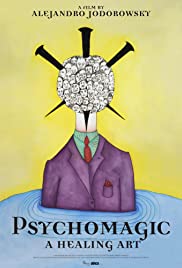
PSYCHOMAGIC, A HEALING ART (2020, doc)

August 5, 2020

 Greetings again from the darkness. Alejandro Jodorowski is a long-time avant-garde and visionary director known for cult classics EL TOPO (1970) and SANTA SANGRE (1989). He’s now 91 years old, and this is his first film since ENDLESS POETRY (2016) – only categorizing this as a “film” is a bit of a stretch. More in line with what we see would be, ‘a procession of demonstrations of Jodorowski’s own trauma therapy that he calls Psychomagic’.

Fortunately, we kick off with Jodorowski himself explaining his therapy. He defines Psychoanalysis, founded by Sigmund Freud, as being based on science and words. In contrast, he defines his Psychomagic as based on acts and touch. We then transition directly into an ongoing session – a sequence likely to be the last one many people watch, as only the most curious (or those charged with reviewing the film) will subject themselves to more.

The rest of the runtime is broken into “cases” distinguished by the specific reasons people are seeking treatment. Few can argue that treatments for emotional trauma can vary widely, and that not everyone will be affected the same, and that we should all be open to whatever works. However, I can assure you, Psychomagic treatment is unlike anything you have seen or experienced. These filmed sessions come off more like an acting workshop than therapy, though we are to assume they are legitimate.

Not to spoil anything, but rather to offer a taste of what’s in store, you should brace for full body shoe polish while dancing at night, the shattering of dinner plates on the patient’s chest in nature, pouring cold milk on an unclothed person, the simulation of birth for ‘grown ups’, sledgehammers on pumpkins decorated with family photos (OK, this one actually makes some sense!), sprinkling water on a massive tree to treat depression, burying a wedding dress, and participating in Mexico City’s Walk of the Dead. And I have skipped over the connection between menstruation and finger-painting and cellos.

Artists often thrive with great freedom, and the therapeutic effects of art have certainly been proven many times. It’s just that watching this, I became something beyond skeptical. It reminded me of the old-time healers, and the fine line between healing and scamming. Perhaps it was the regular inclusion of clips from Jodorowski’s films that put me on high alert, or maybe it was simply the progression of segments that each struck as more outrageous than the last. Jodorowski is an old man with a history of creating art, so I’m choosing to give him the benefit of the doubt, though it’s not an easy task after enduring this.

watch the trailer:


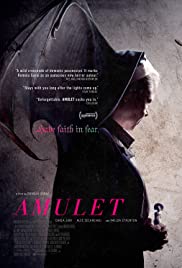
AMULET (2020)

July 24, 2020

 Greetings again from the darkness. Horror films tend to serve up relatively simple plot points so that viewers are controlled by emotions rather than deep thinking. The exceptions typically use multiple story lines and atmosphere to build up suspense that often ends with a twist or surprise ending. You might recognize Ramola Garai as an actress from SUFFRAGETTE (2015) or the TV series “The Hour”, and this is her first feature film as writer-director. She definitely chose the latter plot path, and the result is likely a film that will be divisive amongst the horror crowd.

Tomaz (Alec Secereanu, GOD’S OWN COUNTRY) is a former soldier with such a horrid case of PTSD that he must bind his own hands when he sleeps. He’s now homeless and adrift, merely surviving day-to-day. We see flashbacks to his time as a soldier working a checkpoint deep in the forest. The war is never identified, but one day he decides to help a frantic woman (Angelika Papoulia) rather than shoot her (as we assume his orders dictate). This story and their time together pop up periodically through the movie to the point where we start to believe we have an understanding of Tomaz’s background.

While squatting with other homeless folks, the building where they sleep catches fire, and soon after Tomaz is taken in by Sister Claire (Imelda Staunton), a caring nun who gives him a purpose – helping out a woman who is dealing with a sick, elderly mother. Magda (Carla Juri, BLADE RUNNER 2049 seems withdrawn and initially not particularly happy that Tomaz is living in her house. And, oh my, that house. Dilapidated is too kind as a description. So in addition to a bed, and Magda’s cooking, Tomaz begins repairing the house. And while you may have your own renovation stories to tell, did you ever pull an albino bat out of the toilet? Tomaz has.

Magda does not allow Tomaz to see her mother. He (and we) only hear the confrontations and see the bite marks on Magda’s arms. Clearly something is amiss. The flashbacks to Tomaz as a soldier with Miriam make for a stark contrast between the forest and Magda’s creepy house. It’s in the forest where Tomaz finds the titular amulet buried. If you’ve always thought of an amulet as a good luck charm, your definition will likely change.

It’s interesting to watch the shifts in the relationship between Tomaz and Magda, culminating with a night out dancing, where she reminds us a bit of Elaine Benis at the company party … although Magda’s is a pure emotional release, rather than a comedic effect. As you might expect, the film is at its best when Imelda Staunton is on screen. Unfortunately, these moments are too rare. The “old school” gothic graphics for the opening credits do make for a terrific stage-setter. While Magda’s locked-away mother provides some mystery, the tension of the story never really matches the creepy atmosphere of the house. Ms. Garai includes some excellent moments of horror images, but the deliberately slow pace doesn’t deliver a satisfying payoff.

Available OnDemand July 24, 2020

watch the trailer: