MA RAINEY’S BLACK BOTTOM (2020)

December 21, 2020

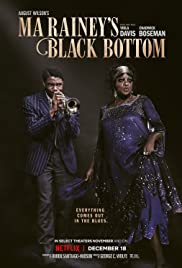
 Greetings again from the darkness. As an Executive Producer, Denzel Washington has pledged to bring 10 August Wilson plays (collectively known as ‘The Pittsburgh Cycle’ or ‘Century Cycle’) to cinema. The first was the Oscar-nominated FENCES (2016), and George C Wolf directs this, the second. Ruben Santiago-Hudson has adapted Wilson’s 1984 play into a feature film vehicle for some of the finest on screen acting we will see this year.

Viola Davis (Oscar winner, FENCES) stars as Gertrude “Ma” Rainey, the “Mother of Blues”, and the recently deceased Chadwick Boseman co-stars as Levee, her ambitious trumpet player. Ms. Davis delivers a towering performance, and Mr. Boseman leaves us with his career best. The film opens in 1927 rural Georgia with two African-Americans running through the woods under the cover of darkness. If your mind goes where my mind did, we are both wrong. They are headed to a shack acting as a nightclub, and we get our first look and listen at Ma belting out a tune. It’s a powerful image and one that expertly sets the tone.

Soon we are in Chicago as Ma’s band makes their way to a recording studio. Cutler (Colman Santiago, IF BEALE STREET COULD TALK, 2018) plays the trombone and is the de facto leader, Toledo (an excellent Glynn Turman, “Fargo”) is the piano player, and Slow Drag (Michael Potts) plays the bass. The three older men all arrive on time at the studio and are waiting on trumpet player Levee (Boseman) and Ma. When Levee does show up, he struts into the rehearsal room and flashes his new shoes. The generational difference is immediately evident, and the fiery banter is superb. Levee is charming and cocky, while the older men are wise from experience and have undoubtedly seen dozens of Levees throughout their years. Cutler’s strong religious beliefs become known and Toledo’s sage advice falls on deaf ears.

Ma literally crashes into the scene, and we quickly understand that this woman will apologize for nothing, and has earned the right to call her own shots – even if that’s only true in this one corner of the universe. She understand the power her record sales give her, and she seizes every possible upper hand – whether it’s which arrangement to sing on a song, allowing her stuttering nephew to record, or even demanding a cold coca-cola before singing. Ma speaks in third person and her attitude is not that of a warm, grateful person, but rather of a woman who understands what she has earned. When she says, “All they want is my voice”, we know exactly what she means.

More collisions occur, this time figuratively. There is a collision of swagger between Ma and Levee. The collision of generations with Levee and the band. Finally, there is the collision of Levee and the white man. Ma wants to sing her songs on the record the way she sings them for her fans, while Levee is pushing for the “new” up-tempo sound. Levee’s ambition for songwriting and putting together his own band clashes with the older musicians who are satisfied to be working, and Levee tries to play the game by playing up to the white men in power, only to be taught the lesson that his bandmates tried to warn him of.

Wilson is known for his speeches, and the key players get their moment. Toledo describes blacks as “the leftovers”, while Ma describes white people listening to the blues … “They hear it come out, but they don’t know how it got there.” These are powerful moments, yet standing above them are the two soliloquies we hear from Levee. The first is about his background of family and introduction to white men, while the second is truly an other-worldly cinematic moment – he contests the unwavering religious beliefs in what ultimately proves to be the most tragic way. It’s a scene which will be Mr. Boseman’s long-lasting acting legacy.

Supporting work is provided by Jeremy Shamos as Ma’s agent Irvin, Taylour Paige as another line in the sand between Ma and Levee, Dusan Brown as Ma’s nephew, and Jonny Coyne as the studio owner/producer. This is not so much a story, but rather inspiration for us to assemble the various pieces into the backstories of these characters. It’s a way for us to better understand what they did to get here, and how they are handling it now. Step on the shoes at your own peril. When someone overcomes so much in life, they aren’t likely to back down gently. The music is terrific, the message is strong, and the performances are unforgettable.

Now streaming on Netflix

watch the trailer


FIRST COW (2020)

December 19, 2020

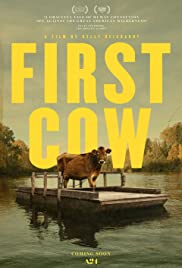
 Greetings again from the darkness. A modern-era woman (Alia Shawkat) is hiking along an Oregon river with her trusty dog. Something catches her eye and she begins tentatively brushing away decades of leaves and soot. Ultimately it turns into an excavation of two human skeletons nestled together. How many years since these two laid down for the last time? Why in this spot?  It’s a terrific way to begin a story, and does justice to what follows … all of which takes place in the early 19th century.

Director Kelly Reichardt has already made her mark with such standouts as CERTAIN WOMEN (2016), MEEK’S CUTOFF (2010), and WENDY AND LUCY (2008), and this time she adapts the screenplay with Jonathan Raymond from his 2004 novel, “The Half-Life”. Cookie (John Magaro, also seen in this year’s SYLVIE’S LOVE) is initially seen traveling west with a band of trappers. Skirting the law as they make their way in this new world, the men act as bullying brutes towards Cookie, a quiet and sensitive man. During one stop for camp, Cookie is rummaging the brush for food when he stumbles upon a naked Chinese man who is hungry and running from Russians (aren’t we all?). Cookie provides King-Lu (played by Orion Lee) with food and shelter, a Golden Rule act that comes full circle not long thereafter.

Cookie and King-Lu begin establishing something more than a friendship. It’s a life bond (but probably not in the way you might be thinking). It’s more natural instinct – a ‘two heads are better than one’ partnership. Despite the hardships of early frontier days, the two men share their version of the American Dream, and it’s about this time that our titular bovine makes her entry stage left. The cow belongs to Chief Factor (Toby Jones) who is eager to create a more refined life in this untamed wilderness. Cookie views the cow’s milk as the key to creating tasty biscuits (a rare treat), and King-Lu immediately recognizes the possibility of profit. The nightly heist features Cookie’s one-directional conversation with Evie the cow … presumably making her first screen appearance.

Ms. Reichardt’s film is not nearly as simple or slow moving as it appears. She fills it with a slow-build tension, especially in the second half. The film requires patience and attention to detail from viewers. How can something so quiet and peaceful be filled with such danger and difficulty? That’s the brilliance of the film. Supporting work is provided by Scott Shepherd as a military officer Factor tries to impress, the late Rene Auberjonois (whose presence seems a tip of the cap to Altman’s classic MCCABE AND MRS MILLER), Ewan Bremner (whose accent requires subtitles for comprehension), and Lily Gladstone as Factor’s Native American wife.

This is the first film I recall where a clarfoutis plays a key role, and there are sprinkles of dark comedy throughout … which plays well off the rugged characters and environment. William Tyler’s score and Christopher Blauvelt’s cinematographer mesh well with the fine performances throughout.  Ms. Reichardt opens the film with a William Black quote, “The bird a nest, the spider a web, man friendship”. We witness the friendship, and by the end, we wonder if it’s also a web.

Available on Showtime and streaming outlets

watch the trailer


HUNTER HUNTER (2020)

December 19, 2020

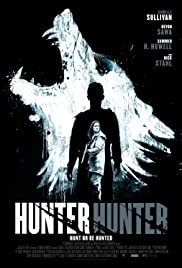
 Greetings again from the darkness. The initial assumption is that this is a story of a lone wolf stalking a family. Early on, it shifts into the story of Joseph Mersault, a throwback trapper teaching his 13 year old daughter how to survive off the land. Yet, what writer-director Shawn Linden ultimately delivers is the story of Joseph’s wife, Anne, who combats not only the wolf, but something even worse.

Joseph (Devon Sawa) is one grumpy dude. He’s no fan of society or people, and the only pleasures he seems to find in life are living in an isolated cabin and teaching his daughter Renee (Summer H Howell) how to do the same. They are joined in this quiet and very hard life by wife and mother, Anne (Camille Sullivan). Anne dutifully carries out her chores, but dreams of a more normal life for herself and her daughter. The family barters animal skins for food and supplies and live mostly off the grid – and we later learn there are complications to even something as simple as their cabin.

The forests of Manitoba provide what the family needs, but just barely. Winter is approaching and now a wolf is stealing from their traps, leaving them short of food. This wolf has previously stalked the family, and Joseph aims to hunt him down. The camera work in the forest is terrific – giving us the visual beauty, as well as the constant danger. And in this story, danger and traps take on many forms, including the secrets folks keep from each other.

The wolf only makes a couple of appearances, yet the threat is always present. There is a terrific sequence that cuts between Joseph, Anne, and Renee, as each are in different areas of the forest at the same time. Each of the situations is tension-filled and our minds are bouncing around as much as the characters. Other characters enter the story, including a couple of Rangers who are unprepared for what they are about to face, and another character (Nick Stahl) who shifts the entire dynamic of the film.

Director Linden gives us a survival thriller, one that probably best compares to LEAVE NO TRACE. This one is also a psychological study of just what a person is capable of when pushed to the limit. Anne’s story is about her ability to navigate this world while raising a daughter. The final sequence leads to extreme violence, and acts as her emotional release every bit as much as rage and revenge.

VOD beginning December 18, 2020

watch the trailer


THE ART OF POLITICAL MURDER (2020, doc)

December 16, 2020

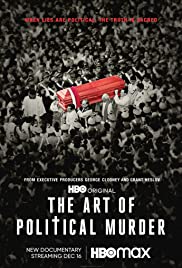
 Greetings again from the darkness. Very few documentaries can also be labeled political crime thrillers, but that description fits Paul Taylor’s film based on Francisco Goldman’s 2014 book. It’s a blend of history, religion, corruption, and investigative work as it all relates to a brutal murder. Even in these times when trust is broken on so many fronts, we as viewers are left wondering how something like this could happen.

The Guatemalan Civil War spanned 1960 through 1996, and had the right wing military facing off against leftist rebels supported by the indigenous Mayans. More than 200,000 civilians were killed, and the people’s faith in their government was destroyed. But this isn’t the story of the war. Bishop Juan Gerardi publicly condemned the government and military for war crimes and atrocities in his deeply researched 1996 REMHI (Recovery of Historical Memory Project) report. Two days later, 78 year old Bishop Gerardi was murdered. Savagely murdered. Bludgeoned in the head and face with a concrete slab, outside his parish home.

The bulk of the film is dedicated to what happened after the April 26, 1998 murder: a botched crime scene, numerous theories, citizen protests, and a high profile trial. It’s really the stories behind the story. The Bishop was an outspoken activist for the Mayan people and he was beloved by many. However, the exploration of the police investigation left many wondering what kind of government would issue a state-sponsored hit on a religious leader of the people.

We hear from the key witness and see clips of the prosecutors. There are interviews with a journalist and activists, and we learn of some of the theories of who killed the Bishop and why. These theories included: organized crime, drug traffickers, church thieves, and it was even proposed that it was a crime of passion. Not only does the film chronicle the police investigation, but we are also privy to the more fascinating investigation into the investigation. It’s an exploration of the crime and its aftermath – including governmental and military corruption, and more attempted violence. The clips from the courtroom scenes are stunning, and although those at the highest level may never answer for what happened, the dedication of Bishop Gerardi is still remembered.

This HBO Documentary is premiering December 16, 2020

watch the trailer


THE LAST SERMON (2020, doc)

December 15, 2020

 Greetings again from the darkness. In 2003, Jack Baxter and Joshua Faudem were in the process of making a documentary on Mike’s Place, a blues club in Tel Aviv located next door to the American Embassy. The purpose of the project was to show that there was more to Israel than violence and terrorism. On April 30, while they were filming, two British-born Hamas suicide bombers changed the course of the documentary and the lives of the filmmakers.

Joshua Faudem finished that documentary, BLUES BY THE BEACH, while his filmmaking partner Jack Baxter recovered from the severe injuries he incurred during the blast at the club. The two reunite in what seems to be Mr. Baxter’s personal mission to prove, in his own words that, “murder is not the essence of Islam”. He wants to understand or make sense of radicalism, and to meet with the families of the Tel Aviv bombers. While his experience makes this a logical pursuit, we know the likelihood of success is nil.

The film opens with a quote from Cervantes’ Don Quixote: “Where there’s music, there can be no evil.” Baxter, now using a cane for stability, takes this to heart and ties in music to most of the refugee camps he visits. It should also be noted that Baxter still has a piece of what he calls “organic shrapnel” embedded in his arm. Yes, it’s a bone fragment of one of the bombers. Baxter’s mission for the film takes him to many different areas of Europe, including Jerusalem, Serbia, Hungary, Berlin, Prague, Paris, and London. His meeting with the Mayor in Hungary is especially interesting, as we are informed that his country welcomes refugees, but the fence/wall he built is to show that Islamists are not welcome.

The film takes its title from the Prophet Muhammed’s Last Sermon, and it’s referenced a few times throughout as a contrast to Islamic extremists. The film succeeds as a personal journey for Baxter, but not so much as research on terrorism or discovering how so many have corrupted Islam into a call for violence. Most of the interviews and discussions with refugees, imams, and others are left at face value, so no groundbreaking occurs here, other than traveling to various areas and as a cleansing for Mr. Baxter.

Gravitas Ventures is releasing the film in virtual cinemas and VOD platforms December 15, 2020

watch the trailer


THE BEE GEES: HOW CAN YOU MEND A BROKEN HEART (2020, doc)

December 12, 2020

 Greetings again from the darkness. “Whether you’re a brother or whether you’re a mother, you’re stayin’ alive” … that instantly recognizable lyric is a bit ironic when it comes to the fascinating story of the Brothers Gibb – a story of love, ego, success, and tragedy. Director Frank Marshall delivers a heartfelt and quite detailed chronicle of the familial music group that experienced the highest highs and lowest lows. The foot-tapping “Stayin’ Alive” plays over the opening, but we soon cut to a 1979 concert in Oakland where the Bee Gees are performing the film’s title track. If somehow you are unfamiliar with their music, this beautiful performance will clue you in quickly.

Flash forward to 2019, and we hear from 73 year old Barry Gibb as he dolefully states, “my immediate family is gone”. Going back to their childhood, we see 5 year old twins Robin and Maurice joining with older (by 3 years) brother Barry to perform live shows. Contrary to popular belief, the boys were born on the Isle of Man, and only later did the family relocate to Australia. Robin’s tear-jerking voice perfectly blended with Barry’s power (and later falsetto), while Maurice was a natural harmonizer. Barry promised his younger siblings they were “going to be famous”. It’s a prediction that certainly came true.

Along the way, we hear recollections from musical luminaries such as Eric Clapton, Chris Martin, Nick Jonas, Justin Timberlake, and Noel Gallagher. Jonas and Gallagher both speak to performing with one’s brothers, and it’s Gallagher who nails it with, “Brothers singing is an instrument nobody can buy.” In comparison, Timberlake’s few comments seem to be included because of who he is rather than what he has to say. It’s noted that early work from the Bee Gees sounded very much like the Beatles, and it was music executive Robert Stigwood who truly recognized their talent and the possibilities of their stunning harmonies. Stigwood would guide them through their career peaks and valleys.

Much is made of how the brothers functioned as “one” while writing and singing, but as often happens, success brought out the egos, and in 1969 Robin quit the group due to his creative clashes with Barry … both wanted to sing lead. It’s interesting to note that Maurice married singer/actress Lulu, who most will remember as the singer on the smash hit “To Sir with Love” (she also appeared in the movie). Not surprisingly, the brothers’ first song after reconciling was “How Can You Mend a Broken Heart?”, which provided some symmetry to their own situation.

The film closely tracks their career, including resorting to performing in small clubs, and their shift in musical styles with 1975’s “Jive Talkin’”, followed by “Nights on Broadway”. The Bee Gees went through a few producers in their career, which likely explains their numerous shifts in style. Arif Mardin was followed by “hippie” Albhy Galuten, who helped create the ‘Miami sound’ and then turn them (like it or not) into disco icons when Robert Stigwood included them in his film and music vision of a little magazine article entitled “Tribal Rights of the new Saturday Night”. The movie, of course, was SATURDAY NIGHT FEVER, and the soundtrack exploded on the scene. Of particular interest here is Galuten’s explanation of how they built/wrote the song “Stayin’ Alive”. It was also around this time when the youngest Gibb brother, Andy, zoomed up the charts with three consecutive number one singles.

Of course all good things must come to end … even if by the end they aren’t so great (“Disco Duck”). Chicago DJ Steve Dahl organized “Disco Demolition Night” at Comiskey Park and the anti-disco movement was well underway. This is discussed from a historical and societal perspective with some particularly fascinating insight into what actually happened that night. Casualties of the movement and the collapse of disco, the brothers once again reinvented themselves – this time as songwriters for such performers as Barbra Streisand, Dionne Warwick, Diana Ross, Celine Dion, Kenny Rogers and Dolly Parton.

It may seem that the Brothers Gibb had more lives than a cat, but alas, tragedy struck numerous times. First to go was Andy at age 30, followed by Maurice in 2003, and Robin (cancer) in 2012. It’s a wonderful documentary for fans of the Bee Gees, as well as those just wanting to know more. I am especially grateful to director Marshall for including my favorite, “Massachusetts”. Mr. Marshall has had quite a career himself. He had a minor acting role in the classic THE LAST PICTURE SHOW (1971), has been a Producer on numerous Spielberg movies including RAIDERS OF THE LOST ARK (1981), directed ARACHNOPHOBIA (1990), and has been married to Hollywood power producer Kathleen Kennedy since 1987. Elected to the Rock and Roll Hall of Fame in 1997, the Bee Gees music can be described as: “Ah, ha, ha, ha, stayin’ alive …”

HBO Documentary premieres December 12, 2020

watch the trailer


WANDER DARKLY (2020)

December 11, 2020

 Greetings again from the darkness. By nature, an ambitious filmmaker takes risks that other filmmakers don’t, sometimes to the detriment of their own success. However, for those of us who maintain a crazy pace of movie watching, we tend to relish those who find a way to try something different – turn a familiar story into one we might not have seen before. So hats off to writer-director Tara Miele (THE LAKE EFFECT, 2010) for jolting the frequently used flashback effect and making it into an interactive experience.

Adrienne (Sienna Miller) and Matteo (Diego Luna) are a normal couple going through the kind of rough patch that many couples will relate to. They have chosen to not get married, yet they have a newborn baby and recently purchased a home (despite job situations that don’t seem to add up). The pressures of adulting have resulted in frustrations and distrust to the point that Adrienne questions if the relationship should even continue. Their solution is scheduling “date nights”, and the one we see is a date night gone bad … and then worse.

What follows is Adrienne and Matteo on a surreal trek through the hazy memories of their relationship via moments in time that play like foggy dreams. We see good moments and bad, and the two hash out what they really thinking at the time – all while Adrienne tries to make sense of her new situation. There are some similarities here to Michel Gondry’s excellent ETERNAL SUNSHINE OF THE SPOTLESS MIND (2004), but at its core, this is a heartfelt examination of trauma, love, memories, and grief as they relate and impact a relationship.

Beth Grant provides support work as Adrienne’s mother, but it’s Sienna Miller who delivers what may be a career best performance. She has always been a fine actress, but this may be the widest range of emotions she’s ever had to convey. The dialogue may be a bit sketchy at times, but we recognize every portion of this flawed relationship. Watching a couple re-live actual past situations and debate on what was said or what was meant, is a history lesson that cuts deeply. A clip from NIGHT OF THE LIVING DEAD is purposeful in its inclusion, but I won’t disclose anything further in regards to the nature of these characters and what they go through. I’ll only say that filmmaker Miele (a Grand Jury award winner at Sundance) does really nice work in showing how physical trauma and emotional trauma so often go hand-in-hand.

In select theaters and On Demand December 11, 2020

watch the trailer


THE STAND IN (2020)

December 11, 2020

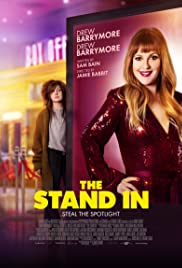
 Greetings again from the darkness. Few would understand the pressures of celebrity better than Drew Barrymore. She’s 45 years old and has been in front of the camera for 40 years. Most of us recall her as young Gertie in Spielberg’s ET: THE EXTRATERRESTRIAL (1982), and of course, her family tree spans much of Hollywood’s history – for instance, she’s the great-niece of Lionel Barrymore who played Mr. Potter in the Christmas classic, IT’S A WONDERFUL LIFE. This time out, she takes on dual roles, but Drew’s fan base deserves fair warning … it’s not the fluffy, light-hearted comedy you might be expecting.

Director Jamie Babbit (known mostly for her TV work, including “Silicon Valley” and “Gilmore Girls”) and screenwriter Sam Bain (creator of “Peep Show”) explore career success and fulfillment in life, especially as it relates to balancing celebrity status and having a meaningful personal relationship. Ms. Barrymore plays Candy Black, a pratfall comedy actress who has made a career with her catchphrase, “Hit me where it hurts”. Simultaneously, and under pounds of makeup, Drew also plays Candy’s stand-in/double, Paula, who dreams of one day being an actual actor in her own right. Candy is a high-strung addict who barely functions, while Paula is a wallflower whose income is dependent on Candy’s career.

One day on the set, Candy throws a tantrum. It’s a complete meltdown that results in an injury to a fellow actor. Of course it’s caught on video and goes viral. Just like that, Candy’s career screeches to a halt, and so does Paula’s. We then flash forward 5 years, and Candy has isolated herself inside her mansion, taking up woodwork and anonymously bonding online with fellow woodworker Steve (Michael Zegan, “The Marvelous Mrs. Maisel”). After being charged with tax evasion, Candy is sentenced to a rehab facility and cons her trusty stand-in Paula to go in her place. Once released, Candy’s much nicer stand-in continues the gig on an “apology tour” where soon she is welcomed back into the industry’s good graces (as Candy), and slowly takes over Candy’s life, including a non-virtual meet up with Steve.

Supporting work is provided by TJ Miller, Holland Taylor, Elle Kemper, Andrew Rannells, and Lena Dunham (in what’s basically a quick cameo). Things get a bit convoluted with the old Candy, the new Candy, and Steve, the guy stuck in the middle – who has secrets of his own. Despite the relatively few laughs in what is billed as a comedy, there are some pointed observations and commentary on the industry and for those whose ambition is to be famous. Soul searching and ‘finding one’s true self’ is never easy, and often our dreams may not be in sync with who we are. Drew Barrymore does a nice job in both roles, but it’s likely her fans will be expecting a different style movie. It’s also likely the message here could have been better delivered by choosing either a comedic approach or a dramatic one, as the blend doesn’t quite work on either front.

AVAILABLE IN SELECT THEATERS, ON DEMAND, AND DIGITAL ON DECEMBER 11, 2020

watch the trailer


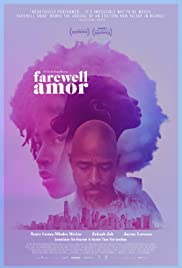
FAREWELL AMOR (2020)

December 11, 2020

 Greetings again from the darkness. Awkwardness abounds in the opening scene as Walter, his wife, and their teenage daughter reunite at JFK airport. The Angolan family has been separated for 17 years, and reality hits as the threesome grasp that they don’t even really know each other. The reunion gets more uncomfortable as they try to settle into Walter’s cramped one bedroom apartment. He’s been living and working in New York City as a taxi driver while the paperwork was processed to allow his family to join him.

This is the first feature film from writer-director Ekwa Msangi, and she expands her 2016 short film FAREWELL MEU AMOR. Ntare Gum Mbaho Mwine stars as Walter, the taxi driver and husband/father with a secret. His wife Esther is played by Zainab Jah, and it’s her religious zealousness that complicates things for the reunited family. Their daughter Sylvia is played by newcomer Jayme Lawson, a teenager whose simmering energy and passion for dancing is masked by her quiet demeanor. In fact, it’s dancing that links the three characters and ultimately breaks down barriers.

Ms. Msangi cleverly utilizes individual chapters for the three main characters within the larger story. We quickly get a feel for the difficulties and challenges each is facing during this transition. Walter is struggling with the separation from Linda (Nana Mensah), a nurse he had grown quite fond of. Esther is reacts to her husband’s independence by praying louder and harder and sending money to her church. Sylvia’s story is perhaps the most interesting. As an immigrant, she’s an outcast at school, and only the kindness of classmate DJ (Marcus Scribner) allows her to create her space with a terrific dance off. There is also an interesting interaction between Esther and a neighbor (Joie Lee), one of the few who knows the full story and tries to help.

Cultural upheaval is on display, and there are quite a few touching scenes. Walter and Esther have dinner out at a nice restaurant, and it’s a scene filled with conflicting feelings and emotions … handled extremely well by the actors. There is a gentleness and sincerity to the film, and we find ourselves hoping things will work out well for all three. Perhaps it’s a stretch to think dancing might be the key to a smoother transition, but the way it plays out is quite pleasant to watch. It’s a terrific first feature from Ekwa Msangi.

In Theaters and On Demand December 11

watch the trailer


WILD MOUNTAIN THYME (2020)

December 10, 2020

 Greetings again from the darkness. While I have Irish ancestors, the uproar of the Irish press over the accents in the film is a bit puzzling to me. Any frequent movie watcher can tell you that cinema history is filled with actors giving difficult accents their best shot – and the results have ranged from ‘spot’ on to ‘not even close’, and everything in between. As a Texan, I can vouch for the sometimes cringe-inducing ‘not close’ efforts, but I’ve never judged a film by such trivial matters. Why do I start with this? Only to get it out of the way in order to have a more meaningful discussion of the latest film from writer-director John Patrick Shanley (DOUBT, 2008, and an Oscar winner for the MOONSTRUCK screenplay, 1987). It’s based on his 2014 Broadway play, “Outside Mullingar”.

After the breathtaking shots of the Irish countryside over the opening credits, we learn of two neighboring farms belong to the Muldoons and the Reillys. Rosemary Muldoon (Emily Blunt) and Anthony Reilly (Jamie Dornan) have known each other their entire lives, and it’s been assumed by locals that they would someday marry each other. Their elderly parents are dying off, yet what prevents the relationship from deepening beyond “Good morning to ya’” is Anthony’s bizarrely awkward social skills compounded by his constant bickering with his father (Christopher Walken), and his belief in a family curse. The two men still mourn the passing of Anthony’s mother, and Rosemary has her own sadness to deal with … while growing a bit antsy waiting for Anthony to come around.

Anthony’s father is concerned that the family name is in danger of ending, due to his reticence to marry. Because of this, dad decides to give the family farm to another relative. The fun kicks off when Adam (Jon Hamm) arrives. Adam is the stereotypical “Yank” – arrogant and showy, with only a romantic notion of what being an Irish farmer means. If that’s not bad enough news for Anthony, Adam also sets his sights on Rosemary and convinces her to visit him. He can’t imagine how the excitement of New York City contrasted with daily life in Ireland won’t win her over.

We don’t actually see any real farming in the movie, and Anthony’s sullen act gets a bit tiresome, but the message is conveyed well by Ms. Blunt and Mr. Dornan. Filmmaker Shanley has delivered more of a romantic drama than romantic comedy, but there are humorous moments included, not the least of which being Anthony’s practice proposal to a donkey. Ms. Blunt proves again what a fine actor she is, and her sequence inside her home in the final act is terrific. As for the accents, Mr. Dornan’s holds up the best, while Mr. Walken’s downright comical, but the story and characters are what we remember when this one ends … unless, of course, you are part of the Irish media.

In theaters and On Demand November 11, 2020

watch the trailer