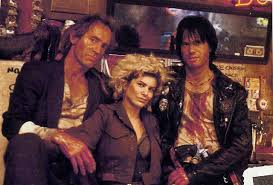
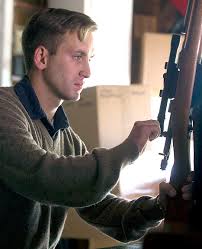
DALLAS BUYERS CLUB (2013)

November 11, 2013

dallas1 Greetings again from the darkness. It’s not unusual for an actor or actress to alter their physical appearance for a movie role. Sometimes those changes become the story: Robert DeNiro in Raging Bull, Christian Bale in The Machinist and Charlize Theron in Monster are a few that come to mind. Regardless of the transformation or make-up, what really matters is the performance and the character. Just ask Eddie Murphy (Norbit) or Gwyneth Paltrow (Shallow Hal). In Dallas Buyers Club, we actually get two incredible transformations that lead to two stunning performances.

dallas2 Matthew McConaughey and Jared Leto each lost approximately 40 pounds for their respective roles as Ron Woodroof, the redneck, three-way loving, alcoholic, drug-addicted electrician/rodeo cowboy; and Rayon, the sensitive, street-savvy, would-be transsexual so desperate for a kind word. Their physical appearance will startle you more than once, but is quite effective in getting across the struggles of those infected with HIV virus in the 1980’s. The number of victims impacted exploded and the medical profession was ill-equipped to properly treat the patients.

This is based on a true story and a real life guy (Woodroof) who became a most unlikely beacon of hope for AIDS patients. Woodroof fought the medical industry, Pharmaceutical companies and the government (FDA, DEA, IRS). It’s impossible to miss the message and accusations that most of these had a single goal of increasing profits, rather than dallas3curing the disease. And that’s where the story lags a bit. Michael O’Neill and Dennis O’Hare are the faces of greed and bureaucracy, while Jennifer Garner, Leto, and Griffin Dunne represent the side with a heart (though Ms. Garner is clearly out of her class here). Woodroof seems to be a guy who just doesn’t want to die, sees a business opportunity, and even learns a little bit about humanity along the way.

There have been numerous other projects that deal with AIDS, including: Philadelphia with Tom Hanks and the recent documentary How to Survive a Plague. This may be the first with a protagonist who is distinctly unlikeable, despite his passion and strong survival instincts. McConaughey doesn’t shy away from the homophobic personality and cruel manner of speech that Woodroof possesses. We never doubt his frustration at those controlling the big picture, but we never really see him connect with those his brash tactics help.

dallas4 McConaughey is on a dream run as an actor right now, and it certainly wouldn’t be surprising to see him garner an Oscar nomination. But it would be a mistake to chalk that up to his losing so much weight – he really delivers a character that we won’t soon forget. And let’s not overlook Mr. Leto, who has been away from acting for 4 years touring with his band. He is a remarkable talent and a true screen presence. Compare this role to his Mark David Chapman in Chapter 27. It’s not just the range of weight, but moreso the range in acting that so impresses.

Also worth noting here is the outstanding cinematography of Yves Belanger. This movie is shot in a way that brings out the intimacy of the moment, while not losing the big picture. Director Jean-Marc Vallee (The Young Victoria) and co-writers Craig Borten and Melisa Wallack work together for a solid foundation, but it’s McConaughey and Leto that we will most remember … and of course, the pics of the great Marc Bolan on the wall.

**NOTE: for you baseball fans, that is in fact slugger Adam Dunn as a bartender.  He was also an investor in the film.

SEE THIS MOVIE IF: you want to see two of the best and most startling acting performances of the year OR you want a glimpse at the confusion and panic that the AIDS epidemic brought to the mid 1980’s.

SKIP THIS MOVIE IF: you are looking for an elegant treatment of AIDS … this one will make your skin crawl.

watch the trailer:

http://www.youtube.com/watch?v=fvMPU0WaPcc


LAST VEGAS (2013)

November 9, 2013

last vegas1 Greetings again from the darkness. I’ve been writing about “Gray Cinema” for the past few years and the understandable desire of Hollywood to capitalize on the aging population. Take that trend and mix it with new-age buddy pictures like The Hangover and Bridesmaids, and you can at least imagine what director Jon Turteltaub (the National Treasure movies) and writer Dan Fogelman (the very entertaining Crazy Stupid Love) were attempting to create.

The film’s poster recalls the glory days of the Rat Pack, so taking this foursome of sixty-something year old childhood buddies to Las Vegas presents many possibilities. There is no shortage of enthusiasm from the four leads: Michael Douglas as Billy, the smooth-talking lifelong bachelor who proposed to his thirty-ish girlfriend at a funeral; Morgan Freeman as Archie, suffocating in a cocoon of family over-protection; Robert Deniro as Paddy, the isolated widow wallowing in grief for the past year; and Kevin Kline as Sam, the stir-crazy Florida stereotype bored with 4:00 dinner parties and his marriage.

last vegas2 These top notch actors give it all they have, but there is just no rescuing such fluff and lack of substance. The script is frustrating throughout and just gives no credit to an audience that might appreciate even a gag or story line that wasn’t obvious from the opening credits. Mary Steenburgen‘s character provides a brief respite, but the developments are so absurd that neither her character or the story line can be taken seriously.

Toss in a bar fight, bikini contest, mandatory viagra jokes, a world class Casino penthouse, an inconceivable party that would be shut down by fire code, and a wasted cameo from 50 Cent … and you get a lame, flat, mostly unfunny story that barely skims the surface of an endless stream of possibly interesting topics.  It’s certainly not at the level of The Best Exotic Marigold Hotel … or even Space Cowboys.

I’ll end by stating that I am a huge fan of Gray Cinema, but my request is that some effort go into the script and production so that viewers are provided with an entertaining and intelligent and respectful experience. There is no need to dwell on the bits of culture that have passed them by or the physical ailments that plague their activities. Luckily, the stellar cast prevents this one from flopping to the level that the script deserves.

SEE THIS MOVIE IF: you can appreciate the novelty of a cast of leading men all in their sixties and seventies OR you get a kick out of knowing the punchline of every joke before it actually happens

SKIP THIS MOVIE IF: you expect a certain level of “smarts” in movies … even comedies.

watch the trailer:

http://www.youtube.com/watch?v=IMnr-R7BkkU


ALL IS LOST (2013)

November 2, 2013

all is lost1 Greetings again from the darkness. In Cast Away, Tom Hanks makes friends with a volleyball. In The Old Man and the Sea, Spencer Tracy talks to the whale. In Harvey,  James Stewart chats it up with a tall imaginary rabbit! It takes the great Robert Redford to show us how to face isolation with silent dignity (save one well-deserved F-word).

Writer/director J.C. Chandor brought us the very good Margin Call (2011), which was filled with many characters and mounds of dialogue. Here, he reverses field with a single character and no real dialogue – only the opening log entry and a couple of SOS calls into a short-circuited radio. This is one man’s struggle for survival. It’s that man vs nature. It’s our man facing mortality and isolation.

all is lost2 So you are probably wondering how this can hold your attention for two hours. The real answer is Robert Redford. At age 77, his screen presence is remarkable. Having never been a “showy” actor, his performance and this movie depend on facial expressions, his body language, and mostly his ability to connect with an audience immediately. In 1972, Redford was Jeremiah Johnson, another man of few words who fought nature (and native Americans in that one), but this one is more immediate with its pending doom.  Technically, All is Lost is exceptional, especially in sound design and in creating a terrifying and believable situation. But it’s Mr. Redford that causes us to feel thirsty with him, and to hold our breath as a storm shoves him underwater.

all is lost3 Alex Ebert’s music is subtle and effective, but let’s get real … Mr. Redford and his mop of red hair are the reason to see this movie. There is almost no back story on this character, other than what we infer from his opening log entry. We know his “I’m sorry” has many meanings to his family, but we soon realize his will to live probably comes from an internal drive connected to his apology. It’s nice to see a role for an older actor that doesn’t included stupid humor designed to make kids laugh. Not much humor in this one, and there is no need to be sorry.

**NOTE: Robert Redford’s acting career spans more than 50 years and 6 decades. Many think of a sexy Robert Redford in one of his numerous roles, but this is the first to pair him with a sextant!

SEE THIS MOVIE: for the extraordinary performance of Hollywood legend Robert Redford OR if you are tired of the incessant cute-talk featured in most movies and shows these days (this one gives your ears a break, though your other senses work overtime)

SKIP THIS MOVIE IF: you are seeking guffaws or playful banter (it’s only filled with an excess of undrinkable water)

watch the trailer:

http://www.youtube.com/watch?v=Lk_R04LfUQU


THE BICYCLE THIEF (1948, Italy, Ladri di biciclette)

October 31, 2013

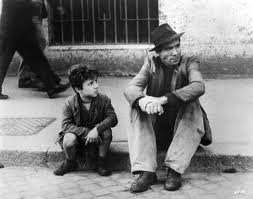
bicycle1 Greetings again from the darkness. To understand why this is considered a masterpiece of cinema and one of the best films ever made, one must put the era of its release into perspective. It’s 1948 – post war Italy and poverty mandates the fabric of society. Humanity is difficult to come by. Self-interest controls actions and emotions. Hollywood is in a glitz and glamor mode, while Italian cinema has been dominated with light-hearted and simple films. Vittorio De Sica is a matinée idol as an actor and also, as a director, one of the driving forces of Neo-realism … a genre that focused on the struggles of real people.

There is nothing fancy or complicated about this story. Ricci is one of the masses looking for work at a time when jobs are beyond scarce. One day he is extremely fortunate to be offered a job posting signs around town. He is elated at the bicycle4opportunity to again provide for his wife and young son. The only catch … he must have a bicycle for the job. His wife pawns their bedsheets to retrieve the bicycle and we join in with their pride and happiness brought on by this job.

We see Ricci on a ladder posting a Rita Hayworth movie advertisement … an example of Hollywood’s polar opposite approach to movies as compared to the Italian neo-realism. While on the ladder, Ricci witnesses the theft of his precious bicycle. His frantic reaction demonstrates the loss means so much more than the loss of two-wheeled transportation. It’s actually the loss of hope.

Soon enough Ricci and his young son Bruno are searching the streets of Rome trying to find the bicycle. It plays like a road trip movie as they experience many interactions on the streets and back alleys. Their search is painful to watch, and father and son endure many emotions, none more powerful than the last few minutes and a touching final shot that is a tribute to the great Charlie Chaplin.

All three lead actors are first timers which adds to the realistic look and feel of the characters and stories. Lamberto Maggiorani (Ricci) was a factory worker who showed up for auditions. He is a very striking man with a Daniel Day-Lewis appearance. Enzo Staiola (Bruno) was a 7 year old boy just watching the whole movie process when he was picked out of the crowd and cast. Lianella Carell (Maria) was a journalist on set to interview De Sica when he cast her as the wife/mother. Additionally, most of this was filmed on the streets and on location in Rome (very few sets).

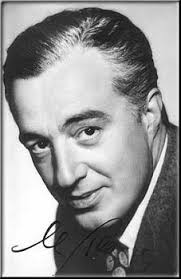
de sica The actual Italian title is “Ladri di biciclette” which translates into Bicycle Thieves, but it has been best known in the U.S. as The Bicycle Thief, the title I prefer. It’s based on a novel by Luigi Bartolini and the screenplay comes from the incredibly prolific screenwriter Cesare Zavattini, who worked with most of the great filmmakers from the 1940’s through the 1970’s. Also of note, Sergio Leone was an assistant to director Vittorio De Sica (pictured left) during production. De Sica directed many wonderful films including Sunshine (1947), which looked at juvenile corruption, and Umberto D. (1952) which examined old age.

The film received an honorary Oscar in 1950, as there had been no category yet established for Best Foreign Language film.  Many question the status of this film as a masterpiece all these years later, but I certainly still experience it’s powerful and sensitive message, and would recommend to anyone who admires world cinema and the classics.


watch a trailer from one of the re-releases:


12 YEARS A SLAVE (2013)

October 27, 2013

slave1 Greetings again from the darkness. Should this be labeled a historical drama? Is it one man’s extraordinary tale of strength and survival? Does this fall into the “art film” category that so divides the movie-going public? The answer to all is YES, and I would add that it’s a masterfully crafted film with exquisite story telling, stunning photography and top notch acting throughout.

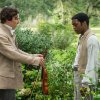
The movie is based on the real life and writings of Solomon Northrup, a free man who was kidnapped and sold into slavery from 1841-53. Northrup’s story provides us a look inside the despicable institution of slavery. Needless to say, it’s a painful and sad process made even more emotional by the work of director Steve McQueen (Hunger, Shame). McQueen takes a very direct approach. Not much is left to the imagination. Torture, abuse, cruelty and misery take up the slave2full screen. The only subtlety comes from the terrific work of Chiwetel Ejiofor as Northrup. His facial expressions and eyes are more powerful and telling than any lines of dialogue could be.

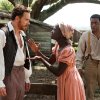
You will not find many details from the movie here. This is one to experience for yourself. It lacks the typical Hollywood agenda when it comes to American history. Instead this era is presented through the eyes of a single wronged man and his quest to return to his wife and kids, no matter the inhumane obstacles. We see Paul Giamatti as an emotionless, all-business slave trader. Benedict Cumberbatch is a plantation owner who has a heart, but lacks business savvy. And finally we enter the world of cotton farmer Michael Fassbender, who twists Bible scripture into threats directed at the slaves – his “property”.

slave3 Fassbender dives deep into evil to find his character, and along with Ejiofor, Sarah Paulsen (who plays Fassbender’s icy wife), and Lupita Nyong’o (who plays slave Patsey, the center of the two most incredible scenes in the film), provide more Oscar worthy performances than any one movie can expect. You will also note Quvenzhane Wallis (as Northrup’s daughter) and Dwight Henry (as a slave) in their first appearances since Beasts of the Southern Wild. Other strong support comes from Scoot McNairy, Taran Killam (SNL), Michael K Williams, Alfre Woodard, a nasty Paul Dano, Garret Dillahunt and Adepero Oduye.

Steven Spielberg gave us a taste of the holocaust with Schindler’s List, but not since the TV mini-series “Roots” has any project come so close to examining the realities of slavery. Northrup’s story seems to be from a different universe than the slave4charming slaves of Gone with the Wind. I would argue that what makes this watchable (though very difficult) is the focus on Northrup’s story. While tragic, his ending actually deflects from the ongoing plight of those not so fortunate. It’s a story of a man who states he doesn’t wish to merely survive, he wants to live a life worth living.

McQueen’s direction will certainly be front and center come awards season, as will many of the actors, John Ridley (the screenwriter), Sean Bobbitt (cinematographer) and Hans Zimmer (score). The only question is whether the subject matter is too tough for Oscar voters, who traditionally lean towards projects a bit more mainstream.

SEE THIS MOVIE IF: you want to see filmmaking and story-telling at the highest level and based on the true path of one man during one of America’s most despicable periods.

SKIP THIS MOVIE IF: slavery, complete with explicit scenes of turture and cruelty, is something you would rather read about than see depicted onscreen.

watch the trailer:

http://www.youtube.com/watch?v=vUQNjfhlREk


THE COUNSELOR (2013)

October 27, 2013

counselor Greetings again from the darkness. The best dramatic writers thrive on creating a story filled with intricacies, multi-faceted characters, mis-direction, and a complex interweaving of sub-plots. Cormac McCarthy has proved he is one of the best such writers through his highly successful novels … some of which have made the transition to the screen: All the Pretty Horses, The Road, and of course, No Country for Old Men. This, however, is his first attempt at an original screenplay. Describing it as a disappointment is a severe understatement.

The cool parts of this movie: Bruno Ganz as a diamond dealer in Amsterdam and the two live cheetahs.

counselor2 The parts of the film that could have been interesting: the wardrobes of all main characters, Javier Bardem’s Brian Grazer-inspired hairdo, the line-up of luxury vehicles (Bentley, Ferrari, etc), and the “bolito”.

The parts of this movie that were never going to work: the opening scene with Michael Fassbender and Penelope Cruz frolicking under the sheets, dialogue that is too poetic for the characters, Brad Pitt as his grown up scammer from Thelma and Louise, Fassbender’s Texas accent, and Cameron Diaz (gold tooth, silver fingernails, cheetah tats).

counselor4 The part of this movie that is an outright disgrace: Cameron Diaz doing the splits while having intimate relations with the windshield of Bardem’s Ferrari … maybe this idea came from Joe Eszterhas after being rejected as too outlandish for Showgirls.

Chances are viewers will fall into two camps: thinking this is a wild and crazy ride inside the Mexican drug cartel, OR believing this is one of 2013’s sloppiest, messiest, most pointless and confusing wastes of time in a movie theater. I am solidly in group two and can’t even recommend you see this to determine where you fall.

The cast is filled with A-listers: Javier Bardem, Brad Pitt, Michael Fassbender, Penelope Cruz, and Cameron Diaz. The writer is a renowned novelist. The director is three time Oscar nominee Ridley Scott. How could it miss? Even the best actors can counselor3sometimes be miscast. Even the best writers have work best left unpublished. Even the best directors lose control of a project. It’s a movie tragedy when all those things happen in a single film.

I guess the best running joke throughout the movie is that Fassbender’s titular character is constantly receiving counseling, rather than offering it. At its core, the story is just another drug deal gone bad (do any movie drug deals ever go “right”?). With it’s unusual visuals, unrealistic conversations, and convoluted sub-plots, this one would have played better as a slideshow. Instead, I am left with this: I’ll never look at a smudge on my windshield the same again.

SEE THIS MOVIE IF: your cable system doesn’t offer the National Geographic channel and you want to see two cool cheetahs

SKIP THIS MOVIE IF: just the thought of Cameron Diaz humping a windshield stimulates only nightmares for you

watch the trailer:

http://www.youtube.com/watch?v=zrAXTxNrsi8


BONNIE AND CLYDE (1967) revisited

October 25, 2013

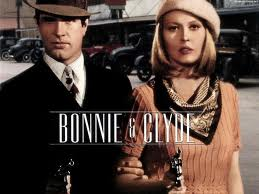
bonnie1 Dramatizations focusing on real life people, be they famous or infamous, require a certain mindset from the viewer.  First, understand that it’s not a documentary.  What you see may be different than what you have read.  Second, expect the filmmakers to take some dramatic license in order to add interest and color to the story.  All of this is in play for the wonderful and classic Bonnie and Clyde from 1967.

To put this time period into perspective, know that the movie was released 46 years ago, and depicts a period during the Great Depression that was approximately 32 years prior to filming.  That’s correct. The film’s release date was closer in time to the Great Depression than today is to the film’s release date. It’s also important to note that Bonnie Parker and Clyde Barrow were 23 and 24, respectively, at the time of their violent deaths at the 1934 Gibsland Ambush.  Their ages and the times certainly played a role in their reckless ways and poor judgment.

bonnie 3 Sadly, there is a generation of movie-goers who have little knowledge of Warren Beatty’s place in Hollywood history … or worse, their only recollection is of his clunky political rapping in 1998’s Bulworth.  By 1967, Beatty was already a heartthrob and up-and-coming actor, but it’s his role and contract as producer of Bonnie and Clyde that set him up as a Hollywood power player (not to mention, financially set for life).  His 40% of gross pay plan has made him tens of millions over the years.  In addition to his producer duties, Beatty is at his physical peak here … a glamorous actor going all out in a career-defining role. Pictured left, is the real Bonnie and Clyde.

Faye Dunaway plays Bonnie as first, a bored youngster who comes to life due to the danger and sexual attraction she senses with Clyde.  She then transitions into a spirited woman very comfortable with the spotlight of notoriety and fully understanding how to pull the strings of her man.  Dunaway’s career is best marked by her work as Bonnie, and her roles in Chinatown and Network … though many know her best as the mother with an aversion to wire hangers.

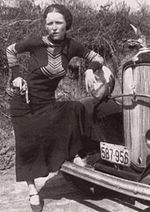
There are three writers associated with the film: David Newman (he also wrote the Christopher Reeve Superman scripts), Robert Benton (Oscar winner for Kramer v Kramer and Places in the Heart) and Robert Towne (known best for his Oscar winning Chinatown script).  Mr. Benton was inspired by the fact that his father had attended the Texas funerals of both Bonnie and Clyde. The basic outline is based on the true stories – Joplin, Missouri; Ruston, Louisiana; Texas Ranger Frank Hamer; the numerous stolen cars; the role of Clyde’s brother and his wife; the visit to Bonnie’s mother; and even Bonnie’s poem “The Trail’s End” (aka The Story of Bonnie and Clyde).  But as expected, many liberties are taken.  Unlike in the movie, bonnie 2Frank Hamer never crossed paths with Bonnie and Clyde prior to the final ambush.  Blanche (played by Estelle Parsons) was very upset at her portrayal after seeing the movie … she claims to have not been such a lunatic.  The CW Moss character is actually an amalgam of drivers affiliated with the gang.  Also, there is no mention of the horrible accident that left Bonnie’s legs badly burned … to the point where Clyde had to carry her everywhere those last few months. Pictured left is the famous photo of Bonnie with cigar and gun.

Director Arthur Penn was an Oscar winner and also gave us such fine films as The Miracle Worker (1962), Alice’s Restaurant (1969), and Little Big Man (1970). He and Beatty had many arguments while on set, but the finished project is packed with energy, emotion and action. Beatty and Dunaway give us an engaging couple with a dark destiny.  Excellent support work is provided by Gene Hackman (as Clyde’s brother Buck), Michael J Pollard (as CW Post), Denver Pyle (as Frank Hamer), Dub Taylor (as CW’s dad), Evans Evans (the real life wife of director John Frankenheimer), Gene Wilder (in his film debut), Mabel Cavitt (as Bonnie’s mom, she was literally yanked from the group of Red Oak, Texas onlookers during filming), and Patrick Cranshaw (you might know him as Blue in Old School). It should also be noted that the violence displayed was groundbreaking at the time. The use of squibs … packets of stage blood used to enhance the gunfights … were used generously throughout.  Previously, gunshot wounds rarely had blood shown onscreen.

The film received 8 Oscar nominations with wins for Estelle Parsons (Best Supp Actress) and Burnett Guffey (Cinematographer). The Best Picture winner that year was In the Heat of the Night, and nominations also went to The Graduate and Guess Who’s Coming to Dinner.  This was one of the first 100 movies inducted into The National Film Registry, and it brought Lester Flatt and Earl Scruggs into the mainstream with their “Foggy Mountain Breakdown”.  Initially released as a “B” movie playing drive-ins, things changed dramatically once critic Pauline Kael’s raving review was published in The New Yorker.

this is not the most artistic trailer, but it will give you a taste of the film’s style:

http://www.youtube.com/watch?v=3ACCpXaA-MU


NEAR DARK (1987)

October 24, 2013

near dark1 Greetings again from the darkness. It’s always fun to take a fresh look at a cult favorite, especially a quarter century since initial release. Near Dark is best known as Kathryn Bigelow’s first solo directorial effort … yes, the Oscar winning director of The Hurt Locker (plus Point Blank and Zero Dark Thirty). But that’s not why this one has a loyal following. It’s actually a very stylish (low budget) vampire/road trip/quasi-western that focuses on family. And it’s one of the very few vampire movies where the word “vampire” is never uttered.

Ms. Bigelow co-wrote the screenplay with Eric Red, who also wrote The Hitcher. Similarities abound, yet this one stands on its own thanks to the photography and the performances. We can’t help but notice three main actors come directly from James Cameron’s AliensBill Paxton, Lance Henrickson, and Jenette Goldstein. Of course, Mr. Cameron and Ms. Bigelow were in a relationship that resulted in marriage (and later ended in divorce). Near Dark lost at the box office to another near dark2vampire movie released at the same time, The Lost Boys. Having its production company go out of business provided no marketing help and Near Dark has since built a rabid following thanks to cable, DVD and midnight showings.

The basic story has a young local (rural Oklahoma) boy (Adrian Pasdar, who is married to one of the Dixie Chicks in real life) meeting a stranger in town (Jenny Wright, who played Rob Lowe’s wife in St Elmo’s Fire). Their initial sparks lead to necking .. get it? Next thing we know he is being dragged into a speeding Winnebago by Paxton, Henrickson, Goldstein, Wright and Joshua John Miller. We soon enough figure out it’s a traveling troupe of vampires and Caleb (the young local boy) is in big trouble.

There are a couple of well known/classic scenes: the sequence in the bar where we really get to see the personalities of each of this group, and the bungalow shootout where the bullet holes in the walls allow the deadly rays of sunshine to wreak havoc with the bloodsucking clan. Additionally, you will note some beautiful shots that confirm Ms. Bigelow’s background as an artist – the backlit shot of the group in the fog, and Caleb’s horse riding scene.

near dark3 For those accustomed to seeing the “cool” Bill Paxton, they will be surprised at his frenetic wild man act. You might also recall his stint a couple years prior in the The Terminator as one of the blue-haired punks that naked Arnold meets upon his arrival. Jenny Wright is fun to watch here and it’s a reminder of her talent, and what a shame that she retired/disappeared from the acting world in 1998. Others in support include Tim Thomerson as Caleb’s dad and (a very young) James LeGros as the frightened teenage cowboy playing pool in the bar scene. Caleb’s sister is played by Marcie Leeds, who played young Sarah (Barbara Hershey’s character) in Beaches.

A sure sign of 1980’s horror is the electronic score provided by Tangerine Dream. The score would be much different today, but it’s very much a part of the film’s fabric and style. In addition to the key actors coming from Cameron’s film, you will also note Aliens on the town’s theatre marquee.

Bram Stoker published “Dracula” in 1897 and since then it’s provided source material and inspiration for an amazing number of films. Some of the best known include: Nosferatu in 1922, Bela Lugosi as Dracula in 1931, Abbott and Costello Meet Frankenstein (1948), Frank Langella in Dracula (1979), The Hunger with Catherine Deneuve (1983), Francis Ford Coppola’s Dracula with Gary Oldman (1992), Tom Cruise in Anne Rice’s Interview with the Vampire (1994), Robert Rodriguez’ From Dusk til Dawn (1996 with George Clooney), Blade (1998), and most recently the Twilight franchise, TV’s “True Blood“, the excellent Let the Right One In (2008) and the animated Hotel Transylvania (2012). Next up is an NBC series with Jonathan Rhys Meyers in the title role of “Dracula“. For the undead, it’s quite an impressive family tree of entertainment and horror.


KILLING KENNEDY (2013)

October 20, 2013

Greetings again from  the darkness.  The premiere of this National Geographic channel production was held for a group of national writers and, thanks to the Dallas Film Society, we were able to be there for the very first theatrical screening – the first even killing1for the writer and director, who were also in attendance.   The event was held at the historic Texas Theatre, which of course, is where Lee Harvey Oswald was captured on that fateful November day in 1963.

Kelly Masterson (Before the Devil Knows You’re Dead) wrote the screenplay for this movie based on the book co-written by Bill O’Reilly and Martin Dugard, who also co-wrote “Killing Lincoln”.  It should be noted that neither the books nor their corresponding movies provide any new information, and actually stick very close to the traditionally accepted chain of events (in Kennedy’s case that’s The Warren Report). These works aren’t meant to add fuel to the conspiracy theory fires, but rather to allow for straight-forward re-telling and visualization for those too young to have the images from 50 years ago etched into their memories.

This version in particular focuses on a 3-4 year period leading up to the assassination, and the parallels of Lee Harvey and Marina Oswald, and John and Jacqueline Kennedy.  We witness the (fictionalized) account of Oswald renouncing his US citizenship and spending time in Russia where he meets Marina.  Their return to the US focuses on his continued work at spreading the gospel of communism, especially supporting Casto’s Cuba.   We see a bit more of Oswald as a family man killing3than what we are accustomed to, but we are never far from his Marine-gone-bad image … and there is certainly an emphasis on making the point that Oswald was an expert marksman (though the point is often debated) despite his alleged failed attempt on the life of Army General Edwin Walker.

On the other hand, the Kennedy’s are portrayed as a loving couple, though JFK’s flings are not ignored.  Here, Jacqueline is the devoted and extremely supportive wife of a man somewhat insecure in his new level of power.  Their love for each other is driven home with numerous (actually too many) lines of dialogue that basically say “the one thing I couldn’t bear is losing you”.   The behind-the-scenes glimpses include JFK listening to the “Camelot” soundtrack, his back pain and subsequent injections, and the numerous cracks and concerns from all involved about traveling to Dallas, a city viewed as politically volatile and dangerous.

The now very famous footage of Oswald’s final trek is expertly recreated mostly from the view point of Jack Ruby, though killing2not much insight to Ruby is provided.  Here he’s merely a justice seeking citizen who is frustrated that his beloved President was shot.  Of course many other theories abound, as with most every aspect of the event.  There is a very vivid re-enactment of the Oswald/Officer JD Tippit confrontation, and the Texas Theatre capture seems pretty authentic. We get very little attention on the FBI, CIA or Secret Service, and we are presented with the stark contrast in the funerals of Oswald and Kennedy. Minimal actual footage of Kennedy or Oswald is used until the very end of the movie, which allows the viewer to remain in “fiction” mode … much of what we see is speculation from the lives of these two families.

 Rob Lowe and Ginner Goodwin are effective as Jack and Jacqueline, and a hefty Casey Siemaszko has the look of Jack Ruby. Michelle Trachtenberg may be a bit too pretty for Marina, but her demeanor is as imagined.  Natalie Gold gets a few scenes as Ruth Paine, a piece of the puzzle often ignored in the story.  The best and most affecting performance here is that of Will Rothhaar as Oswald. He balances the passion for the cause with the mental instability, and we never view him a monster – just a misguided, desperate man.  Director Nelson McCormick (mostly TV work) never really judges these characters, and in the process leaves it to us to answer the real question on Oswald … patsy or no patsy?

**NOTE: See this on the National Georgraphic Channel, airing November 10.

watch the trailer:

http://www.youtube.com/watch?v=FHZqXcPZJOE


PARKLAND (2013)

October 15, 2013

parkland1 Greetings again from the darkness. Fifty years of investigation and research have spawned an endless number of theories about what happened, how it happened, and why it happened, that tragic day in 1963. President John F Kennedy and his lovely wife Jacqueline had captured the hearts of many Americans, and on a trip to Ft Worth and then Dallas, the streets were lined with eager citizens who just wanted to catch a glimpse … hoping some of that Camelot magic would rub off. Instead, a city and a country, went spinning off into feelings of anger and devastation. Rather than show us what we already know, this is a peek at a few individuals impacted in ways you might not have previously thought about.

Vincent Bugliosi made a name for himself as the prosecutor in the Charles Manson Family murder case, and then penning the corresponding book “Helter Skelter” (subsequently made into a movie). Parkland (the name of the Dallas hospital where Kennedy was taken after the shooting) is based on Bugliosi’s book “Four Days in November: The Assassination of President John F. Kennedy”.

parkland4 The main stories we follow are that of Abraham Zapruder (Paul Giamatti), Lee Harvey Oswald’s brother Robert (James Badge Dale), their mother Margueritte (Jacki Weaver), Secret Service Agent Forrest Sorrels (Billy Bob Thornton), local FBI Agent James Hosty (Ron Livingston), and the emergency room doctors and nurses who treated JFK and Oswald (Zac Efron, Colin Hanks, Marcia Gay Harden). You might think that’s too many stories for a single movie, and you are probably correct. However, it’s fascinating to see the frenetic pace and immediate fallout of just how these people were impacted. Sure, we would like more details and backstory, but that’s not the approach this film takes. It just provides a taste of the gut-wrenching decisions Mr. Zapruder has to make while grieving for his beloved President; and the shock of Oswald’s brother as reality hits; the jaw-dropping delusions of Oswald’s mother; the absolute frustration of the CIA and FBI agents knowing their historic failures will be their legacy; and the disparate emotions that enter the operating room with Kennedy and Oswald.

parkland5 The film doesn’t take any stance on the grassy knoll, CIA involvement, LBJ involvement, or number of shooters. This is not a crime solving story or research into conspiracy theories. No, this is a look at real people in extraordinary situations that no amount of preparation can pacify. There are so many little details revealed … one of the most powerful occurring at the Lee Harvey Oswald funeral, and another as the JFK casket is loaded onto Air Force One just prior to LBJ taking the oath. So many little things you have probably never before considered.

parkland6 If you were alive at the time of the assassination, you understand the impact. If you have read any of the stacks of books written about that day, you understand what happened and the messy investigation that followed. Bugliosi and director Peter Landesman effectively mix news reels from the day with dramatizations of the fallout, and the actors do a tremendous job of showing just how personally this affected those at the time. A different perspective brings with it interesting discussion … and a big thanks if your mother is nothing like Oswald’s!

**NOTE: Since I am a Dallas resident, I was relieved to see the film didn’t dwell on the hatred directed at the city following the shooting

SEE THIS MOVIE IF: you are interested in the stress and emotion experienced by so many after JFK was assassinated.

SKIP THIS MOVIE IF: you are looking for another conspiracy theory in the mold of Oliver Stone’s JFK.

watch the trailer:

http://www.youtube.com/watch?v=SgPjt_BRLvY