THE GREAT BEAUTY (La grande bellezza, Italy, 2013)

December 15, 2013

beauty1 Greetings again from the darkness. This is Italy’s submission to the Academy for Best Foreign Film of 2013. If it wasn’t such a beautiful film to watch, a fun game of spot the Italian director influence could be played. Director Paolo Sorrentino owes much to Fellini and La dolce vita, but this is more than a tribute. Sorrentino shows great style and insight, and his commitment to camera angles, movement, colors, textures and faces are quite something to behold.

Toni Servillo plays Jep Gambardella, a man celebrating his 65th birthday by doing what he does most every night … beauty3partying with his group of intellectual friends. Jep had a successful novel published in his 20’s and has since worked sporadically as a journalist, but has never again focused on his writing. One can’t help but notice the similarities to Marcello Mastroianni in La dolce vita, but Jep is jolted with news that sends him flashing back to his younger years and his one true love.  Especially satisfying are the numerous shots of what makes Rome such an enchanting city.  The historical sites and beautiful sculptures and fountains provide quite the contrast to the startling appearance of the party goers.

beauty2 Much of the story includes Roman decadence, and it can easily be viewed as the decline of Roman civilization both past and present. See, Jep’s apartment overlooks the famous ruins of The Colosseum. Even moreso, we get a nice conflict between uppity society and the all too important modern and conceptual art crowd. Toss in a few pot shots at the Vatican and Sorrentino seems to be telling us that everyone takes themselves entirely too seriously … even as we belittle and judge others. Whatever his true message, the sensory overload provided here could be a film class in camera style and is quite fun to watch.

watch the trailer:

https://www.youtube.com/watch?v=Dyt430YkQn0


DEAR MR. WATTERSON (2013, doc)

December 7, 2013

calvin1 Greetings again from the darkness. Two upfront admissions: First, I am not a comic strip historian. Second, there have been a hand full of comic strips that I have been obsessively “drawn” to, and “Calvin and Hobbes” was definitely one of them. Any fan of C&H would not miss the chance to see a documentary that might provide some insight into the genius behind the imaginative boy and his feline friend. Bill Watterson is now as famous for his life as an extreme recluse as he is for his artistry on the little boy and his feline friend.

calvin2 Directed by uber fan Joel Allen Schroeder, we are presented with a steady stream of talking heads interrupted periodically by Schroeder’s trips to the Cartoon Museum, Ohio State University library, and Chagrin Falls, Ohio (Watterson’s hometown and the foundation of the Calvin and Hobbes world). Watterson re-created downtown Chagrin Falls when he depicted Calvin as a quasi-Godzilla stomping through town. Many of the talking heads are other cartoonists who remain in awe of Watterson’s works. We get a glimpse into the business side as we hear from an executive at Universal Press Syndicate, Watterson’s publisher. There is also a segment with Jean Schulz, the widow of Charles “Sparky” Schulz, the man behind “Peanuts”.

Since we see so little of the actual published work, we lean heavily on the spoken words of those interviewed … kind of frustrating when the subject is a medium of such visual relevance. Even more frustrating is the lack of insight into Watterson as an artist. Instead, the director rehashes what we already know from following the work. Watterson’s “high art vs. low art” arguments are mentioned, as is his belief that imagination and creativity are crucial to the good life.

By far the most interesting commentary comes from Stephan Pastis, known for his “Pearls Before Swine”. Pastis not only admires Watterson’s legacy but he provides insight into the world of artists who are constantly under the pressure of commercialism, and often find themselves doing business with those they have little in common with. He explains Watterson’s vision and integrity (and clout) in denying licensing rights for Calvin and Hobbes. Leaving hundreds of millions of dollars on the table by refusing to allow Calvin and Hobbes lunch boxes, t-shirts, stuffed animals, etc … calvin3clearly shows that Watterson’s vision was not about profit, but rather about artistic purity. The comparison to Snoopy selling insurance makes the point quite directly.

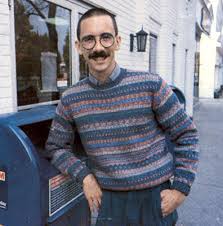
So we walk away with no more insight into Watterson (pictured left), no more insight into Calvin and Hobbes, but a clear understanding of the industry respect that the work and the artist carry. We all share the pure joy of reading and re-reading our favorite panels, not just for the smiles they bring, but also the multiple layers of observation delivered by a boy and his tiger. It’s a reminder to keep your imagination active and never miss a chance to go exploring!

watch the trailer:

https://www.youtube.com/watch?v=KtmV7-f_j7Y

Dear Mr Watterson


http://www.youtube.com/watch?v=KtmV7-f_j7Y


THE SWIMMER (1968) revisited

December 1, 2013

swimmer1 Greetings again from the darkness. Having first been drawn into this film by watching it on a 13 inch black and white TV in my dorm room, I have long wanted to experience it on a larger, full color screen. With this “dream” finally attained, the film remains a very odd, hypnotic, stylistic 1960’s film. Based on a John Cheever short story published in the “New Yorker”, it works as a dual allegory to: the failed American Dream and one man’s life.

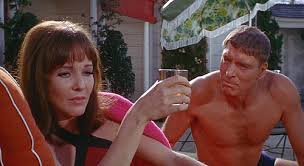
Burt Lancaster stars as Ned Merrill, a long-lost neighbor who shows up one morning to take a swim at the house of some friends. A little conversation leads to the formulation of Ned’s plan to “swim home” through each of the backyard pools in the valley. This is a chlorinated road trip and it’s quite an adventure. Along the way, Ned meets those that are happy to see him and those that aren’t. The former babysitter (Janet Landgard) follows him for part of the trip. He swimmer2also has an extended visit with a former lover (whom he clearly spurned) played by Janice Rule (pictured left) … a visit that starts poorly and goes downhill from there.  Various other interactions occur during his pool crawl, including some face time with a young Joan Rivers (who plays a pool party girl).

As we can tell from the delivery of the dialogue, something isn’t quite right with Ned. He has been “missing” for awhile and he seems to be oblivious to the changes in his life, while everyone else is quite aware. It seems Ned is swimming right through the stages of his life. The movie takes him: from morning to evening, from sunshine to rain, from warm to cold, from energetic to tired, and from healthy to hurt. By the end of his trip, we understand the current state of Ned’s life, even if he prefers to believe his wife and daughter remain part of his idealistic suburban paradise.

Eleanor Perry wrote the screenplay, while her husband Frank Perry (Mommie Dearest) directed. They also collaborated on Diary of a Mad Housewife. A minor bit of trivia notes that Fred was singer Katy Perry’s uncle. Due to creative differences with Lancaster, Mr. Perry left the film before it was completed. Sydney Pollack was brought in to re-shoot the scene with Lancaster and Ms. Rule. It had previously been shot with Barbara Loden. A 24 year old Marvin Hamlisch composed the somewhat heavy-handed score … it was the first of many film scores he would compose.

This is an unusual looking film – very stylistic and impressionistic for the times. It flows more like a play than a traditional movie and the dialogue is more literary than conversational. Lancaster’s performance is exceptional, and it should be noted, he was 52 years old at the time of shooting. If you have seen the movie, you understand why that is so impressive.

watch the trailer:


THE BOOK THIEF (2013)

December 1, 2013

book thief1 Greetings again from the darkness. You may be familiar with the source material – the huge best selling novel from Markus Zusak. If not, you may be surprised at the “through the eyes” of an illiterate, orphaned child’s perspective of the German home front during WWII. You may be more surprised to learn that it’s narrated by The Grim Reaper (British actor Roger Allam), and includes a Nazi rally, book-burning, bomb shelters, a look at the anti-Jew and anti-Communist movements, the German conscription/military draft and the dangers associated with hiding a Jew in one’s basement (with similarities to “The Diary of Anne Frank”).

book thief2 There is no denying the melodramatic nature of the story and the presentation from director Brian Percival, but this one avoids schmaltz thanks to the remarkable performances of the internationally diverse cast led by the great Geoffrey Rush and Emily Watson, and especially Sophie Nelisse as the incredibly perceptive Liesel who provides the innocence and powers of observation that prove to us (and Death) that good people will do extraordinary things no matter the atrocious conditions. Another young actor to keep an eye on is Nico Liersch, who plays Liesel’s Aryan schoolmate Rudy … a dreamer who imagines himself as Jesse Owens (not a popular view among the Nazi powers that be).

book thief 3 As Liesel’s foster parents, Rush plays a warm-hearted WWI veteran, and Watson plays a cantankerous, grounded woman hiding the emotion she carries for her husband and new daughter. The biggest piece of hiding involves Max, a young Jewish man who is the son of a soldier who once saved the life of Rush’s character. Max and Liesel have a wonderful bond as he teaches her to speak through her eyes and she nurses him back to health by sharing her new found joy of reading.

The ghost of the boy who lived in the shadows … from H.G. Wells “The Invisible Man” plays a key role as Liesel tries to make sense of a world that delivers a daily dose of relentless danger. As she develops her love and dependence on the written word, it’s clear that to survive in these times, one must have something that provides hope. The unusual story structure with the odd narrator, and a mix of wry humor, keep us connected with the characters and allows the humanity to shine through. Still, I challenge you to watch this without a lump in your throat.

**NOTE: the score is from the great John Williams, who once again excels in complimenting emotional storytelling.

SEE THIS MOVIE IF: the melding of a child’s innocence and strength can be enough to overcome the pain and shame of seeing how the Nazi movement affected so many, at least for a two hour period.

SKIP THIS MOVIE IF: you care not to revisit any of the suffering and caused by WWII (even if it’s within a story of personal strength and survival)

watch the trailer:

https://www.youtube.com/watch?v=92EBSmxinus


PHILOMENA (2013)

November 29, 2013

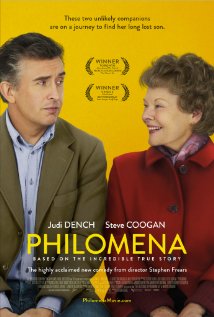
philomena Greetings again from the darkness. Two people telling the same story can make that story sound infinitely different. Two people united in their efforts to solve a mystery can have vastly different reactions to the same situations. Such personality and attitudinal differences are the real core of this story … even more than the true life inspired story of a quest to reunite a mother and child after 50 years.

Peter Mullan’s startling 2002 film The Magdalene Sisters provided us a look into the dark side of Ireland convents in the 1950’s. Here, director Stephen Frears brings us the very personal story of Philomena Lee – one of the unwed teenagers banished to the convent to deliver her baby and work off her debt to the nuns and church, after signing away all future access to her child. It’s a heart-breaking story of the times, of the church, and of a singular woman. Philomena struggles with guilt and regret over 50 years until her daughter arranges a meeting with journalist Martin Sixsmith. This begins their journey to uncover the truth and find Philomena’s son, and provide us with a front row to two distinct ways of viewing the world.

Dame Judi Dench plays Philomena and Steve Coogan (also co-writer and producer) plays Martin, resulting in a very “odd couple” road trip and personality test. Dench is remarkable is her role (surely in the running for an Oscar nom) as the seemingly simple woman who reads romance novels, gets excited about salad bars, is thrilled with mints on her pillow, and has lived a lifetime with a hole in her heart created by having her young son ripped from her world. Coogan is effectively restrained (minus his usual exaggerated comic mannerisms) as the snooty Brit journalist who thinks writing and reading human interest stories are a waste of time. She has maintained her religious faith and faith in people, while he has long ago given up on God and flaunts his cynicism in most every situation.

Director Frears has a widely varied movie career – from The Grifters to High Fidelity to The Queen. He excels in drama with a wry sense of humor.  Some will view the movie as anti-Catholic (replete with cruel nuns) … it is difficult to defend the painful childbirth, isolated mothers, selling of children and lack of assistance in reconciling the parties. Others will view this as a victory of faith over intellect. It’s the world-weary journalist with the $5.00 words who ends up learning a life lesson. It can be a reminder that life is going to throw some difficult situations your way. Your attitude and approach that will determine how you deal with it … and how much emotional pain follows. This is another entry into gray cinema that will generate much debate and discussion … a sure sign of success for a movie!

**NOTE: this is based on Martin Sixsmith’s book “The Lost Child of Philomena Lee”

SEE THIS MOVIE IF: instigating post-viewing debate is one of your movie criteria OR you want to see what could be another Oscar nominated role for Judi Dench

SKIP THIS MOVIE IF: stories inspired by real life heart-break is not your idea of holiday entertainment, no matter how thought-provoking or well-acted.

watch the trailer:

https://www.youtube.com/watch?v=4DBPqcp6Hc4


NEBRASKA (2013)

November 24, 2013

nebraska1 Greetings again from the darkness. Director Alexander Payne has proved yet again that he has a remarkable eye for characters, and no need to bury those characters deep in plot. About Schmidt, Sideways, and The Descendants provided us with characters we could laugh with, cry with and feel with. His latest is his first film which he did not write, but it’s clear that he and screenwriter Bob Nelson are similar type people watchers.

What you notice immediately is that this film and its characters move at their own pace. There is no rushing or urgency. They do nebraska2things and say things in due time. Or not. What you also notice is that the camera does the same thing. Filmed in stark black and white, the camera is exceedingly quiet and still … just like the characters and landscape. We can thank Director of Photography Phedon Papamichael, who also worked with Payne on Sideways and The Descendants. Even the score is a bit offbeat. The blending of trumpet and guitar is rare, yet seems to fit just right.

Bruce Dern is 77 years old and in his sixth decade of acting. While I have liked him quite often – and really liked him in The King of Marvin Gardens (1972) – this may be his best performance and best role yet. Dern’s Woody Grant is an alcoholic, nebraska4and hard of hearing, and crotchety, and isolated. More seriously, he seems to be in the early stages of dementia given his insistence on walking to Nebraska to collect his “winnings” from a mass marketing mailing similar to Publishers Clearing House. With minimal dialogue, we “get” Woody. That’s thanks to Dern’s physical performance and ability to emote through simple gestures. We feel his quiet desperation in the search for meaning in a life that is slipping away. He just wants to be somebody before the end.

The delivery mechanism is a road trip shared by Woody and his very patient son David (Will Forte). We sense David looks at the trip as an opportunity to connect for the first time with his dad, and maybe even get some life questions answered along the way. On the trip, other family members join in, including Woody’s other son Ross (Bob Odenkirk), and Woody’s colorful wife Kate (June Squibb). The trip takes them to Woody’s hometown where they cross paths with other family and old friends.

nebraska3 Woody’s insistence that he is about to be a millionaire brings out the “true self” in those whose paths they cross. Many of his old friends are truly happy for him and wish him nothing but the best. Others aren’t so kind. True colors can be hard to watch, especially as shown by Woody’s old partner Ed Pegram (Stacy Keach), and other family members who are just after “their fair share” of the loot. The movie excels in these moments … watching a fiery Kate put these vultures in their place, while defending the husband she has spent the whole time badgering is priceless.

Ms. Squibb delivers the film’s funniest lines, but she also gives a depth to Kate that adds the level of realism. Will Forte is surprisingly effective given his “Saturday Night Live” background, but we never lose sight of Bruce Dern (and his hair). The characters we see are grounded rural midwesterners who live their life from day to day, depending heavily on family and friends. Their interpersonal skills are quite different than what is found in metropolitan areas, and those born and raised in heavily populated areas may struggle to relate.

The film should garner Oscar nomination consideration in multiple categories, and Mr. Dern is probably a shoe-in for a Best Actor nom. So slow down and share this trip from Montana to Nebraska … while I can’t promise a prize of one million dollars, you will definitely be rewarded.

SEE THIS MOVIE IF: you enjoy character driven dramatic comedies based on people you might know (if you know people in the rural midwest)

SKIP THIS MOVIE IF: your sense of humor is more likely to parallel that of Adam Sandler or Will Ferrell than Sideways or About Schmidt.

watch the trailer:

https://www.youtube.com/watch?v=UT5tqPojMtg


THE HUNGER GAMES: CATCHING FIRE (2013)

November 24, 2013

hunger1 Greetings again from the darkness. It’s quite clear I am not the target audience for Suzanne Collins’ literary trilogy or the corresponding movies that are packing in the teenagers and young adults. Still, I’ll admit to enjoying the first movie … and am even a bit more impressed by this second entry. Having a female heroine that is young, strong, smart, loyal, and emotionally grounded is not just unusual, but also quite a welcome change of pace.

Any uproar over missing/adapted elements from the source books can be chalked up to the young readers who haven’t yet come to understand that a 2 hour movie cannot possibly relay all the details and imagination held within the written page. In fact, co-hunger3screenwriters Simon Beaufoy (Slumdog Millionaire) and Michael deBrauyn (aka Michael Arndt of Toy Story 3 fame) do an excellent job of balancing the numerous elements contained within the story: a fascist government, the off-kilter romances, family bonds, and the early stages of a revolution/uprising. This sequel features a new and much better suited director in Francis Lawrence, known for I Am Legend.

What really makes this material click on screen is the performance of Jennifer Lawrence as Katniss. Her Mockingjay becomes the symbol of hope for the many districts intimidated by the iron fist rule of the President, played by the menacing Donald Sutherland. Ms. Lawrence is an absurdly talented actress and is one of the rare few who can convey a multitude of hunger2emotions through facial expressions alone. Despite Katniss’ sometimes prickly personality, the audience connects with her in a most positive manner.

In addition to Ms. Lawrence and Mr. Sutherland, returning to the fold are Josh Hutcherson as Peeta (still lacking even an ounce of screen presence), Woody Harrelson as Haymitch (giving a bit more effort this time around), Lenny Kravitz as Cinna, Paula Malcomson as Katniss’ mother (seen recently as Abby in “Ray Donovan“), Willow Shields as Prim, Liam Hemsworth as Gale (his most exciting scene is washing his hands), and of course the instant electricity and energy provided by Elizabeth Banks as Effie and Stanley Tucci as Caesar – two of the most colorful characters this side of 1970’s era Elton John.

hunger4 New to this chapter are two of the finest actors working today: Philip Seymour Hoffman as game designer Plutarch Heavensbee, and Jeffrey Wright as “Volts” from the “nuts and volts” duo with Amanda Plummer. Jena Malone tries, but is miscast as Johanna, and Sam Claflin has a couple of worthy moments as Finnick. Two of the best additions are the frightening killer baboons and the Black Swan-style wedding dress. Both make eye-opening entries.

There is much to like about this series thus far, but of course, one must accept it for the genre it represents. And fair warning – see the two Hunger Games movies in order … or don’t bother. Regardless of your take on this franchise – may the odds be ever in your favor.

SEE THIS MOVIE IF:  you have seen and enjoyed the first one OR you want to see some angry baboons take on a group who just escaped a fog bank that would make John Carpenter jealous.

SKIP THIS MOVIE IF: you skipped The Hunger Games.

watch the trailer:

https://www.youtube.com/watch?v=EAzGXqJSDJ8


THE 400 BLOWS (1959, Les quatre cents coups, Fr.)

November 23, 2013

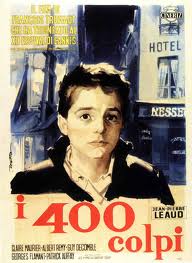
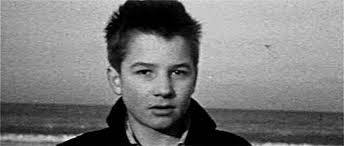
4001 Greetings again from the darkness. Cited as one of the films that begot the French New Wave, this one cuts straight to the nerve if you were ever misunderstood or felt isolated as a kid (and who wasn’t?). Knowing that it’s a semi-autobiographical presentation from director Francois Truffaut makes it all the more poignant. Truffaut was a troubled youth and (like many of us) used his love of cinema as an escape, and to provide hope for his future. His mentor, the famous film theorist Andre Bazim, died just before this (Truffaut’s first) film was released … it bears a dedication to Bazim.

Jean-Pierre Leaud plays 12 year old Antoine Doinel, a boy who just can’t get a break at home or school. Labeled a troublemaker (the film title translates “to raise hell” or “to live a wild life”) by a lazy, cruel teacher, and treated as a lost cause and unwanted burden by his tight-sweater-wearing mother (Claire Maurier, over 80 and still acting today) and stepfather (Albert Remy). Antoine’s days are spent reading Balzac, watching movies, and dreaming of escape. A couple of unfortunate incidents spiral out of control and he ends up first in jail, and then in an “observation center” for troubled kids.

4002 The beauty of the filmmaking is evident in most every shot … and there are some amazing extended takes. The overhead scene of the PE teacher “losing” students as they jog through the city is humorous and insightful. The puppet scene in the park is an extraordinary long take of kids’ innocent and mesmerized faces, and the extended shot of Antoine running through the countryside is a cinematic first. Above all of that is the famous ending shot – a zoom in to freeze frame of the young boy caught between land and sea (past and present).

Truffaut and Leaud teamed up for four more projects featuring the same character, Antoine Doinel. In 1962’s Antoine and Colette, he finds first love. 1968 brings Stolen Kisses and true love. 1970’s Bed & Board has Antoine getting married, and finally 1979’s Love on the Run brings divorce and life after a failed marriage. Other than the “7 Up” series, I can’t recall a movie character being tracked in real time for two decades in multiple films.

The French New Wave also included directors such as Jean-Luc Godard, Claude Chabrol, and Jacques Remy (who appears as a policemen in this movie). These filmmakers used realism to tell their stories just after the time when Hollywood was using icons such as James Dean and Marlon Brando to express rebellious youth. This makes for an interesting comparison and fun analysis. Whatever your preference, Truffaut’s first feature is clearly an exciting development for cinematic history.

**NOTE: Francois Truffaut was a huge Alfred Hitchcock fan, and published a book “Hitchcock, Truffaut” in which he interviewed Hitchcock on each of his films, in order.

**NOTE: Francois Truffaut periodically acted in films (including a cameo in The 400 Blows).  His most famous role was when Steven Spielberg (a huge Truffaut fan) cast him in Close Encounters of the Third Kind.

watch a trailer (not the original trailer):

https://www.youtube.com/watch?v=i89oN8v7RdY

The 400 Blows


JFK (1991)

November 22, 2013

jfk1 Greetings again from the darkness. Fifty years to the day after the tragic assassination of President Kennedy seems like the best time for me to finally write something about Oliver Stone’s controversial 1991 film. As a Dallas resident, the hallmark event has never been far removed, either mentally or geographically. I periodically see movies at the Texas Theatre where Oswald was captured. It’s impossible to drive downtown and not regularly pass the Texas School Book Depository and Dealey Plaza. The reminders are always present and maybe that’s a good thing.

When this movie was released, it shook the dust off the story and brought much attention back to the crime that had once seemed so quickly solved. The conspiracy theorists embraced Mr. Stone’s work and even those who knew little of the Warren Report were swept up in the details and accusations. It was so easily accepted as an investigative presentation, and it was a way for the people to finally get what they wanted … the answer to what happened and why.

jfk2 Viewing the film this week again for the first time since 1991, it’s understandable why so many were swept up in the frenzy. This is an expert presentation of a staggering number of theories and details and characters. With a run time well over three hours, the only opportunities for an exhale come during the somewhat lame interactions between New Orleans District Attorney Jim Garrison (Kevin Costner) and his wife (Sissy Spacek). Othewise, it’s a very well written parade of movie stars that is exceptionally photographed and expertly edited. Newsreel footage, reenactments, and dramatizations of events successfully create a mind puzzle. The film grabs you and does not let go … and this is 22 years after release and 50 years after the assassination.

Now don’t mistake that praise for believability. While Stone’s approach has been attacked from all sides, he did publish an annotated script “proving” his details. Still, his blending of theories is staggering: the military, the CIA, the FBI, LBJ, the Mafia, the pro- and anti-Castro types, the Russians, and even a likely corrupt businessman. The latter is Clay Shaw, played with evil enjoyment by Tommy Lee Jones in a role worthy of a movie unto itself.

jfk3 In Stone’s version, Garrison is the voice of truth. He’s the guy that doesn’t buy off on the Warren Report. In fact, this movie version of Garrison represents us as the viewer … the citizens who want to believe our government, but are too rational to accept things spoon fed to us. This isn’t so much a courtroom drama or investigative report, it’s more like a data dump. Stone is delivering all of the little doubts in one fell swoop. In other words, with all of these possibilities and unexplained events, how could it not be a conspiracy? Was it a coup d’etat with LBJ waiting in the wings? That makes sense if you believe defense contractors were unwilling to sit quietly as JFK pulled out of Vietnam. Was Oswald a patsy as he claimed? That argument can certainly be supported. More than one gunman? 5.6 seconds, a tree in the eye line, and smoke from the grassy knoll can lead to that conclusion. The movie serves as our emotional outburst at not knowing why this happened and who was responsible. We like our mysteries solved and this one apparently never will be.

Roger Ebert once said that facts are for print and emotions are for film. Oliver Stone seems to excel at the latter. He gives us permission to be paranoid. He takes extreme dramatic license with two extended soliloquies: Donald Sutherland as “X” (Fletcher Prouty) and Kevin Costner as Garrison in the courtroom. Neither of these events are probable, in fact the courtroom scene is borne from numerous Garrison speeches, quotes and book passages over the years.

This 50th anniversary has brought at least three new JFK inspired films: Parkland, Killing Kennedy, and Letters To Jackie. Three very different approaches to the man and the event that changed the world … it changed our perceptions and our expectations. Oliver Stone’s film gave us permission to do so out loud.

**NOTE: on the anniversary of this event, it’s important to remember that Officer JD Tippett was also brutally gunned down that day by Oswald

**NOTE: the real Jim Garrison appears in the movie as Earl Warren (yes, of the Warren Commission)

**NOTE: Unitended humor occurs with a sweaty John Candy saying “Daddy-O” and when Kevin Bacon says “People GOT to know


THOR: THE DARK WORLD (2013)

November 12, 2013

thor3 Greetings again from the darkness. While this is the second Thor movie, we feel a bit more familiar with the Norse God thanks to The Avengers. It’s not surprising that Chris Hemsworth can hold his own with the character given his looks and physicality, but this time he gets a run for his money thanks to Tom Hiddleston as Loki. (not my favorite part of the first one).

The film’s official villain is Malekith (Christopher Eccleston) who rules the Dark Elves and is trying to re-capture the all-powerful Aether, a substance of infinite energy. But the whole battle for the 9 realms is really just a sideline to Thor vs Loki, and Thor’s touch of humanity and eye for Jane Foster (Natalie Portman). Most of the key characters are back: Anthony Hopkins as Odin (even more over the top this time), Rene Russo (Thor’s mom), Ray thor2Stevenson as Volstagg, Jaimie Alexander (Sif), Idris Elba (Heimdall), Kat Dennings (Darcy), and Stellan Skarsgard (Erik Selvig).

This sequel is kind of interesting to analyze. It’s certainly bigger than the original … the special effects are huge and much improved. Light comic moments abound, but luckily the snark from Kat Dennings is minimal. Chris O’Dowd shows up for a couple of pretty funny, but slightly out of place scenes. There are a couple of cameos including an off-beat appearance by one of the The Avengers. Rene Russo even gets her own sword fight! Though it matters not to me, I assume there are many who would choose a Skarsgard other than Stellan to run around Stonehenge sans clothes. So while it has all of that going for it, the story often fails at engaging the audience.

thor4 This one is directed by Alan Taylor, who is quite a successful TV director, and there was clearly some upfront concern over the script as Joss Whedon was brought in for scene doctoring. I believe what we learn is that the fish out of water story works when Thor is on Earth, but it loses impact when Jane Foster visits Asgard. Still, Tom Hiddleston is such fun to watch as Loki, that none of that really matters.

It’s a superhero movie that will entertain the fans and provide plenty of ammunition for the critics looking to bash. If you see it in the theatre, you should know to stay for BOTH post-movie scenes. A rare Benecio Del Toro sighting makes it worthwhile.

SEE THIS MOVIE IF:  you are a fan of the Marvel comics and the corresponding films … and know that there are many more to come!

SKIP THIS MOVIE IF: you are rational human being unwilling to spend time on the superhero fantasy world.  Just know that there are many more to come!

***SPOILER ALERT***

If you are interested in the Benecio Del Toro character, then continue reading.  If you prefer to be surprised, then please stop reading now.

Del Toro plays The Collector in the final scene.  Expect an expanded role for Guardians of the Galaxy.  The Collector is millions of years old and is a pre-Cognitive (he sees the future).  He collects items and beings of real power.  At the end of Thor: The Dark World, he takes possession of Aether and states “One down, five to go“. There are six gems of color in this universe and possession brings ultimate power.  Expect more to come in future Marvel films.