THE PHENOMENON (2020, doc)

October 6, 2020

 Greetings again from the darkness. One has to hand it to documentarian James Fox. He is nothing if not persistent. And persistency is a requirement for anyone involved with researching and reporting UFO sightings that now date back more than 70 years. To give you an idea of Mr. Fox’s commitment to the cause, he also directed OUT OF THE BLUE (2003, which was also narrated by Peter Coyote) and I KNOW WHAT I SAW (2009), and produced (with his father Charles) UFO’S: 50 YEARS OF DENIAL (1997).

Peter Coyote is back as narrator for Mr. Fox’s latest project, apparently inspired by the 2017 New York Times report of the secret Pentagon UFO program called Advanced Aerospace Threat Identification Program (AATIP), which details US Navy Pilots’ multiple encounters with Unidentified Flying Objects. And just this year (2020), the US Defense Department confirmed encounters classified as ‘unconfirmed’.

For many years now, we have heard the claims that, “We are not alone in the Universe”, and “There is something else out there.” This film lays out the photographic evidence and the eyewitness testimony, as well as researching the secretive nature of the government on this topic for so long. We hear from some of those affiliated with Project Blue Book, the UFO investigative initiative formulated by the US Air Force. Many pilots and crew have documented what they’ve seen, and there is even a 1998 interview with Astronaut Gordon Cooper, providing more credibility to the sightings and encounters.

The film somewhat works as a timeline, but director Fox chose to bounce around in time, which provides some structure, while also working against a chronological perspective. It goes back to 1947, when pilot Kenneth Arnold reported an encounter with multiple flying saucers in formation near Mount Rainier, and then details more sightings that occurred over the next few decades, including: 1952 invasion of secure airspace, 1955 military pilot William Coleman, 1957 Levelland, Texas sheriff, 1966 landing in Michigan, and the 1966 Congressional hearings. We learn of “The case that changed everything”, a 1964 New Mexico encounter with Officer Lonnie Zamora, which left evidence such as landing gear imprints, footprints, and a burn area.

As you would expect, Dr. Jacques Vallee and Dr. J Allen Hynek are included here. They are two of the foremost experts on UFO research, and Dr. Vallee was the inspiration for Francois Truffaut’s Dr. Lacombe in Steven Spielberg’s classic CLOSE ENCOUNTERS OF THE THIRD KIND (1977). Director Fox does a nice job mixing the interviews with experts, historians, military personnel, intelligence officers, and eye witnesses – interviews that have taken place over many years. For skeptics, plenty of international work is blended in, as we learn of the students in 1966 Australia, the 1982 Ukrainian nuclear site, and in the “Contact” section, we hear of 1959 New Guinea where the aliens “waved” back, and 1994 Zimbabwe, where students reported being communicated with telepathically.

watch the trailer


THE RINGMASTER (2020, doc)

October 6, 2020

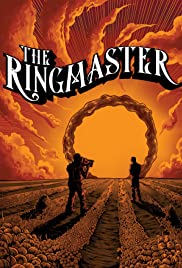
 Greetings again from the darkness. I’ve just finished reading an article proclaiming “addict” is now an offensive term, but since Zach Capp refers to himself as a gambling addict at the beginning of this movie, I guess it’s alright here. Let’s start by saying it’s not unusual for a documentary project to shift gears or change tracks during production. Sometimes a better story or topic pops up, and the filmmaker goes with it. But that’s not what this is. This is more ‘Mutiny on the Documentary’ and the result is a unique mess that still manages to hold our attention.

Zach discusses his 2015 stint in rehab (“it saved my life”) and subsequent inheritance from his grandfather. These two events led him to quit his very good job and pursue documentary filmmaking. His first subject? Onion rings. The onion rings he calls “a big part of my childhood”. After we hear numerous customers rave about these onion rings, we meet Larry Lang, the man responsible for the immensely popular tasty treats. Mr. Lang lives in Worthington, Minnesota, and we quickly realize he’s not the guy you would likely select as the centerpiece for a film. Well, we realize that, but Zach Capp never does.

We do learn that Zach had a vision, and this was to be the first in a series entitled “American Food Legends”. Following Larry around is somewhat less than stimulating, and we try to decide if he is simply socially awkward, or if he falls somewhere on the spectrum. His onion ring recipe is kept secret, and he brings the ingredients to work in a brown paper bag. Larry’s sister, Linda, acts as a kind of handler for him during the filming process with Zach and the crew. As a viewer, I often felt like they were intruding on this poor man, yet Zach and everyone involved treated Larry and Linda with respect.

The real cluster involves a garage band named Dead Man’s Party performing “Larry’s Song”, and continues on to the King Turkey Day Parade,  Badland’s Pawn – known for ‘Guns, Gold, and Rock ‘n Roll”, and ultimately, Badlands’ Speedway, where Larry’s onion rings are to be featured. Of course, most of Zach’s plans to “improve” Larry’s life fall flat because Larry is only happy when he’s in the kitchen he knows making onion rings for the locals who know him. It could be viewed as an intrusion with the best intentions … or it could be viewed as manipulation for selfish reasons.

However you view it, the aforementioned ‘mutiny’ occurs when the crew realizes Zach’s pursuit of the “Lord of the Onion Rings” (the original title) is more of a story than Larry Lang. Director Dave Newberg and his girlfriend Molly Dworski are called in to salvage a project that dragged out 3 years. The film is bookended with 2018 Las Vegas, as the onion rings are entered into a tasting as “Raider Rings” … an offering of the newly transplanted NFL Raiders from Oakland to Las Vegas. This ties in the long-time Las Vegas restaurant Piero’s, and its owner. It would be nice to report a happy-ending or even bittersweet finale, but life tends to deliver in whatever manner fits. By the time this one ends, we are mostly confused and concerned. What a strange experience, and one that I’ll recall anytime onion rings hit my plate.

watch the trailer


ON THE ROCKS (2020)

October 4, 2020

 Greetings again from the darkness. Sofia Coppola cemented her place among top filmmakers with the instant classic LOST IN TRANSLATION (2003). Sure, she’s had other successes with THE VIRGIN SUICIDES (1999), MARIE ANTOINETTE (2006), and SOMEWHERE (2010), but it’s her thought-provoking and self-analytical film with Bill Murray and Scarlet Johansson that struck an emotional nerve for so many. This time, she reunites with Murray in what could easily be a companion piece, as it’s both familiar and not.

Rashida Jones (“Parks and Recreation”) stars as Laura, who is trying to find herself as a writer amidst the fatiguing responsibilities that go with being a mother and wife, and having age 40 staring her in the face. Marlon Wayans (WHITE CHICKS, 2004) plays her charming, just-started-a-new-business husband Dean, who may or may not be cheating on her. Whether it’s Laura’s concern over how “boring” she has become, or the little clues she finds … well, it’s probably nothing … but doubt grows into suspicion.

It’s at this point when Felix (Murray), Laura’s father, enters the story. Felix is a likable cad (probably an archaic word, but it fits), who has never been much of a father to Laura. Instead he chases fun and skirts, and begins convincing Laura that all men are like him. Director Coppola examines contemporary relationships, and the insecurities that come with a long-term commitment. Can one person be enough? Can men be trusted?

What follows is an offbeat father-daughter husband-spying adventure, and an ill-advised one at that. Felix pulls up in his Alpha Romeo, and the two enjoy caviar on their stakeout – with the top down on the convertible. This leads to a scene clearly written to take advantage of Bill Murray’s talents. As he zips the sports car through the city, he gets stopped by New York’s finest. Depending on your perspective, you’ll either view this as a prime example of white privilege, or as the benefits of spending one’s life being a good listener, attentive to others – a people person making connections.

There is a great line from Felix that carries a great deal of weight, although it’s easy to treat it as a ‘throw away” line. He advises Laura, “You need to start thinking like a man.” Spending time with her dad makes her wonder if he’s right – do all men think like him? This plays well against the non-stop yapping mother Laura gets regularly cornered by when dropping her daughter for school. Jenny Slate is perfectly annoying as the mother who not only still thinks the world revolves around her, but also that the world is still interested.

Of course, we know, and Laura figures it out: her father worships her. He may gallivant around the globe looking for his next notch, but he absolutely realizes what a beautiful soul his daughter is, and what a better person she is than him. Probably the best lesson Ms. Coppola offers is that communication is key … or lack of communication can cause a thought to spin out of control. Sofia Coppola and Rashida Jones are both daughters of giants in their field, and likely could relate to having a larger-than-life figure cast a shadow. Eagle-eyed viewers will spot Barbara Bain as Gran. Ms. Bain rose to fame as Cinnamon Carter in the 1960’s TV series “Mission: Impossible”. She’s now 89 years old and still working! Sofia Coppola has delivered yet another film that’s interesting and provides terrific conversation after watching.

watch the trailer


ETERNAL BEAUTY (2020)

October 1, 2020

 Greetings again from the darkness. There is an odd line early on in which the psychologist says, “Don’t fight depression. Make friends with it.” What makes this an odd line is that Jane is a paranoid schizophrenic, and depression doesn’t seem to be a driving force in her life. Craig Roberts wrote and directed the film (his second feature as director). You might know Mr. Roberts as an actor. He played the lead in SUBMARINE (2010). His approach as a filmmaker is one that keeps the audience off-balance; in fact, we can simply state this one is weird.

Sally Hawkins (THE SHAPE OF WATER, 2017) plays Jane. She lives on her own thanks to medication. Her family is present, though not especially supportive. A flashback takes us to Jane’s wedding day where a younger Jane is played by Morfydd Clark (THE PERSONAL HISTORY OF DAVID COPPERFIELD, 2020). Jane is spurned on her wedding day by her husband-to-be, and it pushes her over the edge emotionally and mentally.

An early scene gives us a peek at current day Jane. She brings wrapped Christmas presents to her parents’ house, and promptly hands over the receipts to each family member. She purchased her own gifts, acts surprised and grateful as she opens them, and expects her parents and sisters to repay her for the gifts. It’s quite a scene.

We follow Jane through her days as she seems to drift in and out of awareness and reality. She periodically hears her phone ring, and by answering she hears the voice of her former fiancé. The red phones match the phone she was on during her last conversation with him on her wedding day. It’s her most painful and visceral memory, and one that Jane can’t seem to overcome.

Relationships between the parents and the sisters are quite something to behold. Penelope Wilton (THE BEST EXOTIC MARIGOLD HOTEL, 2011) is the mother prone to cruelty and confusion, whereas the father (Robert Pugh, MASTER AND COMMANDER) nearly fades into the wallpaper, though seems more empathetic. Jane’s sisters Nicola and Alice are played by Billie Piper (“Penny Dreadful”) and Alice Lowe (GET DUKED!, 2020). Nicola envies Jane’s ability to collect free money (disability), while Alice is estranged from their mother, and claims her “normal” life is boring.

When Mike (David Thewlis from Charlie Kaufman’s latest, I’M THINKING OF ENDING THINGS) enters the picture, it’s like a jolt of electricity from touching the wrong wire. Mike is somehow stranger than Jane, yet they manage to connect. As an example of the film’s odd dialogue, when Jane asks Mike how things are going, he responds, “Things were looking up for a few weeks, a couple years back.” That’s the type of exchange we deal with throughout, and it takes an inordinate amount of energy to process what we see and hear.

One shot from cinematographer Kit Fraser is a particular standout. It comes from inside a microwave, replete with rotisserie base and Jane’s face peering through the glass. There are numerous moments we’ve not previously seen or heard in movies … like the doctor clarifying if the patient is “fine or good”. Ms. Hawkins delivers another strange, but affecting performance … something she has mastered over the years. She always makes the character hers, and makes us care about her. An added bonus is hearing Ricky Nelson sing “I Will Follow You” … slightly more soothing than David Thewlis’ frantic electric guitar performance. It seems certain that filmmaker Roberts agrees that normal is boring, and he ensures his film and characters are not.

watch the trailer:


HERB ALPERT IS … (2020, doc)

October 1, 2020

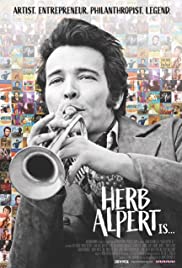
 Greetings again from the darkness. Herb Alpert’s music was played frequently in my home as I was growing up, so I became a fan early on. His impact on the music industry seems not to be celebrated or remembered today the way it should, and documentarian John Scheinfeld seeks to change that with this thorough and detailed look at the man and his career. By the time the end credits roll, we are in awe of not just the musical accomplishments, but also the humanity of Herb Alpert.

The film’s opening sequence shows Alpert working the canvas with a brush. For those who know him only as a trumpet player, this might catch you off guard. In fact, Alpert is quite an accomplished abstract painter, sculptor, musician, producer, businessman, and philanthropist. He’s also consistently described as “humble”, “gracious”, and “kind”. Such is the Herb Alpert we come to know during this nearly two hour profile.

An exploration of his life includes a timeline of events accompanied by interviews with those who know him well: songwriter and composer Paul Williams, Sting, QuestLove, Producer Lou Adler, Burt Bachrach, and journalist Bill Moyers. Additionally, we hear directly from Herb (now 85 years old) and his wife of nearly 50 years, singer Lani Hall. In fact, Ms. Hall-Alpert serves up one of the most insightful descriptions of her husband when she says, “He doesn’t work creatively. He lives creatively.”

Alpert was a working musician from an early age, and things really took off for him after he and Jerry Moss co-founded A&M Records (Alpert & Moss) in 1962. He explains his approach as a record label executive: he listens with his soul, and the music must touch him. That approach made A&M hugely successful, signing such popular and talented acts as Cat Stevens, Carole King, The Carpenters, Peter Frampton, Quincy Jones, Janet Jackson, and The Police, among others.

Beyond that gut instinct, Alpert’s career as a musician was remarkable. He won 9 Grammy’s, had 15 Gold and 14 Platinum albums, and sold over 72 million records. We learn that his Tijuana Brass band outsold the Beatles two to one in 1966, and of course we get to hear such megahits as “The Lonely Bull” (1962), “A Taste of Honey” (1965), “Tijuana Taxi” (1965), “This Guy’s in Love with You” (1968), and “Rise” (1979). We see clips of the band on The Andy Williams Show and The Ed Sullivan Show, as well as some of their early music videos.

Director Scheinfeld has made a nice career of profiling talented folks like: John Coltrane, Harry Nilsson, Bing Crosby, Bob Hope, Bette Midler, Dean Martin, Frank Sinatra, and the Marx Brothers. However, I’m not sure any of his subjects have had the many talents and passions of Herb Alpert. We learn of his commitment to making a positive impact on the world each and every day, and his work as a philanthropist includes resurrecting the Harlem School of Arts, and inspiring those students to reach new heights.

The sale of A&M Records in 1990 to Polygram for $500 million combined with his successful music career has allowed Alpert to continue with his philanthropic pursuits, yet he remains one of the most humble superstars you’ll ever find. In an early sequence, he jokes about sneaking maple syrup into his oatmeal – he says it’s “cheating” his strict diet. We see some early home movies, and Alpert revisits both his childhood school and home, which contrasts with his own show at an elite art gallery. Alpert recounts stories involving Sonny Bono and the great Sam Cooke, and goes back to the old campus of A&M Records (once a movie studio where Charlie Chaplin worked), now the home for the Jim Henson Company.

I’d be remiss in not mentioning (and thanking) Herb Alpert for the greatest album cover of all time: “Whipped Cream and Other Delights”, a visual favorite of so many throughout the years. Herb Alpert had his music played by the Apollo VIII crew, and he recalls with pride that the great Miles Davis once remarked, “You hear 3 notes and you know it’s Herb Alpert.” Despite all the brilliance he’s displayed in his life, Herb is noted for always being “humble and gracious” … and he’s still “the coolest guy in the room”. Not many can supply the soundtrack to their own life story! The film ends with Alpert himself saying he is “very grateful”, and we can only hope he knows that we are the grateful ones.

In theaters and VOD October 2, 2020

watch the trailer


ONCE UPON A RIVER (2020)

October 1, 2020

 Greetings again from the  darkness. Haroula Rose is an extraordinary talent. She’s a singer, actor, writer, producer, and director, and she’s continuing to prove she’s very good at all of the above. This is her first time directing a feature length film, and she also adapted the screenplay from the popular 2011 novel written by Bonnie Jo Campbell. The film has a unique look and feel, yet is so accessible we are drawn in from the stunning opening shots.

Kenadi DelaCerna stars as Margo Crane, a teenage Native American living on the Stark River with her beloved father (Tatanka Means, “Banshee”). Taking place in 1977 rural Michigan, the film shows Margo’s father teaching her how to hunt and fish, and honing her sharpshooter eye with a rifle. We learn that a year ago, Margo’s mother left a note explaining that she had to “find” herself, though other rumors circulate through the small community. This abandonment is only the first of many unfortunate situations Margo must face. Two of these involve her father’s half-brother Cal (Coburn Goss, MAN OF STEEL), a demented, yet powerful man in town – and his two entitled sons. The most tragic event pushes 15 year old Margo to set off down the river by herself (with her “Annie Oakley” biography), in hopes of locating her mother.

At this point, it’s tempting to label this a ‘coming-of-age’ story, and while it is that, it’s also much more. Margo’s journey finds her crossing paths with Will (Ajuawak Kapashesit), a Native American researching his roots, and Smoke (John Ashton, BEVERLY HILLS COP), a grumpy old codger with emphysema. In the simplest of terms, Margo is a teenage runaway, but there’s nothing simple about Margo. Along the way, she’s discovering life lessons and finding out what she’s really made of. One of the most stunning moments (and there are a few) occurs when Margo tracks down her mother (Lindsay Pulsipher, “True Blood”), and calls her out on the lie she told to “find” herself a shiny new life. When the mother asks Margo, if Cal ever asks about her, I nearly fell out of my chair. That line carries so much weight.

The cinematography from Charlotte Hornsby delivers the breathtaking beauty of nature, as well as the pain and intimacy of the characters. Even the music of Zac Rae follows the travails of Margo as she continues on. We are accustomed to seeing grizzled men living off the land and making their own way, but not teenage girls. The closest comparison I can come up with is Debra Granik’s superb 2010 WINTER’S BONE, which introduced many of us to Jennifer Lawrence. Here, it’s Kenadi DelaCerna, with her first acting credit, who carries a difficult film. It’s fascinating to watch her skin a rabbit and soon after, figure out that sometimes blood has nothing to do with family, and making the best choices can be quite challenging. It’s not a fast-moving film, but it’s one that will stick with you.

Available via Virtual Cinemas on October 2, 2020

watch the trailer


THE GLORIAS (2020)

October 1, 2020

 Greetings again from the darkness. Who hasn’t dreamt of having a conversation with their younger self in hopes of instilling some wisdom to improve the forthcoming life decisions? Writer-director Julie Taymor (FRIDA, 2002) and co-writer Sarah Ruhl have adapted Gloria Steinem’s autobiography, “My Life on the Road”, and use cross-country bus trips as a vehicle allowing Ms. Steinem to chat with herself at four different stages of life.

The feminist icon and activist is played by four actors: Oscar winner Julianne Moore, Oscar winner Alicia Vikander, Lulu Wilson (“The Haunting of Hill House”), and Ryan Kiera Armstrong as the youngest Gloria. Childhood is called the formative years for a reason, and we do get a taste of how Gloria’s nomadic hustler of a father Leo (Timothy Hutton), and her mother Ruth (Enid Graham) influence the woman she became. Her father (referring to himself as Steinomite) explained that travel is the best education, while her mother struggled with mental instability after being forced to give up her writing career.

Bucking the male-dominated world began in the era portrayed by Ms. Vikander, and it takes up most of the first half of the film. Discrimination and harassment were commonplace as she fought to be taken seriously as a journalist and writer. This portion includes her trip to India, where she was heavily influenced by the philosophy of Mahatma Gandhi. In addition, we see Gloria’s time as a (undercover) Playboy bunny, and the reactions that her corresponding article caused.

Ms. Moore is on screen much of the second half, including the founding of “Ms.” magazine, and her affiliation with other activists like Dorothy Pitman Hughes (Janelle Monae), Flo Kennedy (Lorraine Toussaint), Wilma Mankiller (Kimberly Guerrero, “Seinfeld”), and of course, Bella Abzug (Bette Midler). There’s a moment on the bus when Ms. Moore’s Gloria tells her younger self, Ms. Vikander’s Gloria, “Speaking your mind will get you into trouble.” It sounds like a warning, but in fact, it’s motivation for what’s to come.

Ms. Taymor’s film cuts between periods of Steinem’s life with the multiple Glorias in action. The bus rides are an interesting choice as looking out the windows we (and Gloria) sees the streets of New York, the palette of India, miles of nature, and even her own father on the road in his car. Outside is filled with the colors of life, while inside the bus, the colors are muted, often black and white. We see actual clips of the 1963 March on Washington DC, including Mahalia Jackson, and the 1977 National Women’s Conference. It just feels like something’s missing here – like the movie doesn’t have the heft Ms. Steinem deserves.

Sometimes Ms. Taymor’s approach is a bit too artsy for the story, and there is only a brief mention of Ms. Steinem’s nemesis, Phyllis Schlafly … despite much attention to abortion and women’s rights. Gloria’s passion for issues is clear, and we note her motivation to transform an environment that stifled her mother. The film’s music comes from Oscar winner Eric Goldenthal, and the cinematography from Rodrigo Prieto, frequent collaborator of Martin Scorsese and other elite directors. The timing is spot on for the film given contemporary issues, including the opening on the Supreme Court created by the passing of Ruth Bader Ginsburg. Despite this, the film might just be a bit too nice, or too lightweight given the history, accomplishments and impact of Gloria Steinem (who has a cameo appearance on the bus).

watch the trailer


A CALL TO SPY (2020)

October 1, 2020

 Greetings again from the darkness. It’s 1941 and the Nazis are dominating France. Winston Churchill creates a secret British Intelligence Organization calls Special Operations Executive (SOE). It’s basically a group of spies in France with the purpose of undermining the Nazis. The group is run by Maurice Buckmaster (played by Linus Roache) and after very limited success, the decision is made to recruit women – the thought being they will be less likely to arouse suspicion and can more freely move about. This is really the story of three women, all outcasts in some form. American agent Virginia Hall (Sarah Megan Thomas) is one of the first female spies to go to France. British Muslim Noor Inayat Khan (Radhika Apte) is a highly skilled Air Force wireless operator (communications), and Vera Atkins (Stana Katic, “Castle”) is a Jewish Romanian immigrant charged with recruiting women to the program. For those who enjoy trivia, Ms. Atkins also served as Ian Fleming’s inspiration for Miss Moneypenny in the James Bond franchise.

Greetings again from the darkness. Virginia Hall should be famous. Oh sure, history buffs know her name, but usually she’s a blip in book or article about WWII. Director Lydia Dean Pilcher was Oscar nominated as Producer for the excellent CUTIE AND THE BOXER (2013), and here she serves up the first film featuring Virginia Hall and her contributions. Sarah Megan Thomas (EQUITY, 2016) wrote the screenplay and stars as Ms. Hall.

Virginia Hall remarkably overcame her wooden leg … an appendage she named “Cuthbert” … and was rejected in her quest to become a US Diplomat. Noor faced down the stigma of being a dedicated pacifist – a difficult hurdle in the middle of a war. Vera Atkins was never able to be fully trusted by her co-workers due to her Jewish background. While we are exposed to the plights of each of these women, there is actually very little interaction between the three, which creates an unusual story structure. The bulk of the time goes to Virginia Hall, and that’s understandable given her history, participation, and accomplishments. We witness how she excels in enlisting and inspiring citizens and volunteers to join the resistance, and creates multiple networks that impacted some many of the Allied troops.

An excruciating water torture scene occurs pre-opening credits, and then over the opening credits, director Pilcher slyly works in each of the key players. The concern over women during this era as Buckmaster is concerned the recruits “won’t last a week”. It would have been interesting if we were privy to a bit more of the training “in sabotage and subversion”, but it’s likely some of that training still occurs today; although the point is made clear that this was trial and error, with an emphasis on error.

The female spies were nicknamed the “Baker Street Irregulars”, and they definitely accomplished their mission of changing the course of the war. Klaus Barbie (the Butcher of Lyon) is shown trying, and failing, to hunt down Virginia Hall, whose life was always in danger once she became known to the Nazis. And it’s that danger that is the movie’s Achilles. The sense of danger should be suffocating and relentless, and instead only pops up periodically here. The stories of these courageous folks must be told, but with that comes the ever-present danger they experienced. This is just a bit too much to overlook.

watch the trailer


THE GIRL WHO WORE FREEDOM (doc, 2020)

September 29, 2020

Boston Film Festival (2020, virtual)

 Greetings again from the darkness. I watch dozens of documentaries each year, and I always learn something from the best ones. However, I don’t recall ever being so emotional over a documentary as I was while watching this one from Christian Taylor. Ms. Taylor confesses that she always considered herself a proud Patriot (her son serves in the US Army), but this is her film of “the D-Day that changed me” and where she “truly learned about freedom”.

The film initially focuses on Ms. Taylor’s trip to Normandy for D-Day, and she comments on how the progression of the day bounces between “celebration” and “memorial” back-to-back. As the trip unfolds, it becomes something akin to a spiritual awakening for her. She mingles with the French citizens who have such vivid recollections of June 6, 1944. One lady is a particular standout: Dany Patix Boucherie. Dany was a 5 year old child that day 76 years ago, and we see the photograph of her wearing the American flag dress that her mom sewed from parachute scraps. To this day, Ms. Boucherie leads the cheers for the U.S. soldiers who liberated her town and country.

We hear numerous personal stories from French citizens who were either kids at the time of the invasion, or they are re-telling the stories they’ve heard over the years from their friends and families. 20,000 French civilians died so why are they so grateful and respectful to the American soldiers who fought? Well we hear the answer directly from these folks, and the sincerity and heartfelt emotions are surely to hit you hard. At the heart of all the tragedy and destruction is an undeniable truth – the Americans were not there to conquer, but rather to liberate. That’s the French perspective … young Americans arriving in their country and fighting fiercely and courageously to prevent France from falling to the Germans.

We see photographs of displaced French kids eating meals with soldiers at American camps, and smiling kids draped all over massive tanks to have their picture taken. Stories are told of the thunderous and destructive bombings, and of lost parents, but somehow the sadness was turned to gratitude after so many years.

The Utah Beach museum was founded by a man who was shot by Americans. His son tells the incredible story and shows us a clip of the father telling it in his own words. Rather than hold animosity towards those who shot him, he is instead most appreciative and understanding. Director Taylor then follows Florent Plana, who has dedicated his time and energy to meeting with and documenting the stories of WWII veterans. This was yet another segment that was almost too affecting for me to keep my vision clear (if you get my drift).

We watch a memorial service for veteran Jim Reid, who requested his ashes be spread on the sands of Utah Beach. His friends and family, as well as some locals join in for the tribute. Toward the end, we are informed how crucial it is to keep the French kids involved and informed, so that the era doesn’t pass with the last of the survivors. American soldiers are identified as “superheroes”, and even those who have carried guilt all these years, find themselves liberated by the Normandy visit. The French people will have it no other way. The film only touches on the amazing story of General Theodore Roosevelt, Jr, who despite walking with a cane and being the oldest soldier to take part in the invasion (56), led troops onto Omaha Beach. Also included is a brief interview with Helen Patton, General George Patton’s granddaughter. As a finale, we get yet another look at the flag dress of young Dany Patix Boucherie, and as the film comes full circle, our understanding feels more complete. Such a touching tribute to the good that remains in humanity, and it’s a lesson that has remained intact for three-quarters of a century.

watch the trailer:


25 – TONY CONIGLIARO (doc, 2020)

September 29, 2020

Boston Film Festival (2020, virtual)

 Greetings again from the darkness. Fairy Tales traditionally have happy endings so that our kids form an optimistic view of the world. Unfortunately, director John Ippolito brings us a real life baseball fairy tale with a tragic ending. Tony Conigliaro and his brothers Billy and Richie, grew up in Lynn, Massachusetts, just a few miles from historic Fenway Park, and two ended up wearing the Red Sox uniform – only it was Tony that was the legend … the can’t miss prospect who was presumed to be a future Hall-of-Famer.

It’s highly likely that Tony’s Little League baseball coach taught him to play the game “one pitch at a time”. The irony in the lesson here is that a single pitch vaulted Tony into the Major League spotlight, while another pitch (just 3 years later) basically put an end to the fairy tale. We see a clip from April 17, 1964. It’s Kennedy Memorial Day at Fenway Park (the first home game since President Kennedy was assassinated). Nineteen year old Tony Conigliaro swings at the first pitch he sees in the ballpark he worshipped growing up. Famed announcer Curt Gowdy makes the call as the towering Home Run leaves the yard. What an incredible moment for Tony, his family, and the Boston fans.

 Tony C became the youngest AL player to reach 100 career Home Runs, and he was an all-star in 1967, the year his Red Sox faced Bob Gibson’s St. Louis Cardinals in the World Series. Unfortunately for Tony, he didn’t play in that series. On August 18, 1967, when facing the Angels’ Jack Hamilton, a pitch hit Tony squarely in face, shattering the cheekbone below his left eye. Teammates and fans in attendance that day recall the horrifying sound of the collision of ball and bone. The on-deck hitter, Rico Petrocelli and Red Sox pitcher Jim Lonborg (the 1967 Cy Young Award winner) rushed to Tony, who was crumpled in the dirt by home plate. Carted off by stretcher, the next time most saw Tony was the infamous cover of “Sports Illustrated” highlighting his purple eye swollen shut. It was a punch in the gut to see this rising young star in such a state.

Joe Malone (former Massachusetts State Treasurer) is our narrator and host, and he conducts the interviews with former teammates, family members, fans, and New England sports experts such as museum curator Richard Johnson. Each reminisces about Tony and his legendary status as a hometown hero signed by his hometown professional team. Former Red Sox executive Dan Duquette compares Tony C to today’s most exciting young baseball star, Juan Soto, while Luis Tiant, Petrocelli, and Lonborg recall a great teammate and player.

In Boston, 1964 is remembered as the year of The Beatles, Cassius Clay, and the debut of Tony Conigliaro. We learn that he said, “I want to be better than Ted Williams”, and since he remains the youngest AL player to reach 100 career Home Runs, we can’t help but wonder ‘what might have been’. Ippolito’s film is only about 45 minutes long, and along with the piano music courtesy of Sarah Hale Folger, it plays very much like a warm tribute to Tony C’s memory. Very few MLB clips are shown, and we do learn of his 1982 heart attack, subsequent coma, and 8 years of being bedridden before dying in 1990 at age 45. To put that in perspective, another New England sports legend, Tom Brady, is still going strong at age 43).  Tony Conigliaro is the embodiment of “life’s not fair”, and a reminder to take it one pitch at a time.

watch the trailer: