 Greetings again from the darkness. Norwegian filmmaker Eskil Vogt wrote the screenplay for last year’s terrific THE WORST PERSON IN THE WORLD, and that’s just one of his collaborations with fellow countryman Joachim Trier. The two seem to enjoy, or at least have a knack, for creating films that take viewers out of their comfort zone. This is Vogt’s second feature as director, and you will likely find yourself questioning your ideals of the complexities of childhood and debating what makes a kid “good” or “bad”.
A family moves to a new apartment so that their eldest daughter Anna (Alva Brynsmo Ramstad) can receive the best possible treatment for her non-verbal autism (seemingly trapped inside her own body). Anna’s younger sister Ida (Rakel Leonora Flottum) spends an inordinate amount of time on her own as their mother (Ellen Dorrit Petersen is also Rakel’s real life mother; THELMA, 2017) focuses on Anna. Immediately we are struck by how cruel Ida is to Anna, obviously envious of the time her parents devote to the child in need. The film moves meticulously as Ida befriends Ben (Sam Ashraf), a young boy from the same apartment building. Ben has an ability to move things with his mind. His telekinesis is in the early stages, and Ida pushes him to develop his powers. One particularly disturbing sequence involves the two kids and a local cat at the top of the building’s stairwell. Aisha (Mina Yasmin Bremseth Asheim), another young girl from the building starts hanging out with Ida and Ben. This also draws in Anna, as the sweet Aisha has a connection with her and a way of communicating telepathically. It’s at this point where our brains shift into overdrive as we realize there is something supernatural going on.
As Ben’s ability grows, so does his sadistic nature. He reacts (often violently) to situations where he feels disrespected. At the same time, Anna and Aisha grow closer, and Ida and her parents are thrilled with Anna’s improved demeanor. As viewers, we come to realize that director Vogt has made the apartment building a character itself. Is the building behind the special abilities shown by these kids? Or is it the ominous nearby forest? Why are the powers strongest when the kids are together? For a film that mostly progresses very slowly, there is much for us to take in – although we do wish more time had been spent on the makeup of all four kids. We are only teased with what other kids in the building are experiencing, but the supernatural aura is clearly in play.
None of the four child actors have any previous feature film experience, yet each is superb in their own way. They perfectly capture the curiosity and confusion that goes with childhood, and there is an insightful “kid” moment when Ida shows her one ‘talent’ to Ben. We are left to wonder if the film’s identical title to the 1961 classic is coincidental or purposeful. It’s not a remake, but it works as an homage. The staircase shot is even similar in the two films. Filmmaker Voigt excels at ensuring we believe something evil is just around the corner, yet he never rushes to the next moment. An eerie, ominous atmosphere is perfectly complemented by these four kids. Vogt’s dark film sticks the ending, and stays with us for a while.
Opening May 13, 2022


 Posted by David Ferguson
  Greetings again from the darkness. Barely five minutes in, we have concluded that Anais is a whirlwind of activity. She’s behind on her rent and yet turns the conversation with her landlord to fruit juice and a smoke alarm. This is the first feature film from writer-director Charline Bougeois-Tacquet who benefits greatly with the presence of lead actor Anais Demoustier. I have no idea if the name is a coincidence or whether this was written with her in mind, but we quickly realize that Anais is a mess … a charming mess and one for which hope remains.
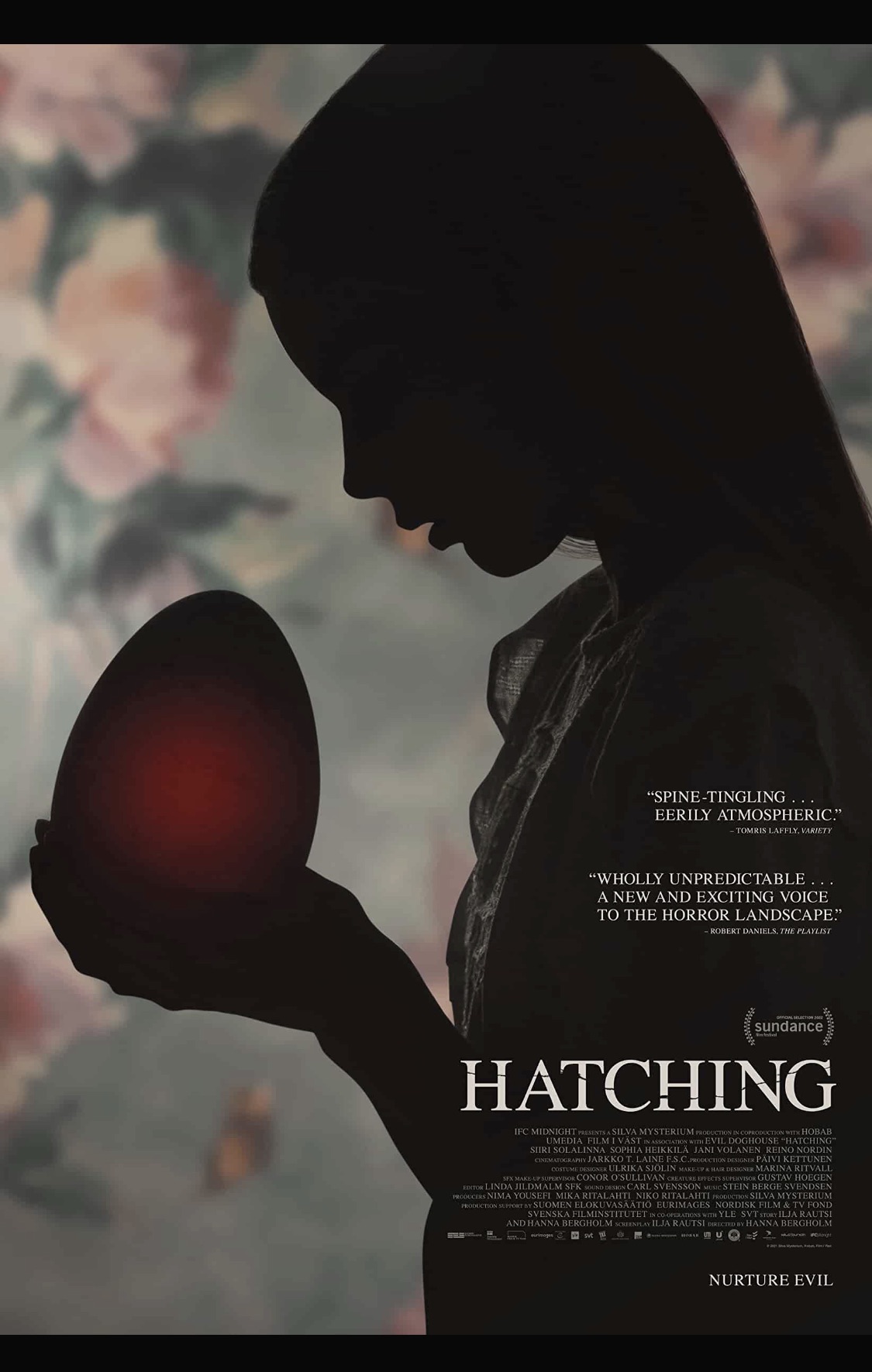 Greetings again from the darkness. The exceptionally creepy creature leads us to believe this could be a terrific new addition to the creature feature genre. However, director Hanna Bergholm and screenwriter Ilja Rautsi expend so much time and energy on the metaphor aspect that we feel a bit bludgeoned by the end. Despite some wonderful horror elements, we find ourselves thinking, ‘alright, already … just stick with the creepy stuff!’
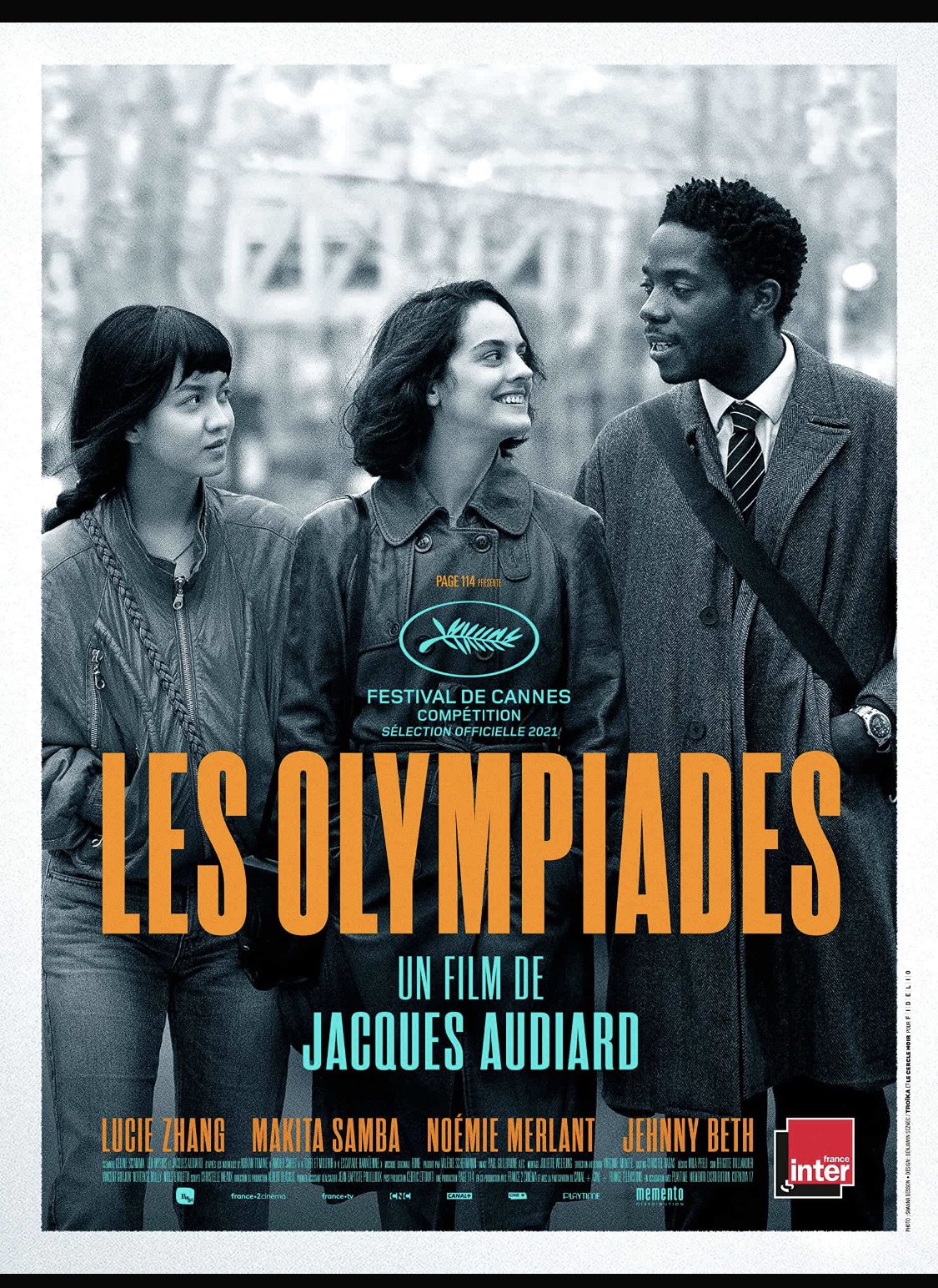 Greetings again from the darkness. Jacques Audiard is one of the filmmakers who has won my cinematic loyalty through his consistently thought-provoking and entertaining films. His five features since 2005 have all been excellent: THE BEAT THAT MY HEART SKIPPED (2005), A PROPHET (2009), RUST AND BONE (2012), DEEPHAN (2015), THE SISTERS BROTHERS (2018). This latest is a different kind of story for Audiard, and it’s based on the stories from animator Adrian Tomine. Audiard adapted the screenplay with Nicholas Livecchi, Lea Mysius, and Celine Sciamma (writer and director of PORTRAIT OF A LADY ON FIRE, 2019). The result is a unique vision of modern-day love set in an area of Paris that is rarely featured in films.
 Greetings again from the darkness. Every writer has a story about what inspired them to put words on the page. What we have here is Eva Husson directing a script from Alice Birch (LADY MACBETH, 2016) who has adapted the 2016 novella from British author Graham Swift. We follow Jane Fairchild through three stages, as her work as a maidservant allows her to become “an occupational observer of life.”
 Greetings again from the darkness. Ana Gasteyer’s “Saturday Night Live” parody of Celine Dion not-so-humbly announcing herself as “the greatest singer in the world” was brilliant sketch comedy and good for a hearty laugh. All these years later, filmmaker Valerie Lemercier cast herself as the lead in this unofficial biopic “inspired by” the story of Celine Dion. It’s a fictionalized account co-written with Brigitte Buc that sticks to the real story in some parts, while also being a bit creepy and serving up a quasi-horror film sensation in others. You might ask, “How can the story of Celine Dion” have anything to do with horror?”, and well the answer is that Ms. Lemercier (a woman in her 50’s), plays the fictionally named Aline Dieu at ALL ages (thanks to some CGI). Seeing that face on the young girl peering up at her family on stage is as creepy and discomforting as any screen image we will see this year.
 Greetings again from the darkness. “What made him do it?” That’s the question we always ask after a mass shooting. Rarely does any answer make much sense. Director Justin Kurzel and his TRUE HISTORY OF THE KELLY GANG (2019) screenwriter Shaun Grant join forces in collaboration again for a story based on the man responsible for the 1996 Port Arthur Massacre in Tasmania. It was the worst lone gunman mass shooting in Australian history with 35 killed and 23 injured. The filmmakers tread lightly here and never mention the shooter’s name, though the film’s title is a backwards hint. Their film is an attempt to answer that question we always ask.
 Greetings again from the darkness. Perhaps you are a normal movie lover and have never wondered what it might be like if director Terrence Malick delved into the horror genre. Well, the first feature film from writer-director Goran Stolevski gives every indication that he has spent entirely too much time with such thoughts. This arthouse folk horror film will likely frustrate many with its unconventional approach, odd narrative, and spiritual narration that hardly contributes to the characters in the story.
 Greetings again from the darkness. Writer-director Hany Abu-Assad has had two films nominated for the Best Foreign Language Oscar. OMAR (2013) and PARADISE NOW (2005) were both excellent and deserving of such regard. His latest in ‘based on true events’ from Bethlehem, West Bank in Occupied Palestine. He shows us the intimidating wall around the city and points out the vulnerability of local women.
 Greetings again from the darkness. As a kid in Glasgow, Alan McGee’s dream was the same as many others: he wanted to make it big in the music business. A TV appearance by The Sex Pistols lit the proverbial fire, and Alan became obsessed. However, as he states in the film, “I didn’t have any talent, which limited my opportunities.” What he did possess was ambition and commitment. The last few years have produced an abundance of music biopics, yet this one isn’t based on a great singer, songwriter, or guitar player. Instead, director Nick Moran and co-writers Dean Cavanagh and Irvine Welsh have adapted Alan McGee’s autobiography, “The Creation Records Story: Riots, Raves and Running a Label.”
