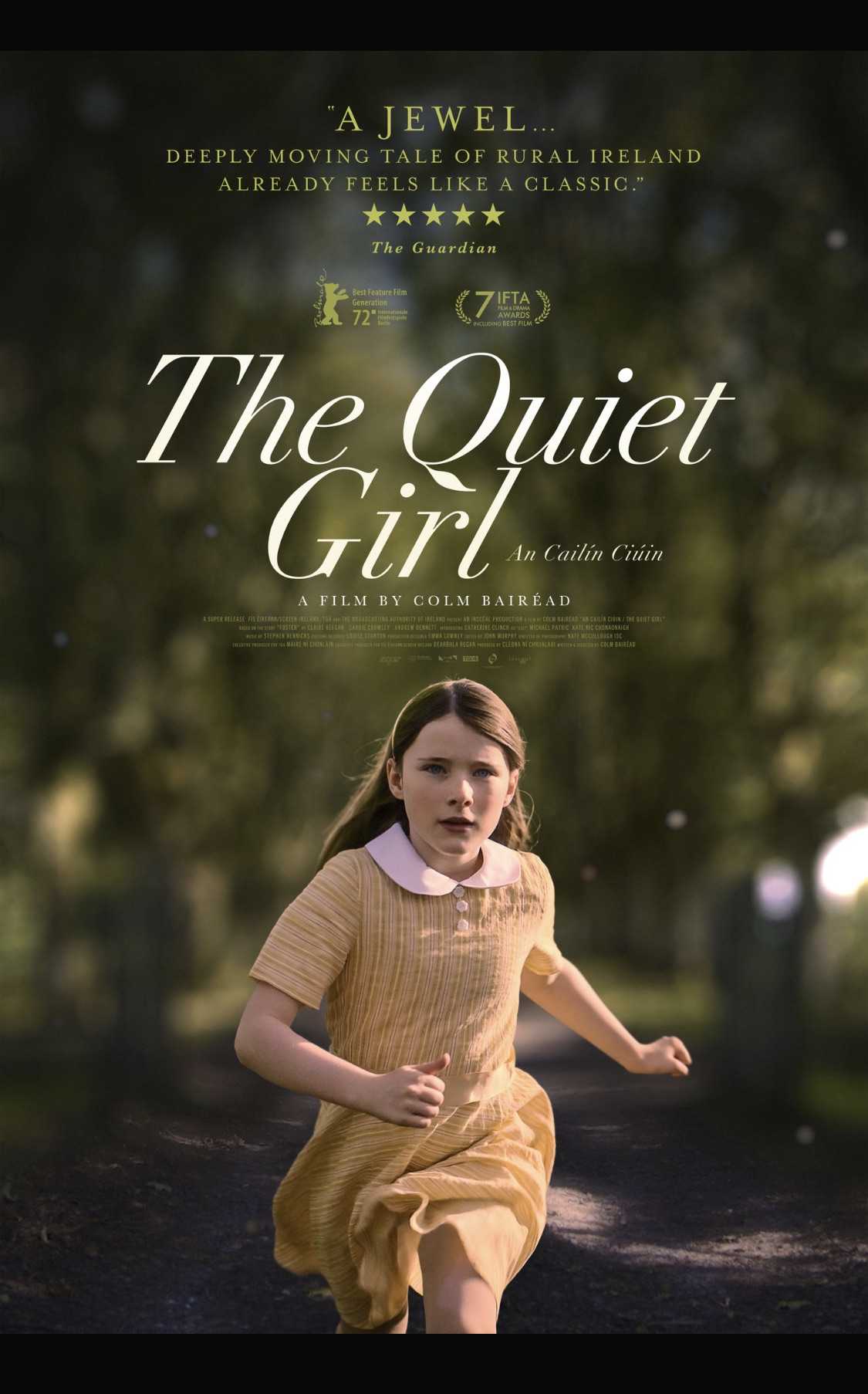
 Greetings again from the darkness. What a treat to watch a film that doesn’t drown us in the obvious or spell out each character’s precise thoughts. There are no explosions or action sequences, and these folks are ever so believable and grounded in life. With the depth of emotions relayed, and the unhurried pacing, it’s remarkable that this is a first feature film. Writer-director Colm Bairead has based his debut on “Foster”, a story by Claire Keegan.
It’s 1981 and a mother (Kate Nic Chonaonaigh) is calling for her daughter … young Cait (an extraordinary Catherine Clinch) is difficult to spot, blending in with nature in the pasture of her family’s farm. Being nearly invisible is how Cait spends her days. Mom is just about ready to deliver a new addition to the already crowded home. One more is one too many mouths to feed since dad (Michael Patric) works the liquor harder than the farm. With no discussion, or even an explanation, Cait (approximately 9 or 10 years old) is unceremoniously dropped off at a relative’s house for the summer. By this time, we’ve noticed she is extraordinarily quiet as she tries to remain unnoticed in her out-of-sync world – a home that lacks warmth and obvious love.
Cait is immediately struck by the kindness and tenderness shown by Eibhlin (Carrie Crowley), the woman at the new house who casts a fawning gaze at the child. Eibhlin’s husband, Sean (Andrew Bennett), is not nearly as welcoming of the girl, and seems to avoid speaking directly to her initially. Where previously Cait lived a life of isolation, missing the adoration young kids expect from parents, she’s quick to embrace Eibhlin’s attention and chips in with chores around the farm.
For a while, our focus is on Cait and Eibhlin, but slowly it shifts as Sean gradually thaws from his early silent treatment. It’s fascinating to watch the subtle ways in which Cait and Sean develop a bond. He even acknowledges her natural tendency towards silence by advising something along the lines of, ‘many people have missed the opportunity to say nothing.’ For her, it’s been a survival instinct. To Sean, it’s often a wise choice.
The work by Director of Photography, Kate McCullough, is exceptional. The shots of nature are lovely, but it’s the way she shoots these evolving characters that really makes an impact. An example of the complexity embedded in this ‘simple’ story is how Eibhlin informs Cait that secrets within a home are a bad omen; so imagine Cait’s surprise when the neighbor (Joan Sheehy) spills the dark secret held by Eibhlin and Sean.
Gaelic is the predominant language spoken herd, making subtitles a necessity for most of us. Mr. Bairead’s film has received an Oscar nomination for Best Foreign Language feature film, and although the story doesn’t move at the pace we’ve grown accustomed to, the ending strikes us square in the heart as we realize Cait truly feels loved for the first time.
Opens in theaters on February 24, 2023


 Posted by David Ferguson
  Greetings again from the darkness. One of my (many) pet peeves involves movies where we are supposed to believe a couple finds eternal love after barely spending any time together. Now I fully understand some artistic license must be taken in love stories, as there are only a couple of hours to work with, but the challenge is making the audience believe it. For the films that do it right, it’s a thing of beauty.
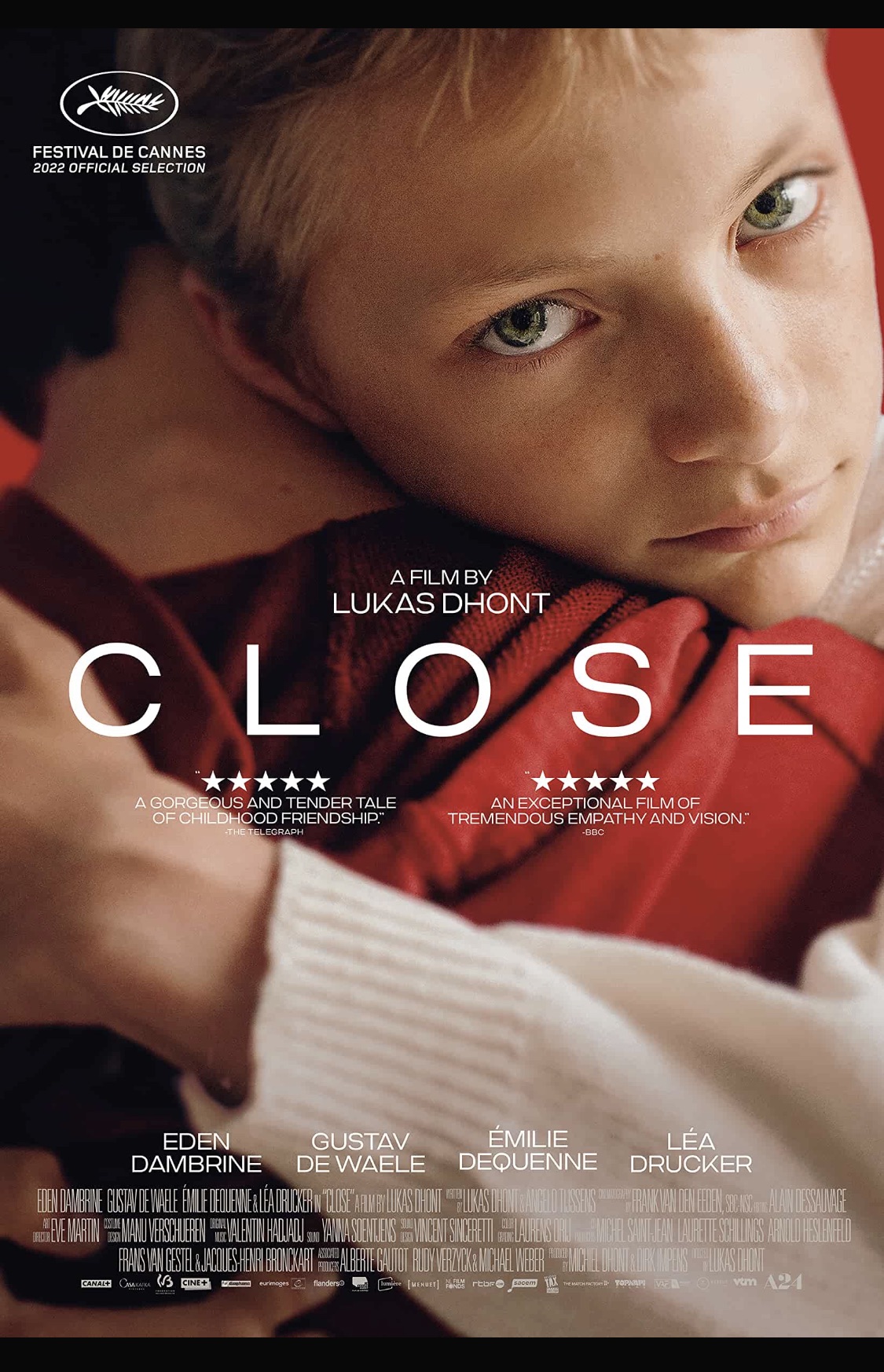 Greetings again from the darkness. Coming of age stories are immensely popular in literature and cinema. And why not? We all go through the stages (some more effectively than others). Writer-director Lukas Dhont is no stranger to backlash and criticism after his 2018 feature film debut, GIRL, and the approach he took on transgender issues. This time the topic is different, yet his approach still opens him up to additional criticism. However, if the viewer isn’t on a quest for controversy, this story from Dhont and co-writer Angelo Tissens is quite touching.
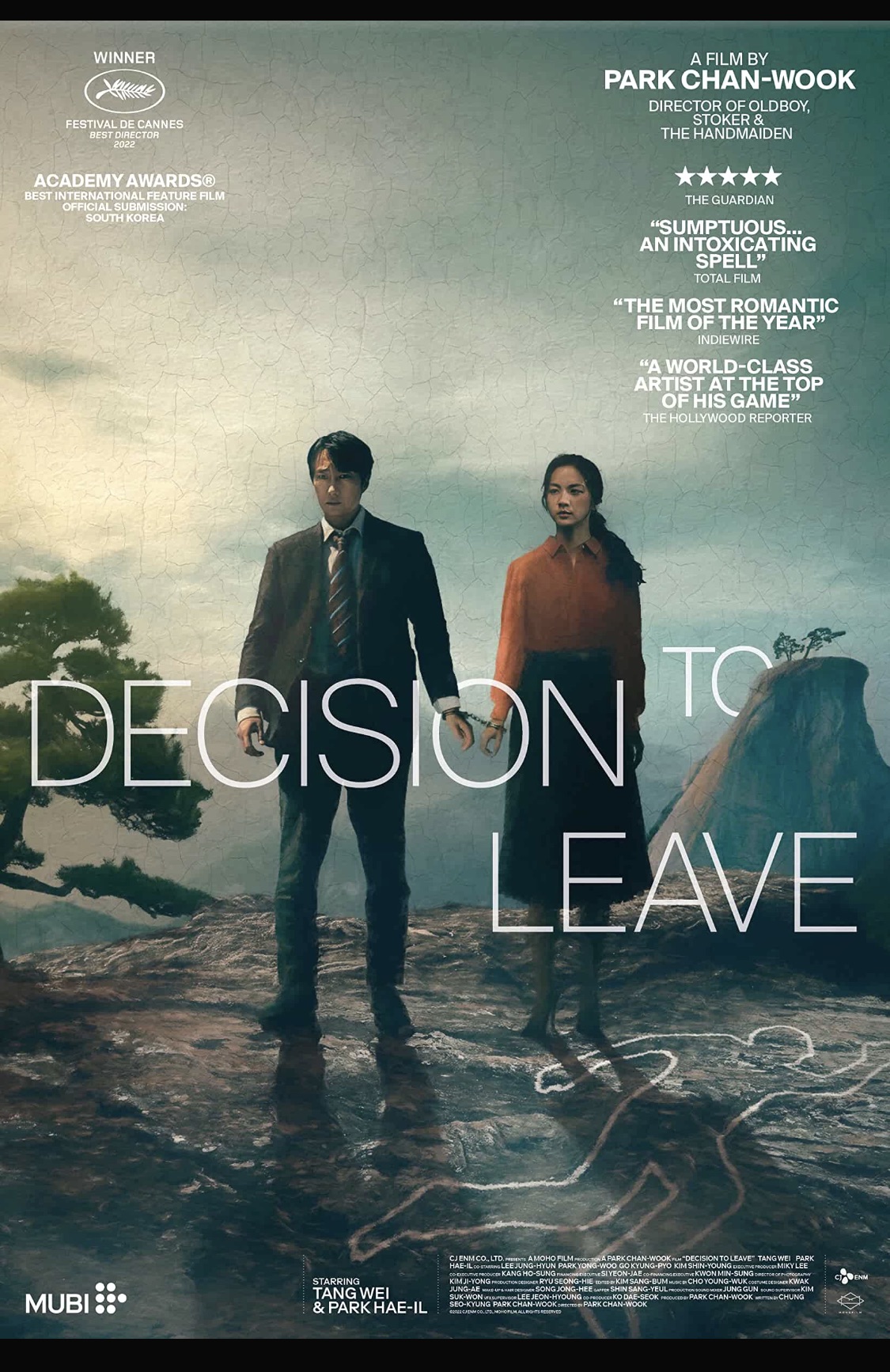 Greetings again from the darkness. For the first half hour, we can’t help but think, “we’ve seen this all before.” A straight-as-an-arrow police detective falls hard for a suspect in a murder case. Sure, the familiar story line is often fun to watch, but we are initially a bit disappointed since this is the work of writer-director Park Chan-wook, the filmmaker behind OLD BOY (2003) and THE HANDMAIDEN (2016). Of course, we worried needlessly. The masterful director then begins twisting and turning characters and events in this homage to Hitchcock’s VERTIGO.
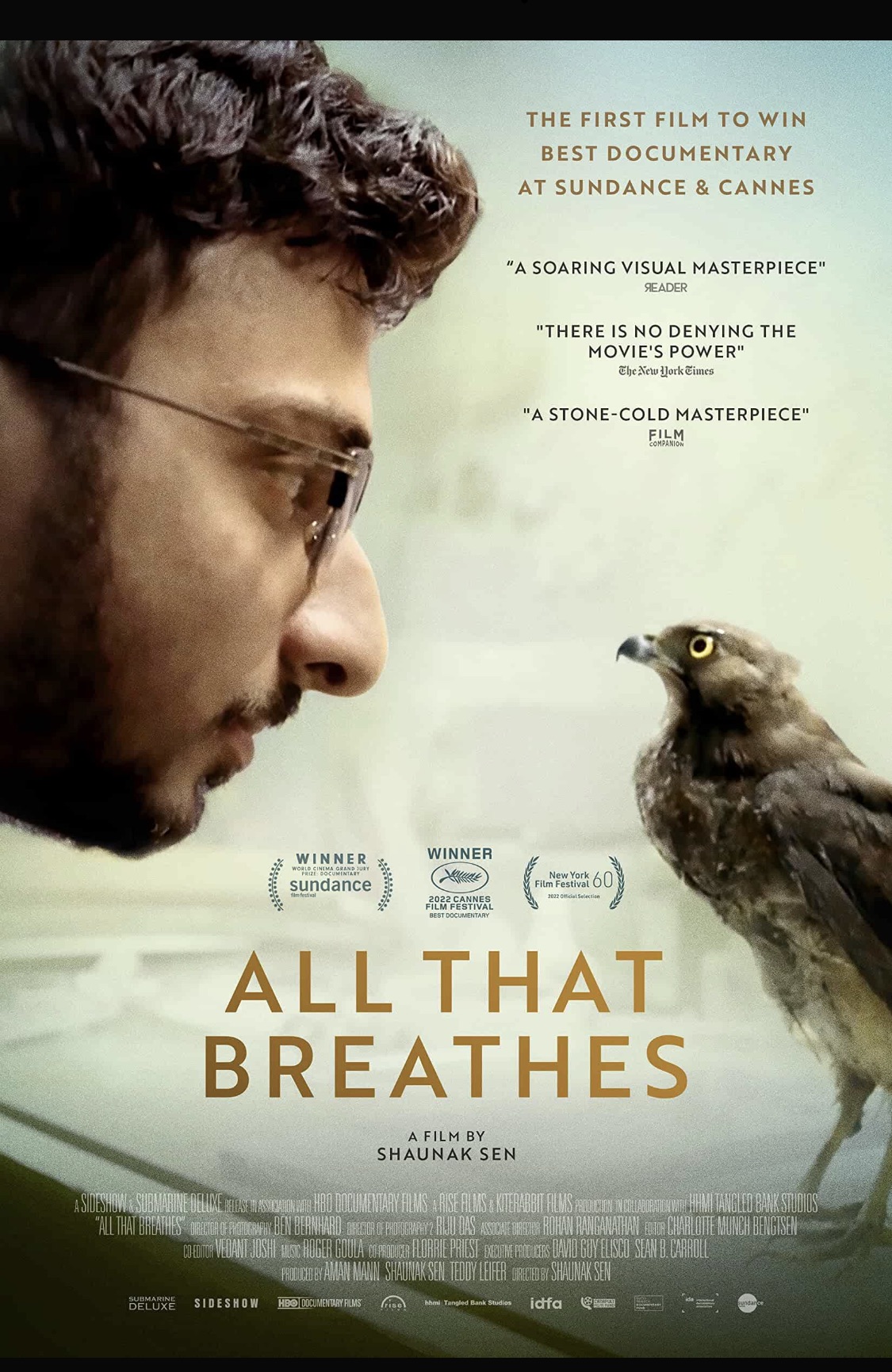 Greetings again from the darkness. The expert photography and artistic approach taken by Shaunak Sen in his documentary is quite something to behold, even as the message may be a bit heavy-handed. His opening shot perfectly captures all of this, as a sea of rats scrounges for food through the trash while the headlights of an approaching car drive home the point that it’s the humans who have thrown things out of balance.
 Greetings again from the darkness. Many filmmakers mine their own lives for projects, making their work personal, revealing, and sometimes invasive. It’s easy to label these works as narcissistic, and by definition, that would be accurate. However, some of the finest films from our most interesting writer-directors fall into the autobiographical (or semi-autobiographical) category. Examples include Fellini’s 8 ½ (1963), Cameron Crowe’s ALMOST FAMOUS, and Woody Allen’s STARDUST MEMORIES. This time it’s Oscar winner Alejandro Inarritu looking inward. Inarritu won his Oscars for THE REVENANT (2015), and his previous nominations include BIRDMAN (2014) and BABEL (2006), and those are in addition to his other standouts: BIUTIFUL (2010), 21 GRAMS (2003), and AMORES PERROS (2000). He’s joined on this project by his BIUTIFUL and BIRDMAN co-writer, Nicolas Giacobone.
 Greetings again from the darkness. There has been no shortage of conspiracy theories, either recently or historically, that have left non-believers bewildered at how ‘the other side’ held firm. Writer-director Arthur Harari and his co-writers Bernard Cendron and Vincent Poymiro bring the remarkable struggle of Hiroo Onoda to the screen. Onoda was a Japanese soldier who refused to believe WWII ended, and instead, continued his mission of resistance by spending thirty years in a Filipino jungle.
 Greetings again from the darkness. Most of us are quick to judge others. Often too quick. This superb (and bleak) feature film debut from writer-director Gaysorn Thavat reminds us that our initial judgments might just be an easy “out” for us so that we may go on about our way, oblivious to the struggles of others. There is observational commentary here on what it means for a parent to love their kids so deeply, for someone to believe in themselves whole-heartedly, and for the pain an institution can cause under the guise of doing the right thing.
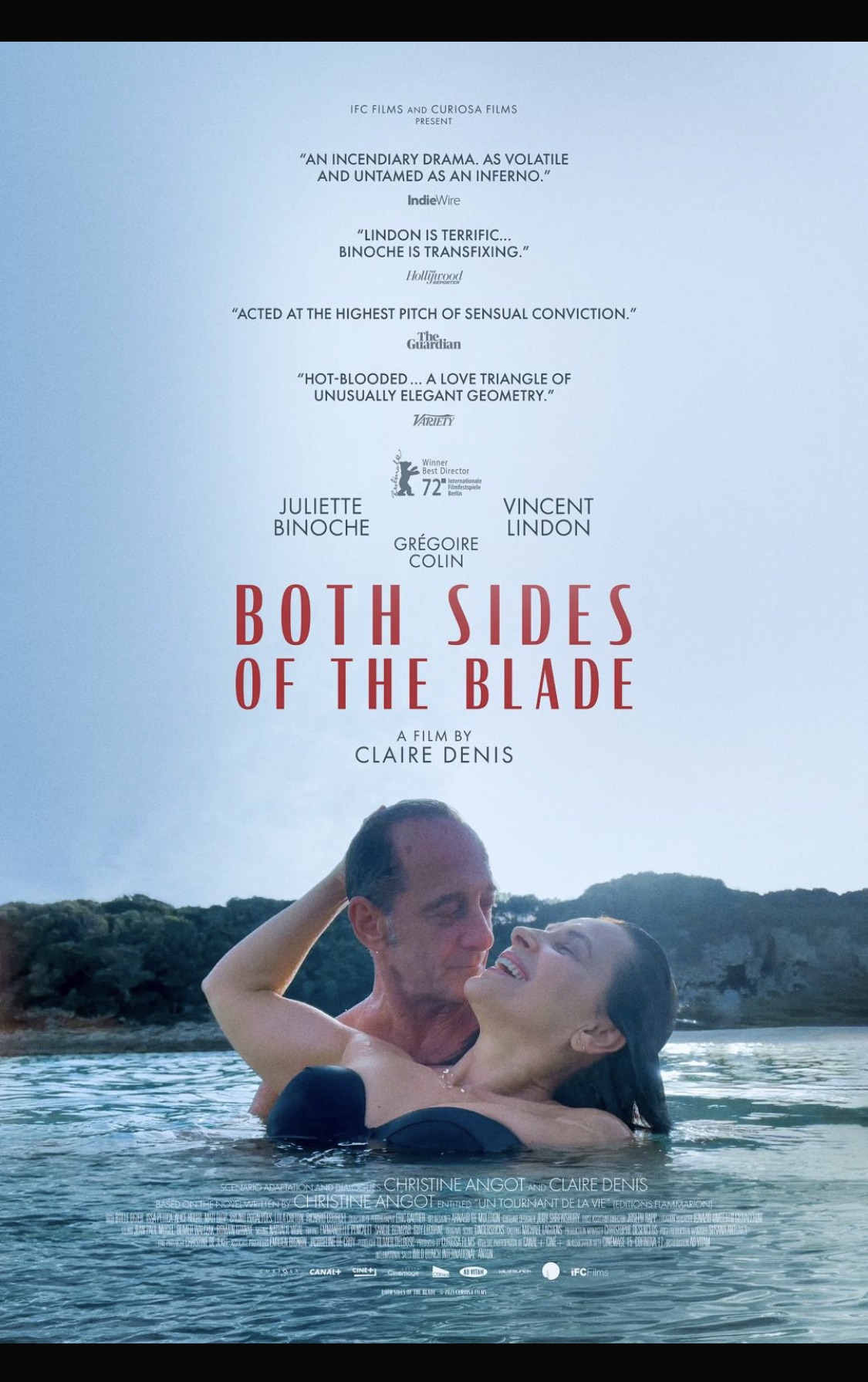 Greetings again from the darkness. If you are one of the many who need someone to cheer for – a nice person – in order for a movie to work for you, then this latest from renowned French director Claire Denis (BEAU TREVAIL, 2019) is going to be a challenge. Ms. Denis co-wrote the script with Christine Angot (they previously collaborated on LET THE SUNSHINE IN, 2017), an adaptation of Ms. Angot’s novel.
 Greetings again from the darkness. Satire is one of the most challenging cinematic genres to get right. The script and performances are crucial, and the director must walk a fine line between too subtle and over-the-top. The long-time collaborative filmmaking team of co-writers and co-directors Mariano Cohn and Gaston Duprat, along with co-writer Andres Duprat, strike just the right chord and deliver a gem that is funny, insightful, and quite entertaining. The film was well received at last year’s Venice Film Festival, but is only now getting distribution.
