MAMMA MIA! HERE WE GO AGAIN (2018)

July 19, 2018

 Greetings again from the darkness. It’s been 10 years since director Phyllida Lloyd presented the crowd-pleasing MAMMA MIA! movie. It was a box office hit (over $600 million worldwide) and was, for a few years, the highest grossing musical of all-time. Most importantly, it was extremely entertaining and a joyous cinematic romp for viewers. This year’s sequel is directed by Ol Parker (THE BEST EXOTIC MARIGOLD HOTEL and husband to actress Thandie Newton), and though the melancholy is slathered on a bit too thick, it also fulfills its number one priority – entertaining the fans.

The story begins with Sophie (Amanda Seyfried) putting the final touches on the house-turned-hotel in preparation for the upcoming Grand Opening. It’s named Hotel Bella Donna in honor of Sophie’s mother (Meryl Streep). What looks to be a straight-forward story surprises us with a flashback to Donna’s 1979 graduation, which features not only the first song-and-dance number “When I Kissed the Teacher”, but also the first of two ABBA cameos … Bjorn Ulvaeus as a professor. The young Donna is played brilliantly by Lily James, and she effortlessly captures the free-spiritedness that led to the conundrum of the first movie – 3 possible dads for Sophie.

Those 3 dads return not only as Pierce Brosnan (Sam), Stellan Skarsgard (Bill), and Colin Firth (Harry), but also as Jeremy Irvine (young Sam), Josh Dylan (young Bill), and Hugh Skinner (young Harry). In fact, most of the run time is dedicated to the backstory of these characters and how they first met as youngsters. Each has a segment (and song) with young Harry featured in “Waterloo” accompanied by Benny Andersson (ABBA cameo #2) on piano. Young Bill is the charming sailor who saves the day for Donna, while young Sam assists her with saving a storm-shaken horse (kind of humorous since Mr. Irvine starred in WAR HORSE).

Also back are Dominic Cooper as Sky, Sophie’s true love, who can’t decide between romance and career, and Donna’s life-long friends Tanya (Christine Baranski) and Rosie (Julie Walters), who are also part of the flashback as Jessica Keenan Wynn (excellent as young Tanya) and Alexa Davies (as young Rosie). New to the cast are Celia Imrie in the graduation number, Andy Garcia as the hotel manager, and drawing the biggest applause of all … Cher as Sophie’s grandmother (and as my viewing partner commented, an early peek at what Lady Gaga will look like as a grandma)! It’s best if you experience Cher for yourself, and it should be noted that this is her first big screen appearance since BURLESQUE in 2010.

Of course, the songs are key and many of the ABBA numbers from the first movie are featured again this time. In particular, “Dancing Queen” is a nautical standout, and “Fernando” is a show-stopper. While it may not be quite as raucous as the first, it’s a treat watching Lily James, and there is a wonderful blending of “old” and “new” in the finale. The only real question remaining is, did the casting director do the math before casting Cher (age 72) as Meryl Streep’s (age 69) mother?

*As a special treat, there is a “most interesting” cameo near the end of the film

watch the trailer:


YELLOW SUBMARINE (1968, animation) revisited

July 7, 2018

 Greetings again from the darkness. “It was 50 years ago, Sgt Pepper taught the band to play”. OK, I know that’s not the lyric, but 50 fits better than 20 when we are talking about the latest re-mastered 4K version of the classic animated YELLOW SUBMARINE from The Beatles. Originally released in 1968, the story is by Lee Minoff and is based on the Lennon-McCartney song of the title. Additional dialogue and story elements were contributed by (at least) four other writers, including Erich Segal of LOVE STORY fame, and after all these years, the film not only remains quite entertaining, it has attained a certain legendary status.

Directed by George Dunning (animation producer), also instrumental in The Beatles “unaffiliated” animated TV series of the same era, the film requires a bit of historical perspective to bring the full picture into focus. This was the year before Woodstock, and the Beatles were no longer the four fresh faced lads from Liverpool. Their songs had not only changed the music world, it had changed them as individuals. Much of their charm had turned to cynicism, and drug use was prevalent. The band reluctantly agreed to allow production of this animated movie for the sole purpose of fulfilling their 3 film contract with United Artist (A HARD DAY’S NIGHT, HELP!). Other than the songs and a closing segment, they were barely involved … not even voicing their own characters.

The true legacy is what we see on screen, and after 50 years, it remains magical. The psychedelic pop art visuals were unlike anything most of us had ever seen. The colors and images seemed to explode in vibrancy and come alive before our eyes. Some have mistakenly credited pop artist Peter Max as the man behind the colorful images, and fans of Monty Python (especially Terry Gilliam) will easily recognize the stylistic influence. Sharp ears will pick up references to Beatles lyrics not included on the soundtrack, and much of the dialogue captures the droll tone of Lennon or the whimsy of McCartney. However, we never stop thinking about how much more effective this could have been with John, Paul, George and Ringo providing the voices.

An extended opening sequence provides the basics of the story – The Blue Meanies are coming (!) and they intend to expunge all music and color from Pepperland. The only way to stop them is with Beatles music. Once we ‘understand’ the story, we hear Ringo’s vocals kick off the title song over the opening credits. Through the adventure we meet some fascinating and creative characters, see an abundance of green apples (the logo for Apple Records), play spot the icon (with actual photographs), laugh along with Ringo and his “hole” in the pocket, and catch the essence of Beatles wit, though the dialogue is sometimes a bit muddled.

Of course, beyond the animation, it’s the music that matters. Two songs that stand out because of the corresponding animation are “Eleanor Rigby” and “Lucy in the Sky with Diamonds”.  Some of the 11 Beatles songs mish-mashed from various albums include:  “Sgt Pepper’s Lonely Hearts Club Band”, “All You Need is Love”, “All Together Now”, and “When I’m Sixty-Four”. There are also a couple of George Harrison songs that aren’t otherwise available, and a personal favorite, “Hey Bulldog”, which has its own sequence, and was originally only included in the UK movie version. We also notice the beautiful orchestra music composed by long-time Beatles producer George Martin.

At the time it was released, hippies would claim the movie looks better when you’re stoned, and it’s likely for those folks, that sentiment held true for most things in life. The message of the day and one present in much of the Beatles’ work, is that of Love. It’s a message that rings true today, and also part of why the film works so well for both kids and adults. Although we may be a bit disappointed that the fab four don’t provide the voices of their characters, the stunning visuals and classic songs make this a film for everyone. The short live action sequence at the end where we see the real John, Paul, George and Ringo is simply the cherry on top … or is that an Apple?

watch the (U.S.) trailer:


DR. SEUSS’ HOW THE GRINCH STOLE CHRISTMAS! THE MUSICAL

December 7, 2017

Opening Night December 5, 2017

Winspear Opera House – Dallas, TX


 It’s pretty easy to tell if a stage production is “working”. For a tragedy, we hear sniffles emanating from the audience, and for a comedy we hear laughter. When it comes to the re-telling of a family Christmas classic, we watch to see if the kids are engaged. Near the end of this touring version of “Dr. Seuss’ How the Grinch Stole Christmas! The Musical”, most every kid in the theatre is yelling “Christmas” at the stage in a desperate attempt to feed the floundering Grinch the correct line. Of course, Philip Bryan as The Grinch knows exactly what he’s doing, and it’s a brilliant gesture to allow the kids in the audience to believe they are participating … just as we believe The Grinch’s heart has grown as he learns the true meaning of Christmas.

The Dr. Seuss book was first published in 1957, and the iconic animated TV short first aired in 1966. In 2000, director Ron Howard delivered his live-action feature film, and Broadway was home to a hit run in both 2006 and 2007. Since then, there have been numerous tours of the hit stage musical, and many kids and families have been entertained by seeing The Grinch, his dog Max and the Whoville residents brought to life on stage.

“Welcome, Christmas” and “You’re a Mean One, Mr. Grinch” are the two songs familiar from the TV show, and both were written by Albert Hague and Dr. Seuss. There are new elements to the story, and seven new songs with music by Mel Marvin and Timothy Mason (book and lyrics), including “Who Likes Christmas?”, “One of a Kind”, and “It’s the Thought that Counts”. All the songs contribute to the story-telling, but none are especially memorable on their own. There is a twist in approach, as we first meet Max the dog … a much older Max. He acts as our narrator recalling his days with The Grinch, as they are acted out around him. Bob Lauder stars as Old Max, and has a wonderful voice for narration and singing.

Little Cindy-Lou Who and the rest of the Whoville folks are decked out in a pink, red, and white color scheme compounding the chaotic feel created by the holiday season and by having Christmas stolen while they sleep. The Whoville songs are often difficult to understand, despite being performed energetically. The sets (designed by John Lee Beatty) remain true to the original Dr. Seuss book and the centerpiece Christmas tree is especially wonderful.

Of course, what everyone comes to see is The Grinch. His green costume (designed by Robert Morgan) with creepy long fingers is a sight to behold, and Mr. Bryan takes full advantage of the spotlight, both with his physicality and his wide-ranging voice. At various times he reminds of Michael Keaton in BEETLEJUICE (1988), Jim Carrey from the 2000 film, and even The Joker from THE DARK NIGHT (2008). The kids are especially attentive while The Grinch is on stage, as are the much older kids (known as adults) in the audience.

Any production of The Grinch is challenged to overcome the iconic voices of Boris Karloff and Thurl Ravenscroft from the TV version, as these men possessed two of the most recognizable and iconic voices in entertainment history. Director Matt August has been behind both Broadway productions and numerous national tours, and he certainly puts on an entertaining show – assisted here by the live orchestra conducted by Peter Nilson, and some contemporary touches including a laugh-inducing belch, and a hashtag for the milennials. It’s been 60 years since the book was published, and the mean old Grinch and his dog Max can still entertain us.


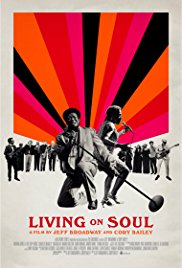
LIVING ON SOUL (2017, doc)

December 3, 2017

 Greetings again from the darkness. Barely a year after the 1969 Woodstock festival, both Jimi Hendrix and Janis Joplin were dead. Fortunately, the movie cameras were rolling to capture their electrifying performances for generations to come. A few years later, director Martin Scorsese (an assistant director on WOODSTOCK) was there to capture on film the final live performance of The Band (and many famous friends) in THE LAST WALTZ. Jump ahead to 2014 and co-directors Cory Bailey and Jeff Broadway were at the historic Apollo Theater to capture the 3 night sold out shows honoring Daptone Records.

The Harlem venue and stage has seen many memorable performances from icons such as James Brown, Ella Fitzgerald and Billie Holliday, but even according to historian Billy “Mr. Apollo” Mitchell, this was an event for the ages. Among those delivering the highest level of soul, funk, gospel and R&B music were The Dap-Kings, Charles Bradley, Naomi Shelton, Como Mamas, Antibalas, The Budos Band, and of course, the great Sharon Jones.

In addition to the energetic and energizing performances, the film mixes in some back story for many of the artists, plus insight from Daptone Records co-founders Gabe Roth (aka Bosco Mann) and Neal Sugarman (they know plenty about funk!). If the on stage dynamics weren’t so amazing to watch, we might wish for even more history being told, but not much can compete with Sharon Jones kicking off her shoes for a rousing rendition of “Get Up and Get Out”.

I promise you’ve never heard a cancer-free proclamation like the one from Ms. Jones, who was also front and center in the 2015 documentary MISS SHARON JONES!. Unfortunately, the cancer returned and she passed away a year after the Apollo shows. It should also be mentioned that Charles Bradley, a centerpiece of Daptone Records passed away just a couple of months ago (September 2017). We can celebrate their performances just as much as the mixture of black and white who perform together on stage, while the cheering and dancing in the crowd comes from a surprising blend of the same. It’s a stark reminder of how music can unify even while most of society fragments.

watch the trailer:


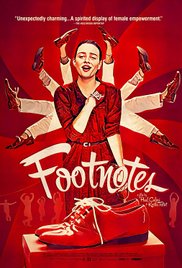
FOOTNOTES (Sur qued piel danser, France, 2017)

July 16, 2017

 Greetings again from the darkness. On the heels of success experienced by LA LA Land, and “inspired by the films of Jacques Demy and Stanley Donen”, co-writers and co-directors Paul Calori and Kostia Testut find the right fit with this whimsical musical-comedy that puts coming-of-age and social commentary on equal footing.

Pauline Etienne stars as Julie, an eager, hardworking young lady who flip-flops between odd jobs (McJobs) just trying to make ends meet in a tough French economy. When she secures a job as a stocker in a high-profile shoe (not footwear) factory, Julie is determined to buckle down, not step on toes, win over her stern supervisor (Clementine Yelnik), and finally get her life in order. Unfortunately, there are rumors of an upgrade, which in the world of corporate management double-speak means downsizing, or even closing the factory. Julie then spends most of the movie treading lightly between romance, a gruff boss, and her activist co-workers.

This is not the kind of musical where the singing voices, original songs or dancing will knock your socks off, but it all relates to the story and nothing seems forced. Feeling threatened, the factory ladies step up their game by singing “Let’s Fight Back” with some creative choreography that makes good use of the warehouse space. One of the delivery drivers (Olivier Chantreau) takes a shine to Julie, even though the boss assumes she is behind the workers’ strike and tries to boot her from the job.

Luic Corbery plays the smarmy CEO whose polished misleading statements are laced with charm as he attempts to re-buff the angry protests from the factory workers; all the while scheming to move operations to lower-cost China. With female solidarity and empowerment around her, Julie must decide if she will be the sole outlier, or if this is her chance to find her true self. It’s in these scenes where Ms. Etienne’s real-person screen presence spikes the story with the well-meaning persona that makes us care.

The working class dream of a better life is a constant throughout, though the ending is a bit disappointing given what we have watched Julie trudge through. The choreography is not flashy or polished, but rather low key and meaningful. There is a touch of the classic The Umbrellas of Cherbourg (including a song/dance featuring multi-colored umbrellas), and although it’s not at that level, it nonetheless is an admirable and enjoyable film. It should be noted that the original title Julie and the Shoe Factory does not quite take advantage of the wordplay offered by the English title.

watch the trailer:


BEAUTY AND THE BEAST (2017)

March 14, 2017

 Greetings again from the darkness. An entire generation still enjoys their childhood animated movie memories thanks to Disney’s The Little Mermaid (1989), Beauty and the Beast (1991) and The Lion King (1994). We are now a quarter-century later and Disney is looking to re-create the magic (and hopefully cash in) with Live Action versions of all three …as it did with Cinderella (2015) and last year’s The Jungle Book (sensing a trend?). Up now is director Bill Condon’s mixture of live action, CGI and music for Beauty and the Beast.

The 18th century story (1740) by Gabrielle-Suzanne Barbot de Villeneuve was re-written and shortened by Jeanne-Marie Leprince de Beaumont after Barbot’s death. Director Jean Cocteau’s 1946 French film version looks to have been a key influence for this updated ‘Beast’, while the 2014 version with Vincent Cassel will probably now be rendered forgotten. Screenwriters Stephen Chbosky (The Perks of Being a Wallflower) and Evan Spiliotopoulos (The Huntsman: Winter’s War) team with Oscar winner Condon, whose musical movie resume includes Chicago and Dreamgirls, to inject some contemporary aspects to Belle’s personality, as well as a bit more backstory for quite a few characters … all while staying true to the 1991 version.

Emma Watson proves a nice choice for Belle as she has what it takes to be nice yet tough, while still being an oddball within her own community. Belle is a bookworm who dares to help other girls to read, while also being the brains behind her father’s (Kevin Kline) work. She realizes her neighbors view her as a curiosity – and there is even a song to prove it! Ms. Watson brings strength, independence, and courage to the role. These traits and others are on full display even before her first encounter with the beast.

Dan Stevens (“Downton Abbey”) is the beneficiary of an extended backstory for the Prince, which includes a large dance and musical production at the castle, leading to his being cursed for having no love in his heart. Most of the scenes with Beast utilize CGI for the face and head. This effect worked for me as I found the look fascinating and able to fulfill the necessary emotions, though the non-beast Prince would be considered the weakest link in this fairy tale chain.

Since the comparisons to the 1991 version are inevitable, and certainly a matter of personal opinion, Luke Evans made a wonderfully pompous Gaston, while Josh Gad was quite humorous as LeFou, Gaston’s loyal sidekick who is also the center of the misplaced controversy (not worthy of discussion here). The staff – both live versions and special effects – includes Ewan McGregor as Lumiere, Ian McKellan as Cogsworth, Emma Thompson as Mrs. Potts, Audra McDonald as Madame Garderobe, Stanley Tucci as Maestro Cadenza and Gugu Mbatha-Raw as Plumette. Each bring their own touch to the roles, with Ms. McDonald being a particular standout, and Ms. Thompson having the most thankless job as replacement for Angela Lansbury.

While I found this version quite enjoyable and well done, it’s a bit confusing why the decision was made to go so dark and foreboding. It’s not young kid friendly at all, and seems as if the target audience is millennials who were raised on the 1991 version. This was done at the expense of inviting a new generation to explore the story and characters. Parents should probably avoid taking any kids under age 10 or 11, and the film easily could have received a PG-13 rating.

8-time Oscar winner Alan Menken returns to score the film (he did the 1991 version as well), plus he wrote new songs with Tim Rice and there are some original lyrics by Howard Ashman. With only one viewing, it’s doubtful any of the new songs will be instant classics, but “Be Our Guest” is a definite crowd-pleaser (again).

Of course, it’s an impossible task to please everyone when you mess with the classics, but overall, it’s a nice twist for fans of the 1991 animated version. Likely a missed opportunity to bring new youngsters into the fantastical BATB world, it does show that the animated to live action transformation can be well done … and that’s a relief with The Lion King and The Little Mermaid on the way. Dear Disney – don’t mess ‘em up!

Be our guest … watch the trailer:


LET IT BE: A CELEBRATION OF THE MUSIC OF THE BEATLES

March 10, 2017

Dallas Summer Musicals at Fair Park

March 8, 2017

This is one of my rare forays from the big screen to the big stage. The touring production of this world famous musical came to Dallas, and will soon play Ft Worth before heading off to the next stop.

 The Beatles’ first big UK hit was in 1962 (“Love Me Do”) and their first U.S. tour occurred in 1964. The band’s final live performance was in 1969 on a rooftop in London, and they officially broke up in 1970. During this unprecedented run (and since), The Beatles sold more records than any band in history, and changed the face and sound of popular music at least a couple of times. Because of this unparalleled success and popularity, it’s not surprising that the band and its music have now generated THREE stage productions – Rain: A Tribute to The Beatles, Beatlemania, and most recently, Let it Be: A Celebration of the Music of The Beatles.

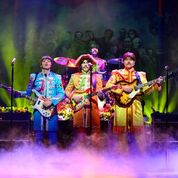
Revamped after successful runs in London’s West End and on Broadway, this touring version is split into two parts: Act 1 hits some of the highlights of the band’s career, while Act 2 provides a look at what might have been – a reunion of the band in 1980. One could describe this as ‘What was’ versus ‘What if?’.

Kicking off with the first appearance on “The Ed Sullivan Show”, the familiar music immediately lights the warm fire of nostalgia in the audience. The other segments in this first Act include the Shea Stadium concert, the Sgt Pepper era, and finally Abbey Road – replete with a barefoot Paul. What is immediately apparent is that the four lads on stage may not closely resemble the original band in looks, but they certainly are talented musicians and singers. The banter with the audience is not especially a highlight as the exaggerated speaking voices meant to mimic Paul and John are at times cringe-inducing, but this in no way impacts the enjoyment and expert versions of the songs that are permanently imbedded in our DNA.

The difference maker in this show is the ‘What if?’ second Act, as the ultimate fan fantasy occurs – the four lads from Liverpool reunite for a concert on John’s 40th birthday, October 9, 1980. This is ten years after they disbanded, and there are some musical chills as they play a blend of their hits from “the good old days” and meld their talents on songs from their individual projects. Selections include George’s “What is Life”, John’s “Starting Over”, Ringo’s “It Don’t Come Easy”, and Paul’s “Band on the Run”. There is also “Blackbird” in the stage style of Crosby, Stills and Nash; while John’s “Imagine” truly hits the right note. Though the encore is predictable and necessary and crowd-pleasing, the musical highlight of the show is George’s searing version of “While My Guitar Gently Weeps”.

With an emphasis on the music, the stage props were minimal. Either side featured a retro dial radio and television. While the band played, the familiar clips of actual Beatles audiences were shown; during the costume changes, we were treated to music from the era, news clips, and the always good-for-a-laugh Carnation Instant Breakfast commercial. Complementing the fine music were the spot on costumes. Evolving from the early suits, mop-tops and Beatle boots to the spectacular Sgt Pepper psychedelic colors, and culminating in Lennon’s iconic New York City t-shirt, the clothes and facial hair leave no doubt as to the era. Neil Candelora plays Paul with the perfect amount of fake stage pep and constant need for audience feedback, and JT Curtis as George gets to flash his prolific musical expertise periodically while struggling to maintain the mostly still nature of the quiet one. Chris McBurney handles Ringo’s drums with relative ease, and Michael Gagliano adds the Lennon edge necessary to capture the band’s stage presence. It may not be a true “Revolution” but everything does “Come Together” for an extremely fun and crowd-pleasing time.


LA LA LAND (2016)

December 10, 2016

la-la-land Greetings again from the darkness. Is this a nostalgic throwback to the movie musicals of Stanley Donen and Fred Astaire, or is it a contemporary film designed to revitalize the movie musical genre in an era dominated by superheroes and sci-fi? However you might choose to label writer/director Damien Chazelle’s follow-up to Whiplash (2014), it’s clearly one of the best and most entertaining movies of the year.

While the opening credits are still rolling (“Presented in CinemaScope” being the first gag), the film kicks off with its only large scale (think Busby Berkeley on a L.A. freeway rather than in a swimming pool) musical production, “Another Day of Sun”. It’s also the first of 3 less-than-warm-and-fuzzy “meetings” between the two lead characters before they finally click.

Emma Stone and Ryan Gosling light up the screen with the same incredible chemistry they displayed in Crazy, Stupid, Love (2011). Mia (Ms. Stone) is a struggling actress-wannabe working behind the counter at the Warner Brothers studio coffee shop. Sebastian (Mr. Gosling) is a pianist committed to the traditions of jazz music … even as he toils in a club playing mainstream tunes for folks who aren’t even listening.

As their relationship develops, we are treated to a tap dance number in the Mulholland Drive moonlight. Soon, Sebastian (either a brooding Gene Kelly or a dancing James Dean) is forced to make a choice between finding a way to open his own jazz club or compromising his integrity by making lots of money joining a “hot” band (led by John Legend), while Mia is focusing on auditions and her writing (which leads to a disastrous one-woman show).

Director Chazelle and cinematographer Linus Sandgren create a look in line with Singin’ in the Rain, but a tone more suited to A Star is Born. There is no shortage of romance and music, but it’s equally balanced with melancholy, foolish dreams, and shattered hopes. While it’s an homage to old Hollywood, Los Angeles and movie musicals, it seems to gracefully swing between past and present – and reality and fantasy.

Mia has a bedroom wall mural of Ingrid Bergman, while Sebastian treasures his piano stool that once belonged to Hoagy Carmichael … two more examples of past and present intertwined. Ms. Stone and Mr. Gosling possess solid (not exceptional) singing voices, which aids in having the songs tell their story. Ms. Stone is quite a talent, and especially stands out in her audition scenes … we feel her pouring her heart out to casting agents who may or may not even be paying attention. It’s remarkable work from her.

Supporting work is provided by Rosemarie DeWitt (as Sebastian’s sister), JK Simmons (as a club owner and Sebastian’s boss), Finn Wittrock (as Mia’s boyfriend) and Damon Gupton. Also in supporting roles would be the Griffith Observatory (after a Rebel Without a Cause viewing), the Los Angeles scene, and the Warner Brothers lot.

The “What Could Have Been” ending sequence is top notch filmmaking in all aspects, and perfectly caps a movie that drips with nostalgia … while also being touching, funny, and downright fun. Watching this film is much like going through the ups and downs of a relationship, and rather than a fairy tale, it’s a painful jab at “the one who got away”. It deserves to be seen on the big screen – enjoy the full palette of colors and the full spectrum of emotions (love and heartbreak, frustration, anger, and utter joy). This is one to tell your friends about … don’t wait for them to tell you.

watch the trailer:


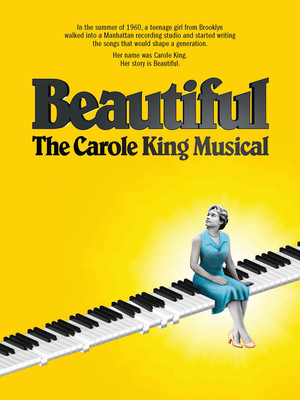
BEAUTIFUL: THE CAROLE KING MUSICAL (Theatre Review, 2016)

June 9, 2016

beautiful A piano sits center stage under a low beam spotlight. No other set decorations are present. The simplicity is symbolic of the public image of Carole King – a grounded artist whose prolific songwriting skills weave a tapestry of hit songs that began in the late 1950’s. In a somewhat awkward opening, Abby Mueller takes the stage as Ms. King and sheepishly admits that, as a Brooklyn girl, she feels like she is ‘home’ and breaks into her mega-hit “So Far Away”. The song sets the feel good tone for the audience, and by the end of the evening, we learn that’s her on stage at Carnegie Hall, and the rest of the story is in flashback form.

This is opening night at the Dallas Winspear Opera House as the national tour continues for the production of the 2014 Broadway hit … one that ended with Abby’s sister Jessie Mueller winning a Tony Award. The house is full, and the audience is as friendly as they come – ready to be reminded of the happy life times when Ms. King’s songs spoke for their emotions. The sound glitch present in that opening number is quickly resolved, and for the rest of the evening there is no shortage of toe-tapping and lip-synching.

Playwright and filmmaker (Emma, Bullets over Broadway, Nicholas Nickelby) Douglas McGrath follows the familiar path of another recent jukebox musical and mega Broadway hit “Jersey Boys”. He keeps the steady rain of hit songs coming, while mixing in just enough backstory for us to appreciate the artistic struggles and understand the times. We see the humble beginnings of a very smart teenage Carole Klein (later King) and her festering dream of becoming a professional songwriter – conflicting with the wishes of her mother who deemed teaching to be the profession of choice. Her early meetings at 1650 Broadway (not the Brill Building!) with music producer Don Kirshner (played by Curt Kouril) make it clear that female composers were mostly non-existent during the late 1950’s, and that Carole was a somewhat below-the-radar groundbreaker.

Rather than skim through Ms. King’s now more than 50 year career, the focus remains mostly on those early years writing with her wordsmith husband Gerry Goffin (played by Liam Tobin). The challenges of marrying young, having a daughter, and working multiple jobs are all touched upon, but it’s Carole’s long fight to keep her marriage to Goffin together that takes up most of the non-song time … this in despite of his drugs, philandering, and extreme mood swings. Goffin is portrayed as the tortured artist, while Ms. King is presented as a dowdy do-gooder who also happens to be an immensely talented composer. For much of the production, she looks similar to Elisabeth Moss during the first couple of seasons of “Mad Men”.

Between Goffin/King and their friendly rivalry with Barry Mann (a terrific Ben Fankhauser) and Cynthia Weil (Becky Gulsvig), the hit songs just keep coming. Many are performed by the writers themselves, while others evolve into full production numbers featuring numerous talented ensemble performers in the role of such acts as Neil Sedaka, The Shirelles, The Drifters, Little Eva and The Righteous Brothers. The latter group has one of the audience-favorite moments as they sing “You’ve Lost that Lovin’ Feeling” (John Michael Dias is a standout vocalist as Bobby Hatfield).

The emotional sincerity of the times is captured by these writers and their songs, but Mr. McGrath does toss in plenty of cornball comedy to make sure everyone is paying attention between musical numbers. Barry Mann and Cynthia Weil could be considered comic relief were it not for their own prodigious writing talent: “On Broadway”, “You’ve Lost that Lovin’ Feeling”, “Walking in the Rain”, and “We Gotta Get Out of This Place”.

The Goffin/King numbers included here are numerous and impressive: “Will You Love Me Tomorrow?”, “Up on the Roof”, “One Fine Day”, “Pleasant Valley Sunday”, “Take Good Care of my Baby”, “Loco-Motion”.

The real story here is the blossoming of a shy woman into an artist who trusts her talent and believes she has something to sing about. Once her marriage to Goffin finally ended, Ms. King moved to Los Angeles and worked with super producer Lou Adler (known today as Jack Nicholson’s Lakers buddy). Her 1971 solo album Tapestry featured such hits as “So Far Away”, “You’ve Got a Friend” (a huge hit for James Taylor), “It’s Too Late”, “(You Make Me Feel) Like a Natural Woman”, and this show’s title track and finale, “Beautiful”.

Unlike many musicals, this show doesn’t have a true “showstopper”, but the sheer number of hit songs familiar to the crowd provide the feel-good atmosphere that leaves those attending feeling joyous and well entertained. A very nice performance from Abby Mueller allows us to take in the music, while also respecting the long road and accomplishments of the great Carole King … winner of Grammy awards, and inductee into both the Songwriter Hall of Fame, and Rock and Roll Hall of Fame. The production is also a reminder that nice people can succeed in an industry that thrives on ‘bad boys’ and artists with an edge.


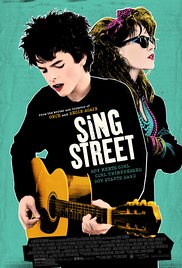
SING STREET (2016)

April 20, 2016

DALLAS INTERNATIONAL FILM FESTIVAL 2016

sing street Greetings again from the darkness. The vast majority of 1980’s music usually inspires nothing but groans and an immediate change of the radio channel from me. Yet writer/director John Carney masterfully captured and held my attention with this crowd-pleasing story that leans heavily on the tunes from that era.

Mr. Carney was also responsible for two previous music-centric movies, Once (2007) and Begin Again (2013). He is an exceptional story teller who puts music at the center, but avoids the label of “musical” by making it about people, rather than notes.

It’s 1985 in economically depressed Dublin, and a strong opening sequence introduces us to Connor (Ferdia Walsh-Peelo) as his ever-arguing parents (Aidan Gillen, Maria Doyle Kennedy) inform him of the economic necessity of pulling him out of prep school and enrolling him into a much tougher environment … one that comes with bullies and hard-nosed teachers/clergy.

Soon enough Connor is hanging with the misfits and inviting an enchanting “older” girl to star in his band’s video. She agrees, and wide-eyed Connor quickly sets out to form a band that didn’t previously exist.

There are two interesting and fully realized relationships that make this movie click: Connor and the enchanting Raphina (Lucy Boynton), and Connor and his older brother Brendon (Jack Reynor). Brendan is Connor’s life mentor and music guru. They are quick to jump on the new world of music videos, and it’s a real hoot to watch Connor emulate the style and fashion of Duran, Duran, The Cure, etc.

It’s fascinating to note that Connor, while a pretty talented lyricist and singer, doesn’t really seem to be in love with the music except as a means to an end … a way to get the girl. That said, the real message here is that while teenagers often feel like they can’t fix the outside world (parents, teachers, bullies), they can fix themselves by finding a passion in life (the movie uses the term vocation).

It’s hard not to notice the influence of such filmmakers as John Hughes and Cameron Crowe, and Carney certainly brings his touch of romanticism. Plus, one must appreciate any movie that delivers an original song as catchy as “Drive it like you Stole it”, while also taking a shot at Phil Collins. It’s a funny and sweet movie that should really catch on through positive word of mouth.

watch the trailer: