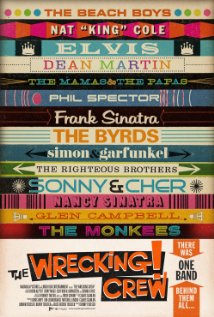
THE WRECKING CREW (doc, 2008/2015)

March 15, 2015

wrecking crew Greetings again from the darkness. The music business has always been a bit of a mystery – not just to the average record buyer, but even to those within the industry. History is filled with singers, band members, and songwriters missing out on the pot of gold due to slick legal maneuvering from some less-than-upstanding agent, producer or label. This documentary details the prolific recordings from a core group of studio musicians responsible for the sounds heard as rock and roll music exploded on the scene … their stellar performances marketed to the public as the work of popular bands.

Lest you think this is limited to an obscure genre or style of music, the two dozen (or so) musicians known as The Wrecking Crew were responsible for the album music for such groups and performers as The Beach Boys, Frank Sinatra, The Righteous Brothers, Elvis Presley, The Mamas and the Papas, Sonny and Cher, Sam Cooke, The Byrds, and The Monkees. And we can’t leave out Phil Spector’s “Wall of Sound” which dominated the charts for years. Director Denny Tedesco set out to make a documentary short about his father, guitarist extraordinaire Tommy Tedesco, but quickly realized the story was much bigger than just his dad.

In addition to the very talented (and funny) Tedesco, we get interviews with such talented musicians as Hal Blaine, Earl Palmer, Don Randi, Al Casey, Plas Johnson (The Pink Panther sax soloist), Carol Kaye, and Bill Pittman. There is also insight from producers Lou Adler and Snuff Garrett, American Bandstand’s Dick Clark, songwriter Jimmy Webb, plus icon Herb Alpert. Micky Dolenz and Peter Tork explain the business rationale in having the professionals take care of the recordings, while Roger McGuinn spills the beans that other members of The Byrds (including David Crosby) were pretty miffed at the process.

The personal importance of telling this story is quite obvious in the work of the director, and is especially clear in the segments featuring his father. In addition to the popular music he was involved with, the senior Tedesco’s work is heard in such well-known TV themes as “Bonanza“, “MASH“, “Batman“, and “The Twilight Zone” … plus many movie scores. Archival footage is available for Q&A roundtables and some of the seminar work Tedesco did in the later stages of his career (he passed away in 1997). There is also footage of Phil Spector working in the studio, and some audio from Frank Sinatra as he works on recording, and early Brian Wilson creating the magic of Pet Sounds with the Wrecking Crew.

Glen Campbell and Leon Russell are the two big breakout performers from this group of studio musicians and both speak so highly of these unpublicized artists. Their interviews, and that of Dick Clark, highlight the confusion of timeline in the making of the film. It began making festival rounds in 2008 before running the age old issue of “musical rights” brought distribution to a screeching halt. So now, in 2015, the film is finally getting some theatre time, and with it comes the recognition and appreciation that is long overdue for the members of this very secret club … few of whom seem to hold any type of grudge. They were just happy to make a living doing what they love.

This film instantly becomes one of four documentaries highly recommended for those who want to better understand the music biz. Group it with Standing in the Shadows of Motown (2002), Muscle Shoals (2013), and Oscar winner Twenty Feet from Stardom (2013) to form an 8 hour education and history of popular music over the past three generations.

**NOTE: Kent Hartman released a book entitled “The Wrecking Crew” that provides additional detail; however, it is not affiliated with Denny Tedesco’s film.

watch the trailer:


THE LAST FIVE YEARS (2015)

February 12, 2015

last 5 years Greetings again from the darkness. Adapting a hit stage production to the big screen is always a bit challenging. When it’s a full blown musical, the challenge grows exponentially. Throw in a highly unusual story-telling structure and limit 99% of the screen time to two characters and, well, a filmmaker is either off-the-charts ambitious or one who truly enjoys suffering for art.

Director Richard LaGravenese (P.S. I Love You) brings the hit off-Broadway musical by Jason Robert Brown to the screen, and features Anna Kendrick and Jeremy Jordan as Cathy and Jamie, respectively. Ms. Kendrick has become the go-to actress for musicals with Into the Woods (as Cinderella) and the Pitch Perfect movies. She is a wonderful singer and a fine actress. Mr. Jordan is best known for TV’s “Smash” and for “Newsies” on Broadway.  He too is a talented singer.

Surprisingly, it’s not the talented leads that provide the most interest here … it’s the story structure. As per the title, the story follows the couple’s relationship over a five year period. The opening scene features Cathy reading and reacting to the break-up note left by Jamie. The second scene features Jamie describing his joy when he first falls for Cathy, as they romp in bed. See, Cathy’s story goes from the end to the beginning, while Jamie’s story goes from the beginning to the end … intersecting only at the marriage proposal in the park.  It’s a fascinating way to tell a story – not just two perspectives, but also in reverse order of each other!

The song lyrics act as the dialogue, and that’s where the transition from stage to screen falls a bit short. While the lyrics are clever and adequately describe each relationship change, those same lyrics and the non-stop singing, prevent the viewers from ever connecting to the characters … and more importantly, prevent us from understanding how these two characters ever connected to each other. Rather than a love story, it comes across as a moment of passion that turns into a relationship between two people who don’t have much in common and don’t particularly care for each other. And the real crux of the tension stems from Jamie’s skyrocketing novel writing career versus Cathy’s going-nowhere-but-Ohio acting career.

Cathy starts sad and ends happy, while Jamie starts happy (he found a Shiksa princess!) and finds a way to end his misery (writing a Dear Jane note). It’s Sunset to Sunrise, and Sunrise to Sunset. The “goodbye” finale is very creative and well done. This unusual story structure is quite interesting, and the lyrics are sharp … it’s the lack of spirit in the music, and the 90 minutes of the same two voices that prevent this from being something special.

watch the trailer:


INTO THE WOODS (2014)

December 23, 2014


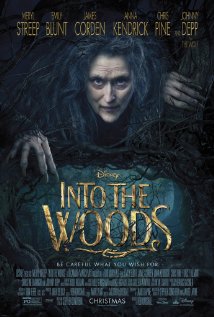
into the woods Greetings again from the darkness. It’s a musical, but not a typical musical. It’s a fairy tale, but not a typical fairy tale. It’s funny, but not a typical comedy. It’s a bit frightening, but not a typical monster film. It’s filled with lessons of morality and responsibility, but certainly not a typical parable. In fact, there is nothing typical about director Rob Marshall’s (Oscar winner for Chicago) screen adaptation of the smash Broadway hit from Stephen Sondheim and James Lupine.

The story revolves around 4 classic Fairy Tales: Little Red Riding Hood, Jack and the Beanstalk, Rapunzel, and Cinderella, in a style much more similar in tone to the edgy Brothers Grimm, than the cuddly Walt Disney traditionals. These four are intertwined with the saga of a baker (James Cordon) and his wife (Emily Blunt) who discover they have been unable to have children due to a long ago spell cast by a wicked witch (Meryl Streep). With a secret agenda, the witch offers the couple a way to break the spell, and that’s what ties-in the four tales and provides a reason for adventure and song.

Filmed seamlessly between an elaborate sound stage and a couple of park locations, the film has a dark and eerie feel to it that’s probably too intense for younger children. And much of the dialogue and lyrics is aimed directly at adults and will be a blur to kids. Additionally, in typical Sondheim fashion, the songs aren’t catchy and melodic in the manner of most movie musicals … instead the lyrics propel the story and help shape the characters. Oh, and by the way, don’t expect any fancy dance sequences – this is pretty serious stuff with plenty of angst amongst the characters.

Ms. Streep is extraordinary as the witch (both nasty and beautiful) and does a terrific job with her three main songs. She is especially fun in her entrances and exits, and while wearing the most impactful of all the costumes. Emily Blunt also handles her vocals very well and offers up some of the film’s most witty dialogue. Chris Pine (as the Prince) is flat out hilarious, and with a twinkle in his eye, spouts lines such as “I was raised to be charming, not sincere”. He also shares the screen with Billy Magnussen (playing the younger brother) in the most audacious of the musical numbers, “Agony”. As Cinderella, Anna Kendrick once again proves she is an exceptionally talented singer, and James Cordon anchors the production as the nice guy village baker we are rooting for.

In supporting roles, we have a devilish Johnny Depp whose screen time as the Big Bad Wolf is quite limited, and a perfectly cast Christine Baranski as the evil step-mother in cahoots with her non-Cinderella daughters played by Lucy Punch and Tammy Blanchard. Lilla Crawford is Little Red Riding Hood, and her young age snuffs out much of the innuendo that the Wolf scenes should have provided, and takes the edge off the song “I Know Things Now”. Daniel Huddlestone is an energetic Jack, and dependable Tracey Ullman plays his frustrated mom. MacKenzie Mauzy captures the awakening of Rapunzel, while Frances de la Tour frightens everyone involved as the agitated (for good reason) Lady Giant.

Unconventional is the best description of this production, and there is a group of viewers who will be totally captivated by it, while a much larger group will probably find it too dark and bleak, and lacking the easy charm we have come to expect from movie musicals. However, for those of us in the first group, we will be totally enchanted by the characters, story lines, wry humor, costumes, sets, and songs.

SEE THIS MOVIE IF: you prefer your fairy tales a bit on the dark side OR you want to see yet another incredible performance from Meryl.

SKIP THIS MOVIE IF: you are looking for a light-hearted holiday matinee for the little kiddies

watch the trailer:


A CHRISTMAS STORY: THE MUSICAL (Theater review, 2014)

December 9, 2014

** Theater review – this site is normally reserved for movies, but since the touring stage musical of one of my favorite movies is playing in Dallas, it seems like a good fit.

a christmas story musical Bob Clark’s 1983 film based on Jean Shepherd’s novel “In God We Trust, All Others Pay Cash” has become a precious Christmas tradition not just for my family, but also countless others. The Broadway musical received three Tony nominations in 2013 (including Best Musical) and when the touring production was announced as part of the Dallas Summer Musicals 75th season lineup, it was certain to become one of its most popular.

What a joy to watch the pre-show sea of smiling ticketholders jostling to have their picture taken with a glass case display in the theatre lobby. The featured attraction was one of three original “leg lamps” used in the movie … direct from the private collection of Dallas Summer Musicals President and Managing Director Michael Jenkins. This set the mood for a most delightful presentation of a familiar story presented in a manner most of us had not previously experienced.

A film-to-stage adaptation is made more challenging when transitioned into a musical format. The music and lyrics were written for Broadway by Benj Pasek and Justin Paul, and the songs bring a nice, upbeat touch without disturbing the flow of the story. Chris Carsten plays the Jean Shepherd role, and instead of an unseen movie narrator, he is an active stage participant intertwined through many scenes. With a voice more reminiscent of Brian Doyle Murray than Jean Shepherd, it takes awhile for us to adjust, but Carsten’s animated descriptions are a real asset to the production.

Of course we all know what really matters … Ralphie Parker and the outrageous situations he and his family find themselves. For this show, Ralphie was played by Evan Gray (rotating shows with Coulten Maurer), and his slightly clumsy movements were effective for the comedy moments, and his singing voice was sufficient and consistent throughout the show. Christopher Swan as The Old Man sounded remarkably similar to Darren McGavin at times, while Cal Alexander was spot on as little Randy, especially when screaming “I can’t get up!” in a very popular scene. Susannah Jones was a real standout as The Mother, and her beautiful and soothing singing voice perfectly complemented the sweet demeanor necessary for the role.

The musical numbers benefited from a very talented group of youngsters, and the fact that the songs helped push along the story. The “A Major Award” song and dance sequence seemed to last a couple minutes longer than necessary, and that was probably because it was missing kids through most of it. Miss Shields (played wonderfully by Avital Asuleen) had an explosive and slightly seductive dance that was a bit uncomfortable to watch given the close proximity of the kids, but it was quickly forgiven as the “On Santa’s Lap” portion was colorful and lively and hilarious.

Somehow, most of the iconic moments were captured on stage: the pink bunny pj’s, the triple dog dare on the playground, Higbee’s display window, the furnace battle, Scut Farkus, and of course the leg lamp/major award. The Chinese restaurant scene is a bit awkward these days and probably should be re-written to avoid the racist tone, but we were treated to live bloodhounds romping across the stage as the Bumpus pups, and the presence of the Red Ryder Carbine-Action 200 shot Range Model with a compass in the stock kept Ralphie’s dream alive.

Matt Lenz takes over the direction from Broadway’s John Rando, and Jordan Sparks handles Warren Carlyle’s crisp choreography. The orchestra performed well throughout, and a couple of the kids were exceptional in their tap solos. At the core of the story, and what allows so many to connect, is the nostalgia associated with simpler times and life as a kid combined with the heartfelt emotions that go with being a parent. It seems we all dream of a major award, but what we really want is for our family to be happy … and that’s true whether on a movie screen or through singing on a theatrical stage. HO-HO-HO!!

If you want more information on Dallas Summer Musicals, visit: http://www.dallassummermusicals.org/


A HARD DAY’S NIGHT (1964) revisited

July 16, 2014

a hard days night Greetings again from the darkness. It’s the 50th anniversary and what a treat to see the re-mastered, restored film in a crowded theatre – many wearing their Beatles shirts. The quasi-documentary, cinema verite’ approach from director Richard Lester may not fit the traditional idea of a great movie, but at a minimum, it’s a fantastic pop culture artifact showing a world on the verge of change (and four of those partially responsible).

The Beatles first film shows them at the most innocent and fresh-faced we ever see them … it’s just a few months after their appearance on “the Ed Sullivan Show”. John Lennon is the most guarded, but his quick wit and distrust of the establishment are obvious. Paul McCartney is at his cutest and least arrogant, but still managing to pose on cue. George Harrison comes across most open and full of joy – before he became the most publicly withdrawn. Ringo Starr is self-deprecating and in full hang-dog mode.

For a stark contrast, watch the four lads a year later in HELP!, also directed by Mr. Lester. The luster of fame is clearly tarnished and they are quite aware of the power they wield. In contrast, during this shoot, we are almost “on set” as the boys are first experiencing Beatlemania! In addition to the Fab Four, British actor Wilfrid Brambill plays Paul’s Grandfather. The recurring gag of him being “very clean” is a play on Brambill’s long-running role as Albert Steptoe in “Steptoe & Son” where he is referred to as “a dirty old man“. Victor Spinetti plays the very anxious TV director wearing the infamous sweater. Mr. Spinetti also appeared in HELP! (1965) and The Magical Mystery Tour (1967). Richard Vernon played the grumpy old man sharing the train car with the boys. Mr. Vernon also appeared in Goldfinger that same year. Another James Bond link occurs when Ringo is invited to the Le Cercle Club … the same club James Bond first appears in Dr. No (1962). Lastly, Pattie Boyd is one of the giggly schoolgirls on the train and appears in 3 different scenes. 18 months later, she was married to George Harrison … and a few years later, she reiterated her attraction to lead guitarists by marrying Eric Clapton.

I was caught off guard by the frenetic pace of the film … it has been 3 decades since I last watched it. But mostly, I was stunned at the clean look of this restored version and was awed by the terrific sound, especially of the song restorations completed by Giles Martin, the son of Beatles record producer Sir George Martin … who was nominated for an Academy Award for his film score.

The film inspired the 1960’s TV show “The Monkees“, and of course, the soundtrack was a massive best seller and chart topper. “If I Fell” is one of my favorite Beatles songs and it’s a nice segment in the film, but the real climax is the performance of “She Loves You”, replete with terrific crowd shots. The impact and lasting impression of the film is every bit as recognizable as that stunning opening chord to the title track that opens the film.

watch the (new) trailer:


JERSEY BOYS (2014)

July 2, 2014

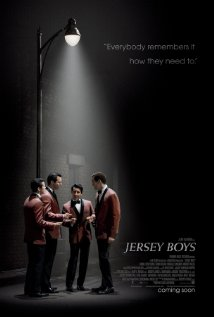
jersey Greetings again from the darkness. Two upfront disclosures are in order. I have never seen the mega-smash Broadway show, and I’ve always been a huge fan of The Four Seasons’ music. These are pertinent because they impact one’s reaction to the film version.

Director Clint Eastwood says he knew immediately he wanted to bring the Broadway show to the movies. In fact, his decision to cast 3 of the 4 main stage actors proved crucial in this successful transition. The rags-to-riches story of four guys from New Jersey is not only true, but it’s believable because they scrap and battle just like we would expect. The mob ties are on full display, as is the struggle to maintain any semblance of normal family life while on the rocket ship to stardom.

John Lloyd Young is spectacular as the great Frankie Valli. While I fully anticipated cringing during the songs, his voice never once faltered. He is clearly the main reason the Broadway show (he won a Tony award) and the movie work. Erich Bergen plays songwriter Bob Gaudio and Michael Lomenda plays bassist Nick Massi … both are solid. The only crack was in the casting of Vincent Piazza as Tommy DeVito. Piazza is well known from “Boardwalk Empire“, but he is just a bit too slick as the guy who scammed the other band members, digging a massive hole of debt – mostly to a mob loan shark named Norm Waxman (played by Donnie Kehr in an excellent performance).

Other support work is provided by Mike Doyle as record producer and all-around flamboyant guy, Bob Crewe; Renee Marino starts strong as Mary (Frankie’s future wife) but is given little to do (other than booze and yell) as the story progresses; Joseph Russo captures the quirks of a young Joe Pesci, who introduces Gaudio to the band; and the always entertaining Christopher Walken slightly underplays local made guy Gyp DeCarlo who is instrumental in protecting Frankie in those early years … proving that in Jersey, Talent = Respect. It should also be noted that the band’s accountant is played by Barry Livingston, who you might remember as Ernie from “My Three Son’s“.

Eastwood is now 84 years old and he wisely takes a pretty conventional route with the film version. In fact, the argument could be made that since it doesn’t have the edge of most R-rated movies, taming the language could have resulted in a PG-13 rating, making it more accessible to families.  The screenplay is from Marshall Brickman (Annie Hall, Manhattan) and Rick Elice,  also co-wrote the book for the musical. This movie has not been popular with critics and it’s probably because of this relatively safe approach to an entertaining and fun story. It’s not cutting edge cinema, but if you enjoy The Four Seasons music, you will enjoy the movie.

***NOTE: Two surprising notes on cameos: Clint Eastwood makes a brief appearance on a TV set showing an episode of “Rawhide” where he portrayed Rowdy Yates; but the bigger question is WHERE WAS FRANKIE VALLI?  After numerous appearances on “The Sopranos“, and being listed as here as an Executive Producer, it seems working Mr. Valli into a scene would have been a nice tribute … or, as reader Goldy suggested … how about showing actual Hall of Fame induction footage at the end?

***NOTE: If you are in the mood for a different type of Christmas song this year, check out The Four Seasons version of “Santa Claus is Coming to Town” … always one of the more challenging sing-alongs!

watch the trailer:


THE LITTLE MERMAID (1989) revisited

January 24, 2014

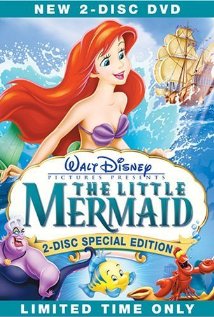
little mermaid Greetings again from the darkness. The first of three true classics from the “middle era” of Disney animation … along with Beauty and the Beast (1991) and The Lion King (1994) … this 1989 version of Hans Christian Anderson’s 1837 story brought musical theatre to an animated children’s fairy tale. It was also the 28th Disney film, and the final to utilize hand-painted cel animation.

The Blu-Ray release (a Christmas present from my son) to celebrate the film’s 25th anniversary is truly stunning in color, brightness, clarity and sound. An explosion of sight and sound occurs during the incredible cacophony of joy and cheer better known as the Best Song Oscar winner “Under the Sea”. The calypso style was a very creative choice by musical directors Alan Menken and Howard Ashman.

Of course, the star of the show is Ariel, the rebellious 16 year old mermaid who dreams of walking on the beach and dancing with the Prince. Ariel’s remarkable vocals (“Part of Your World”) are provided by Jodi Benson, who beautifully captures the innocence and longing necessary for the character. Samuel E Wright is the smooth voiced Jamaican crab Sebastian, who not only takes lead on “Under the Sea”, but also on romantic ballad “Kiss the Girl”. The other standout is Pat Carroll as Ursula the Sea Witch. She is the perfect villain vs Ariel, and is quite a commentary on the actions of those who are power hungry.

Written and directed by John Clements and Ron Musker, the film was a bit different for its time because of the depth of Ariel’s character. This was a typical teenager going against her strict parent and dreaming of a better life. Ariel has a mind of her own and is willing to chase her dreams … even if it’s a boy from the proverbial “other side of the tracks” and with a Faustian negotiation. From a technical perspective, the artwork is spectacular and movements are full and fluid (sorry for the pun). This came 5 years after Ron Howard’s live action Splash with Tom Hanks and Darryl Hannah. If you ever doubt the power that expert animation can possess, just compare the emotion and charm in these two mermaid films.

This latest Blu-Ray release has some very interesting special features. We are treated to interviews with the film’s animators as well as a peek inside the Disney Animation studios, now on its third generation of animators. Much reverence is provided to The Nine Old Men … the original group of animators hand picked by Walt Disney. The last of the nine men died in 2008, and their trainees are now mentoring the most excited current group that is kicking out some new classics like Frozen and Wreck-it Ralph. What’s that word … circle of life.

watch the “Under the Sea” segment (Best Song Oscar winner):

https://www.youtube.com/watch?v=NPQVrjnC1jo


MEET ME IN ST LOUIS (1944) revisited

January 1, 2014

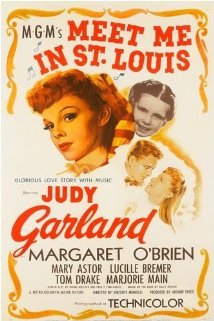
meet me Greetings again from the darkness. There are, even amongst otherwise intelligent movie lovers, those who proudly proclaim “I don’t like musicals“. It’s a somewhat understandable stance since so many of this genre are simply a group of songs linked together by a thin story with uninteresting characters. However, when done well, the musical can be a most enjoyable, emotional and entertaining ride. One of the best and most beloved is director Vincente Minnelli‘s Meet Me in St. Louis.

If you were making a musical in 1944, your dream cast would certainly include Judy Garland. She was 22 years old at the time, just a few years removed from her iconic role as Dorothy in The Wizard of Oz. Ms. Garland was desperately trying to break free of her “Oz” and “Andy Hardy” teenage ingénue image and transition to adult roles. In fact, she pushed back hard at MGM against being cast in this film. Because of this, she initially struggled with the character of Esther until finally grasping the tone that director Minnelli was after. The result is clearly one of her best performances, and maybe her most beautiful look ever on screen (probably due in part to the director’s attraction to her).

The story is broken into four sections … the four seasons leading up to the 1904 World’s Fair to be held in St. Louis. The Smith family lives in a charming upper middle class Victorian home that serves as the centerpiece for most scenes … especially the intricate, winding mahogany staircase, and the elaborate gaslight fixtures throughout. Mr. and Mrs Smith are played by Leon Ames and Mary Astor (known best for The Maltese Falcon). They are joined in the house by a son Lon (Henry H Daniels, Jr), four daughters (Rose – Lucille Bremer, Esther – Judy Garland, Agnes – Joan Carroll, Tootie – Margaret O’Brien), a spry grandfather (Harry Davenport), and wise-cracking housekeeper (Marjorie Main). The family dynamics are such that multiple sub-stories are constantly being juggled.

There are numerous pieces and tidbits associated with this film, so let’s discuss just a few. While audiences today may find 7 year old Margaret O’Brien’s performance as the youngest daughter Tootie to be a bit over the top, she won an Oscar that year as the Best Juvenile Actor (no longer awarded). Two sequences in particular stand out: the quite dark and harsh Halloween portion which accurately displays the dangerous activities of that era (making today’s trick or treat seem quite tame), and the song and dance routine performed in the parlor while wearing a nightgown. A few years later, Ms. O’Brien would star in the classic Little Women (1949). This is also the film where director Vincente Minnelli and Judy Garland first met. They were married the following year and of course had a daughter, Liza Minnelli. All three were Oscar winners: Judy in 1940 for Best Juvenile Actor, Vincente for directing Gigi (1958), and Liza for Best Actress in Cabaret (1972).

meet me2 Sally Benson’s series of short stories published in the “New Yorker” magazine inspired the film. The stories were based on Ms. Benson’s childhood in St. Louis and she consulted on the script and set. In the movie, the Smith house is located at 1935 Kensington. For filming, the house was built on the MGM backlot on what became known as St. Louis Street. The street was used for many films, and the same house was used for the original Cheaper By the Dozen (1950). Sadly, the street and houses fell into disrepair and was later destroyed and sold off by MGM (it’s now condos and office buildings).

Of course, this is a musical so the songs deserve mention. Many were original compositions for the film, including “The Trolley Song” (nominated for a Best Song Oscar, and one of the few songs ever to utilize the word clang multiple times) and “Have Yourself a Merry Little Christmas”, the latter showcasing Ms. Garland in peak singing voice. The film was a huge box office success and was nominated for four Oscars (no wins). The set design and costumes are extraordinary, and the story is quite affecting as it focuses on family and what makes a home so special. This is a wonderfully sentimental taste of Americana at the turn of the century.  And a bit of advice to all the gentlemen out there … should the object of your desire ever suggest the two of you dim the lights and watch this one together, immediately say YES with a smile!  It’s one of the best examples of how effective a musical can be in telling a story and connecting an audience to the characters … and it’s still pretty effective at connecting viewers to each other as well!

**NOTE:  TV buffs will notice a small, but important role for June Lockhart, who became a TV mainstay for 50 plus years.  She was best known for “Lassie” and “Lost in Space“, and still works today at age 88.

**NOTE: The beautiful curved brass bed in Judy Garland’s bedroom was also used in Gaslight, another classic film from 1944.

Rather than include the trailer for this film, below you will find the scene where Judy Garland sings “Have Yourself a Merry Little Christmas”.  Her voice is gorgeous and it may be her best ever vocal performance from a movie:

http://www.youtube.com/watch?v=5g4lY8Y3eoo


INSIDE LLEWYN DAVIS (2013)

December 15, 2013

Greetings again from the darkness. If you are a follower of the filmmaking Coen Brothers (and you should be), then you are quite aware of their complete lack of artistic interest in any traditionally successful character. Their work is inspired by life’s obstacles and tough luck, even if brought on by a character’s own poor judgment. Coen Bros stories revolve around those who carry on and have (blind?) faith that their approach, no matter how ill conceived, is the only option … the only path worth taking. Their main character this time out apparently thinks life is filled with only careerists (sell-outs) or losers (those who can’t catch a break).

llewyn6 The titular Llewyn Davis (played by Oscar Isaac) is introduced to us onstage at the Gaslight singing a beautiful folk song. Moments later he is lying in the back alley after taking a whipping from a mysterious stranger. It’s not until this scene is repeated again for the film’s finale do we understand the cause of this effect. See, Llewyn is not a very likable guy. We learn he is still grieving from the suicide of his musical partner (as sung by Marcus Mumford), and that he bounces from sofa to sofa amongst acquaintances and family members. Llewyn has no friends, only acquaintances too kind to throw him out … even if he might be the father of an unwanted baby, or if he accidentally allows a beloved pet cat to escape, or he uses excess profanity in front of kids.

The story is based in the folk music scene of 1961 Greenwich Village in the pre-Bob Dylan days. The Coen’s were inspired by the memoirs of Dave Van Ronk entitled “The Mayor of MacDougal Street“. So while the songs are real and the characters are often inspired or based upon real artists of the time, Llewyn’s story is pure Coen fiction. From a viewer’s perspective, that means cringing, levels of discomfort, uneasy chuckling and moments of rapture … such as John Goodman evoking a drugged out Doc Promus spewing harsh poetic diatribes.

llewyn5 We never really know if the Coens are making a statement or tossing it out for us to debate. Are they saying that even the ugliness of Llewyn’s personality can produce something as beautiful as music, or are they saying that we allow ourselves to get tricked by beautiful music into thinking that the artist must also be pure? Carey Mulligan (as Jean) has one of the film’s best and most insightful lines when she tells Llewyn he is “King Midas’ idiot brother“. Her pure disgust (and expert rendering of the F-word) and anger contrasts with her angelic onstage persona with husband Jim (Justin Timberlake).

As always, the Coens provide us a constant flow of interesting and oddball characters. In addition to Goodman’s jazz hipster, we get Garrett Hedlund as an ultra cool (til he’s not) valet, Adam Driver as a cowboy folk singer, Troy Nelson as a virtuous Army folk singer (based on Tom Paxton), and Llewyn’s Upper East side cat owners, his spunky sister, and best of all F Murray Abraham as Bud Grossman, the owner of Chicago’s Gate of Horn club. Based on the real Albert Grossman who discovered Peter, Paul and Mary, and managed Bob Dylan (whose spirit lingers all through this movie), Grossman is the lone witness to Llewyn’s audition. This may be the most touching musical moment of the movie (“The Death of Queen Jane”), but it’s clearly the wrong song for the moment.

llewyn3 Oscar Isaac is exceptional as Llewyn Davis. He captures that crisis of self that’s necessary for an artist whose talent and passion is just out of step with societal changes. We feel his pain, but fail to understand the lack of caring he often displays towards others. We get how his need for money overrides his artistic integrity as he participates in the absurd novelty song “Please Mr Kennedy”. Why Isaac’s performance is not garnering more Oscar chat is beyond my understanding. It’s possibly due to the fact that the movie and his character are not readily accessible to the average movie goer. Effort, thought and consideration is required.

If you are expecting a feel good nostalgic trip down the folk singer era of Greenwich Village, you will be shocked and disappointed. Instead, brace yourself for the trials of a talented musician who wrongly believes the music should be enough. Speaking of music, the immensely talented T Bone Burnett is the man behind the music and it’s fascinating to note how he allows the songs to guide us through the story and keep us ever hopeful of better days. This is the Coen Brothers at their most refined and expert.

**NOTE: It’s kind of interesting to think that both this movie and Saving Mr Banks are both based in 1961 and the two films are being released at the same time in 2013.  Though totally unrelated, they do provide a stark contrast in NYC vs LA.

SEE THIS MOVIE IF: you are a Coen Bros fan or past due for an introduction

SKIP THIS MOVIE IF: you’ve tried, but Coen Bros humor is just a bit too dark or esoteric for your tastes

watch the trailer:

https://www.youtube.com/watch?v=LFphYRyH7wc


LES MISERABLES (2012)

December 30, 2012

les mis Greetings again from the darkness. One of the most anticipated films of the year is the first from director Tom Hooper since his Oscar -winning The King’s Speech. It also happens to be based on one of the true literary classics by Victor Hugo (first published 1862). And yes, it is presented as a true musical … the dialogue is sung and story advanced through forty-something songs. The latter feature gives it more of an opera feel than the stage version I saw more than 20 years ago.

The biggest question and curiosity going in was whether the cast of top notch movie stars could hold their own vocally. Sure, Hugh Jackman (Jean Valjean) is a Tony winner, Anne Hathaway (Fatine) has some Broadway chops of her own, Amanda Seyfried (Cosette) sang in Mamma Mia, and Russell Crowe (Javert) has toured with his own band. But this is a whole new challenge, as director Hooper decided to have the actors sing “live” during les mis4filming, providing a more intimate feel to the film. Throw in two exceptionally strong vocal performances from Eddie Redmayne (Marius) and Samantha Barks (Eponine) and only the harshest critics will claim the singing disappoints.

Seinfeld” fans will enjoy the comic relief from thieving innkeepers Sacha Baron Cohen and Helena Bonham Carter as they take advantage of their customers while belting out “Master of the House“. And it’s pure joy to hear Colin Wilkinson‘s wonderful voice as The Bishop who offers Valjean his chance for redemption. Mr. Wilkinson is legendary as the original Valjean in the London and New York stage versions from the mid-80’s.  The historical les mis3relevance of the material includes the 1832 student-led June Rebellion and it’s adequately staged here.

There were a few things that distracted me at times. The most annoying being the incessant facial close-up on every song. This is typically a device to cover-up weak set design, but here the sets are spectacular and really capture the nastiness of 19th century France. And while I certainly enjoyed Ms. Hathaways’ show-stopping “I Dreamed a Dream“, I found her overall acting to be quite distracting during her few scenes. Russell Crowe’s physical presence perfectly captures the omnipresent Javert, though the lack of punch in his vocals les mis2prevented the boom needed in a couple of songs. Lastly, Mr. Jackman seemed to strain on the high notes in my favorite “Bring him Home“, though again, none of these things ruined the experience for me.

As with most film musicals, the best approach is just to allow the story and songs to wash over you … don’t dwell on the minor issues. Keep in mind that this is a powerful and interesting production thanks to Victor Hugo’s source material. It’s a privilege to enjoy a first rate presentation seen through new eyes and heard through new vocalists.

SEE THIS MOVIE IF: you are a fan of the stage version OR you enjoy well made movie musicals

SKIP THIS MOVIE IF: you are expecting the movie stars to have operatic voices OR nearly three hours of close-ups is more than you can take

watch the trailer:

http://www.youtube.com/watch?v=EkHHHUk8RCw