IN SEARCH OF FELLINI (2017)

April 30, 2017

USA Film Festival 2017

 Greetings again from the darkness. Even In this age of “helicopter parenting” it’s disconcerting to see such flagrant over-protectiveness as that perpetuated by Maria Bello’s character on her daughter Lucy. For film lovers, it’s even more disheartening to see how the mother uses “happy ending” movies such as It’s a Wonderful Life to create the social bubble that results in 20 year old Lucy having never been kissed, and having no concept of reality (outside of what she has seen in movies).

Contrary to what that set-up would have us believe, director Taron Lexton’s film is actually less Coming-of-Age and more ‘Welcome to the Universe’, and Lucy’s journey of self-discovery is quite enjoyable to behold. Co-written by Nancy Cartwright and Peter Kjenaas, it’s the ‘based on a true story’ of Ms. Cartwright’s own personal journey prior to her nearly 30 year run as the voice of Bart Simpson.

Lucy (Ksenia Solo, Black Swan) is off on an interview-gone-wrong when she stumbles into a Fellini film festival. She is immediately entranced by the obscure imagery and often less-than-happy endings. In fact, she connects with the films in such a manner that she is inspired to travel to Italy and meet with the Maestro himself. Ms. Cartwright’s real life motivation stemmed from watching Fellini’s La Strada (1954), and she instantly saw herself in Gelsomina (played by the spirited Giuletta Masina).

Her travels through Italy are filled with ups and downs, and Lucy crosses paths with good people and bad. It’s her first true life experience and we are along for the ride. The structure of the story is such that as Lucy is discovering life, her mother (Bello) is back home in Ohio slowly losing her battle with cancer while being nursed by her straight-talking sister (Mary Lynn Rajskub, Chloe from “24”). Such contrasting elements would fit right in to a Fellini film.

At some point, most movie lovers experience the awakening that occurs when graduating from pleasant, feel good family movies to more esoteric and philosophical cinema. Fortunately, this awakening typically occurs before age 20 and does not require an international trip or dying mother to allow us to grow as a person. Ms. Cartwright’s willingness to share her story makes for interesting filmmaking and one of the more unusual coming-of-age (or Welcome to the Universe) twists that we’ve seen on screen.

**I couldn’t find a trailer to post


UNLEASHED (2017)

April 29, 2017

USA Film Festival 2017

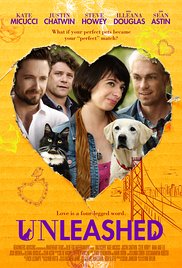
 Greetings again from the darkness. Quirky is an overused word to describe far too many offbeat independent movies and unconventional actors. However, sometimes no better word exists, and that’s exactly the situation with writer/director Finn Taylor’s latest. A full moon cosmic event results in a collision between astronomy and astrology, and just like that … Emma’s faithful pet dog and cat are transformed into hunky human boyfriend material.

Adding to the high level of quirk (in the role of Emma) is the extraordinarily multi-talented Kate Micucci (“Garfunkel and Oates”) – an actress, comedian, writer, musician and artist. Plus, she is just so darn likeable and nice! In fact, “nice” may be the only challenger to quirky in how best to describe this film. Sure it’s cute and sweet and delightful, but above all, it’s a nice movie whose nice characters will leave you with a nice feeling.

Steve Howey and Justin Chatwin (both from “Shameless”) are spot on in their portrayals of Sam and Diego – the humanized dog and cat, respectively. Howey and his bleach blonde hair and boundless energy capture the devoted pooch, while Chatwin is downright hilarious with his feline tendencies that attract a public following. Given much leeway with the roles, we never lose sight of their original connection to love-lost Emma.

While the premise may offend some (though nothing else in the film will), the humor stems from this being a woman’s fantasy. Her beloved pets, with full knowledge of her likes and dislikes, and with blind commitment, take on beautiful male human form without losing the lovable pet traits. What more could a women-done-wrong desire? It’s also quite a scathing commentary on modern day dating, with the ne’er-do-well Luke (Josh Brener, “Silicon Valley”) contrasted to the too-nice Carl (Sean Astin). Hana Mae Lee (Pitch Perfect) is Emma’s spunky best bud and co-worker, and Illeana Douglas plays their boss.

There are some terrific Bay Area film locations utilized, and the music is so perfectly matched that we find ourselves saying “of course” as each new song pops up. Filmmaker Taylor certainly could have gone a bit harsher with the commentary and humor, but let’s enjoy this quirk for what it is … a really nice time.

watch the trailer:

http://themovieunleashed.com/?page_id=12


VOICE FROM THE STONE (2017)

April 29, 2017

USA FILM FESTIVAL 2017

 Greetings again from the darkness. A painful death bed scene and a teary-eyed child saying goodbye to their beloved caregiver kick off this film that immediately downshifts to a deliberate pace after those two emotional peaks. The first feature from director Eric Howell is adapted by Andrew Shaw from Silvio Raffo’s novel, and it excels in delivering atmosphere and visual unease created by the stunning setting of a fogged-cloaked Tuscan castle that is itself a key character in the film.

Emilia Clarke (“Game of Thrones”), and those expressive eyebrows of hers, stars as Verena, a rehabilitation nurse who specializes in helping traumatized children. Verena is spunky and confident as she arrives at the Gothic-esque home of artist/sculptor Klaus (Marton Csokas) and his son Jakob (Edward Dring). It’s been more than 7 months since the death of his mother (Caterina Murino, Solange in Casino Royale), and also since young Jakob last spoke even a single word. Verena expects to succeed where other nurses have failed.

1950’s Tuscany is beautiful despite, or maybe because of, the dreary and minimal natural lighting and the mysterious elements of the ancient castle and surrounding forest and stone quarry. It’s also a bit creepy and that allows the measured pace of the story to work – it comes across as we are going through the slow process with Jakob and Verena. Well, it works until it doesn’t. The character shifts for Verena and Klaus occur too abruptly – almost as if pages in the script were skipped. Both transformations seem out of place with the film and are jarring to watch … and not jarring in the way that we expect from a suspense thriller.

Most won’t be surprised at where the story goes, but just in case, no spoilers will be discussed here. It should be enough to state that the look and feel of this one should appeal to those who enjoyed such films as The Others, Rebecca, The Sixth Sense, Crimson Peak, and the stories of Edgar Allan Poe. The execution of the story might not be at that level, but the atmosphere and mood certainly are. Oversized sculptures, life-sized portraits, an untouched death bed, and even a grand piano allow for more texture than any cheap jump-scares.

Gothic, romantic, supernatural suspense thrillers are pretty tough to pull off, but even getting close allows for some cinematic viewing pleasure. As an added bonus, the lovely score from Michael Wandmacher never screams at us, and Amy Lee (Evanescence) delivers a beautiful and fitting song “Speak to Me” as the film ends.

watch the trailer:


THE LOST CITY OF Z (2017)

April 20, 2017

DALLAS INTERNATIONAL FILM FESTIVAL 2017

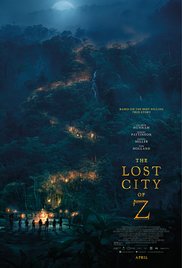
 Greetings again from the darkness. We aren’t likely to watch a more beautiful or expertly photographed film this year. Director James Gray’s (The Immigrant, We Own the Night) project looks and feels like a throwback to days of epic filmmaking, and cinematographer Darius Khandji (Se7en, Evita, The Immigrant) fills the screen with green and gold hues (similar to Out of Africa) that deliver both a sense of realism and a touch of romanticism. The minor quibble here is with the emphasis on the biographical rather than the more interesting and compelling and adventuresome expeditions to the “new” world.

Our true to life hero (and the film’s portrayal provides no other description) is military man and explorer Percy Fawcett played by Charlie Hunnam. Based on the book by David Grann, the film divides focus into three areas: the stuffy, poorly lit backrooms of London power moguls; the 1916 WWI front line where Fawcett proves his mettle; the jungles of Amazonia wherein lies Fawcett’s hope for glory and redemption. It’s the latter of these that are by far the most engaging, and also the segments that leave us pining for more detail.

The three Fawcett expeditions form the structure for the quite long run time (2 hours, 21 minutes). In 1906 the Royal Geographic Society enlisted Fawcett for a “mapping” journey to distinguish boundaries around Bolivia in what had become a commercially important area due to the black gold known as rubber. Fawcett was not just a manly-man, he was also obsessed with overcoming his “poor choice in ancestors” and gaining a position of status within society. Using his military training and personal mission, that first expedition (with help from a powerful character played by the great Franco Nero) was enough to light Fawcett’s lifelong fixation on proving the existence of Z (Zed) and the earlier advanced society.

Back home, Fawcett’s wife Nina (Sienna Miller) shows flashes of turn-of-the-century feminism, though lacking in judgment when she suggests a ridealong with her husband on his next expedition. Although the couple spends little time together, given the years-long trips, they do manage to produce a hefty brood of kids, the eldest played by Tom Holland (the new Spider-Man).

1912 brings the second Amazonia expedition, the one in which renowned Antarctic explorer James Murray (a snarly Angus Macfayden) joins Fawcett and his by now loyal and expert travel companion Henry Costin (a terrific Robert Pattison). The trip proceeds as one might expect when an ego-driven, unqualified yet wealthy passenger is along for only the glory. Murray’s history is well documented and here receives the treatment he earned.

It’s the third trip in 1925 that Fawcett makes with his son that will be his last, and the one that dealt the unanswered questions inspiring Mr. Grann to research and write his book. It’s also the segment of the film that leaves us wanting more details … more time in the jungle. With the overabundance of information and data available to us these days, the staggering courage and spirit of those willing to jump in a wooden canoe on unchartered waters and trek through lands with no known back story, offer more than enough foundation for compelling filmmaking. It’s this possibility of historical discovery that is the real story, not one man’s lust for medals and confirmation. More jungle could have elevated this from very good to monumental filmmaking.

watch the trailer:


TRUMAN (2017)

April 20, 2017

 Greetings again from the darkness. Is this a cancer movie? A dog movie? A buddy movie? Well, the answer is yes – at least somewhat – to all three. Writer/director Cesc Gay and co-writer Tomas Aragay offer up an unusually paced and uniquely focused film that is likely to strike a chord with many viewers, while leaving some others thinking, what’s the point? For those of us in that first group, it’s an absorbing ride-along with a not overly likeable character who is out to put his proverbial “affairs in order”.

Two exceedingly talented actors take the lead here and draw us right in. Ricardo Darin (terrific in The Secret in Their Eyes, 2009) is Julian, and Javier Camara (an Almodovar regular, so shuddersome in Talk to Her) is his long time friend Tomas. Knowing his friend is dying, Tomas hops on a plane back to Madrid, from his new life in Canada, in order to spend four days and yes, to say goodbye.

The surprise visit sends the two long-time buds on a kind of (mostly) inner-city “road trip”. Their daily outings include: a trip to the veterinarian so Julian can prepare his dog Truman (a non-puppy Bullmastiff) for the coming change; a doctor visit to convey the desire to cease treatment on the tumors; a bookstore to search for material on pet psychology; a diner where Julian confronts old friends – a lunch that provides significant insight into Julian’s mindset; an in-home visit to a potential pet adoption family; a direct chat proving ‘the show must go on’ with the owner (Jose Luis Gomez) of the theatre where Julian works as an actor; a spur of the moment flight to Amsterdam for lunch with Julian’s estranged son Nico and wife Sophie; and a meet on the street with Julian’s ex-wife. In between, there are exchanges with Julian’s cousin Paula (a very good Dolores Fonzi) who can’t hide her frustration despite offering unwavering support.

There are many wonderfully subtle moments that keep the story grounded and prevent anything approaching the typically over-dramatic movie that we have become so accustomed to. Death and comedy don’t tend to blend well, but there are some charming and even comical moments that sneak in … sometimes during the moments that Julian is expressing regret for things said or done, or not said or done. He attempts to make amends, but this isn’t about the profound moments – no, it’s about the small ones. When Julian mutters the brilliant line, “I used to be a romantic hero”, we know exactly what it means. This isn’t the usual tear-jerker, but it will likely tug at the heart strings, even as it touches on death on one’s own terms (a common cinematic theme these days).

watch the trailer:


FRANTZ (2017)

April 20, 2017

Dallas International Film Festival 2017

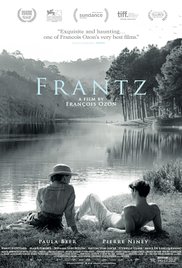
 Greetings again from the darkness. Director Francois Ozon won me over as a fan for life with his 2003 writing-mystery Swimming Pool. His latest stands in stark contrast to that gem, as there are no mind games for the viewer, other than those the characters play on each other. Actually, this is quite a straightforward story of romance, loss and hope; and it’s an example of expert filmmaking from a director in full control of story, setting, character and camera.

It’s 1919 in historic and ancient Quedlinburg, Germany. WWI has recently ended and the loss of her soldier fiancé is still so fresh for Anna (an excellent Paula Beer) that she makes daily treks to lay flowers on the grave of Frantz. She spots an unknown foreigner paying respects to Frantz, and since it’s a small town, the two are soon enough sitting together in the parlor of Frantz’ parents’ house where Anna lives. It’s an awkward encounter between a grief-stricken German family and a Frenchman paying respects to the family of a fallen “friend”.

That these folks are so quick to accept and encourage these recollections of Adrien (Pierre Niney) speaks loud and clear to human nature in times of grief – we desperately cling to any connection, positive memory, or new strand of information. Then again, Adrien’s perspective is every bit as interesting as that of the parents and Anna. He seeks forgiveness and inclusion, yet is unable to come clean on his motives and past.

More human nature is on display as we initially see how the Germans treat the (outsider) Frenchman, and then later as Anna travels to France, we see how the French treat this (and presumably all) German. Anger, mistrust and deceit are ever-present amongst this group of people who seemingly only want a touch of happiness, and it’s fun to note the parallels between the initial story in Germany and the later time in France.

Director Ozon flips between black & white and the periodic use of color when hope and new direction exists. It provides a personal and dramatic look to the film, along with visual clues as to what’s really occurring on screen, and is nicely complemented by the flowing score from Phillipe Rombi (Swimming Pool, Joyeux Noel). Ozon also selects one of Manet’s lesser known paintings, Le Suicide, as a link between the past and the terrific ending that reinforces the movie’s message, “life goes on”.

watch the trailer:


TOMMY’S HONOUR (2017)

April 19, 2017

Dallas International Film Festival 2017

 Greetings again from the darkness. Jason Connery (Sean’s son) directs this story about old Tom Morris and his son Tommy (Young Tom), written by Pamela Martin from the book by Kevin Cook. It’s a bit surprising that the story focuses as much or more on the melodrama and personal story of the younger Tommy than the historical influences, but there is links action to give us a feel for the times.

Jack Lowden and his dimples portray Tommy, while Ophelia Lovibond plays his love interest Meg. Their relationship drives the story, and we are reminded that small-minded people were every bit as prevalent 140 years ago as they are now. Tommy’s mother, their community, and even the minister of the Church pass harsh judgment on Meg and her unfortunate past. Combine that with the element of “Gentlemen”, which are anything but, and we get an understanding of how Tommy’s actions changed not just the game of golf, but also influenced the softening of the class difference. His push to bring respect and fairness to professional golfers erased the similarities with how race horses and golfers were treated the same from a wagering perspective.

This was the time of the original “13 Rules of Golf”, and when rowdy crowd hovered right next to the golfers as they played. Other than the closing credit graphics, Old Tom Morris (Peter Mullan) isn’t really given his due as a course designer, but this is really the story of his son, and though the film is a bit too long, it’s a story that deserves to be told.

watch the trailer:


THE PROMISE (2017)

April 19, 2017

 Greetings again from the darkness. I’ve said this before, but mixing romance with historical war time dramas is fraught with peril – it’s a difficult line to navigate for a movie. Writer/director Terry George (Hotel Rwanda) and co-writer Robin Swicord (The Curious Case of Benjamin Button) have delivered a sweeping historical epic that is immensely watchable by not over-blowing the romantic triangle, the war atrocities or the courage and bravery of the main characters.

The one-too-many lovers are played by the talented Oscar Isaac as medical student wannabe Mikael; Christian Bale as Chris, an American war correspondent; and blossoming international star Charlotte Le Bon as Ana, an American tutor based in Constantinople. These are three varied and distinct characters we accept because they have admirable qualities, as well as human flaws.

Mikael marries a local girl (Angela Sarafyan who was the robot with hypnotizing eyes HBO’s “Westworld”) for the sole purpose of using the dowry to pay for medical school. His “promise” is that he will return and learn to love her (so romantic!). Chris is a hard-driving and hard drinking journalist who is not welcome most anyplace he goes and finds himself in quite a predicament with his job, girlfriend and life. It’s not until later in the story that he flashes a caring heart underneath his armor of brash. Ana is nearly angelic at times in her goodness and with a smile that lights up the screen. Her devotion to Chris is as odd as her attraction to Mikael, but seeking logic in matters of love is often a journey without merit.

The story is based around the time of WWI and specifically highlights the Armenian Genocide – something the Turkish government denies to this day, referring to it instead as a “relocation” of nearly 1.5 million Armenians. The film began as a passion project for Armenian-American Kirk Kerkorian, a businessman, philanthropist and the once owner of MGM Studios. He raised the money and helped assemble the team, but unfortunately passed away just before production began. He would undoubtedly be proud of the finished film, and find some solace (if not humor) in the fact that it hits theatres only a few weeks after The Ottoman Lieutenant, a Turkish government backed project that purposefully ignored the atrocities and leaned heavily to a singular view of history.

The cast is deep and includes (one of my favorites) Shohreh Aghdashloo as Mikael’s wise and courageous mother, Tom Hollander (“The Night Manager”) as a fellow prisoner of the Turks, James Cromwell as an American Ambassador, Rade Serbedzija as a leader of the Armenian resistance, and Jean Reno as a commander of the French Naval fleet that plays a vital role in 1915.

Cinematographer Javier Aguirresorobe captures some breathtaking vistas and desert landscapes, while also delivering the intimacy and urgency of both the romantic and dangerous moments (including a spectacular rain-drenched train sequence). The acting is superb throughout, with Bale dialing back his sometimes over-exuberant traits, Isaac giving us someone to pin our hopes on, and Ms. Le Bon bringing the compassion to an area when it’s so desperately needed. Expect to see her explode in popularity and respect when the right leading role comes along. Lastly, it’s rare that I would think this, but the film’s 2 hour and 14 minute run time might have benefited from an additional 10-15 minutes of detail towards the Turkish military strategies, and both the Armenian resistance and slaughter. It’s a part of history that should be neither ignored nor glossed over.

watch the trailer:


DIFF 2017: Day Ten

April 11, 2017

The Dallas International Film Festival ran March 31 through April 9 (it will return for its 12th year in 2018)

 This is the end. The final day of DIFF 2017. Despite periodically feeling more like a marathon than entertainment, it’s always a bit sad when the closing credits roll on the festival’s final movie. My tally for this year’s festival is 30 films watched, 14 of which were documentaries. Just like every year, the DIFF programming provided a diverse schedule of films from around the globe, and a deep lineup of documentaries that range from biographical to social interest. For a list of the winners, please visit www.dallasfilm.org Below is a recap of the three films I watched on Sunday April 9, 2017:

FRANTZ

Director Francois Ozon won me over as a fan for life with his 2003 writing-mystery Swimming Pool. His latest stands in stark contrast to that gem, as there are no mind games for the viewer, other than those the characters play on each other. Actually, this is quite a straightforward story of romance, loss and hope; and it’s an example of expert filmmaking from a director in full control of story, setting, character and camera.

It’s 1919 in historic and ancient Quedlinburg, Germany. WWI has recently ended and the loss of her soldier fiancé is still so fresh for Anna (an excellent Paula Beer) that she makes daily treks to lay flowers on the grave of Frantz. She spots an unknown foreigner paying respects to Frantz, and since it’s a small town, the two are soon enough sitting together in the parlor of Frantz’ parents’ house where Anna lives. It’s an awkward encounter between a grief-stricken German family and a Frenchman paying respects to the family of a fallen “friend”.

That these folks are so quick to accept and encourage these recollections of Adrien (Pierre Niney) speaks loud and clear to human nature in times of grief – we desperately cling to any connection, positive memory, or new strand of information. Then again, Adrien’s perspective is every bit as interesting as that of the parents and Anna. He seeks forgiveness and inclusion, yet is unable to come clean on his motives and past.

More human nature is on display as we initially see how the Germans treat the (outsider) Frenchman, and then later as Anna travels to France, we see how the French treat this (and presumably all) German. Anger, mistrust and deceit are ever-present amongst this group of people who seemingly only want a touch of happiness, and it’s fun to note the parallels between the initial story in Germany and the later time in France.

Director Ozon flips between black & white and the periodic use of color when hope and new direction exists. It provides a personal and dramatic look to the film, along with visual clues as to what’s really occurring on screen, and is nicely complemented by the flowing score from Phillipe Rombi (Swimming Pool, Joyeux Noel). Ozon also selects one of Manet’s lesser known paintings, Le Suicide, as a link between the past and the terrific ending that reinforces the movie’s message, “life goes on”.


STEP (documentary)

Director Amanda Lipitz proves that a documentary can be both inspiring and sad. She takes us inside the Baltimore Leadership School for Young Women and introduces us to the senior girls on the Step dance squad known as the “Lethal Ladies”. The school was founded in 2009 with the goal of sending every student to college, in spite of the challenges and barriers faced in this inner city community. This is the school’s first senior class, and everyone – students, teachers, parents, administration – is on edge.

Emotions overflow throughout the film. The normal roller coaster ride that accompanies high school girls is somehow magnified when the pressures of becoming the first one in the family to attend college collide with such harsh realities of poor grades, no food in the fridge, no power in the home, and inconsistent support from parental units. There is also the goal of winning the year-end Step competition against schools that have a more successful track record, and who likely don’t face the extremes of Baltimore street violence and poverty that is normal for these girls each day.

Ms. Lipitz’ film, a Sundance award winner, never backs away from the emotion of the moment and yet still manages to maintain the long-game perspective of trying to get each of these students graduated and accepted into college. She dives into the home lives of a few of these girls and though all of the parents want the best for the kids, it’s quite obvious that the type of home support and structure varies widely even amongst these few we follow.

The real beauty of this environment is that the school provides structure, guidance and support all along the way. The Step coach pushes them hard daily towards being the best they can be going into the competition. The girls push themselves and each other, and overcome some personality conflicts, all for the sake of a stronger team. The school principal has one-on-one meetings to light a fire when necessary, and you’ve likely never seen a more dedicated high school college counselor who doles out hugs and motivation in whatever dosage is necessary.

The key message here is that it takes a combination of inner-strength and drive, and a support system of family, teachers, coaches, administrators and friends for kids to have a chance at finding a way to succeed at life … whether that’s at Johns Hopkins or a local community college program. This is a special film with a real-world case study of students looking for a way up, and of those looking to provide the necessary boost.

ABACUS: SMALL ENOUGH TO JAIL (documentary)

We are all sick and tired of the phrase “too big to fail”. The 2008 financial crisis very nearly crippled the United States economy, and regardless of how you feel about the bailout funded by taxpayers, there is no question that some of the participants got off with nary a scratch … and some even received giant bonuses in spite of their fraudulent activities. All of that has been written about and reported on ad nauseam. Highly acclaimed documentarian Steve James (Hoop Dreams, The Interruptors) turns his camera not on “too big to fail”, but rather “small enough to jail”.

The only financial institution to be criminally indicted in the wake of the 2008 crisis was a small community bank in New York’s Chinatown. Thomas Sung founded Abacus Federal Savings Bank and his daughter’s have been running it for years. We learn that Mr. Sung was partly inspired to give up his law profession in order to serve the Chinese community by watching George Bailey (James Stewart) do the same thing in the classic film It’s a Wonderful Life.

Once we see how the 5 year legal process and more than 2 month long trial wrap up, it’s pretty tempting to call this a witch hunt for the purpose of publicity by New York District Attorney Cyrus Vance, Jr. So much of what occurred seems to have been done for the TV cameras and the newspaper headlines … especially the humiliating and public chain gang walk in shackles that, as one journalist pointed out, has never been done before and could not have been done with another minority group. Mr. Vance clearly needed a conviction as a political stepping stone. His biggest mistake was in choosing the wrong target. Of course he couldn’t attack the numerous giant financial institutions based in NYC, but he was unprepared for the fight and backlash that he received due to the Abacus pride and principles, and beliefs in one’s people.

Director James doesn’t focus so much on the incompetence of the DA office as he does the far more interesting bank owners and family members. Their determination and conviction to having run their business in the right way goes beyond inspiration and dips into reverence. It’s not David vs Goliath but it is a clash of contradictory values. It would have been interesting to hear even more from the journalists who covered the process and trial, but we get enough to understand their surprise at how the case was handled by the government.

We depend on our government to do the right thing, and when it doesn’t, we deserve to get angry. This film is one of those that will generate some fiery post-movie discussions … discussions that need to be had.


DIFF 2017: Day Nine

April 10, 2017

The Dallas International Film Festival ran March 31 – April 9

 The penultimate day of the festival has arrived. It’s second Saturday and the end is in sight. Today also means the category winners have been announced and most will receive another screening during one of the TBA slots from the original programming schedule. This gives festival attendees a chance to catch up on any must-see films they might have missed during the week. Below is a recap of the two films I watched on Saturday April 8, 2017:

BEFORE I FALL

A middle-aged man is probably not the best choice to comment on the film version of a popular YA novel. In fact, there may be no more tortuous sound to male ears than the first 10 to 15 minutes of incessant teen girl jabbering served up here during the carpool ride to school. Lauren Oliver’s novel is adapted by Maria Maggenti, and Ry Russo-Young directs this mash-up of Groundhog Day, Mean Girls and Heathers. Even though not much new ground is covered with this one, it’s handled in a way that the message isn’t lost, and even comes across as quite sincere.

Zoey Deutch delivers a strong and forthright lead performance as Samantha, and it’s on her shoulders which the success of most scenes rest. Ms. Deutch is the daughter of actress Lea Thompson (Back to the Future) and director Howard Deutch (Pretty in Pink), and appeared recently in Richard Linklater’s Everybody Wants Some! She is a star in the making and has the ability to come across as likeable, even when playing a character who isn’t.

Samantha is part of a four girl squad perched atop the social pyramid at their “Pacific northwest” high school. Filling out the royal panel are Cynthy Wu as Ally, Medalion Rahimi as Elody, and Halston Sage (Paper Towns) as Lindsay the evil Queen of the full-of-themselves quadrangle. These girls spend most of each day congratulating each other on their perfections and scalding other high schoolers who they view as less-worthy. Elena Kampouris, as Juliet the “psycho”, endures especially harsh comments and treatment … finally peaking at a keg party where she ends up in a scene reminiscent of Carrie, only with Solo cup booze in place of pig blood.

Of course, if this were a full movie about how poorly teenage girls treat each other, there would be no need for cameras to roll. The hook is that after that keg party, Samantha is killed in a car crash. But rather than go sadly and quietly into the grave, she ends up re-living the day over and over until she completes her self-analysis personality adjustment.

Supporting actors include Jennifer Beals as Samantha’s mother, Erica Tremblay (her brother Jacob starred in Room) as Samantha’s little sister, Logan Miller and Kian Lawley as the secret admirer and jerky boyfriend, Liv Hewson with nice boots and a key bathroom scene, and Diego Boneta (Rock of Ages) as the teacher whose Sisyphus lesson provides the obvious literary reference for Samantha’s again and again week.

The film easily slides into the Me and Earl and the Dying Girl sub-genre, and we should all be in complete support of any project that encourages teenagers to re-evaluate their daily choices and make the changes necessary to become a better person. The message to “be nice” is something worth rooting for.


I AM NOT MADAME BOVARY (Wo bu shi Pan Jim Liam)

Have you ever watched a movie through a telescope? How about a porthole? Such is the effect of the highly unusual circular aspect utilized by Director Xiaogang Feng and cinematographer Pan Luo. Most of the movie is delivered through a round view using maybe one-third of the screen, and is meant to position us with the same restricted view of the world as the small town villagers. The exceptions are a couple of larger square/rectangle scenes in Beijing and the widescreen wrap-up at the end.

Bingbing Fan stars as Lian, and we follow her quest for what she views as justice in her decade-long battle with Chinese bureaucracy. Here is my attempt at explaining the set-up: She and her husband agreed to get a “fake” divorce so that they could obtain a better apartment through public housing distribution. During this time, her husband met and married another woman, and now she wants the original divorce overturned so that they can get a “real” divorce. It’s a matter of principle and justice. Her 10 year legal positioning leaves a wake of mayors, politicians, judges, and officials.

While Lian’s pursuit of justice may seem a bit confusing and not the least bit humorous, the reactions of the bureaucrats provide many comical exchanges as it becomes quite clear that self-preservation and saving their own jobs and positions are what matters most. Over the years, many take their best shot at reasoning, tricking and even threatening Lian in an effort to get her to give up the cause. She remains resolute. An example of the humor includes the snowball effect where one of the Chinese officials asks if “you have ever wondered how a sesame seed becomes a watermelon”. Whether this is brilliant philosophy or poorly translated subtitles matters little – the meaning is clear and fitting.

Writer Zhenyun Liu makes a risky choice in holding back the true motivation of Lian’s battle until near the end. Knowing this earlier likely would have made us more supportive of Lian, but instead the decision leaves us as confused as the bureaucrats … the likely reason for this decision. The score features terrific use of drums and percussion, and the film provides the best yet description of marriage: tolerate until it hurts. The widescreen epilogue reminds us that even the most painful parts of the past may fade … but not without a good fight!