CHURCHILL (2017)

June 4, 2017

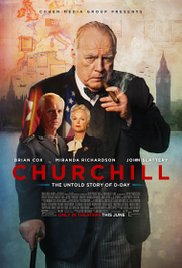
 Greetings again from the darkness. Well, well. The image to most of Winston Churchill is epitomized by his nickname, The Lion of Britain. Undeniably one of the most iconic historical figures of the last 150 years, there have been volumes of articles and books and movies documenting his important role in so many moments that shaped our modern world. Director Jonathan Teplitzky (The Railway Man) and writer Alex von Tunzelmann (she herself a British historian) take us behind the public façade and into the personal doubts and fears … even literally into his bedroom and the middle of his marital spats.

Brian Cox takes on the role of Churchill, and seems to relish more than the ever-present stogie and its lingering smoke. He captures many of the physical traits and movements, while employing his stage-trained voice in an exceptional reenactment of the infamous and impassioned D-Day radio speech. Complementing his performance is Miranda Richardson as Clemmie Churchill, the strong and diligent great woman behind the great man.

Most of the film takes place in the four days leading up to the June 6, 1944 Allied Forces invasion of Normandy, known of course as D-Day and Operation Overlord. At the time, Churchill was almost 70 years old, and what we see here is man teetering between past and present while cloaked in an almost paralyzing fear stemming from the 1915 Gallipoli debacle. He is presented as vehemently opposed to the Normandy invasion, though most documentation shows his initial resistance from (1941-43) had subsided, and he was fully on board by this time.

Although the ticking clock throughout the film leads to the invasion, this isn’t a war movie per se, but rather a peek at the human side of leadership in a time of crisis. Ask yourself if you could readily order tens of thousands of young soldiers to face slaughter, especially after you had experienced such tragic results a still-fresh-on-the-conscience 29 years earlier.

John Slattery (“Mad Men”) plays General Dwight Eisenhower, the Supreme Allied Commander (and future President of the United States) and he more than holds his own in scenes with Cox/Churchill. Julian Wadham plays Bernard Montgomery, the Spartan General. He was over all Allied ground forces and accepted Germany’s surrender in 1945. Taking on the role of British Field Marshal Jan Smuts (also the Prime Minister of South Africa) is Richard Durden. Having the thankless job of trying to keep Churchill on track, Smuts was the only person to sign the peace treaties for both WWI and WWII, and later established the League of Nations. James Purefoy does a really nice job as King George VI (replete with minor stutter), and Ella Purnell (Emma in Miss Peregrine’s Home for Peculiar Children) shines as Churchill’s bright-eyed new secretary, and invested British citizen.

The best scenes are between Winston and Clemmie, and those where he fine-tunes his remarkable speeches. At times the film veers into near-caricature mode, but manages to right itself thanks to the counsel and wisdom of two strong women. Later this year, Atonement director Joe Wright will present Darkest Hour, with the great Gary Oldman as Churchill, and it’s likely to feature more politics and acts of state. Despite the blustering and sense of “losing it”, all is well when the D-Day speech is delivered. It’s so much more than words on the page. Well, well.

watch the trailer:


BAND AID (2017)

June 1, 2017

 Greetings again from the darkness. “Where words fail, music speaks.” Danish author Hans Christian Andersen wrote those words more than 150 years ago, and he surely never imagined a 21st century California couple would prove true the adage. Zoe Lister-Jones (a regular on TV’s “Whitney”) has been acting regularly since 2004, and this is her first “all in” film project where she is writer/director/producer/lead actress. Her talent as a writer is evident in a topic assumed close to her heart: thirty-something angst.

Ms. Lister-Jones stars as Anna, a disenchanted Uber driver who is married to super slobby slacker Ben played by Adam Pally (Slow Learners, 2015). These two seem perfectly matched – or would be, if not for the constant bickering over anything and everything. Before you assume this is a remake of the ultra-depressing Revolutionary Road (2008), please note that the two leads are incredibly funny people and masters of witty one-liners. They make marital squabbles quite entertaining, once they decide to form a band with the sole purpose of singing their arguments.

Admittedly, it’s a shaky premise, but these two manage to pull it off with help from neighbor/drummer/sex addict “Weird Dave” (Fred Armisen). Along the way, they take shots at their friends’ exuberance over babies, the Holocaust, a kid named ISIS, pizza, dirty dishes, a mousetrap, sex, drugs, and art. They even bring levity to a marriage counseling scene featuring Retta (“Parks and Recreation”).

Just as impressive as the humor is how the film balances the drama associated with lingering depression tied to the trauma of a miscarriage. This and the couple’s inability to communicate their emotions are what drive their marital challenges. For a short time, the ‘argument music’ seems to improve their relationship, but it’s obvious that the real issue must be dealt with. Enter Ben’s mom (Susie Essman), whose only scene serves the purpose of explaining women to Ben and all the dumb guys in the audience.

There are actually quite a few familiar faces (many with ties to “Life in Pieces”) that appear in only one or two scenes: Chris D’Elia, Ravi Patel, the aforementioned Retta, Majandra Delfino, Jesse Williams, Colin Hanks, Brooklyn Decker, Erinn Hayes, Jamie Chung, Hannah Simone, and Angelique Cabral. These quick hit scenes serve as a dose of reality, as “moments” are what make up life … even if many interactions are “crazy” (D’Elia) or creepy (Williams).

The film was well received at Sundance, and it immediately marks Zoe Lister-Jones as a filmmaker to watch. Her comedic presence is a rarity, and is complimented nicely by her musical talent, and her willingness to hit serious topics head-on. Here, she offers a woman’s perspective on having kids, being questioned about having kids, and traditional women’s roles within society and marriage. Her inspired observations (a spontaneous jam session at the kid’s birthday party) are a welcome addition to today’s cinema, while also offering a west coast contrast to east coast indie film.

watch the trailer:


PAST LIFE (2017)

June 1, 2017

 Greetings again from the darkness. Renowned Israeli filmmaker Avi Nesher tackles the familiar topic of Holocaust survivors and drops in a related family mystery, two dueling and personality-opposite sisters, plus numerous sub-plots including: arguing spouses, musical sexism (it’s a thing), cancer, and a cross-country investigation. The film was inspired by the autobiography of Dr. Baruch Milch, who is the father of the rival sisters and whose past actions are at the core of the investigation.

It’s 1977 West Berlin, and after successfully performing a solo during a concert, no singer wants to be grabbed by a crazy-eyed old lady and accused of being the daughter of a murderer … an act exacerbated by the fact that the accusation is in a language she doesn’t understand. This is exactly what happens to young Sephi Milch (played well by Joy Rieger, who reminds of a late 1970’s Amy Irving). It’s an unsettling moment for Sephi and when she mentions it to her dissident older sister Nana (Nelly Tagar), who also happens to be a journalist/editor, the girls unite for an investigation that will take them deep into the mysterious past of their father.

The sisters of conflict are never really on the same page, as Nana is relentless in pursuit of the truth while the more reserved Sephi can’t see the benefit to uncovering something that could tear the family apart. Also, Sephi is focused on her dream of becoming the first respected female classical composer in history. In an odd twist of fate, it’s the son of the accusing crazy lady who is instrumental (apologies for the pun) in helping Sephi purse her goal. Thomas Zielinski (played by Rafael Stachowiak) is a well known conductor who is either a creepy guy (with an even creepier mother) with amorous intentions toward Sephi or a generous guy in a position to help the rising star.

The story could have been interesting enough with this foundation, but it becomes cluttered with side stories that actually bog down and divert our attention from what we care about. Doron Tavory plays Dr. Baruch Milch, and though his being a lousy father doesn’t make him a murderer, it certainly allows for doubt in both the girls and the audience. Often, the film feels like a jigsaw puzzle with missing pieces … or worse, including pieces from a different puzzle.

Taking place at a time when Egyptian President Anwar Sadat was working towards a peaceful accord with Israel, the film also acts as a reminder that war pushes people into actions that might be out of character, yet necessary in the moment. Should these digressions be forgiven or become one’s lingering shadowy legacy? The clashes with past and present, historical and modern, confuse these issues and divert our attention away from two sisters trying to understand the impact of their father’s actions during WWII on their family today. The rest is just noise … disguised as beautiful music.

watch the trailer:


WINE TASTING (2017)

June 1, 2017

 Greetings again from the darkness. The film isn’t likely to teach you much about wine, wine history or even wine tasting (despite the title), but at least you won’t have to watch Paul Giamatti guzzle the spit bucket. Director Josh Mitchell and writer Justin Samuels have combined on this look at four friends studying for the Master Sommelier exam, as well as how their friendship is impacted by the results.

The opening scene finds the four lads drilling blindfolded for the tasting section. When they are told their answers are “not even close”, we realize there is a bit of humor mixed in with the highly stressful process that requires years of studying and practice (and a high failure rate). It’s also our first indication that the film is a bit stagey, and that the cast may not have the acting chops we are accustomed to seeing on the silver screen. However, this is not a factor of effort, as everyone involved seems committed to their roles and the project.

The director Josh Mitchell plays Mateo, a chef who finds support not just with his buddies, but also with an understanding girlfriend played by Alysa Scanzano. Jesse O’Neill plays John, who tries to handle the stress and long hours with a boost from cocaine; while Josh Thrower portrays Ed, the wine taster who succumbs to alcoholism after his girlfriend dumps him. The most colorful character of the four is Franco, a rowdy and opportunistic Serbian played by Vanja Kapetanovic. These four toss around the “dude’s” and “bro’s” at a pace that would make any stoner movie proud.

The film is at its best when focused on the pressure of preparing for the exam, and it’s the second half that reminds us of the power of friendship … though it leans a bit heavy on dude-drama. The Jason Wise documentary Somm (2012) provides a more detailed, behind-the-curtain look at what it takes to become a Sommelier, and of course, Sideways (2004) and Bottle Shock (2006) are the two best known films centered on wine tasting and wine competition, respectively. While this one isn’t at the level of those films, its description of “fire hose of information” and the relentless studying and commitment to the cause, do hit home.


WAKEFIELD (2017)

May 18, 2017

Dallas International Film Festival 2017

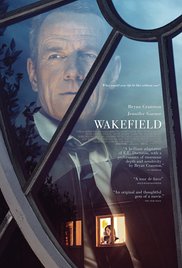
 Greetings again from the darkness. Oscar nominated for her screenplay to The Curious Case of Benjamin Button (2008), Robin Swicord’s directorial debut of The Jane Austen Book Club (2007) was not particularly impressive. However, she bounces back nicely with this Bryan Cranston vehicle and one of the more creative scripts featuring internal dialogue that’s ever hit the silver screen. Cranston is showing a knack for selecting interesting projects, and he excels here as the high-powered attorney who spontaneously decides to drop out of society in a most unusual manner.

There is a ton of social commentary on display here with targets including married life, suburban living, career pressures, and self-doubt … substantially summed up with a line from Cranston’s character, “Who hasn’t had the impulse to put their life on hold?” As he proceeds through his new ‘unshackled’ and ‘primal’ lifestyle while observing the world unnoticed through the small window in his garage attic, much of his focus seems to be on discovering just who he is at his core, and what is the truth behind his relationship with his wife (Jennifer Garner). It’s as if he is asking “What am I?” while clinging to his previous life in a voyeuristic way.

Ms. Swicord’s screenplay is adapted from E.L. Doctorow’s short story and it’s sneaky in the way that it questions how we go about our daily life, and how one can “snap” emotionally if feeling unappreciated. It’s a showcase for the other side of upper middle class white privilege, as well as suburban alienation that is so prevalent (and ignored) today. By dropping out but staying close, Cranston’s character actually pays more attention to his family than he usually would if sitting next to them at the dinner table.

We are accustomed to a mid-life crisis involving a sports car, marital affair or sudden career change. It’s highly unusual for someone to actually “disappear”. It’s at that point where the narration really shines … it’s insightful, observational and thought-provoking. Beyond that, the comedic edge is laden with sadness. The story humanizes this pretty despicable guy – or at least a guy who does a pretty despicable thing. The score is in the style of a 1980’s Brian DePalma movie, which just adds to the unique cinematic experience. This is one to see for Cranston’s performance, as well as for Ms. Swicord’s commentary on today’s way of life.

watch the trailer:


A QUIET PASSION (2017)

May 18, 2017

Dallas International Film Festival 2017

 Greetings again from the darkness. We open on a young woman standing strong during a critical moment at seminary school. It’s kind of a clunky start in an overly-dramatic and stagey sense for the film, but Emma Bell sets the standard for the future behavior of Emily Dickinson. What follows is a period drama with minimal costuming effects, but rather a fitting onslaught of language and words – most of which comes courtesy of Ms. Dickinson and her mighty pen.

I’ve often viewed Emily Dickinson as an early feminist whose beliefs and intentions were stifled by the era in which lived, as well as the depression that seemed to cloak most of her days. She was definitely an odd/unusual person and clearly stood for women’s equality at a time when her own poems were published anonymously to avoid scandal and backlash for the paper. Writer/director Terence Davies (The Deep Blue Sea, 2011) shows interest in glamorizing neither the times nor the writer, and Cynthia Nixon seizes the opportunity to capture the essence of a gifted woman who at best, could be described as a societal misfit and a genius.

The terrific cast also includes Keith Carradine as Emily’s proud father, Jennifer Ehle as her (yin-yang) sister Vinnie, and Duncan Duff as brother Austin. Emily’s rare forays beyond familial boundaries are mostly via garden strolls with her wise-cracking friend Miss Buffum, played with zeal by Catherine Bailey. There is also a tremendous 3:00am scene between Emily and her sister-in-law Susan (Jodhi May), which provides the best possible self-analysis by Ms. Dickinson (outside of her writings). She confesses to her new family member, “You have a life, I have a routine.” This insightful line seems to carry no sadness for Emily.

The first third of the film features some low-key zingers that rival anything from Whit Stillman’s superb Love & Friendship, though the balance of the film takes a turn towards the serious and somber while focusing more on Faith and Death and Emily’s controversial stances. She embraces the label of “no-hoper” and continues on with her observations of a life she barely leads. While the language and words are the stars here (along with Ms. Nixon), there is a very cool effect as the characters seamlessly age before our eyes in a series of portrait poses, vaulting the timeline headfirst into Emily’s descent into self-imposed isolation. It’s a very well done biopic that requires your ears be in prime form.

Ms. Dickinson died in 1866 at the age of 55, and the film helps us understand that the contradictions and confusion associated with religion does not solely belong to our modern times. This might best be explained when Emily’s aunt wins an argument by proclaiming that “hymns aren’t music”. Mr. Davies delivers a small film that is large in thought and beautiful in look.

watch the trailer:


WHISKY GALORE (2017)

May 11, 2017

 Greetings again from the darkness. There’s good fun to be had in watching director Gilles MacKinnon’s and writer Peter McDougall’s remake of the 1949 comedy from director Alexander Mackendrick and writer Angus MacPhaill, based on the novel from Compton MacKenzie. Whew! Is that enough ‘Macs’ for you? The story takes place on an isolated Scottish island of Todday during WWII, and is loosely based on true events of 1941.

Not only is the community geographically isolated, it’s also mostly insulated from the rationing and hardships caused by the Great War. All that changes when the last bit of whisky is guzzled, leaving the locals “in terrible shape” with nothing to drink but tea (uttered with equal parts disgust and disappointment). Even though it was Irish and not Scottish, if you’ve seen Waking Ned Devine (1998), then you’ll have an idea of the comedic style – mischievous wry humor rather than hysterical slapstick.

The key locals include Gregor Fisher as Macroom, single father to two grown daughters Catriona (Ellie Kendrick) and Peggy (Naomi Battrick). Of course, where there are two lovely daughters, there is likely to be love in the air. Filling these roles are returning war hero Sergeant Odd (Sean Biggerstaff) and George (Kevin Guthrie), the son of a local ultra-Calvinist mother. Eddie Izzard plays the all too serious Home Guard Captain Wagget, while Fenella Woodgar spouts some of the film’s best one-liners as his wife.

When a cargo ship carrying 50,000 cases of whisky crashes just offshore, the locals begin plotting how to rescue the bounty and return normalcy to their daily lives … all while observing the Sabbath and gazing wistfully at the ship from dry land. There is also a funky sub-plot that ties into the story of the Duke of Windsor and Wallis Spencer, but this is mostly a story of local ingenuity and inspiration set to the beautiful music of Scottish bagpipes and violins (from composer Patrick Doyle). The quaint setting and predicament make for whimsical fun and some nice laughs … just remember to change the password if you are guarding the road.

watch the trailer:


CHUCK (2017)

May 9, 2017

 Greetings again from the darkness. “That guy could take a punch.” It’s supposed to be a compliment and knowing nod to the machismo and toughness so valued in the world of boxing. Instead that trait is responsible for the two claims to fame for heavyweight boxer Chuck Wepner: he shockingly went 15 rounds (minus 17 seconds) against Muhammad Ali in 1975, and was the inspiration for Sylvester Stallone’s Oscar winning movie Rocky.

Director Philippe Falardeau (Monsieur Lazhar) and the four co-writers (Jeff Feuerzeig, Jerry Stahl, Michael Cristopher, Liev Schreiber) spend very little time in the boxing ring or with the usual training montages, and instead focus on how Wepner’s ego and inability to handle fame affected his family, his health and his life. This is a portrait of Chuck the man, and it’s at times more painful than the barrage of punches Ali landed in Round 15.

Liev Schreiber is outstanding as ‘The Bayonne Bleeder’, the disparaging (but accurate) sobriquet that stuck with Wepner – thanks to his propensity to bleed in most bouts. His self-motivation to “Stay up Chuck” against Ali (played here by Schreiber’s “Ray Donovan” brother Pooch Hall) is what became the foundation for Stallone’s Rocky screenplay. There are a few terrific scenes with Wepner and Stallone (a spot on Morgan Spector) as Wepner desperately tries to latch onto the Rocky bandwagon, going so far as to introduce himself as “the real Rocky”. It’s tough for an actor to get Oscar consideration for a performance in the first half of the year, but Schreiber is worthy.

It’s not the first time we have seen the pitfalls of instant fame and celebrity status, and even though it’s a true story, there is a familiarity to it that makes the plight of this lovable lug quite easy to relate to. Wepner’s blue collar narcissism may have been the cause of much of the pain in his life, but it also allowed him to become a folk hero. His connection with Anthony Quinn in Requiem for a Heavyweight provides all the personality profile we require to grasp Wepner’s make-up.

The supporting cast is strong. Ron Perlman plays Wepner’s manager/trainer Al Braverman, Jim Gaffigan is his hero-worshiping corner man and cocaine accomplice, Elisabeth Moss plays wrongly-done first wife Phyllis, Michael Rappaport is estranged brother John, and Naomi Watts (she and Schreiber ended their long-term relationship soon after filming) as his confidant and second wife Linda. Moss and Rappaport each have very strong scenes … scenes that remind us that these are real people and not part of some fairy tale.

Director Falardeau delivers no shortage of 1970’s cheese – wardrobe, facial hair, disco music, party drugs, and night clubs – but there is also enough humor to maintain balance: Wepner explains after the Ali fight how he tried to “wear him down with my face”. By the end we aren’t sure if Wepner was self-destructive or simply lacking in dependable counsel. Either way, the journey of self-discovery is even more interesting than the boxing career, and the film is punctuated with closing credit footage that provides viewers with a sense of relief. A tragic ending has been averted, and Chuck remains a local Bayonne, New Jersey resident – even if he’s no longer a bleeder.

watch the trailer:


NORMAN (2017)

May 4, 2017

 Greetings again from the darkness. With the subtitle, ‘The Moderate Rise and Rapid Fall of a New York Fixer’, writer/director Joseph Cedar removes one layer of the mystery that otherwise envelops the lead character Norman Oppenheimer. We find ourselves somewhat sympathetic for the obviously lonely guy, while also accepting this as Cedar’s commentary on today’s real world obsession with networking. “It’s who you know” is the call of the business world, and few stake claim to more contacts that Norman.

Richard Gere stars as Norman, and we immediately notice his usual on screen air of superiority is missing, replaced instead by a fast-talking sense of desperation … in fact, Norman reeks of desperation. Cedar divides the film into four Acts: A Foot in the Door, The Right Horse, The Anonymous Donor, and The Price of Peace. These acts begin with Norman stalking/meeting an Israeli Deputy Minister after a conference, buying him an $1100 pair of Lanvin shoes, and then tracking their relationship over the next few years as Micha Eshel (Lior Ashkenazi) ultimately becomes Prime Minister of Israel, and is embroiled in a scandal that directly impacts Norman.

It’s a terrific script with exceptional performances from both Mr. Gere and Mr. Ashkenazi (who also starred in director Cedar’s excellent Oscar nominated Footnote, 2011). Their awkward initial connection seems grounded in reality – despite the expensive gift. These are two men who dream big, but go about things in quite different ways. Other terrific actors show up throughout, including: Michael Sheen as Norman’s lawyer nephew; Steve Buscemi as a Rabbi; Dan Stevens, Harris Yulin and Josh Charles as businessmen; Isaach De Bankole as the shoe salesman; Hank Azaria as Norman’s mirror-image from the streets; and Charlotte Gainsbourg as a disconcertingly quiet and calm Israeli investigator.

There are many interesting elements in the film – some are small details, while others are quite impactful. Examples of these include the whimsical music from Japanese composer Jun Miyake, Norman’s questionable diet, the emphasis on “Unnamed US businessman”, the twist on a simple question “What do you need?”, the recurring shot of the shoes, and the creative use of split screen montage during multiple phone calls.

Most hustlers don’t generate a great deal of success, and Norman is often an annoying, even an unwelcome presence. However, it seems clear he is well-intentioned, and despite a proclivity for fabricating facts, his sincerity makes him a somewhat sympathetic figure … one that by the film’s end, has accomplished quite a few favors that should have delivered the recognition and influence he so craved. Norman’s “art of the deal” may not be textbook, but it makes for entertaining viewing.

watch the trailer:


THE DINNER (2017)

May 4, 2017

 Greetings again from the darkness. Oscar nominated writer/director Oren Moverman (The Messenger, 2009) takes the source novel from Herman Koch and turns it into a checklist of items and people to detest. Rather than a cynical look at humanity, we endure a shrill commentary on white privilege, entitlement, misguided parenting, social media for millennials, and mental illness. If somehow the world and local news doesn’t feature quite enough ugliness for you, then Mr. Moverman’s movie should fill the gap – making Roman Polanski’s Carnage (2011) look like a light-hearted comedy by comparison. It’s definitely no Who’s Afraid of Virginia Woolf or even My Dinner with Andre.

Dinner for four at an over-the-top ostentatious restaurant is the setting, and aggravation is the sauce for each course – labeled on screen for our convenience as Aperitif, Appetizer, Main course, Cheese, Dessert, and Digestif. Richard Gere is Congressman Stan Lohman, a candidate for Governor and a slick politician in the midst of a battle to get the necessary votes for approval on his sponsored bill. He is joined by his second (yes it matters) and much younger wife Katelynn, played by Rebecca Hall. Rounding out the foursome is Stan’s estranged (and strange) brother Paul (Steve Coogan) and Paul’s wife Claire (Laura Linney), who is every bit as off-center as her husband.

These four have no real interest in sharing dinner time conversation, but the horrific actions of their teenage sons have brought them together for a strategy session. Michael (Charlie Plummer) is Paul and Claire’s son, while Rick (Seamus Davey-Fitzpatrick) is Stan’s son with first wife Chole Sevigny. Video of their despicable and unforgivable act has been posted on YouTube, and now the four “adults” are convening to decide the best step for these “good kids” who just need help getting back on track. At least that’s what Claire would have us believe. In fact, if satire exists at all in this script, it surely would be in the fact that the politician is the only one to exhibit any semblance of moral fortitude in this situation. We even hear the incident described as “an unfortunate chain of events” … further emphasizing the film’s theme that EVERYTHING is political these days.

The film itself is often too-congested and convoluted. The flashbacks are messy and unnecessary, and the dialogue ill-timed and seemingly written for shock value rather than with situational purpose. No one does droll like Steve Coogan, yet his character spends the film sermonizing (with his running narration of a Gettysburg analogy) and showing no signs of humanity. The big reveal with his character is borderline shameless and insulting. Somehow we are left to ponder who shows the worst judgment – the teenagers or the adults. Evidently we are supposed to feel the moral outrage that all of society is now driven by politics, and in politics, “someone always gets hurt”. Personally, if I have outrage, it is directed at a manipulative film that stole valuable time from me.

watch the trailer: