THE PROGRAM (2016)

March 18, 2016

the program Greetings again from the darkness. The fallen king. The disgraced idol. We expect there to be more to the story of Lance Armstrong, but the bottom line is really pretty simple. Lance Armstrong is a liar. Lance Armstrong is a fraud. The movie offers little in the way of excuses or explanations, and you’ll likely think even less of Armstrong after the movie … if that’s even possible.

Ben Foster turns in a nice performance and is believable as Lance the cyclist, Lance the teammate, and Lance the doper. But even Foster can’t quite capture the public façade or reach the level of deception that the real life Lance maintained for years. Chris O’Dowd is spot on as David Walsh, the sportswriter who wrote the book on which the film is based, “Seven Deadly Sins: My Pursuit of Lance Armstrong”. In fact, the movie would likely have been more interesting had it focused on Walsh’s research and pursuit, rather than re-hashing the all too familiar Armstrong deceit.

Director Stephen Frears (The Queen, High Fidelity, The Grifters) works with the screenplay from John Hodge (Trainspotting) and we see how Lance battled through testicular cancer and later sought out Dr. Ferrari (Guillaume Canet) – the Godfather of blood doping. We get many shots of the familiar yellow jersey during numerous Tour de France races, and we hear Lance pontificate on what sets him apart: desire, hunger, heart and soul, and guts. Later we hear his proclamation of innocence followed by “I’m the most tested athlete on the face of the planet”.

Jesse Plemons (“Breaking Bad”, “Fargo”) has slimmed down and plays the crucial role of Floyd Landis – a devout Mennonite, Lance teammate, and the final straw in the crumbling of an empire. It’s Landis who broke “the silence around cycling”, and forced an industry and the public to accept what most of us hoped against all hope wasn’t true.

Armstrong’s infamous “Oprah” appearance and public admission brought poignancy to his own words: “We are the authors of our life stories.” Perhaps this lesson is as valuable as all the money Livestrong raised for cancer research. Picturesque Hamilton Pool in Austin makes an appearance, as do songs from The Ramones, The Fall (“Mr. Pharmacist”) and Leonard Cohen. While the film is not at the level of Alex Gibney’s documentary The Armstrong Lie, it is a reminder that real life can be more dramatic and devastating than the movie version.

watch the trailer:


HELLO, MY NAME IS DORIS (2016)

March 18, 2016

hello my name is doris Greetings again from the darkness. Hollywood has long ignored the pushback on its habit of casting younger women as the love interest of older men. In most of those movies, the relationships are treated as normal and expected. In the few movies that turn the tables, a relationship between an older woman and younger man is typically treated as either comedy or scandal … consider Harold and Maude (1971) and Notes on a Scandal (2006). In this latest film, writer/director Michael Showalter (The Baxter) and co-writer Laura Terruso strive to balance heartfelt emotions with situational laughs.

Sally Field returns to leading lady status as Doris, a never-married frumpy accountant in her late 60’s who has been living in her childhood home whilst caring for her ailing mother … hoarding everything from magazines to packaged food seasoning to a single water ski. The film begins with the open casket funeral of Doris’ mom, and we see her brother (Stephen Root) and his obnoxious and rude wife (Wendi McLendon) immediately pounce on Doris to clear out the clutter and sell the house. They even set her up with a hoarder specialist/therapist (Elizabeth Reaser) who finds the case quite challenging.

The real fun in the movie begins with a close encounter in the office elevator, when Doris and her cat-eye glasses come face to face with a handsome and charming young man who offers up a compliment – something Doris rarely experiences. Of course, a few minutes later, we learn the young man is John (Max Greenfield, “New Girl”), the new artistic director in Doris’ office. For years, Doris has depended upon cheesy romance novels to supply the fantasy in her life, and now the lessons from that reading kick into full gear.

It’s a night out with her best friend Roz (Tyne Daly) that results in a chance interaction with a cocky motivational speaker (Peter Gallagher) whose catchphrase is “Every week has seven days. None of them are named Someday”. He leaves Doris with this thought: “Impossible means I’m possible”. When combined with those romance novels, Doris now sees a realistic chance for love if she pursues the man of her dreams … the aforementioned (and half her age) John.

With the help of Roz’ teenage granddaughter (Isabella Acres), Doris learns how to Facebook stalk, and soon enough ends up at a concert with John’s favorite techno band, Baby Goya and Nuclear Winters (led by Jack Antonoff of Fun.). John and his group of hipster friends are enamored with Doris’ vintage clothes and quirky sense of style and speech. She soon finds herself posing in spandex for Baby Goya’s album cover, going to dinner parties, and joining a rooftop knitting group of millennials.

Judging by the boisterous laughing by women in the theatre, this is a prime GNO flick for women of all ages. Most of the comedic situations seemed pretty obvious and predictable, and I found some traits of Doris to be less than appealing. However, as a statement on what happens when the outside world passes by, and generational gaps become almost impossible to bridge, the film makes a bold statement on real friendship between mature women. It poses the question, what determines whether a personal awakening is real or imagined?

Sally Field (turning 70 in 2016) gives a terrific performance, and it goes much deeper than someone who puts her reading glasses on top of her regular glasses and wears giant bows in her giant hairpiece. Ms. Field has excelled in such previous work as “Sybil” (1975), Norma Rae (1978), Places in the Heart (1983), and Lincoln (2011). She understands comedy and human drama, and as Doris … you’ll kind of like her. You’ll really kind of like her!

watch the trailer:


THE LOBSTER (2016)

March 12, 2016

lobster Greetings again from the darkness. The scene playing over the opening credits is baffling to us and sets the tone of peculiarity that runs throughout the film. A lady gets out of her car during a rainstorm to perform an unthinkable act as we watch through the windshield as the wipers rhythmically clear our view. Next we watch as Colin Farrell’s wife announces, after 11 years of marriage, she is leaving him for another man. Curiously, Farrell asks if her new man wears glasses or contacts.

Welcome to a dystopian future via the warped and creative mind of writer/director Yorgos Lanthimos (Dogtooth, 2009). It really boils down to a satirical look at relationships and our societal outcast of single adults. In Lanthimos’ world, Farrell, now a single man, must check in to the oddest country hotel you’ve seen. He has 45 days to find a romantic partner. If he doesn’t, he will be transformed into the animal of his choice. He chooses the lobster because of its long life span … ignoring the probability of ending up on a restaurant platter.

It’s an oddball world overly structured with rules enforced by the Hotel manager – a terrific Olivia Colman. Farrell befriends a couple of other single fellows: the limping man (Ben Whishaw), and the man with a lisp (John C Reilly). It’s funny and uncomfortable and kind of sad to watch these folks awkwardly try to connect with others with a deadline fast-approaching.

The first half of the movie is really black comedy at its finest, but once Farrell escapes the Hotel and joins the “loners” in the forest, the tone shifts a bit. An uneven romance develops between Farrell and a woman played by Rachel Weisz (who is also the film’s narrator). Even though this group of loners pride themselves on independence, it’s ironic that Farrell has merely traded one set of rules for another … courtesy of the rebel leader played by Lea Seydoux.

It’s a bizarre film, and one from which we can’t look away. The deadpan-yet- emotional dialogue delivery is strange enough, but the site gags are even further off the charts – keep an eye out for animals (former singles) strolling by in the background (peacock, camel, etc). There is certainly insight into modern day relationships and how people connect based on instantaneous judgments … but at least we don’t have to dig our own graves … yet!

watch the trailer:


EMBRACE OF THE SERPENT (Columbia, 2016)

March 12, 2016

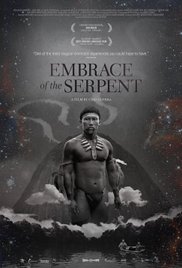
embrace Greetings again from the darkness. Breathtaking black & white photography takes us on parallel scientific expeditions down the Amazon River, with stories inspired by the travel journals of Theodor Koch Grunberg (1872-1924) and Richard Evans Schultes (1915-2001).  It’s the first ever Oscar nomination (Best Foreign Language Film) for Columbia, and director Ciro Guerra’s film certainly deserves any and all acclaim.

The common link between the two expeditions is an Amazon Shaman named Karamakate. A young and proud Karamakate (Nilbio Torres) acts as a guide in the early 1900’s for Theo (Jan Bijvoet), who is already quite ill when we first see his travel guide Manduca (Yauenky Migue) dragging him from the canoe. 30 plus years later, Evan (Brionne Davis) finds an older and wiser Karamakate (Antonio Bolivar), and the two head down the river on much the same route as the decades earlier expedition. Supposedly both trips were a search for the sacred and rare healing plant called Yakruna.

David Gallego’s cinematography is absolutely gorgeous throughout, and adds a dimension to the journeys as we see first-hand the sociological and biological destruction caused by colonialism and the rubber barons. The lost/forgotten cultures are reason enough for the natives to distrust white men, yet the mysticism and pride of the indigenous tribes are fascinating.

The character of Karamakate is a pleasure to get to know, and the film has a great deal to say … and does so while being a visual stunning experience.

watch the trailer:


Lolo (France, 2016)

March 12, 2016

lolo Greetings again from the darkness. The old saying “opposites attract” is on full display in director and co-writer Julie Delpy’s latest, as she offers up a twist on the French farce by adding a dark undercurrent. Additionally, the film addresses the personal and societal challenges facing women in their 40’s who are successful in their career, and who also hold out hope for finding true love.

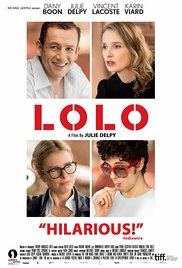
Ms. Delpy also stars as Violette, a germaphobe divorcee who works in the fashion industry in Paris. The film opens as Violette and her best friend Ariane (Karen Viard) are deep into girl-chat while hanging out at a spa … each annoyed that they are without a soul mate that would complete their lives (or at least fill the sexual void).

After dumping a freshly caught tuna in Violette’s lap (as they meet for the first time), and then informing her that he understands she’s not his type … you know, since she is a lesbian (which she is not) … Jean-Rene (Dany Boon) re-groups and begins charming her with his grounded and simple nature. These two form a cute, but odd couple of opposites and seem to very much enjoy each other’s company.

Things start to get confusing for the couple when her 19 year old son Lolo (Vincent Lacoste) begins his (initially) subtle clandestine activities designed to break up the couple. Soon enough we realize this wannabe artist goes well beyond typical passive-aggressive activities, and straight into full-on psychotic mode with Oedipal tendencies. His psychological warfare against Jean-Rene slowly builds from childish antics, to deceitful and devilish scheming, to downright criminal … all with a sense of black comedy for us viewers (can’t say the same for Jean-Rene).

Other movies such as Cyrus and We Need to Talk about Kevin have dealt with the mother-son relationships ranging from creepy to dangerous, but Delpy’s movie always hits us with a dose of laughter when it’s needed. The use of the movie classic Village of the Damned (1960) is especially spot on as Violette and Jean-Rene continue to plug away as a couple … even when it’s obvious to us that 3 is too many for a healthy relationship – especially when one could be a reincarnation of Damien from The Omen.  The perfect ending reminds us that no one beats the French when it comes to a farce; even when the darkness is sprinkled on a bit heavier than usual.

watch the trailer:


JACK OF THE RED HEARTS (2016)

February 27, 2016

jack of the red hearts Greetings again from the darkness. Being the parent of an autistic child carries challenges that require incredible patience and love and extraordinary effort. Writer Jennifer Deaton and Director Janet Grillo (Fly Away, 2011) deliver an insightful and interesting look at these challenges through the eyes of two parents, their autistic daughter, their teenage son, and the in-home caregiver they hire.

The film begins with a glimpse of what appears to be two different worlds: a street wise teenage girl helping her younger sister “escape” from a foster home, and two beaten down parents of a young autistic daughter. Soon enough, these two worlds collide and Jack/Jacqueline/Donna is hired by the parents to be a live-in companion for their daughter. The parents are so desperate for help that they fall for the savvy con being played by Donna.

None of what happens is surprising … Donna turns out to have a knack for helping autistic Glory, the parents begin to experience a bit more happiness, the teenage son develops a crush on Donna, and the cloud of truth is constantly hovering. Even though some of the scenes are bit corny, for the most part the story is told in a grounded manner that allows us to connect with all of the characters – conveying the pressures, stress and periodic moments of breakthrough.

The acting is strong throughout. Taylor Richardson (A Most Violent Year) is exceptional as the autistic Glory. She is believable and never goes beyond what fits for the character. Famke Janssen and Scott Cohen are solid as the parents, and Israel Broussard shows real promise as teenage Robert/Bobert. Donna/Jack’s younger sister has limited screen time, but Sophia Anne Caruso (Brigitta in TV’s live version of “The Sound of Music”) makes it work. Shouldering much of the film is Anna Sophia Robb (Bridge to Terabithia, The Way Way Back) as Jack/Donna. She does her best work in the second half of the film, as her initial tough-girl stint is a bit shaky. However her scenes with Glory are outstanding, and it’s a pleasure to watch her slowly turn over a new leaf.

As strong as the cast is, much of the credit goes to director Grillo (ex-wife of David O. Russell) who has a real understanding of the world of autism, and keeps us focused on importance of family, the need to be loved, and the rewards of finding one’s place in the world.

watch the trailer:


TOUCHED WITH FIRE (2016)

February 19, 2016

touched with fire Greetings again from the darkness. We all have good days and bad. Sometimes we energetically leap from bed, while other days we barely muster the energy to push off the covers. For those who are bi-polar, those peaks and valleys are mere child’s play. When “up”, they often are filled with frenetic creativity and hyper-energy. When “down”, life holds no purpose and the simplest daily actions are deemed impossible. Medication seems to be their only hope for “normal”.

Writer-director-editor-composer Paul Dalio admits much of the story comes directly from his life and that Carla and Marco carry much of him. Katie Holmes plays Carla and Luke Kirby (Take This Waltz, 2011) plays Marco … theirs one of the few on screen meet-cutes to occur in a psychiatric hospital (not counting McMurphy and Chief). When the pendulum swings, Carla frantically scrawls out poetry based on nature and feelings. Marco is also a poet – the rapping kind – but he seems more addicted to the energy and spirit that goes with being up.

The film is really two-in-one … a star-crossed love story and a commentary on treatment (to medicate or not to medicate – that is the question). The writings and work of clinical psychologist Kay Redfield Jamison play a vital role here, and she even appears as herself in a critical scene. Carla really wants to get “right”, especially when she discovers she is pregnant.  Marco, on the other hand, spends much of his time trying to maintain the “high” as he finds life so much more fulfilling and interesting when not medicated. Marco uses the track record of many suspected bi-polar types as proof that greatness is near – Emily Dickinson, Tchaikovsky, and Van Gogh.

Bradley Cooper was Oscar nominated for his bi-polar role in Silver Linings Playbook, and both movies pay some attention to the challenges faced by families. Carla’s parents are played by Christine Lahti and Bruce Altman, while Griffin Dunne is Marco’s dad. The best intentions often fail miserably, leaving all parties feeling frustrated and emotionally distraught. The movie seems to make the argument that medication is the only real hope if a sufferer wants to live anything approaching a normal life, and it’s Ms. Jamison’s stated contention that medication will neither change the personality nor negatively impact creativity.

Katie Holmes offers up her best work since Pieces of April in 2000. Of course, there was a “marriage” mixed in there that stomped down her career. This role reminds that she is capable of finding the core of a deep character. Welcome back. Spike Lee is listed as a Producer here, and Mr. Dalio says Lee, who was his NYU Film School professor, encouraged him to explore this facet of his affliction. Dalio’s wife Kristina Nikolova shared cinematographer duties with Alexander Stanishev.

The film, previously entitled “Mania Days”, does a nice job of showing us the extremism involved with being bi-polar, as well as the challenges that come from being part of the medical field or familial support staff.

watch the trailer:


THEEB (Jordan, 2015)

February 18, 2016

theeb Greetings again from the darkness. The first film from Jordan to be nominated for a Best Foreign Language Oscar has drawn comparisons to the epic classic Lawrence of Arabia, and the legendary Monument Valley canon of John Ford. This feature film debut of writer/director Naji Abu Nowar takes a more intimate approach in being more while also being less.

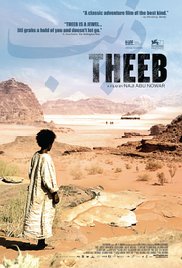
It’s 1916 in Hijaz Province, Arabia – nearing the end of the Ottoman Empire – and the film opens with a voiceover of fatherly advice that provides our basic introduction to the tribe’s customs. Soon enough we are watching a couple of Bedoin brothers doing typical brotherly things. The older brother Hussein alternates between teasing young Theeb and teaching him some basic survival skills.

Circumstances are such that the boys find themselves on a cross-desert adventure that is both beautiful and dangerous. It’s a rare snapshot into this part of the world as it is transitioning from an era where the tribesmen were renowned guides across this stretch of desert, to the modern era where trains (The Iron Donkey) transport people and cargo in significantly less time.

More than anything, this is a coming of age story for young Theeb. He quickly learns to apply life lessons taught by his big brother and their late father. Each decision becomes a matter of life and death, and it’s the expressive eyes and facial gestures of Jacik Eid as Theeb that makes this so much more than a stunningly beautiful film to look at. The sand, the sun, and the colorful canyons are like so much of nature – simultaneously visually spectacular and life-threatening. Watching Theeb react to each moment through wits and quick-thinking is a unique experience, and when we realize that Theeb fully understands his place in making things right for the family, it becomes emotionally profound.

Theeb is defined as “wolf” and it’s the strength, independence and savvy of young Theeb that grabs the viewer and prevents us from simply enjoying the landscape and photography. We are engaged with the adventure of this growing-up-too-fast young man.

watch the trailer:


A WAR (Krigen, Denmark, 2015)

February 11, 2016

a war Greetings again from the darkness. Distinguishing between right and wrong has always been pretty easy for me, which probably explains my fascination when a good book or movie presents a decision weighted by moral ambiguity … especially one involving life and death. Such is the case with writer/director Tobias Lindholm’s (A Hijacking, 2012) latest, which has been Oscar nominated for Best Foreign Language Film (Denmark). It’s tension-filled and overflowing with moments that will make you question yourself and your beliefs.

Three parts make up the whole, and each segment brings its own pressures and is presented with its own camera technique. We see Commander Claus Pederson (Pilou Asbaek) leading his squad of Danish soldiers in their Afghan peace-keeping missions. The film bounces between these boots on the ground and Pederson’s wife (Tuva Novotny) back at home in Denmark trying to maintain a sense of normalcy for their three kids. The final act is a tense courtroom drama that will undoubtedly mess with your head.

Mr. Asbaek (“Game of Thrones” and the upcoming Ben-Hur remake) is spell-binding as Commander Pederson. When a land mine causes the loss of one of his men, Pederson proves that he is no desk-jockey, but rather a leader by example. He has a calm presence that inspires his men, though his fearless approach is quietly questioned by some. His in-the-heat-of-the-moment decision with his squad under fire saves the life of an injured soldier, while also resulting in a tragedy that could affect his military career, his family life, and his freedom.

It’s interesting to see how director Lindholm parallels the struggles of Mr. and Mrs. Pederson … albeit in different worlds. The personal and emotional challenges are everywhere and affect everyone. The 3 kids miss their father and struggle in their own ways with their new world. The wife misses her husband and battles to keep the kids in line. The husband misses his wife and their closeness. He also misses the little joys that come with being a (present) father. The soldiers struggle with their orders to patrol a community that doesn’t seem to want them. Even the community struggles with the constant threat of danger.

Commander Pederson’s fateful decision is the focus of the courtroom drama. The dilemma faced by him and his men is truly a no-win situation. His job was to protect his men while also protecting the citizens of the community. It’s a judgment call in the heat of the moment. Either decision would be right and either decision would be wrong. The issue on trial is so complex that it’s very likely the desired verdict would be split among those in the theatre. When Pederson’s wife tells him “It’s not what you did that matters. It’s what you do now.” We certainly understand her, but do we agree? Is it possible to judge a war crime when lives are in immediate danger?  What would you do? Unless you’ve been in those boots, it’s impossible to know. The best intentions can be eclipsed by a will to live and quest to save those for whom you are responsible. Is lying ever OK, and if so, what is the fallout?  How does it impact you, those you love, and those whose respect you have earned?

This is an exceptionally well made movie with a script that constantly has us questioning our morals. while providing no easy answers.

watch the trailer:


BOY AND THE WORLD (animated, 2015)

February 11, 2016

O Menino e o Mundo (Brazil)

boy and the world Greetings again from the darkness. It may not be Pixar, but this wonderful film from Ale Abreu is absolutely worthy of its Oscar nomination for Best Animated Feature, though it’s heavier on message than story. It’s a wonderful reminder that one of the best features of animation is that the look can be unconventional and still be effective.

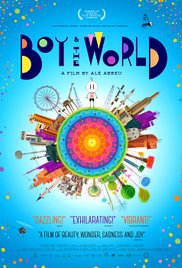
The stick figure boy is on a mission to re-connect with his father, who left the family’s country home to find work in the big city. For Abreu’s film, the boy’s real purpose is to be our tour guide through this exploration of the state of the “civilized” world. It’s an adventure that provides the boy (and us) insight into cities, the sea, the countryside and agricultural life. It’s also an examination of the loss of childhood innocence as we are exposed to reality.

A rare hand-drawn presentation is also mixed-media, as it utilizes a few real news clips to emphasize the cluttered, damaged world. It’s a different approach in making the arguments regarding climate change, carbon footprints and socioeconomic imbalance. The hand-drawn core here is more complex than what we initially believe. Colors explode onto the screen, and the visuals often carry multiple meanings in depicting the intended message.

Dialogue is minimal and often garbled in a manner that reminds of any adult in the Charlie Brown comics … but we are never confused on what is being conveyed. In addition to the visuals, sound effects play a huge role, as does the music from composers Ruben Feffer and Gustavo Kuriat, and Brazilian jazz favorite Nana Vasconcelos. It’s a unique approach to reminding us that our harsh treatment of the planet could play like a horror story or dangerous adventure to the innocent eyes of a child.

watch the trailer: