Greetings again from the darkness. The best neo-noir crime thrillers immersed in the grim tone of “True Detective”, Stieg Larsson’s trilogy and El secreto de sus ojos(The Secret in Their Eyes, 2009) have a way of drawing us into the atmospheric underbelly of society and keeping us grappling for solid ground until a resolution is in place. This gem from Spain comes courtesy of director Alberto Rodriguez, who co-wrote the story with Rafael Cobos. Cinematographer Alex Catalan also deserves much credit.
Juan (Javier Gutierrez) and Pablo (Raul Arevalo) are two police detectives thrown together to investigate the disappearance of two teenage sisters in a remote part of the southern country. It’s 1980, five years after the death of Franco, and the country is in the midst of political and social transition/turmoil. The two detectives are a microcosm of this transition as Juan is the old-school cop who views “physicality” as part of the interrogation process, while Pablo is next generation and believes in following the new rules of democracy and treating all with respect. Pablo, whose wife is back home in Madrid expecting their first child, is none too happy about being paired with Juan, who seems to have no real moral compass at this stage in his life and career.
When the violently abused bodies of the sisters are discovered, Juan and Pablo follow a trail of leads that take them through a mostly closed-circuit and uncooperative community … one eager to explain that those sisters had “a reputation”. The village women are all frightened to speak, the men are zealously protective of each other, and both are suspicious of outsiders. Even the Civil Guard systematically defends the old society of man-rule.
The contrast between the two polar opposite detectives, and their slow to develop meeting of minds, is more the focus here than the still quite interesting procedural work being done to investigate the murders and uncover the atrocities. This is not one of those heart-pounding, adrenaline-laced joy rides, but rather a slow-burn of police work and character development.
Aerial shots to open the film are breath-taking and included periodically throughout the film. Mr. Catalan’s work is combined with digitized versions of the work of photographer Hector Garrido to create the haunting atmosphere around an area of Spain that otherwise lacks the natural beauty we often associate with the country. This setting adds yet another layer to this mesmerizing movie-watching (for those of us who appreciate the genre).
Greetings again from the darkness. If I find myself three minutes into a movie and have already executed a couple of eye-rolls, any hopes for a decent little Romantic-Comedy-Drama would ordinarily be dashed. However, having Rebecca Hall’s character narrate her writing efforts as she taps away on the keyboard, actually does serve the story. The first feature from director Sean Mewshaw and his screenwriting wife Desiree Van Til takes advantage of a beautiful setting, a slew of contrasts, and some heartfelt music to keep us interested in how things plays out.
Ms. Hall plays Hannah, the grieving young widow who has stashed herself away in a lakefront cabin located in the rural Maine community in which she was raised. Her grief remains burdensome some two years after the tragic death of her husband Hunter Miles – a folk singer whose only album (and subsequent death) created a public mystique and a defensiveness on the part of Hannah to protect and control his legacy.
As a Ph.D from Brown, periodic contributor to the local newspaper, and soul mate of Hunter, Hannah undertakes the writing of his biography in the shadow of the studio monument that continues to expand with trinkets left at his gravesite by a cult of fans paying respect. Griffin Dunne plays her friend and owner of the local bookstore and publisher of the newspaper. His less than enthusiastic critique of her early pages of the biography correspond with the vigorous pursuit by a Hofstra Pop Culture Professor with a book publishing deal who wants to make Hunter a key element of his new project.
Jason Sudeikis plays Andrew, and his fast-talking big city mannerisms don’t initially mesh so well with the hyper-sensitive and protective grieving widow. The two spar like brother and sister, and the initial adversarial relationship means only one thing in the movie world … romance is in the air. Fortunately, the focus on telling the story of Hunter acts as a form of grief therapy for Hannah and a bit of redemption of spirit for Andrew. Of course, the path to enlightenment is not simple for either. Hannah’s “friend with benefits” is a hunky local power company worker played by Joe Manganiello (“True Blood”), and Andrew’s big city music industry girlfriend is played by Dianna Agron (“Glee”). But as you would expect, the biggest obstacle faced by the two leads is their own stubbornness.
We learn the most about Andrew and Hannah when they are around others. An Easter luncheon with Hannah’s family is especially insightful. Her parents are played by Blythe Danner and Richard Masur, and as viewers we long for more scenes featuring these two characters (and terrific actors). We sense that these parents see right through Andrew and Hannah. Can Hannah let down her guard so that she can move on with life? Can Andrew quell his ambition so that the emotional connection takes place?
Beautifully shot (with British Columbia substituting for Maine), the aspect of nature plays a role in contrasting country girl with city boy, and it’s the accidental discovery of a long lost song that highlights the stark difference in motives … while also being the impetus for change. Hunter’s original music is heard throughout the film, and it’s actually Damien Jurado whose singing and songwriting add an element of intrigue and realism. Hannah, as narrator, states “In the middle, we feel like it’s never going to end.” While that may be true for many romance movies, the filmmakers here avoid the “too cute” moments that spoil most in this genre … and impressively overcome those early eye-rolls.
Greetings again from the darkness. Homage or Spoof or outright Farce? Though the Coen Brothers motivation may be cloudy, their inspiration certainly is not. The Golden Age of Hollywood is skewered by the filmmaking brothers who previously applied their caustic commentary to the movie business in Barton Fink (1991). However, this latest seems to borrow more from the unrelated universes of their films A Serious Man(2009) and Burn After Reading(2008) in that it alternates tone by focusing first on one man’s attempt to make sense of things, and then with a near slapstick approach to “urgent” situations.
The film seems to be made for Hollywood geeks. Perhaps this can also be worded as … the film seems to be made for the Coen brothers themselves. Rather than an intricate plot and subtle character development used in their classic No Country for Old Men(2007), this is more a collection of scenes loosely tied together thanks to their connection to Eddie Mannix, Capitol Pictures “fixer”. Josh Brolin plays straight-laced Mannix, a twist on the real Eddie Mannix, notorious for his behind the scenes work at MGM in controlling the media, protecting the stars and studio, and protecting movie stars from their own idiotic actions. He was a real life Ray Donovan. It’s Mannix’s job that creates the hamster wheel to keep this story moving (complimented by narration from Michael Gambon).
We witness a typical day for Mannix as he confesses to the Priest that he had a couple of cigarettes after promising his wife he would quit, negotiates with communists who have kidnapped the studios biggest movie star, deftly handles the studio head’s greedy desire to shift a western movie star into a genre for which he is ill-prepared, plans a cover-up for the starlet having a baby out of wedlock, and juggles the demands of the competing twin gossip columnists searching for scandal. Mannix keeps his cool through all of this while mulling a lucrative job offer from Lockheed that would put him right in the midst of the nuclear war scare.
With an exacting attention to period and industry detail, the Coen’s remind us of the popular genres and circumstances of the era. George Clooney plays mega star Baird Whitlock, working on the studios biggest picture of the year – a biblical epic entitled “Hail, Caesar!” (think Ben-Hur, The Robe, etc). Whitlock is kidnapped by a group of communist writers (not yet blacklisted) who are striking out against a capitalistic studio that doesn’t share the rewards with the creative folks. It’s a different look than what Trumbo offered last year. In a tribute to Roy Rogers and famed stuntman Yakima Canutt, there is a segment on popular westerns featuring Alden Ehrenreich (Beautiful Creatures, 2013) as Hobie Doyle, a popular actor whose an artist with a rope and horse and guitar, but not so smooth on his transition to the parlor dramas being filmed by demanding director Laurence Laurentz (a terrific Ralph Fiennes). In boosting Doyle’s public perception, the studio sets him up on a date with a Carmen Miranda-type played by Veronica Osorio. Her character is named Carlotta Valdez in a nod to Hitchcock’s Vertigo. Another sequence features Scarlett Johansson as DeAnna Moran, an Esther Williams type (with a behind the scenes nod to Loretta Young) in a Busby Berkeley-esque production number featuring the synchronized swimming so prominent in the era. One of the film’s best segments comes courtesy of Channing Tatum in a take on films like On the Town, where sailors would sing and dance while on leave.
Tilda Swinton (whose appearance improves any movie) appears as the competing twin sister gossip columnists Thora and Thessaly Thackery. Her hats and costumes are sublime and pay worthy tribute to Hedda Hopper (who also balked at being termed a gossip columnist). Jonah Hill’s only scene is from the trailer, and it could be misleading to any of his fan’s coming to see his performance; and the same could be said for Frances McDormand (a very funny scene as a throwback editor). And so as not to disappoint their many critics, the Coen’s have a terrific scene featuring four men of various religious sects who are asked their opinion of the script – so as not to offend any viewers. The pettiness is palpable.
Roger Deakins is, as always, in fine form as the cinematographer. The water and western productions are the most eye-catching, but he does some of his best camera work in the shots of individual actors or scenes-within-a-scene. We have come to depend on Joel and Ethan Coen for taking us out of our movie comfort zone, while providing the highest level of production – music, costumes, sets, camera and acting. While this latest will leave many scratching their heads, the few in the target audience will be applauding fiercely.
Greetings again from the darkness. “There’s air freshener behind the Virgin”. That line should provide the necessary caution for you to be braced for just about anything to be said by any character in this latest from director Nicholas Hytner. Billed as “A mostly true story”, it’s actually more commentary on how we treat those less fortunate and how we use others for our own gain. That bleak message is cloaked here in humor and a wonderful performance from Dame Maggie Smith.
Alan Bennett is an author, playwright and screenwriter known for The History Boysand The Madness of King George(Oscar nominated for his script). He is also at the core of this story – every bit as much as Ms. Shepherd, the lady in the van. While living in upper crust Camden Town, Mr. Bennett offered to let Ms. Shepherd park her van in his driveway for a few weeks until she could make other arrangements. This van was also her home, and the years (as they are apt to do) came and went until this arrangement had lasted 15 years (1974-1989).
You might assume that Ms. Shepherd was an extremely appreciative “squatter”, but in fact, she was quite a cantankerous and difficult woman, possibly/probably suffering from mental instability. Maggie Smith brings a humanity to the role that she had previously owned onstage and radio. She goes far deeper than the wise-cracking old lady role we have grown accustomed to seeing her play … though her vicious dialogue delivery remains in prime form. Throughout the film, we assemble bits and pieces of Ms. Shepherd’s background: an educated-French speaking musician-turned nun-former ambulance driver-who “possibly” won awards for her talents. She is also carrying a burden of guilt from a past tragic accident that keeps her in the confessional on a consistent basis.
Mr. Bennett is played by Alex Jennings (The Queen, 2006), and the film actually presents dual Bennetts – the one doing the writing, and the one doing the living. These two Bennetts are a virtual married couple – arguing over Ms. Shepherd, and jabbing each other with barbs aimed directly at known emotional weaknesses. The living Bennett claims to be so full of British timidity that he couldn’t possibly confront the woman junking up his driveway. The writer Bennett takes the high road and claims he would rather write spy stories than focus his pen on the odorous, obnoxious transient living in his front yard. Of course, now that we have a play and movie, it’s difficult to avoid viewing Mr. Bennett’s actions as anything less than inspiration for his writing … though the extended charitable actions cannot be minimized.
With director Hytner and writer Bennett reuniting, it’s also interesting to note that more than a dozen actors from The History Boysmake appearances here. The list includes James Corden, Frances de la Tour, and Dominic Cooper. Also in supporting roles are Roger Allam and Deborah Findlay (playing constantly irritated neighbors), Gwen Taylor as Bennett’s dementia-stricken mother, Jim Broadbent as a blackmailing former cop, and Marion Bailey as a staffer at the abbey.
Filmed at the same house where the van was parked for so many years, the film is a reminder to us to exercise tolerance and charity in dealing with the poor. Even Bennett’s grudgingly-offered assistance is a step above what would typically be expected. While we could feel a wide spectrum of emotions for the two main parties here, it’s Ms. Shepherd’s character who says “I didn’t choose. I was chosen”. We are left to interpret her words in a way that is either quite sad or accepting.
The film mostly avoids dime store sentimentality, and that’s in large part due to Maggie Smith’s performance. Few are as effective at frightening young kids or putting the elite in their place. The ending scene shows the real Alan Bennett cruising into the driveway on his bicycle just as the blue plaque honoring the lady in the van is displayed. We can be certain this gesture would not generate a “thank you” from her.
Greetings again from the darkness. When the word formulaic is used to describe a movie or book, it’s typically meant as a disparagement. We must admit, however, that if the formula works, it only makes sense (and dollars) to stick with it. Most Hollywood blockbuster franchises are built around a basic formula – superheroes, romantic-comedies, alien invasions, etc. Author Nicholas Sparks (The Notebook) has taken his tragic-romance novel formula and turned it into big screen gold. This is the eleventh film developed from his writing, and it’s likely to be another successful entry into the Sparks canon.
Director Ross Katz (Adult Beginners, 2015) is at the helm of the screenplay by Bryan Sipe (upcoming Demolition) and many of the familiar Sparks features are present. First off, the key players are all exceedingly attractive – Ralph Lauren model attractive. Secondly, there is a will they/won’t they romance that will of course happen and then may fall apart, but probably won’t. And third, some type of tragedy will occur that will kick off a stream of tears from a certain segment of the audience.
This one begins with a narrator’s humble-brag promising to tell us the “secret of life”. That narrator is Travis, played with an over-flowing abundance of southern charm by Benjamin Walker (Abraham Lincoln: Vampire Hunter, 2012). His main vices are a tendency to use “damn” to the point of overkill in most every conversation, and his natural ability to attract the ladies. Oh, and he has a rescue dog and a lake house and he is a veterinarian. See, in the Sparks universe, everyone is beautiful and successful. Travis has his eye on his new neighbor, who is pretending to be annoyed but mostly admits to playing a game of hard-to-get. This is Gabby (Teresa Palmer, Warm Bodies2013), and she is beautiful and a doctor-to-be. Gabby’s current boyfriend is, of course, a handsome doctor. Ryan is played by Tom Welling (a bit heftier than his days as Clark Kent/Superman in “Smallville”).
The beautiful Maggie Grace (Taken) plays Travis’ sister, and Alexandra Daddario (San Andreas) plays Monica … she is not only beautiful, but she is also the nicest, most understanding and supportive “other” woman ever seen on screen. Tom Wilkinson plays Travis’ veterinarian dad, and Sharon Blackwood plays the wise-cracking and match-making assistant Cora. If that’s not enough beauty and success for you, we also get “puppies in a basket”!
Come for the chuckles and tears … just not twists or surprises. Fans of this genre will get exactly what they want. It’s a romantic fantasy set in the somewhat realistic world of doctors, veterinarians, and equestrians. The faces are perfect. The dialogue is snappy without being demanding (even in the God discussion). Many scenes feature loyal dogs, or a serene lake, or the “moon and stars”. Even the difficult parts of life – raising kids, health issues, etc – are given the ‘yada, yada, yada’ treatment. While Travis claims over and over that Gabby “bothers him”, it’s the kind of bother that creates a cryfest in the theatre … whether things go right or wrong. It’s also the reason that all eleven Sparks films feature a couple of lovers on the poster. Just remember, if that formula works ….
Greetings again from the darkness. In the not-inconsequential sub-genre of 1960’s tough guy crime thrillers, it’s tough to beat this neo-noir that carries the lineage of a fine wine, but the taste of a stout beer. Familiar faces are everywhere, bullets fly, double-crossing is expected, Angie flaunts, and revenge is the mission.
While not a box office hit on its release in 1967, the film grew into a cult classic and is now appreciated as one of the era’s best. The set-up is certainly not too complicated. During a heist (filmed at Alcatraz), one of the gang members shoots another at “point blank” range and takes off with both the money and the poor guy’s wife. The shot guy survives and seeks his money ($93,000) and revenge on those who wronged him.
Sure it sounds simple and common, but it’s made special thanks to top notch work from the writer, director, cinematographer, composer and cast. The story (adapted by Alexander Jacobs, David Newhouse, Rafe Newhouse) is based on “The Hunter” from acclaimed crime novelist Donald Westlake (as Richard Stark). The book was also the source material for Mel Gibson’s 1999 movie Payback. Oscar nominated director John Boorman (Deliverance 1972, Hope and Glory1987) works with Oscar nominated cinematographer Philip H Lathrop (Earthquake 1974) to create a stylish and gritty look and feel, while Oscar winning composer Johnny Mandel (The Sandpiper, MASH theme) adds just the right musical touch.
If that’s not enough for you, Lee Marvin commands attention as the revenge-obsessed tough guy who won’t get fooled again. To call Lee Marvin a tough guy seems redundant and unnecessary, as his screen presence oozed dominance. He was coming off an Oscar win for Cat Ballouand one of his best performances in The Dirty Dozen. In other words, he was an actor at the peak of his Hollywood power.
Joining Mr. Marvin on screen is a prestigious group led by Angie Dickinson and Carroll O’Connor. With a career that spanned more than 50 years, Ms. Dickinson starred in such films as the original Ocean’s 11 and Brian DePalma’s homage to Hitchcock, Dressed to Kill. Of course, she also starred in one of the biggest TV shows of the 1970’s “Police Woman”. And speaking of 1970’s TV, few were more jarring to the culture than “All in the Family” with Carroll O’Connor as Archie Bunker. In this film, Ms. Dickinson plays the sister of Marvin’s double-crossing wife and she gets to flail away in anger at him before the two fall into bed together … a terrific piece of editing. Mr. O’Connor plays Brewster, one of the three heads of “the Organization”, and one of the targets that Marvin chases to retrieve his money.
Playing another of the three heads is Lloyd Bochner, who capitalized on his smooth demeanor and velvety voice during a 7 decade career in TV and movies. Mr. Bochner is the father of Hart Bochner, who (as Ellis) tried to out-smart Hans Gruber in Die Hard. Keenan Wynn appears as a mysterious figure feeding information to Marvin’s character to assist in his quest of taking down the organization. Mr. Wynn is the son of legendary entertainer Ed Wynn who was known for his work in vaudeville, Ziegfeld Follies, TV and movies (Mary Poppins). Keenan also appeared in many TV shows and movies, with Dr. Strangelove: Or How I Learned to Stop Worrying and Love the Bomb being his most famous. Appearing as Lynn, the two-timing wife, Sharon Acker was on the verge of movie stardom … only that stardom never came. By choosing to focus on TV roles, she had a nice long career, but never reached the superstar status many had predicted. Sandra Warner plays the waitress that Marvin talks to, and Ms. Warner simply walked away from the business after this role … despite a successful career that started when she was 18 years old. Yet another familiar face in the cast belongs to John Vernon, who was making his feature film debut. Here he plays the guy pulling the trigger at point blank range, and many will recognize him as Dean Wormer in Animal House. James Sikking plays the sharpshooter employed by the organization, and fans of “Hill Street Blues” will remember him as the slightly annoying Howard.
There are a few other notes of interest regarding actors in the movie … though you’ll have to look quickly. Sid Haig plays a henchman at the hotel. Mr. Haig has had a prolific career as a heavy, bad guy, villain, horror film staple, and even Tarantino favorite. Barbara Feldon, the beloved Agent 99 in “Get Smart” makes an appearance on a Ponds face cream commercial as Marvin watches TV, and Lauren Bacall is seen/heard quickly on a TV set as well. Also, Felix Silla has one scene as a hotel guard. The diminutive Mr. Silla also starred as Cousin Itt in “The Addams Family”. As a final note and shout out to “the Chevies”, it must be noted that Angie Dickinson and Keenan Wynn would also appear together in the deliciously twisted 1971 film Pretty Maids all in a Row from that lover of the female form, director Roger Vadim.
It’s pretty easy to see how all of these factors came together to create this cult favorite. From a filmmaking perspective, the use of flashbacks, editing and sound effects (footsteps) all add to the experience, as does Brewster’s stunning home – which in real life, now belongs to Drew Barrymore. If you are a fan of 1960’s film, it’s one you probably already have seen a few times, but if not, it’s one to watch if for no other reason that Lee Marvin firing shots into an empty bed … I’m still not sure how that was supposed to help him obtain his $93,000, but he really wants his money!
Greetings again from the darkness. Writer/director Deniz Gamze Erguven admits to being inspired by Sophia Coppola’s 1999 The Virgin Suicides(though this is not a remake), and by offering us a rare glimpse into the lives of five sisters in a rural community in Turkey, it’s clear why the film has been so well received at film festivals – culminating in an Oscar nomination for Best Foreign Film. It’s a bit confusing that the film is credited to France (Ms. Erguven’s current place of residence) as it takes place in Turkey and is performed in Turkish. But of course, country of origin is a minor ripple in this year’s uproar over diversity at the Oscars.
Not being any type of expert in Turkey culture or customs, I must accept that the insights provided by Ms. Erguven and her co-writer Alice Winocour are somewhat accurate, which makes the balance between the tradition of female oppression and the amazing spirit of the girls so relatable for many. What begins as a seemingly harmless game of chicken the girls play with some classmates (boys) on the way home after the semester’s last day of classes, turns into a series of events that most will find absolutely unacceptable. The shame brought to the family and the threat of the girls being “spoiled” highlights the extreme reactions from their grandmother (Nihal G Koldas) and Uncle Erol (Ayberk Pekcan).
Lale (Gunes Sensoy) is the youngest of the sisters and in the end proves to be the toughest and most independent. And that’s really saying something. We take in much of what happens through Lale’s expressive eyes, and we as viewers long for reasonableness to enter their lives. After being what can only be described as imprisoned in their own home, the spirit of the girls collectively and individually becomes clear. They find ways, small and large, to rebel … but it’s soon enough clear that the mission is to marry the girls off before it’s too late (there’s that “spoiled” thing again).
As Lale witnesses what her older sisters are subjected to, and how happiness or their own wishes play no role, she becomes more determined to avoid such destiny. With skewed perspective, one might make the argument that Grandmother and Uncle are doing what they think is in the long term best interests of the girls, but the Uncle’s despicable actions void any such thought. Instead we are left to marvel at the strength and spirit of the girls in world that holds them in such low regard as individuals.
Lale’s sisters are Sonay (Ilayda Akdogan), Nur (Doga Zeynep Doguslu), Selma (Tugba Sunguroglu) and Ece (Elit Iscan). The girls are so natural together that we never doubt their sisterly bond. They argue like sisters, defend each other as sisters, and play together like sisters … were it not for their isolated existence, their bond would be a joy to behold. The cinematography throughout the film adds to the discomfort and dread we feel, and the acting is naturalistic and believable. In the end, it’s the unbridled freedom of the titular creature that Lale defiantly embraces … whatever the consequences may be.
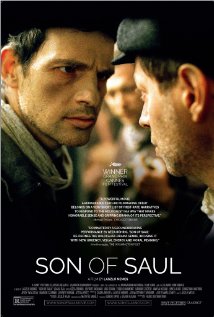
Greetings again from the darkness. Not wanting to watch another movie related to the Holocaust is understandable. Why should you purposefully agree to experience the misery and unfathomable horror that occurred? The simple answer is that we should never forget one of the darkest and inexcusable periods in human history. Director Laszlo Nemes delivers a new approach … a different viewpoint … and it grabs us and doesn’t let go.
The startling opening is a long-tracking shot featuring Saul Auslander (played by Geza Rohrig) and his duties as part of the Sonderkommando unit at 1944 Auschwitz-Birkenau concentration camp. The red X on his jacket relegates Saul to corralling the next round of Jews into the gas chamber and then cleaning up for the next group. The reward of this position means the delay of his own inevitable death. It’s a closer, more intimate look at a process that we have not prevented ourselves to think much on.
What we soon realize is that dialogue is minimal and most of what we see is as if we were standing right beside or just behind Saul. The shallow focus means much in our sight line is blurred, and we are exceptionally dependent on the sound – what we hear often conveys more of the message than what we see. Cinematographer Matyas Erdely never allows our eyes to drift … he shows us only so much, forcing our brain to process and interpret so many more clues.
The horrific proceedings may be blurred, but it’s a devastating experience nonetheless. Saul’s stoic face masks his true emotions and disgust, and prevents him from drawing any unwanted attention. Saul’s dependability as a Sonderkommando changes in the blink of an eye – he sees the body of a young boy whom he claims is his own son. He becomes obsessed with finding a Rabbi to allow for a proper burial for the boy. It seems clear that this mission is a chance to break from his soul-crushing duties and grab a bit of redemption before it’s too late. Unfortunately, the timing of this mission conflicts with a planned prisoner uprising … adding more complexity to a nearly impossible quest.
This is the feature film debut of director Laszlo Nemes, who also co-wrote the story with Clara Royer. Some of the specifics are drawn from “Voices from Beneath the Ashes” (edited by Ber Mark) and “Auschwitz: A Doctor’s Eyewitness Account” by Miklos Nyiszli. It’s a fearless vision for Holocaust storytelling with many open-ended issues (we don’t always know identities and positions of those we see) and few conclusions provided. But then we all know the ultimate conclusion, and this look may be the most devastatingly intimate look we have ever had.
It’s not a movie that allows you to kick back on the sofa and simultaneously catch up with Facebook. It demands and deserves attention and patience. Nothing here is designed to allow us a “hands off” view from a safe distance. In fact, the lack of traditional story structure and dialogue direction forces us to face the ugliest reality through a different perspective than we’ve ever considered. Powerful stuff.
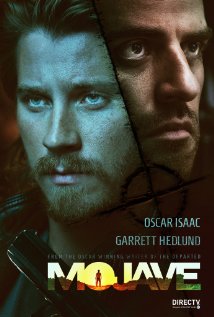
Greetings again from the darkness. The isolation of the desert seems the perfect place for an artist to achieve the existential awakening necessary during a time of personal doubt and crisis. The journey to find one’s true self becomes much more complicated when the one-man desert getaway is interrupted by heavy boozing, self-destructive tendencies, and a serial-killer sociopath. Such is the case with writer/director William Monahan’s (Oscar winner for his screenplay of The Departed) latest film.
Garrett Hedlund plays Thomas, a very successful filmmaker, who seems to take no joy from his life of luxury … a mansion in the hills, cool cars, a wife and daughter, and endless adulation. Sporting the ultra-cool celebrity look of sunglasses and long hair, Thomas heads off into the desert to either clear his mind or end his life. We aren’t really sure which, and neither is he. Lots of Vodka and reckless Jeep driving leave Thomas in a showdown of wits and machismo across a campfire from a sinister yet articulate drifter.
The drifter is Jack, played by Oscar Isaac, and it’s no surprise when we learn he is a serial killer … the sociopath part we figured out quickly, right along with Thomas. Their under-the-stars confrontation leads to a tragic accident the next day, and pits these two in a B-movie game of cat and mouse with a tone that reminds a bit of Cape Fear(1991) and U-Turn(1997).
Heading back to L.A., Thomas comes up with an incredibly stupid plan to cover his tracks. Being famous “since I was 19 years old” and having financial success with movies hasn’t trained Thomas on facing off against a clever nemesis. Even his discussion with his manager (played by an unusually low-key Walton Goggins) comes across as literary-speak rather than real advice. “Worry about what seems to be” is the advice Thomas rolls with.
Monahan fills the screen with tough-guy dialogue for these two characters that are both simultaneously stupid and smart. Jack and Thomas go at each like a couple of intellects, but it’s the class warfare that stands out. The 99% versus the 1%. The message seems to be that it comes down to circumstance on whether one is an artist or a psychotic felon … and the line separating the two is pretty slim.
It’s also not a very well disguised ripping of the film industry … especially of producers. Mark Wahlberg chews some scenery as a d-bag movie producer who talks loud and fast while accomplishing little. It’s a pretty funny turn for Wahlberg, though unfortunately his character spends limited time on screen. Louise Bourgoin has a couple of scenes, and quickly proves more would have been welcome.
The film may not be much to look at, and doesn’t really make much sense, but some of the dialogue duels and “brother” banter, manage to keep us interested throughout. “Take a left. Take a right.” It doesn’t much matter with these two well-read adversaries from opposite sides of the tracks.
Greetings again from the darkness. With a prestigious award from Cannes, filmmaker Ely Dagher probably had hopes for an Oscar nomination in the animated short film category. The nomination didn’t happen, but that doesn’t diminish the fine work from the Beirut-born director, who also uses splashes of news reel footage to contrast with the animation.
A teenager in suburban post-war Beirut has become disillusioned with his days of school and mundane home life. He spends hours on a rooftop gazing at downtown Beirut and a world so close, of which he knows so little. One day he is drawn to the unfamiliar urban landscape by a light emanating from the tall buildings … a light encouraging the younger generation to cross the bitter lines of division that have been wrecking the city.
He soon enters a world of imagination and serenity, and finds his bond to his real life slipping away. It’s a reminder that change only occurs with action, not merely dreams of a better world. The recurring theme and the block in his mind are presented to us by these two lines: “I’m tired of hearing the same story over and over again”; and “It feels like everything is stuck.” These feelings are not uncommon in teenagers all over the globe, but especially poignant given this setting.
 Greetings again from the darkness. The best neo-noir crime thrillers immersed in the grim tone of “True Detective”, Stieg Larsson’s trilogy and El secreto de sus ojos (The Secret in Their Eyes, 2009) have a way of drawing us into the atmospheric underbelly of society and keeping us grappling for solid ground until a resolution is in place. This gem from Spain comes courtesy of director Alberto Rodriguez, who co-wrote the story with Rafael Cobos. Cinematographer Alex Catalan also deserves much credit.


 Posted by David Ferguson