AMERICAN HONEY (2016)

October 13, 2016

american-honey  Greetings again from the darkness. Movies are often classified according to genre: comedy, thriller, romance, drama, etc. Writer/director Andrea Arnold (Wuthering Heights, 2011) pays little attention to such labels, and seems to take immense pleasure in spotlighting a segment of society that rarely gets the silver screen treatment. Rather than bring us yet another lawyer, cop, teacher or writer, Ms. Arnold demands we pay attention to a group of misfits.

Our introduction to Star (Sasha Lane) comes from inside a dumpster as she and her young siblings are diving for food behind a grocery store, and afterwards hitchhiking for a ride back home. A chance parking lot meeting with an energetic young man named Jake (Shia LeBeouf) leads Star to take some drastic actions … including joining Jake and his traveling troupe of free-spirited cohorts as they drive around the country selling magazine subscriptions and staying in cheap hotels. In between fabricated sales pitches, there is much alcohol, drugs, hip hop, and sex.

Jake is the top salesperson, but it’s Krystal (Riley Keough) who supervises the group with threats, punishment and insults. She understands this is a captive audience with few options … even asking Star “Will anyone miss you?” That question is at the core of what keeps this group together. The van gang is the only community to which they belong – the closest thing to family they have. The handbook’s stated purpose may be to “make money”, but fundamentally, these folks just want to fit in somewhere.

Director Arnold takes a quasi-documentary approach (similar to last year’s Tangerine) that delivers a realistic feel to a world most of us have little knowledge of. Seeing these scam artists bounce through suburbs and rural areas, willing to take advantage of most anyone along the way, generates both empathy and disgust. By design, it’s Star with whom we most relate. She clearly has a conscience, but is as naïve to the world as she is sensitive to her own desires. A simple question (used twice) is a kick in the gut to viewers, and the dreams and hopes of these misfits are most puzzling of all.

The use of music is exceptionally well done, leaning heavily on hip-hop and Rihanna (twice). The titular Lady Antebellum song has its moment, as does Darth Vader philosophy and a few flying creatures. Though the run time is entirely too long for an indie that really doesn’t follow a traditional narrative, we don’t mind too much since we are watching the birth of a new star. Sasha Lane makes an incredible debut, and though the director “discovered” her on spring break in Florida, the natural talent here runs deep. I’m not sure of the market for this film, but it seems obvious Ms. Lane has a much brighter future than her character – or any of the others riding along in the van.

watch the trailer:


CERTAIN WOMEN (2016)

October 13, 2016

certain-women Greetings again from the darkness. This is surely one of the most intriguing movies of the year that is about women and by a woman. Writer/director Kelly Reichardt (Wendy and Lucy, 2008) has adapted the short stories from Maile Meloy into a film with 3 segments focusing on the daily perseverance of three women in small town Montana (including a rare Wyoming joke).

The first segment has lawyer Laura Dern returning to the office after an … umm … “long lunch meeting”. Waiting for her is her client played by Jared Harris (“Mad Men”). The frustration between the two is palpable. Things take a turn for the worse as the sheriff calls Dern to the scene where Harris has taken a hostage at gunpoint. The issues on display here include the lack of respect for a female attorney, her unsatisfying personal life, and the one-way trust that can happen in times of desperation.

In the next story, we follow Michelle Williams and her husband James LeGros as they meet with a lonely elderly neighbor (Rene Auberjonis) and offer to buy some limestone blocks that have been sitting on his property for decades. The subtlety of the conversation embodies the missing respect and power of Ms. Williams’ character.

Emotions are exploding beneath the surface in the third segment featuring horse handler Lily Gladstone as she stumbles into a class being taught by Kristen Stewart, and is immediately captivated by the smart young teacher. Where this attraction leads is further commentary on the challenges faced by those trying to escape the daily drudgery of their lives.

The above recaps don’t come close to capturing the extraordinary quiet and stillness that director Reichardt uses in an emotionally powerful manner. These three women are all intelligent and filled with both pride and visceral disappointment … each quietly suffering, yet trudging forward with the emptiness each day brings. They each have a feeling of isolation – even if they aren’t truly alone, and failed or lackluster relationships certainly play a role.

The acting and cinematography (film, not digital!) is as expert as the directing. Ms. Gladstone is truly a standout by saying few words out loud, but speaking volumes with her open and pleading eyes. The nuance of each scene is where the most interest is, and the overall mood of the characters and tone of the stories overcome the fact that we are plopped into these lives with little or no backstory. As each one softly crashes (two figuratively, one literally), we understand these are the faces of strong women who will continue to do what’s necessary … even if that’s shoveling horse poop. The film is dedicated to Ms. Reichardt’s dog Lucy (a key to her personal and professional life).

watch the trailer:


BLUE JAY (2016)

October 8, 2016

blue-jay Greetings again from the darkness. Mark Duplass is the master of awkward. As a writer he excels in awkward encounters, awkward conversations, awkward situations … and awkward people. He can even create awkward out minimalism – two people in a simple and normal environment.

A bearded Mr. Duplass stars as Jim, a seemingly normal guy who has returned to his small hometown to pack up his mother’s house after her passing. While at the local market, he bumps into his old high school sweetheart Amanda, played by Sarah Paulson, who just happens to be in town visiting her expectant sister. Their awkward grocery aisle reunion leads to a very unusual … and yes, awkward … evening.

First time director Alexandre Lehmann uses his extensive experience as a cinematographer, and a black & white motif, to create a beautifully filmed story that is both simple and layered. Only one other actor appears in the movie … one scene with the great Clu Galager (“The Virginian”, The Last Picture Show) as a local merchant who provides a link to the past for Amanda and Jim. The bulk of the time is spent in Jim’s mother’s house – a literal time capsule that allows for reminiscing for the two former lovers.

Amongst the old familiar clothes, photos, letters, books and audio tapes, Jim and Amanda somehow progress to a bizarre form of role playing/play acting as if they had married young and were now celebrating their 20th wedding anniversary. You guessed it … awkward. Dinner, dancing, acting silly, jelly beans, Annie Lennox and cutting loose leads them to an awkward bedroom encounter. This moment finally produces an explosion of emotion which uncovers the long-buried source of their break-up … shutting down their fantasy game of recapturing the past.

It would be pretty easy to compare the film to Richard Linklater’s Before Sunrise (1995) or Before Sunset (2004), and though it has more in common with the latter, this one comes across more raw and melancholy than those more celebrated films. We never once doubt this situation could play out, but the only word to describe two former lovers exploring “what could have been” is … awkward. It’s a captivating movie to watch and yet another feather in the cap of Duplass Productions.

watch the trailer:


LONDON TOWN (2016)

October 8, 2016

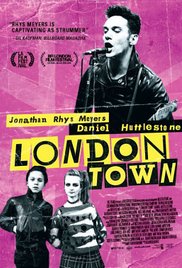
london-town Greetings again from the darkness. The late 1970’s in London were filled with political, social and labor discontent. Director Derrick Borte (The Joneses, 2009) and writer Matt Brown (The Man Who Knew Infinity, 2015) use this backdrop, along with some cutting edge music of the era, to tell a coming-of-age story that is enjoyable despite its predictability.

Daniel Huttlestone (Into the Woods) plays 15 year old Shay (not Che) who carries the burden of babysitting for his sister Alice (Anya McKenna-Bruce) and cooking for his two-job dad Nick (Dougray Scott), as he dreams of meeting up with his free-spirited mom Sandrine (Natascha McElhone) who lives a bohemian lifestyle in London. Things start to change for Shay once he receives a package from his mom … his first taste of music from The Clash.

Soon enough, Shay finds himself chatting it up on a commuter train with wild girl Vivian (Nell Williams), who generously shares her own music from The Clash, as well as some insight into the band, and even a ticket to their next concert. After the best night of Shay’s life, a work accident puts his dad in the hospital, requiring the son to take on even more responsibility.

More than a coming of age story, this is what I call “the teenage awakening”. Once the world starts opening up to Shay, he begins to question everything. A serendipitous night in the clink with Joe Strummer (Jonathan Rhys Meyers) brings some surprisingly grounded philosophy and guidance. “Some people just burn bright” is a spot-on description of Shay’s mom and a lesson to Shay that parents are people too.

The movie belongs to Huttlestone, who bounces between responsible young man, bullied teen, and anti-establishment rebel. Ms. Williams is delightful in her role, and JRM brings the necessary hard edge to Strummer. Director Borte has a really nice eye for scenes, but probably was a bit too stingy with Clash tunes. The timing for the film is a bit unfortunate, as it’s released in the same year as the similar but superior Sing Street. Still it’s an enjoyable little film with enough philosophy sprinkled in that we don’t even mind the predictable ending with “I Fought the Law” carrying us to closing credits.

watch the trailer:


DENIAL (2016)

October 6, 2016

denial Greetings again from the darkness. Guilty until proven innocent. It’s a concept that is inconceivable to Americans, yet it’s the core of British Law in libel cases. When once respected British historian David Irving accused American scholar and educator Deborah Lipstadt of libel, based on her book that accused him of being a Holocaust denier, the burden fell to Lipstadt to prove not just that Irving’s work was a purposeful lie, but that the Holocaust did in fact take place.

This is the first theatrical release in about 15 years for director Mick Jackson, who is best known for his 1991 L.A. Story and 1992 The Bodyguard, and for his Emmy-winning 2010 TV movie Temple Grandin. The script is adapted, from Deborah Lipstadt’s book, by playwright David Hare (The Reader, 2008), and the courtroom dialogue is taken directly from trial records and transcripts. Like most courtroom dramas, the quality relies heavily on actors.

Rachel Weisz plays Ms. Lipstadt with a brazen and outspoken quality one would expect from a confident and knowledgeable Queens-raised scholar. Timothy Spall bravely takes on the role of David Irving, a pathetic figure blind to how his racism and anti-Semitism corrupted his writings and beliefs. Tom Wilkinson is the barrister Richard Rampton who advocates for Ms. Lipstadt and Penguin Books in the libel suit brought by Mr. Irving. Andrew Scott plays Andrew Julius, the noted solicitor who also handled Princess Diana’s divorce from Prince Charles. Others include Caren Pistorius as an idealistic member of the legal team, and Alex Jennings as Sir Charles Gray – the sitting judge for the case.

Of course for any sane human being, it’s beyond belief that a Holocaust denier could achieve even a modicum of attention or notoriety, much less have the audacity to bring suit against a scholar who simply published descriptions of that denier’s own words. Rather than come down to fact vs opinion, a more fitting title would be opinion based on fact vs opinion based on a lie. If the words used against Irving in Lipstadt’s books are true, she would win the case. In other words, she had to prove that he was a racist, an anti-Semite and knowingly misrepresented the facts in his works as a Holocaust denier.

Mr. Jackson’s film begins with Ms. Lipstadt as a professor in 1994 at Emory University (where she remains employed to this day). In 1996, the lawsuit is filed, and in 1998, Lipstadt and Rampton visit Auschwitz. Though the courtroom drama and corresponding legal work takes up much of the film, it’s this sequence filmed at Auschwitz that is the heart and soul of the film. Very little melodrama is added … the scenes and the setting speak for themselves.

The trial finally started in 2000, and as always, it’s fascinating to compare the British court of law and process with that of the United States. The formality is on full display, but nuance and showmanship still play a role. The film and the trial ask the question … are you a racist/anti-Semite if you truly believe the despicable things you say/write? This is the question that the judge wrestles with (and of course, “Seinfeld” had a spin on this when George stated “It’s not a lie, if you believe it”).

It’s been a rough movie week for me with the Holocaust and slavery (The Birth of a Nation), but it’s also been a reminder of just what wicked things people are capable of, and how current society continues to struggle with such inexplicable thoughts. Kudos to Ms. Weisz, Mr. Wilkinson and Mr. Spall for excellent performances, and to Mr. Hale for the rare inclusion of a Chappaquiddick punchline.

watch the trailer:


THE BIRTH OF A NATION (2016)

October 6, 2016

birth-of-a-nation Greetings again from the darkness. Rarely is a director’s feature film debut one that has historical and societal relevance … and certainly few first-timers would dare “borrow” the title of one of the most iconic films in cinematic history (regardless of the irony). But it seems Nate Parker may be no ordinary filmmaker. His 7 year passion project is well made, well acted and worthy of discussion.

Though the films share the title card (right down to the font), there are almost no similarities between Mr. Parker’s film and the 1915 D.W. Griffith movie. Griffith’s movie (set 30-40 years later) is known as the first blockbuster and historical epic, was the first film screened at The White House (by Woodrow Wilson), and has been studied for its advanced filmmaking techniques. It’s also notorious for the despicable portrayal of racism, and has even been credited/blamed for re-energizing the activities of the Ku Klux Klan. Parker’s film is neither a remake nor a historical epic – it’s more of a biographical portrait of the most famous figure in the 1931 Southampton, Virginia uprising … Nat Turner.

This is the story of Nat Turner, but it’s clearly Nate Parker’s film. He is producer, co-writer (with Jean Celestin), director and lead actor (as Turner). Previously recognized for his acting (The Great Debaters, 2007), Parker’s passion for the story is evident. He takes creative license in some key elements (Turner’s marriage, the interracial baptism, the armory battle), but the fundamental truth that Turner was driven by his religious beliefs and visions to fight in order to free slaves is profound and ingrained in each scene.

Supporting work is solid and comes from Armie Hammer as Nat’s plantation owner and master, Penelope Ann Miller (The Shadow, 1994) as the plantation matriarch who teaches young Nat to read the bible (not the white man books), Jackie Earle Haley (The Bad News Bears, 1976) as the villainous slave hunting ranch hand, Mark Boone Junior as the scheming Reverend, Gabrielle Union as a rape victim, and Aja Naomi King (“How to Get Away with Murder”) as Cherry (Turner’s wife).

Nat Turner’s uprising lasted a mere 48 hours, and resulted in the slaughtering of dozens of slave owners and their families. Of course, many slaves were also killed and the fallout was that slave owners became more wary of the possible actions of slaves … while it also provided a glimmer of hope, and generational stories, for those who remained enslaved.

Religion was a driving force in Turner’s actions, and it’s fascinating to see a movie acknowledge conflicting bible verses, and how support can be found for most any action … in this case, slavery AND the battle against it. Turner’s sermons to slaves evolve over time from a message of “obey your master” to the point where he is inspiring the uprising – all with words directly from the scripture.

The end for Nat Turner provides the end of the movie, but of course, it’s not the end of the story. One need only check today’s headlines to know that racial tensions are prevalent and that society still has a ways to go for equality and humanity for all. Nina Simone’s “Strange Fruit” is one of the more haunting songs one will ever hear in a movie (originally recorded in 1939 by Billie Holliday), but it’s spot-on in its inclusion. A detailed song about lynching grabs our attention amongst the whippings, force-feedings, rape and other torturous mistreatments.

Slavery has been portrayed on screen in such films as 12 Years a Slave, “Roots”, Django Unchained, and Amistad. Nate Parker’s film deserves to be mentioned among these projects, and there is little doubt we will hear and see even more from Parker as a filmmaker (and actor). As a final benefit, the film reminds us to never bring a hatchet to a canon fight.

**NOTE: for those who follow the NBA, you’ll notice Michael Finley and Tony Parker are Executive Producers for the film.

**NOTE TO AMC NorthPark: my movie buddy was not pleased with his $7.03 small popcorn. Being one of the few who pays with cash, he questions why you can’t make 3 cents less per bag rather than load down your customers with 97 cents change … to say nothing of the inefficiencies in having your concession workers count out the 3 quarters, 2 dimes, 2 pennies


THE DRESSMAKER (2016, Australia)

September 29, 2016

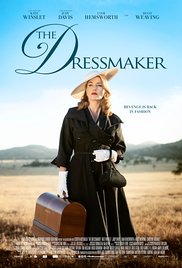
dressmaker Greetings again from the darkness. Sometimes we just have to give thanks (and credit) to a filmmaker for boldly stepping out of the Hollywood box and delivering a cinematic experience that is creative, interesting and downright unusual. Such is the case with director Jocelyn Moorhouse and her first film since A Thousand Acres (1997).

We know immediately that we are in for something a bit different. A1950’s era bus rolls down the dusty road and stops in a desolate little Aussie town with only a handful of store fronts. Western-style music accompanies Kate Winslet as she steps off the bus brandishing a Singer sewing machine rather than a Winchester or Colt. She lights up a cigarette, squints out from under her hat, and utters one of the more memorable first lines of any movie. We are hooked. (You had me at “bastards”)

What follows is based on Rosalie Ham’s best-selling novel with a screenplay from the director and PJ Hogan (Muriel’s Wedding, 1997), and features a most remarkable blend of slapstick comedy, dark humor, tragedy, romance, mystery, and revenge. At times the film has a Coen Brothers or Wes Anderson feel, while at various other moments it recalls the Keystone Cops, Chocolat, a spaghetti western and a spoof of … well it’s difficult to say whether it’s a spoof or homage to numerous genres.

Ms. Winslet is in full lead mode as Tilly … the local girl who was accused of murder at age ten and banished from her mother and hometown. After 25 years, Tilly returns to Dungatar in an attempt to reconnect with her mom, gain a bit of revenge on the petty townfolks, and remember that fateful day that has been blocked from her memory. The tool of her trade is a sewing machine (and at times a golf club) and Tilly has the magic touch to transform the local ladies into more attractive and confident versions of themselves. She wields her Singer with every bit of danger as Blondie (Clint Eastwood) did with his revolver in The Good, The Bad and The Ugly.

Judy Davis (A Passage to India) is fantastic (worthy of an Oscar nom) as Tilly’s mother “Mad” Molly. In a role that would have been pure caricature in different hands (Maggie Smith), Ms. Davis provides a depth and humanity to a role that is truly the heart of the film. Also excellent is Hugo Weaving as the local Police Sergeant who has his own secret quirks and guilty conscience, and is one of the first to appreciate the talents Tilly brings to the small town. Liam Hemsworth spends the movie grinning and gazing in the role of arm candy Teddy – one easily recognizable as the female role in most movies (those not directed by a woman). The deep cast always features Sarah Snook as Gertrude and Kerry Fox as the villainous school marm Beulah (replete with devilish hairdo).

While the story itself is relatively predictable, it’s the manner in which scenes are staged that makes this such a pleasure. The offbeat combination of desolate Aussie town and near cartoon characters are set against the colorful and textured world of highly fashionable clothes, wicked twists, twisted humor, reconciliation and tragedy – many scenes combining more than a couple of these.

Marion Boyce and Margot Wilson deserve special attention for costume design, as the costumes themselves play as characters to contrast the local atmosphere. It’s startling to realize that such a coherent story utilizes such topics as domestic violence, spousal rape, misogyny, cross-dressing, murder, perjury, blackmail, Billie Holliday, South Pacific, cannabis brownies, and Sunset Boulevard in such creative ways. Though many critics will not agree, Ms. Moorhouse has delivered an entertaining and accessible movie despite its complexity with multiple subplots and various undertones. Let’s hope she doesn’t wait 20 years for her next film project.

watch the trailer:


ITHACA (2016)

September 21, 2016

ithaca Greetings again from the darkness. The source material is the 1943 novel “The Human Comedy” from Pulitzer Prize winning writer William Saroyan; and it’s the directorial debut of Meg Ryan, the one-time ‘America’s Sweetheart’ who reunites with her Sleepless in Seattle co-star Tom Hanks (in a ghostly cameo). Due to these juicy ingredients, we can be excused if our expectations are a bit high.

As a viewer, it’s easy to relate to the emotions of young Homer McCauley (Alex Neustaedter) as his messenger job expedites the disillusionment that often accompanies adulthood. While Homer becomes more disenchanted the more he learns, we feel let down with each successive sequence. The adapted screenplay from Eric Jendresen never picks a direction, and instead teases us with numerous pieces from the novel with little follow through on any.

Homer’s dad (a very brief Tom Hanks apparition) has recently passed, and with his older brother Marcus (Jack Quaid, son of Meg Ryan and Dennis Quaid) off at war, Homer takes it upon himself to secure a job to help support his saintly and melancholy mother (Meg Ryan), his older sister Bess (Christine Nelson) and his little brother Ulysses (an energetic Spencer Howell). He pledges to be the best bicycle messenger ever when hired at the local telegraph company run by Tom Spangler (Hamish Linklater) and old-timer (grumpy and frequently inebriated) Willie (Sam Shepard).

Being that it’s war time, some of the telegraphs Homer must deliver are the worst possible news for the parents on the receiving end. As the film progresses, we see the light slowly go out of Homer’s once bright eyes. The accelerated coming-of-age aspect is at its best when his father-figure Willie brusquely tells him “You are 14 years old and you’re a man! I don’t know who made you that way.” It’s the most poignant moment of the film and the closest we get to a real theme.

The letters Homer receives from older brother Marcus contribute to his understanding of the world and the reading of the letters serves the purpose of story narration. The film is nostalgic and idealistic, but so unfocused that we are never able to fully connect with any of the characters. We are caught off guard when Homer proclaims his mother as the nicest person ever, although she has offered even less guidance than Forrest Gump’s mom. Ithaca, Ulysses, and Homer … we can’t miss the mythology ties, as well as the importance of home, but it always feels like something is missing.

In 1943, six time Oscar nominee Clarence Brown made a movie based on this same novel, and the cast included Mickey Rooney, Frank Morgan, Donna Reid and Van Johnson. In this new version, John Mellencamp provides the musical score, and Ms. Ryan has stated that the novel helped her work through a difficult time in her personal life. She’s likely to get more opportunities to direct; her first outing is easy enough to watch, but just as easy to forget.

watch the trailer:


SNOWDEN (2016)

September 15, 2016

snowden Greetings again from the darkness. I’ve never really understood the artistic benefit to filming a biography after a spectacular documentary on that person has already been produced, made the rounds, and racked up awards. But then, I guess the point has little to do with art, and more to do with economics (documentaries are historically a money losing venture). Renowned director Oliver Stone brings us the story of Edward Snowden just two years after filmmaker Laura Poitrus won the Oscar for Best Documentary for her Citizenfour.

Much of what Ms. Poitrus documented in real time at the Mira Hotel in Japan is re-enacted here as one of the three core storylines in Mr. Stone’s film. To his credit, he fills in much of the backstory and Snowden’s resume by starting with a failed attempt at joining Special Forces (tumbling off the top bunk is automatic disqualification if it shatters one’s leg).

Joseph Gordon-Levitt mimics Snowden’s low key mannerism and measured vocals, while also fiddling with his eyeglasses during key moments. As a sought-after role for an actor, Snowden ranks a few rungs below, say Howard Hughes or Franklin Roosevelt or most any other person who has had an impact on America … just not much personality to work with – though his actions have created some of the most interesting discussions over the past few years.

Joining Snowden in the hotel room are Melissa Leo as Ms. Poitrus, Zachary Quinto as journalist Glenn Greenwald, and Tom Wilkinson showing off a Scottish accent as journalist (from The Guardian) Ewen MacAskill. The second storyline takes us through the initial recruitment and subsequent rise through the CIA and NSA, as we see how Snowden continually uncovered more about how the government was spying on citizens. His interactions along the way – such as Rhys Ifans as his CIA mentor Corbin O’Brian and Nic Cage as disgruntled agent Hank Forrester – provide a spark of energy on screen. The third piece of the pie revolves around Snowden and his politically-polar-opposite girlfriend Lindsay Mills, played by Shailene Woodley.

Since it’s an Oliver Stone movie (he co-wrote the screenplay with Kiernan Fitzgerald), we fully expect his political views to be on full display. It’s clear he is sympathetic and fully supportive of Snowden’s actions, and does his best to paint him as a patriot who had no choice but to go public with his belief that the spying had nothing to do with terrorism, but was instead a form of social and economic control. Based on the books “The Time of the Octopus” by Anatoly Kutcherena and “The Snowden Files” by Luke Harding, the film portrays Snowden as increasingly disenchanted and disappointed, beginning in 2003 and moving through 2013.

Stone’s feel for visuals come into play as we track Snowden through Virginia, Geneva, Hawaii, Japan and finally Russia. Along the route, familiar faces pop up in almost every new scene – Timothy Olyphant, Scott Eastwood, Lakeith Stanfield (Short Term 10), Logan Marshall-Green, Ben Chaplin, Ben Schnetzer, and Joely Richardson. There are a couple of sequences in which Stone applies his stamp … a party with drones hovering overhead (until they aren’t), and an impactful full wall Skype with Rhys Ifans’ face looming larger than Snowden’s entire body.

Whistleblower or turncoat? Hero or traitor? Most people fall pretty clearly on one side of the debate, and there’s no doubt where Stone stands. Just prior to the voice of Peter Gabriel over the closing credits and clips of the real Ed Snowden, there is a fancy edit where Stone shows him at his computer in his current home in Russia. Stone’s movie makes a nice companion piece to Citizenfour, but if you are only going to see one, choose the documentary.

watch the trailer:


THUNDERBOLT AND LIGHTFOOT (1974) revisited

September 10, 2016

thunderbolt Greetings again from the darkness. The 1970’s brought a wave of new filmmakers who not only changed the way films were made, but also the type and style of stories for the big screen. Due to the abundance of interesting movies from this era, it’s easy to see how, over time, a few gems can slip and fall into the ‘forgotten’ category. One of these is this personal favorite from the infamous writer/director Michael Cimino, who passed away just a couple of months ago (July 2016).

The opening shot has a car in the distance kicking up dust on a country road as it approaches a small rural church seemingly plopped in the middle of pasture. Once parked, the driver of the car steps inside the church and begins spraying bullets throughout the intimate wooden structure – his target being a bespectacled slow talking preacher played by Clint Eastwood who ducks out a side door.

As you might guess, John Doherty, nicknamed The Thunderbolt, (Eastwood’s character) is no real preacher. The man shooting at him is one of his old partners in crime, and he’s seeking revenge on Doherty for stealing the gang’s money from their last job. While Eastwood is dodging bullets in the pasture, a young wise-cracking Jeff Bridges is stealing a car from a local dealership. In short order Bridges (Lightfoot) has run over the guy shooting at Eastwood, and Clint is hanging onto the car for dear life as Bridges speeds off. And that’s how this inauspicious titular partnership begins.

What follows is a blend of buddy flick, road trip and heist movie. It’s spiced up with Thunderbolt’s other partners (played by George Kennedy and Geoffrey Lewis) first chasing them down, and then reluctantly agreeing to partner up again to repeat their previous robbery. In the process, we travel through Hell’s Canyon along the Snake River in Idaho and listen to a lot of tough talk between the four key players. Kennedy’s character is especially hard on the young Bridges, and that’s what kicks off the pseudo father-son relationship at the core of the film – tough guy and loner Thunderbolt genuinely grows to like the fast-talking Lightfoot, who manages to quell a bit of Thunderbolt’s world weary bitterness.

The dialogue is filled with put-downs, smack-downs and threats, and is accompanied by some unusual visuals. In addition to the stunning countryside, seeing Kennedy and Lewis co-occupy a small ice cream truck is itself entirely worth the effort of tracking this one down. But that’s not all … how about Jeff Bridges in full dress, wig, heels and make-up? It’s all for his part in the heist, but it certainly nails down the closeness of he and Eastwood and they hide as a couple at a drive-in movie theatre … that is, until they are forced into a high-speed chase scene over the familiar speed humps that anyone from the drive-in era will recall. We also get the colorful wardrobe – Eastwood and Bridges spend much of the film in disco-type clothes stolen from the back of a car. Other standout visual moments include a woman on a motorcycle using a hammer to pound on Bridges’ van while both are driving over a bridge; comedian Don Rickles on TV; and a woman exposing herself to Bridges through a sliding glass door as he works his manual labor job.

These fabulous moments all fit perfectly into 1970’s cinema and are courtesy of the terrific cast, as well as the vision of writer/director Michael Cimino in his first feature film. Cimino’s story is the ultimate fall-from-grace. As a Yale graduate, he became a Madison Avenue advertising star with his unique and creative TV commercials. His script polishing of Magnum Force (the second Dirty Harry movie) so impressed Eastwood, that it led to the two collaborating on Thunderbolt and Lightfoot. With the success of this first film, Cimino moved on to the Vietnam picture The Deer Hunter, released in 1978. That film won 4 Oscars including Best Picture and Best Director (for Cimino). This propelled him to the top of the Hollywood mountain, and the rare opportunity for full control of his next project. The result was the legendary critical and box office flop Heaven’s Gate. It’s the flop by which all others are measured, and very nearly destroyed United Artists (a studio founded in 1919 by Mary Pickford, Charlie Chaplin, Douglas Fairbanks and DW Griffith). Cimino’s reputation and career never fully recovered and though he only made five more films, he did write two successful novels. Upon hearing of his passing, many of those he worked with had nothing but praise for Cimino as a writer, director and artist … especially Eastwood and Robert DeNiro.

Even casual movie watchers are somewhat familiar with the long (more than 60 years) and decorated career of Clint Eastwood. His impact on the entertainment world has come via acting, writing, directing, producing and composing. He has won four Oscars (two each for Million Dollar Baby and Unforgiven), while being nominated eleven times. His last acting role was Trouble with the Curve (2012), but he continues to direct films … including the recently released Sully, with Tom Hanks playing Captain Chesley Sullenberger who piloted the “miracle on the Hudson”. Eastwood’s big break came with the TV show “Rawhide”, which led to the spaghetti westerns of the 1960’s, and then to the 1970’s-80’s tough guy and action star Dirty Harry, before mixing in action/comedy with Every Which Way But Loose (1978) and the like. Although he continued to act, it seemed Eastwood’s passion lay behind the camera, where he has been able to make the films he wanted and include some of his personal views (not always popular with the Hollywood elite). Given the two high profile lawsuits, he probably wishes he had never met Sondra Locke, but Eastwood’s influence and legacy stretches across decades and multiple genres in the movie world.

In 1974, Jeff Bridges was still known mostly as the son of Lloyd Bridges, though he had also made a name for himself with a Best Supporting Oscar nomination for The Last Picture Show (McMurtry, Bogdanovich, 1971). As Lightfoot, Bridges dons leather pants and a brash attitude while flaunting his acting style of just making everything look so darn easy … and receiving another Best Supporting Oscar nomination. Since then, Bridges has received Oscar nominations for Starman (1984), The Contender (2001), True Grit (2010) and of course for his Oscar winning performance in Crazy Heart (2009). Beyond these, Bridges has brought life to some incredibly unique and interesting characters: Kevin Flynn/Clu in Tron (1982), former NFL’er Terry Brogan in Against All Odds (1984), Preston Tucker in the underrated Tucker: The Man and his Dream (1988), with brother Beau in The Fabulous Baker Boys (1989), another lost gem The Fischer King (1991), the “highly” popular Dude in The Big Lebowski (1998), the suspicious neighbor in Arlington Road (1999), Tony Stark’s nemesis Obadiah Stone in Iron Man (2008), and most recently as the retiring Texas Ranger in Hell or High Water … one of the best films of 2016. And yes, he did appear in Cimino’s Heaven’s Gate.
george-kennedy In addition to Eastwood and Bridges, another key to why the film works is the presence of George Kennedy as Red, the grumpy, burly, hayfever-stricken guy who trusts no one. Prior to acting, Kennedy served under General George S Patton and was awarded 2 bronze stars. Like Eastwood, he broke in during the era of Westerns and moved on to tough guy roles in the 1960’s. The difference, of course, was that Eastwood was one of the biggest movie stars on the planet, while Kennedy was simply one of the best character actors in Hollywood history. He won a Best Supporting Oscar for his memorable work opposite Paul Newman in Cool Hand Luke (1967). In the 1970’s Kennedy appeared in the popular disaster films (the “Airport” franchise, Earthquake, etc), before turning his career on its ear by jumping into the Naked Gun spoof films. Never one to shy away from work, whether TV or movies, Kennedy appeared in 74 episodes (1988-91) of the immensely popular TV series “Dallas”. His role of Carter McKay breathed new life into the series. As a rancher/oilman from Colorado who bought a ranch from viewer favorite Ray Krebbs, Kennedy’s McKay became the ultimate nemesis for J.R. Ewing. Watching Kennedy and Larry Hagman go head-to-head was some of the best TV viewers could ask for. In fact it was Kennedy’s character who tricked J.R. into losing control of Ewing Oil. Kennedy also appeared in the two CBS “Dallas” movies that followed the end of the series. His final role was that of Mark Wahlberg’s grandfather in The Gambler (2014). Mr. Kennedy died in February 2016 at the age of 91, after more than 50 years of acting and nearly 200 screen credits. Fans of his work may remember his often gruff persona, but those who worked with him claim Kennedy was just about the nicest guy they had known.

The fourth cog in this Thunderbolt and Lightfoot wheel was Eddie played by familiar face Geoffrey Lewis. In the film, he was the good-hearted guy who seemed to be out of place, which allowed for the perfect contrast with hard-nosed George Kennedy. Mr. Lewis appeared in many movies with Clint Eastwood, and TV audiences may remember his as part of the series “Flo” (1980). Lewis, who is the father of actress Juliette Lewis, died in 2015 after more than 200 acting roles … including Heaven’s Gate.

The rest of Cimino’s first film is literally filled with one scene appearances by faces we either recognized at the time, or would come to know very well in the near future. These include: a 20 year old Catherine Bach, known also as Daisy Duke in “The Dukes of Hazzard”; Gary Busey in a quick scene with Bridges; Burton Gilliam of Blazing Saddles fames; Dub Taylor (appeared in multiple films by both Sam Peckinpah and Robert Zemekis) is the gas station attendant who rants about US economics; Bill McKinney (much too memorable in Deliverance, numerous films with Eastwood) is the crazy driver who, along with his pooping raccoon, picks up a hitchhiking Eastwood and Bridges; Claudia Lennear (the inspiration for The Rolling Stones “Brown Sugar”, part of Twenty Feet from Stardom) is the secretary who asks Eastwood for his social security number; Jack Dodson (Howard Sprague on “The Andy Griffith Show”) plays the vault manager and home invasion victim; Roy Jenson (in Chinatown, he’s the guy holding Nicholson when Polanski slices his nose) is Dunlop, the early church shooter; Gregory Walcott (Plan 9 From Outer Space) is the car salesman who Bridges dupes; Scott Eastwood (Clint’s kid) is the 5 year old boy at the ice cream truck; and Vic Tayback and Beth Howland, known for their work as Mel and Vera on “Alice”. Should you need more, that’s Paul Williams singing the theme song (that he wrote).

Admittedly, Michael Cimino’s directorial debut Thunderbolt and Lightfoot does not rank among the best of the truly great films released during the 1970’s: The Godfather I and II, Jaws, Chinatown, Taxi Driver, All the President’s Men, Annie Hall, One Flew Over the Cuckoo’s Nest, Star Wars … just to name a few. However, it does belong on a list of forgotten gems – movies from the 1970’s that are still worth watching today. Where else can you watch Clint Eastwood preaching the gospel or George Kennedy bullying Jeff Bridges?

***This is part of theDarlin’ Dallas Blogathanrunning September 21-23, 2016 at https://weegiemidget.wordpress.com/

darlin-dallasers