Greetings again from the darkness. The iconic green bottle is from Holland, not Germany. It’s a product of which the Dutch are proud. Founded in 1864, the family was forced to sell in the aftermath of WWII, and thanks to Freddy, the family bought it back and remains in control today. Heineken … it’s all about the beer.
An archival opening statement from Alfred (Freddy) Heineken speaks about his grandfather and father, who founded and helped build the family business. We then move into a musical montage of advertisements old and new, footage of breweries and bottling plants, and many Heineken images – some familiar, others not. The movie then takes us through four generations of the family who have run and influenced the global growth.
Some pieces of this story are quite interesting. Running through 70 operating companies covering 180 countries, we share the globetrotting trek through breweries in Amsterdam, Europe, the Congo, Vietnam and Poland. Especially fascinating is the grand opening of a huge facility in China. Chemistry plays a role in the success of the beer as we learn in the segment about Heineken “A-yeast”, as well as the company’s approach to hops and barley farming. There is even a kidnapping that made international news.
This family owned business is presented as the ultimate socially responsible organization. Their Heineken Foundation helps the underprivileged in Nigeria, plus running numerous other medical clinics around the world. They are also committed to recycling and encouraging socially responsible drinking.
Even learning about the “smiling e’s” in the logo, and the marketing commitment to social media, sports, music and other cultural events helps us understand what makes the company successful. What never quite clicks is the purpose of director Michael John Warren’s film. Is it a recruiting film for the firm? Is it purely propaganda? Is it an ego piece for the family? It could even be an attempt to drive up the price of a possible sale of the company? As viewers, we can’t answer these questions, as we are just supposed to accept this love fest as proof that not only is the beer tasty, but Heineken is a friend to the global economy. Maybe it’s not all about the beer.
Greetings again from the darkness. With no shortage of books, movies, TV specials, documentaries, or research papers about President John Kennedy’s assassination, one could wonder what yet another new project could possibly bring to the table. The answer is: eye-opening evidence presented in a concise manner by a group of experts.
The film begins with the actual break in regular TV programming for the announcement of November 22, 1963. It then moves forward by reminding us of the litany of unanswered questions remaining 50+ years later. We see many of the most familiar images from JFK’s trip to Texas (“nut country”), including an enhanced Zapruder film. A quick history lesson follows showing how JFK was planning a full withdrawal of troops from Vietnam, which is later described as the basis for what could be the conspiracy or titular “coup”. The Warren Commission is discussed along with the gaps in interviews and evidence.
Five key areas are examined under the microscope here: the Secret Service, forensics, chain-of-custody with the body, the autopsy process and report, and Lee Harvey Oswald. Experts from each category detail their research and conclusions. The panel includes Vince Palamara, Sherry Feister, Douglas Horne, Dr David Mantik, Barry Ernest, Jerry Dealey, and Dick Russell. This group represents an extraordinary amount of time and diligence in researching testimony, documents and evidence … in fact, dwarfing the time spent compiling the Warren Report. Discussions of lapses in Secret Service protocol, triangulated crossfire, contradictory medical testimony, doctored photographs, and “patsy”, take on real weight and substance. The documentation appears strong to corroborate these conclusions and theories, and at a minimum raise significant doubt about who was involved and why.
If you are expecting testimony from wild-eyed conspiracy theorists living on the fringes of society, you will be disappointed. Instead, filmmaker Stephen Goetsch and writer Art Van Kampen offer screen time to historians, physicians, researchers, and experts-in-field so that they may provide an educated and trained interpretation of the evidence. Much of the material may be familiar to those who are well read, but the methodical and deliberate method of presentation is what makes this one worth a look.
To see the trailer and learn more about the film (and a screening at The Texas Theatre), go to: www.acoupincamelot.com
Greetings again from the darkness. This is the third in filmmaker Darryl Roberts’ documentary series focusing on America’s obsession and ideals of physical beauty. His first was released in 2007 and centered on plastic surgery, while the second from 2011 explored dieting and the quest for thin. Installment number three takes on the sexualization of society, and of girls in particular.
Make no mistake; this is not one of those funny “taboo TV ad” specials. Instead, it’s a sobering look at beauty pageants for little girls, marketing methods (TV, print, retail), and the proliferation of porn into the daily lives of teenagers. The dots are connected to show how these have led to a society struggling with sexual dysfunction.
Mr. Roberts kicks this off with an introduction to what is termed, a Mental Health Crisis – specifically, the Sexualization of little girls. The models used in advertising continue to skew younger and younger, often with 11 or 12 year olds made up and posed to look “desirable”. We are informed that kids watch 25-50,000 TV commercials per year, and many of these advertisements are targeted directly to this ever-growing economic group. Disbelief accompanies our trip to rural Georgia as we meet Beauty Pageant mothers who see nothing sexual about their little girls being half-dressed on stage, performing the type of “dance” moves one would see in a hard-edged rap video. This is our first (but not last) glimpse of how clueless many parents are on this issue.
A well-known psychologist explains the harm in having “girls versus girls” in a contest to see who is chosen as the best, simply on the basis of their looks. The connecting dots then lead us to the frightening topic of teenage pregnancy, where a group of girls detail how they started having sex as young as age 14. Interviews with kids (boys and girls) make the very crucial point that abstinence and even safe sex are not frequent subjects of conversation. Brain development is scientifically proven to be a factor in the frequent “immediate gratification” decisions made by teens. More on this would have been welcome.
We meet the two interns Mr. Roberts hired to assist with this project. One of the girls, single-handedly takes on the Abercrombie & Fitch chain, after the CEO makes a statement claiming their clothes are exclusionary … basically, A&F only sells to the young and beautiful. One of the interns becomes a crusader against A&F and that leads her to become a spokesperson against teenage bullying – in its many forms.
A university professor explains how there has been a Sexuality Generation Shift, and much of it can be traced to the frequency and accessibility of online porn. This has become the educational front for kids in regards to sexual relationships. These days, girls are either “F***able or Invisible” and “Gonzo porn” never gives any indication that intimacy or feelings should play a role, and now, the dots connect to the high rate of sexual abuse and rape on college campuses.
Though I may not be a huge fan of the look and structure of the film, it’s the message that matters. Mr. Roberts offers up significant statistics throughout, and the interviews prove quite insightful … whether it be a college professor or the clueless mother supporting her wannabe teenage model (who can’t grasp the concept of consistent safe sex). The most significant takeaway is that the world of youngsters today is not just void of any of real guidance, but even worse, their introduction and education of sex is coming directly from the world of online porn. We are judged as a society on how we care for our children, and a disgusting example is provided near the film’s end as Mr. Roberts discloses that one of his interns was (at a minimum) sexually harassed by a producer during the project. It makes for an abrupt reminder that we all must take responsibility for our actions and for the protection and guidance of kids.
Thanks to sponsorship of Carolyn Costin and the Monte Nido Treatment Center, the film will be screened free of charge in a few U.S. cities, including Dallas on October 20. For more information, and to watch the trailer, go to: http://www.americathebeautifuldoc.com/
Greetings again from the darkness. Documentaries with a message are usually most effective when they engage in debate … share both sides of the argument, if you will. Preaching from a soapbox typically causes the viewer to tune out, and the opportunity is missed. The one exception to this is when the stance is heavily supported with history, facts, data, research and pertinent interviews. Husband and wife co-directors Joshua Tickell and Rebecca Harrell Tickell deliver what amounts to a visual thesis on how to break the big oil monopoly.
Beginning with a montage of beautiful and colorful automobiles, we are quickly reminded of Americans love of their cars which leads to the addiction to oil. The next 90 minutes provides a trek through the key historical events that led to our oil dependency, and ends with a proposal on how to stop it.
The history lesson discusses John D Rockefeller and his Standard Oil monopoly, followed by his political influence to get Prohibition passed. This after Henry Ford called alcohol “the perfect fuel”. We then learn of how large companies drove out the trolley system in favor of an interstate freeway system for cars. We re-live the 1973 gas shortage as the Arab countries flexed – or extorted, depending on your take. Jumping to 2008, the surge in oil prices to $147 per barrel is described as the economic earthquake, with the Stock Market crash termed an aftershock. In other words, oil is the foundation of our economy. Today’s global market is discussed along with the exponential growth of China’s car industry – 15 million cars sold this year. This time-line with specific data leads to the impressive second half of the film … how to get ourselves out of this mess.
For those who say it’s foolish to discuss breaking our dependency on oil because it is used in so many other ways, they are missing the point. The cause is less oil dependency for cars, not a total break from it’s use in products such as medicines, clothes, plastics, etc. The filmmakers offer the options of both electric cars and alternative fuel sources.
Elon Musk’s Tesla Motors is briefly discussed, with the acknowledgment that battery technology improvement is vital to the future success of electric cars. A more immediate solution comes in the form of alternative fuels – ethanol and methanol. We see the exceptional strides Brazil has made with strong leadership. We see how our current vehicles already have the capability to run on these biofuels, if not for a simple software adjustment built-in by auto-makers. Nine million flex fuel cars on the road now, and many of these owners remain unaware of their options. Why? Because fueling stations are so tough to come by, as only the most independent of stations are not contractually obligated to big oil companies.
The film is exceptionally well researched and the data delivered in an easy to understand format. The Tickell team won the Sundance award for the 2008 documentary Fuel, and their message is even stronger this time out. By the way, Ms. Tickell is a former child actress known as Sam Elliot’s daughter in the 1989 Christmas classic Prancer. She and her husband are now renowned environmental activists, and this project is really a call to action … the choices are available NOW to break the oil monopoly.
Greetings again from the darkness. By definition, documentaries tell us the story of something that has already happened. The best ones expose a great story, and it usually boils down to how interesting we find the subject. The Canadian Punk duo Death From Above 1979 has a history that is both entertaining and a bit unusual – even within the music industry.
Between 2001 and 2005, the band performed 546 live shows around the world. And then it was over. Bandmates Sebastien Grainger (drums and vocals) and Jesse F Keeler (bass, keyboard, backing vocals) melded their creative flow into an incredibly energetic live experience. They were in perfect sync onstage, and audiences responded.
Filmmaker Eva Michon (Grainger’s wife) provides us with interviews from music executives, members of other rock bands, and especially Grainger and Keeler. We learn of their influence, and also witness their conflicting insecurities and musical confidence.
Their first full album “You’re a Woman, I’m a Machine” sold 100,000 units in 2004, but the follow-up “The Physical World” wouldn’t be released for a decade. The reason for the delay is the crux of this band’s story … they broke up! It seems clear the two band members grew apart creatively, causing a crack in the friendship. They quit speaking, even while on tour. In 2005, they were opening for Nine Inch Nails at Madison Square Garden, and a few weeks later they went their own separate ways.
Grainger finally reached out to Keeler in 2011, and the band reunited with an invitation to play famed music festival Coachella. A surprise show at SXSW in Austin was shut down by the cops after the crowd spun out of control. The video here is the best we see, and certainly more exciting than the actual footage from Coachella.
The reunion just doesn’t play well on screen, and it robs the film of it’s core moment. The interviews are insightful and the photos and early footage are excellent. All that’s lacking is a wow moment. Still, fans of the band will be all over this, while those unfamiliar will find it interesting enough.
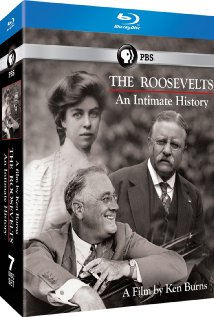
Greetings again from the darkness. Ken Burns is renowned for his documentaries – two of my favorites are Baseball (1994) and Jazz (2001). The power he wields is measured by his ability to get 14 hours of documentary not just researched and filmed, but also broadcast via PBS. Think how many Hollywood producers can’t get the green light for a 90 minute pet project. Mr. Burns is a national treasure who creates national treasures, and his latest is some of his finest work yet.
Focusing on one of the most prominent American family – one that dominated politics and history for years – the stories are presented in chronological order, interconnecting the biographies of Theodore, Franklin and Eleanor with the key events in history that they helped shape. But it’s not all politics, as we also learn about the families and the individual make-up (flaws and all) of the 3 principals. We learn of the Republican Roosevelts of Oyster Bay and the Democrats of Hyde Park.
Mr. Burns has set the bar very high for his productions, yet somehow we still managed to be struck by the photographs, archival footage and insights of these people and the times. The sheer number of previously unseen photographs and footage is staggering. Add to that the commentary from writers and historians, and it’s easy to imagine this being the foundation for a high school or college history course … one that students would actually enjoy.
There are seven parts to the whole, each presented in chronological order:
Pt 1 Get Action 1858-1901. This segment focuses on a young, asthmatic Teddy as he overcompensates for his weakness by charging through every obstacle. We see the photo of young Teddy watching Abe Lincolns funeral procession pass 14th and Broadway. Teddy’s perpetual motion takes him to Harvard and the continued formation of his political views. His famous quote is remembered: “Not all Democrats are horse thieves, but all horse thievesn are democrats.” His way with words seemed to have no end. Teddy’s foundation seems a polar opposite to his 5th cousin Franklin, who is quite pampered as a child. The film displays the torturous February 14 when Teddy experienced the death of both his wife and mother. This segment takes us through the Rough Riders, San Juan Hill and the death of President McKinley.
Pt 2 In The Arena 1901-1910. Theodore Roosevelt takes charge as the youngest ever President and immediately begins to battle corporate greed, push for the Panama Canal, and preserve the American wilderness. We watch as FDR courts and then marries cousin Eleanor. This segment shows Teddy inviting Booker T Washington to dinner at the White House, the first African American to do so. We learn that when TR wasn’t speed-talking, he was speed-reading, taking in a book per day. He also became the first President to leave the country while in office, visiting the Panama Canal work site. At FDR’s wedding, Teddy was the one to give away Eleanor. Upon leaving office, TR takes his African trip with son Kermit.
Pt 3 The Fire of Life 1910-1919. The beginning of WWI and how TR campaigned to get the US to enter the war, while FDR was named Asst Secretary of the Navy, and served in the NY State Senate. The chasm between the Roosevelt clans – Oyster Bay vs Hyde Park – widens, as TR joins the Bull Moose Party, and is actually shot in the chest (and somehow continued giving his speech). TR took his Amazon Rainforest trip with Kermit and was stricken with malaria. It’s also in this segment that we begin to understand the most unusual relationship of FDR and Eleanor. She knew of his fondness for certain other women, and it’s in this time when the marriage transitions into a parnership. It’s also during this time that Theodore, age 60, dies in his sleep.
Pt 4 The Storm 1920-1933. The war ended, women could vote, and prohibition arrived. Woodrow Wilson had a stroke while in office, and it’s during this time that FDR is stricken with polio. We see and hear much of FDR’s struggle with the disease and how he worked to hide it, so as not to be seen as weak or limited. 1929 brought the New Deal speech and Eleanor begins her real politicking.
Pt 5 The Rising road 1933-39. The country is battling the Great Depression, and Eleanor’s actions create some controversy. FDR struggles with how best to deal with Hitler, while a quarter to one-third of the nation is unemployed. George Will’s commentary is especially effective here as he points our the two great crisis facing FDR: the depression and Hitler. The fireside chats (30 in 12 years) connect FDR to the citizenry and go far in establishing trust. It’s in this time that Eleanor’s friendship with a couple of other ladies (including Lorena Hickock) begins the questioning of her sexuality. FDR releases two huge pieces of legislation: The Wagner Act (NLRB, organized labor) and the Social Security Act. He delivers his “Ecomonmic Royalist” speech and talks about this generation’s “renedezvous with destiny“.
Pt 6 The Common Cause 1939-44. The preparation for WWII and the bombing of Pearl Harbor are discussed, but the controversy over the strategy is not really examined. FDR continues his close relationship with Missy (his secretary) and Daisy (his cousin). It’s mentioned that the right people are somehow in place during certain moments, and Churchill and FDR fit the description. Eleanor continues her work for the poor, blue collar and African Americans, while the preparation for war effectively ends the depression.
Pt 7 A Strong and Active Faith 1944-62. The plan for post-war peace is complicated by FDR’s cerebral hemorrhage, and during his record fourth term, he dies at age 63. The last hour or so really gives Eleanor her time in the spotlight and she works for Civil Rights, the UN, and against Joseph McCarthy (“our Gestapo”). We see her become the grand lady of the Democratic Party, and even meet with newly elected John Kennedy, though she did not support him. It took death at age 78 to slow her down.
The insight into the obstacles all 3 Roosevelts overcame is fasincating. We hear recordings of each, and the voice acting fills the gaps – Meryl Streep as Eleanor, Edward Herrmann as FDR, and Paul Giamatti as TR. Peter Coyote does a nice job throughout as the narrator, and numerous other actors are utilized through the production, including the final screen appearance of Eli Wallach. This is an incredible documentary covering some giants of US politics and some of the most historical events.
**NOTE: there are also photos and video of FDR’s speech at Ebbets Field, where he cracks about being a Dodgers fan, but never having attended a game there.
Greetings again from the darkness. What an excellent documentary on yet another in the seemingly endless string of baseball stories that are both fascinating and true. Don’t make the error of assuming one must be a baseball fan to enjoy this … it works just as well as a story of the little guy sticking it to the man (the man in this case is the court-protected giant known as Professional Baseball).
An original production of Netflix, it’s directed by Chapman and Maclain Way, brothers and grandsons of Bing Russell. You may or may not be familiar with Bing. He is the father of actor Kurt Russell, a well known character actor (a recurring role as Deputy Clem in “Bonanza“), and the driving force behind the Portland Mavericks. The Mavericks were an Independent Professional Baseball team from 1973 to 1977, and this is their story.
As a kid, Bing hung around St Petersberg, where the New York Yankees held spring training. He ended up friends with Lefty Gomez, and hung around many Yankee greats. Bing had a true passion for baseball. He loved the game, the players, and the way of life. He even used to test young Kurt on the intricacies of the game, and later created some very in-depth teaching videos.
Bing’s real impact on the great game came from his stint as creative force and owner of the Mavericks. The film does a terrific job with interviews, archival footage and other recollections of Bing and the rag-tag group of players that disrupted the industry that does not like to be messed with.
Not only was the team successful on the field, but they also set attendance records and inspired true fan loyalty. They were the last independent league allowed to play in the minor leagues, and their legacy continued even after the team was shut down: two of the pitchers invented Big League Chew, one pitcher was nominated for a Pulitzer Prize, the team hired the first female GM in professional ball, and they even had a left-handed catcher. Their bat boy (Todd Field) went on to become an actor and Oscar nominated director and writer (In The Bedroom). “Ball Four” author Jim Bouton made his comeback with the Mavericks, which led to his making it back to the big leagues, and even Kurt Russell spent some time playing during the Mavericks’ first year.
It’s a shame this film didn’t make the festival rounds, as it would no doubt have been well received. I expect every baseball lover will get a kick out of this, and I certainly hope others give it chance. Bing Russell’s vision and passion are to be admired and respected, regardless of the industry. He was a “can do” guy who followed his bliss and made a difference. The film is also a reminder that sports were once played for love of the game, rather than love of the dollar.
Greetings again from the darkness. Director Steve James is well known for his heralded documentary Hoop Dreams, released 20 years ago. Film Critic Roger Ebert was one of that film’s earliest and loudest champions. Now, Mr. James returns the favor with a tribute to the life of Roger Ebert, based on the memoir of the same name.
James struggles a bit with the film’s structure because there is so much story to Ebert’s life, and the director’s access to the challenges faced by Ebert during his last months of life make for a story unto itself. No punches are pulled, and this is one of the most head-on presentations of illness and dying that we have ever witnessed on screen. Ebert’s cancer took his jaw and his recognizable voice, but this man would not be silenced. He passionately embraced social media and blogging to become even more relevant than ever.
It’s fun to see the love-hate relationship between Ebert and his TV co-host Gene Siskel. This was the best kind of rivalry – one that brought at the best in both. I was fortunate enough to be exposed to them via PBS in 1975, their first year broadcasting together. I’ve said it before, but these two guys taught me how to watch a movie … how to appreciate what story was being told, and how it was being told. Their brief verbal jousts showed me that opinions can vary widely on movies and that it’s not just OK, but actually fun to debate the merits.
As much fun as their show was, what I really enjoyed was reading their full reviews in the Chicago newspapers. My trips to the library were often for the sole purpose of digging out the latest reviews (this was prior to internet). Whle I more often agreed with Siskel, it was Ebert’s stunning writing skills that really hit home with me. It wasn’t until many years later that I learned he won a Pulitzer at age 26, and had grown up as a journalist. His words could translate what his senses took in.
Because of all that, this documentary is very personal to me … as I’m sure it is to the entire community of film lovers that Siskel and/or Ebert inspired. The interviews with Werner Herzog, Martin Scorsese and Errol Morris (plus others) clearly display the impact of Ebert. But as personal as it is to these men as filmmakers and to me as a movie blogger, that’s nothing like the personal level we witness between Roger and Chaz, his wife. Roger’s health issues and numerous operations and rehabilitation stints show the courage and love of these two. This was heart-warming and gut-wrenching all at the same time … the kind of movie that Roger would have given a big thumbs up.
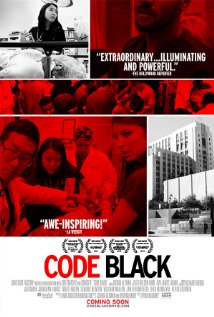
Greetings again from the darkness. Filmmaker/Doctor (an unusual combo) Ryan McGarry takes us behind the Emergency Room curtain at LA County General … one of the busiest ER departments in the country, with a waiting room filled with low income, uninsured people desperate for medical attention. So desperate that they will wait up to 18 hours to see a doctor.
We see live action sequences from C-Booth (Critical Booth) in the “old” Emergency Room prior to the opening of the shiny new facility next door. The footage is startling and quickly explains why so few doctors are cut out for this particular work. The workspace is limited and the most serious trauma cases are wheeled in with medical staff whirling around at full speed and full adrenaline. Life and death medical decisions must be made at a frantic pace, and each person must perform their role precisely during this operating ballet.
This initial C-Booth footage is not for the squeamish but sets the stage for the abrupt changes brought on by the new facility. Bureacracy and compliance put an immediate kibosh on the doctor/patient relationship. We know this because the doctors tell us. They now must spend the bulk of their time completing paperwork rather than seeing patients.
We hear directly from a group of interns and we admire their passion for medicine and healing. Still, the apparent bashing of a business-first approach and compliance-heavy process highlight the real world inexperience of these young docs. Unfortunately, very few of the veteran doctors have much to say on camera and instead, director/doctor McGarry guides us through his words and eyes in hopes of creating empathy for his “I just want to help people” devotion.
The C-Booth footage is fascinating and reminds us that “M*A*S*H” was purely entertainment and “Grey’s Anatomy” probably doesn’t even deserve to be called a medical drama. Where the film falters is in not contrasting the LA County General process with that of the suburban facilities that deal almost exclusively with the insured populace. That seems to be a much more interesting comparison than old school crash cart trauma with no tracking to the new world of hospital compliance.
Greetings again from the darkness. Documentarian Mary Mazzio presents an inspirational and terrific human interest story … in the first half of the film. The second half veers off into a one-sided socio-political editorial that, as frustrating as it is, doesn’t dim the light from the magical first half.
Narrated by Michael Pena, we learn the story of 2 teachers and 4 students from Carl Hayden Community High School located just outside of Phoenix. The students are sons of undocumented immigrants (illegal aliens) attending a school with 92% of families living below the poverty line (90% Hispanic). The area is riddled with gangs, drugs and depression, making the journey and accomplishments of these four all the more impressive.
The group enters a high level Underwater Robotics competition sponsored by NASA and Naval Research … in the collegiate division. If this were a Hollywood script, it would be outlandish and unbelievable. Instead, it’s true and fascinating. Two amazing teachers (Fredi and Allan) lead the four boys: Lorenzo (the funny one, driven by a Hooters dream), Oscar (a natural leader in any group), Luis (the quiet dependable one, the muscle of the group), and Cristian (the brainiac computer geek who is a loner). With a total budget of $800, the group proceeds to work together to design, build and test their entry (affectionately known as “Stinky”).
When they arrive in California, they realize they are competing against colleges … in particular, the team from MIT (with Exxon sponsorship). Simply competing should have been victory enough, but we see actual footage of the awards ceremony which nets the team much more than a participation ribbon. Their spirit and drive was no longer just inspirational, but now they had results to go with it.
The talking head approach works here because we get to know the four boys and the teachers. We also get plenty of face time with the MIT team and some judges. The insight from all of these people helps put this in perspective. Quite enlightening is the 10 year reunion between the MIT team and the boys who beat them a decade earlier. The life paths of these 8 display a clear distinction between the economic haves and have-nots. This is where the film’s focus should have remained post-competition.
Unfortunately, we are taken on a trip of activism and the movement for undocumented students known as the Dream Act. Too much time is spent on the politics and protests, and not enough on the positive aspects of the legacy these boys and the teachers left for the high school, and a generation of students that followed. We are told that of the 2 million undocumented students in the U.S., 49% will drop out of high school. This leaves the impression that all 2 million are similar to these four, never once providing a mention of those who choose gangs or drugs. Focusing on one segment of this, is an injustice to the issue as a whole.
The best message here is that determination and drive and teamwork can accomplish a great deal, and that it would be wonderful if every student could explore their own talents and interests. It does make one wonder if this economically disadvantaged group can accomplish this, what limitations is the impact of the rigid structure within public education imposing on other students. If a group of ESL students in the middle of the desert can build an underwater robotics that competes against the work of the brightest engineering students at MIT … all students should know the possibilities are endless.
 Greetings again from the darkness. The iconic green bottle is from Holland, not Germany. It’s a product of which the Dutch are proud. Founded in 1864, the family was forced to sell in the aftermath of WWII, and thanks to Freddy, the family bought it back and remains in control today. Heineken … it’s all about the beer.


 Posted by David Ferguson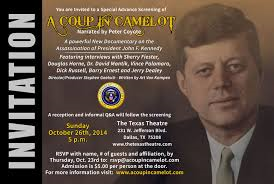





 Movie Reviews from the Dark