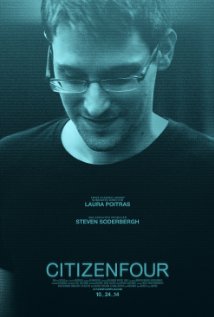
Greetings again from the darkness. Edward Snowden. You know the name and you know the story. Hero of the People or Enemy of the State? Ultimate Patriot or a double-spy for the Russians? Protected as a Whistle-Blower or Guilty of Treason? Chances are you long ago made up your mind on how you view Ed (his stated name preference).
In January 2013, Snowden contacted documentarian Laura Poitras via an anonymous email name “Citizenfour”. By June, the two were meeting in a Hong Kong hotel along with journalist Glenn Greenwald. What follows is a mesmerizing look at the actual footage shot of Greenwald interviewing Snowden. This is Ed Snowden before the media storm. This is Ed Snowden continually proclaiming that he is not the story, and he is trusting Greenwald to determine what documents are fit for public release. He voices concern about jeopardizing national security, while at the same time being adamant about exposing the immense and widespread governmental tracking of digital movements by millions of people … most with no known ties to terrorism.
The timeline is public record, so the core of the film is really an intimate look at the man who, acutely aware of the coming fallout, proceeded with pulling the curtain back on NSA actions that he deemed inappropriate. Ms. Poitras structures the film as a thriller, and it will certainly cause tension in every viewer. We can’t help but put ourselves in Snowden’s shoes. Would we feel the need to go public with proof? Who would we tell? How would we tell them? Would we be willing to release our name, knowing it could put everyone we love in danger? Would we be prepared to watch our President publically call us out as unpatriotic and a danger to the nation? These questions are impossible for us to answer, but add weight to the scenes of Snowden answering Greenwald’s questions while Ms. Poitras works the camera.
One of the more interesting points made in the movie is that what we once termed individual freedom and liberties, is now couched as privacy. We have come to expect our privacy, and certainly don’t appreciate our government digging through our emails, search history, texts and phone calls. But how to balance the individual “right” to privacy with the government’s need to collect intelligence in the name of national security? That’s the key question, and one with no clear answer.
Regardless of your opinion on Snowden and his actions, the film presents him as an idealist believing he is doing the right thing. Most of this occurs before the media firestorm, but we do see the anticipated fallout. Once Snowden goes into hiding, we witness Greenwald becoming the face and voice of the cause. He is a talented journalist and exceptional speaker, and doesn’t back down from the reaction of those who stand accused.
The film allows us to take notice of the personal attacks on Snowden as an attempt discredit his documentation. Making Snowden the story distracted the media and the general public from the real issue. It’s a fascinating film that will surely make you uncomfortable and cause re-evaluation of the chain of events. You may not change your mind, but you will most certainly have a better understanding of the human side.
Greetings again from the darkness. There aren’t many traditions that span more than 1200 years, and only one of those involves walking 500 miles … the Camino de Santiago. Its origin is as a religious trek to Santiago de Compostela where tradition holds that the magnificent cathedral contains the remains of St. James the Apostle. These days, the Camino is no longer limited to those with Christian beliefs, and in fact many modern day pilgrims take it on as a personal quest rather than a spiritual journey.
Director Lydia B Smith and her camera allow us to travel along with a group of (six) pilgrims, each with their own story, background and motivation. The journey involves both physical and emotional challenges, and results in varying degrees of self-awareness. One obvious difference in today’s pilgrims versus those of medieval times is the experience is much more communal these days. Not only do the walkers eat and sleep in the same hostels along the route, they also freely share their emotions and thoughts with each other (and the camera). This contrasts greatly with the tradition of solitude and quiet introspection. Call it a lesson in generational differences.
The elements rotate between favorable and challenging. The pilgrims must face cold, hot, rain, and wind. These obstacles of nature are magnified with foot blisters, sore knees and other bodily ailments. However, for most of these people, the mental challenge is every bit as steep. For 6 plus hours each day over approximately 35 days, they focus on the incredible scenery as well as their own thoughts. It’s impossible to hide from one’s self, even though friendship … and even relationships … form along the path.
Each of those who complete the journey realizes it’s not about the destination, but rather the inspiration and spiritual enlightenment – even if it wasn’t their original goal. There is talk about the “internal Camino” and how you walk with your heart. Reflection on this spectacular path leads to harmony with nature and self. A lovely Spanish guitar accompanies our viewing pleasure, and it’s impossible not to imagine ourselves on this journey. If inspiration strikes, just be aware that spending that much time with one’s self is an activity far removed from our generation’s typical day.
Greetings again from the darkness. Proving once again that real life provides the most fascinating topics and characters, documentarian Norah Shapiro takes a look at cultural identity and the slow process of exiled-Tibetans adapting to the outside world. Her project takes us inside the Miss Tibet Beauty Pageant … “a pageant with a difference”.
Tenzen Khecheo is the film’s focus. She appears to be a pretty typical teenager living in Minneapolis, though we soon enough learn her family history. Her father received one of the rare immigration visas issued by the U.S. to exiled Tibetans. His family later joined him in the states, and Tenzen’s story picks up after his death. She decides to enter the 10th annual Miss Tibet pageant, and is accompanied by her mother and sisters as they head off to Dharamsala in the Indian Himalayas.
The pageant is run by a self-described “small town impresario” named Lobsang Wangyal, who is more flamboyant and publicity-addicted than any of the six women in the pageant. The stated ideal behind the pageant is to empower Tibetan women and provide them confidence and a platform to have their voice heard. Of course, this seems ironic to us Americans who have heard for years that these pageants are the polar opposite of empowering. But this contradiction helps us understand some of the basic cultural differences in the United States (where freedom is abused) versus exiled-Tibet where morals, honesty, kindness, modesty and spirituality are the most adhered to traits.
What follows is more or less a Westernized Beauty Pageant replete with segments of swim suit modeling, personal talent, current events, and photography sessions. And just like in the U.S., scandal, controversy, and accusations of fraud and unfairness follow the announcement of the winners. This ugly scene captures the essence of what we previously heard from those interviewed – competition goes against the nature of this culture. While they are not against modernization and adapting, the idea of becoming more Westernized is quite unappealing to many.
Ms. Shapiro is kind enough to provide a brief history lesson on Tibet, and how the invasion of China led to the exiled community who for years has followed the guidance of the Dalai Lama. We also meet Ama Adhe, a long time political prisoner, who meets with the girls – driving home the difference between those who have truly suffered for their beliefs and those who simply talk a good game. Tenzen Khecheo mostly behaved like a typical American teenager, though she did show moments of humility when she doubted her relevance among the Tibetan women. It’s always interesting to get a glimpse inside another culture, especially one that is in slow transition.
Greetings again from the darkness. It’s simultaneously “the best job and the worst job”. While not a definition of a TV Showrunner, that is certainly the best description. With the recent renaissance of TV, and the competition between networks, cable and the internet, an incredible level of creativity and freedom has produced a more cinematic effect on the small screen. Whose broad shoulders are responsible for what we watch? The Showrunners, that’s who.
This is a behind-the-scenes look at the process of getting a show to air, and then struggling to keep it there … it takes an enormous amount of talent and a ton of good luck. We learn that 84% of new TV shows fail, and it’s important to note that good shows often fail – not just bad ones. Director Des Doyle presents an extremely impressive succession of interviews. These are the writers, producers and showrunners of some of TV’s most innovative shows: JJ Abrams (“Lost”), Joss Whedon (“Buffy the Vampire Slayer”), Terence Winter (“The Sopranos”, “Boardwalk Empire”), and Janet Tamaro (“Rizzoli & Ives”) just to name a few. This who’s who of showrunners generously share their insight and observations on the business that more than a few call “a grind”.
Especially interesting is the concentration on the writing process. We go inside the writer’s room and hear discussions on the importance of looking at the entire season, rather than a specific episode. We learn the importance of “quality scripts on time”, meaning the writing must be good and must come fast – episodes frequently air within a month of filming. Joss Whedon advises writers to focus on moments, not on moves. Collaboration is crucial, and while nothing beats an actor who embodies a particular role (Michael Chiklis in “The Shield”), never lose sight that writing is the heart of TV shows.
Discussion of the various outlets (networks, cable, internet) leads to an explanation of how TV writing has evolved. Some shows are now designed for the increasingly-popular “binge watching”, while network shows are still in the business of “selling ads”. Another significant shift is due to Social Media. TV is described as now being like the theatre – immediate feedback is available (Twitter, Facebook). While ratings are still important, interaction between the industry and viewing public is now standard operating procedure.
It’s not often we are allowed behind the curtain in the entertainment business, but this one should be mandatory viewing for anyone with an itch to become a TV writer. You should know the stress and insecurities that accompany the talent and ego. You should understand the time pressures and the lack of recognition that often follows even those who prove successful. You should also know that for those who have it in their blood, nothing else compares. This is truly “the art of running a TV show”.
Greetings again from the darkness. The iconic green bottle is from Holland, not Germany. It’s a product of which the Dutch are proud. Founded in 1864, the family was forced to sell in the aftermath of WWII, and thanks to Freddy, the family bought it back and remains in control today. Heineken … it’s all about the beer.
An archival opening statement from Alfred (Freddy) Heineken speaks about his grandfather and father, who founded and helped build the family business. We then move into a musical montage of advertisements old and new, footage of breweries and bottling plants, and many Heineken images – some familiar, others not. The movie then takes us through four generations of the family who have run and influenced the global growth.
Some pieces of this story are quite interesting. Running through 70 operating companies covering 180 countries, we share the globetrotting trek through breweries in Amsterdam, Europe, the Congo, Vietnam and Poland. Especially fascinating is the grand opening of a huge facility in China. Chemistry plays a role in the success of the beer as we learn in the segment about Heineken “A-yeast”, as well as the company’s approach to hops and barley farming. There is even a kidnapping that made international news.
This family owned business is presented as the ultimate socially responsible organization. Their Heineken Foundation helps the underprivileged in Nigeria, plus running numerous other medical clinics around the world. They are also committed to recycling and encouraging socially responsible drinking.
Even learning about the “smiling e’s” in the logo, and the marketing commitment to social media, sports, music and other cultural events helps us understand what makes the company successful. What never quite clicks is the purpose of director Michael John Warren’s film. Is it a recruiting film for the firm? Is it purely propaganda? Is it an ego piece for the family? It could even be an attempt to drive up the price of a possible sale of the company? As viewers, we can’t answer these questions, as we are just supposed to accept this love fest as proof that not only is the beer tasty, but Heineken is a friend to the global economy. Maybe it’s not all about the beer.
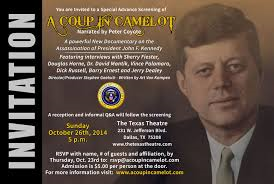
Greetings again from the darkness. With no shortage of books, movies, TV specials, documentaries, or research papers about President John Kennedy’s assassination, one could wonder what yet another new project could possibly bring to the table. The answer is: eye-opening evidence presented in a concise manner by a group of experts.
The film begins with the actual break in regular TV programming for the announcement of November 22, 1963. It then moves forward by reminding us of the litany of unanswered questions remaining 50+ years later. We see many of the most familiar images from JFK’s trip to Texas (“nut country”), including an enhanced Zapruder film. A quick history lesson follows showing how JFK was planning a full withdrawal of troops from Vietnam, which is later described as the basis for what could be the conspiracy or titular “coup”. The Warren Commission is discussed along with the gaps in interviews and evidence.
Five key areas are examined under the microscope here: the Secret Service, forensics, chain-of-custody with the body, the autopsy process and report, and Lee Harvey Oswald. Experts from each category detail their research and conclusions. The panel includes Vince Palamara, Sherry Feister, Douglas Horne, Dr David Mantik, Barry Ernest, Jerry Dealey, and Dick Russell. This group represents an extraordinary amount of time and diligence in researching testimony, documents and evidence … in fact, dwarfing the time spent compiling the Warren Report. Discussions of lapses in Secret Service protocol, triangulated crossfire, contradictory medical testimony, doctored photographs, and “patsy”, take on real weight and substance. The documentation appears strong to corroborate these conclusions and theories, and at a minimum raise significant doubt about who was involved and why.
If you are expecting testimony from wild-eyed conspiracy theorists living on the fringes of society, you will be disappointed. Instead, filmmaker Stephen Goetsch and writer Art Van Kampen offer screen time to historians, physicians, researchers, and experts-in-field so that they may provide an educated and trained interpretation of the evidence. Much of the material may be familiar to those who are well read, but the methodical and deliberate method of presentation is what makes this one worth a look.
To see the trailer and learn more about the film (and a screening at The Texas Theatre), go to: www.acoupincamelot.com
Greetings again from the darkness. This is the third in filmmaker Darryl Roberts’ documentary series focusing on America’s obsession and ideals of physical beauty. His first was released in 2007 and centered on plastic surgery, while the second from 2011 explored dieting and the quest for thin. Installment number three takes on the sexualization of society, and of girls in particular.
Make no mistake; this is not one of those funny “taboo TV ad” specials. Instead, it’s a sobering look at beauty pageants for little girls, marketing methods (TV, print, retail), and the proliferation of porn into the daily lives of teenagers. The dots are connected to show how these have led to a society struggling with sexual dysfunction.
Mr. Roberts kicks this off with an introduction to what is termed, a Mental Health Crisis – specifically, the Sexualization of little girls. The models used in advertising continue to skew younger and younger, often with 11 or 12 year olds made up and posed to look “desirable”. We are informed that kids watch 25-50,000 TV commercials per year, and many of these advertisements are targeted directly to this ever-growing economic group. Disbelief accompanies our trip to rural Georgia as we meet Beauty Pageant mothers who see nothing sexual about their little girls being half-dressed on stage, performing the type of “dance” moves one would see in a hard-edged rap video. This is our first (but not last) glimpse of how clueless many parents are on this issue.
A well-known psychologist explains the harm in having “girls versus girls” in a contest to see who is chosen as the best, simply on the basis of their looks. The connecting dots then lead us to the frightening topic of teenage pregnancy, where a group of girls detail how they started having sex as young as age 14. Interviews with kids (boys and girls) make the very crucial point that abstinence and even safe sex are not frequent subjects of conversation. Brain development is scientifically proven to be a factor in the frequent “immediate gratification” decisions made by teens. More on this would have been welcome.
We meet the two interns Mr. Roberts hired to assist with this project. One of the girls, single-handedly takes on the Abercrombie & Fitch chain, after the CEO makes a statement claiming their clothes are exclusionary … basically, A&F only sells to the young and beautiful. One of the interns becomes a crusader against A&F and that leads her to become a spokesperson against teenage bullying – in its many forms.
A university professor explains how there has been a Sexuality Generation Shift, and much of it can be traced to the frequency and accessibility of online porn. This has become the educational front for kids in regards to sexual relationships. These days, girls are either “F***able or Invisible” and “Gonzo porn” never gives any indication that intimacy or feelings should play a role, and now, the dots connect to the high rate of sexual abuse and rape on college campuses.
Though I may not be a huge fan of the look and structure of the film, it’s the message that matters. Mr. Roberts offers up significant statistics throughout, and the interviews prove quite insightful … whether it be a college professor or the clueless mother supporting her wannabe teenage model (who can’t grasp the concept of consistent safe sex). The most significant takeaway is that the world of youngsters today is not just void of any of real guidance, but even worse, their introduction and education of sex is coming directly from the world of online porn. We are judged as a society on how we care for our children, and a disgusting example is provided near the film’s end as Mr. Roberts discloses that one of his interns was (at a minimum) sexually harassed by a producer during the project. It makes for an abrupt reminder that we all must take responsibility for our actions and for the protection and guidance of kids.
Thanks to sponsorship of Carolyn Costin and the Monte Nido Treatment Center, the film will be screened free of charge in a few U.S. cities, including Dallas on October 20. For more information, and to watch the trailer, go to: http://www.americathebeautifuldoc.com/
Greetings again from the darkness. Documentaries with a message are usually most effective when they engage in debate … share both sides of the argument, if you will. Preaching from a soapbox typically causes the viewer to tune out, and the opportunity is missed. The one exception to this is when the stance is heavily supported with history, facts, data, research and pertinent interviews. Husband and wife co-directors Joshua Tickell and Rebecca Harrell Tickell deliver what amounts to a visual thesis on how to break the big oil monopoly.
Beginning with a montage of beautiful and colorful automobiles, we are quickly reminded of Americans love of their cars which leads to the addiction to oil. The next 90 minutes provides a trek through the key historical events that led to our oil dependency, and ends with a proposal on how to stop it.
The history lesson discusses John D Rockefeller and his Standard Oil monopoly, followed by his political influence to get Prohibition passed. This after Henry Ford called alcohol “the perfect fuel”. We then learn of how large companies drove out the trolley system in favor of an interstate freeway system for cars. We re-live the 1973 gas shortage as the Arab countries flexed – or extorted, depending on your take. Jumping to 2008, the surge in oil prices to $147 per barrel is described as the economic earthquake, with the Stock Market crash termed an aftershock. In other words, oil is the foundation of our economy. Today’s global market is discussed along with the exponential growth of China’s car industry – 15 million cars sold this year. This time-line with specific data leads to the impressive second half of the film … how to get ourselves out of this mess.
For those who say it’s foolish to discuss breaking our dependency on oil because it is used in so many other ways, they are missing the point. The cause is less oil dependency for cars, not a total break from it’s use in products such as medicines, clothes, plastics, etc. The filmmakers offer the options of both electric cars and alternative fuel sources.
Elon Musk’s Tesla Motors is briefly discussed, with the acknowledgment that battery technology improvement is vital to the future success of electric cars. A more immediate solution comes in the form of alternative fuels – ethanol and methanol. We see the exceptional strides Brazil has made with strong leadership. We see how our current vehicles already have the capability to run on these biofuels, if not for a simple software adjustment built-in by auto-makers. Nine million flex fuel cars on the road now, and many of these owners remain unaware of their options. Why? Because fueling stations are so tough to come by, as only the most independent of stations are not contractually obligated to big oil companies.
The film is exceptionally well researched and the data delivered in an easy to understand format. The Tickell team won the Sundance award for the 2008 documentary Fuel, and their message is even stronger this time out. By the way, Ms. Tickell is a former child actress known as Sam Elliot’s daughter in the 1989 Christmas classic Prancer. She and her husband are now renowned environmental activists, and this project is really a call to action … the choices are available NOW to break the oil monopoly.
Greetings again from the darkness. By definition, documentaries tell us the story of something that has already happened. The best ones expose a great story, and it usually boils down to how interesting we find the subject. The Canadian Punk duo Death From Above 1979 has a history that is both entertaining and a bit unusual – even within the music industry.
Between 2001 and 2005, the band performed 546 live shows around the world. And then it was over. Bandmates Sebastien Grainger (drums and vocals) and Jesse F Keeler (bass, keyboard, backing vocals) melded their creative flow into an incredibly energetic live experience. They were in perfect sync onstage, and audiences responded.
Filmmaker Eva Michon (Grainger’s wife) provides us with interviews from music executives, members of other rock bands, and especially Grainger and Keeler. We learn of their influence, and also witness their conflicting insecurities and musical confidence.
Their first full album “You’re a Woman, I’m a Machine” sold 100,000 units in 2004, but the follow-up “The Physical World” wouldn’t be released for a decade. The reason for the delay is the crux of this band’s story … they broke up! It seems clear the two band members grew apart creatively, causing a crack in the friendship. They quit speaking, even while on tour. In 2005, they were opening for Nine Inch Nails at Madison Square Garden, and a few weeks later they went their own separate ways.
Grainger finally reached out to Keeler in 2011, and the band reunited with an invitation to play famed music festival Coachella. A surprise show at SXSW in Austin was shut down by the cops after the crowd spun out of control. The video here is the best we see, and certainly more exciting than the actual footage from Coachella.
The reunion just doesn’t play well on screen, and it robs the film of it’s core moment. The interviews are insightful and the photos and early footage are excellent. All that’s lacking is a wow moment. Still, fans of the band will be all over this, while those unfamiliar will find it interesting enough.
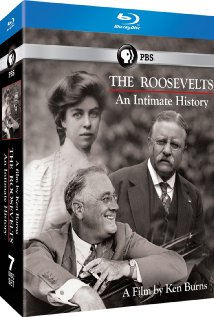
Greetings again from the darkness. Ken Burns is renowned for his documentaries – two of my favorites are Baseball (1994) and Jazz (2001). The power he wields is measured by his ability to get 14 hours of documentary not just researched and filmed, but also broadcast via PBS. Think how many Hollywood producers can’t get the green light for a 90 minute pet project. Mr. Burns is a national treasure who creates national treasures, and his latest is some of his finest work yet.
Focusing on one of the most prominent American family – one that dominated politics and history for years – the stories are presented in chronological order, interconnecting the biographies of Theodore, Franklin and Eleanor with the key events in history that they helped shape. But it’s not all politics, as we also learn about the families and the individual make-up (flaws and all) of the 3 principals. We learn of the Republican Roosevelts of Oyster Bay and the Democrats of Hyde Park.
Mr. Burns has set the bar very high for his productions, yet somehow we still managed to be struck by the photographs, archival footage and insights of these people and the times. The sheer number of previously unseen photographs and footage is staggering. Add to that the commentary from writers and historians, and it’s easy to imagine this being the foundation for a high school or college history course … one that students would actually enjoy.
There are seven parts to the whole, each presented in chronological order:
Pt 1 Get Action 1858-1901. This segment focuses on a young, asthmatic Teddy as he overcompensates for his weakness by charging through every obstacle. We see the photo of young Teddy watching Abe Lincolns funeral procession pass 14th and Broadway. Teddy’s perpetual motion takes him to Harvard and the continued formation of his political views. His famous quote is remembered: “Not all Democrats are horse thieves, but all horse thievesn are democrats.” His way with words seemed to have no end. Teddy’s foundation seems a polar opposite to his 5th cousin Franklin, who is quite pampered as a child. The film displays the torturous February 14 when Teddy experienced the death of both his wife and mother. This segment takes us through the Rough Riders, San Juan Hill and the death of President McKinley.
Pt 2 In The Arena 1901-1910. Theodore Roosevelt takes charge as the youngest ever President and immediately begins to battle corporate greed, push for the Panama Canal, and preserve the American wilderness. We watch as FDR courts and then marries cousin Eleanor. This segment shows Teddy inviting Booker T Washington to dinner at the White House, the first African American to do so. We learn that when TR wasn’t speed-talking, he was speed-reading, taking in a book per day. He also became the first President to leave the country while in office, visiting the Panama Canal work site. At FDR’s wedding, Teddy was the one to give away Eleanor. Upon leaving office, TR takes his African trip with son Kermit.
Pt 3 The Fire of Life 1910-1919. The beginning of WWI and how TR campaigned to get the US to enter the war, while FDR was named Asst Secretary of the Navy, and served in the NY State Senate. The chasm between the Roosevelt clans – Oyster Bay vs Hyde Park – widens, as TR joins the Bull Moose Party, and is actually shot in the chest (and somehow continued giving his speech). TR took his Amazon Rainforest trip with Kermit and was stricken with malaria. It’s also in this segment that we begin to understand the most unusual relationship of FDR and Eleanor. She knew of his fondness for certain other women, and it’s in this time when the marriage transitions into a parnership. It’s also during this time that Theodore, age 60, dies in his sleep.
Pt 4 The Storm 1920-1933. The war ended, women could vote, and prohibition arrived. Woodrow Wilson had a stroke while in office, and it’s during this time that FDR is stricken with polio. We see and hear much of FDR’s struggle with the disease and how he worked to hide it, so as not to be seen as weak or limited. 1929 brought the New Deal speech and Eleanor begins her real politicking.
Pt 5 The Rising road 1933-39. The country is battling the Great Depression, and Eleanor’s actions create some controversy. FDR struggles with how best to deal with Hitler, while a quarter to one-third of the nation is unemployed. George Will’s commentary is especially effective here as he points our the two great crisis facing FDR: the depression and Hitler. The fireside chats (30 in 12 years) connect FDR to the citizenry and go far in establishing trust. It’s in this time that Eleanor’s friendship with a couple of other ladies (including Lorena Hickock) begins the questioning of her sexuality. FDR releases two huge pieces of legislation: The Wagner Act (NLRB, organized labor) and the Social Security Act. He delivers his “Ecomonmic Royalist” speech and talks about this generation’s “renedezvous with destiny“.
Pt 6 The Common Cause 1939-44. The preparation for WWII and the bombing of Pearl Harbor are discussed, but the controversy over the strategy is not really examined. FDR continues his close relationship with Missy (his secretary) and Daisy (his cousin). It’s mentioned that the right people are somehow in place during certain moments, and Churchill and FDR fit the description. Eleanor continues her work for the poor, blue collar and African Americans, while the preparation for war effectively ends the depression.
Pt 7 A Strong and Active Faith 1944-62. The plan for post-war peace is complicated by FDR’s cerebral hemorrhage, and during his record fourth term, he dies at age 63. The last hour or so really gives Eleanor her time in the spotlight and she works for Civil Rights, the UN, and against Joseph McCarthy (“our Gestapo”). We see her become the grand lady of the Democratic Party, and even meet with newly elected John Kennedy, though she did not support him. It took death at age 78 to slow her down.
The insight into the obstacles all 3 Roosevelts overcame is fasincating. We hear recordings of each, and the voice acting fills the gaps – Meryl Streep as Eleanor, Edward Herrmann as FDR, and Paul Giamatti as TR. Peter Coyote does a nice job throughout as the narrator, and numerous other actors are utilized through the production, including the final screen appearance of Eli Wallach. This is an incredible documentary covering some giants of US politics and some of the most historical events.
**NOTE: there are also photos and video of FDR’s speech at Ebbets Field, where he cracks about being a Dodgers fan, but never having attended a game there.
 Greetings again from the darkness. Edward Snowden. You know the name and you know the story. Hero of the People or Enemy of the State? Ultimate Patriot or a double-spy for the Russians? Protected as a Whistle-Blower or Guilty of Treason? Chances are you long ago made up your mind on how you view Ed (his stated name preference).


 Posted by David Ferguson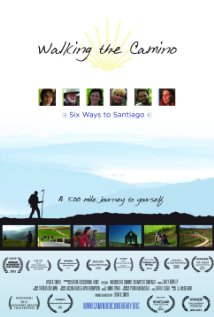





 Movie Reviews from the Dark