NOTHING LEFT UNSAID: GLORIA VANDERBILT AND ANDERSON COOPER (2016)

April 9, 2016

nothing left unsaid Greetings again from the darkness. Rather than the usual biographic approach, this is quite a personal and intimate conversation piece as the “poor little rich girl”, Gloria Vanderbilt, recollects her life of fame with her journalist son, Anderson Cooper. Expert documentary filmmaker Liz Garbus (Oscar nominated for What Happened Miss Simone, 2015, and The Farm: Angola, USA, 1999) delivers what amounts to video memoirs as Mr. Cooper guides his 91 year old mother down Memory Lane.

This is an HBO documentary, and it will have a theatrical run in addition to multiple showings on the cable behemoth. Some may view it as an ego piece … two persons of privilege reminiscing about their “tough” lives, but it’s a stark reminder that no amount of money can prevent the heart from breaking, or the lasting effects of grief.

Gloria Vanderbilt turns out to be a relatively pragmatic lady who, with age and experience, has come to accept the unusual path her life has taken … from a basically parentless childhood, to being at the center of custody battle that created a national media frenzy, to four marriages (the first at age 17), to a personal and social life that bears mention of such names as Frank Sinatra, Richard Avedon, Charlie Chaplin, Truman Capote, Sidney Lumet and Errol Flynn. Along the way, she has been constantly involved with art … whether in the form of painting, writing, sculpting, acting – or designing the iconic jeans of the 1970’s that bore her name.

She kicks off the film by quoting Faulkner: “The past isn’t over, it’s not ever over.” It’s the perfect beginning, as the hook here is that her son Anderson Cooper has spent a couple of years going through her storage units, and is now depending on her to fill in the historical life gaps created by her letters, photographs and paintings. Much of the discussion focuses on young Gloria’s beloved nanny, as well as the custody case featuring Aunt Gertrude (who founded the Whitney Museum).

Hers may not be a life that altered the course of mankind, but now 92 year old Gloria Vanderbilt has experienced the highest highs and lowest lows, and is willing to discuss the fascinating specifics … thanks to the coaxing by her little boy.

**This premieres Sunday April 10, 2016 on HBO

watch the trailer:


A SPACE PROGRAM (doc, 2016)

April 7, 2016

a space program Greetings again from the darkness. This is one of those rare times when an approach to film commentary simply eludes me. Is this a film, an art exhibit, a film about an art exhibit, an observation of earthling’s place in the universe, or a mechanism to bring Tom Sachs’ vision to a (slightly) wider audience? Perhaps it’s a bit of all those things … or perhaps it’s none.

At a minimum, Van Neistat’s film, or visual presentation if you prefer, is an intriguing look at a team of people (led by Mr. Sachs) who are really into their project of building a space program from scratch, and “sending” two astronauts (both female) to Mars to find signs of life. This we learn after the opening 1969 quote from Buckminster Fuller: “Science and Religion are on a parallel course to answer the question, Are we alone?”

Artist Tom Sachs had a New York City exhibit in 2012 entitled “Space Program 2.0: MARS”. This is the filmed version of the exhibit/project featuring Mission Control – Sachs is the Commander, while others are his team of experts (crew members), plus two astronauts, and a live audience – with laughing and clapping. Before you start picturing some big budget Hollywood production like Apollo 13 or Gravity, you should know that this is a complete “bricolage” project, and bricolage is defined as the creation of something from a diverse range of available objects. In this case, the first part of the movie goes into detail about the use of plywood and steel (amongst other things) to create the multitude of items necessary for this space program to succeed (including a landing module and astronaut suits).

The production, at times plays like performance art, but there is a certain level of seriousness to it … despite the scotch drinking and other shenanigans to lighten the mood periodically. The narration and electronic score complement the use of models, cameras, audio/radio, and other devices for the simulation. We even see an IBM commercial and the use of an Atari video game … yet, for this viewer, the unanswered question had little to do with whether we are alone in the universe, and more to do with what was the goal, vision, purpose, or ambition of this project?

watch the trailer:


THEY WILL HAVE TO KILL US FIRST (doc, 2016)

March 31, 2016

they will have to kill us Greetings again from the darkness. Where there is oppression, there is often courage. Director Johanna Schwartz and her film crew have produced a remarkably informative and well-made documentary. The film hits the target in putting on display the effects of the 2012 Islamic Jihadists invasion of northern Mali (Geo, Timbuktu) and the institution of Sharia Law.

Malian culture is steeped in music, which is used for education, entertainment and history. Radio stations were shuttered and musical instruments were burned. Many famous musicians escaped to Bamako and other areas rather than risk torture and execution. Director Schwartz interviews many of these musicians and we get defiant quotes such as “Our way of resisting is our instruments”, and “We think of ourselves as ambassadors of our country.”

In other words, these musicians understand the cultural and political impact of continuing to make music. Their goal is to spread the message widely. We also see film of a refugee camp where women are staying strong in the face of adversity – hopeful of better days ahead.

2014 peace talks in Algeria led to an official cease fire in 2015, but most locals remain cautious. With the help of globally known performers such as Brian Eno and Nick Zimmer, a Gig for Exiled Musicians was organized for Timbuktu, and it allowed for re-visiting the village and the city – now mostly a bombed out shell. Many homes and historical sites in the ancient cities were destroyed by the terrorists.

These atrocities give that much more strength to the musicians, and we are especially taken by female singers Khaira and Disco, and the local band Songhoy Blues. The perspective of those most affected proves quite powerful, and is a reminder of just how strong the human spirit can be. It’s a film that should be seen by many, and one director Schwartz should be quite proud.

watch the trailer:


MR. GAGA (doc, 2016)

March 31, 2016

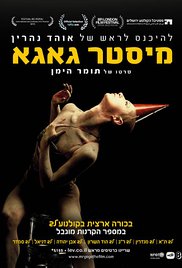
mr gaga Greetings again from the darkness. Don’t think for a second this has anything to do with the globally famous Lady Gaga; however, if the name recognition causes a few more people to watch this labor of love and respect from filmmaker Tomer Heymann (Paper Dolls, 2006), then so much the better. Creative geniuses make fascinating subjects for talented documentarians, and Israeli dancer and modern dance choreographer Ohad Naharin is certainly no exception.

The opening scene captures Ohad working with a female dancer on the proper way to fall down … over and over – even after she bangs her head on the floor. It’s our first of many glimpses behind the scenes of his style for rehearsals. His quiet intensity perhaps restrained for the cameras; he harps on dancers more about emotion than technique.

Ohad’s own words provide much of the film’s backdrop and structure. That combined with the stunning performance footage from numerous shows he choreographed, we begin to get a feel for this driven visionary. By the end, we have also been provided some insight into his childhood, his late arrival to formal dance training, the death of his first wife/co-creative partner, and the birth of his first child.

We see clips of his prowess as a young dancer who couldn’t find fulfillment in the dance companies of Martha Graham or Maurice Bejart, but who seemed destined to make his mark with modern dance … sometimes causing a bit of controversy along the way. His founding of Gaga – what he calls “movement language” is given a celebrity endorsement from Natalie Portman, who mentions that it allows her to find pleasure in dancing, which is more typically associated with pain. Ohad’s own description is that Gaga is designed for us to “listen to our body before we tell it what to do”. He proclaims that Gaga is accessible to the masses, and that dance has the power to heal.

Director Heymann’s film expertly captures many sides to Ohad Naharin, a man originally drawn to dancing not as a career, but rather as something he enjoyed. The talented dancers and the extensive rehearsal footage remind us of the physical and mental grind required to achieve greatness in dancing … a lesson that carries forward for most any endeavor.

watch the trailer:


FASTBALL (doc, 2016)

March 24, 2016

fastball Greetings again from the darkness. Cheese. Gas. Heat. The crowd perks up when a power pitcher lights up the radar gun and starts ringing up hitters. As narrator Kevin Costner points out, at the core of the game of baseball is the epic battle between a man with a stick and one with a rock … the bat and ball … the batter and pitcher. Director Jonathan Hock digs into our fascination with those few who can throw a fastball at speeds that cause even the elite hitters to struggle. A 100 mph fastball gives the batter .396 milliseconds to react … quicker than the blink of an eye.

Mr. Hock structures the film for maximum enjoyment and ease of keeping up. I counted 13 chapters which such titles as “The Big Train”, “The Heater from Van Meter”, “Hoot”, “The Fastest that Never Was”, “Nolan Ryan”, and “The Fastest Pitch” . Within each chapter we are treated to a blend of archival footage, interviews with baseball legends, and input from scientists and experts. The segments contrast the athletic side with the scientific side … especially interesting given how over the past 15 years, baseball has transitioned into such a risk strategy of performance tendency metrics.

Listening to a physics expert discuss the “Magnus Effect”, while legendary hitters like Hank Aaron and George Brett describe a “rising fastball”, is quite an experience for those of us who so love the great game. There is a history lesson, complete with photos and film, on how measuring the speed of pitches goes back to Walter Johnson being tracked through some contraption at the Remington Armory; Bob Feller’s pitch racing against a motorcycle; and a young Nolan Ryan going up against a crude radar detector.

Different generations are discussed with insight from such legendary fastball pitchers as Bob Gibson, Goose Gossage, Nolan Ryan, Justin Verlander, Craig Kimbrel, David Price and Aroldis Chapman. Unfortunately 80 year old Sandy Koufax is not interviewed, but we do see some rare video footage from his 1965 Perfect Game. There is discussion on earlier eras and pitchers such as Walter Johnson, Bob Feller and the enigmatic Steve Dalkowski (who does make a brief appearance). Gibson describing his infamous glare from the mound is itself worth the price of admission. However, it’s the great Nolan Ryan who has the most camera time, which is understandable given his unprecedented quarter century run as a power pitcher.

Just as interesting as listening the pitchers, is having the hitters discuss the challenge in hitting the fastball. The difference between a 92 mph fastball and a 100 mph fastball is broken down scientifically by the experts and real world by hitters such as Tony Gwynn, Al Kaline, George Brett and Hank Aaron. The chalkboard and video clips work together to make it clear just how difficult it is to hit the fastball. As for the “fastest pitch ever”, the mystery may never be solved.

watch the trailer:


BOOM BUST BOOM (doc, 2016)

March 12, 2016

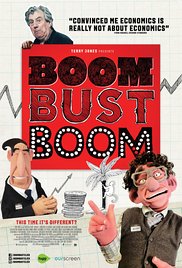
boom bust boom Greetings again from the darkness. On the heels of Adam McKay’s scathing and entertaining explanation of the 2008 financial collapse comes Terry Jones (of Monty Python fame) with a more global perspective of the same era. McKay’s Oscar nominated The Big Short was designed to let us know who did what and why, while Jones’ version applies a British spin and his wildly creative approach in breaking down the long-standing economic models that wreak havoc with our money.

Jones has joined forces with Economics Professor Theo Kocken to school us on the “leftover” strategies and economic models used by Politicians and Bankers … models that assume the market (investors and institutions) will act rationally. Our education comes courtesy of a multi-media show featuring animation, puppets, music and expert interviews (economists, authors, academic leaders, and at least 3 Nobel Prize winners).

According to the movie (and it’s difficult to argue otherwise), human nature is the Achilles heel of Capitalism. In fact, they use the term euphoria to describe the phenomenon that occurs as “stable” economic times lead to more risk and more debt. Debt clearly is the most profound 4-letter word in economics.

A film within the film … “Terry Jones’ Short History of Financial Crisis” takes us back to the 1500’s and through modern times, as the same mistakes recur. One of the more effective sequences shows State of the Union addresses from President Calvin Coolidge (1928) and President George W Bush (2006). Both speeches proclaim solid economies only 1-2 years prior to the two biggest collapses in U.S. history … just two extreme examples that the experts have no idea where the economy is headed as long as they continue to utilize the models that have proven to be ineffective.

It’s fascinating to get specifics on Hyman Minsky’s “Financial Instability Hypothesis”, as well as an explanation of the Neoclassical Economic Model (better known as the Free Market). Insight is provided by University of Texas Professor James Galbraith, son of famed economist John Kenneth Galbraith, and it’s quite enlightening to hear Allan Greenspan (a long time believer in the Free Market system) admit to being wrong about expecting rational behavior from those in the market.

The movie will forever act as a reminder for us to pinch ourselves should we think “this time is different”. In fact there is a movement by Economics students to change the way Economics degrees and PhD programs are structured – more emphasis on learning from history, and re-thinking and re-designing economic models.

The applicable websites are:

http://www.rethinkeconomics.org/

http://www.ecnmy.org/


CITY OF GOLD (doc, 2016)

March 12, 2016

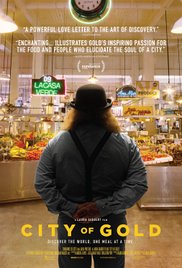
city of gold Greetings again from the darkness. “First we eat. Then we do everything else”. Filmmaker Laura Gabbert’s film kicks off with that quote from MFK Fisher, author of “The Art of Eating”. If Ms. Fisher looked at eating as art, then Jonathan Gold views it as a crucial piece of society that brings diverse cultures together.

As the subject of the film, Mr. Gold is a pretty interesting character. Sure, he is a food critic for the LA Times, an author and a Pulitzer Prize winner; but, more than that, he is a man of the streets of Los Angeles, and is described as providing a new vision of the city while also changing the food critic world. He spurns the traditional idea of anonymity that typically cloaks food critics, and mostly ignores the hoity-toity French restaurants for the Taco Trucks and mom & pop joints scattered around LA.

The real core of the story and of Mr. Gold is the cultural diversity that exists within the boundaries of an area that most TV shows and movies would have us believe is sterile, white and rich. The reality is that LA is a conglomerate of cities filled with migrants who have brought their culture, talents and especially their diverse homeland cuisine. Gold relishes the chance to explore every “hole-in-the-wall” … taste their food and learn their story. He takes us through Boyle Heights, Hollywood, the San Gabriel Valley and the full 15 mile stretch of Pico Blvd.

As a reporter, Gold struggles with structure and deadlines, but as a writer his words are as tasty as the food of which he writes. In a day where Yelp and Twitter allow everyone to pretend they are an expert, Gold reminds us of the value real critics bring to a topic … experience, knowledge and a descriptive way with words.

The film gets a bit loose in the second half as director Gabbert tries to cram in all there is to know about Gold. His background with music: cello, classical, punk, blues and hip-hop probably get more time than is necessary. The contrast with his environmentalist brother is worth it for no other reason than hearing the line: “he is eating everything I’m trying to save”.

Gold’s legacy will be the culinary map of the region he has created with his work. He encourages us not just to sample new cuisine, but also to better understand the people that make up one of the most diverse and fascinating metropolitan areas in the world. Now how about a taco?!?!

watch the trailer:


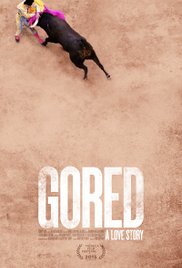
GORED (doc, 2016)

February 29, 2016

gored Greetings again from the darkness. Opinions of bullfighting seem to fall into three categories: those who admire the courage and athleticism of the matadors, those who respect the history and tradition so vital to the culture of some, and those who are outraged and disgusted by the cruelty bestowed upon the bulls. Director Ido Mizrahy and his co-writer Geoffrey Gray seemingly take no stance, and make no effort in manipulating anyone’s feelings toward bullfighting. Instead, their focus is on one man. A man with an inner-drive that even he can’t explain.

Antonio Barrera is billed as the most-gored matador in history. His official 23 times is remarkable when you consider that even once can kill a man … or at least destroy the bravura required to enter the ring. But this is not a story of numbers. It’s about Barrera’s relentless drive and passion for bullfighting, and his inexplicable (and sometimes medically impossible) ability to recover from injury and finish his duty. Once he was intubated due to lack of breathing, and as soon as he regained consciousness, he ripped out the tubes and returned to the ring … directly from the table.

Mizrahy “treats” us to more than enough clips of Barrera being gored and carried from the ring, but the most intimate and revealing moments come courtesy of interviews with Barrera’s wife, sister and father. It’s during these segments that we begin to understand that no logic can explain the matador’s need to enter the ring … or return to the ring. His wife explains how she lives in fear while understanding she is not his first love; his sister discusses his youth and early training, while his father’s inability to fulfill his own dreams probably etched in stone the destiny of the son.

The film opens and closes with Barrera’s final performance in December 2012, and it’s a breath-taking sequence featuring his crowd-pleasing Puerto Gayola – he kneels in the ring in front of the charging bull. Barrera muses on the acceptance that one must be ready to die while in search of the perfect performance, and how thoughts of dominating death seem like crazy thoughts to the rest of us.

It’s unfortunate that the film only offers a quick glimpse into Barrera’s post-matador life. It’s a brief mention of feeling “lost” after walking away from his dream, and wondering (like the rest of us mortals), what is his dream now? It’s clear managing the career of another matador does not fill the void, but we are left empty-handed and wanting to know more about Antonio Barrera … the former matador known not for his grace and elegance, but for his passion and courage.

watch the trailer:


MAJOR LEAGUE LEGENDS – The Smithsonian Channel (2016)

February 27, 2016

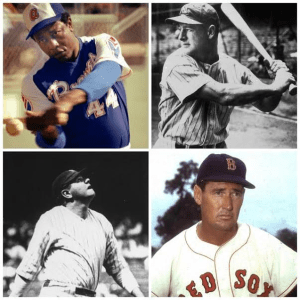
Major League Baseball and the Smithsonian Channel have teamed up to deliver a four-part series entitled “Major League Legends”:

February 29: “The Hammer of Hank Aaron

March 7: “American Hercules: Babe Ruth

March 14: “Lou Gehrig: Iron Knight

March 21: “Ted Williams: The Immortal

Major League Legends For us fans who have baseball history and lore as part of the fabric of our soul, we can’t help but be excited to see what happens when Smithsonian turns their attention to four legendary figures from the game we love. The result is an unusual approach that blends psychology, mythology, history, and childhood with sports achievement. Rather than the typical highlight reels punctuated with record-breaking statistics, we are instead treated to an analysis of what drove these four men to reach a level that transcended the game.

Since Henry Aaron is the only living member of this foursome, it’s especially compelling to see him interviewed and reminisce about his childhood poverty, run-ins with the Ku Klux Klan, skipping school to hear Jackie Robinson speak, and rocketing through the Nego Leagues and Minor Leagues to reach the Major Leagues by age 20. He even mentions how his father reacted when young Henry mentioned his dream of being a pilot. Much attention is given to the racism, hate mail and threats the Aaron family endured during his pursuit of the Home Run record, and it’s sobering to hear his wife Billye state “you just learn to cope”. This segment is a reminder of just how Aaron changed the world through his dignity and courage.

In what easily could be interpreted as Aaron’s polar opposite, Babe Ruth became a larger than life figure and the first modern day celebrity athlete. However, the story is never that simple. Ruth was basically a neglected kid until age 6 when Brother Matthias became a father figure at St. Mary’s Institutional School for Boys. Ruth’s prowess on the field is truly legendary, and it seems logical that his starting out in life as an unloved child possibly drove him to seek as much attention and fame as possible. This segment features some terrific photographs and clips, as well as the man and the myth.

With an incurable and devastating disease using his name for more than 75 years, Lou Gehrig is often described as the shyest and most courageous of all sports superstars. He was the wholesome All-American boy with the irrepressible work ethic. Imagine being known for never missing a day of work! A childhood of poverty and an unusually close relationship with his mother laid the foundation of a man who was focused on being the best ballplayer he could be. The personality opposite of his teammate Ruth, it was Gehrig whom the parents hoped their sons would grow up to be like. His is a story of motherhood-baseball-America-loyalty-humility- grace-endurance, and as recently as last year, ALS (Lou Gehrig’s Disease) inspired millions to participate in the Ice Bucket challenge to raise money for research. It’s little wonder why Gehrig was the first player to ever have his jersey number retired.

The greatest hitter who ever lived. A fighter pilot who served in two wars. Elected to three Halls of Fame: baseball, fishing and fishing. Ted Williams has been described as a baseball savant, but it’s likely his superiority knows no bounds … at least none he would admit to. Despite a tough childhood (alcoholic dad and absentee mother) and losing nearly 5 full baseball seasons due to military service, Williams posted incredible records (2 triple crowns) and his .406 season is one of those etched in stone baseball numbers. It was also Williams who waited until 1999 at Fenway Park to finally dispel John Updike’s proclamation that “Gods don’t answer letters”.

The series offers plenty of film clips and career highlights, but the real focus is on what made these men reach the pinnacle of their profession after significantly less than ideal starts to life. Insight comes from writers, historians, and Phil Couisineau, a learned mythologist. Also appearing in each segment is Will Leitch, founding editor of the sports blog “Deadspin”. He provides the sports and fan perspective in relation to the more psychological and mythic approach of the others. On the downside, Martin Sheen may not have been the best choice as series narrator, as his enthusiasm often seemed forced. The series is less about sports achievement than it is perseverance and personal ambition and self-motivation … certainly topics that we all can learn from and appreciate.

http://www.smithsonianchannel.com/shows/major-league-legends/1004228


KING GEORGES (doc, 2016)

February 27, 2016

king georges Greetings again from the darkness. The “foodie” fad has been in full swing for a few years now, resulting in a new generation of celebrity chefs … plus we each have that friend who believes top dollar and “hot” restaurants are the key to an enjoyable meal. First time director (and many times Producer) Erika Frankel provides a dose of history and authenticity (rather than Reality TV) as she turns her camera on Chef Georges Perrier and his Le Bec-Fin restaurant, an iconic Philadelphia dining locale for forty years.

In 2010, Chef Georges announced he would be closing the restaurant, and Ms. Frankel decided to take her camera into the kitchen to document the end of an era. Georges was a pioneer of French chefs coming to the United States and his four decade run is incredibly rare and quite a legacy. Early in the film, Georges tells us “A chef doesn’t have a normal life”, and the film documents the truth in this proclamation. His “20 hour workdays” cost him any shot at a family life, and though his daughter acknowledges as much, her comments are those of someone who has accepted that her father must cook in the way that an artist must paint. This level of food preparation is truly an art, and Georges is described as the world’s greatest saucier … the foundation of French cuisine.

Other films and documentaries have taken us into kitchens, but it’s Georges’ personality and commitment to “perfection” that add a different spin here. Sure, he is extremely vocal … at times bombastic … but it’s all related to his love of cooking. The stress and pressures in the kitchen of what has been called the finest restaurant in the country are at times almost unbearable, but the film helps us understand the staff dynamics and motivation.

The most interesting aspect of the film is the relationship between Georges and the young chef he is mentoring, Nicholas Elmi. Georges alternates between being demanding and appreciative. There is a touching scene where Georges invites Nick to share a meal and ballgame with him … in this world, it’s the ultimate display of love. Director Frankel follows the career path of Elmi, and it makes for a fascinating end to the film and fitting tribute to Georges.

watch the trailer: