ART BASTARD (2016, doc)

June 23, 2016

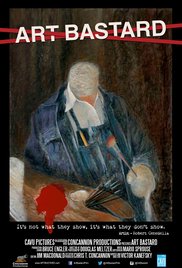
art bastard Greetings again from the darkness. Writer/director Victor Kanefsky sets out to show that both definitions of the titular “B” word are fitting descriptions of the unfairly obscure NYC artist Robert Cenedella. The artist learned at age six that the man he called Daddy was not his biological father, and then later his decades-long battle against the cliquish art world establishment relegated him to a career that was stifled at most every turn. In an interesting twist, Mr. Cenedella (now age 76) has embraced his life as an outsider, and used it as inspiration for his incredible paintings and drawings.

Much of the film comes directly from interviews with the engaging, opinionated and often quite funny Mr. Cenedella. One of his best and most insightful (to his persona) quotes is: “It’s not what they show that bothers me. It’s what they don’t show.” He is of course discussing museums and art galleries, and how the recurring theme of “legitimacy” is decided by a relative few, thereby determining what the public is allowed to see … which in turn impacts what pieces are bought and sold.

Due to his relative obscurity (I knew nothing of the artist prior this doc), Kanefsky includes a biographical structure that begins with an unstable childhood and continues with his tutelage under German artist George Grosz … Cenedella’s mentor for art and life. With direction such as “think with your hand”, Grosz inspired the young artist to transfer his observant eye to the canvas and paper.

Unfortunately for Cenedella, his development as an artist paralleled the boom of modern abstract art … something that didn’t play well for the man who captured the energy and people of NYC on the page through satirical group caricatures. He was termed the anti-Warhol, and the film presents the 1965 “Yes Art” showcase as the biggest achievement of Cenedella’s career. And this exposes the only real weakness with the film – we never really understand the economics of Cenedella’s art. Did he sell paintings?  How did he earn a living?  We know he sold a lot of “I Like Ludwig” buttons, and we know he later painted a wall mural at Le Cirque restaurant, but the movie would have us believe Cenedella was an immensely talented painter who should be living in poverty based on his inability to get accepted by the art world.

This muddled point is key because so much of the film is dedicated to Cenedella’s disgust with the commercial side of the industry, and how critics and the power brokers have turned the art world into a haven of collectors who buy and sell for profit, rather than enjoyment. What determines the value of art? It’s a question as old as the cave drawings. Is the value in the aesthetics, the emotion or the monetary return? Cenedella believes the public should be allowed to decide for themselves, rather than being spoon fed only what the elite determine “good enough”.

Robert Cenedella proves to be a fascinating subject for a film, and it’s a reminder that some of the best documentaries introduce us to interesting people to whom we might ordinarily not be exposed. When Cenedella asks “If you compromise with art, why be an artist?” he is really telling us to be true to ourselves. It’s a message we should take to heart … he certainly has.

watch the trailer:


THE WITNESS (doc, 2016)

June 2, 2016

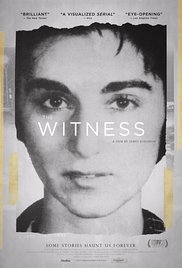
witness Greetings again from the darkness. Remember that time you told yourself “I don’t want to get involved”? We live in an era when the phrase “If you see something, say something” is more catchphrase than active philosophy, and it’s pretty easy to justify looking the other way by thinking “It’s none of my business.” In 1964, twenty-eight year old Kitty Genovese was brutally attacked and murdered in Queens. The New York Times reported that the same man attacked her three times, and that no one called the police, despite her screams and 38 people witnessing the attacks over a half hour. Her story became the symbol for “bystander apathy” and led to development of the 911 system and the “Good Samaritan Law”.

Forty years after the attack, the New York Times examined their original story, and it’s that piece that brought together filmmaker James D Soloman (he wrote the screenplay for The Conspirator) and Kitty’s brother Bill. Their goal was to research the horrible events of that night and determine once and for all if the legendary story is fact or a case of media sensationalism. With its flashbacks to multiple news stories over the years, the film begins as a procedural and evolves into Bill’s personal journey of emotional turmoil in regards to his big sister’s life and death.

Bill was only 16 years old when Kitty was killed; and three years later, he lost both legs while serving in Vietnam. It’s his calmness and intelligence that we are so drawn to as he makes his way through the crime scenes, interviews witnesses/neighbors/family members, and examines as much of the existing evidence as possible. His fascinating journey finds him crossing paths with Mike Wallace of “60 Minutes”, Abe Rosenthal (the NY Times editor who ran the original story and wrote a book about the case), the police detective who investigated the case, the prosecutor, and the defense attorney for Kitty’s confessed murderer.

As compelling as the complete film is, there are a few segments that really stand out. Mr. Rosenthal’s attitude and lack of remorse for running such a sloppy story is sickening – even 50 years after the fact. It’s an extraordinary example of how the media can manipulate a story for ratings, and of how little things have changed over 5 decades. A face-to-face sit down with the Reverend son of the confessed killer is both awkward and frustrating, while also enlightening as to how family members can revise history in order to live with it. Finally, Bill’s visit to the home of Kitty’s old friend and neighbor Sofia is heartbreaking as the woman remembers comforting Kitty in her last few moments of life.

Bill discovers numerous conflicts to the original NYT story … there were two attacks, not three; the number 38 for witnesses seems to have been fabricated; most of the witnesses were ear-witnesses, not eye-witnesses; and there is every indication that multiple calls were made to the police … thereby muting the argument that neighbors were too apathetic or frightened to get involved. While none of these points are especially surprising to us, it’s Bill’s story now and we can’t help but feel for him.

Mr. Soloman expertly structures the film so that we can experience both the highs and lows of Bill’s efforts. We hear the recording of Kitty’s former roommate as she shed lights on Kitty the person, rather than Kitty the victim. Bill reads the letter from Rocco, Kitty’s ex-husband as he declines an interview. We are in the room when Bill is questioned as to whether he is part of the infamous Genovese crime family, and we see Bill tackle the trial transcripts with the words “heard screams, saw nothing” repeated many times. If this is a study on social behavior, it may be more pertinent to media motives than human reaction … but this isn’t the place to bash the media – it’s a compelling look at one man’s quest to find peace with the past.

watch the trailer:


IT’S SO EASY AND OTHER LIES (doc, 2016)

June 2, 2016

Its so easy Greetings again from the darkness. This biopic will probably be a ‘can’t miss’ for fans of Guns ‘n Roses and Velvet Revolver, while registering not so much as a blip for the rest of the universe. From a filmmaking perspective, director Christopher Duddy takes a different approach, as the core of the film has subject Duff McKagan onstage (at Seattle’s Moore Theatre) reciting passages directly from his own autobiography … while being backed by a soft playing band in front of a live audience.

The film begins with an Upton Sinclair quote as if that will somehow add literary authenticity to the memoirs of a rock star and recovering addict. It’s not surprising that the most interesting parts of McKagan’s life story are the bits and pieces of his numerous band projects … beginning when he was 15 years old and drawn to the Punk Rock world at Seattle’s The Gorilla Room in 1979. After having played with dozens of bands, a meeting with guitarist Slash changed his life. Soon, Guns ‘n Roses was opening for Motley Crue (Nikki Sixx is interviewed) and not long after they were headlining their own stadium shows and selling millions of records.

What doesn’t really work is the rehash of McKagan’s abuse of vodka that led to the life-threatening pancreatitis. We’ve heard the story (or those like it) so many times before … especially from well worn rockers looking to make another buck. Of course it’s startling to see the names flash across the screen – those he knew and played with who weren’t able to come out of their addiction and abuse.

The film doesn’t spend much time on Guns ‘n Roses or his time with Velvet Revolver, though we get the gist of each. It’s McKagan’s insistence on telling us how close to death he was, and how lucky he is now, that really slows down the pace … listening to his confessions comes across a bit like a musical AA meeting. McKagan’s business school background is impressive and helps set him apart from many of the other train wrecks in his industry, but what’s missing is any indication that he is an extraordinary musical talent … it leaves us feeling he is just a lucky guy who was in the right place at the right time, then messed it up with addiction, managed to clean up and get a real life, and then nearly messed it all up again. While we may be happy for his success and the fact that he has survived, there’s not much here to set his story apart from many others … and certainly nothing that leaves us in awe of his talent.

watch the trailer:


HOLY HELL (doc, 2016)

May 26, 2016

holy hell Greetings again from the darkness. David Koresh and the Branch Davidians. Marshall Applewhite and Heaven’s Gate. Jim Jones and People’s Temple. Charles Manson and The Manson Family. For most of us, this list just about sums up our insight into the world of cults … and the horrific and violent endings of each are probably the only reason we know as much as we do. Filmmaker Will Allen, and his library of archival footage spanning more than 25 years, takes us behind the scenes of The Buddahfield, a cult run by an exceedingly odd man named Michel Rostand … or Jaime Gomez … or Andreas … or Reyji … depending on what time period and location we are discussing.

The film begins in 1985 West Hollywood as Mr. Allen joins his sister in her search for enlightenment and spiritual awakening. “Why am I here?” he asks … not referring to the commune of young men and women, but rather why is he on earth – what is the meaning of life? We have all wondered if it’s simply life and death, or if there is a greater purpose. These unanswered questions are how massive churches are built … and how cults are formed. The early film footage reveals exactly what one would expect: young people frolicking in the type of freedom that comes from dropping out of society. It’s an innocence that is ripe for plucking, and that’s exactly what “The Teacher” Michel does.

Trained as a hypnotherapist, Michel is the guru who claims to possess “the Knowing” – true enlightenment and the path to God in the purest form. At this point, I should mention that Michel is seemingly always strutting around in a Speedo and Ray-Bans. If he is a man of the cloth, it’s an awfully small swatch. He also wears heavy eye-liner and strikes many pensive poses for the camera and his followers.

The last thing that I want to do is judge these followers on decisions they made early in life. Feeling lost or emotionally empty and aimless can lead to desperation. In filmmaker Will Allen’s defense, this documentary acts as personal therapy or even catharsis for his fellow cult members who judge themselves harshly for the two decades of belief in a cause and a man that ultimately proved to be something much less than spiritual. Many of these followers are interviewed on camera and are clearly struggling even years after leaving the cult. It’s not just the awareness of so many wasted years, but also the guilt in following a man who was not merely odd, but who also victimized so many.

Creepiness plays a big part here. It’s creepy how one guy can so influence the lives of so many others. It’s creepy how no one was able to expose this fraud before so many were hurt. It’s creepy to hear these folks talk about their mindset during that time. And mostly it’s creepy to view the incredible footage shot by Mr. Allen during his two decades on the inside. Lastly, the stalking (with camera) in 2012 which allows Mr. Allen to get the ending for his movie is in itself a special form of creepy … one that had me thinking that ALL of these people need psychological help.

If you want to see the internal workings of a cult (from California to Texas to Hawaii) – one with Speedos, plastic surgery, ballet, brainwashing, two kinds of peacocks – and the subsequent fallout, then you’ll agree the film delivers a type of eavesdropping and peeking that is both rare and fascinating … in a creepy kind of way.

watch the trailer:


WEINER (doc, 2016)

May 14, 2016

Dallas International Film Festival 2016

Weiner Greetings again from the darkness. Normally I would have no interest in a movie with this title, but in this case, it’s a chance to get a glimpse into the psychological make-up of a guy who obliterated his own political career … by simply being unable to keep his privates private. The end result of the efforts from filmmakers Josh Kriegman and Elyse Steinberg is nearly unrestricted access to a NYC mayor candidate’s campaign, as well as a look at a politician that is at times tense, and other times funny (in a laughing AT you kind of way).

In 2011, seven-term New York Congressman Anthony Weiner resigned in the aftermath of a sexting scandal made worse by (what else?) … his lying and attempted cover-up. The film begins with a clip of one of Weiner’s explosive speeches, meant to portray his expertise as a legislator and politician. This is quickly followed by the pun-filled headlines that exposed his sexting habit, seemingly leaving his political career in the dust.

Picking up two years later, the film finds the disgraced former Congressman running a campaign for NYC mayor. We can’t be too surprised as we have learned numerous times that many politicians are addicted to power and life in the public eye. What makes this an interesting subject is two-fold: how publically humiliated Weiner had been, and the fact that his wife is Huma Abedin, long-time Hillary Clinton advisor and aide.

We don’t learn how it happened, but we do find Anthony and Huma are still married, are parents to a young child (she was pregnant when the first scandal hit), and that Huma fully supports his mayoral candidacy. As the campaign kicks off, Weiner is a frontrunner, proving that we are a forgiving lot. The cameras capture him in full candidate mode – making calls to potential donors, giving speeches, dealing with staffers, and working the crowds at his energy-filled parades. Of course, it’s all a façade … or at least half of one.

When the second sexting scandal hits and “Carlos Danger” makes headlines as Weiner’s online pseudonym, the real trainwreck begins, and we find it impossible to turn away. It’s at this point where our feelings are confirmed … Huma is by far the more interesting of these two personality polar opposites. Where Weiner is two-faced – bouncing between humbled and overly ambitious; Huma is cool, collected and (seemingly) smart.

Weiner remains clueless about his chances, and the level of tension skyrockets in meetings and during spousal moments. It’s impossible not to believe that the energies used towards the campaign would have been better spent in therapy – both individual and as a couple. His stream of lies proved he had not changed his ways, and his periodic reflective and apologetic moments are diminished by his true color nastiness, which is more pervasive.

The film gets unnecessarily sidetracked during a segment that features one of Weiner’s phone sex relationships – codenamed “Pineapple”. Entirely too much time is spent on her pathetic publicity grab, and fortunately it all falls flat. It is a reminder that the media never misses a chance to film a frenzy … even if they have to manipulate it. There is no room in a documentary for TWO trainwrecks!

After the film and the irresistible draw of watching this ego-driven dude never once come to grips with why he is socially unacceptable as a leader, we realize there are unanswered questions. Why did Huma stick with her husband? Why was she onboard with him getting back in the game … did she really miss the public eye? The filmmaker flat out asks Weiner “Why have you let me film this?” Perhaps the answer to that last question is somewhat explained when you know that Anthony Weiner made an appearance in Sharknado 3. Some people just need the spotlight.

The hecklers, the eye rolls, the angry outbursts all lead up to Lawrence O’Donnell asking Weiner “What’s wrong with you?” I asked myself that same question after the movie when I realized that I was mesmerized the entire time. As for Huma ever allowing herself to be the subject of a documentary, we can only assume that she is too sagacious to allow such unfettered camera access to her work. I suppose her appearance in the next “Sharknado” is equally unlikely.

watch the trailer:


UNDER THE GUN (doc, 2016)

May 11, 2016

under the gun Greetings again from the darkness. Filmmaker Stephanie Soechtig and journalist Katie Couric, who brought us the 2014 documentary Fed Up about childhood obesity, re-team to deliver a “20/20” type presentation billed as a “balanced look at the gun debate”.  It’s a polarizing topic and we hear from the families of victims, experts in the field, and gun rights advocates.  Supplemented by some startling statistics, it seems incomprehensible that some common ground has yet to be found.

The opening credits play over a video timeline of gun law highlights and news clips of shooting events such as Martin Luther King, Jr, Bobby Kennedy and Ronald Reagan. It then hits us with the first mind-numbing stat … during the run time of the film, 22 people will be shot in America, and 6 will die. It’s at this point where we realize the “balanced” approach is really not likely since it’s an emotional debate as much as (or more) than an intellectual one. It’s the stricter gun law faction vs. Second amendment purists.

There is simply no comparison to the personal stories of parents who have had a child killed at Sandy Hook School in Newtown, Connecticut or at the movie theater in Aurora, Colorado. Regardless of where you stand on gun rights, these stories are heart-breaking and devastating. There is also a segment with Gabby Giffords, who is still recovering from her 2011 gunshot wounds, and along with her husband astronaut Mark Kelly, has joined the fight for gun control laws. ( sidenote: It did seem odd that Kelly’s rip of the Cub Scouts made the final cut).

Much of the film is spent on the issues of background checks and the infamous Gun Show loophole. It’s here that we begin to understand the strength of the NRA. Founded in 1871, the NRA was originally designed to fine-tune the “aim” of those wishing to shoot firearms. It is now a political powerhouse and one of the most pervasive lobbyists in Washington, DC. The film is quite fair in distinguishing between the NRA senior executives, and the rank-and-file members who are fed a steady dose of propaganda that borders on fear-mongering. Though most NRA members stand in favor of background checks to prevent felons, terrorists, and the underage from obtaining fire arms, the NRA continues to preach that ‘they are going to take away your guns’ and that ‘it takes a good guy with a gun to defeat a bad guy with a gun’.

It doesn’t seem that the filmmakers set out to change anyone’s mind on the topic, but rather to highlight the importance of some type of compromise or common ground in light of the 32,000 people who die in America from gunshots each year. And seriously, does it make sense that there are more gun stores in the U.S. than McDonalds and Starbucks combined? The most honest and direct moment of the film comes when one of the parents of a victim states, “we don’t want your sorry’s or prayers … we want your action.”

watch the trailer:


HARRY BENSON: SHOOT FIRST (doc, 2016)

May 8, 2016

USA Film Festival 2016

harry benson Greetings again from the darkness. There are many talented photographers, but not many that are well known. Quite a few photographers have shot famous folks, but few are famous themselves. These days we tend to think of photography as the barrage of celebrity privacy invasion shots courtesy of the paparazzi cameras. Co-writers/co-directors Justin Bare and Matthew Miele remind us … with this sturdy portrait of Harry Benson … that true photography is an admirable and respected art form.

Mr. Benson is now 86 years old and retains his heavy Scottish accent and ambitious work ethic. An illustrious career was kick-started in 1964 when he was assigned to cover The Beatles’ inaugural trip to the United States. His behind-the-scenes work included the infamous shot of the four lads blowing off a bit of stress with a hotel pillow fight in their hotel.

The film acts as a retrospective of Mr. Benson’s work, and it’s wonderful to hear him tell his own stories. Not many can claim to have been right in the middle of five decades of history, entertainment, politics and cultural events. This is a man whose work had him standing next to Bobby Kennedy in 1968 on the night he was assassinated. Elizabeth Taylor so trusted him, that she allowed him to photograph her just after her brain surgery.  World class recluse and chess champion Bobby Fischer posed for Benson, as did Muhammad Ali, Winston Churchill, Martin Luther King, Jr and Michael Jackson … to name just a few. It’s also fascinating to see his spontaneous shots of Greta Garbo swimming, and he literally went 50 plus years between photos of The Queen. His work on the front lines of Somalia is breath-taking … this from a man who has photographed the last eleven U.S. Presidents (every one since Eisenhauer).

In addition to Benson’s own recollections, the filmmakers also include observations and insight from such a diverse group as Dan Rather, Ralph Lauren, Bryant Gumbel, James L Brooks, Sharon Stone, Betty Buckley and Winston Churchill’s granddaughter. We get the impression that Mr. Benson fully comprehends his impact, but it’s his commitment to the job … to the shot … that has earned him the trust and reputation for integrity. Not everyone gets this shot …

harry benson2


THE LIBERATORS (doc, 2016)

May 8, 2016

Dallas International Film Festival 2016

liberators Greetings again from the darkness. The story of how art was treated during WWII is fascinating: Himmler devised the plan to hide/store the valuable art in a cave to protect it from the bombings (they weren’t as worried about citizens); much of it was stolen by soldiers from both sides; and the decades of effort to recover and return the displaced works. Those recovery efforts have been chronicled on screen in The Monuments Men (2014) and the far superior documentary The Rape of Europa (2008).

First time director, and Denison Texas native, Cassie Bryant narrows her focus to one specific case … the Quedinburg Treasures – a collection of medieval artifacts with tremendous religious and historical value. Her interest stems from the connection to the small town of Whitewright, Texas just outside of her hometown. In what could be described as a mixture of research, mystery and crime, Ms. Bryant follows the work of Will Korte. He has spent a career tracking down missing/stolen WWII art, and considers the Quedinburg Treasures the most important case of his career.

The film avoids the use of a narrator, and instead utilizes first person interviews and news clips. Much of this occurs in regards to the research … both Mr. Korte and those local to Whitewright, including the Meador family, friends and neighbors. The trail leads to Joe Tom Meador, and ultimately to the recovery of a substantial portion of the treasure.

When the focus shifts to the trial, the film loses a little steam, as by this time, much of the mystery has been solved. The interviews with super attorney Dick DeGuerin have some interest due to his philosophy about good people doing bad things, as well as his humorous perspective on how the case never should have gone to trial.

There is little argument in the adage that artistic relics provide much of the cultural heritage for any society or era, and this story carries an odd twist in that the motivation may never be determined so that we might classify as either the spoils of war or outright theft. It’s also dumbfounding to think that a Goodwill Store might have played a key role in the missing pieces (if one is to believe the family).

watch the trailer:

https://vimeo.com/156908676


TOWER (doc, 2016)

May 6, 2016

Dallas International Film Festival

UT Tower3 Greetings again from the darkness. As a UT alumnus, the numbers are etched in memory. August 1, 1966. The 27th floor. 16 dead. 32 wounded. 8 months pregnant. 96 minutes. But thanks to director Keith Maitland, the story he tells is what lies behind those numbers … the innocent people involved that tragic day almost 50 years ago on the campus of the University of Texas at Austin.

A beautifully creative approach blends archival news footage, on-site live radio reports, amateur photography, rotoscopic animation, and the captivating recollections of the survivors in their own words (as read by actors). Given the use of animation, it’s more of a reconstruction than a reenactment, and it’s incredibly intense as we are transported to the day a lone gunman shattered more than the peacefulness of a sunny, hot August day in Austin. It was a day that shook the country, and caused terror, confusion and panic … and also acts of heroism.

By focusing on the victims and those who had no choice but to be involved that day, director Maitland makes little mention of the shooter (a name I won’t publish here). We hear the words of Clare Wilson, the first shooting victim who was 8 months pregnant at the time. We also hear the words of Allen Crum, the University Co-op manager, whose heroic actions helped put an end to the tragic events of the day. Of course, police officers Ray Martinez and Houston McCoy are credited with ascending 27 floors and taking down the bad guy, and it’s mesmerizing to hear their recollections of that day.

It was also fascinating to hear the replays of the on-site reporting from Neal Spelce of KTBC radio as he made his way around campus – reporting live to the nation. We also learned many details about how the police responded, how citizen vigilantes jumped in to help with their deer rifles (it is Texas after all), and how some acted so valiantly in the face of horror, while others understandably went ducking for cover. There is also the extremely moving mass assembly of quiet support as the ordeal finally ended.

Political commentary is minimal and confined to the very end as we are informed that, quite ironically, August 1, 2016 will mark the 50th anniversary of this event … and it’s also the day that the new Texas campus carry law goes into effect. There are also reminders of more recent mass shootings: Columbine, Virginia Tech, Sandy Hook, and the Aurora, Colorado movie theater.

In the post film Q&A, director Maitland addressed, what he called the disruption of public space and how it leads to various responses by ordinary people … some quite heroic and selfless. Much of the film follows the extraordinary Texas Monthly article by Pamela Colloff entitled “96 Minutes”. It’s a must read and the perfect complement to this exceptionally well made and emotional documentary (which will air on PBS later this year).

watch the extended trailer:

https://vimeo.com/88257777


NORMAN LEAR: JUST ANOTHER VERSION OF YOU (doc, 2016)

May 4, 2016

Dallas International Film Festival 2016

norman lear Greetings again from the darkness. Very few people have achieved the level of career success of Norman Lear. Very few people have had the impact on culture as Norman Lear. Very few people have led a life as interesting as Norman Lear. And if all of that somehow doesn’t impress you … Norman Lear is 93 years old and still working!  It’s no wonder that co-directors Heidi Ewing and Rachel Grady decided to tell his stories.

This is a man who served in WWII and flew 52 combat missions. He also purchased a copy of the U.S. Constitution so that it could tour the country and citizens could see it up close. He is regarded as the most influential TV producer ever. His roster of hit shows includes: “All in the Family”; “Maude”; “Good Times”; “The Jeffersons”; and “Mary Hartman, Mary Hartman”. These weren’t just popular or funny shows. They were ground-breaking and controversial … they changed TV and they changed society.

At one point, Mr. Lear was producer on 6 of the Top 10 shows on television. His “Good Times” series was the first to put an African-American family front and center. “Maude” was the first TV show to seriously discuss abortion, while “All in the Family” brought Archie Bunker (the great Carroll O’Connor) and the generation gap with changing societal mores right into our living rooms.

The film features a great deal of interview time with Mr. Lear, but also with others who worked with him and/or were influenced by him. The Mel Brooks and Carl Reiner segment is especially poignant, as it’s three comedy trailblazers who made such a difference in how we are entertained. At one point, Lear states “I never lost my childlike view of the world”, and he says that contributed to always having a fresh approach.

Frances Lear, the feminist activist, is the perfect life partner for Norman, and the film captures their magic. They make such an impressive team committed to their causes, yet still maintaining a solid marriage. In fact, a documentary focusing on Frances would also be quite interesting.

In the world of television programming, there is BN (Before Norman) and AN (After Norman), and the timeline is not only obvious, but also important. Norman says he worked to deliver “serious people comedy … we had something on our mind”. The proof of his influence is that he was able to inspire TV viewers to further discuss and consider the issues he found important.