A SONG FOR YOU: THE AUSTIN CITY LIMITS STORY (doc, 2016)

May 1, 2016

Dallas International Film Festival 2016

a song for you Greetings again from the darkness. It’s difficult to believe now, but Austin City Limits was once “the little engine that could” … and now it’s the longest running music program on television. Willie Nelson played the 1974 pilot, and the rest – as they say – is history … and continues to be history in the making.

This is a show about music.” That simple quote from the film says a great deal. There is no place to hide on the small stage in the small studio with the audience right on top of you. These aren’t music videos, but rather these are the artists performing their songs live in an intimate setting (with the ever-present TV cameras).

Director Keith Maitland, who also presented his powerful documentary Tower at the festival, spends a great deal of time allowing producer Terry Lickona to reminisce and tell stories about how the show has always walked a fine line between success and the threat of cancellation … what’s also known as life in public television.

Much of the structure of the film is around the show’s 40th anniversary and the formulating of the initial class of the ACL Hall of Fame. As interesting as it is to listen to Mr. Lickona and ACL founder Bill Arhos, it’s the music that shines here. There are too many clips to name here, and certainly some of the choices speak to the age of the director, but the highlights include a soulful Townes Van Zandt in 1976, a spirited Lightnin’ Hopkins in 1979, Ray Charles (and a shot of my head in the crowd) in 1980, the infamous Stevie Ray Vaughn show in 1983, and the always smooth and debonair Leonard Cohen from 1989. There are also clips of The Pixies, Radiohead, Dolly Parton, Buddy Guy and, well, just too many to name … yet somehow not enough.

We also see Lyle Lovett’s show which was the final filming in the original Studio 6A, before ACL got a building/studio designed just for them (one a bit more fire code friendly). It’s a wonderful trip down Memory Lane for someone like me who spent many a night in the old studio, and for those of us who have so appreciated the straightforward approach to music that the TV show has maintained through the years.

http://www.asongforyoufilm.com/

a song for you2


HONKY TONK HEAVEN: LEGEND OF THE BROKEN SPOKE (doc, 2016)

May 1, 2016

Dallas International Film Festival 2016

honky tonk Greetings again from the darkness. “The last of the true Texas dance halls and damn sure proud of it.” If you have ever stepped booted foot into The Broken Spoke on South Lamar in Austin, you have likely heard silver-tongued owner James White rattle off this intro. Co-directors Sam Wainwright Douglas and Brenda Mitchell deliver the ultimate tribute … actually a good old fashioned love letter … to this iconic Austin landmark.

At its core, The Broken Spoke is about the music and the dancing, but since Mr. White (built and) opened the doors in 1964, it’s now part of Austin and country music history. Over those 50 years, George Strait played in the house band, Willie Nelson sang with short hair and no beard, Bob Wills actually showed up for his gig, and that low-rise stage under a low-hanging roof has been played by a ‘who’s who’ of performers (Jerry Jeff Walker, Gary P Nunn, Ray Benson, Roy Acuff, Ernest Tubbs) … all under the loving care of Mr. White.

The real story goes beyond music. It’s the family business run by James and Annetta White, and their daughters who were raised under the leaky roof as the dancing couples waltzed their way around the oval floor. One of the daughters now teaches newcomers how to 2-step, while the other hand-stitches each rhinestone onto Daddy’s signature glitzy western shirts. Annetta can be found pouring drinks from behind the bar or cooking up a batch of chicken fried steak from her own recipe … she says “napping makes you lazy”. Husband James makes the nightly rounds greeting customers, and even occasionally joining the band for a song. Theirs is a family and business success and these two deserve every bit of respect that industry insiders and loyal customers offer up.

As Mr. White parks his immaculate white classic Cadillac under the giant oak tree, it provides the perfect visual for his earlier statement that The Broken Spoke took off once the hippies and rednecks realized they shared common ground with dancing to country music. While urban creep threatens the “old” Austin feel, it only takes Dale Watson’s colorful description of the difference between a honky tonk and a dance hall, to bring it right back.

You probably don’t want to ask Mr. White for a recommendation on a local roofer, and you best remember the house rule … “Don’t stand on the dance floor!” What the film does is answer the question “Where did you come from?” and has us dreading the day when we ask “Where did you go?” about The Broken Spoke.

film website:

http://www.brokenspokefilm.com/


THE ANTHROPOLOGIST (2016)

May 1, 2016

Dallas International Film Festival 2016

anthropologist Greetings again from the darkness. Following an anthropologist around for 5 years will either sound interesting to you or not. The hook here is that the filmmakers draw a parallel between acclaimed anthropologist Margaret Mead and her granddaughter Mary Catherine Bateson, and modern day anthropologist Susie Crate and her teenage daughter Katie.

It’s unclear how the three co-directors – Seth Kramer, Daniel A Miller, Jeremy Newberger– split the duties or shared contributions in telling this story over 5 years, but we follow Susie and Katie to Siberia, Kiribati (South Pacific), Peru, and Virginia. We witness how the melting permafrost is destroying wheat fields and slowly starving out communities. We watch as Susie goes glacier ice gathering in the Andes, and how the local community bonds over the haul.

One of the director’s half-jokingly referred to the film as the “Coming of Age Climate Change comedy” … saying that’s their pitch as they push for distribution. While that’s a catchphrase of which to be proud, I didn’t find much humor here. In fact, as Katie ages from 14 through 18 during filming, I found her to be a bit of a drag on the pacing of the film … not nearly as interesting as she seems to find herself. Clearly her mother is a dedicated and intelligent professional, but the mother/daughter theme came across a bit forced.

The film informs us that anthropology is the study of learned behavior which defines different cultures. Most of what they do is observe and record different cultures, and the changes that occur. There is also Susie’s observation, “we don’t change the world, we change ourselves”, which is quite a profound thought from someone in her line of work.


IN PURSUIT OF SILENCE (doc, 2016)

April 25, 2016

Dallas International Film Festival 2016


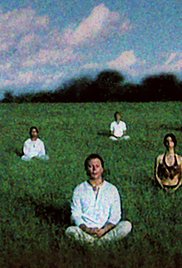
in pursuit of silence Greetings again from the darkness. “Silence is a sound of many qualities.” Director Patrick Shen explores this sentiment as he reminds us what an important role silence (or at least quiet) can play in our lives.

There are many interviews and insights from experts (like author George Prochnik) … each in agreement that the benefits to silence are many. To be clear, we are speaking to the silence associated with things like rustling leaves, flowing water, and rolling waves. We are talking about the process invoked in Japanese Tea Houses, and the steps for meditation.

We are informed that silence has a positive influence on four areas: Physiological, Psychological, Cognitive and Physical. In fact, deep forest walks are used as treatments and prevention, and have shown signs of improving immune systems.

Most of us have noticed how uncluttered our mind becomes as we relax by the shore or on a mountain. Mr. Shen’s film has plenty of quiet time around the interviews, and even in a movie theatre, these peaceful times have quite an impact.

The point is made that we have substituted technology for human interaction … even in place of interaction with our own self. We have left only the tiniest space for reflective thought … the kind of thought that reduces stress and results in clarity within life.

For those who have never experienced it, the film offers a display of composer John Cage’s infamous 4’33” (4 minutes, 33 seconds) piece with three movements … each with complete silence from the orchestra. The idea sprang from his Zen lessons, and now for more than 60 years has been startling audiences into a pleasant state of appreciation. The film drives home the point that we should all find time to quiet our soul.


FARMER / VETERAN (doc, 2016)

April 17, 2016

Dallas International Film Festival 2016

farmer veteran Greetings again from the darkness. Alex Sutton served 3 tours of Iraq and is now considered fully disabled due to PTSD. He is the subject of this film from co-directors Alix Blair and Jeremy Lange, and we are privy to glimpses of his life over the span of a few years. Alex is trying to heal by working on a farm where he lives with his protective fiancé. It’s neither a glamorous nor productive life, but it presents the challenges faced by so many veterans.

Over the course of the film, we get a pretty good feel for the muddled perspective Alex lives with, due in part to a staggering number of prescribed drugs he ingests daily. Blending this diet of meds with his fascination and comfort with the arsenal of firearms he maintains, provides scenes like the one where he compares the hatching of a baby chick to the killing he did during the war – both providing God-like powers.

The film takes us through their daily lives on the farm (chickens, goats, a donkey, a horse, and a peacock), and then to their wedding day and the birth of children. Alex is a likable guy, but one who can never really focus for long periods or put a plan together to organize the farm activities. In fact, he seems closest to happy when firing shots from one of his weapons … even if for no apparent reason.

Our views change quickly during a reading of Alex’s medical records. Where we had previously accepted his account of the med-evac after injuries that “tore him apart”, we soon realize the PTSD has a deeper impact than the daily struggles on the farm. The closing credits detail the 400,000 cases of PTSD stemming from the wars in Iraq and Afghanistan, and it’s a reminder of the need for better care for this mental health challenge facing so many. A world of isolation is no solution. The filmmakers provide an intimate look at this growing issue, and it’s a reminder that the VA is ill-equipped in its present state. Kudos for excellent use of music throughout … especially the “Jubilee” song over the end credits.

watch the trailer:

https://vimeo.com/71373272


NOTHING LEFT UNSAID: GLORIA VANDERBILT AND ANDERSON COOPER (2016)

April 9, 2016

nothing left unsaid Greetings again from the darkness. Rather than the usual biographic approach, this is quite a personal and intimate conversation piece as the “poor little rich girl”, Gloria Vanderbilt, recollects her life of fame with her journalist son, Anderson Cooper. Expert documentary filmmaker Liz Garbus (Oscar nominated for What Happened Miss Simone, 2015, and The Farm: Angola, USA, 1999) delivers what amounts to video memoirs as Mr. Cooper guides his 91 year old mother down Memory Lane.

This is an HBO documentary, and it will have a theatrical run in addition to multiple showings on the cable behemoth. Some may view it as an ego piece … two persons of privilege reminiscing about their “tough” lives, but it’s a stark reminder that no amount of money can prevent the heart from breaking, or the lasting effects of grief.

Gloria Vanderbilt turns out to be a relatively pragmatic lady who, with age and experience, has come to accept the unusual path her life has taken … from a basically parentless childhood, to being at the center of custody battle that created a national media frenzy, to four marriages (the first at age 17), to a personal and social life that bears mention of such names as Frank Sinatra, Richard Avedon, Charlie Chaplin, Truman Capote, Sidney Lumet and Errol Flynn. Along the way, she has been constantly involved with art … whether in the form of painting, writing, sculpting, acting – or designing the iconic jeans of the 1970’s that bore her name.

She kicks off the film by quoting Faulkner: “The past isn’t over, it’s not ever over.” It’s the perfect beginning, as the hook here is that her son Anderson Cooper has spent a couple of years going through her storage units, and is now depending on her to fill in the historical life gaps created by her letters, photographs and paintings. Much of the discussion focuses on young Gloria’s beloved nanny, as well as the custody case featuring Aunt Gertrude (who founded the Whitney Museum).

Hers may not be a life that altered the course of mankind, but now 92 year old Gloria Vanderbilt has experienced the highest highs and lowest lows, and is willing to discuss the fascinating specifics … thanks to the coaxing by her little boy.

**This premieres Sunday April 10, 2016 on HBO

watch the trailer:


A SPACE PROGRAM (doc, 2016)

April 7, 2016

a space program Greetings again from the darkness. This is one of those rare times when an approach to film commentary simply eludes me. Is this a film, an art exhibit, a film about an art exhibit, an observation of earthling’s place in the universe, or a mechanism to bring Tom Sachs’ vision to a (slightly) wider audience? Perhaps it’s a bit of all those things … or perhaps it’s none.

At a minimum, Van Neistat’s film, or visual presentation if you prefer, is an intriguing look at a team of people (led by Mr. Sachs) who are really into their project of building a space program from scratch, and “sending” two astronauts (both female) to Mars to find signs of life. This we learn after the opening 1969 quote from Buckminster Fuller: “Science and Religion are on a parallel course to answer the question, Are we alone?”

Artist Tom Sachs had a New York City exhibit in 2012 entitled “Space Program 2.0: MARS”. This is the filmed version of the exhibit/project featuring Mission Control – Sachs is the Commander, while others are his team of experts (crew members), plus two astronauts, and a live audience – with laughing and clapping. Before you start picturing some big budget Hollywood production like Apollo 13 or Gravity, you should know that this is a complete “bricolage” project, and bricolage is defined as the creation of something from a diverse range of available objects. In this case, the first part of the movie goes into detail about the use of plywood and steel (amongst other things) to create the multitude of items necessary for this space program to succeed (including a landing module and astronaut suits).

The production, at times plays like performance art, but there is a certain level of seriousness to it … despite the scotch drinking and other shenanigans to lighten the mood periodically. The narration and electronic score complement the use of models, cameras, audio/radio, and other devices for the simulation. We even see an IBM commercial and the use of an Atari video game … yet, for this viewer, the unanswered question had little to do with whether we are alone in the universe, and more to do with what was the goal, vision, purpose, or ambition of this project?

watch the trailer:


THEY WILL HAVE TO KILL US FIRST (doc, 2016)

March 31, 2016

they will have to kill us Greetings again from the darkness. Where there is oppression, there is often courage. Director Johanna Schwartz and her film crew have produced a remarkably informative and well-made documentary. The film hits the target in putting on display the effects of the 2012 Islamic Jihadists invasion of northern Mali (Geo, Timbuktu) and the institution of Sharia Law.

Malian culture is steeped in music, which is used for education, entertainment and history. Radio stations were shuttered and musical instruments were burned. Many famous musicians escaped to Bamako and other areas rather than risk torture and execution. Director Schwartz interviews many of these musicians and we get defiant quotes such as “Our way of resisting is our instruments”, and “We think of ourselves as ambassadors of our country.”

In other words, these musicians understand the cultural and political impact of continuing to make music. Their goal is to spread the message widely. We also see film of a refugee camp where women are staying strong in the face of adversity – hopeful of better days ahead.

2014 peace talks in Algeria led to an official cease fire in 2015, but most locals remain cautious. With the help of globally known performers such as Brian Eno and Nick Zimmer, a Gig for Exiled Musicians was organized for Timbuktu, and it allowed for re-visiting the village and the city – now mostly a bombed out shell. Many homes and historical sites in the ancient cities were destroyed by the terrorists.

These atrocities give that much more strength to the musicians, and we are especially taken by female singers Khaira and Disco, and the local band Songhoy Blues. The perspective of those most affected proves quite powerful, and is a reminder of just how strong the human spirit can be. It’s a film that should be seen by many, and one director Schwartz should be quite proud.

watch the trailer:


MR. GAGA (doc, 2016)

March 31, 2016

mr gaga Greetings again from the darkness. Don’t think for a second this has anything to do with the globally famous Lady Gaga; however, if the name recognition causes a few more people to watch this labor of love and respect from filmmaker Tomer Heymann (Paper Dolls, 2006), then so much the better. Creative geniuses make fascinating subjects for talented documentarians, and Israeli dancer and modern dance choreographer Ohad Naharin is certainly no exception.

The opening scene captures Ohad working with a female dancer on the proper way to fall down … over and over – even after she bangs her head on the floor. It’s our first of many glimpses behind the scenes of his style for rehearsals. His quiet intensity perhaps restrained for the cameras; he harps on dancers more about emotion than technique.

Ohad’s own words provide much of the film’s backdrop and structure. That combined with the stunning performance footage from numerous shows he choreographed, we begin to get a feel for this driven visionary. By the end, we have also been provided some insight into his childhood, his late arrival to formal dance training, the death of his first wife/co-creative partner, and the birth of his first child.

We see clips of his prowess as a young dancer who couldn’t find fulfillment in the dance companies of Martha Graham or Maurice Bejart, but who seemed destined to make his mark with modern dance … sometimes causing a bit of controversy along the way. His founding of Gaga – what he calls “movement language” is given a celebrity endorsement from Natalie Portman, who mentions that it allows her to find pleasure in dancing, which is more typically associated with pain. Ohad’s own description is that Gaga is designed for us to “listen to our body before we tell it what to do”. He proclaims that Gaga is accessible to the masses, and that dance has the power to heal.

Director Heymann’s film expertly captures many sides to Ohad Naharin, a man originally drawn to dancing not as a career, but rather as something he enjoyed. The talented dancers and the extensive rehearsal footage remind us of the physical and mental grind required to achieve greatness in dancing … a lesson that carries forward for most any endeavor.

watch the trailer:


FASTBALL (doc, 2016)

March 24, 2016

fastball Greetings again from the darkness. Cheese. Gas. Heat. The crowd perks up when a power pitcher lights up the radar gun and starts ringing up hitters. As narrator Kevin Costner points out, at the core of the game of baseball is the epic battle between a man with a stick and one with a rock … the bat and ball … the batter and pitcher. Director Jonathan Hock digs into our fascination with those few who can throw a fastball at speeds that cause even the elite hitters to struggle. A 100 mph fastball gives the batter .396 milliseconds to react … quicker than the blink of an eye.

Mr. Hock structures the film for maximum enjoyment and ease of keeping up. I counted 13 chapters which such titles as “The Big Train”, “The Heater from Van Meter”, “Hoot”, “The Fastest that Never Was”, “Nolan Ryan”, and “The Fastest Pitch” . Within each chapter we are treated to a blend of archival footage, interviews with baseball legends, and input from scientists and experts. The segments contrast the athletic side with the scientific side … especially interesting given how over the past 15 years, baseball has transitioned into such a risk strategy of performance tendency metrics.

Listening to a physics expert discuss the “Magnus Effect”, while legendary hitters like Hank Aaron and George Brett describe a “rising fastball”, is quite an experience for those of us who so love the great game. There is a history lesson, complete with photos and film, on how measuring the speed of pitches goes back to Walter Johnson being tracked through some contraption at the Remington Armory; Bob Feller’s pitch racing against a motorcycle; and a young Nolan Ryan going up against a crude radar detector.

Different generations are discussed with insight from such legendary fastball pitchers as Bob Gibson, Goose Gossage, Nolan Ryan, Justin Verlander, Craig Kimbrel, David Price and Aroldis Chapman. Unfortunately 80 year old Sandy Koufax is not interviewed, but we do see some rare video footage from his 1965 Perfect Game. There is discussion on earlier eras and pitchers such as Walter Johnson, Bob Feller and the enigmatic Steve Dalkowski (who does make a brief appearance). Gibson describing his infamous glare from the mound is itself worth the price of admission. However, it’s the great Nolan Ryan who has the most camera time, which is understandable given his unprecedented quarter century run as a power pitcher.

Just as interesting as listening the pitchers, is having the hitters discuss the challenge in hitting the fastball. The difference between a 92 mph fastball and a 100 mph fastball is broken down scientifically by the experts and real world by hitters such as Tony Gwynn, Al Kaline, George Brett and Hank Aaron. The chalkboard and video clips work together to make it clear just how difficult it is to hit the fastball. As for the “fastest pitch ever”, the mystery may never be solved.

watch the trailer: