KAMAPI! FOR THE LOVE OF SAKE (2016, doc)

August 21, 2016

kampai Greetings again from the darkness. No matter your country of origin, drinking in a social setting inspires a unifying call for the group. We Americans proudly bellow “Cheers”. In Spanish, it’s “Salud”, while the Germans say “Prost” and the French “Santé”. You might have guessed from the title of this documentary … the Japanese say “Kampai!” as they toast their cohorts and raise a glass of Sake, also known as Japanese rice wine.

Filmmaker Mirai Konishi promises a look at the fascinating and somewhat mysterious world of brewing sake. His approach is to gain insight from three different individuals who hail from quite disparate backgrounds and are now fully immersed in all things Sake. John Gauntner is a U.S. born writer/educator/researcher whose publications are world renowned as the best available on the subject. Philip Harper is a British gent who is Oxford educated and the first non-Japanese master Sake brewer (Toji). He spends roughly 60% of a year in a dark, dank environment perfecting his own label of the drink. Kosuke Kuji runs an inherited century old Japanese Sake brewery that has been in his family for multiple generations.

We are informed that Sake is the national beverage of Japan and has been around for many centuries, creating historical and cultural significance. Unfortunately, the film offers little historical perspective, so we don’t learn how and why Sake became so ingrained in the fabric of Japan. Instead we focus mostly on the three fellows noted above and how their passions and commitment to Sake helped drive not just their own interests, but that of the industry. One other segment offers a glimpse inside the North Carolina based brewery looking to capitalize on the growing Sake trend. Unfortunately, per numerous reports, Blue Kudza went out of business shortly after this segment was filmed.

A cursory description of the process – gathering ingredients, preparation, fermenting, tasting, etc is interesting enough, and the personal stories add enough heft that we don’t realize the missing historical perspective until the movie ends. We are left anticipating a Sake tasting party, yet no more educated on the true significance of the chilled, warmed or room temperature beverage (it can be served all three ways) being hoisted as the patrons exclaim “Kampai!” and the screen fades to black.


THE LOST ARCADE (2016, doc)

August 13, 2016

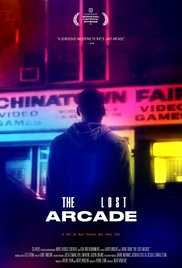
lost arcade Greetings again from the darkness. Webster’s definition of “arcade” is how director Kurt Vincent chooses to start his documentary. While video arcade is the most widely used version, it was the alternative description of the word “passageway” that caught my eye.

In the 1970’s and 1980’s, video arcades were seemingly everywhere … peaking in 1981 with 24,000 locations throughout the United States, with the largest venues being in Times Square. Rather than take on the collapse/transformation of an industry, Mr. Vincent instead focuses on one particular NYC arcade – Chinatown Fair. The video footage shot inside the arcade prior to its closure offers up an intimate look at the atmosphere; a racially diverse group of youngsters bonding and socializing within an ecosystem that the outside world didn’t understand (or care much about).

Placing your “next” quarter in line on the cabinet may have guaranteed you an upcoming time at the controls, but this can be viewed as the Land of Misfits with the gamers flocking to groups of their kind. These were the folks who didn’t fit in with the more physically active groups at rec centers and on playgrounds, but instead thrived on the late night gatherings amidst the electronics beeps and flashing lights.

We meet Sam Palmer, the immigrant from Pakistan, who owned Chinatown Fair for decades. This father figure often hired his most loyal players to help run the place, and we hear the personal stories from a couple of these – one (Akuma Hokura) who was rescued from a life on the streets, and another (Henry Cen) who later opened his own competitive arcade in Brooklyn. It’s perfectly accurate to describe this as a social community, and maybe not a stretch to call it a society unto itself.

Space Invaders, Pac-Man, Frogger and Street Fighter are just some of the most popular arcade games that finally gave way to home gaming – beginning with the 1986 introduction of Nintendo home systems. This development made gaming much more convenient for the masses, but also destroyed the social community of the local arcades.

We meet the guy who tried to re-open Chinatown Fair as a knock-off of Dave & Busters with an emphasis on family entertainment. However, as someone in the film states, “nostalgia is not really all that profitable”. Mr. Vincent’s film is a time capsule look at what made arcades work, and it’s very interesting to learn that Chinatown Fair played a role in a DeNiro/Streep film, an Old Dirty Bastard music video, and even an episode of David Letterman’s show. Going back to the opening definition, it’s easy to see how a generation used the local arcade as a passageway to finding a social life and interacting with others … something that had previously been more challenging for them.


MISS SHARON JONES!

August 10, 2016

Dallas International Film Festival 2016

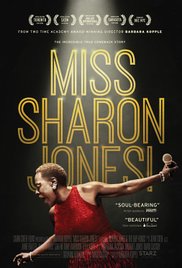
miss sharon jones Greetings again from the darkness. Being described as “the female James Brown” is a double-edged sword. On one side, the talent and stage presence must be obvious. On the other side, the burden of expectations that can never be eclipsed is always present. Soul/Funk/R&B singer Sharon Jones doesn’t much care about any of that … and in this documentary we witness both her strength in life and her powerhouse performances on stage.

Filmmaker Barbara Kopple is a two time Oscar winner (Harlan County USA, 1976 and American Dream, 1990) and here she presents not so much a music or concert documentary, as an intimate look at how a person can be inspired and driven by music to fight through life’s challenges – and even cancer. In 2013, Miss Jones was diagnosed and much of the film follows her through head-shaving, chemotherapy and the battle to regain her voice and strength.

Born in North Augusta, South Carolina, Sharon was raised in Brooklyn. Her background was anything but privileged, and as an adult she spent years working as a Corrections Officer at Rikers Island, while continuing to sing in her spare time. A record producer once told her she was ‘too black, too fat, too short’ to make it, but she just kept singing … releasing her first album at age 40.

Sharon’s spirit and energy are the core of the story here as even after her cancer diagnosis, she carried the pressure of needing to get back to singing and performing so that her band members in The Dap-Kings could earn a living and feed their families.

Her NYC comeback is impressive and life-affirming, but the highlights are clips of her earlier stage performances … and the most incredible in-church performance you are likely to ever witness. In 2014, she won her first Grammy for “Give the People What They Want”, and Ms. Kopple’s film shines a spotlight on an incredible talent and spirited lady who deserves much more than to have a cult following and be “underappreciated”. Perhaps the film will open some eyes, ears and hearts.

watch the trailer:


GLEASON (doc, 2016)

August 4, 2016

Gleason Greetings again from the darkness. Heroes come in many shapes and forms. Steve Gleason became a cult hero when he blocked a punt for his New Orleans Saints team in their first home game after Hurricane Katrina. For this, the team erected a life-sized statue outside the Superdome. In his time since that game, he has suffered more than any person should, and he has provided hope and assistance to more unfortunate folks than just about anyone. By now, just about everyone would consider him a hero.

Director Clay Tweel takes a very direct approach to telling Steve’s story. He guides us through the life of the undersized Washington State linebacker who, against all odds, carved out a 9 year career in the NFL; married a remarkable woman who was his equal as a free-spirit; was diagnosed with Amyotrophic Lateral Sclerosis (Lou Gehrig’s disease); learned to live with the debilitating disease; established a foundation to provide assistance to others with ALS.

Tweel pulls no punches in showing the progression of the devastating disease, and equally as importantly, in the toll such a disease takes on the loving caregiver after so many years. Gleason retired in 2008, and was diagnosed in 2011. Six weeks later, he and his wife Michel found out she was pregnant with their first child. Staring down the disease and the impending birth of their child, the couple took a 2 month expedition to the Alaska wilderness. This could be interpreted as their way of leaving their “old life” behind, but this couple is so full of life and spirit, that it was in fact, merely a next step.

The diagnosis and the baby announcement motivated Gleason to begin filming video blogs/journals for his unborn child. His stated goal was to “share with you who I am”, since the odds weren’t good that father and son would ever be able to hold a conversation or play catch. Clips of these video entries are shown throughout and capture Gleason’s charm, humor, sincerity and sprit of life.

Son Rivers arrives in October 2011 just as the disease is creating severe challenges for Steve’s physical and verbal capacities. We watch as Michel transitions from free-spirited newlywed to full-time care-giver and first time mother. Her coping methods are on display, as are the effects on her energy and outlook over the next few years.

With the help of friends and family, Team Gleason is created as a foundation to provide assistance to ALS sufferers. The foundation finds its newest mission when Medicare announces that vocal/speech technology will no longer be covered for ALS. “No White Flags” becomes the calling card for the foundation, and these activities are blended with Gleason’s medical and family hurdles … including his religious father who drags him to a ‘faith healer’.

Moments with Eddie Vedder and Drew Brees, among others, lead us to the global phenomenon known as “the ice bucket challenge” for ALS and finally the Microsoft Super Bowl commercial featuring Gleason and new speech technology. The film and story are simultaneously gut-wrenching and inspirational, and provide a rare behind-the-scenes look at the emotional and physical impact of disease on both patient and caregiver.

watch the trailer:


RICHARD LINKLATER: DREAM IS DESTINY (doc, 2016)

August 4, 2016

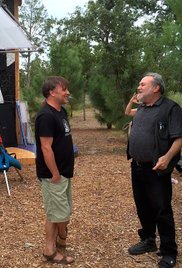
linklater Greetings again from the darkness. He had the childhood dream of becoming a major league baseball player derailed due to a health issue. His dream of becoming a novelist fizzled because he preferred collaboration to solitude. So his dreams led to his destiny … that of being a ground-breaking filmmaker who “changed the landscape of independent filmmaking”. Director Richard Linklater is profiled by co-directors Louis Black (co-founder Austin Chronicle and SXSW) and Karen Bernstein (Emmy and Grammy award winner), two passionate and knowledgeable folks who are understandably fans of Linklater and the Austin film landscape.

The film kicks off with a scene from Slacker (1991) in which Linklater himself appeared as a taxi passenger rambling philosophically about the bus station. It then time warps to the red carpet event for the premiere of Linklater’s Boyhood (2014), setting the stage for filling the gap of more than two decades.

It might be best to think of this as a tribute to Linklater the filmmaker rather than an in-depth analysis of how he creates his art … though we do get to see him on set. Some of the time is spent watching Linklater and Black peruse old journals and early screenplays as the young director was honing his thoughts and talent. This type of nostalgia could be overdone, but instead it allows us to better understand the journey that has produced some outstanding work (along with a few forgettable projects).

Over the years, so much attention has been paid to the NYC vs LA preferences within the film industry; it’s a pleasure to acknowledge the “outsider world” of Austin, Texas … a film scene nurtured by Linklater and his cronies. There are plenty of family photos and home videos, along with the celebrity input of Jonathan Demme, John Pierson, Kevin Smith, Matthew McConaughey, Jack Black, Ethan Hawke, Patricia Arquette, and Ellar Coltrane (the kid from Boyhood). Each speaks admiringly in regards to Linklater’s spirit and passion for the work. It’s especially interesting to hear of his budget/fundraising struggles on Boyhood – an understandable challenge since the project took 12 years, and required he return for funding each and every year!

Richard Linklater is auteur defined. He is his work, and his work is him. He’s been at the forefront of the indie wave with Slacker (1991), followed by the cult favorite Dazed and Confused (1993), the “Before” trilogy (Sunrise – 1995, Sunset – 2004, Midnight – 2013), box office hit School of Rock (2003), the oddball Bernie (2011), groundbreaking Boyhood (2014), and his most recent Everybody Wants Some! (2016). Linklater is proof that creative filmmaking can thrive in a place like Austin, Texas … even if he might still like to be a baseball player.


THE MAN WHO SAVED BEN-HUR (2016, doc)

July 28, 2016

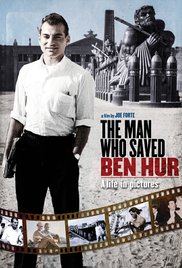
man who saved ben hur Greetings again from the darkness. The title may limit interest in this documentary as it might be mistaken for an “on the set, behind the scenes” tell-all appealing only to the most ardent film history buffs. However, this plays best as a tender tale of an elderly man who lived an exciting life, but finds things pretty empty as he nears the end.

Filmmaker Joe Forte was cautioned by his deeply Catholic family to stay away from the movie business, lest he “end up like Cousin Johnny”. Just a few years ago, Joe decided to track down Cousin Johnny, and he discovered they were separated by only a few city blocks. Johnny Alarimo was one of the most successful Assistant Directors from the 1950’s, 60’s and 70’s, and on the day he invited Joe and his camera into his home, the apartment was filled with boxes of memories.

A treasure trove of photographs – many featuring Johnny posing with the Hollywood elite – were organized in files, sleeves and boxes. And the best part was that, despite being in his late 80’s, Johnny could recall the stories corresponding with most every snapshot.

Being a relative, Mr. Forte treads lightly on the topics Johnny wishes to avoid. We learn of his close friend from WWII, Henry “Pet” Petrich. It’s clear the two shared a bond, though Johnny remains pretty tight-lipped on details … just like on his stories regarding time with Rock Hudson and Gore Vidal. The likely secret life would remain secret forever, but we find ourselves liking this charming man more and more as the film continues.

We do get the Ben-Hur story as it’s disclosed that Johnny was director William Wyler’s Assistant Director, and was an integral part of getting the movie made as he acted as on set translator between the English and Italian speaking folks. Wyler’s personal letter to Alarimo is every bit as valued as the autographed portrait sketch of Johnny by “Chuck H” between takes. Though he was the last surviving crew member of Ben-Hur, it’s also a reminder that only department heads received on screen credit until the 1970’s – robbing many contributors of their rightful place in Hollywood lore.

As Joe and Johnny grow closer as friends, we as viewers find ourselves connected to Johnny. We are saddened when he admits that his doctor’s appointments for medical issues are the highlight of his social life these days. Joe provides Johnny with exactly what he wants, needs and deserves … a chance to be the star and tell his stories. More importantly, he prevents an elderly man from living out his final days in loneliness and solitude. No matter how many celebrities one has met, nothing compares to the warmth of a friend.

watch the trailer:


ANTS ON A SHRIMP (2016, doc)

July 28, 2016

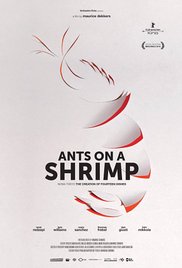
ants on a shrimp Greetings again from the darkness. One need not be a true foodie to be aware of the rise in popularity of the bombastic, egotistical chefs splattered all over TV as they strive for ratings by out-yelling the competition. Less accessible to the general population – due to cost and/or locale – is the highest level of fine dining that is a cult unto itself. One of the most successful elite restaurants is Noma based in Copenhagen, Denmark. It was named “Best in the world” for four out of five years (2010-2014), and yet the owner/chef remains unsatisfied.

Last year, filmmaker Pierre Deschamps provided a profile of Rene Redzepi and his world class restaurant in the film Noma My Perfect Storm. This time, filmmaker Maurice Dekkers takes a different approach. He follows Redzepi and his senior staff as they temporarily relocate Noma to Tokyo in a risky and difficult project.

Much more than a glimpse into a restaurant kitchen, this is an examination of collaborative artistry. Redzepi and his dedicated, enthusiastic team (Lars, Thomas, Rosio, Dan, Kim) strive for perfection in something that can’t be measured. It’s internal pressure and tension within a creative environment … something only the most internally driven can comprehend.

The structure of the film is the countdown to the opening of Tokyo restaurant. All 3000 available reservations for the 6 weeks are sold out, and the waiting list numbers more than 58,000. The team is committed to leaving behind their pure Nordic cuisine and discovering locally sourced new ingredients … a mission that finds them scavenging Nagano Forest and comingling with fish experts at market.

Food is the centerpiece here as the team learns turtle is a local delicacy; they gain respect for Japanese fruit culture that dates back thousands of years; and even tries deep fried fish sperm as a possible offering. But beyond the food, this is about a group stepping outside their comfort zone and trying to find their “voice” – despite a firm belief that nothing is ever quite good enough … a sentiment their customers don’t agree with.

watch the trailer:


FREE TO RUN (2016, doc)

July 15, 2016

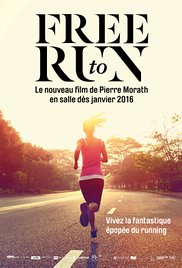
free to run Greetings again from the darkness. Director Pierre Morath seemingly had three good ideas for a movie: a history of long-distance running, the fight and final acceptance of women into the sport, and an analysis of holistic running vs. competitive running. Any of the topics would make a solid documentary, but when combined, the result is a bit of a hodgepodge that is still interesting and informative.

All of the familiar names are present: Frank Shorter, Bill Rodgers, Jim Fixx, Steve Prefontaine and Joan Benoit . However, it’s Fred Lebow and Karen Switzer who prove to be the most compelling figures. In 1967, Ms. Switzer was the first woman to run the Boston Marathon, and you’ve probably seen the iconic photo of some guy trying to forcibly remove her from the race. It’s pointed out that at the time, women still didn’t have the right to vote in Switzerland – an effective means of showing that women were still fighting for basic equality. Mr. Lebow founded the New York Runners Club and was instrumental in moving the NY Marathon from The Bronx to Central Park. He was a marketing man and promoter at heart, and was a key figure in expanding the popularity of distance running.

It was 1984, before the Women’s Marathon became an official Olympic sport, the coverage of Ms. Benoit’s win is compared to women winning the right to vote. It’s also noted (somewhat facetiously) that “it’s the first time women are allowed to be exhausted in public”.

Perhaps the most interesting pieces of this running puzzle focus on the “free your mind” aspect of running that stands in stark opposition to the mega-corporate effects of Nike (and other corporations) on running events. Corporate sponsorships and vast sums of money created a global network of high-profile and finely-tuned runners, while the inner peace attained from running allowed the activity (rather than the sport) to continue to grow in acceptance from those looking to escape some of the day-to-day stresses of life.

The “dark side” of the sport reared its head in 2012 after Hurricane Sandy left destruction in the path of where the NYC Marathon (50,000 runners) was to be held. With the big money at stake, some poor decisions were made as citizens throughout the area were without power, clean water and even shelter.

Admittedly, distance runners can often be described as “oddballs”, and though it only takes a pair of sneakers and some shorts to “go for a run”, it’s the corporate sponsorships that make it big business … but at least now, women are right there with the men – whether it’s a big city marathon or a jog through the park.


AT THE FORK (2016, doc)

July 13, 2016

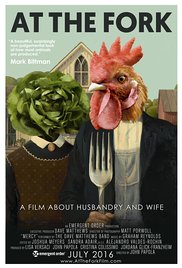
At the fork Greetings again from the darkness. “We need to feed the world!” is the battle cry used for years by farmers and ranchers to justify many less-than-appealing approaches to their craft. Director, and admitted omnivore, John Papola provides a mostly even-handed overview of contemporary animal farming and animal welfare as it corresponds to our food supply. However, that’s not to say the documentary is without flaws.

The heavy-handed beginning of the film plops us into the traditional family “rib-fest” at the director’s home, and introduces us to his vegan wife Lisa who cringes at the sight of so much meat on the grill. The couple then begins their journey of research at an animal sanctuary where we mostly watch some lady rubbing the belly of a pig (yes, he likes it). It’s at this point where the film almost lost me for good. Fortunately, the rest of the run time was filled with good information and thought-provoking interviews.

Papola visits multiple animal farmers across multiple channels: pig, cattle, chicken, and dairy. We get to hear first hand from the farmers themselves as they speak to the realities they face: economic vs. moral. There is the constant pressure to get more from less … much of which comes from the corporations who control the bulk of the food supply, distribution and pricing.

We also hear from industry experts like Dr. Temple Grandin and journalist Mark Dittman; the CEO of Whole Foods, John Mackey; the President of the Humane Society, Wayne Pacelle; and the Governor of Iowa, Terry Branstad … each with their own opinions and expertise within this field – some clearly defending their position.

While this is definitely not a hatchet job on animal farming, you can expect to see graphic detail of overcrowding, castration, culling and the removing of calves from their mothers after birth. Some of it is quite difficult to watch, while some segments are inspiring … like watching the hogs wander through the forest and the chickens splashing in the stream.

The film touches on some growing trends like the 5 step labeling run by Global Animal Protection (GAP), and “certified humane” labeling … though these segments seemed rushed and incomplete. We also learn about “Ag Gag” laws and how whistleblowers are dealt with, plus the catastrophic effects of Avian Bird Flu on some facilities.

Beautifully photographed by cinematographer Matt Porwol (Cartel Land), the film captures the people, the land, and the animals, while also driving home the point that consumer spending habits are like votes – they will ultimately determine the level of stewardship for animal welfare and the process of what ends up on our dinner plate. Now all we need is a documentary that teaches us how to shop in a way that leads to widespread ethical treatment of animals.


NUTS! (2016, doc)

July 10, 2016

Oak Cliff Film Festival 2016

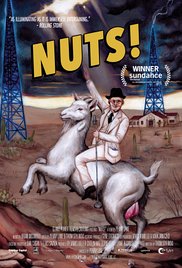
nuts Greetings again from the darkness. Not many true life rags-to-riches stories combine snake oil, goat testicles, Wolfman Jack, early radio advancements, celebrities, a campaign for Governor and the Journal of the American Medical Association. Director Penny Lane (Our Nixon, 2013) provides some real nuggets in her telling of the life and career of Dr John Romulus Brinkley. Her inventive approach is unique both narratively and visually … and even a bit sneaky.

If Brinkley is an unknown figure to you, it might be surprising to know that he built an empire and became famous and multi-millionaire during one of the harshest depression eras in American history (the 1920’s and 30’s). Brinkley had the cajones to transform little Milford Kansas from a sleepy town of 300 to a bustling city of 5000. So what drove this growth? Brinkley built his fortune by implanting goat testicles into men for the purpose of curing impotence … a procedure he claimed to have performed more than 10,000 times.

Based on the authorized biography “The Life of a Man” by Clement Wood, director Lane’s film allows us to get to know and feel comfortable with Brinkley. We begin to appreciate and admire his entrepreneurial efforts and success, and even side with him against his challengers. The final act reminds us why we are/should be skeptical beings and that our viewpoint affects our beliefs.

Where we might normally cry “bollocks”, the blending of news clips, home movies, photographs and hand-drawn animation have us fully on board. It would be difficult to argue against the label of genius when describing Brinkley, though the specific category is up for debate. Recognizing the power of the young radio industry, Brinkley started KFKB, when U.S. radio was still in development. He used radio to market his goat procedure, and is even credited with introducing country & western music, and the first sex talk show (a predecessor to Dr Ruth) to the air waves.

JAMA editor Morris Fishbein was a long time nemesis to Brinkley. Fishbein’s years-long crusade was fought to label Brinkley as a “quack”, a charlatan and a fraud. Brinkley was forced to re-group after a losing campaign for Governor and some challenges to his radio station. He ended up in Del Rio, Texas with his beautiful house, a new hospital, and powerful one million watt radio station (XERA) becoming his family jewels. The station was located on the Mexico side of the border to avoid U.S. regulation and he was now able to broadcast not just across the U.S., but to numerous countries.

Brinkley’s particular genius might better translate to modern times. We need look no further than the current Presidential candidates, and the success of religious televangelists and Reality TV icons. These are the folks that tell us what to read, what to believe and how to act … and they each have their followers and believers.

Brinkley lost the Libel suit he brought against Fishbein, and his empire crumbled quickly. He was dead 3 years later. Milford Kansas no longer exists and goats have a newfound success (requiring significantly less sacrifice) as viral videos on social media. When XERA became XERF, Wolfman Jack worked there as a DJ becoming the radio voice for a new wave of music called rock and roll. The film names names (celebrities of the era) and reminds us that what’s claimed is not always true and accurate. Mostly, however, the film is a fascinating character study and history lesson, and as a movie to watch … it’s a ball.

watch the trailer: