DIFF 2017: Day Seven

April 9, 2017

The Dallas International Film Festival runs March 31 – April 9, 2017
 It’s Thursday and we are in the home stretch for the festival. Only four days remain, and a second wave of new films and filmmakers has hit the schedule. By the end of today, I will have watched 22 DIFF movies with 3 full and exciting days to go. Below is a recap of the three movies I watched on Thursday April 6, 2017:


IT’S ONLY THE END OF THE WORLD (Juste la fin du monde)

All it takes is either Vincent Cassel or Marion Cotillard in the cast, and a movie becomes a must-see for me. Combine both of them with some other terrific French actors: Lea Seydoux, Nathalie Baye and rising star Gaspard Ulliel, and then have the project directed by daring young filmmaker Xavier Dolan (Mommy, 2014), and the pieces are in place for an important and stimulating cinematic experience. Then again, sometimes having the pieces just isn’t quite enough.

Based on the play from Jean-Luc Lagarce, the film begins with Louis (Mr. Ulliel) on a flight back home for the first visit with his family in 12 years. Louis is now a successful writer, and the reason for his trip home is to deliver some important news … news that requires a face-to-face gathering. As he enters the home, it’s obvious there are significant underlying issues with these folks. The family dynamics are light-years beyond strained, and what follows is 99 minutes of yelling, bickering and blaming. It’s a miserable experience for Louis, and unfortunately for us viewers as well.

Ms. Cotillard’s Catherine is subservient wife to Mr. Cassel’s Antoine, the bitter brother who doesn’t seem overly joyous that Louis has finally decided to visit. Ms. Seydoux is the little sis who barely has memories of Louis living at home, but desperately wants to form a bond while he’s present. The matriarch is played by Ms. Baye who has the best and most honest line of the film. She tells Louis: “I don’t understand you. But I love you.” That line could have been the title of the film as it seems that none of these people have any understanding or empathy for the other family members, though there is a connection that only relatives can share.

Mr. Dolan films everyone up close creating a sense of claustrophobia and annoyance that takes the dialogue to near breaking point on a few occasions. He also employs some extremely creative camera angles with some of these ultra-tight shots. Lastly, you aren’t likely to see a more fitting or effective use of a cuckoo clock in any movie this year. Its role as a metaphor is clear, and just as clear … these people are themselves cuckoo!


ELLA BRENNAN: COMMANDING THE TABLE (documentary)

Actress Patricia Clarkson narrates this profile of restaurateur-extraordinaire and incredibly dedicated, successful and influential businesswoman Ella Brennan. For anyone who has eaten at Commander’s Palace in New Orleans, the flavorful impact of Ms. Brennan is surely known. However, there is so much more to her story and documentarian Leslie Iwerks does a thorough and entertaining job of serving up the details.

Whether or not you consider yourself a “foodie”, you’ve likely heard of Emeril Lagasse and Paul Prudhomme – two of the first celebrity chefs. Both got their start thanks to Ms. Brennan, and both still credit her for much of their success. The story begins in the 1940’s when Ella was just out of high school and her much older brother Owen put her to work in his restaurant. She studied vigorously, both through books and observation.

To fully appreciate this amazing woman, the era must be considered. Women in business were rarely provided opportunities, and from an industry perspective, food was not yet a national obsession. Ms. Brennan bucked both by building a business and generating national interest in various types of food, flavors and meals.

When a family feud caused a split and the loss of Brennan’s restaurant on Royal, Ella opened Commander’s Palace, a now globally famous eatery that is must-dining for locals and tourists alike. Director Iwerks chronicles changes in menus and chefs, and focuses on Ms. Brennan’s commitment to running a business the right way, and being a vital part of the community. Never is this more evident than in the aftermath of Katrina in 2005. Her story is the ultimate success story of a self-made woman who preserved through good times and bad, and her legacy is not likely to be forgotten in the culinary world.


SPETTACOLO (documentary)

For those of us a little rusty on our Italian, it’s pronounced spe-TAK-ola and it means “the show” or “the play”. That is the perfect title for a documentary on the Tuscany region farming town of Monticchiello. On April 6, 1944, the townspeople took a stand against the German invasion during WWII, and for more than 50 years the town has staged a live presentation to maintain their bravely-earned voice.

More than an annual tradition, the play is a lifelong commitment that proves how art and participation can connect those within a community. Co-directors Jeff Malmberg (Marwencol) and Chris Shellen take us through the early stages of planning where discussions are held to determine this year’s “hot topic”. This determines the focus of the play and what will be discussed and presented. What follows is script writing from long time director Andrea Cresti, stage building, and hours upon hours of rehearsal. Along the way, we learn how the younger generation is showing little interest in the tradition, casting doubt on not just the future of the play, but also the identity of the town.

In an effort to help us better understand the folks involved and just what it means to the community, the film moves at a very deliberate … ok, pretty darn slow place. Of course, this is Tuscany, so the topography and landscape are breathtaking – including one stunning shot of summer’s sunflowers. The film captures the difficulty in maintaining tradition, and as Mr. Cresti states, it might be better if the play ends before losing all meaning.


DIFF 2017: Day Four

April 5, 2017

The Dallas International Film Festival runs March 31 – April 9, 2017


The first weekend of DIFF 2017 has come and gone, and though my eyes are a bit bloodshot, it’s been a lot of fun taking in quite a few interesting and thought-provoking documentaries and some independent films from passionate filmmakers. While some festival attendees take a little time off after a busy weekend, my plan is to see multiple movies each day until the festival ends. Below is the recap of the three movies I watched on Monday April 3, 2017:

UNREST (documentary)

With all of the remarkable advancements in the medical field, there are still gaps that can make a bad situation even worse. Jennifer Brea was once a brilliant, lively, active person whose dream as a youngster was to “swallow the world whole”. As a PhD student at Harvard, she seemed well on her way. When she was hit with a 107 degree fever, doctors were unable to properly diagnose, so they informed Jennifer that the resulting fatigue must be psychological in nature (aka ‘It’s all in your head’). Though she survived, her life has never been the same.

With the support of her husband Omar, Jennifer decided to document her journey – both medical and personal. During a doctor’s appointment, Omar coaches Jennifer with something along the lines of, “If you say too little, they can’t help you. If you say too much, they will assume you are a mental case.” The stigma attached to Chronic Fatigue Syndrome persists despite affecting more than one million Americans. Officially chronicled as Myalgic Encephalomyelitis (ME), Chronic Fatigue Syndrome has struck many athletes and other active, vibrant folks. Since 85% of those affected are female, and no clear cause or diagnosis is available, there remain medical professionals who lump this functional disorder into the same classification as “hysteria” from the old days. It can’t be easily identified so they assume it’s psychological. Because of this, many of these people suffer in silence with little treatment.

Despite being bedridden many days, along with a high sensitivity to light and sound, Jennifer has capitalized on technology to connect with other ME sufferers. They share their stories via Skype and YouTube, and a support system slowly forms for these people who feel so isolated and forgotten. Home remedies and theories of causation are shared. Mixed results occur, but these are fighters.

A global #MillionMissing protest is organized to bring attention to those who suffer in greater numbers than Multiple Sclerosis. Research is limited, though there seems to be a clear link between the immune system and the brain. Jennifer’s story and film are a reminder that those things we don’t understand deserve more than a shrug, especially when so many beautiful people are living in misery. She proudly proclaims, “I’m still here”, and we believe she will find a way to persevere.


WHAT LIES UPSTREAM (documentary)

“Issues” documentaries walk a dangerous line. If done properly, they can be informative, educational and even act as calls to action. On the other hand, they can be biased, manipulative and even blatant propaganda (Hello there, Michael Moore). Because of this, my defense shields are usually at high alert when I sit down to take in a film such as this latest from Cullen Hoback (Terms and Conditions May Apply, 2013).

Mr. Hoback identifies as an investigate filmmaker, and that’s a pretty accurate description of his process. He spent two years in West Virginia’s “chemical valley” after a 2014 chemical spill by Freedom Industries. It was only because of the smell and color of the drinking water that the public became aware of the spill identified as MCHM. Trucked in bottled water became the only safe source for drinking, cooking and bathing for the more than 300,000 who were impacted. As frightening as this seems, the true horror comes from what Hoback uncovers in his interviews and legwork.

It’s only once this network of government, industry and agencies begins to unravel that our eyes widen and we get an inkling of the real danger. Mr. Hoback never shies away from dramatizing a moment or event, but that doesn’t soften the frustrations we experience while being informed that companies and factories provide their own water testing results to agencies such as EPA, who then provide a review of the data as compared to “acceptable standards”. When the CDC is called in to examine medical records of those impacted by the polluted waters, a quick “no issues here” rubberstamp is provided and no further digging is done.

Two recurring players in this saga are Dr. Gupta and Randy Huffman. Mr. Huffman is a director of West Virginia Department of Environmental Protection, while Dr. Gupta is originally an outspoken caution flag waver who sees the obvious oversights and mistakes occurring in safety tests and communication. It’s interesting to see the transformation of Dr. Gupta from caring medical scientist to self-protective politician during this period; while Mr. Huffman seems to move from clueless government head to concerned leader. Of course, all of the specifics seem to fall into a gray area due to Mr. Hoback presentation style, but clearly something isn’t right.

The biggest takeways here are that it seems the agencies are more protective of their turf than of public safety. Industry and lobbyists are apparently more directly involved with actually writing bills than we previously imagined. Misrepresentations and outright fraudulent data (along with faulty testing processes) can put the public’s safety in peril … at least until the water smells so bad that everyone notices. Given that much of the details and data are sketchy here, it leaves little doubt that we should be vigilant in our questioning of those responsible for our safety.


TROPHY (documentary)

Totally unexpected is a documentary on big game hunting that doesn’t come down squarely on one side of this argument. Co-directors Christina Clusiau and Shaul Schwarz do an admirable job of laying out the facts and leaving the viewer to contemplate how these moving pieces create a blurred line between conservation and commerce.

Expect a couple of scenes that might be difficult to watch – after all, it is a documentary on hunting animals. There are plenty of facts and statistics provided, with one of the most staggering being since 1970, the world has lost 60% of its wild animals. Rhinos alone are down from 500,000 to 30,000, and we meet a rhino breeder who seems to have devoted his life and fortune to saving the species. On the surface, his stance seems difficult to debate, but African law prevents the sale of rhino horn, which means this breeder is sitting on millions of dollars of stored horns, while poachers profit by picking off his animals and selling on the black market. Not so clear now, is it?

Other stories involve elephants, alligators, and others. We visit the massive Safari Club hunting convention in Las Vegas, as well as stock auctions where breeders battle over the next generation. The safari clubs argue that much of the money big game hunters pay is distributed back into the conservation efforts of the country, though the corruption of politicians can’t be ignored.

The contrast between shooters and hunters, killers and sportsmen, is noted and legitimate information is provided. Focus goes to the “Big 5”: hunters trying to bag each of water buffalo, leopard, elephant, lion and rhino. The process is slow and expensive, and the industry has evolved to breeding that is designed to facilitate the future of the species and the industry.

Hunter’s remorse is admitted, as is a connection to the animals by the otherwise stoic and businesslike breeders. When one hunter quotes the bible in saying that man shall have dominion over animals, it’s a reminder that no matter one’s stance, there is a defense to be made. The big question is, can the industry be run in a manner that allows the animals to survive, the villagers to benefit, and the vendors to profit? In theory, this seems doable … but reality and self-interest often destroy best intentions.


DIFF 2017: Day Three

April 4, 2017

The Dallas International Film Festival runs from March 31 – April 9, 2017

 This was my first 5 movie day since last year’s festival, and it comes on the heels of the four from yesterday. Sometimes a film festival can be an endurance challenge, but the Dallas International Film Festival offers such a diverse selection of films, it feels like a mistake to miss an opportunity to view unique films, some of which might struggle to get distribution. Below is a recap of the five films I watched on Sunday April 2, 2017:

SCORE: A FILM MUSIC DOCUMENTARY (documentary)

Admittedly, this is one of the films that jumped off the schedule when first going through the programming for this year’s DIFF. The magic of music in movies has always fascinated me, and many movies and their scores are so inter-connected that you simply can’t think of one without the other: Jaws; Star Wars; The Magnificent Seven; The Good, The Bad, and The Ugly; Psycho; Gone with the Wind; James Bond; Batman; Titanic; Chariots of Fire; Jurassic Park … chances are, just reading that list caused you to hear the themes!

Director Matt Schrader, in his directorial debut, takes us back to the beginning to explain that silent films weren’t ever really silent. There was invariably live or recorded musical accompaniment to help muffle the sound of the projector. But it was Max Steiner’s score for King Kong in 1933 that really changed the game. His music transformed the film from schlocky special effects B-movie into a tense, thrilling cinematic experience.

This is so much more than a history of important and beautifully written scores. Director Schrader interviews most of the well-known film composers working today. He gains insight into their writing process, commentary on the ground-breakers who came before them, and a look at how technology, new instruments, new styles, and a different approach are always in the works.

Some of those interviewed include Rachel Portman (the only female included here), Randy Newman, Danny Elfman, Atticus Ross and Trent Reznor, and Thomas Newman (son of Alfred). There is also a well-deserved segment reserved entirely for the great John Williams, and we get reminders of the revolutionary composers like Jerry Goldsmith (Planet of the Apes, Chinatown) and Bernard Hermann (Psycho), as well as Henry Mancini (The Pink Panther), Monty Norman (Bond), and Ennio Morricone (westerns). A quick segment that proves quite entertaining is Mark Mothersbaugh (formerly of Devo) telling the story of how he used a toy piano for the score of Rugrats, but somehow no longer has possession of the little piano anymore.

Oscar winning composer Hans Zimmer is a recurring voice throughout and provides some structure to the numerous interviews and segments. It’s pretty funny to see this highly accomplished, world-renowned composer in his early days as a keyboardist for The Buggles’ “Video Killed the Radio Star” (the first video played on MTV). More importantly, Mr. Zimmer discusses the insecurities and pressures that go along with the job, and how change (such as his aggressive sounds) isn’t always welcomed openly.

The technical aspects of creating the score are certainly not ignored. We get a glimpse inside Abbey Road Studios, and how thrilling it is for the composer to hear the live orchestra bring the music to life that first time. It also serves as a reminder that film composing employs a significant number of the live orchestral musicians working today, and that we all hope technology doesn’t replace that imperfect beauty of the real thing.

If there is a disappointment in the film, it’s that the recently deceased James Horner seems woefully short-changed, with only a brief post credits segment featuring director James Cameron who, as usual, spends the time talking more about himself than the impact of Horner. Adding a scientific perspective was a nice touch. Hearing that our brains respond to movie music in a similar manner to chocolate and sex made a great deal of sense; as I’ve often wondered if film scores are more manipulative or complementary in nature. This documentary is a must for movie lovers, and on a personal note, made me miss my friend Adam very much. He would have certainly enjoyed this one and had a great deal to say about it.


THE SECRET LIFE OF LANCE LETSCHER (documentary)

Most documentaries with an artist as the subject offer little more than a retrospective of the work. It’s rare that we get to explore the mind and creative process in a way that brings us a little closer to their world, while also magnifying the gap. This is Sandra Adair’s first foray into directing, though she is an Oscar nominated Film Editor (Boyhood), and she works wonders in getting Lance Letscher to open up and share his ideas, insecurities and reactions.

The first question we might ask is, why does he do this? Working in solitude with an Exacto knife and surrounded by piles of books, album covers, board games, signs and magazine pages, Mr. Letscher creates some amazingly detailed collages out of everyday materials – most of which have been discarded by previous owners.

Much of the film revolves around a commissioned project for a large outdoor piece to hang on the building that houses a book store on South Congress Avenue in Austin. Having not typically worked with metal, Letscher lets us in on some of the frustrations he has – which leads to a form of artistic procrastination. When things do finally click, it’s enthralling to see how quickly his vision comes to life.

Also fascinating is seeing how his right brain and left brain work in conjunction to create these diagrams of thought. He claims his subconscious mind is responsible for much of his creations, but we slowly come to realize Letscher is a rare blend of art and engineering. This blend results in such unusual projects as gliders/planes and motorcycles, in addition to his customary collage work.

Director Adair does not limit the framework to art. We get to know part of what makes Letscher the man tick. He jokes about his childhood nickname “Trance”, while later coming clean on his father’s depression and suicide – and how that has impacted him as a father, husband and artist. He acknowledges his tendency to take the “path of greater resistance” even during the process of layout-revision-glue-press. The use of music and intimate camera work create a polished documentary on a man who is doing more than keeping Austin weird – he is keeping it beautiful and interesting.


A BAD IDEA GONE WRONG

With all of the documentaries I have scheduled during the festival, it was important to mix in a comedy here and there. This little indie shot in Ft Worth is directed by Jason Headley and stars Matt Jones (“Breaking Bad”), Will Rogers, and Eleanore Pierta. It’s a pretty humorous look at a couple of bumbling house burglars with different objectives, who find themselves in what looks like a no-win situation.

Mr. Jones has a certain stoner quality that makes most everything he says seem like a punchline – even when it’s kind of brilliant. Mr. Rogers captures the essence of guy who is stuck holding on to a past relationship and being unable/unwilling to let go. He finds meaning to seemingly innocuous details that lead him to believe his ex-fiancé still pines for him.

The real fun begins when these two doofuses manage to set the house alarm that effectively locks them in the house they are robbing. Oh, and then they stumble on sleeping Darcy, the housesitter/pet taxi driver who may or may not be as welcome in the home as are the boys themselves.

Niagara Falls and a hide-a-key rock are key players in this comedy that’s good for a few laughs, while also providing a bit of romance-under-stress.


BERLIN SYNDROME

A well-made intense, suspense-filled thriller is about as much fun as one can have watching a movie. Director Cate Shortland (Lore, 2012) delivers just that with this hostage-psychopath saga based on the novel from Melanie Joosten. It also features a best-yet performance from Teresa Palmer.

Clare (Ms. Palmer) is touring Berlin alone (with her camera and backpack) as she seeks life experiences away from her Australian homeland. She spends her days enjoying the culture and architecture of the city and one day crosses paths with Andi (Max Riemelt). He charms her through broken English and they end up with a passion-filled evening. Of course, thanks to the film score, we know something is rotten in Berlin – and in particular with Andi. His innocent looks mask a true psychopath, and he ends up imprisoning Clare in the remote apartment while he goes about his daily life as a teacher. In fact, his outside-the-apartment life could have used a bit more definition. How does this guy fit in? We get only glimpses.

If this sounds like Brie Larson’s Room without the kid, you would be on the right path. The difference being, Clare has only herself to think of – along with survival and escape. In Room, the mother had the well-being of her son to consider. This makes for a more mano y mano situation – a true battle of wits. It’s brutal to watch at times, and is one of those films that forces you to ask, what would you do? At what point do you give up hope of escaping and concentrate on making the best of a situation? The frustrations and anger are palpable, and it shows how difficult it is to use rational thought when combating psychotic behavior.


MUSTANG ISLAND

This low budget Texas indie from director Craig Elrod is based on his 2014 short film Molly. The unorthodox pacing and deadpan delivery provide some quirky and funny moments, in spite of what seems to be a film full of sad characters.

Bookend close-up shots of the two female characters who are key to the story open and close the film. What happens in between probably seemed kind of lame on the written page, but actually works in the hands of a cast that executes most every scene.

Macon Blair plays Bill, and when we first see him, he’s crying while driving his car right into a parked boat. Bill’s a bit of a sad sack and there isn’t much grace to how he handles Molly (Molly Karrasch) breaking up with him. In fact, he’s a bit irrational when he talks his brother John (John Merriman) and simpleton friend Travis (Jason Newman) into tracking Molly to her family beach house on Mustang Island.

Of course, Molly isn’t there, so the boys break in and make themselves at home. What follows is more wrecks, a stolen truck, and an encounter with a bizarre and hilarious “Dance Party” dude (Byron Brown). More importantly, a connection between Bill and a local waitress named Lee (an excellent Lee Eddy) helps him forget the original reason for the trip … at least until Molly shows up!

The movie is plodding at times, but the good parts make up for it – provided you are a fan of deadpan humor and offbeat pacing. Shot in Galveston rather than Mustang Island, the local feel of the beach community is evident and crucial to the tone of the film – as is the spot on score from composer Benjamin Prosser.


DIFF 2017: Day Two

April 3, 2017

The DALLAS INTERNATIONAL FILM FESTIVAL runs March 31- April 9, 2017

It’s the first weekend of the festival and that means two full days of movie watching, and a breakfast that must hold me all day. It also means very little writing time, so the updates will be slightly delayed. Below is a recap of the four movies I watched on Saturday April 1 (no April Fools jokes here):


44 PAGES (documentary)

Most of us were first introduced to Goofus and Gallant while trying to mind our parents stern direction to “be still” as we sat in the sterile doctor or dentist waiting room as kids. Highlights Magazine was our only tangible hope for entertainment in a world before smart phones ipads. Filmmaker Tony Shaff captures the vital role played by this publication as he documents the 9 month process of putting together the magazine’s 70th anniversary edition.

The first surprise is that filming doesn’t take place in some Madison Avenue skyscraper, but instead in a turn of the century mansion in tiny Honesdale, Pennsylvania (pop 5000). That’s right, the creative folks work in the same little town where the Myers founded Highlights so many years ago … and some of those in the bloodlines remain involved with the business.

If you are imagining a scene that’s a throwback to a Norman Rockwell painting, you wouldn’t be far off. Their mission is: For the benefit of children, and the motto is “Fun with purpose”. The job of the staff is to think like kids, and I challenge you to avoid even a touch of envy as you feel the spirit of editor Judy Burke and her ever-present smile as she enthusiastically tackles every task of every day.

No Santa Claus and no witches are just some of the parameters that give structure to the general content aimed at ages 6 to 12. You won’t find a single advertisement in an issue, and that brings up the viability of a publication business that is dying on the vine in many market segments. We see how the Highlights group is evolving into apps and the digital world, and even a new Robotics section, while still holding tight to the paper page.

The music was a bit loud and distracting at times, but mostly director Shaff succeeds at providing a blend of nostalgia and contemporary as we get to know the staff and witness their efforts to stay relevant and true to their belief that the magazine does indeed matter.


DEALT (documentary)

One of the sub-genres of film documentaries involves profiling those folks who are doing extraordinary things in life. Sometimes these people are changing the world, sometimes they are sharing their talents, and other times they are overcoming challenges that most of us don’t have. Richard Turner of San Antonio, Texas is one of those who checks all three boxes.

Mr. Turner is the world’s best card mechanic … a magician, if you will – although he doesn’t much like that word. Now you might be asking how a card trickster is changing the world, and it’s a fair question. The answer becomes clear when we see him sharing some card secrets with a young visually-impaired girl late in the film. That’s correct, Mr. Turner is himself blind, and if you assume that a blind man cannot possibly execute highly complex and entertaining card tricks, you are encouraged to learn more about this remarkable man.

Director Luke Korem expertly provides the necessary background for us to understand how Turner has become the star he is, and equally fascinating is how he simultaneously delivers a personal profile of the family man – the flawed man – who has slowly, but surely come to accept his weaknesses after a life of denial. “Blind” was another word he spurned for years, as he was driven to let his skills stand on their own against all others. So while we “ooh and ahh” and gape in amazement at his card skills, our hearts are touched by the relationships he has with his wife Kim, his son Asa, and his self-reflective drive that allowed him to reach 5th degree black belt. Mr. Turner likely practiced his card skills for 16 hours today … how was your day?


CITY OF JOY (documentary)

Bukuvu in the Democratic Republic of Congo is an area you may or may not be familiar with. Would you be surprised to learn that the area is among the richest in the world for highly sought-after natural resources (conflict metals) for use in many global products such as computers and smart phones? This peaceful and happy community was rocked in 1996 when the war over these resources began.

Filmmaker (and Editor-extraordinaire) Madeleine Gavin takes us inside a brutal and horrifying world that is controlled by militias hired by governments and multi-national governments in an effort to protect territories and resources. These local militias are the local power and care little for the citizens of these areas. Their strategy is too much to watch: they move into a village and rape the women of all ages, thereby breaking down the family structure, causing locals to move out, leaving the village to the militia to patrol.

Rape is the main weapon of this economic war, and these survivors are broken women. Enter a remarkable woman named Christine Schuler-Deschryver and a courageous Dr. Mukinege. In 2007, the City of Joy organization was founded and the compound opened in 2011. Their mission is to turn these rape survivors into community leaders.

Dr. Mukinege runs the Panzi hospital where the women come to get healed physically. Ms. Schuler-Deschryver is the director of the City of Joy where the women stay for 6 months to gain emotional strength by telling their stories and transforming the pain into leadership. We learn of Christine’s ambivalence towards celebrity photo opps, and contrast that with Eve Ensler (The Vagina Monologues) who is actively involved with the center. This is an incredibly important and powerful documentary that educates us on the horrible atrocities, as well as the inspirational side. By the end of 2017, more than 1000 women will have graduated from City of Joy. The real hope is that one day the center is not needed.


THE RELATIONTRIP

I just need to simply accept the fact that I’m too old to ever really understand the new world of hipster relationships and dating. Getting to really know someone, and all the nuances and time and effort that go with that, has been replaced by speed-dating events and apps designed for swiping away any connection based on a profile pic. Still, I should be able to find the humor in this bass-ackwards new world of courting.

Co-directors C.A. Smith and his real life partner Renee’ Felice Smith open up the film with a clearly disgruntled and discombobulated couple in a car – and without a word, we flashback to “four days earlier”. Beck (Ms. Smith) and Liam (Matt Bush) are seemingly proud independent loaners who have their meet-cute at a late night concert of Liam’s band named The F*** Dragons. What follows is a hyper-speed relationship development that starts out as a ‘friendship friend trip’ and ends according to the film’s title.

Along the way, the audience shares the discovery of personal baggage with Liam and Beck. Liam is weighed down by past girlfriends, a devotion to video games, and mommy issues taking directly from a Woody Allen movie (kind of funny thanks to massive Sally Struthers ankles). Beck has body-insecurity and lacks personal confidence, personified through a funky, wise-cracking muppet and a swimsuit habit that is a bit extreme.

The film uses some surreal elements and effects to make some interesting points, and a creative peanut butter and jelly metaphor that provides hope that this is the beginning of a filmmaking partnership to keep an eye on. In the meantime, I’ll try to view this new relationship world as evolution and not disappointment.


DIFF 2017: Day One

April 2, 2017

The 2017 Dallas International Film Festival runs March 30-April 9

 The usual excitement of festival Day One was tempered somewhat by this incessant cough that I can’t seem to shake, and the realization that I will be a nuisance to others in the theatre. However, my goal of 30 movies in 10 days will not be stopped so I loaded up on Robitussin, cough drops and a giant bottled water, and headed off to my first scheduled movie. Of course, it was Friday afternoon so Dallas traffic forced me to into a fall-back plan before I had even seen one movie. Pulling off to the Angelika rather than continue creeping on Central expressway towards the Magnolia ended up as a fortuitous turn of events. The three movies I watched are recapped below.

WAKEFIELD

While I wasn’t a big fan of Robin Swicord’s directorial debut (The Jane Austen Book Club, 2007), she bounces back nicely with this Bryan Cranston vehicle with one of the more creative scripts featuring internal dialogue that I’ve ever seen. Cranston is showing a knack for selecting interesting interesting projects, and he excels here as the high-powered attorney who spontaneously decides to drop out of society in a most unusual manner.

There is a ton of social commentary on display here with targets including married life, suburban living, career pressures, and self-doubt … substantially summed up with a line from Cranston’s character, “Most everyone has had the impulse to put their life on hold.” As he proceeds through his new ‘unshackled’ and ‘primal’ lifestyle while observing unnoticed through the stained glass window in his garage attic, much of his focus seems to be on discovering just who he is at his core, and what is the truth behind his relationship with his wife (Jennifer Garner). It’s as if he is asking “What am I?” while staying close to his previous life in a voyeuristic way. The score is in the style of a 1980’s Brian DePalma movie, which just adds to the unique cinematic experience.


TOMMY ‘S HONOUR

Jason Connery (Sean’s son) directs this story about old Tom Morris and his son Tommy written by Pamela Martin from the book by Kevin Cook. It’s a bit surprising that the story focuses as much or more on the melodrama and personal story of the younger Tommy than the historical influences, but there is links action to give us a feel for the times.

Jack Lowden and his dimples portray Tommy, while Ophelia Lovibond plays his love interest Meg. Their relationship drives the story, and we are reminded that small-minded people were every bit as prevalent 140 years ago as they are now. Tommy’s mother, their community, and even the minister of the Church pass harsh judgment on Meg and her unfortunate past. Combine that with the element of “Gentlemen”, which are anything but, and we get an understanding of how Tommy’s actions changed not just the game of golf, but also influenced the softening of the class difference. His push to bring respect and fairness to professional golfers erased the similarities with how race horses and golfers were treated the same from a wagering perspective.

This was the time of the original “13 Rules of Golf”, and when rowdy crowd hovered right next to the golfers as they played. Other than the closing credit graphics, Old Tom Morris (Peter Mullan) isn’t really given his due as a course designer, but this is really the story of his son, and though the film is a bit too long, it’s a story that deserves to be told.


CITY OF GHOSTS (documentary)

Oscar nominated director Matthew Heineman delivered the stunning documentary Cartel Land in 2015, and here he once again proves his expertise as the messenger of important stories that need to be told.

The film begins in the Syrian city of Ragga in 2012, and we see the beginning of the revolution against the Assad regime. The sayings “Death is Death” and “Danger has a special taste” come into play, and by the end of the film, there is a clarity that is devastating.

The courageous and dedicated Citizen Journalists are divided into two groups: the internal who risk their lives in Ragga uploading news stories and videos of ISIS actions and, the external who are based in Turkey and Germany and post regularly to social media outlets. Their combined efforts and risk taking allow the real story to be told from their home city mostly cut-off from the outside world – as evidenced by the satellite graveyard.

RBSS (Ragga is Being Silently Slaughtered) is the movement spreading the truth about ISIS atrocities – including public beheadings, shootings, and bombings. It’s a terrifying story, never more so than during the professionally produced recruiting ISIS videos featuring young children. These brave folks have had friends, family and neighbors slaughtered which inspires them to continue fighting the guns and bombs with the power of words. It’s breathtaking.


AMERICAN ANARCHIST (2017, doc)

March 30, 2017

 Greetings again from the darkness. If only the young had a monopoly on ignorance and poor judgment. As William Powell’s wife states during this film, all adolescents do dumb things, but they don’t all write it down and publish it. Such was the case with 19 year old Mr. Powell who, at age 19, wrote “The Anarchist Cookbook”. It was published in 1970 and has since sold more than 2 million copies.

Charlie Siskel (Gene’s nephew and director of Finding Vivian Maier) conducts an extended and in-depth interview with the 65 year old Powell in an attempt to discover what motivated him to write the book, how it has affected his life, and how he feels about it now. Siskel pulls no punches with his questions, with one of the first being, did Powell ‘advocate a violent overthrow of the government?’ Powell’s proclamation that it was not intended as “a call to action”, leads us to believe he was either quite naïve as a 19 year old author, or has spent the last four decades rationalizing his original intent.

In the late 1960’s the counterculture uprising included monumental movements: Civil Rights, Women’s Rights, and Gays. For an insightful 19 year old to write a book for like minded individuals – the liner notes state it’s “not a book for children or morons” – and claim the only choice for real men is revolution, well, it’s understandable that his work and the corresponding stigma has followed him through life.

It’s a fascinating interview with a man who professes remorse (“which is different than regret”) and somehow seems to be caught off-guard with the “laundry list of associations” to his book: Columbine, Oklahoma City bombing, Aurora theatre massacre, Gabby Giffords shooting, and numerous other bombings, shootings and atrocities against humanity. Mr. Siskel was a producer on Michael Moore’s Bowling for Columbine, so he pushes hard for insight during this part. Powell is very self-reflective and measured in his responses during the final segment … even as he states “I didn’t do” those evil things. He does acknowledge some responsibility, and states that while everyone has ‘skeletons in the closet’, his skeleton is in print through 2 million copies and easy internet access.

At one point he labels his own work as “over-the-top exaggerated rhetoric” and admits that what he now views as rubbish, was at the time considered “cool”. His defense, so many years later, that he wanted to advocate people thinking for themselves rings a bit hollow. No matter how true it is that he doesn’t control publishing rights and long ago distanced himself from the book, it’s a chilling reminder that one’s legacy doesn’t discriminate against age. All we have is (hopefully) wisdom with age, and an introspection that can be shared. The documentary is one that provides much insight into human nature, while also serving as a compelling history lesson.


THE LAST LAUGH (2017, doc)

March 5, 2017

last-laugh Greetings again from the darkness. The best comedy often touches a nerve. Jokes can make us feel uncomfortable and even a bit embarrassed for laughing. Although the best comedians are traditionally those who attack the politically correct world we live in, there are certain topics that remain taboo even to the bravest comedians: child molesting, rape, AIDS, 9/11, and the Holocaust. Director Ferne Pearlstein examines the issue of taboo comedy through numerous interviews with some well known and successful comedians, authors, and even Holocaust survivors.

Much of the focus here is on the Holocaust, and some of the familiar faces providing insight include Mel Brooks, Sarah Silverman, Gilbert Gottfried, and Rob and Carl Reiner. We learn the most important rule is … never tell a crappy joke about a dark subject – it better be really funny! We also learn that while the Holocaust is mostly off-limits, the Nazi’s are fair game. Bugs Bunny, Charlie Chaplin, The Three Stooges, and The Marx Brothers have all mined the Nazi world for the sake of comedy and satire, though maybe none have done so as frequently or successfully as Mel Brooks (“Springtime for Hitler”)

One of the most interesting recurring threads of the film involves Auschwitz survivor Renee Firehouse. North of 90 years old, this remarkable lady is extremely sharp and understands the importance of laughter … while also never being shy about what she thinks is NOT funny. Ms. Firestone even meets up with the effervescent Robert Clary, a fellow Holocaust survivor, and known to many as LeBeau on the TV show “Hogan’s Heroes”.

A trip to the Holocaust Survivor Convention on the Las Vegas strip offers up more thoughts on the role comedy played in keeping these folks alive. We see rare footage of carefully staged Cabaret acts from within the concentration camps … who even knew this went on? The recently re-discovered footage of Jerry Lewis’ “The Day the Clown Cried” is also shown, and the commentary from Harry Shearer makes it clear that the rest should never find an audience.

Authors Etgar Keret, Shalom Auslander and Abraham Foxman each provide their thoughts on forbidden comedic topics, and clips are shown from “Curb Your Enthusiasm” and Brooks’ The Producers, as well as scandalous moments from Louis CK, Joan Rivers, Chris Rock, and the most censured comic of all, Lenny Bruce. Laughter may be the best medicine, but sometimes it’s interesting to take a step back and determine exactly what is off-limits. When has a joke gone too far? It appears from Ms. Pearlstein’s project that the line in the sand is determined by personal taste, preference and judgment.

watch the trailer:


THE FREEDOM TO MARRY (2017, doc)

March 5, 2017

freedom-to-marry Greetings again from the darkness. The film takes us back more than forty years to a 1973 poll that found the majority of the people in the United States felt homosexuality was immoral. That’s what the folks at the non-profit organization Freedom To Marry had to overcome in their decades long fight to win the right for legal gay marriage. Filmmaker Eddie Rosenstein offers up a behind the scenes, and very detailed look at the history, strategy, and tactics used by the group to reach their goals.

In 1983 Evan Wolfson wrote his Harvard thesis on why gay marriage is moral and just. After that, and because of it, Mr. Wolfson became the driving force, the leader, and the face of the movement for gay marriage rights … as well as the Director of the Freedom To Marry organization. This is really the inside story and a chronological legal and political history of the push for gay marriage.

The fight is truly a Civil Rights movement of rallies and marches – both for and against. We witness the revolution one conversation at a time, and the film counts down the days to the Supreme Court arguments, as well as the final decision. 102 days until the Supreme Court arguments open … and a reminder that about a decade prior there were zero firms that allowed gay marriage. Much time is spent with Mary Benauto, the chief litigator for the cause, and a true champion of legal gay rights.

It’s Evan Wolfson who dominates the film, and rightly so. He’s known as “The Marriage Guy” and “The Paul Revere of Gay Marriage”. We witness him leading many important meetings and consistently working towards the goal. He explains to us that AIDS shattered the silence of the community, as the movement shifted from “leave us alone” to “let us in”. As Ms. Benauto explains, “I do this work because people just want to be who they are”; but it’s Evan who makes his mission clear when he states, “I always believed we would win”. The film is an extraordinary look at a vital part of Civil Rights history, complete with heroes.

watch the trailer:


DYING LAUGHING (2017, doc)

February 24, 2017

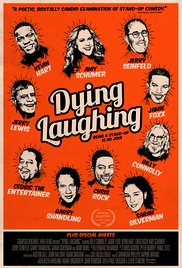
dying-laughing Greetings again from the darkness. We all want to be funny. Making people laugh allows for an immediate connection … plus it just feels good to make someone else happy. Co-directors Lloyd Stanton and Paul Toogood show us the dark side (or at least the backside) of comedy through a series of black and white filmed interviews with dozens of stand-up comedians. In this age of political correctness, Chris Rock explains that there is only one group who says what they want to say: stand-up comedians.

It plays not so much as “how to become a comedian”, but rather a therapy session for those who already are. It’s loosely structured into segments that provide very specific insight and real life stories on: the first time on stage, life on the road, dealing with hecklers, the devastation of bombing, how to connect with an audience, and what it’s like to be “on” or really kill it.

The list of participants is too long to list here, but includes such stalwarts as the aforementioned Mr. Rock, Jerry Seinfeld, Sarah Silverman, Jerry Lewis, Kevin Hart, Amy Schumer, Billy Connolly, and Dave Attell. Those at the top of their profession open up about what it takes and how they made it. Think “Take a Parent to School Day”, without the societal filter or peer pressure. These folks spend most of their waking hours looking outward for material, but here they are generous enough to look inward so that we might better understand their craft.

A diverse cross-section of comedians provide examples of racism, sexism and most any other ism. There is also the admission that a need/desire for acceptance exists pretty much across the profession. The struggles and challenges make up the experience which is vital to the growth and survival of a comedian … and maybe even what strands of sanity they possess. We hear stories of writing and re-writing jokes over and over again for years, before finally hitting on the right wording and delivery. We learn Smartphones often contain pages of notes on ideas and partial jokes, and that pain on stage often leads to a better act.

Jerry Seinfeld produced a documentary in 2002 entitled Comedian, and it dealt with the rigors of honing the act in front of audiences, and when combined with this project, we are reminded that comedy is at its best when it is about SOMETHING (fertile ground these days) … and that every comedian gets knocked down – but then gets up again (tip of the cap to Chumbawamba). The film is dedicated to the late Garry Shandling (who also appears in the film) and leaves us with the thought that “the laugh is your reward as a comedian”. And that’s pretty sweet.

watch the trailer:


DECANTED (2016, doc)

February 23, 2017

decanted Greetings again from the darkness. Fantasizing about owning and running your own Winery is perfectly natural, and impossible to avoid, while on a weekend escape to Napa Valley, California. Director Nicholas Kovacic opens with a helicopter tour of the 30 mile long area courtesy of Heidi Barrett, winemaker extraordinaire, and wife of Bo Barrett (of Chateau Montelena and Bottle Shock fame). The terrain below is so beautiful, that when it’s combined with the industry it supports, a romantic vision is understandable.

The patchwork quilt of individual parcels falls in a geologic epicenter with near perfect conditions for growing the grapes that lead to the marvelous wine. Of course, Mother Nature is still in control, and that’s one of the points to the film (which could have been titled “Starting a Winery for Dummies”). Of course, Ms. Barrett is no dummy, and neither are any of the other winemakers we meet during the course of what’s probably a too long 82 minutes. These folks pour love, sweat, worry, and money into a once per year product that can go wrong at any of the numerous steps prior to having a glass poured as you settle in for a juicy steak of plate of pasta.

Much of the time is devoted to Texan Mike Martin as he shops for a new winery, and settles on one in Coombsville. His Italics Winegrowers makes the point, that it’s probably wiser to buy an existing enterprise, than wait the 4 to 5 years for the first crop if starting from scratch. The established Reynolds Family Winery provides another example of the complexity to this business; and just how much nurturing goes into farming and production, and the incredible variances experienced from year to year.

Napa Valley is described as still in the “Wild West” stage since the tradition goes back only a couple of decades (instead of centuries like in Italy and France). Creativity abounds as new winemakers thrill us with the discovery of new blends and varietals. A perfect example is Ms. Barrett’s 6L 1992 Screaming Eagle, which nabbed a record $550,000 for a single bottle at the 2000 Napa Valley Wine Auction (now called Auction Napa Valley).

The film does a nice job of talking about how the industry has evolved to one that pays attention to farming the vines and the full process … not just what happens when it hits the barrels. There is even mention of how branding plays a key role these days, yet is still sometimes overlooked. Beautifully filmed, with some gorgeous shots of the area, Mr. Kovacic’s project is bit more artistic than most documentaries, but might have benefited from a shorter run time … or better personal connection to the players.

watch the trailer: