DIFF 2019 Day 7

April 20, 2019

2019 Dallas International Film Festival

 Greetings again from the darkness. The penultimate day of the festival and my eyes are tired and my rear end is sore from sitting … not complaining, just explaining the reality of so many movies over so many days. This day was the oddest mixture of films and one that could only happen at a film festival. I started with a prestigious French farce, followed by a hardcore international business documentary, and ended the evening with a quirky independent comedy on a topic that’s typically off-limits. What a fun day!


Here is my recap of the films from Day 7:


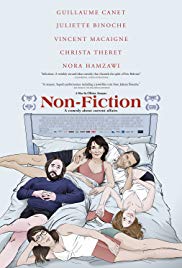
NON-FICTION (France)

Kids today (shake your head while saying it). No one reads anymore, and when they do, it’s only e-books and blogs. Such is the ongoing discussion throughout this latest from writer-director Olivier Assayas (PERSONAL SHOPPER 2016, CLOUDS OF SILS MARIA 2015). Lest you think the debate between traditional hardback books and digital literature takes up the full run time, you should know that such serious discussion is wrapped in a more traditional French sex farce … and a quite entertaining one at that.

Guillaume Canet (the excellent TELL NO ONE, 2006) stars as publisher Alain Danielson. He has a lunch meeting with his client and friend, author Leonard Spiegel (a very funny Vincent Macaigne) where he declines to publish Leonard’s latest manuscript. Alain claims it’s too easy to identify the real people mentioned in the story, despite the name changes. Leonard says it’s “auto-fiction”, meaning his writing takes inspiration from his life. One of the ongoing gags (no pun intended) revolves around an inappropriate act in the theatre during a screening of Michael Haneke’s WHITE RIBBON – or was it during STAR WARS: THE FORCE AWAKENS? Such is Leonard’s sly way of disguising his characters and life.

Juliette Binoche co-stars as Alain’s wife Selena, and Ms. Binoche takes full advantage of one of the few films where she can flash her comedic chops. Nora Hamzawi plays Valerie, Leonard’s wife – and she is delightful as the spouse who refuses to build up Leonard’s ego or provide any boost whatsoever to his confidence. Instead she spends a great deal of time reminding him of what his critics are saying. The final piece to this puzzle is Christa Theret, who plays the Head of Digital Transformation for Alain’s publishing house, and is the constant instigator in the push towards digital.

Quintessentially French may be the best description for the film and these characters. At the dinner party, the conversation is stimulating and intellectual, while in their personal lives, it seems everyone is sleeping with someone else. Most every character worries about infidelities, while it’s a part of their own life. Even Twitter is treated as “very French” in that it consists of ‘4 very witty lines’. Clever lines are spoken frequently, especially from Leonard who says he writes “feel-bad books” rather than the usual “feel good” ones. And Alain refers to Leonard’s last book as “a worst seller”.

Fewer readers, books vs digital, and the popularity of blogs all play into the generational debate of change/progress vs traditional ways. Whether books and libraries are a relic of the past is certainly a viable topic, but the comedy-infused relationships keep the film from ever feeling too heavy. Ms. Binoche has a recurring bit where her TV role is misidentified as a cop, and she (in character) plays along with what may be the first ever Juliette Binoche on screen joke.

Filmmaker Assayas previously tackled art appreciation, or the lack thereof in modern times, with his 2008 film SUMMER HOURS. This time he turns his attention to literature and we can’t help but notice some similarities to the works of Woody Allen and Eric Rohmer with the heavy dialogue and awkward relationships. The French title translates to “Double Lives” which is not only a better title, but also a more descriptive one. However, by the time the ‘Martian Martian’ song plays over the final credits, you will likely feel entertained … in a mostly French manner.


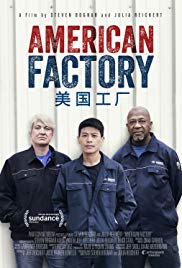
AMERICAN FACTORY (doc)

 In December 2008, General Motors shut down the truck plant in Dayton, Ohio, putting approximately 2000 folks out of work. Six years later, Chairman Cao Dewang, the founder of Fuyao Glass, invested millions to turn the shell of the plant into a retro-fitted factory and the first U.S. operation for his company – a company he claims owns 70% of the auto glass market. In doing so, the factory hired approximately 1000 locals, many of whom had not had consistent work since the GM plant closed years prior.

Co-directors Steven Bognar and Julie Reichert share an Oscar nomination (she has 3 total) for their 2009 documentary short, THE LAST TRUCK: CLOSING OF A GM PLANT. This time out, they have impressive access to a remarkable situation: a successful Chinese company opening a factory in the United States, and attempting to merge two distinctly different cultures. We hear much these days about globalization, and by the end of the film, you’ll likely be re-defining the word.

While there were good intentions on both sides, the differences that start out as kind of funny turn into hurdles that are nearly impossible to manage. Fuyao ships many workers from China to Dayton for the training of U.S. workers. These folks must spend two years away from their family, as they try to make sense of a land far different from home. Workshops are held for the Chinese workers as they are lectured on what makes Americans different … they don’t work as hard, they don’t dress well, they talk too much on the job, they won’t work overtime, etc. The Chinese blatantly state that they are superior to American workers – a point that’s difficult to argue against when it comes to dedication, quality, and efficiency. We soon learn there is more to the picture.

U.S. labor and safety laws exist for a reason, and the Chinese company neither understands these, nor is very willing to abide by them. Additionally, since this is the ‘rust belt’, the shadow of unionization hovers from day one. While China’s Workers’ Union works in sync with companies, U.S. labor unions are regularly in conflict with companies here. When the U.S. supervisors make a training and observation trip to China to see the Fuyao factory, the differences become even more obvious. The mostly overweight Americans show up casual – one even in a JAWS tshirt – while the lean Chinese are all in fine suits and ties. Morning shift routines are also contrasted to point out the gaps in discipline and attention to details.

What the filmmakers do best is allow us to see both sides of the issue. Surely the right thing to do is obvious when it comes to safety, and when Chairman Cao says the real purpose in life is one’s work, well, we realize these two cultures are farther apart than the 7000 miles that separate them. It’s a very fair look at both sides, but for those who say U.S. companies are too focused on profit, they’ll likely be surprised to learn that Chinese factory workers typically get 1 or 2 days off from work each month!  As one of the dismissed American managers states, you can’t spell Fuyao with “fu”. The film seems to present a debate with lines drawn via citizenship.


FRANCES FERGUSON

 We can usually assume some movie topics are off-limits for comedy material. For instance, the reception for a comedy about the Holocaust would likely be less than positive. Well brace yourself, because director Bob Byington (SOMEBODY UP THERE LIKES ME, 2012) delivers a very funny and offbeat movie about a sexual predator. Having the sex offender be a very pretty mid-20’s woman takes some of the edge off, but the film never lets us forget her crime.

The very talented Kaley Wheless (recently seen as Woody Harrelson’s daughter in THE HIGHWAYMEN on Netflix) stars as Frances, a woman who specializes in bad decisions. The narrator – an always excellent Nick Offerman – explains that Frances married Nick (Keith Poulson) and immediately thought it was the best thing. And then she thought it was the worst thing. And then she wondered, what’s the difference? Next came having a baby – daughter Parfait (is that a real name these days?). And finally, came her worst decision of all.

As a substitute teacher at the high school, Frances sets sight on hunky senior Jake, and then turns the fantasy into reality … a reality that ends with her arrest and time in jail. We do see some of her time while incarcerated, but most of the film occurs once she is released and on probation. Spending time with her mom (Jennifer Prediger) is of little help to her, but group therapy led by David Krumholtz does allow her think through some things.

Director Byington and lead actress Wheless are credited with the story, while Scott King wrote the screenplay. Ms. Wheless’ deadpan delivery and acidic nature while seemingly surrendering to life is a key to why the comedy works, and we must tip our cap to the script as well. There’s a bit of NAPOLEAN DYNAMITE awkwardness on display, and filming in North Platte, Nebraska, seems like the perfect call.


DIFF 2019 Day 5

April 17, 2019

2019 Dallas International Film Festival

 Greetings again from the darkness. Day 5 means we are now past the halfway mark for this year’s festival. Originally I had 4 films scheduled for today, but I opted out of the late movie since it would have required more than a 90 minute wait after the end of the third movie. It’s that kind of situation that makes festival scheduling a bit frustrating. Despite that, all 3 movies were worth the time: a documentary profile of an Italian model, a low budget quirky comedy, and a masterclass from two veteran screen actors.


Here is my recap of Day 5 films:


THE DISAPPEARANCE OF MY MOTHER (doc)

 Caution is usually the best policy when choosing a biographical documentary shot by the subject’s family member. Often objectivity is sacrificed in the pursuit of a worthy tribute film. Oddly enough, it’s the mother-son relationship that provides the necessary spark as cinematographer Beniamino Barrese turns the lense on his mother Benedetta Barzini, a fashion model icon in the 1960’s and feminist spokesperson in the 1970’s.

We see photographs and flashbacks that prove what a stunning beauty Benedetta Barzini was at the peak of her modeling days. We also see clips of her appearances as a feminist spokesperson, and it’s in these that we see the fiery personality that is so prevalent in the current day exchanges with her director-son as he coaxes her through the process. There are also segments where she is mentoring younger girls and a return to the catwalk during Fashion Week.

She’s now in her 70’s, and remains physically striking with a lithe body that defies her age. But it’s the words coming out of her mouth – many pushing this to an “R” rating – that define the woman of today. The title of the movie refers to her preference to ‘disappear’ rather than ‘appear’ in the images of photos, film or social media.  When discussing the obsession society has with youth, she explains that Youth equates to Life, while Old age is associated with Death. That philosophy is a bit of a downer, but is an example of the insight she brings. In describing today’s marketing, she says women are usually associated with nature, while men represent thought and reason. The outspoken and wise feminist lives on.

Home clips from 1999 and a visit with long-time friend Lauren Hutton offer up more bits of what makes the woman tick, as does her listening to Leonard Cohen and smoking cigs and vaping at an alarming rate. In her mid-70’s, whether she likes it or not, her smile still lights up the screen and any room she is in. Still, we understand she has earned her own liberation from the camera, even as she puts a cap on it. Fin.


ODE TO JOY

 You might be familiar with the disease narcolepsy, but unless you or someone close to you suffers from it, you’re likely unfamiliar with cataplexy – a symptom of narcolepsy that causes sudden and extreme muscle weakness typically brought on by severe emotions such as sadness, anger or excitement. For Charlie, the trigger is happiness, so he has learned to (mostly) cope by avoiding his triggers: puppies, weddings, random acts of kindness, kids playing, and relationships. What he couldn’t avoid was being a groomsman in his sister’s wedding, which is how director Jason Winer and co-writers Max Werner and Chris Higgins choose to begin the film. We see the full effects and fallout (no pun intended) of Charlie’s disease.

Charlie works a calm job (out of necessity) at the public library, and his co-workers have mastered the art of assisting in keeping Charlie thinking non-happy thoughts. As tends to happen, love finds a way. Charlie crosses paths with Francesca (Morena Baccarin), a lively woman who appears to be Charlie’s opposite in most ways … making the attraction even stronger. A first date to a community theatre where a one-man show titled “Great Depression” is playing, we get the full effect of the challenges Charlie faces.

Cooper (Jake Lacy), Charlie’s younger brother, has been his main support system for most of his life – which is even more remarkable when we get the story of how Cooper got his name. When things fizzle between Francesca and Charlie, Cooper swoops in to date her and they set up Charlie with Bethany (a wonderful Melissa Rauch). Bethany’s own quirks seem to be a good fit, even if Charlie’s torch for Francesca still flickers. Surely you’ve never seen an oboe sing-a-long to the Cranberries “Zombie”, and if somehow you have, it likely pales in comparison to the one Ms. Rauch performs.

The laughs are many, yet the script and Freeman’s performance remain respectful to the disease and those who suffer from it. Jane Curtin appears as Francesca’s Aunt who is cancer-stricken, and no, the purpose wasn’t to show a disease worse than cataplexy, but rather to show we all have challenges in life – and how we deal determines the type of person we are. The story was inspired by a story on Chicago TV’s “This American Life”, and it’s a nice little gem that hopefully will find distribution.


THE TOMORROW MAN

 Noble Jones worked as the second unit director on David Fincher’s award-winning film THE SOCIAL NETWORK (2010), and he has made quite a name for himself in music videos and commercials. This is his first feature film as director and he also wrote this interesting script. On top of that, he cast two top-notch veteran actors to bring the story to life: John Lithgow and Blythe Danner. At times it feels like we are watching a masterclass in acting and many of their scenes together have a live theatre feel.

Ed (Lithgow) and Ronnie (Danner) cross paths at the local grocery store where they each shop at an alarmingly frequent rate. It turns out Ed is preparing for doomsday and Ronnie is hoarder. As they spend time together, their fondness for each other grows, but we are never really sure if it’s loneliness or connection that inspires the relationship.

Despite both having a very serious approach to life, there are many moments of levity and sweetness, but also doses of reality that keep us off-balanced – just as life does. Ed proclaims the world would be such a disaster with ball bearings … of course his view is a bit skewed since he spent 17 years on the business. Ronnie is brave enough to attend Thanksgiving dinner with Ed at his son’s house, and the explosive family dynamics drive home the challenges of co-existing with others at any age.

Ed tells the new checkout clerk that it’s “good to know your neighbor. You never know when you’ll need them.” His preparations for doom and gloom … or as he calls it, SHTF … are offset by Ronnie’s sweetness, and a yard sale leads to the surprise ending. As a bonus, filmmaker Noble has finally found a good use for the song “Muskrat Love”.


DIFF 2019 Day 2

April 13, 2019

2019 Dallas International Film Festival

 Greetings again from the darkness. I missed yesterday’s Opening Night Gala and feature film, but paid my penance today by taking in 5 films on Day 2 of this year’s Dallas International Film Festival. Changes have come to the festival this year, including reserved seats, and a shorter run that omits the encore screenings of award winners on the final weekend (there is no final weekend). The reserved seats policy is especially challenging for those of us who try to catch a couple of dozen films during the festival, but if it helps things run a bit smoother, then it’s something we will work around.

As with other years covering the festival, I will recap the films I see each day. Due to the time involved and the quick turnaround required, these will not be the usual full reviews, but rather an overview of the films and my initial reactions. If you are in the Dallas area, the festival runs through Thursday April 18, and more info can be found at http://www.DallasFilm.org


MS. PURPLE
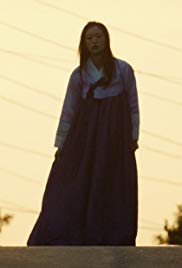
 Kasie (an excellent Tiffany Chu) lives with her father, who has an unidentified terminal illness and is in an extended coma with no real chance for recovery. Kasie is the primary caregiver, and out of duty, refuses to put him in hospice for professional care. She also works as a Hostess/Escort at a popular Karaoke bar and has a rich boyfriend, although there seems to be no love between the two – it’s more of a business relationship.

Out of necessity, Kasie re-connects with her older brother Carey (Teddy Lee) who bolted from home many years ago after disputes with the father. He seems to have done little with his life, and frequently gets booted from an internet café for lack of cash. Carrying guilt for deserting his sister and father years ago, especially since the mother/wife left home when the kids were very young, he agrees to help Kasie with caregiving, and even takes dad for “road trips” in the neighborhood by pushing the bed through town (a comical sight).

Director and writer Justin Chon (co-written with Chris Dinh) was behind the critically acclaimed GOOK in 2017 (a Korean DO THE RIGHT THING). Here he uses Kasie’s flashbacks to childhood with her dad and brother as a framing device, demonstrating how the father dealt with his wife leaving, and laying out the responsibilities and burdens that family can bring. There are recurring shots of lone palm trees whose significance to Kasie is only explained late in the film … but does provide more insight into the bond with her father. A nice young valet (the car parking type) offers Kasie a taste of normalcy and it slowly brings her back towards center. The film has a terrific score of violin music from Roger Suen, and lets us know that finding one’s self while caring for another can be a breakthrough that may sometimes be loud, and may sometimes be quiet.


LEAVE THE BUS THROUGH THE BROKEN WINDOW (doc)

 Most documentaries explore a topic or an event, or provide a profile of a person or organization. Not this one. It’s an unusual … OK, very odd … documentary that follows Andrew Hevia, a Cuban-American photographer/filmmaker on his trip to Hong Kong to cover the Art Basel fair. His motivation in heading to Hong Kong from the United States is a nasty break-up in a long-term relationship with his girlfriend. It seems more likely that he’s running from rather than towards, and he is described as having a camera and little else.

Mr. Hevia admits to having no real knowledge of Hong Kong art and the initial culture shock he experiences includes securing lodging that can best be describes as “cozy” – a 40 square foot “apartment” that would be a tight closet and inhumane prison cell. Once he has a roof over his head, he hits the street with his camera. It’s at this point where we realize he has no real plan.

On his trek through the city, he crosses paths with fish balls, art galleries, jumpers, a street riot, artists, art collectors, expats, tourists, students, and a ferry ride. People come and go during his days and nights as he interacts with all sorts … often showing us a part of the city we wouldn’t likely see. He searches out different artistic outlets, attractive girls, and just about any party he can crash. The film plays like a travel video-diary narrated by electronic voice that’s a blend of Alexa and the computer voice from WAR GAMES. It’s an unusual viewing experience and one that leaves us feeling a bit empty. Fortunately, its run time is a brisk 68 minutes.


TREASURE ISLAND (doc) L’ile Au Tresor
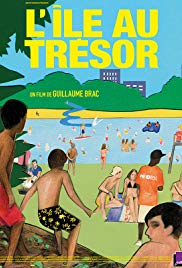
 Yet another atypical documentary, this one from French director Guillaume Brac, who turns his lens on a water park in suburban Paris. The park is beautiful and wrapped in nature, as the lake offers many differing areas of attraction depending on one’s interests.

Brac presents various segments, some quite short, based on various groups visiting the park. We might be watching a group of underage adolescent boys trying to sneak in, and once caught, try to talk their way out of trouble. In a few segments we see the challenges facing the security guards who have to balance the park’s goal of fun with the need for safety. Of course this is France, so we also get the teenagers flirting and trying to impress each other (“Life is great”). There are families – large and small – enjoying a picnic in the bucolic setting, while young kids splash and frolic during their carefree days. Brac even takes us behind the scenes where park managers work on logistics based on weather, staff, and resources.

This is really more of a social project than a cinematic one, and we sometimes feel like we are snooping on people just having fun or doing their job. One segment with a 10 year old boy and his 3 year old brother is particularly sweet. The beauty of the park setting is contrasted with the pylon jumpers and the after-hours staff partying, but mostly it shows that people are pretty similar no matter the location.


WILD ROSE
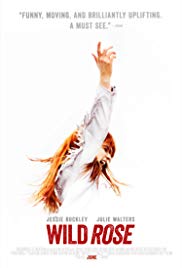
 Quick … name all of the female Country music singers from Glasgow, Scotland! That’s the premise for this film from director Tom Harper and writer Nicole Taylor, both best known for their British TV work. Rose-Lynn Harlan is being released after a year in jail on drug charges. She uncomfortably adjusts her white boots over the ankle monitor and sets off to conquer Nashville with her singing.

Of course there are a few problems with her Music City dream. See, she’s a single mother with two kids, and she’s from a working class area where putting food on the table and paying the bills is a significant achievement. Jessie Buckley stars as Rose-Lynn, and by stars I mean she carries the film and flashes great promise as an actress. Her no-nonsense mother Marion is played by 2-time Oscar nominee Julie Walters, and while Rose-Lynn has stars in her eyes, mother Marion pushes her to take a housekeeping job and focus on her kids.

We know where all of this is headed, and it’s a credit to Ms. Buckley and Ms. Taylor’s script that we care enough to follow along. Rose-Lynn is employed by the wealthy Susannah (Sophie Okonedo), and we get one of the funniest vacuum cleaner scenes ever. Susannah soon takes on Rose-Lynn as a pet project with the goal of helping her get to Nashville for her shot.

Some rough language is peppered throughout and it’s spouted with the heaviest of Scottish accents, so much of it sounds a bit comical rather than threatening. The film is a bit uneven, but the mainstream approach keeps it from going too far off track. “Three chords and the truth” is used to describe country music, and if that’s your musical taste, you’ll likely enjoy the songs. However, if you prefer ‘Country and Western’, you’re flat out of luck.


THE DEATH OF DICK LONG
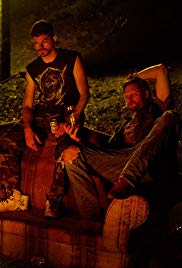
 “It’s been awhile” by Staind is the song we first hear from Pink Freud, a garage band formed by buddies Zeke, Earl and Dick. The music is awful, but “band practice” seems to exist solely for the purpose of getting these slackers together, hanging out, and drinking beer. Daniel Scheinert also directed SWISS ARMY MAN (2016) and this is the first screenplay from Billy Chew. Mr. Scheinert also plays the titular Mr. Long.

One evening, band practice takes a wrong turn, and Dick ends up dead … dumped in a hospital parking lot by his bandmates. If we previously had any doubts as to the intelligence of Zeke and Earl, all of that is cleared up as these two bumbling idiots try to cover up their involvement and what actually happened that night. The cause of death is slow to unfold, but once it does, it surely is the only one of its kind. The Sheriff (Janelle Cochrane) and her deputy (Sarah Baker) prove equally clueless in their attempts to solve the crime, and much of the film’s humor revolves around folks just not asking quite the right question in any situation.

Michael Abbott Jr plays Zeke and Andre Hyland plays Earl, and there scenes together will have you laughing and questioning human existence. Virginia Newcomb plays Lydia (Zeke’s wife), Jess Weixler is the perplexed wife of Dick, and Sunita Mani is hilarious as Earl’s friend Lake Travis (a name nearly as much of a punchline as the film’s titular character).  While the film has many funny and awkward moments, it can also be taken as a statement on testosterone-driven bad decisions and actions with consequences. If nothing else, we learn how to quickly answer when someone asks, “Y’all wanna get weird?”

WE ARE COLUMBINE (2019, doc)

April 10, 2019

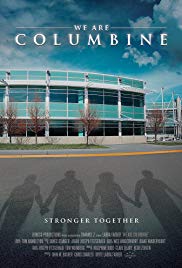
 Greetings again from the darkness. A great many things changed on April 20, 1999. The “Columbine Massacre”, a school shooting (and pipe bombs) that resulted in many deaths and injuries, and subsequent copycats, was broadcast live on television for the world to witness. Laura Farber was a freshman at Columbine High School that fateful day, and now, almost 20 years later, she’s a filmmaker taking a look at the fallout from such a traumatic event.

Rather than document the progression of events – something that’s already been done numerous times – Ms. Farber enlists four of her former classmates, plus a teacher and the school principal to discuss their memories of the day, and more importantly, the impact it has had on their lives since. Gus was the pot smoking slacker. Jaimi was an athlete whose big sister also attended the school. Amy was a cheerleader and social type, and Zach was a studious soccer player. Mr. Zeyba was a first year teacher at the time, and Mr. DeAngelis (“Mr. De”) was the school principal. None are especially anxious to revisit those memories, and without the trust they have for Ms. Farber, they probably wouldn’t.

With filming set up at an otherwise unoccupied Columbine High School, each of the participants walks us through where they were that day (cafeteria, classroom, etc) and how they remember things unfolding. News clips and a 911 call from that day are replayed, but filmmaker Farber wisely decides against showing the shooters or even mentioning their names. This is about the survivors and as difficult as the conversations are, we get the feeling it’s a cathartic exercise for them. We are stunned to hear that they have spoken very little of that day, even to each other or other classmates. There is an “understanding”.

This is a very intimate and personal look at how an unbelievably traumatic event can alter the life path of a person. Gus now expresses himself through his rap music. Jaimi is a nurse who values her time with her wife and kids. Amy is a social worker, and Zach is now a teacher at Columbine High School. Mr. Zeyba continues to teach and Mr. DeAngelis continued on as school principal … after testing numerous fire alarm signals to prevent flashbacks. Each is giving back in their own way after experiencing something most of us can barely imagine. It may not be a traditionally informative documentary, but it’s one that brings us as close as possible to what the survivors feel.

watch the trailer:


FERRANTE FEVER (2019, doc)

March 7, 2019

 Greetings again from the darkness. “I publish to be read.” Those are the words of Elena Ferrante, an Italian writer who is committed to having her work speak for itself. She has eschewed the celebrity status that typically accompanies best-selling authors. Where previously we have been intrigued by recluses like JD Salinger, Harper Lee, or even Howard Hughes, it’s rare (unprecedented?) that we are speaking of absolute anonymity. With no public face whatsoever behind the pen name of so many successful books, director Giacomo Durzi flirts with the question, is it the mystery of the author or the author’s work that drives interest?

It’s somewhat ironic that a film focused on an author so adamant about avoiding the spotlight opens with a quote from one of the most recognizable names and voices on the planet. Hillary Clinton describes Ferrante’s writing as “hypnotic”, and claims to ration her time for reading the books. Of course when one chooses not to talk about their work, it leaves others to do so. Director Durzi serves up a lineup of editors and writers, plus a researcher/scholar and the translator of Ferrante’s all-Italian writing.

We learn that the fuse of globalization for Ms. Ferrante’s work was lit by James Wood and his review in “The New Yorker”. This global literary phenomenon exploded from there. Insight from writers Jonathan Franzen, Roberto Saviano, and Elizabeth Strout help us understand how these books have been so influential, impacting so many readers. A segment on the Italian Strega Prize for literature is fascinating, as it becomes clear that even her home country doesn’t know how to handle her success.

Translator Ann Goldstein is interviewed, and even jokes about how unusual it is for a translator to become part of the story … another example of how Ferrante’s anonymity changes things. Ms. Goldstein is unapologetically a fan of the work and seems anxious to continue. Ms. Ferrante’s own words drawn from her letters in “Frantumaglia” hover over the film as narration, but that’s as close as we get to the real person.

Time Magazine lists her as one of the 100 most influential personalities, which is kind of funny since we don’t know her personality other than through her writing. Durzi’s film is not a search for the person or a quest to uncover the author’s identity, as it’s more of an exploration of the popularity and impact of her work. We can’t help but wonder if other writers are more envious of her writing ability or of her ability to remain anonymous. Typically the former destroys any hope of the latter … but not with Ferrante.

watch the trailer:


Oscar Nominate Documentary Shorts 2019

February 22, 2019

Oscar Nominated Documentary Shorts 2019

By definition, films in this category pack a punch with a real life story into a run time of just a few minutes. It’s possible one or two could be transformed into a feature length documentary or narrative interpretation, and yet it’s remarkable how much information or emotion can be relayed with a short film. In an unusual twist, one of the nominated films offers only an edited clip of historical footage – yet it will likely stick with you. Below you will find the five films listed these in order of my preference. Just a reminder, these are not Oscar predictions, just personal opinion.


 PERIOD. END OF SENTENCE (USA) 26 minutes

‘It’s some type of illness that mostly affects girls.’ That’s paraphrasing the answer from a group of young Indian men when asked to define menstruation. Unfortunately, the women aren’t much better educated or informed, and the subject remains taboo in rural India. The Pad Project is designed to empower women by providing a machine that makes low cost pads, far superior and more hygienic than the “cloths” they have used for generations.

Director Rayka Zehtabchi introduces us to the man who invented the machine, but this story is about the women. Not only do the pads improve their life and health, but by marketing the pads, the women experience financial gains that dramatically impact their lifestyle. The film is surprisingly humorous and uplifting, and it’s refreshing to see such a wonderful solution to what’s referred to as “a girl problem”. The film will be available on Netflix beginning February 12.


 BLACK SHEEP (UK), 21 minutes

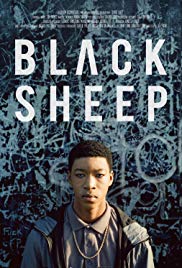
When a young boy, not so dissimilar to her 10 year old Nicaraguan son, is killed on the streets of her London neighborhood, a mother takes steps she feels are necessary to protect her son. They relocate to Essex for safety, unaware that extreme racism exists. With the camera in close-up mode, a now adult Cornelius Walker re-tells his story as reenactments periodically accompany his words.

Director Ed Perkins captures the pain and intimacy of the decisions that led Cornelius to try and fit in … “make friends with monsters”, as he puts it. What a stark reminder of how strong our survival instincts are. We can rationalize actions that wouldn’t typically be considered, even if the long-term price paid for those decisions is to be forever haunted by losing our true self. The reenactments may cost it some votes in this category, but Mr. Walker’s story will stick with you.


 END GAME (USA), 40 minutes

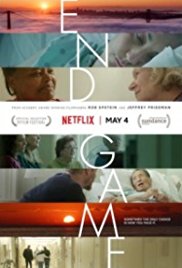
Though emotions run high in all 5 of the Doc Short nominees, none reach the tearjerker level and gut-punch of this look at palliative care by co-directors Rob Epstein and Jeffrey Friedman. Teams of medical professionals are committed to end of life care and helping patients and families deal with death.

Mr. Epstein is a two time Oscar winner for Doc Feature (THE TIMES OF HARVEY MILK, 1984; COMMON THREADS: STORIES FROM THE QUILTS, 1989) and he and Mr. Friedman previously collaborated on the 2014 doc AND THE OSCAR GOES TO … There is an interesting look at the San Francisco Zen Hospice Guest House, but there is a bit too much time spent on one patient/family and the film is very similar to the previously nominated EXTREMIS (2016).


 A NIGHT AT THE GARDEN (USA), 7 minutes

On February 20, 1939, a Nazi-American rally took place at Madison Square Garden in New York City. Perhaps you were aware of this or not, but either way, this brief 7 minute clip edited from archival footage will surely chill you to the bone.

The rally takes place shortly before WWII begins, and the pomp and circumstance, as well as the scope of the event, are startling. Standing at a podium in front of a giant George Washington portrait, Fritz Kuhn, leader of the German American Bund, spews vile hate-filled words and the crowd of 20,000 cheers.

Director Marshall Curry has been previously nominated twice for Documentary Feature, and his work here is wisely restricted to editing the footage. No commentary or interview is necessary. The name you will want to know after this 7 minutes is Isadore Greenbaum.


 LIFEBOAT (USA), 34 minutes

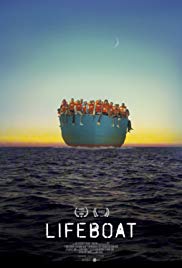
Thousands of refugees take to rafts and battered boats in the Mediterranean Sea in hopes of escaping an environment of poverty, torture and/or bombings. They realize it’s a life or death step, yet they believe those odds are better than staying put. This is director Skye Fitzgerald’s follow up to his 2015 doc short 50 FEET FROM SYRIA, and the second of what he plans will be a trilogy.

We follow Sea-Watch Captain Jon Castle as his crew, funded by a German non-profit dedicated to rescuing refugees, strives to save as many as possible before starvation, illness or drowning occurs. Sometimes they succeed. This one would make an interesting double-bill with last year’s winner THE WHITE HELMETS, which focused on rescues on land (after bombings). Captain Castle (who passed away last year) makes the point that the rescues are the right thing to do as humans, as it could easily be us in need of rescue sometime in the future. Director Fitzgerald pays little attention to political arguments, and presents this as a humanitarian issue.


BRESLIN AND HAMILL: DEADLINE ARTISTS (2019, doc)

January 27, 2019

 Greetings again from the darkness. From the department of ‘The more things change, the more they stay the same’ (a phrase attributed to French writer Jean-Baptiste Alphonse Karr), there is a segment in this documentary showing Nixon’s Vice President Spiro Agnew comments on the “evil liberal media”. The only thing missing is the now all-too-familiar catchphrase “fake news”. If, as many believe, we are in a re-run of a political cycle from that era, we should be so fortunate to have the writers and journalists of that era … specifically Jimmy Breslin and Pete Hamill.

Co-directors Jonathan Alter (political journalist and author), John Block, and Steve McCarthy are behind this HBO documentary that flashes back to a time when reading the morning newspaper was a ritual for much of the world. This was before the internet and certainly before Tweeters began presenting opinions as breaking news. At one point, the city of New York supported 7 different newspapers, and these two writers – very different in style – are forever linked to the city, to their ‘street poetry’ and to each other.

Jimmy Breslin and Pete Hamill were at various times co-workers and rivals, yet always friends … a friendship based on mutual professional respect. Pete was the more likable one, while Jimmy was the brash New Yorker – a celebrity who admittedly had enemies. The filmmakers provide a background on each, often with the writers themselves providing color commentary. Specific events from certain years are used a story structure: 1984 and Bernhard Goetz, 1989 shows our current President (30 years younger) dishing racial divisiveness via an emotional reaction, the 1963 JFK assassination and how Breslin chose to interview the man digging the grave, Vietnam in 1966, 1976 when both were employed by The New York Daily News, the letter Breslin received from Son of Sam in 1977, the same year Hamill was editor of two newspapers simultaneously, the 1985 AIDS outbreak, and the 1991 Crown Heights riots.

We learn Breslin often held court at a local bar, and that Hamill dated Jackie Onassis. Breslin’s baseball book “Can’t Anybody Play this Game?” is discussed, as is what Hamill calls “the rhythm of writing”. A 2015 interview with the two elderly men makes the bond quite obvious, and an emotional segment shows Pete and his wife recalling that tragic day on 9/11. The talking head interviews featured are many and impressive, including: the siblings, offspring and spouses of the two men; writers Tom Wolfe, Gay Talese, and Nicholas Pileggi (“Goodfellas”); performers Tony Bennett, Robert Deniro, and Shirley Maclaine (also a love interest); activist Gloria Steinem; cartoonist Gary Trudeau; and other historians, journalists, and writers.

Anne Marie is mentioned as the woman who sat between the two writers at the Daily News, and we can’t help but think she deserves her own movie, given her connections (so to speak). Breslin and Hamill derived energy and were driven by passion for their causes and observations … and their agenda was drawn from the need to get the truth told, not just the glory of a headline. The message is that local journalism is important, while today, we are allowing it fade away. Breslin is shown hunting and pecking until the end (in 2017), and it’s likely Pete will as well.

watch the trailer:


SCIENCE FAIR (2018, doc)

December 23, 2018

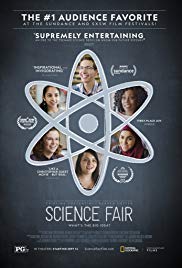
 Greetings again from the darkness. Welcome to the island of misfit High School geeks. Co-directors Cristina Constantini and Darren Foster introduce us to a few of the kids from around the globe who are striving to compete in the Intel International Science and Engineering Fair. More than 1500 students from dozens of countries qualify each year to present their ideas for a $75,000 grand prize. There are many rules, but the key is that the project must have “global impact”. Does this sound more important than a football game?  Well, not in South Dakota!

The film opens with the viral clip of a previous winner who literally ran onstage screaming and crying when his name was announced as a winner. We then meet Jack Andraka today, and in his interview, he explains his guttural response and the impact of the fair both for individuals and idea advancement. Jack, now in his 20’s, works as a researcher. We follow 9 students from various parts of the world – each with different backgrounds, interests, expertise, and motivations. The support they receive from parents, teachers and schools also varies, as do the resources available.

Students being followed are from a Kentucky, South Dakota, Brazil, West Virginia, Germany and New York state. The systems range from a magnet school to a public school without a science lab. In South Dakota, a Muslim girl named Kashfia bluntly states that athletics are the focus of her school (their football team went 0-9), and her science teachers had no interest in being her faculty sponsor … so the football coach agreed to fill the role. This is contrasted to a New York teacher who commits her off-hours to mentor and push students to participate and compete, and she regularly sends multiple students to the fair. In West Virginia, a frustrated math teacher discusses how one student had no interest in homework or tests, then we hear the student explain his advancements in artificial intelligence. A German student diligently works on improving the aeronautics on single wing aircraft. Other projects include detecting arsenic in water, the effects of drug and alcohol abuse, and preventing cancer rather than curing it. It’s an impressive lot.

Quite a few of the students hail from immigrant families, and each student is inspiring, intelligent and ambitious. Given the political climate in the U.S. these days, it is heart-warming to see so many youngsters who want to make the world a better place. The directors also interview past winners, but are not allowed in the exhibit hall once the judging begins. National Geographic has sponsored this documentary which won the Audience award at both Sundance and SXSW. These students are the ones that give us hope for the future, and remind us that sports are a nice pastime, but it is intelligence and technical advancements that will sustain the species. The film should be used to recruit more students into working towards the Olympics of Science Fairs!

watch the trailer:


THEY SHALL NOT GROW OLD (2018, doc)

December 17, 2018

 Greetings again from the darkness. I’ve noted many times how World War II has been mined for cinematic purposes over the years, even to this day. It’s always seemed a shame that World War I – ‘The Great War’ – has so few big screen projects in comparison. Obviously, timing is a major reason. World War II ended in 1945, which means during our lifetime, many of those veterans have been able to record their experiences and memories. In contrast, 2018 marks the 100 year mark of the end of World War I, so the archival footage and documentation is significantly reduced – and sadly, much of it lost or destroyed over time. Because of this, we should treasure this latest from director Peter Jackson as he allows these WWI participants to come alive and tell their stories. But it’s more than historical significance … it’s truly fascinating to hear the words from those that were there.

Director Jackson is best known for his THE LORD OF THE RINGS and THE HOBBIT trilogies, as well as his version of KING KONG (2005) … all “large scale” movies with ground-breaking CGI effects. For his latest, he gets much more personal and intimate, though the technical achievements are equally impressive. The first thing to note is that this film is not presented as a historical timeline detailing the political motivations or battle strategy of the various countries involved. Instead, we hear archival audio from dozens of soldiers who fought, and we see actual video clips and photographs – many we’ve never seen before. Mr. Jackson’s grandfather was a soldier in WWI, and the film’s focus is on the experience of the British soldiers.

Fittingly, the film begins with soldiers’ words playing over some of the faded and tattered war footage. These soldiers go unnamed as the goal is to have us understand the experience – what motivated them to enlist, and what it was like to serve on the battlefield. As we hear the words, the scale and clarity of the video transitions to full screen in vivid color … it’s breathtaking to see these figures become living, breathing, smiling young men from a century ago.

The words of these men fill us in on aspects of the war that most history books gloss over. Many of them “exaggerated” their ages so they could join their friends or relatives in the war. We learn about ‘plum and apple’ jam, stew, sipping water from gas cans, and the challenges presented when the ‘poop pole’ gets overloaded. The trenches are seen up close as mazes of mud (when not fully flooded) with cutouts for sleeping and cooking. We see proof of trench foot/gangrene due to the impossibility of proper sanitation, and we hear and see the constant threats of green gas, snipers and artillery shelling – and that’s on top of the relentless smell of death and infusion of rats.

This is about being a soldier … the ramifications of leaders deciding war is the best or only option. Director Jackson makes it personal, and a segment where the British soldiers mix with injured and captured German soldiers proves that these young men have more in common than not. They all just want to survive and go home to their loved ones.

Jackson co-produced the film with his wife Fran Walsh, and with the involvement of the Imperial War Museum and BBC. Controversy surrounds the colorization of archival footage. I would encourage anyone who feels this way to understand this is much different than bastardizing IT’S A WONDERFUL LIFE or CASABLANCA, where those directors purposefully lit scenes and sets based on the black and white filming process. Jackson is dealing with war footage from100 years ago, much of it by war photographers or soldiers. The purpose is to cause the people and horrific settings to come alive for those who have never connected with WWI – preserving The Great War for personal and historical purposes. It’s really something to behold.

watch the trailer:


BOB LAZAR: AREA 51 AND FLYING SAUCERS (2018, doc)

December 17, 2018

 Greetings again from the darkness. “This story is extraordinary – especially if it’s true.” This is just one of many incredulous statements from the film’s narrator, Mickey Rourke. And let’s face it, when trying to establish credibility for a story that’s been in doubt for 30 years, who better to lean on than Mickey Rourke? In defense of filmmaker Jeremy Corbell, there is no proving or disproving the story of Bob Lazar. It’s more like a Ripley’s Believe it or Not entry than a forensic study with conclusive results. One either chooses to believe Mr. Lazar, or not … and there is no way to prove which side is “right”.

In 1989, Bob Lazar was interviewed anonymously (in shadows with altered voice), claiming that he worked at S-4, a facility adjacent to Area 51, and that his job was to reverse engineer the propulsion system on alien spacecraft – one of 9 being studied. His anonymity didn’t last long, and the one fact in the film that is beyond debate is that his decision to go public with this story altered his life forever. When Mr. Corbell catches up with Mr. Lazar, we find that he doesn’t come across as a crackpot, and we certainly believe that he believes his story. It’s impressive that he’s gone to great lengths over the years to prove his honesty – hypnosis and polygraphs included.

With input from investigative reporter George Knapp, we learn of FBI raids and numerous attempts at character assassination. There seem to be no records confirming Lazar’s employment or education (Cal Tech, MIT) claims, though we do have photos of one of the raids. And we learn from his mother than he was always conducting experiments, even as a kid. Another gem from narrator Rourke, “Can we be made whole if we aren’t believed?” might have made for a better focus as a (shorter) documentary. Since his story can’t be proven, perhaps a more personal study of the man could be insightful.

We bounce between Nevada, California and Michigan, and director Corbell seems to buy into “The X-Files” claim that ‘the truth is out there’. His choices of the electronic warbles as a score and the ridiculous script for Mr. Rourke to narrate notwithstanding, we do find Corbell and Lazar to be forthright in the presentation, even if their story is never able to “weaponize our curiosity” as initially promised. Proclaiming “reality isn’t what it used to be” doesn’t make it so. One must prove something so, for the doubt to be removed.

watch the trailer: