Oscar Nominate Documentary Shorts 2019

February 22, 2019

Oscar Nominated Documentary Shorts 2019

By definition, films in this category pack a punch with a real life story into a run time of just a few minutes. It’s possible one or two could be transformed into a feature length documentary or narrative interpretation, and yet it’s remarkable how much information or emotion can be relayed with a short film. In an unusual twist, one of the nominated films offers only an edited clip of historical footage – yet it will likely stick with you. Below you will find the five films listed these in order of my preference. Just a reminder, these are not Oscar predictions, just personal opinion.


 PERIOD. END OF SENTENCE (USA) 26 minutes

‘It’s some type of illness that mostly affects girls.’ That’s paraphrasing the answer from a group of young Indian men when asked to define menstruation. Unfortunately, the women aren’t much better educated or informed, and the subject remains taboo in rural India. The Pad Project is designed to empower women by providing a machine that makes low cost pads, far superior and more hygienic than the “cloths” they have used for generations.

Director Rayka Zehtabchi introduces us to the man who invented the machine, but this story is about the women. Not only do the pads improve their life and health, but by marketing the pads, the women experience financial gains that dramatically impact their lifestyle. The film is surprisingly humorous and uplifting, and it’s refreshing to see such a wonderful solution to what’s referred to as “a girl problem”. The film will be available on Netflix beginning February 12.


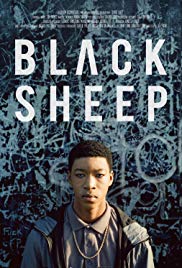
 BLACK SHEEP (UK), 21 minutes

When a young boy, not so dissimilar to her 10 year old Nicaraguan son, is killed on the streets of her London neighborhood, a mother takes steps she feels are necessary to protect her son. They relocate to Essex for safety, unaware that extreme racism exists. With the camera in close-up mode, a now adult Cornelius Walker re-tells his story as reenactments periodically accompany his words.

Director Ed Perkins captures the pain and intimacy of the decisions that led Cornelius to try and fit in … “make friends with monsters”, as he puts it. What a stark reminder of how strong our survival instincts are. We can rationalize actions that wouldn’t typically be considered, even if the long-term price paid for those decisions is to be forever haunted by losing our true self. The reenactments may cost it some votes in this category, but Mr. Walker’s story will stick with you.


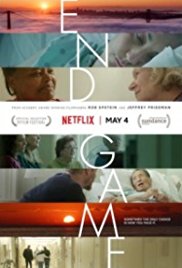
 END GAME (USA), 40 minutes

Though emotions run high in all 5 of the Doc Short nominees, none reach the tearjerker level and gut-punch of this look at palliative care by co-directors Rob Epstein and Jeffrey Friedman. Teams of medical professionals are committed to end of life care and helping patients and families deal with death.

Mr. Epstein is a two time Oscar winner for Doc Feature (THE TIMES OF HARVEY MILK, 1984; COMMON THREADS: STORIES FROM THE QUILTS, 1989) and he and Mr. Friedman previously collaborated on the 2014 doc AND THE OSCAR GOES TO … There is an interesting look at the San Francisco Zen Hospice Guest House, but there is a bit too much time spent on one patient/family and the film is very similar to the previously nominated EXTREMIS (2016).


 A NIGHT AT THE GARDEN (USA), 7 minutes

On February 20, 1939, a Nazi-American rally took place at Madison Square Garden in New York City. Perhaps you were aware of this or not, but either way, this brief 7 minute clip edited from archival footage will surely chill you to the bone.

The rally takes place shortly before WWII begins, and the pomp and circumstance, as well as the scope of the event, are startling. Standing at a podium in front of a giant George Washington portrait, Fritz Kuhn, leader of the German American Bund, spews vile hate-filled words and the crowd of 20,000 cheers.

Director Marshall Curry has been previously nominated twice for Documentary Feature, and his work here is wisely restricted to editing the footage. No commentary or interview is necessary. The name you will want to know after this 7 minutes is Isadore Greenbaum.


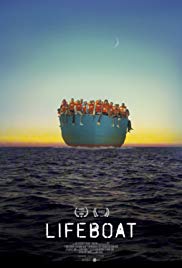
 LIFEBOAT (USA), 34 minutes

Thousands of refugees take to rafts and battered boats in the Mediterranean Sea in hopes of escaping an environment of poverty, torture and/or bombings. They realize it’s a life or death step, yet they believe those odds are better than staying put. This is director Skye Fitzgerald’s follow up to his 2015 doc short 50 FEET FROM SYRIA, and the second of what he plans will be a trilogy.

We follow Sea-Watch Captain Jon Castle as his crew, funded by a German non-profit dedicated to rescuing refugees, strives to save as many as possible before starvation, illness or drowning occurs. Sometimes they succeed. This one would make an interesting double-bill with last year’s winner THE WHITE HELMETS, which focused on rescues on land (after bombings). Captain Castle (who passed away last year) makes the point that the rescues are the right thing to do as humans, as it could easily be us in need of rescue sometime in the future. Director Fitzgerald pays little attention to political arguments, and presents this as a humanitarian issue.


BRESLIN AND HAMILL: DEADLINE ARTISTS (2019, doc)

January 27, 2019

 Greetings again from the darkness. From the department of ‘The more things change, the more they stay the same’ (a phrase attributed to French writer Jean-Baptiste Alphonse Karr), there is a segment in this documentary showing Nixon’s Vice President Spiro Agnew comments on the “evil liberal media”. The only thing missing is the now all-too-familiar catchphrase “fake news”. If, as many believe, we are in a re-run of a political cycle from that era, we should be so fortunate to have the writers and journalists of that era … specifically Jimmy Breslin and Pete Hamill.

Co-directors Jonathan Alter (political journalist and author), John Block, and Steve McCarthy are behind this HBO documentary that flashes back to a time when reading the morning newspaper was a ritual for much of the world. This was before the internet and certainly before Tweeters began presenting opinions as breaking news. At one point, the city of New York supported 7 different newspapers, and these two writers – very different in style – are forever linked to the city, to their ‘street poetry’ and to each other.

Jimmy Breslin and Pete Hamill were at various times co-workers and rivals, yet always friends … a friendship based on mutual professional respect. Pete was the more likable one, while Jimmy was the brash New Yorker – a celebrity who admittedly had enemies. The filmmakers provide a background on each, often with the writers themselves providing color commentary. Specific events from certain years are used a story structure: 1984 and Bernhard Goetz, 1989 shows our current President (30 years younger) dishing racial divisiveness via an emotional reaction, the 1963 JFK assassination and how Breslin chose to interview the man digging the grave, Vietnam in 1966, 1976 when both were employed by The New York Daily News, the letter Breslin received from Son of Sam in 1977, the same year Hamill was editor of two newspapers simultaneously, the 1985 AIDS outbreak, and the 1991 Crown Heights riots.

We learn Breslin often held court at a local bar, and that Hamill dated Jackie Onassis. Breslin’s baseball book “Can’t Anybody Play this Game?” is discussed, as is what Hamill calls “the rhythm of writing”. A 2015 interview with the two elderly men makes the bond quite obvious, and an emotional segment shows Pete and his wife recalling that tragic day on 9/11. The talking head interviews featured are many and impressive, including: the siblings, offspring and spouses of the two men; writers Tom Wolfe, Gay Talese, and Nicholas Pileggi (“Goodfellas”); performers Tony Bennett, Robert Deniro, and Shirley Maclaine (also a love interest); activist Gloria Steinem; cartoonist Gary Trudeau; and other historians, journalists, and writers.

Anne Marie is mentioned as the woman who sat between the two writers at the Daily News, and we can’t help but think she deserves her own movie, given her connections (so to speak). Breslin and Hamill derived energy and were driven by passion for their causes and observations … and their agenda was drawn from the need to get the truth told, not just the glory of a headline. The message is that local journalism is important, while today, we are allowing it fade away. Breslin is shown hunting and pecking until the end (in 2017), and it’s likely Pete will as well.

watch the trailer:


SCIENCE FAIR (2018, doc)

December 23, 2018

 Greetings again from the darkness. Welcome to the island of misfit High School geeks. Co-directors Cristina Constantini and Darren Foster introduce us to a few of the kids from around the globe who are striving to compete in the Intel International Science and Engineering Fair. More than 1500 students from dozens of countries qualify each year to present their ideas for a $75,000 grand prize. There are many rules, but the key is that the project must have “global impact”. Does this sound more important than a football game?  Well, not in South Dakota!

The film opens with the viral clip of a previous winner who literally ran onstage screaming and crying when his name was announced as a winner. We then meet Jack Andraka today, and in his interview, he explains his guttural response and the impact of the fair both for individuals and idea advancement. Jack, now in his 20’s, works as a researcher. We follow 9 students from various parts of the world – each with different backgrounds, interests, expertise, and motivations. The support they receive from parents, teachers and schools also varies, as do the resources available.

Students being followed are from a Kentucky, South Dakota, Brazil, West Virginia, Germany and New York state. The systems range from a magnet school to a public school without a science lab. In South Dakota, a Muslim girl named Kashfia bluntly states that athletics are the focus of her school (their football team went 0-9), and her science teachers had no interest in being her faculty sponsor … so the football coach agreed to fill the role. This is contrasted to a New York teacher who commits her off-hours to mentor and push students to participate and compete, and she regularly sends multiple students to the fair. In West Virginia, a frustrated math teacher discusses how one student had no interest in homework or tests, then we hear the student explain his advancements in artificial intelligence. A German student diligently works on improving the aeronautics on single wing aircraft. Other projects include detecting arsenic in water, the effects of drug and alcohol abuse, and preventing cancer rather than curing it. It’s an impressive lot.

Quite a few of the students hail from immigrant families, and each student is inspiring, intelligent and ambitious. Given the political climate in the U.S. these days, it is heart-warming to see so many youngsters who want to make the world a better place. The directors also interview past winners, but are not allowed in the exhibit hall once the judging begins. National Geographic has sponsored this documentary which won the Audience award at both Sundance and SXSW. These students are the ones that give us hope for the future, and remind us that sports are a nice pastime, but it is intelligence and technical advancements that will sustain the species. The film should be used to recruit more students into working towards the Olympics of Science Fairs!

watch the trailer:


THEY SHALL NOT GROW OLD (2018, doc)

December 17, 2018

 Greetings again from the darkness. I’ve noted many times how World War II has been mined for cinematic purposes over the years, even to this day. It’s always seemed a shame that World War I – ‘The Great War’ – has so few big screen projects in comparison. Obviously, timing is a major reason. World War II ended in 1945, which means during our lifetime, many of those veterans have been able to record their experiences and memories. In contrast, 2018 marks the 100 year mark of the end of World War I, so the archival footage and documentation is significantly reduced – and sadly, much of it lost or destroyed over time. Because of this, we should treasure this latest from director Peter Jackson as he allows these WWI participants to come alive and tell their stories. But it’s more than historical significance … it’s truly fascinating to hear the words from those that were there.

Director Jackson is best known for his THE LORD OF THE RINGS and THE HOBBIT trilogies, as well as his version of KING KONG (2005) … all “large scale” movies with ground-breaking CGI effects. For his latest, he gets much more personal and intimate, though the technical achievements are equally impressive. The first thing to note is that this film is not presented as a historical timeline detailing the political motivations or battle strategy of the various countries involved. Instead, we hear archival audio from dozens of soldiers who fought, and we see actual video clips and photographs – many we’ve never seen before. Mr. Jackson’s grandfather was a soldier in WWI, and the film’s focus is on the experience of the British soldiers.

Fittingly, the film begins with soldiers’ words playing over some of the faded and tattered war footage. These soldiers go unnamed as the goal is to have us understand the experience – what motivated them to enlist, and what it was like to serve on the battlefield. As we hear the words, the scale and clarity of the video transitions to full screen in vivid color … it’s breathtaking to see these figures become living, breathing, smiling young men from a century ago.

The words of these men fill us in on aspects of the war that most history books gloss over. Many of them “exaggerated” their ages so they could join their friends or relatives in the war. We learn about ‘plum and apple’ jam, stew, sipping water from gas cans, and the challenges presented when the ‘poop pole’ gets overloaded. The trenches are seen up close as mazes of mud (when not fully flooded) with cutouts for sleeping and cooking. We see proof of trench foot/gangrene due to the impossibility of proper sanitation, and we hear and see the constant threats of green gas, snipers and artillery shelling – and that’s on top of the relentless smell of death and infusion of rats.

This is about being a soldier … the ramifications of leaders deciding war is the best or only option. Director Jackson makes it personal, and a segment where the British soldiers mix with injured and captured German soldiers proves that these young men have more in common than not. They all just want to survive and go home to their loved ones.

Jackson co-produced the film with his wife Fran Walsh, and with the involvement of the Imperial War Museum and BBC. Controversy surrounds the colorization of archival footage. I would encourage anyone who feels this way to understand this is much different than bastardizing IT’S A WONDERFUL LIFE or CASABLANCA, where those directors purposefully lit scenes and sets based on the black and white filming process. Jackson is dealing with war footage from100 years ago, much of it by war photographers or soldiers. The purpose is to cause the people and horrific settings to come alive for those who have never connected with WWI – preserving The Great War for personal and historical purposes. It’s really something to behold.

watch the trailer:


BOB LAZAR: AREA 51 AND FLYING SAUCERS (2018, doc)

December 17, 2018

 Greetings again from the darkness. “This story is extraordinary – especially if it’s true.” This is just one of many incredulous statements from the film’s narrator, Mickey Rourke. And let’s face it, when trying to establish credibility for a story that’s been in doubt for 30 years, who better to lean on than Mickey Rourke? In defense of filmmaker Jeremy Corbell, there is no proving or disproving the story of Bob Lazar. It’s more like a Ripley’s Believe it or Not entry than a forensic study with conclusive results. One either chooses to believe Mr. Lazar, or not … and there is no way to prove which side is “right”.

In 1989, Bob Lazar was interviewed anonymously (in shadows with altered voice), claiming that he worked at S-4, a facility adjacent to Area 51, and that his job was to reverse engineer the propulsion system on alien spacecraft – one of 9 being studied. His anonymity didn’t last long, and the one fact in the film that is beyond debate is that his decision to go public with this story altered his life forever. When Mr. Corbell catches up with Mr. Lazar, we find that he doesn’t come across as a crackpot, and we certainly believe that he believes his story. It’s impressive that he’s gone to great lengths over the years to prove his honesty – hypnosis and polygraphs included.

With input from investigative reporter George Knapp, we learn of FBI raids and numerous attempts at character assassination. There seem to be no records confirming Lazar’s employment or education (Cal Tech, MIT) claims, though we do have photos of one of the raids. And we learn from his mother than he was always conducting experiments, even as a kid. Another gem from narrator Rourke, “Can we be made whole if we aren’t believed?” might have made for a better focus as a (shorter) documentary. Since his story can’t be proven, perhaps a more personal study of the man could be insightful.

We bounce between Nevada, California and Michigan, and director Corbell seems to buy into “The X-Files” claim that ‘the truth is out there’. His choices of the electronic warbles as a score and the ridiculous script for Mr. Rourke to narrate notwithstanding, we do find Corbell and Lazar to be forthright in the presentation, even if their story is never able to “weaponize our curiosity” as initially promised. Proclaiming “reality isn’t what it used to be” doesn’t make it so. One must prove something so, for the doubt to be removed.

watch the trailer:


BAR TALKS BY SCHUMANN (2018, doc)

December 13, 2018

 Greetings again from the darkness. Learning from those at the top of their game is always fascinating, regardless of what their game, industry, business, or talent is. We want to hear what ‘the best’ has to say. What was their path to the pinnacle? What was their formula for success? Director Marieke Schroeder focuses her lense on Charles Schumann, the world famous bar owner, mixologist, and author.  It wouldn’t be wrong to refer to him as the guru of bars.

Mr. Schumann cuts a dashing figure with his shock of long gray hair and his colorful custom suits. His reputation precedes him as he visits world class bars in Munich, New York City, Paris, Havana, Tokyo and Vienna. Schumann has disciples throughout the industry – those that have learned the bar industry from one of his publications (including “Schumann’s Bar Book”), or by studying his own Munich establishment, Schumann’s bar.

As we travel along on his globetrotting-bar-hopping trek, it’s very interesting to see the differences and similarities in bars located thousands of miles from each other. We also get a bit of a history lesson as cocktails are tracked back to 1803, and the evolution of NYC bars from prohibition to disco to today’s more intimate neighborhood bar is noted. There are interviews with barkeeps, bar owners, a cocktail historian and a journalist, and the most interesting segments are the exchanges with Schumann himself – especially with a female bar owner who seeks his respect and acceptance.

We visit Hemingway’s Bar in Paris and learn of the namesake’s family connection, and a trip to Havana educates us on how crucial Cuba became as a U.S. supplier during prohibition. As a bonus, we learn the purity and tradition of creating Cuban rum. The Tokyo segment is quite unusual in that the best bars might have seating for less than 10 people, and the precision ice block-cutting is a rare skill to behold. Another observation from the numerous bar stops is that each bartender has their own style when it comes to the vigorous shaking of certain cocktails.

Charles Schumann is dedicated to the industry and the craft, and is now an influential spokesperson and consultant, in addition to being a well-known bar owner and mixologist.  Director Schroeder changes the music for each locale, and leaves us with a message that seems impossible to argue against: cocktails are a pleasure to drink AND create.

watch the trailer:


FREE SOLO (2018, doc)

December 4, 2018

 Greetings again from the darkness. Free Solo rock climbing is defined as climbing without use of ropes or safety gear and without a partner. The death rate is off the charts, and it’s difficult to avoid the word ‘crazy’ when describing the act. This film follows renowned free soloist Alex Honnold and his pursuit of Yosemite’s 3000 foot El Capitan wall … one of the most awe-inspiring natural rock formations in the world.

You might assume Alex is one of the “dude” spouting, gnarly-haired, free-spirited types we’ve come to associate with extreme sports, and if so, you’ll be surprised to discover a relatively quiet, kind of geeky, socially awkward thirty-something with a charming smile and reserved personality that leans towards analytical. His success has brought him enough money and recognition that he started a non-profit foundation that brings technology and facilities to impoverished areas around the globe. Alex is an unusual guy who lives in a van and eats meals right from the pan.

Despite the relatively straight-forward goal of accomplishing one of the greatest feats in rock climbing history, there is actually a lot going on in the film. We get familiar with Alex by learning some about his childhood, hearing directly from his mother, listening to his exchanges with climbing legend Tommy Caldwell (himself the subject of the upcoming documentary THE DAWN WALL), and witnessing his first real relationship with Sanni McCandless, whom he met when she attended one of his book signings. There is also a segment on Alex’s MRI where the doctor explains his amygdala requires extraordinary simulation to register on the graph. In other words, his fear factor is mostly non-existent.

The most fascinating segments include his preparations for the climb, and the conflicts about whether he wants the cameras present. Alex and the filmmakers (Jimmy Chin and Elizabeth Chai Vasarhelyi) are equally concerned about whether cameras will distract – will they cause him to make a move he might not otherwise make? The slightest error could lead to instant death, as we learn that dozens of other known climbers have perished in the last few years.

Alex’s preparations are methodical and detailed. Every nuance of El Capitan’s Free Rider path is etched in his mind and his notebook. He is armed only with a bag of rosin, tight-fitting shoes, freakish finger strength, and an other-worldly sense of balance. And of course, his laser-focused mission of perfection … anything less leads to tragedy.

National Geographic is distributing the film, and even those with a certain fear of heights or nausea should be fine watching. The camera crew, who themselves find it difficult to watch Alex in action, captures some amazing shots – whether by wrestling with a camera as they dangle from climbing rope, or perched on the ground with a powerful telescopic lense. Nature is stunning and Alex’s presence brings tension and awe. His existential accomplishments and goals are not for publicity or glory, but simply because that’s how he’s made. The film succeeds in making this point, although we can’t help but utter “crazy” at least a couple times during his momentous climb.

watch the trailer:


MARIA BY CALLAS (2018, doc)

November 29, 2018

 Greetings again from the darkness. These days, it’s inconceivable for anyone under 40 years old to think there was a time when the general public knew very little of the private life of celebrities – even those of whom they were dedicated fans. Today, it’s not uncommon for celebrities to pre-package their life, delivering behind-the-scenes details that far too many people care about. Madonna, Justin Bieber, Taylor Swift and Jennifer Lopez are just a few that have simultaneously tried to appease and manipulate fans into a feeling that they really know the person behind the superstar facade – and perhaps fulfill a fantasy of some common ground. Even more prevalent are the biopics, either in the form of a documentary (WHITNEY: CAN I BE ME) or dramatization (RAY).

Filmmaker Tom Volf realizes that the great Opera singer Maria Callas was known for two things: being a world class soprano/actress and for being difficult to work with … the ultimate diva, one might say. Working with narrator and noted mezzo-soprano Joyce DiDonato, the film expertly reinforces those two traits, and even adds a new label: narcissist. It does so by using (as the title suggests) Maria Callas’ own words taken from interviews, letters to friends, and personal diary entries.

The Greek-American Opera singer/actress was born in Brooklyn to Greek immigrants, and, as a teenager, moved to Athens with her mother and sister after her parents’ marriage fell apart. Director Volf uses a BBC TV interview with David Frost to provide a framing structure to the film, but there are also clips of other interviews shown, and of course, Ms. DiDonato’s readings of the personal Callas writings. We learn Maria was originally controlled by her mother, and then by agents and her husband. Maria attempts to explain how the “difficult” label undeservedly stuck to her for decades due almost entirely to her vocal issues/illness at one sold out performance at the New York Metropolitan. Her own words later contradict, or at least cast much doubt on the accuracy of this simplification.

Archival footage of her life … her mostly glamorous life … is shown throughout, including bits with Aristotle Onassis, filmmaker Vittorio De Sica, actor Omar Sharif, filmmaker Pier Pablo Pasolini, Grace Kelly, and renowned soprano Elvira de Hidalgo, who became Maria’s voice coach. Maria’s fairy tale life is on display: chauffeurs, standing ovations, worshipping fans, and her incredible wardrobe that made her a fashion icon of the times. Her words convey the unhappiness and loneliness she felt, even during the “good times”.

It’s the stage performances that made her famous and took her to the top, so Mr. Volk includes several full-length numbers from Verdi, Bellini, Bizet and others … her glorious talent on full display and surely to inspire awe from any first timers. So while her singing provides a welcome respite from her words, it’s those words … her own words … that seem to solidify her reputation as a diva. Though she claims to have been controlled by others, she managed to take extended breaks throughout her career, and every opera fan and director understands that vocal issues arise periodically, so it’s quite doubtful anyone would hold an extended grudge over such an occurrence.

A substantial portion of the film deals with Maria’s long-term affair with Aristotle Onassis, and how shocked she was, and betrayed she felt, when he married Jackie Kennedy without so much as a word of warning. And when his marriage to Jackie crumbled, he came scurrying back to Maria, who openly welcomed him … a sure sign of just how lonely she had been for most of her life, despite the glamour and adulation. We can debate whether the legacy of Callas might have been better off had her personal thoughts remained buried, but there is little doubt that we are sometimes better off simply enjoying the work or art of a rare talent, rather than getting to know them as a person.

watch the trailer:


UNDER THE WIRE (2018, doc)

November 15, 2018

 Greetings again from the darkness. With release dates so close together, this documentary from director Christopher Martin makes a superb companion piece to director Matthew Heineman’s film, A PRIVATE WAR – the Marie Colvin biopic with an excellent performance by Rosamund Pike. Heineman’s film really helps us understand what drove Ms. Colvin to become the most courageous and well-known war correspondent of her time, while Martin’s doc provides an incredibly up-close look at the dangerous environment that inspired her reports.

In February 2012, Ms. Colvin and photographer Paul Conroy were smuggled into Syria (journalists were prohibited at the time) and found their way to Baba Amr, an area of Homs, Syria. What they discovered was horrific. What the Assad regime was doing to its own people, its own children, was not what Marie and Paul had known as war. Instead they described it as slaughter. They were determined that “the world must see”, and for the next few days, they discovered “The Widows Basement” where women and children were trapped. They watched a relentless Dr. Mohamed desperately try to stitch the injured back together in a makeshift clinic with minimal supplies.

The film is based on the book of the same title by Paul Conroy. On the day the bombing killed Marie and French photographer Remi Ochlik, and many other civilians, it was Paul and French correspondent Edith Bouvier who survived, despite serious injuries. Mr. Conroy acts as our commentator as much of the footage he shots plays on screen. He admits to carrying the weight and responsibility of telling not just Marie’s story, but also the truth about what they witnessed … it’s a brutal war that continues today.

Some reenactments are blended with Conroy’s footage, and we fully understand the terror they felt in entering the drain pipe that acted as the artery to Baba Amr. The infamous clip of the dying baby shown on Anderson Cooper’s CNN interview with Ms. Colvin is no less devastating now. Paul admits that some described Marie as “scarier than the war we are covering”, but no one doubted her courage and drive to tell the stories of those who were being forgotten. As the Sunday Times war correspondent recognizable by her eye patch, Marie’s work with Paul is the best defense possible for our need for truthful and full journalistic coverage … it should be our protection against forces motivated to mislead or misdirect. Paul’s commentary of his extraction from Syria reinforces what courage is required not just to rush to the story, but also to find a way to tell it.

watch the trailer:


THE RECKONING: HOLLYWOOD’S WORST KEPT SECRET (2018, doc)

November 8, 2018

 Greetings again from the darkness. The #MeToo and #TimesUp movements are in full force, and if you somehow missed “what happened”, director Barry Avrich’s film will fill you in and get you caught up. As an expose’, it’s a bit late to the party, but as a look at how we got here, it’s pretty much right on the nose. The film opens with a proverbial cold slap to the face of viewers. We hear the Howard Stern interview where movie mogul Harvey Weinstein denies any type of sexual malfeasance exists in Hollywood. Weinstein, of course, is the poster boy for sexual misconduct in the movie industry. He’s a man who has kept the “casting couch” alive for three decades; although as we’ve learned, it certainly wasn’t Weinstein acting alone (unfortunately).

Much of the film is focused on Weinstein, and justifiably so. He is described as talented AND a monster – also as cunning, witty, brilliant, and devastating. This man was such a megalomaniac that he structured his business around two things: making money on independent films and using his position of power and influence to put women in compromising and unsafe situations. He went so far as to utilize “honey pots” – female assistants who could gain the trust of the actresses and help lure them to his web of sleaze. One of these former assistants, Zelda Perkins, is interviewed and sheds light on the process.

Many others are interviewed for the film. Writers, reporters, agents, lawyers, a psychologist, and actresses all tell their stories and insight. Weinstein is not the only name that’s named. The film also touches on: Donald Trump, Bill Clinton, Bill Cosby, Bill O’Reilly, Woody Allen, Louis CK, Aziz Ansari, Olympic Doctor Nassar … and even Pepe Le Pew (from Looney Tunes). A segment is dedicated to the audacity and despicable actions of director James Toback (known as the dream killer), and Tippi Hedren and Joan Collins talk about “that’s the way it’s always been”. We learn Mack Sennett is credited as being the founding father of the casting couch (in the early 1900’s), though numerous studio heads, producers and directors have since preyed on the ambitions of wannabe starlets.

In an awkward segment, acting legend Meryl Streep admits “I’m taking some hits” after having been targeted by street artist Sabo with #SheKnew posters. If nothing else, this underscores just how difficult it has been for women to speak up … at least until now. Dozens and dozens of women have come forward with their stories, leaving us hopeful that this blight on the industry might be over for good. Leonard Cohen’s biting song “Everybody Knows” is put to good use here.

When one of his victims recalls the story where he gifted her a copy of Fitzgeralds’ “The Last Tycoon”, and Weinstein bluntly stated, “that’s me”, we begin to understand that this monster was not just about control … he was out of control. He lost his barometer on right and wrong, and it became about what he was entitled to in his position at the top of the movie making world. Thanks to some courageous women, he no longer has that power position, and with forums like this film from director Avrich, it’s likely no other predator in this industry will ever again be able to abuse the power to the extent we’ve seen from Harvey Weinstein.

watch the trailer: