Greetings again from the darkness. Couples argue. Some more often and more boisterous than others. Things get ugly when friends and other outsiders are drawn into the arguments, which is exactly what we witness (in exaggerated form) with this film from director Robert Schwartzman and writer Zac Stanford(THE CHUMSCRUBBER, 2005). Schwartzman is also a musician and composer, and is the son of ROCKY actress Talia Shire, and the younger brother of actor Jason Schwartzman (MOONRISE KINGDOM, 2012).
Lisa (Emma Bell, A QUIET PASSION, 2016) has just finished her first acting gig (other than a cameo in her husband’s film) in a stage production of Mozart. Her husband Jack (Dan Fogler, FANTASTIC BEASTS AND WHERE TO FIND THEM) is simultaneously happy for her and insecure. His insecurity stems from his lack of success as a writer, and his suspicion, bordering on jealousy, of Lisa and her co-star Paul (Tyler James Williams, “Everybody Hates Chris”). The film picks up at the intimate after-party at Lisa and Jack’s home. It’s here where we meet Paul and his friend Trina (Cleopatra Coleman, “The Last Man on Earth”), and married couple Brett (Danny Pudi, “Community”) and Sarah (Maggie Q, “Nikita”). Brett is Jack’s literary agent, and he’s about as successful as an agent as Jack is as a writer. Sarah is an Entertainment Lawyer, who is as bored with the party as she was with Lisa’s play … she just wants to go home and sleep.
The party ends abruptly when Jack and Lisa get into a fierce argument. Alone in the house, neither accepts the blame, so of course, it escalates. The unconventional solution reached is to recreate the sequence of events with the same people saying and doing the same things they said and did that first night. Then they do it again. And again. A montage of do-overs causes us to lose track of just how many times these poor people re-live a forgettable and unpleasant evening.
A tonal shift occurs when Jack “casts” the party with actors, while still inviting the same friends to watch. Rather than exaggerated relationship issues, we get an exaggerated look at actors finding their characters … characters who happen to be sitting in the same room! This jolt of fresh faces transforms the film from quirky to slapstick, and it’s quite likely you’ll enjoy one segment more than the others. The “new” actors bring their own comedic style to the roles: an amped up Mark Ryder (“Borgia”) as Jack, actor-within-an-actor Nathan Stewart-Jarrett (“Misfits”) as Paul, a subdued Karan Brar (DIARY OF A WIMPY KID) as Brett, a willing Charlotte McKinney (FANTASY ISLAND) as Lisa, and Marielle Scott (LADY BIRD) as Trina.
The do-overs are a creative approach in attempting to solve the argument, but this movie is at its best, not in deep psychological analysis of relationships, but rather in the simple comedy elements on display. Relax and take it for what it is … a way to laugh at the problems of others without feeling an ounce of guilt. Just please don’t throw the pie.
Greetings again from the darkness. One need not be a Dickens expert to enjoy this re-imagining of his “The Personal History, Adventures, Experience and Observation of David Copperfield the Younger of Blunderstone Rookery (Which He Never Meant to Publish on Any Account)”. Yes, that’s the novel’s actual title, so there is little wonder it’s typically referred to by only the main character’s name.
The film opens with David Copperfield (Dev Patel, SLUMDOG MILLIONAIRE) reading his autobiography to a mesmerized audience in a beautiful theatre. Yes, we hear the iconic opening line, “Whether I shall turn out to be the hero of my own life …”, and then Copperfield turns and walks into the backdrop which comes alive as he, in fact, steps into his own life. The film is episodic in structure as we are presented with segments of Copperfield’s life that shaped his writing – from his birth at The Rookery, to his inquisitive nature as a young boy, through his cruel banishment to factory work, on to his life living with his eccentric aunt and his time at boarding school, and finally, with his time as a proctor, courting Dora, and focusing on writing. It’s a fascinating life, with many elements pulled (or enhanced) from Dickens’ own.
Director Armando Iannucci (IN THE LOOP, creator of “Veep”) and co-writer Simon Blackwell are frequent collaborators renowned for their expertise in satire. Iannucci is an admitted fan and student of Dickens, and he’s assembled quite a sterling cast for his take on the classic story. In addition to Patel as the older Copperfield, we have Jairaj Varsani in his first film as young David, rising star Morfydd Clark (PRIDE AND PREJUDICE AND ZOMBIES, 2015) in dual roles including the enchanting Dora Spenlow, Hugh Laurie as the King Charles (and his head) obsessed Mr. Dick, Aneurin Barnard (DUNKIRK) as David’s friend Steerforth, Darren Boyd and Gwendoline Christie as the wicked Murdstones, Peter Capaldi (“Doctor Who”) as the dodgy Mr. Micawber, Daisy May Cooper as trusted handmaid Peggotty, Nikki Amuka-Bird as the concerned Mrs. Steerforth, Benedict Wong as the sherry-loving Mr. Wickfield, and Ben Whishaw is a standout as conniving Uriah Heep. And if somehow that’s not enough, the brilliant and eclectic Tilda Swinton shines as Aunt Betsey Trotwood.
Each of the segments brings something different to the party – some of it bleak, and some of it cheery. Of course the dialogue has dashes of humor, but much of the comedy comes courtesy of the talented cast. It’s been said of writers that they should write what they know, and David Copperfield literally writes what he lives … through piles of scraps of paper, each holding a moment of life or the essence of a character. Watching this is a bit like camping out in a writer’s head and twisting through their thoughts … Mr. Dickens would be proud.
Greetings again from the darkness. In this time of pandemic, we may not yet have a cure for the virus, but music video director Ninian Doff serves up his first feature film as a vaccine for those who have been stuck in the house for too long. It’s really a mash-up of comedy-horror-thriller-buddy film, with a dash or two of hip-hop and social satire. Mr. Doff also wrote the screenplay, and the film originally played SXSW under the title, “Boyz in the Wood.”
Three friends/delinquents from school are on the verge of expulsion, and their punishment is being sent on the Duke of Edinburg adventure, a program established in 1956 with the objective of getting kids out of the city and into the country. Dean Gibson (played by Rian Gordon) is the leader of the trio, while DJ Beatroot (Viraj Duneja) dreams of becoming a star hip-hop artist, and Duncan (Lewis Gribben) mostly creates chaos at every turn. They are joined on the trip by their personality opposite, Ian (Samuel Bottomley), a home-schooled boy who actually volunteered for the trip in hopes of padding his university application.
The Scottish Highlands serve as the life-sized game board where the boys take their wilderness trek. Substitute teacher Mr. Carlyle (Jonathan Aris) hands them a map and takes a picture of the group in front of a bulletin board filled with missing kid flyers. That’s just a taste of the humor that awaits. Ian is the only one treating the journey seriously, while the other three are wise-cracking, experimenting with drugs, and putting up with DJ Beatroot’s meanderings about his music “career”. At first, the boys are oblivious to the fact that they are being stalked (or hunted) by a couple of elites played by the always entertaining Eddie Izzard as The Duke, and his partner in crime (literally), Georgie Glen as The Duchess.
Simultaneous to this Highlands’ action, we are treated to a look inside the police station where Sergeant Morag (Kate Dickie) and PC Hamish (Kevin Guthrie) generate some laughs with their excitement over hip-hop terrorist zombies in their area. They find this significantly more intriguing than “the bread thief” which was previously the number one crime to solve. At times, it’s difficult to know which group is the most talented at bumbling – the boys, the rich hunters, or the police.
The Duke of Edinburg award is earned by combining “Teamwork, Orienteering, and Foraging.” For this group of boys, it also involves drugs, hip-hop, and staying alive. Director Doff infuses a zany absurdity to the action, and with some of the set ups, he perhaps could have even gone further – although the bits on rabbit pellets and a fork as a weapon are to be admired. One of the songs drags on a bit too long, but mostly the creativity is fun to watch, as is the collision of teenage group dynamics, the generational clash, and the social commentary. The film is in the mode of some of Edgar Wright’s best work, so if that’s your style, you’ll find this a treat.
Greetings again from the darkness. The journey to find one’s self is not unique to artists, but for some reason, it’s more cinematically appealing when an artist is involved. In this quirky film from director David Wnendt, with a screenplay Rebecca Dinerstein Knight adapted from her own novel, artists (of varying types) are everywhere. Of course finding one’s self usually involves making peace with this quagmire we call life.
Frances (Jenny Slate, OBVIOUS CHILD, 2014) watches as three snooty art critics denigrate her latest work to the point of humiliation. Her long-time boyfriend dumps her, and she returns home to her parents, both artists. Instead of sympathy from the family, she’s bombarded with news that her sister Gaby (Elise Kibler) is engaged to a man her father loathes, and to top off the family dinner, her parents (Jessica Hecht, David Paymer) announce they are separating. Rather than deal with any of this head-on, Frances accepts an apprenticeship with an artist in north Norway. “Norway, Norway”. Where the sun never sets.
Nils (Fridtjov Saheim) is the personality opposite to talkative, upbeat Frances. He grumps around while escorting her to the trailer she’ll stay in for the summer. The project, seemingly uninspiring, is to paint a local dilapidated barn yellow – inside and out. Nils is under a tight deadline to finish the barn so it (and he) can earn a spot on the map of cultural sites. Close by is a Viking museum and community, where the folks, led by their Chief (Zach Galifianakis), re-create Viking life for tourists (or mostly themselves).
One day Yasha (Alex Sharp, HOW TO TALK TO GIRLS AT PARTIES, 2017) shows up. He’s arranging a ceremonial Viking funeral for his beloved father (Olek Krupa). Father and son worked together daily in their bakery and developed a close bond. Sasha’s mother (Gillian Anderson), who left them years ago, unexpectedly shows up for the funeral, hoping to lure him to live with her.
Frances compares everyone she meets to subjects in famous works of art. It’s her way of connecting art to the real world, as well as helping her find a place for people in her world of art. Frances and Yasha are drawn together in their search for direction and meaning, and we are led to believe this connection, no matter how brief or random their crossing of paths might be, helps her in her personal quest.
The cinematography from Martin Ahlgren captures this rarely seen top-of-the-world wonderland, and the landscape is truly something to behold. Ms. Slate is once again top notch in her role. She’s likable and relatable, traits some actors struggle with, but which apparently come natural to her. And while we expect lives to be messy and complicated, we hope for a bit more from our movies. Frances’ home life is drawn straight out of a TV sitcom, and the whole Viking village never really makes sense. It seems Frances is short-changed on all of her relationships here, yet the trip still manages to help her discover something in her art. And that’s just about how life works – really messy right up until something clicks, and then back to messy.
Greetings again from the darkness. All you Elvis Presley fans out there can relax. This is not a documentary. In fact, trying to put a label on the film co-written and co-directed by Marv Z Silverman and Tracy Wuischpard would be pointless … unless we can just agree on “Midnight Movie Madness”, and leave it at that.
Not that I would ever encourage such activity, but some have declared that the best ‘midnight movies’ are most enjoyed whilst a sufficiently mind-altered state is achieved, and one is unnaturally influenced by beverage or ‘other’. Now that’s a category this film easily and happily (and likely by design) fits in. There is no reason to start this film while thinking clearly, and actually, thinking is best avoided for the entire 90 minute runtime.
The story kicks off with the narrator explaining that Elvis has spent the last 30 years or so with the aliens of Alpha Centauri. He has been playing music for the community of ETs proving “music is the universal language.” ’But now Elvis is homesick for Earth and wants to see his daughter, Linda Bess Truman. The aliens contact the CIA and arrangements are made for the drop in Area 51. Some quick math places the story sometime around 2010 or a couple years prior.
There is no way I will risk spoiling the zaniness that occurs, but Elvis, now codename John “JB” Burrows, finds himself in the 1970’s Elvis World Crown Competition at the Desert Sands Hotel in Las Vegas. You may have heard about the time that Charlie Chaplin lost a Charlie Chaplin look-alike contest, but here, JB brings down the house as an Elvis impersonator. He’s so good the other contestants (quite a motley crew) question his identity. One of those is “Big M” who is also the film’s narrator. All of this drama is broadcast via “Barry Live”, a TMZ type show delivers laughs along with the daily scoop.
George Thomas plays JB/Elvis, and he seems at ease in the jumpsuits, although those fake sideburns are a punchline by themselves. David Heavener is Big M and the narrator, and his initial role as rival shifts as the story progresses. Diane Yang Kirk plays CIA Agent Messina, who is on JB’s side, and Lauren-Elaine Powell is Jackie, the earthly love interest. Barry Ratcliffe nearly steals the show as the TV host of “Barry Live”, and I believe TJ Myers plays daughter Linda, while Martin Kove (you’ll recognize as bad guy Kreese from THE KARATE KID, 1984) is the State Trooper. Alexander Butterfield is CIA Chairman Townsend, and in real life, Mr. Butterfield served as Deputy Assistant to President Richard Nixon, and was the one who revealed the existence of the Oval Office recording system during the Watergate investigation. Best of all, Sonny West appears as himself. Sonny was part of Elvis’ “Memphis Mafia” back in the day. Sonny and his cousin Red West died within a couple of months of each other in 2017.
Hopefully you’ve picked up that this move is so far outside of mainstream that a traditional review is simply not possible. Animation is used for the aliens and spaceships and the rest of it must be seen to be … well, seen. It appears to be a re-boot of Mr. Silverman’s 2011 project entitled MEMPHIS RISING: ELVIS RETURNS, making most of the footage almost 10 years old. Still, a passion project is the heartfelt pursuit of a filmmaker, whether it’s SCHINDLER’S LIST or Elvis being held captive in ‘Area 52’.
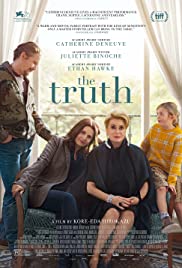
Greetings again from the darkness. Surely every movie lover will savor the chance to watch two of France’s screen titans go at each other as combative mother and daughter. Catherine Deneuve and Juliette Binoche don’t disappoint in this latest from writer-director Hirokazu Koreeda, who was previously Oscar nominated for SHOPLIFTERS (2018).
Ms. Deneuve stars as Fabienne Dangeville, an aging French Oscar winning actress who has recently published her memoir. To celebrate the book, her daughter Lumir (Ms. Binoche) is coming with her family for a visit. Husband Hank (Ethan Hawke) is a self-admitted second rate actor, and their daughter Charlotte (newcomer Clementine Grenier) is awfully cute and meeting her grandmother for the first time. Lumir is a scriptwriter, and harbors less-than-favorable childhood memories of dear old mom.
The personalities of mother and daughter are pretty easy to ascertain. Fabienne admits “I’d rather be a bad mother, a bad friend, and a good actress.” She’s a petty and sometimes nasty woman, who’s quite self-aware. Lumir is the type that has critiqued her mother’s memoir with post-it notes throughout, and calls her out on the false claims of being a doting mother. Most of the movie deals with memories, honesty, and family relationships. It’s not just Lumir who is bothered by book. Fabienne’s long time handler Luc (French screen veteran Alain Libolt) reacts strongly to being omitted entirely, as if he never existed.
Fabienne waves off the criticisms by claiming she’s an actress, so the naked truth is not expected … whereas interesting stories are. The film opens with Fabienne being interviewed by a journalist (Laurent Capelutto, “Black Spot”), and between this interview and what we learn of the memoir, we can’t help but chuckle at some of the real life similarities. First, Ms. Deneuve’s real middle name is Fabienne, and there are teases of her multiple lovers and “almost” movie with Alfred Hitchcock.
A large portion of the film is spent on the film-within-the-film that Fabienne is working on. It’s a science-fiction film (from a short story written by Ken Liu) that focuses on an unusual and difficult mother-daughter relationship. Lumir spots the obvious symmetry, but we are never really sure if Fabienne does, as she’s so busy firing barbs at the lead actress played by rising star Manon Lenoir (the first feature for Manon Clavel). For the elder Fabienne, acting has always been about being a star, so she struggles seeing the younger actress take a role she herself would have embodied 50 years prior.
Other supporting work comes from Christian Crahay as Jacques, Fabienne’s live-in cook (and more); Roger Van Hool as Pierre (man, not turtle) as Lumir’s father who is listed as deceased in the book; and Ludivine Sagnier (SWIMMING POOL, 2003) who plays a younger version of Fabienne’s character in the film-within-the-film. One key character we never actually see is Sarah, a deceased woman who was a friend and fellow actress to Fabienne, and a kind of surrogate mother to Lumir when she was a young girl. Sarah’s memory still hovers over the lives of Fabienne and Lumir, and may be at the heart of any possible reconciliation. Koreeda is a terrific director, and watching the performances here is quite entertaining. We do have the feeling that the script could have gone deeper emotionally had it not attempted to tackle so much. Additionally, many scenes felt like they were begging for more biting comedy than what was there. This is mostly played straight, which leaves Ms. Deneuve and Ms. Binoche to carry the load – a burden they handle quite capably.
Greetings again from the darkness. For the fifteen plus years Jon Stewart hosted “The Daily Show”, he could be depended on to bring his acerbic wit and often scathing political commentary to virtually every show. His most devoted followers leaned left, though he was known to take down extremists on both ends. Stewart’s foray into filmmaking as writer-director was ROSEWATER (2014), a look at the detainment and interrogation of journalist Maziar Bahari in an Iranian prison. This follow-up takes a much lighter approach – one similar to his TV days – while still managing to skewer our election system and campaign financing.
Steve Carell spent a brief time as a reporter/correspondent on “The Daily Show” before heading off to mega-stardom in movies and on TV. Here he plays Gary Zimmer, a political strategist for the Democratic Party. The film opens on the 2016 Presidential campaign between Donald Trump and Hillary Clinton, and we first see Zimmer in a whirlwind media battle of words against his nemesis, Faith Brewster (played by a funny but underutilized Rose Byrne), a strategist for the Republicans. As you might imagine, Zimmer is a funk after the election, and his career is in shambles.
A ray of hope and inspiration enters Zimmer’s life in the form of a viral YouTube video. Wisconsin farmer and former Marine Jack Hastings (the great Chris Cooper) is recorded tearing into the Deerlaken Mayor and City Council. Zimmer recognizes the Patriotism and a potential Party savior, and seizes on the opportunity to convince Hastings that the Democrats stand for the same things he stands for … those things he rattled off in the video.
Zimmer in Deerlaken is the proverbial fish-out-of-water, and his trip is farmed for laughs. It starts in the local German beer hall and carries forward to Hastings’ farm where Zimmer spots daughter Diana Hastings (Mackenzie Davis) up to her elbow in cow. The other locals we get to know include Will Sasso and Will McLaughlin as Big Mike and Little Mike, CJ Wilson as the accommodating barkeep, Blair Sams as the eager baker, and Brent Sexton as Republican Mayor Braun. When Zimmer’s campaign for Hastings catches the eye of Ms. Brewster, we soon experience an all-out political brawl for the Mayor’s job in this tiny town … one recently made smaller by the closing of the local military base. Director Stewart labels this “Heartland USA.”
Of course, this isn’t a story about the candidates. It’s Stewart’s commentary on how campaigns are conducted today. Social media and the national news media are weapons, and we see that there’s no such thing as dirty politics … only politics. Topher Grace plays a pollster and Natasha Lyonne is in charge of analytics, and the over-dependence on data is made clear. However, the biggest point Stewart makes has to do with campaign finance and money. It’s all about the ‘Benjamins.’ The Super PAC is shoved (conveniently) to the back of the room in what Stewart terms “an election economy.”
There are plenty of Jon Stewart comedic touches on display. We get “Rhinestone Cowboy” used a couple of times, see “swing voters” listed on a first name basis, and get an advertising slogan of “a redder kind of blue.” When Faith Brewster says “I look forward to lying to you in the future”, we recognize this as prime form Stewart. The problem with political statements, political commentary, and political satire, is that people will complain it goes too far, or doesn’t go far enough, or points the finger, or doesn’t point the finger. It won’t cover what they want covered in a way they want it covered. Stewart lets neither party off here. In fact, he lays blame on both. However, given what we see and live through on a daily basis right now, Stewart’s observations come across a bit tame … we wish he had pushed harder.
The opening credits segment is brilliant with a slide show of previous campaigns accompanied by Bob Seger’s “Still the Same”, and the closing credits are worth sticking around for just to hear Trevor Potter, the former Chairman of Federal Election Commission.
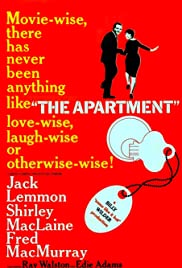
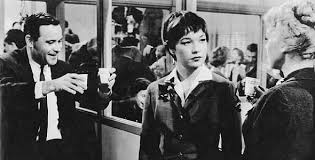
Greetings again from the darkness. This is the latest addition to my “revisited” series where I re-watch and then write about (not a review) a genuine classic movie. It’s been 60 years on this one, so please expect spoilers with no spoiler alerts. Appearing on most every legitimate list of greatest cinematic comedies, director Billy Wilder’s film actually defies categorization and is a terrific blend of comedy-romance-drama and commentary on societal gender roles of that era. Mr. Wilder co-wrote the razor-sharp script with I.A.L. “Iz” Diamond. The two were collaborators off and on for 15 years, including what many consider to be the best comedy of all-time, as well as one of Marilyn Monroe’s finest films, SOME LIKE IT HOT (1959).
Jack Lemmon stars as CC “Bud” Baxter, a clerk at Consolidated Life, a New York insurance company with 31,259 employees. Baxter is but a minor cog in the conglomerate wheel, save for one thing: he allows upper management to use his apartment for their extramarital affairs. He doesn’t much like the arrangement, but lacks the backbone to stand up to them – especially since they dangle the carrot of promotion. Although the neighbors think he is a womanizing Lothario, Baxter’s life is void of companionship. He’s on the outside (of his own apartment) while others are living it up. Elevator Operator Fran Kubelik (Shirley MacLaine) has caught Baxter’s eye, yet while she is courteous and friendly, she politely deflects his flirtations.
When that promotion finally comes through, Baxter finds himself with yet another executive requiring use of the apartment. Jeff Sheldrake (Fred MacMurray) is the Human Resources Manager, and his demands lead to a most disheartening discovery. Baxter is crushed when a broken compact mirror and the office Christmas party allow him to figure out that Mr. Sheldrake is having an affair with Ms. Kubelik, and he himself has been providing the place.
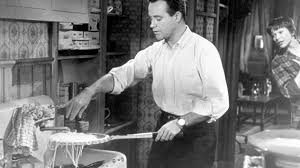
There are so many terrific scenes and performances, it’s not practical to go through each and every one. The early interactions between Baxter and Kubelik are quite fun – he’s so eager, and she’s so careful not to wound his pride. Kubelik and Sheldrake in the booth at the Chinese Restaurant is quite remarkable, and Baxter’s neighbors (Jack Kruschen and Naomi Stevens) are especially effective as the doctor and his quick-to-judge wife. Sheldrake’s secretary, Miss Olsen (Edie Adams), is a standout in her Christmas Party scene with Ms. Kubelik, and watching Baxter and Mrs. MacDougall (Hope Holiday) drunkenly dance the holiday hours away is comedic genius, although nothing can top Baxter deftly wielding a tennis racquet (wooden frame, of course) to strain pasta.
The film earned 10 Oscar nominations, and won in 5 categories: Best Picture, Best Director (Wilder), Best Screenplay (Wilder and Diamond), Best Art/Set Direction (Alexandre Trauner, Edward G Boyle), and Best Film Editing (Daniel Mandell, who also won Oscars for THE BEST YEARS OF OUR LIVES, 1946, and THE PRIDE OF THE YANKEES, 1942, and who also started in showbiz as an acrobat for The Flying Mandells in Ringling Brothers Circus). The film’s other nominees were Best Actor (Lemmon, a 2-time Oscar winner for MISTER ROBERTS, 1955, and SAVE THE TIGER, 1973), Best Actress (MacLaine, Oscar winner for TERMS OF ENDEARMENT, 1983), Best Supporting Actor (Kruschen), Best Cinematographer (Joseph LaShelle, and Oscar winner for LAURA, 1944), and Best Sound (Gordon Sawyer). Somehow Adolph Deutsch’s film score got nominated for a Grammy, but not for an Oscar. He did win 3 other Oscars for ANNIE GET YOUR GUN (1950), SEVEN BRIDES FOR SEVEN BROTHERS (1954), and OKLAHOMA!(1955).
Writer-director Billy Wilder is truly one of cinema’s giants. In his career, he was nominated for 21 Oscars, winning 6 (THE LOST WEEKEND 1945, SUNSET BLVD 1951). This film was released one year after SOME LIKE IT HOT (1959), a film that often tops the list of best all-time comedies. That film and this one, are also in the battle for best final line: “Nobody’s perfect” vs “Shut up and deal”. Wilder admitted that his idea for THE APARTMENT came from one scene in BRIEF ENCOUNTER, the excellent 1945 film from director David Lean, adapted from Noel Coward’s play.
Jack Lemmon’s “Bud” Baxter is just one of many memorable characters throughout his stellar career that featured 8 Oscar nominations, 2 Oscars, and roles in comedy and drama. He was a close friend of comedian Ernie Kovacs who was married to Edie Adams (Miss Olsen in this movie), and had a remarkable comedy partnership (10 movies) with Walter Matthau, the best known of which is THE ODD COUPLE(1968). Lemmon appeared in 7 Billy Wilder movies, and was the first actor to win Oscars for both Best Actor and Best Supporting Actor.
Shirley MacLaine was only 25 years old when she starred as Fran Kubelik. Like Mr. Lemmon, her (6) Oscar nominations were spread across four decades (50’s, 60’s, 70’s, 80’s), finally winning for TERMS OF ENDEARMENT (1983). In real life she is Warren Beatty’s big sister, although they’ve never appeared in the same film. Ms. MacLaine is renowned as a film actress, stage performer, dancer, author (multiple books), and of course, New Age guru. She’s now 86 years old and still working.
Fred MacMurray plays the scoundrel Jeff Sheldrake. Mr. MacMurray is best known for his 12 seasons and 380 episodes as the most patient father on “My Three Sons”. His career spanned fifty years (1929-1978), and he made his mark as a serious actor in such films as the ultimate film noir classic DOUBLE INDEMNITY (1944) and THE CAINE MUTINY (1954). He sprinkled in some westerns, before shifting to comedy in the first Disney live action film THE SHAGGY DOG(1959), and then family fare like THE ABSENT MINDED PROFESSOR (1961) and SON OF FLUBBER (1963). He was certainly an underrated, though never out-of-work actor. On an interesting side note, when he was age 22, he played saxophone in a band that featured Bing Crosby as the lead singer.
Edie Adams plays Miss Olsen, secretary to MacMurray’s Sheldrake. Her screen time here is limited, but her role is crucial to the story and well-crafted by Ms. Adams. She was the wife of early TV comedy legend Ernie Kovacs, who died in a car accident in 1962 at age 42. Ms. Adams put together a multi-faceted career including time as a nightclub singer, and actress on TV, stage, and film. She is still remembered for her iconic cigar commercials: https://www.youtube.com/watch?v=y7EbLIdE88Q
Baxter’s neighbors are played by Jack Kruschen as the understanding Dr. Dreyfuss and Naomi Stevens as the more direct Mrs. Dreyfuss. Mr. Kruschen’s 48 year career covered more than 220 credits in TV and film. Ms. Stevens is remembered for her role in VALLEY OF THE DOLLS (1967) and a recurring role on “The Doris Day Show”. She passed away (age 92) just a couple of months before her 70th wedding anniversary.
Joyce Jameson plays “the blond” Marilyn Monroe lookalike. She is best known for her roles in Roger Corman horror films, and for a recurring role as bombshell Skippy on “The Andy Griffith Show.” Another link to that classic TV series comes from Hal Smith, who dons the Santa Claus costume in the bar. You might recall Mr. Smith as Otis, the town drunk in Mayberry. He was also the voice of Owl in numerous “Winnie the Pooh” cartoons and movies. Hope Holiday plays Mrs. MacDougall, Baxter’s dance partner on Christmas Eve. Ms. Holiday was known as “the voice”, and made frequent appearances in Billy Wilder films.
In addition to MacMurray’s Sheldrake, the other four managers to take advantage of Baxter and his apartment were played by David Lewis (a recurring role as the Warden on “Batman” TV series), Willard Waterman (well-known character actor in radio, TV, film), David White (Larry Tate on “Bewitched”), and Ray Walston. Mr. Walston had many memorable roles including teacher Joe Dobisch in FAST TIMES AT RIDGEMONT HIGH (1982), JJ Singleton in THE STING (1973), co-starring with Bill Bixby in “My Favorite Martian”, and as Judge Henry Bone in “Picket Fences.” He’s yet another in the cast whose career lasted nearly 50 years.
The film’s lasting impact comes courtesy of the fun and energy and comedy on the surface, supported by a sadness lurking underneath. It offers a brilliant balance between lightness and serious social issues, and provides quite a statement of the times. A glance at the era shows us what a typical office environment was like. Women were subjected to endless harassment and unsolicited offers from the men in charge. They either had to find a way to deal with it, or quit and find another job – one where they’d likely face the same culture. Still, despite the sadness, the film does offer a bit of hope … plus some truly classic lines (including that last one). Girl with the “wrong guy” is common theme in movies and literature (and life), but “that’s the way it crumbles, cookie-wise.” And the next time you are debating with friends over a list of Christmas movies, don’t forget Billy Wilder’s THE APARTMENT. Hey, if DIE HARD qualifies, this one surely must!
Greetings again from the darkness. There is no logical explanation for how an Australian indie film, the first feature from director Shannon Murphy, can contain so many elements: a terminally ill teenager, first love, addiction, music lessons, questionable parenting, comedy, a small time drug dealer, a defensive smoking pregnant neighbor, a clueless classmate, a school formal, multiple wigs, a music teacher, a smorgasbord of prescription and illegal drugs, a doctor and dog both named Henry, a bad haircut, and a broken 4th wall … all kicked off by a bloody nose during the ‘meet cute’ at the train stop.
The best explanation for how this crazy jigsaw fits together is the extraordinary work from director Murphy, the tremendous performances from the talented cast, and the exceptional script (her first screenplay) from Rita Kalnejais, which she adapted from her own play. That cast is made up of screen veterans Ben Mendelsohn (always great) and Essie Davis (the mother in THE BABADOOK, 2014), as well as rising star Eliza Scanlen (so memorable in “Sharp Objects”), and relative unknown (but probably not for long) Toby Wallace. Support work is provided by Emily Barclay, as the neighbor mentioned above, and Eugene Gilfedder as the music teacher.
Sixteen year old Milla (Ms. Scanlen) has terminal cancer. Her resigned demeanor turns to excitement when she meets Moses (Mr. Wallace), a gangly hyper-active ball of energy who looks her in the eye through his own blood-shot peepers. She falls quickly and hard. When Milla invites Moses to dinner, her parents Henry (Mr. Mendolsohn) and Anna (Ms. Davis) are as shocked and confounded as any parent would be – and least of all at her haircut. They forbid Milla to see Moses, and we all know how well that approach works for parents.
Henry is a psychiatrist who walks to work, which sometimes leads to an exchange with his new neighbor Toby – the one who has a dog named Henry, and whose defense of her smoking while pregnant stuns us and Henry (the man, not the dog). Milla’s mother Anna was a musician, and now suffers from bouts of depression. She’s heavily medicated thanks to her husband who can legally prescribe drugs for her. Moses has been cast out by his own mother in an effort to protect her younger son, and Milla views Moses as a way to live life before dying.
Director Murphy uses segment/chapter titles to distinguish the bouts of dysfunction, and to allow time to skip ahead. Initially we find ourselves asking the same question Henry and Anna ask, why would Milla go ‘slumming’ for a guy like Moses? We all slowly come around to accept what’s happening. It’s all about feeling as much as possible and experiencing what she can before it’s all over. Time remaining is her motivation.
There are some terrific moments throughout – some easier to watch than others. Milla’s clueless classmate’s selfie is excruciating for us and Milla, and when Anna tells Henry, “This is the worst possible parenting I can imagine”, every parent can relate. The actors are in fine form here, each making their character relatable without being showy – even Milla’s breaking the 4th wall is understated. The film teeters between pain and underlying humor, and balances on the edge of melodrama without tipping. The closest film I can recall in tone and style is Mike Mills’ underrated THUMBSUCKER(2005). With characters that come across as sincere and organic, director Murphy offers up a heartbreaking celebration of living while you are able. Chaos is inevitable, so we might as well accept it.
IFC Films presents this On Demand and in some theatres June 19, 2020
Greetings again from the darkness. “That’s not a word.” “It’s a word.” Anyone who has ever played Scrabble has both shrieked the phrases and been the target of those same screeches from opponents. Word play is in full effect during the feature film debut of director Carl Hunter (a former British pop star). The script comes from the short story “Triple Word Score” by writer Frank Cotrell Boyce, who also wrote the screenplay for the excellent and underrated MILLIONS (2004).
The basic premise has a father searching for his long-missing oldest son. The son stormed out during a hotly contested family game of Scrabble, so dad thinks he can track him down by playing the game online many hours each day. Bill Nighy plays Alan, the owner of Mellor’s Tailor Shop (though he rarely seems to work) and the aforementioned father-on-a-quest. Somewhat annoyed by his father’s pursuit, though still supportive as much as possible, is Alan’s youngest son Peter (Sam Riley, Mr. Darcy in PRIDE AND PREJUDICE AND ZOMBIES, 2016). Peter refers to himself as “not the Prodigal Son”, which is the underlying theme of the story and the father-son relationship.
“Very Quadrophenia” Alan says as he walks by a group of scooter-riding folks. It’s just one of the whip-smart lines Bill Nighy sneaks in. Mr. Nighy has always had a unique on screen energy – one that keeps us off-balance yet eager to see where he leads. He’s perfectly cast for a film that delicately balances deadpan and offbeat humor with awkward relationships and dark moments. Alan is the type of guy who will Scrabble-hustle (and maybe even cheat) a grieving dad for 200 quid, and then turn around and take his gamer-grandson Jack (Louis Healy) from an anti-social to a quite “spruce” young man capable of flirting with his bus stop fantasy Rachel (Ella-Grace Gregoire, “The Five”).
Grief and family dynamics are the core of the story, and the father-son wranglings between Alan and Peter are especially crucial. The film has a somber tone spiced with whimsy to serve up an unusual feel. To go along with that, Production Designer Tim Deckel and Set Decorator David Morison conjure up the visuals we might expect from Wes Anderson or early Tim Burton … colorful wallpaper and vivid furnishings … right down to the knick-knacks and even a label-maker. The aesthetic choices by the filmmaker and crew really combine nicely with the performances in a film that may arrive at a predictable ending, but only after a most interesting journey. We do learn what the title means, and it’s important not to mix up, confuse, or muddle this one with the recent teen abortion drama, NEVER RARELY SOMETIMES ALWAYS.
Virtual Cinema June 12, 2020 and On Demand July 10, 2020
 Greetings again from the darkness. Couples argue. Some more often and more boisterous than others. Things get ugly when friends and other outsiders are drawn into the arguments, which is exactly what we witness (in exaggerated form) with this film from director Robert Schwartzman and writer Zac Stanford (THE CHUMSCRUBBER, 2005). Schwartzman is also a musician and composer, and is the son of ROCKY actress Talia Shire, and the younger brother of actor Jason Schwartzman (MOONRISE KINGDOM, 2012).


 Posted by David Ferguson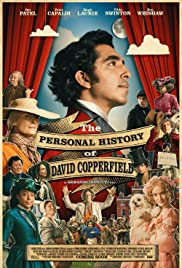






 Movie Reviews from the Dark