Greetings again from the darkness. While you are likely familiar with slapstick comedy, this latest from director Antoine Fuqua could be described as slapstick action. This fits because the implements of destruction include barbed wire, a power drill, a book (hardcover, of course), a nail gun, and even a corkscrew. Such an unusual assortment takes a bit of edge off the the extremely graphic violence. If the kills weren’t so gruesome, we might be tempted to chuckle. The titular character is the MacGuyver of Special Ops.
Writer Richard Wenk adapts the story from the terrific TV series which ran from 1985-89. It starred the late, great Edward Woodward as a classy, sophisticated guy who believed in justice for those who needed help against the odds. For the movie, Denzel Washington (re-teaming with his Training Daydirector) takes over for Mr. Woodward as Robert “Bob” McCall … the seemingly normal guy with extraordinary skills used to balance the scales.
McCall lives a quiet life with OCD tendencies. He is a friendly guy liked by his co-workers at the home improvement box store (imagine Clark Kent working at Home Depot), and even mentors an overweight hispanic young man in his quest to pass the security guard test. McCall is also an insomniac who hangs out after hours reading Hemingway at a local diner, passing along words of hope and wisdom to an underage prostitute (Chloe Grace Moretz). None of these people have any idea of McCall’s previous career with “the company”. Our only glimpse of this is a quick visit to the home of characters from his past, played by Melissa Leo and Bill Pullman.
Our villains here are the Russian mob, and it’s tough to beat that accent for a juicy villain. David Meunier (Johnny Crowder of “Justified” fame) is our first goon, followed up by the slick and menacing Marton Csokas (The Debt) who has an impressive resume of his own. It would have been interesting to have more screen time together for Csokas and Denzel, but we understand why that’s not practical.
Similar to the Bourne movies, the good guy always seems to be a step ahead of the bad, but that has little impact on our ability to find fun in the action. Director Fuqua provides four or five really stylistic shots (including super slo-mo), but also relies on Michael Bay-splosions for one laughable scene at the loading docks. A missed opportunity is the film’s score. We are slammed with a thumping bass line through much of the movie, rather than utilizing the Stuart Copeland theme from the TV series. Expect McCall to arrange the flatware just so, and continue to dish out justice in at least one sequel.
SEE THIS MOVIE IF:you are a fan of action movies and enjoy very creative methods of hand-to-hand combat OR you were a fan of the TV series OR you always wondered if shot glasses or corkscrews had other uses.
SKIP THIS MOVIE IF: graphic gore and violence, even when provided by the always suave and cool Denzel Washington, is not to your taste
Greetings again from the darkness. This classic French film is often referred to as the birth of the heist film. It’s not that it was the first, rather it was groundbreaking in style and approach. Former blacklisted US director Jules Dassin delivers a tense and unique film with terrific atmosphere, blending Film Noir with the French New Wave. The story is based on the novel by Auguste le Breton.
One of the more unusual aspects of the film is that the actual heist is Act II, not Act III – the latter of which actually involves a kidnapping and a quest for vengeance. It’s easy to view the two Ocean’s Eleven films as remakes of this one, and its influence on Stanley Kubrick’s The Killing, as well as Tarantino’s Reservoir Dogs (the table scene), are fun to analyze.
Almost 60 years later, most film classes still discuss the nearly 30 minute heist sequence that involves no dialogue or music (excepting an inadvertent piano key). The teamwork and stress of this sequence is enthralling and worth watching a few times. We somehow find ourselves pulling for these bad guys (criminals, thugs, gangsters, hoods, crooks). I call this the good-bad guy vs bad-bad guy approach.
The good-bad guys are played by Jean Servais (Tony), Carl Michner (Jo), Robert Manuel (Mario), and the director Jules Dussin (Caeser, the Italian safecracker). The bad-bad guys (worthy of hissing) are led by Marcel Lupovici (Grutter) who is simply abusive to everyone.
Paris streets play a huge role, as does the jewelry store set and the simple sound effects that accompany the heist. Also enjoyable is the “casing the place” sequence as the crew plans their process. So many pieces come together to keep this one as a well-deserved entry to the classic film canon.
**NOTE: actress Marie Sabouret who plays gangster moll Mado, died 5 years after filming from leukemia. She was 36.
All of the “trailers” I found online gave away too much (in my opinion), so I have decided not to post any of them.
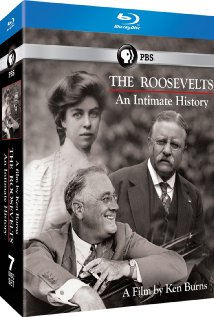
Greetings again from the darkness. Ken Burns is renowned for his documentaries – two of my favorites are Baseball (1994) and Jazz (2001). The power he wields is measured by his ability to get 14 hours of documentary not just researched and filmed, but also broadcast via PBS. Think how many Hollywood producers can’t get the green light for a 90 minute pet project. Mr. Burns is a national treasure who creates national treasures, and his latest is some of his finest work yet.
Focusing on one of the most prominent American family – one that dominated politics and history for years – the stories are presented in chronological order, interconnecting the biographies of Theodore, Franklin and Eleanor with the key events in history that they helped shape. But it’s not all politics, as we also learn about the families and the individual make-up (flaws and all) of the 3 principals. We learn of the Republican Roosevelts of Oyster Bay and the Democrats of Hyde Park.
Mr. Burns has set the bar very high for his productions, yet somehow we still managed to be struck by the photographs, archival footage and insights of these people and the times. The sheer number of previously unseen photographs and footage is staggering. Add to that the commentary from writers and historians, and it’s easy to imagine this being the foundation for a high school or college history course … one that students would actually enjoy.
There are seven parts to the whole, each presented in chronological order:
Pt 1 Get Action 1858-1901. This segment focuses on a young, asthmatic Teddy as he overcompensates for his weakness by charging through every obstacle. We see the photo of young Teddy watching Abe Lincolns funeral procession pass 14th and Broadway. Teddy’s perpetual motion takes him to Harvard and the continued formation of his political views. His famous quote is remembered: “Not all Democrats are horse thieves, but all horse thievesn are democrats.” His way with words seemed to have no end. Teddy’s foundation seems a polar opposite to his 5th cousin Franklin, who is quite pampered as a child. The film displays the torturous February 14 when Teddy experienced the death of both his wife and mother. This segment takes us through the Rough Riders, San Juan Hill and the death of President McKinley.
Pt 2 In The Arena 1901-1910. Theodore Roosevelt takes charge as the youngest ever President and immediately begins to battle corporate greed, push for the Panama Canal, and preserve the American wilderness. We watch as FDR courts and then marries cousin Eleanor. This segment shows Teddy inviting Booker T Washington to dinner at the White House, the first African American to do so. We learn that when TR wasn’t speed-talking, he was speed-reading, taking in a book per day. He also became the first President to leave the country while in office, visiting the Panama Canal work site. At FDR’s wedding, Teddy was the one to give away Eleanor. Upon leaving office, TR takes his African trip with son Kermit.
Pt 3 The Fire of Life 1910-1919. The beginning of WWI and how TR campaigned to get the US to enter the war, while FDR was named Asst Secretary of the Navy, and served in the NY State Senate. The chasm between the Roosevelt clans – Oyster Bay vs Hyde Park – widens, as TR joins the Bull Moose Party, and is actually shot in the chest (and somehow continued giving his speech). TR took his Amazon Rainforest trip with Kermit and was stricken with malaria. It’s also in this segment that we begin to understand the most unusual relationship of FDR and Eleanor. She knew of his fondness for certain other women, and it’s in this time when the marriage transitions into a parnership. It’s also during this time that Theodore, age 60, dies in his sleep.
Pt 4 The Storm 1920-1933. The war ended, women could vote, and prohibition arrived. Woodrow Wilson had a stroke while in office, and it’s during this time that FDR is stricken with polio. We see and hear much of FDR’s struggle with the disease and how he worked to hide it, so as not to be seen as weak or limited. 1929 brought the New Deal speech and Eleanor begins her real politicking.
Pt 5 The Rising road 1933-39. The country is battling the Great Depression, and Eleanor’s actions create some controversy. FDR struggles with how best to deal with Hitler, while a quarter to one-third of the nation is unemployed. George Will’s commentary is especially effective here as he points our the two great crisis facing FDR: the depression and Hitler. The fireside chats (30 in 12 years) connect FDR to the citizenry and go far in establishing trust. It’s in this time that Eleanor’s friendship with a couple of other ladies (including Lorena Hickock) begins the questioning of her sexuality. FDR releases two huge pieces of legislation: The Wagner Act (NLRB, organized labor) and the Social Security Act. He delivers his “Ecomonmic Royalist” speech and talks about this generation’s “renedezvous with destiny“.
Pt 6 The Common Cause 1939-44. The preparation for WWII and the bombing of Pearl Harbor are discussed, but the controversy over the strategy is not really examined. FDR continues his close relationship with Missy (his secretary) and Daisy (his cousin). It’s mentioned that the right people are somehow in place during certain moments, and Churchill and FDR fit the description. Eleanor continues her work for the poor, blue collar and African Americans, while the preparation for war effectively ends the depression.
Pt 7 A Strong and Active Faith 1944-62. The plan for post-war peace is complicated by FDR’s cerebral hemorrhage, and during his record fourth term, he dies at age 63. The last hour or so really gives Eleanor her time in the spotlight and she works for Civil Rights, the UN, and against Joseph McCarthy (“our Gestapo”). We see her become the grand lady of the Democratic Party, and even meet with newly elected John Kennedy, though she did not support him. It took death at age 78 to slow her down.
The insight into the obstacles all 3 Roosevelts overcame is fasincating. We hear recordings of each, and the voice acting fills the gaps – Meryl Streep as Eleanor, Edward Herrmann as FDR, and Paul Giamatti as TR. Peter Coyote does a nice job throughout as the narrator, and numerous other actors are utilized through the production, including the final screen appearance of Eli Wallach. This is an incredible documentary covering some giants of US politics and some of the most historical events.
**NOTE: there are also photos and video of FDR’s speech at Ebbets Field, where he cracks about being a Dodgers fan, but never having attended a game there.
Greetings again from the darkness. Kristen Wiig, Bill Hader, Ty Burrell and Luke Wilson … prepare yourself for 90 minutes of side-splitting laughter! OK, well you can prepare all you want, but you should know that while there are some funny moments, this is one of the bleakest films of the year. Bleak as in achingly painful to watch at times due to the emotional misery most every character experiences.
Hopefully no one stopped reading after “side-splitting laughter” because here is a sampling of thematic elements covered in the film: attempted suicide, suicide of a parent, adultery, sexual abuse of a minor, rampant lying, depression, horrific parenting, drug use, animal cruelty (goldfish).
If Bill Hader and Kristen Wiig of SNL fame don’t spring to mind when considering those elements, please keep an open mind. Both are extremely good (and believable) in their roles as twins estranged for a decade, forced back together after a near tragedy. See, after a miserable childhood, their time apart has prevented both from establishing a strong personal relationship with anyone else. Hader plays a self-professed “gay cliché”, while Wiig is pretending to have the perfect suburban life with her gung-ho, always “up”, good guy husband (Luke Wilson).
The film’s best humor is produced in small moments thanks to the connection between Wiig and Hader. It’s definitely not in the almost shameful attempts at crowd-pleasing offered in the SNL-ish scenes of lip-synching to Starship, and over-indulging on Nitrous Oxide at the dental office.
Real emotional turmoil exists in the scenes between Hader and Ty Burrell, and the unnecessary and inexplicable reunion between Hader, Wiig and their mother (Joanna Gleason). Burrell, known for his outstanding “Modern Family” role, is intriguing as a dramatic actor. Looking forward to more of this from him.
The script, co-written by director Craig Johnson and Mark Heyman, really does capture some poignant and dramatic moments, and certainly benefits from the extremely talented cast. Just don’t expect that side-splitting laughter … unless you are susceptible to lip-synching and/or nitrous oxide farting humor.
watch the trailer (but don’t believe the 50% comedy ratio):
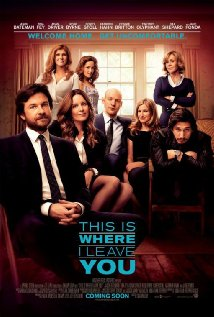
Greetings again from the darkness. After watching this movie, I thought about researching whether the boobs of a 76 year old actress had ever been as front and center as they are in this dramedy from director Shawn Levy – not counting Calendar Girlswhich was for a worthy cause. Luckily I came to my senses, and realized that’s not a topic anyone should google … except maybe a 76 year old man.
Jane Fonda is the actress whose enhanced assets are so prominently featured, and she plays the mother of four adult children brought together to mourn the death of the family patriarch. This is based on the novel by Jonathan Tropper and though it’s watchable enough, it could have benefited from a better script adaptation and a less mainstream comedy director. Mr. Levy provided the popular and entertaining A Night at the Museum, as well as a long list of simple minded movies that didn’t prepare him for the depth of Tropper’s story.
The four “kids” are played by Corey Stoll, Jason Bateman, Tina Fey and Adam Driver. Also joining them under a single roof are Stoll’s desperate-for-a-baby wife Kathryn Hahn, Fey’s two kids and self-professed a-hole husband (Aaron Lazar), and Driver’s engaged-to-be-engaged much older woman played by Connie Britton. If you think that’s an outstanding cast, note that also appearing are Timothy Olyphant (Fey’s brain-damaged former lover), Rose Byrne (she always lusted after Bateman), Dax Shepard (sleeps with Bateman’s wife played by Abigail Spencer), Ben Schwartz as an oddball Jewish rabbi, and Debra Monk (the helpful neighbor and more).
Obviously the issue with so many characters and talented actors is that screen time is limited. Somehow each of these have one key moment in the film, and that may be the biggest issue. Some of these we want to know more about (Olyphant, Byrne, Brittain), while others could have been written out of the script altogether (Lazar, Schwartz, Shepard) and the movie wouldn’t have suffered, and might have improved.
Most of the story revolves around Bateman and his situation – crumbled marriage, lost job, dead father, plus even more. Going through that and facing his sit-com worthy dysfunctional family provides an unending stream of none-too-subtle moments: a basement sleeper/sofa that won’t fold out, roof top talks with his bossypants sister, and even fisticuffs inside the family and out.
This is another in the Suburban-angst sub-genre, and the numerous contrived scenes and formulaic sequences are salvaged only by the talented casts ability to squeeze the moment from the next one-liner. There is so much rage and resentment in this family that we viewers are willing to find humor in the toddler toting his portable potty with him everywhere, or even Bateman taking the expected prat fall in an ice rink. There is little edge to this material, but it’s not difficult to glimpse how the right director could have approached the genius of The Royal Tenenbaums or the original Death at a Funeral, rather than a generic blend of Garden State and August:Osage County.
Britton, Byrne and Batemen all have their moments, and the movie is certainly watchable … though it could have been exceptional as either a straight out comedy or an indie-type drama. No need to email me if you come up with additional films featuring 76 year old boobs.
SEE THIS MOVIE IF:you are up for the challenge of keeping track of the seemingly endless number of characters who have “a moment” during this one
SKIP THIS MOVIE IF:you share the sentiment with me and Jason Bateman’s character that there is no need to focus on Jane Fonda’s “bionic breasts”
Greetings again from the darkness. It’s tough and probably unfair to write about a film project when key pieces remain unseen. Writer/Director Ned Benson‘s brilliant first take on the story was released at Toronto Film Festival in two perspectives: “Him” and “Her“. A massive re-edit produced “Them“, this version for theatrical release. As you might expect, knowledge that more exists … and in probably a more effective story telling format … renders us a bit frustrated with the blended version. Still, there is plenty here to warrant a look.
This viewer’s frustration stems mostly from the long and winding road we travel understanding something tragic has caused the split between El (the titular Eleanor Rigby) and Conor, but only being teased with details. We are offered a brief glimpse of their happy times, but never get to know them as a happy couple. Instead, Conor is shown trying to re-assemble the pieces, while El tries to move on to a different puzzle altogether.
While the story unfolds in teeth-grinding fashion, it doesn’t offset the powerful emotion and personal intensity brought to the screen by both James McAvoy (Conor) and Jessica Chastain (El). Mr. McAvoy has quietly evolved into one of the more interesting actors working, while Ms. Chastain proves herself to be among the best each time she crawls inside a role and makes it her own. We feel for each of them, before we even really know them at all.
Other superb work comes from a sterling supporting cast that includes screen vets William Hurt, Isabelle Huppert, Viola Davis and Ciaran Hinds; as well as Bill Hader, Jess Weixler and Nina Arianda. That’s seven characters (plus the two leads) of which we yearn to learn more. Ms. Davis is especially effective in her all too brief appearance as a professor cutting El very little slack. And Mr. Hurt delivers a terrific monologue that strikes a chord.
So all of these wonderful pieces make for an spell-binding what-if that possibly gets answered in the dual-perspective version. The coldness and lack of understanding in the first 45 minutes can’t offset the emotion and sadness that each character feels. Rumor has it that “Him” and “Her” will get their release this year, and if so, I’ll be there in an attempt to complete both puzzles.
Greetings again from the darkness. Welcome to the annual off-season gift from Liam Neeson. Seemingly every year, he provides us with a February or September release that requires his particular set of tough guy skills. This time, he plays Matthew Scudder – of the popular Lawrence Block crime novel series (17 books).
Director Scott Frank (The Lookout) works to create a 1970’s feel, although the film opens up as a flashback to 1991, and quickly fast forwards to 1999 NYC. There are no shortage of clichés here, yet nothing is over the top; and the bleak, somber, usually rainy setting establishes the tone that fits with “unlicensed” private detective Scudder’s preferred method of living and detecting.
Of course, Scudder is a recovering alcoholic and former cop, with a tragic, careless incident on his record and conscience. The film is so ever-bleak, that the moments of humor … though often awkward and out of place … are quite welcome. The only shining light of innocence comes courtesy of a sharp homeless kid named TJ, played by Brian “Astro” Bradley. TJ is a Philip Marlowe wannabe, and quickly assumes the role of Scudder’s partner/intern/IT Department.
Bad guys are everywhere. Even the serial killers (David Harbour, Adam David Thompson) target the family members of criminals, so as to minimize the involvement of the proper authorities. As an improper authority, we can’t ask for better than Liam Neeson. He works for “favors”, not a paycheck. It should also be noted that this time, he is more likely to outwit the bad guys, than kick their butts.
Other support work comes courtesy of Dan Stephens (“Downton Abbey“), Boyd Holbrook, and creepy cemetery groundskeeper (is there another type?) Olafur Darri Olafsson, who creates yet another memorable character with limited screen time (see “True Detective“).
Mr. Neeson gets plenty of telephone action, which plays right into the strength of Taken, and it’s pretty amazing how much WALKING he does throughout the story. He looks great walking in his duster, but it seems a bicycle would be more efficient … though admittedly, much less intimidating. As a whole, though the movie is probably a bit familiar, it’s the little details and the powerful Liam Neeson that makes it a welcome late summer release.
**NOTE: the character of Matthew Scudder previously appeared on screen in the 1986 Hal Ashby film 8 Million Ways to Die, and was played by Jeff Bridges.
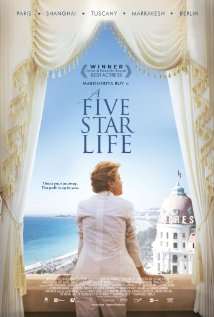
Greetings again from the darkness. Italian movie star Margherita Buy plays Irene, a luxury hotel inspector who travels the world testing picture frames for dust, bed covers for wrinkles, and hotel staff for smiles. Directed and co-written by Maria Sole Tognazzi, the film left me baffled as to why such a talented filmmaker presented such a dead-end trip for the viewer.
Within the first five minutes, we fully “get” Irene and we understand exactly where the movie is headed, provided it follows all overused story clichés (it does). See, Irene has things backwards. She lives in 5 star hotels and takes her brief respites with her nieces, her ex, and her sister. Most of us live with our families and vacation at resorts.
The world class hotels are breathtaking to see, but mostly the movie drags while we wait for Irene’s comeuppance. One segment of the story provides a spark of hope. Lesley Manville (recognizable from numerous Mike Leigh films) appears as a feminist author who lives life to the fullest and preaches realities that strike a chord with Irene. Unfortunately, this plot line is short-lived and the most interesting character disappears as quickly as she arrived.
Irene is single, but maintains a very close relationship with her ex (a very good Stefano Accorsi). Irene has no kids, but periodically spends time with her young nieces. Irene has no close friends, but spends time with her family-centric sister (a very interesting Fabrizia Sacchi). She does all of this without actually committing to living a real life, as she quickly escapes on her next mystery guest mission.
The film begs for comparison to the superior Up in the Air, which allowed for secondary character development … an element only teased in this film. Ms. Buy is very talented, but the script just makes this seem like a luke warm room service meal. We already know that there is no comparison in a dream job versus a dream life.
**NOTE: The Italian title is “Viaggio solo”, which translates to I Travel Alone. There is no good reason for changing the title for its United States release … probably decided by a marketing committee.
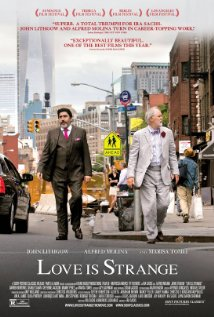
Greetings again from the darkness. In a remarkable opening 6 to 8 minutes, we see John Lithgow and Alfred Molina prepare for, execute, and celebrate their official marriage after almost 40 years together. During this sequence, we quickly understand that Ben (Lithgow) is the emotional one, and George (Molina) is the pragmatic, balanced one. The brief ceremony is filled with love, admiration and happiness, and leaves us with no doubt that these two are dedicated to each other.
Director Ira Sachs (Married Life, 2007) also co-wrote the script with Mauricio Zacharias, and the film excels while Lithgow and Molina are on screen together. It comes across as a contemporary version of the 1937 Leo McCarey film Make Way For Tomorrow (with Beulah Bondi) and highlights the obstacles faced by an elderly couple who face financial hardships, New York real estate misery, and the not-so-welcome generosity of friends and family.
The gay component is not played up, rather the story is told in straight-forward manner as the couple is forced to live apart, and deals with loneliness and unease as they each feel out of place living in a party house with friends (Molina) and sharing a bunk bed with a typically awkward teenage boy played by Charlie Tahan. The boy’s parents are Marisa Tomei and Darren Burrows, who face their own marriage and parental issues.
The happiness of the opening wedding ceremony quickly dissipates into real life misery for all characters. The only happy people are the grown men playing a Game of Thrones board game. Literally everyone else is unhappy, or at least disinterested.
Although conflict is ever-present, the Catholic Church is the closest to a real villain. John Curran plays a Priest in the terrific scene in which Molina is fired (because of his wedding) from his Catholic School teaching job. The poor town of Poughkeepsie takes a couple of shots as well, but mostly it’s the pent-up frustrations of Tomei, the passive-aggressive approach of a few other characters, and the crazy teenage mood swings of Tahan’s character that keep Ben, George, and we as viewers quite uncomfortable. Instead, the joy comes from the subtle moments courtesy of the two leads. See this one for the performances of Lithgow and Molina, and for the beautiful Chopin piano throughout.
***NOTE: this makes a fine movie, but it’s easy to imagine it as a much more effective live production on stage
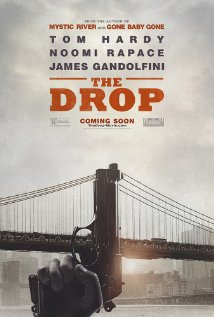
Greetings again from the darkness. Much of what I write here contradicts my long maintained stance that a strong story/script is the basis for any movie worth it’s proverbial weight. This neighborhood crime drama does not spin a twisty plot. Nor does it flash fascinating and colorful mobsters. Instead, it’s the acting that elevates the film to the point of neo-noir must see.
By now you have heard that this is James Gandolfini’s final movie. He passed away while director Michael Roskam (Bullhead) was in editing mode. Gandolfini plays Cousin Marv, a would-be wise-guy who never-really-was. Now he is bitter and desperate, in a beaten down kind of way. As a farewell, Gandolfini leaves us a final reminder of what a powerful screen presence he was, and what a terrific feel for character and scene he possessed.
Beyond Gandolfini, the real attraction and the main reason to see the film is the outstanding and mesmerizing performance of Tom Hardy. In many ways, his bartender Bob is the polar opposite of his infamous Bane from The Dark Knight Rises. Quasi-effeminate in his vocal deliverings, and moving with a slow, stilted shuffle, Bob is one of the least imposing guys. The kind that you would likely look right through. At least that’s the first impression. Hardy is so nuanced, we aren’t even certain when his character transitions and exposes his true make-up. When he does, it’s the highlight of the film.
Noomi Rapace, in yet another intriguing turn, plays local waitress Nadia, who befriends Bob after he rescues an abused puppy. Since the movie is based on Dennis Lehane’s short story “Animal Rescue”, it’s no surprise that the main characters each share a need to be rescued. Nadia’s ex-boyfriend is played to full psycho and creepy effect by Matthias Schoenaerts (so great in Rust and Bone, 2012). The scenes between Schoenaerts and Hardy show the movie at its tension-filled best.
As with most neighborhood crime dramas, there are many secrets, local legends, and allegiances in doubt. The players are weary and dream of either better times or ending the misery. Mr. Lehane wrote the novels that led to some other fine films: Mystic River, Gone Baby Gone, and Shutter Island. He has a feel for ultra-realistic characters, and his material depends on extraordinary acting for fulfillment. This slow boil benefits from some of the best acting we could ask for.
**NOTE: all due respect to the late, great James Gandolfini … we get a glimpse of him “running” from a crime scene, and his athletic prowess does detract from his otherwise imposing screen presence.
**NOTE: how good must this be if I went the entire review without mentioning Ann Dowd or John Ortiz … two excellent actors who play small, vital roles?
SEE THIS MOVIE IF: you need further proof that Tom Hardy is one of the more talented actors working today OR you bask in the atmospheric neighborhood crime drama genre (this is a good one) OR you just want to see a really cute pit bull puppy.
SKIP THIS MOVIE IF: like me, you find it impossible to “unsee” a glimpse of James Gandolfini running on screen, in spite of his towering presence and acting ability.
 Greetings again from the darkness. While you are likely familiar with slapstick comedy, this latest from director Antoine Fuqua could be described as slapstick action. This fits because the implements of destruction include barbed wire, a power drill, a book (hardcover, of course), a nail gun, and even a corkscrew. Such an unusual assortment takes a bit of edge off the the extremely graphic violence. If the kills weren’t so gruesome, we might be tempted to chuckle. The titular character is the MacGuyver of Special Ops.


 Posted by David Ferguson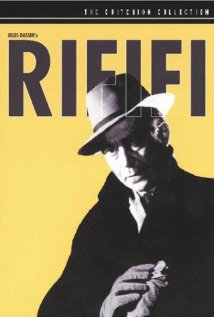



 Movie Reviews from the Dark