Greetings again from the darkness. A fun-filled film meant only to entertain is always welcome. Traditionally these show up during the summer months, but timing this one closer to Halloween makes complete sense. Written by Bryan Schulz (the grandson of the late Peanuts creator Charles Schulz) and Cornelius Uliano (his collaborator on THE PEANUTS MOVIE, 2015), the film is directed by David Henrie, best known for his role in “How I Met Your Mother”. It’s his first feature film gaining distribution, and it doesn’t disappoint.
It’s 1997 on Martha’s Vineyard (although it’s filmed in Southport, North Carolina) and budding journalist Noah (Mason Thames, THE BLACK PHONE, 2021) is desperately trying to follow in his recently deceased father’s footsteps. However, the local newspaper editor (Kevin James) wants nothing to do with the kid’s ideas. Noah suspects an evil presence in town at just about the same time Miss Halverson (Lorraine Bracco, “The Sopranos”) arrives for an extended stay at the B&B run by Noah’s mother (Nora Zehetner, BRICK, 2005).
Not to give anything away, but witchy things start happening. Noah’s baseball teammate Ben (Noah Cottrell) is night-swimming with a lady friend (Lilah Pate), and a fright leaves him “with the lights on and no one home” (as it’s described). It’s summertime, so baseball is a recurring theme for Noah and his friends Eugene (Julian Lerner, the new “The Wonder Years”) and Sammy (Abby James Witherspoon), with familiar face Patrick Renna (THE SANDLOT) as the league umpire. The three friends begin their own investigation, but soon enough, Noah is on his own … at least until he joins forces with retired detective Gene (2-time Oscar winner Mel Gibson). Gene has long been the subject of local rumors and mostly keeps to himself; but Noah’s work piques his interest, and the two share a form of grief.
Bits and pieces of IT (2017), THE GOONIES (1995), and more recently, “Stranger Things” all play a role, and we have references to Mulder and Scully from “The X-Files”, as well as a nostalgic feel that gives this more the feel of a childhood adventure than a true horror story. However, the creep factor is strong enough to earn the PG-13 rating. It should also be noted that Mel Gibson has been ‘canceled’ in some circles, yet he brings the necessary gravitas to elevate the film. It also seems safe to predict that young Mason Thames has a nice acting career ahead of him. Stories revolving around neighborhood legends and myths are quite common, and this one chooses to blend the supernatural with local police cases. So, if you are up for some cinematic fun times around Halloween, director David Henrie is all about treats, not tricks.
Greetings again from the darkness. Once upon a time … in 1880 (or so) … writer Carlo Collodi (aka Lorenzini) had his original “Story of a Marionette” published. The story of his character Pinocchio has since been told to countless children through just about every possible form of media. The classic Disney animated feature film from 1940 won two Oscars (song, score) and the recent 2019 Italian film version received two Oscar nominations. So why is it that we continue to find new ways to tell the story? Well, because the messages are crucial for kids to understand: pay attention to your conscience, beware of temptations, and decisions have consequences. Of course, anytime a filmmaker re-imagines a classic, folks will line up to shout about how unnecessary it is. However, with a kids’ movie, we must recognize that expectations and tastes have shifted. It’s a bit more challenging to get today’s kids to pay attention for 90 minutes.
This version comes to us from Disney as a Live Action film enhanced with computer animation. No, Pinocchio isn’t played by a real person, and in fact, there are only a few real actors on screen – the most important being Oscar winner Tom Hanks as Geppetto. However, the computer-generated Pinocchio (looking almost identical to the 1940 animated version) interacts with both human actors and other computer-generated characters, almost always in a seamless manner.
The film opens as our narrator (Jiminy Cricket) explains that we are in for a “humdinger of a tale.” We soon see low-talking Geppetto (Oscar winner Tom Hanks) in his shop of ‘Toys, Clocks, and Oddments.” He’s busy crafting, and talking to, a wooden puppet meant to fill the void that has left Geppetto a grieving man. His fantastical wall of cuckoo clocks features beloved Disney characters, including the instantly recognizable Jessica Rabbit from WHO FRAMED ROGER RABBIT (1988). That film, as well as this one, were directed by Robert Zemeckis (an Oscar winner for FORREST GUMP, 1994). Mr. Zemeckis was also one of the screenwriters along with Chris Weitz and Simon Farnaby.
Most everyone on the planet knows the story of Pinocchio. The Blue Fairy (Cynthia Erivo) tasks Jiminy Cricket (voiced perfectly by Joseph Gordon-Levitt) to be the conscience of the ‘almost real boy’ and sets the ground rules for becoming real: Pinocchio must be brave, truthful, and unselfish. As with all of us, Pinocchio immediately faces temptation and danger. His comes in the forms of Stromboli, Pleasure Island, and ultimately, Monstro the giant sea creature. Tension is elevated when Geppetto and Pinocchio are separated, and a great adventure follows. Much of this follows the original storyline, with contemporary flourishes included … not all of which are positive additions.
Benjamin Evans Ainsworth (TV mini-series “The Haunting of Bly Manor”) voices Pinocchio, and of course, Mr. Hanks is spot on as Geppetto. Other voice and live acting is delivered by Angus Wright, Keegan-Michael Key, Kyanne Lamaya, Luke Evans (as The Coachman), and Lorraine Bracco (voicing new character Sofia the Seagull). Alan Silvestri composed the film’s score and Don Burgess was the Director of Photography. Ms. Erivo serves up a “big” version of “When You Wish Upon a Star” in a key most kids won’t come close to, but other than a few moments too dark for the youngest of kids, this should make for enjoyable family viewing … which may not be the case when Guillermo del Toro releases his stop-motion animated version later this year for Netflix.
Greetings again from the darkness. All it took was one look at the cast for me to agree to watch and review this mob film. It’s the first feature film from writer-director Jimmy Giannopoulos, and he co-wrote the screenplay with DiomedesRaul Bermudez and Shiloh Fernandez (who also stars). Most will agree the world never really needs another mob movie, but gosh, when they work, they are quite fun to watch. Filmmakers Guy Ritchie and Martin Scorsese have figured this out.
And then there are those that try hard, but for whatever reason, it doesn’t quite click. Sometimes too many characters are crammed in to execute (pun intended) as many familiar mob movie tropes as possible. Director Giannopoulos opens his film with a flashback scene from 10 years ago. The rest of the movie takes place in one evening – one that goes better for some than others. Gio (co-writer Shiloh Fernandez) is dressed in his suit as this is the night “the family” celebrates the death of his father 10 years prior. Gio’s mother (Lorraine Bracco) has baked the titular cake, as she has done each of the previous years. She tells Gio she does this “for your father.” Gio then sets out to walk the streets of Brooklyn in order to bring the cake to his Uncle Angelo’s house for the celebration.
Gio is good-natured and prefers talking and smiling his way through confrontations, rather than the violent tendencies of those around him. Most of the movie revolves around his interactions along the way – with some friendlies and some not-so-friendlies. It seems his chocolate allergy comes up in conversation enough times that we know it will come into play at some point. If it’s not his food allergy, then it’s the whereabouts of his Cousin Leo (Emery Cohen) that makes up most of the conversations we hear. Leo is recently out of prison, but hasn’t contacted his mother yet … a real no-no in the family. Leo had previously crossed a Puerto Rican gang and now he’s missing – hence all the questions.
If you come for the story, you’ll likely be disappointed. This is more a series of vignettes featuring familiar faces such as Luis Guzman as a concerned Uber driver, William Fichtner as a man with a violent nature, and John Magaro, Aldis Hodge, Ashley Benson, Vincent Pastore (of course), Penn Badgley, Jeremy Allen White, and even Marla Maples (yes, the former Mrs. Trump). Once at the party, Gio meets with an ailing Uncle Carmine played by Paul Sorvino, and best of all, Uncle Angelo played by Val Kilmer. If you have not heard, Mr. Kilmer had throat cancer and now speaks through a voice box. Subtitles are utilized to assist viewers. Watching him act with his eyes and body language is a pleasure, and it’s great to have him back on the big screen. The final big name to appear in the film is Ewan McGregor as Father Kelly, who has an early scene with David Mazouz (“Gotham”) as young Gio, and a later scene with modern day Gio and his mother.
We follow Gio in his strange, messy night … think AFTER HOURS (1985) … only mob-related, and lacking most of the dark comedic touches. Other than Fernandez, most of the actors are only in a scene or two, so there’s a novelty effect that doesn’t seem quite right for this genre. Paul Sorvino has only a solitary two-word line of dialogue that starts with an F and ends with you. Still a well-executed crescendo of death and getting to see so many familiar faces in one film makes it worth sticking till the end.
“As far back as I can remember, I always wanted to be a gangster.” That’s how Henry Hill introduces himself. He is the narrator and key figure in director Martin Scorcese’s 1990 masterpiece. What follows Mr. Hill’s intro is the film version of Nicholas Pileggi’s non-fiction book, Wiseguy: Life in the Mafia Family (published 1986). Every so often the perfect match of writer, director and cast occurs, and Goodfellas is one of those rare treats.
Viewing a 35mm print at the historic Texas Theatre just seemed apropo. Knowing that this is the realized vision of Mr. Scorcese and his long time editor, Thelma Schoonmaker, caused the numerous VHS and DVD viewings over the years to simply fade away. The silver screen works wonders for a film with such “big” characters, such startling violence, and such a perfectly inter-woven soundtrack.
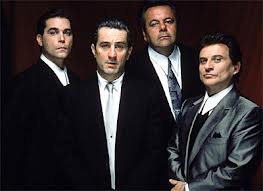
Ray Liotta plays Henry Hill, the real life gangster who ended up snitching on the mob and entering the Federal Witness Protection program. This should not be considered a spoiler because Hill’s story is known worldwide and, well, the movie is 23 years old! Liotta was a relative newcomer when he exploded onto the screen in Jonathan Demme’s Something Wildin 1986. His manic performance in that movie led Scorcese to cast him as Henry Hill. The real life Hill spoke at length with Pileggi for the novel, and the result is a very detailed and nuanced look into the life inside a New York crime family.
The fascinating aspects are too numerous to touch on them all, but there are some that really stood out in this latest viewing. First, Lorraine Bracco plays Hill’s wife Karen. Watching the development of her character is pure gold on screen. She starts out as a fresh-faced blind date, who pulls no punches in putting Hill in his place after he stands her up … and right in front of his fellow gangsters, no less. Watching her fall for “the life” is like watching someone get gradually intoxicated. She seems aware but numb to the rational side of her brain. As Karen develops, she battles through some really tough situations, continues to be Hill’s biggest supporter, and finally his cohort in crime near the end. She is one of the most interesting and best developed female characters from any gangster movie.
Another really fascinating character to follow is that of Tommy Devito played by Joe Pesci. Tommy is a tough guy born into the life, but the prime example of just never being satisfied. His short fuse temper is responsible for some of the most memorable scenes in the movie. The “funny like a clown” scene and the fallout from “go home and get your shinebox” are two of the more frightening sequences ever seen on screen, and are perfect examples of what a loose cannon Tommy is. This character is based on the real life Tommy “Two Gun” DeSimone, muscle for the Lucchese crime family.
In addition to Karen, Henry and Tommy, the other main character is Jimmy Conway, played by Robert DeNiro. Conway is based on the real life Jimmy “The Gent” Burke, who was supposedly the mastermind behind the infamous Lufthansa heist depicted in the movie. The Conway character perfectly represents paranoia and greed, while hiding behind the mob loyalty pledge. DeNiro never once overacts here, but his Conway dominates the screen despite the strong presence of Liotta and Pesci … and even Paul Sorvino, who plays mob boss Paulie. Paulie is based on Paul Vario, the head of the Lucchese crime family. Sorvino plays him as quietly powerful and a guy with a phone phobia (for good reason). Sorvino’s Paulie is the centerpiece of the mob and is totally believable as a guy you better not cross.
One of the more memorable scenes features Jimmy, Henry and Tommy stopping off at Tommy’s mother house to pick up a shovel … and a large, useful knife. While there, Tommy’s mother (played by Catherine Scorcese, Martin’s mother) not only makes them a huge 3 am Italian meal, but also shows off some of her artwork, and even tells a joke!
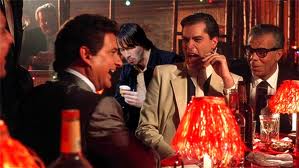
What’s really fun to watch as the film progresses is the change of pace and camera work. Watching young Henry earn his stripes is treated with a light, almost comical touch. As he becomes fully entrenched, we see a young man enjoying the power and respect of his position. This is crystallized by Scorcese’s infamous long-tracking shot through the back entrance and kitchen of the Copacabana as Henry and Karen end up front row by the stage. The downward spiral is much more frenetic with fast cuts and a desperate feel. Scorcese helps us feel the drug-induced paranoia that dominates Henry.
David Chase has stated that Goodfellas had quite an impact and inspired him to create “The Sopranos”, and the marks are quite clear. There is even a significant crossover in the cast as both feature Frank Vincent, Tony Sirico, Frank Pellegrino, Michael Imperioli and, of course, Lorraine Bracco (who was Tony Soprano’s psychiatrist).
Goodfellas was nominated for six Academy Awards, and Joe Pesci was the only winner (Best Supporting Actor). It lost out in the Best Picture category to Dances with Wolves. Scorcese has since directed two other critically acclaimed gangster films: Casino (1995, from another Nicholas Pileggi book), and The Departed(2006, which won Scorcese his first Oscar and also won Best Picture). You might also like to know that Pileggi is the creator of “Vegas”, the new TV show starring Dennis Quaid and Michael Chiklis. The show is about the mob’s influence in the early “wild west” days of Las Vegas.
For years, movie lovers have been debating whether The Godfatheror Goodfellas is the best gangster film. As much as I love debate, I see no reason to choose … they are both exquisite filmmaking, though quite different in style. Both films have provided us direction in life. The Godfatherinformed us that “It’s not personal, Sonny. It’s strictly business”. Goodfellas counseled us “Never rat on your friends, and always keep your mouth shut.” Far be it from me to question the source of good advice!
***PROFANITY WARNING*** This is the unedited “funny like a clown scene” and it’s definitely NSFW!!!
 Greetings again from the darkness. A fun-filled film meant only to entertain is always welcome. Traditionally these show up during the summer months, but timing this one closer to Halloween makes complete sense. Written by Bryan Schulz (the grandson of the late Peanuts creator Charles Schulz) and Cornelius Uliano (his collaborator on THE PEANUTS MOVIE, 2015), the film is directed by David Henrie, best known for his role in “How I Met Your Mother”. It’s his first feature film gaining distribution, and it doesn’t disappoint.


 Posted by David Ferguson
 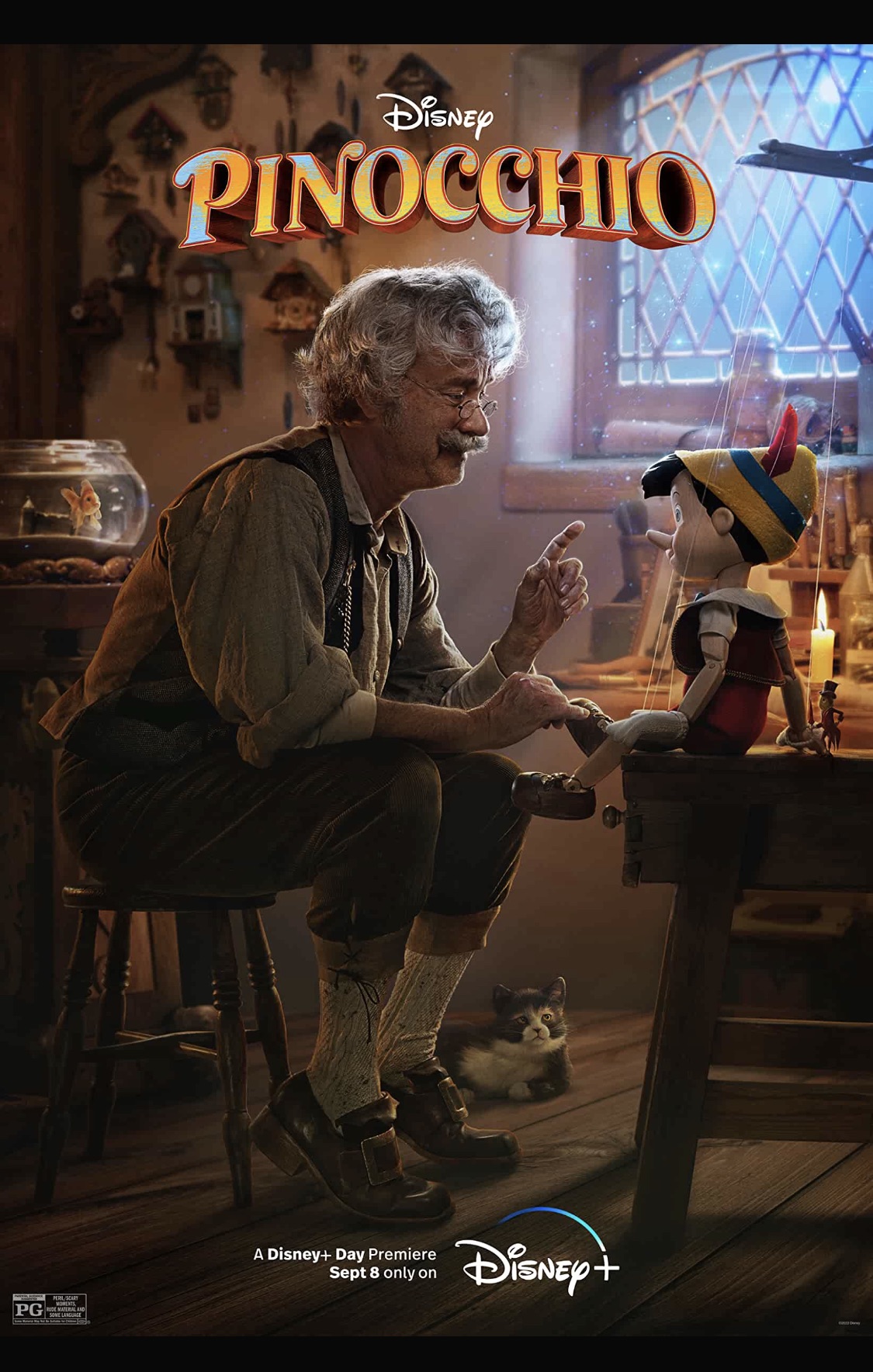 Greetings again from the darkness. Once upon a time … in 1880 (or so) … writer Carlo Collodi (aka Lorenzini) had his original “Story of a Marionette” published. The story of his character Pinocchio has since been told to countless children through just about every possible form of media. The classic Disney animated feature film from 1940 won two Oscars (song, score) and the recent 2019 Italian film version received two Oscar nominations. So why is it that we continue to find new ways to tell the story? Well, because the messages are crucial for kids to understand: pay attention to your conscience, beware of temptations, and decisions have consequences. Of course, anytime a filmmaker re-imagines a classic, folks will line up to shout about how unnecessary it is. However, with a kids’ movie, we must recognize that expectations and tastes have shifted. It’s a bit more challenging to get today’s kids to pay attention for 90 minutes.
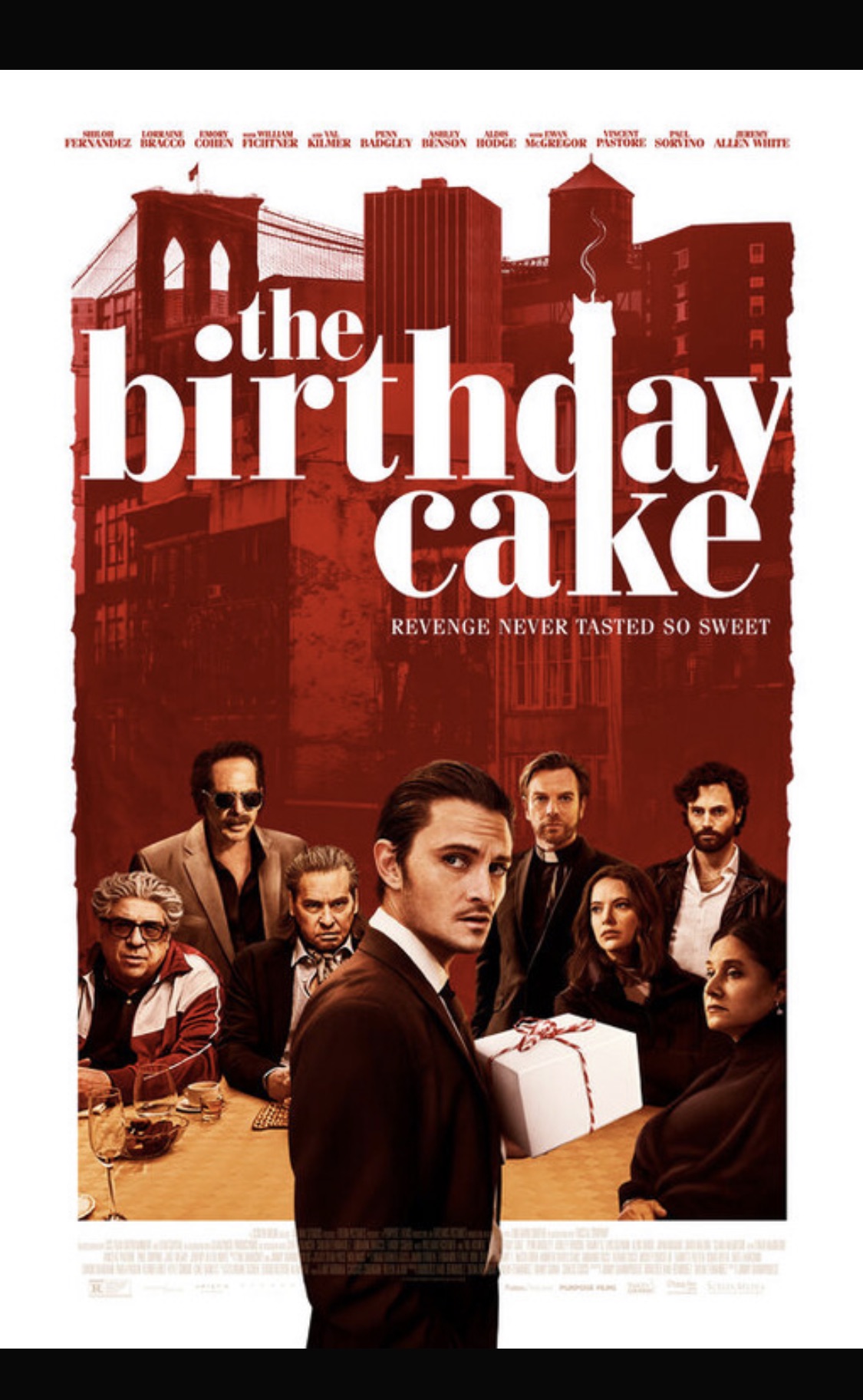 Greetings again from the darkness. All it took was one look at the cast for me to agree to watch and review this mob film. It’s the first feature film from writer-director Jimmy Giannopoulos, and he co-wrote the screenplay with Diomedes Raul Bermudez and Shiloh Fernandez (who also stars). Most will agree the world never really needs another mob movie, but gosh, when they work, they are quite fun to watch. Filmmakers Guy Ritchie and Martin Scorsese have figured this out.


 Movie Reviews from the Dark