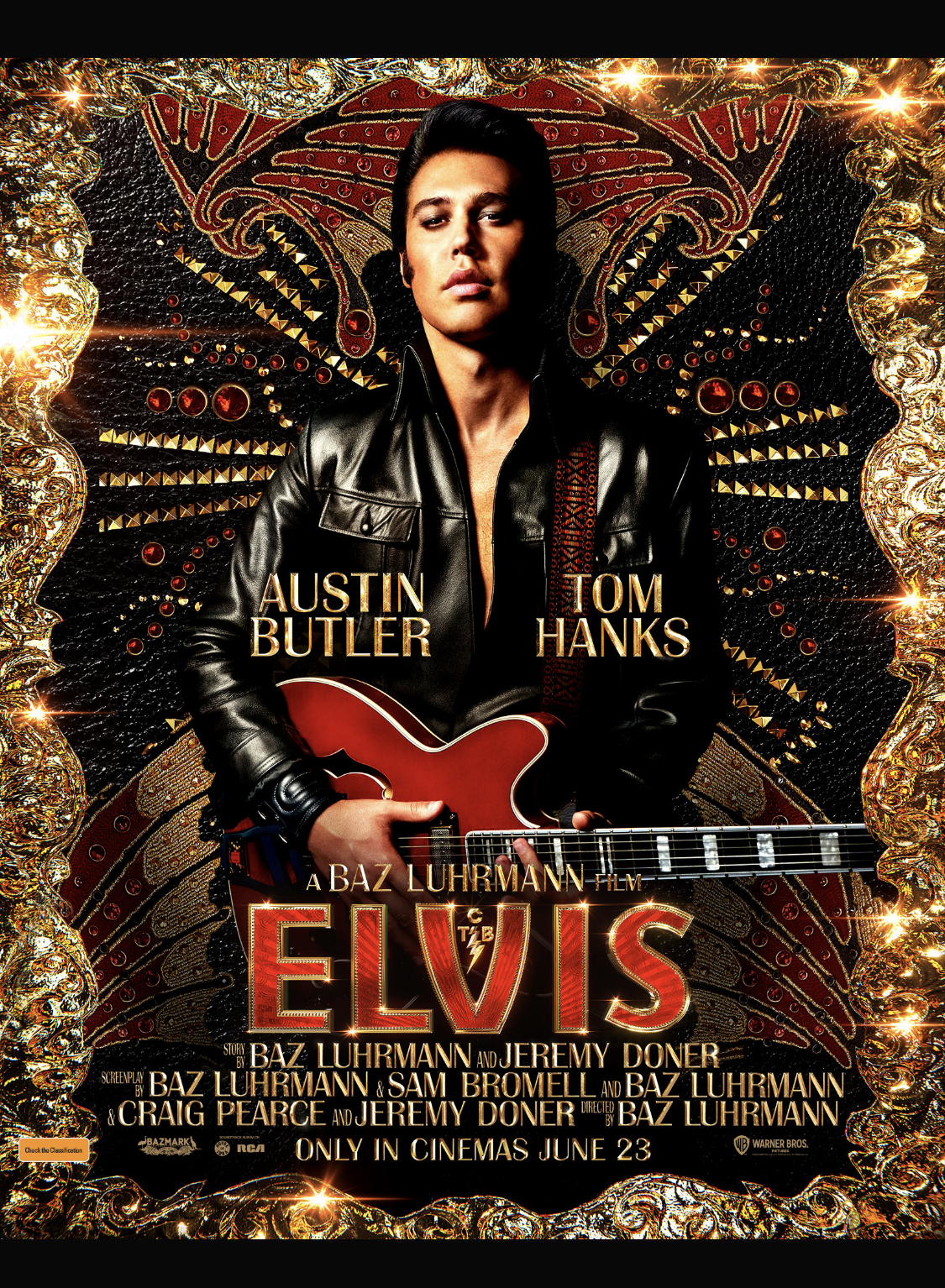
 Greetings again from the darkness. I’m one who grew up spinning my mother’s Elvis 45s and LPs for hours on end. Long before I ever saw one of his movies, I had memorized and mimicked the vocals and stylings of his early recordings. For me, the love of his music was ingrained before any understanding of the cultural influence and impact that had occurred years prior. This background undoubtedly played a significant role in my enjoyment of this film. Many will find bashing this movie to be easy and justified, and I do understand. There are those who view Elvis Presley as little more than a punchline – a drug addicted fat guy chomping on peanut butter and banana sandwiches and forgetting lyrics on stage. Then there are those who view writer-director Baz Luhrmann (THE GREAT GATSBY, MOULIN ROUGE) as a cinematic trickster more committed to flashy visuals than facts and story. For me, the visuals and music of this spectacle were driven by a fully committed actor and a filmmaker serving up a tribute to a cultural icon.
Luhrmann co-wrote the script with Sam Bromell and Craig Pearce (a frequent Luhrman collaborator), and their approach seems three-pronged: the background history and influences of Elvis’ music, the “caught-in-a-trap” life he led, and the force that was Colonel Tom Parker (Elvis’ manager). In fact, much of the story is told from the tainted perspective of an elderly Parker, who is in poor health and near death. In Parker’s mind, he is the ‘hero’ who delivered Elvis to the world, and not the evil huckster who rode his meal-ticket into the ground, while severely limiting artistic opportunities like serious movie roles and international tours.
Playing Colonel Tom Parker, buried beneath a fat suit and facial prosthetics, is Oscar winner Tom Hanks. Further distractions come courtesy of the accent, which is actually pretty close to Parker’s speech pattern. We see Parker’s carnival background and hustler mentality, and watch as he first drools over Elvis along with the teenage girls in the Louisiana Hayride audience … although while the girls enjoy the sexuality, Parker sees nothing but dollar signs. It’s atop a Ferris wheel that Parker entices Elvis with dreams of stardom and wish fulfillment. Elvis is played by Austin Butler (Tex Watson in Tarantino’s ONCE UPON A TIME … IN HOLLYWOOD), and Butler perfectly captures Elvis’ early innocence and naivety, as well as the immense physicality of those early stage performances that sent girls (and some boys) into a tizzy.
Luhrmann takes us back to Presley’s childhood in poverty while living in Tupelo, Mississippi, and it’s here as a young boy wearing a Captain Marvel Jr logo (played by Chaydon Jay) where he is first moved by the gospel music from inside the black church. In fact, Luhrmann makes a point throughout the film to connect Elvis to the music roots of blacks – gospel, blues, R&B. He later befriends BB King (Kelvin Harrison Jr), and is awed by Little Richard (Alton Mason), Big Mama Thornton (Shonka Dukureh), and a stunning Sister Rosetta Tharpe (Yola). This is crucial as Luhrmann is aware of the ’cultural appropriation’ talk associated with Elvis these days, and how the singer absorbed the music that moved him and presented it to the wider audiences that had been previously untouchable by black artists. The influences are beyond debate just as the opening of doors was welcome.
Elvis’ path from Beale Street to Sun Records to RCA is tracked. The Sam Phillips and Sun Records connection is shown only briefly, but Phillips (Josh McConville) is acknowledged for releasing Elvis (driving his Crown Electric truck) so that he could sign with Parker. It was a remarkably standup thing to do and a familiar situation that has resulted in many court battles over the years for other artists and agents. We get a glimpse at Elvis’ extremely close bond with his mother Gladys (Helen Thompson), whose faith and heavy drinking are both on display. We can see the pride Elvis carries as he shows her Graceland for the first time. Richard Roxburgh plays Elvis’ father Vernon, and as time goes on, he’s not portrayed in a flattering light – seemingly more interested in money than in doing right by his son.
Elvis enlisting in the Army is viewed as a necessary public relations step due to the outcry from religious conservatives over his onstage movements clearly sponsored by the devil himself. We see one scene of Elvis courting Priscilla (Olivia DeJonge), but she’s only described as a teenager, so Luhrmann has chosen to gloss over the age difference and the unusual circumstances of those years between meeting and marrying. Also receiving the ‘glossed over’ treatment is Elvis’ movie career. It’s handled via montage with Austin Butler’s face superimposed into actual clips of the films. Another element that the film quickly skips through is the “Memphis Mafia”, Elvis’ entourage of assistants and hangers-on. They are mostly shown here as background characters, and some of these guys went on to write ‘tell-all’ books to line their pockets after Elvis died. It turns out the Elvis’ loyalty to them was not reciprocated once the gravy train ended.
Colonel Tom Parker was neither a Colonel nor a Parker. He was born Andreas van Kujik in The Netherlands and emigrated to the United States in order to pursue the American Dream and boat loads of gambling debt. Supposedly he treated Elvis pretty well, but it’s frustrating to know that so many business decisions were based on Parker’s personal needs rather than Elvis’ artistic development. As you would expect, Tom Hanks handles the role of ‘villain’ and Snowman quite well.
Austin Butler portrays Elvis from the early 1950’s to the mid-1970’s. It’s a terrific performance and one worthy of great admiration. Butler immersed himself in Elvis and it shows, perhaps never better than the infamous 1968 Comeback special. Black leather in the round, rocking to his hits, was a smash in TV ratings, and re-established Elvis as the star he was. The special also features Elvis in white suit belting out “If I Can Dream”, and Butler nails the emotion-filled performance. I consider this (Elvis’ actual song) one of the all-time most memorable rock/pop moments alongside Bill Haley and the Comets releasing “(We’re Gonna) Rock Around the Clock” (1954), Chuck Berry’s “Maybellene” (1955), Bob Dylan going electric at Newport Folk Festival (1965), Sinatra singing “My Way” (1969), Hendrix at Woodstock (1969), Live Aid (1985), and Kurt Cobain/Nirvana unplugged on MTV (1994).
We go behind the scenes for the dealings that brought Elvis and his new big band approach to the International Hotel (now The Hilton) in Las Vegas. Once again, Butler is spot on during the stage performances, and this brings the musical catalog full circle. Elvis’ musical roots and that early fascination never left him – regardless of whether it was his early trio, or the orchestra in Vegas. Despite the extended run time of 2:49, Luhrmann had to make some tough choices on what to include and what to omit. In a career that spanned less than 25 years, Elvis recorded more than 700 songs … none with the help of Auto-Tune. His amazing voice could be smooth, soulful, playful, or powerful, depending on the song – even at the end. We see one of his final stage performances (with Butler’s face superimposed over the clip) recorded a mere two months before his death in 1977. With guitarist Charlie Hodge holding the microphone, a bloated and drug-addicted Elvis delivered a most memorable rendition of “Unchained Melody”. He would soon be dead at age 42.
Baz Luhrmann and Austin Butler have provided a dazzling look at a remarkable career that changed the music industry and society. The film is quite a visual and musical and historical treat. We have grown so accustomed to reveling in the “bad” side of celebrities, that a celebration of one might seem trite to some. However, fans will enjoy most of this, despite the constant feeling that Elvis was trapped and lived with an underlying sadness for so many years. Elvis may have left the building, but Baz Luhrmann, Austin Butler, and the musical legacy continue ‘Taking Care of Business in a Flash.”
The film opens in theaters on June 24, 2022


 Posted by David Ferguson
  Greetings again from the darkness. At the beginning of the film we are informed that this is a movie about the story that made Andy want a Buzz Lightyear action figure in the first TOY STORY (1995). It’s fair to ask – is this a spin-off, a prequel, or an origin story? The answer is a dash of all the above, yet also not exactly any of those. As with all Pixar features, the pedigree is beyond reproach. Writer-director Angus MacLane was the co-director on FINDING DORY (2016), while his co-writer here was Jason Headley (ONWARD, 2020), and the story was developed by Matthew Aldrich (COCO, 2017).
 Greetings again from the darkness. Satire is one of the most challenging cinematic genres to get right. The script and performances are crucial, and the director must walk a fine line between too subtle and over-the-top. The long-time collaborative filmmaking team of co-writers and co-directors Mariano Cohn and Gaston Duprat, along with co-writer Andres Duprat, strike just the right chord and deliver a gem that is funny, insightful, and quite entertaining. The film was well received at last year’s Venice Film Festival, but is only now getting distribution.
 Greetings again from the darkness. Normally when we see a movie where the focus is almost entirely on two characters conversing while in one room, we expect it to feel like something better served in live theater. But director Sophie Hyde does succeed in keeping it cinematic, despite the dialogue-centric script from writer Katy Brand and a setting that is 95 percent within the confines of a single hotel room. An extraordinary performance from two-time Oscar winner Emma Thompson and solid complimentary work from Daryl McCormack keep us interested in the characters.
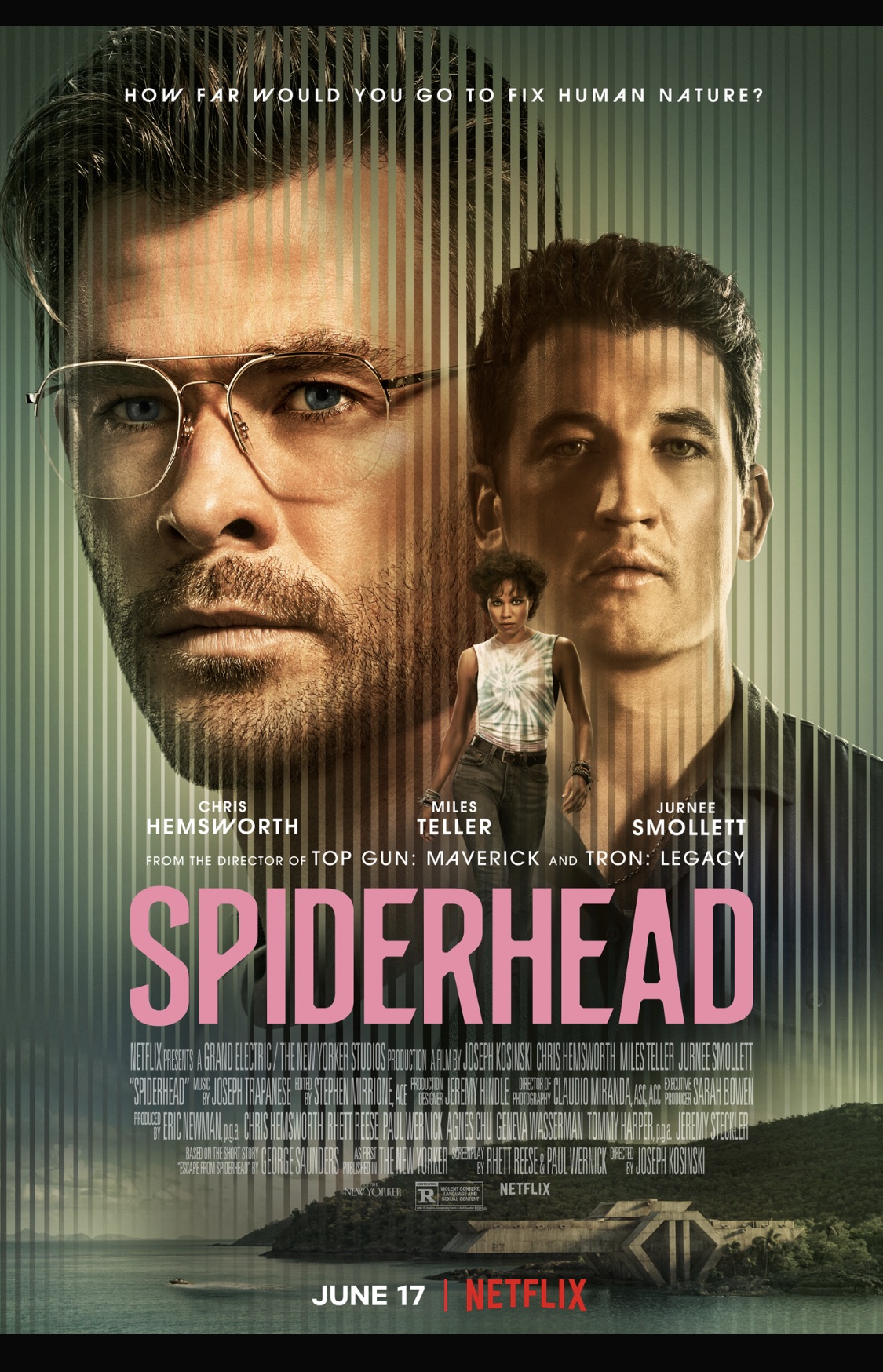 Greetings again from the darkness. “We are changing the world!” These days, those words tend to be more chilling than hopeful. More cautionary than exciting. Spoken a few times by scientist Steve Abnesti (Chris Hemsworth), those words have long ago lost the intended impact with his assistant Mark (Mark Paguio).
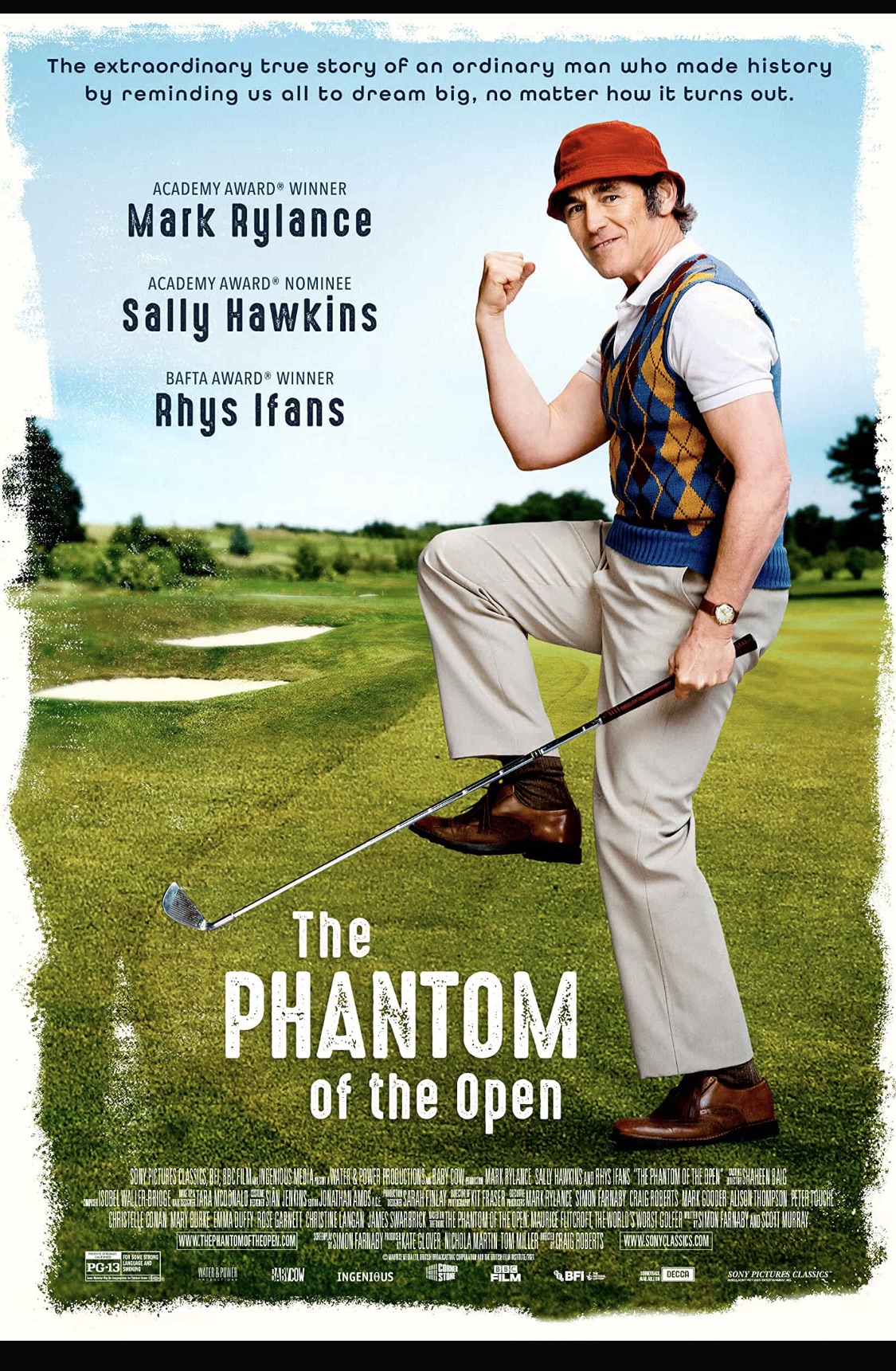 Greetings again from the darkness. Scott Farnaby co-wrote the book with Scott Murray and then adapted that book into the screenplay directed here by Craig Roberts (ETERNAL BEAUTY, 2019). Mr. Farnaby also wrote the excellent screenplay for PADDINGTON 2 (2017), as well as for the upcoming Disney version of PINOCCHIO. Director Roberts is also known for his acting, taking the lead in the underrated SUBMARINE (2010).
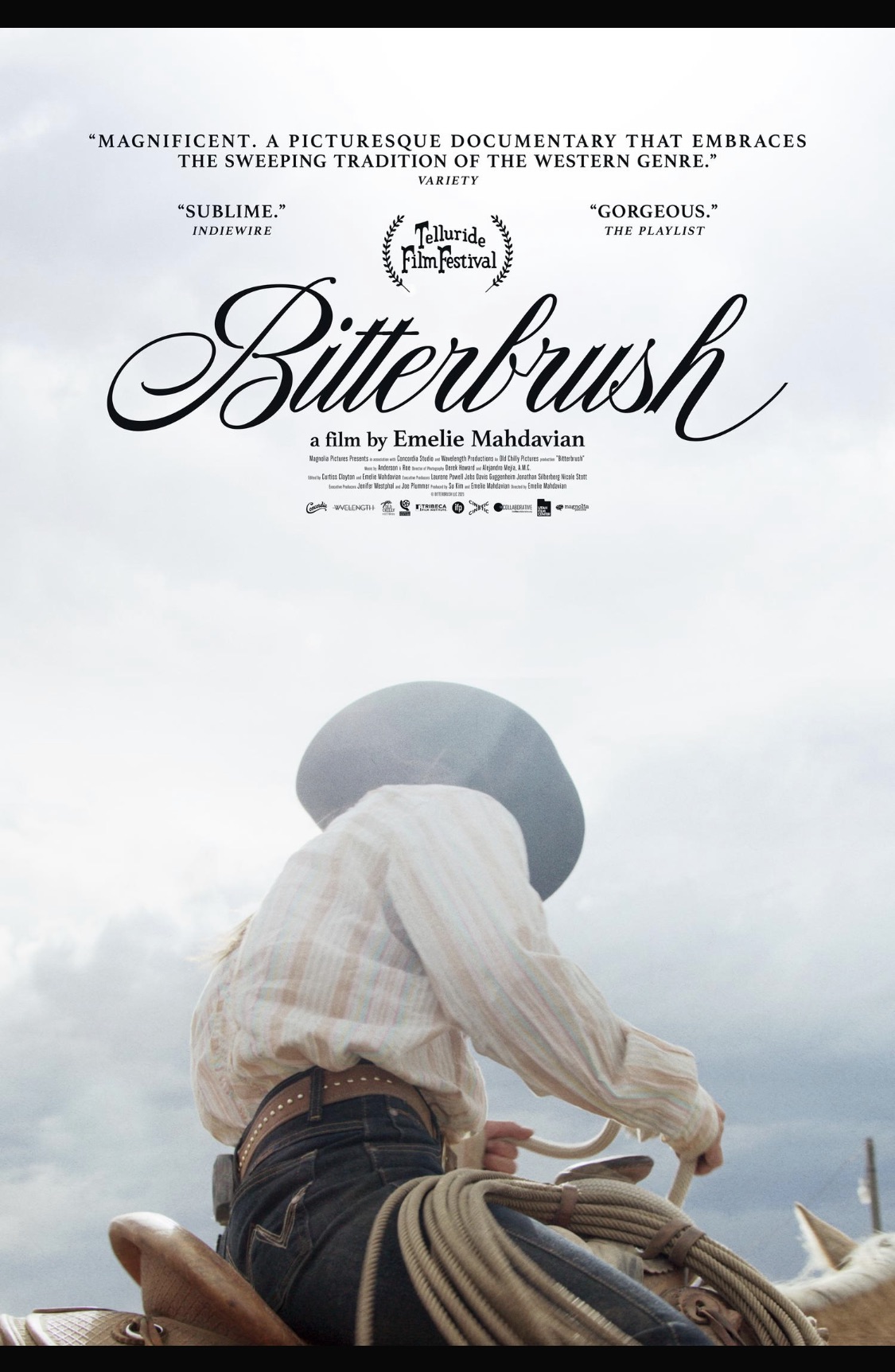 Greetings again from the darkness. The work of director Emelie Mahdavian and cinematographers Derek Howard and Alejandro Mejio make this one worth watching if only for the wide panoramic views and stunning landscapes of the wild west in today’s America. However, the views are really the bonus, as the focus is on Colie Moline and Hollyn Patterson, two cattle wranglers working together on a job in Idaho.
 Greetings again from the darkness. This “inspired by true events” film opens with a history lesson: In 1954, in the landmark Brown v Board of Education case, the Supreme Court of the United States ruled racial segregation of public schools was unconstitutional. This was followed in 1965 with SCOTUS ruling there should be no more delays in desegregation, and another ruling by the high court in 1971 stating that busing students was appropriate in facilitating desegregation. But it took the NAACP bringing suit against Boston Public Schools before a specific court ruling in 1973 forced the city to comply by the following year. The film from writer-director Daniel Adams (THE LIGHTKEEPERS, 2009) and co-writer George Powell picks up in 1974.
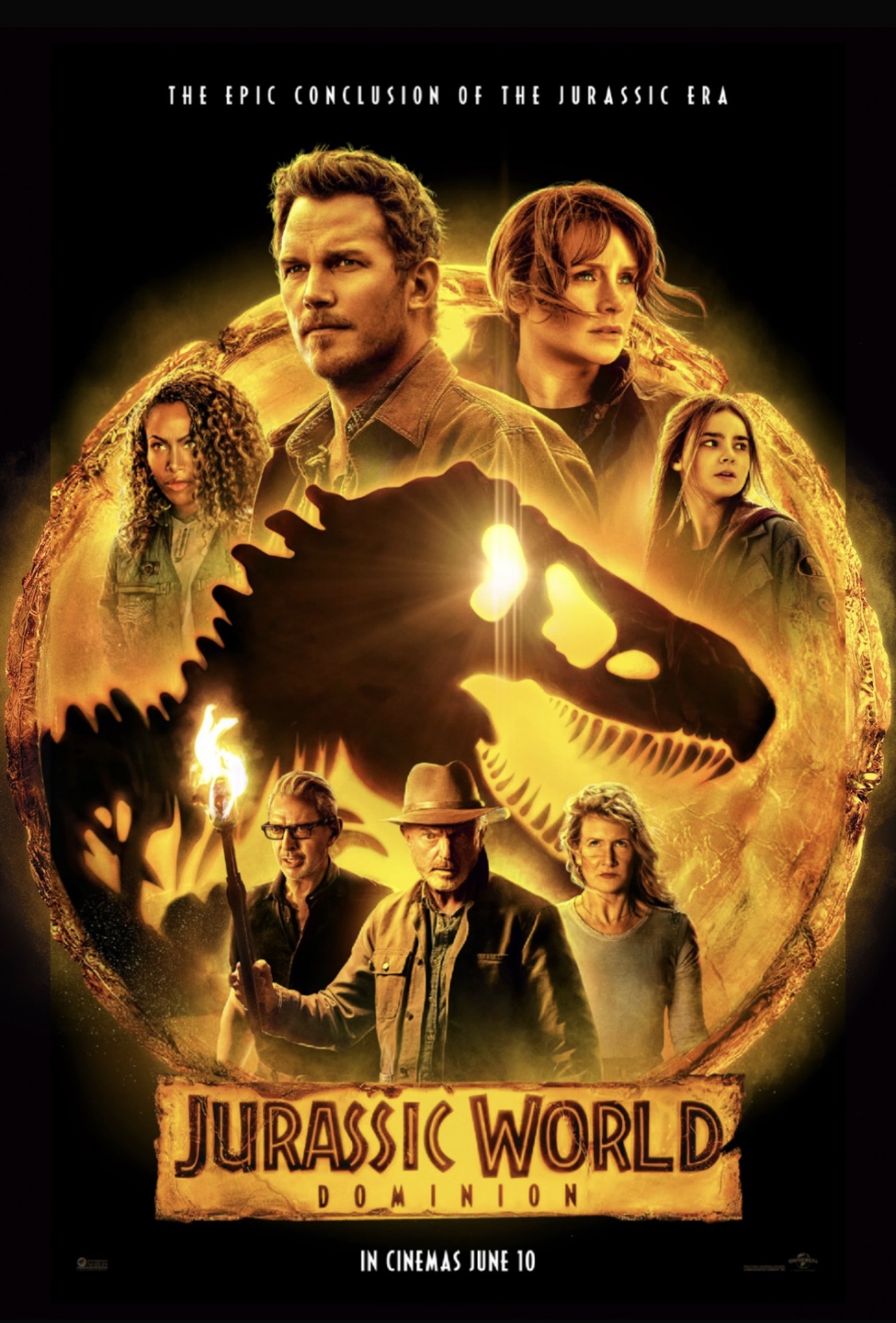 Greetings again from the darkness. It’s been almost 30 years since Steve Spielberg captivated us, and John Hammond (the late Sir Richard Attenborough) “spared no expense” in stunning Dr. Alan Grant (Sam Neill) with our first look at dinosaurs in JURASSIC PARK (1993). Best-selling author Michael Crichton’s original characters and ideas have since spun off into THE LOST WORLD: JURASSIC PARK (1997), JURASSIC PARK III (2001), JURASSIC WORLD (2015), and JURASSIC WORLD: FALLEN KINGDOM (2018). We now have this latest franchise entry to cap off the second dinosaur trilogy, and it finds director Colin Trevorrow back at the helm. He also wrote the story and screenplay with Derek Connolly and Emily Carmichael.
 Greetings again from the darkness. As a sports fan and movie fan, I approach every sports movie with trepidation and low expectations. Let’s face it, most actors aren’t great (or even good) athletes, and most athletes aren’t great (or even good) actors. We would have no interest in a western where the cowboys can’t ride horses, just as we have no interest in watching John Goodman portray a baseball legend in THE BABE (1992). I tell you this to convey my state of mind while preparing to watch this basketball movie from director Jeremiah Zagar and co-writers Will Fetters (A STAR IS BORN, 2018) and Taylor Materne. It gives me pleasure to say that even though the premise is kind of similar to Kevin Bacon’s 1992 film, THE AIR UP THERE, this one should satisfy most sports and basketball fans.
