Greetings again from the darkness. It’s the era of angry cinematic women, and this time we get Viola Davis and Jennifer Lopez as mothers who go on a rampage of violence to gain vengeance for the murders of their sons. In 1991 Thelma & Louise tried to teach abusive and pig-headed men a lesson, and now Lila & Eve face off against neighborhood gangbangers.
Director Charles Stone III is best known for Drumline (2002) and Mr 3000(2004) and this high-stress thriller seems a departure for him, though he compensates with a talented cast. In addition to Ms. Davis and Ms. Lopez, we get detectives played by Shea Whigham and Andre Royo, and Michole Briana White as the leader of the support group.
Stories of vigilantism always skirt the line between gritty and far-fetched, and unfortunately this one leans a bit too far the wrong way. Watching these two women so easily track down their targets and then so effortlessly ‘take care of business’ is head-shaking when combined with the tricky plot twist. The side story focusing on the support group was actually the most interesting, as it provides a glimpse of the grieving process and psychological effects experienced by mothers of murdered sons. Even this part flies off the rails towards the end of the movie – though it was with the best intentions.
Jennifer Lopez at least seems to take some delight in her character … a role much less restrictive than that of Viola Davis, who is forced to play it straight and angry (and she is very adept at this). Mothers seeking vengeance is a cause I can support, but not more can be said about this film as the first rule of Fight Club …
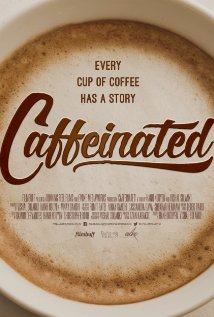
Greetings again from the darkness. Who better to review a documentary about coffee than someone who has never had a sip of the stuff and who becomes nauseated at the waffling aroma of java in a breakfast diner? For whatever reason, coffee and I have been lifelong enemies, and that makes my appreciation and respect of this documentary that much more surprising. Co-directors Hanh Nguyen and Vishal Solanki provide an interesting and in-depth look at the amazingly complex process that begins with planting seeds, and ends with Starbucks convincing some addict that $6 is reasonable for a morning jolt.
As you are probably aware, coffee is truly an international product with various cultures creating their own customs and flavors. What you might not know is that coffee is best grown in a small tropical longitudinal band and at 4000 to 6000 feet elevation. There are many local farmers in these areas who lovingly work their small plots of land in hopes that the price will allow them to feed their family and pay the current debts. These farms are often mortgaged by this year’s crop or even by the land itself. It’s no shock that the big profits are realized further up the pyramid and not by these farmers who cultivate the plants and pick the cherries.
The film does a terrific job at introducing us to those at each step of the long process. We meet farmers and pickers, roasters, distributors and of course, baristas … the rock stars of the coffee world. We even meet a “World Barista Champ”. Yes, there are competitions … just like for chefs and winemakers. In fact, the laborious and complex process of getting coffee to the cup is not all that dissimilar to the process of going from grape to wine glass. Of course the steps are different, but the intricacies and the importance of equipment and skill align pretty well.
Erna Knudsen and Alfred Peet are two of the coffee legends mentioned, and it’s interesting to hear about the elevation of coffee status from a cheap “fast food” product of the 1980’s and 1990’s to the specialty drink of the new millennium, with an emphasis on innovation and style (and trend).
Coffee lovers should have some concern as we learn about the reticence of youngsters to join in the family coffee farming business, after years of seeing how their elders have struggled … not exactly setting the stage for a preferred career path. The detail presented here is impressive and well-researched, and it’s fascinating to see the impact of coffee on so many different countries from around the globe. The film gives you plenty to consider as you sip your next cup of Jitter Juice.
Greetings again from the darkness. Our world is filled with anger and frustration and evil, and should we ever doubt this, a simple click over to the local or national news will prove it so. Even the non-terrorist majority are simply too busy or self-absorbed to show kindness or respect. Subways are jammed with people glued to their smart phones, oblivious to the sea of real humans. Highways are real world video games of dodging the closest road rager. A trip to the shopping mall reveals those too self-centered to simply hold open a door or allow a pedestrian to calmly cross the parking lot. What we need is a Superhero … and in November 2013, we got just that.
Director Dana Nachman chronicles the story of young Miles Scott from Tulelake, California. As a toddler, Miles was diagnosed with Leukemia and went through chemotherapy and other cancer treatments. By age 5, he was on the road to recovery and that’s when the Make-A-Wish foundation became involved. It turns out Miles’ greatest wish was to be Batman for a day. And this is where the documentary takes an unexpected turn.
Nachman chooses not to focus on Miles’ illness, but rather on the heroic efforts of Make-A-Wish director Patricia Wilson and her team to make this wish come true for him. This is not the story of gravely ill little boy, but rather it’s the piecing together of a global phenomenon. A challenging wish transformed into a worldwide viral event constructed by countless volunteers, the San Francisco Chief of Police, the Mayor of San Francisco, 25,000 people lining the streets, and millions more watching via social media.
Ms. Wilson’s incredible “can-do” attitude and boundless positive energy are complimented by Eric Johnston, an inventor and stuntman, who dives headfirst into his role as Batman and mentor to Miles the Batkid. Others key to the event were Mike Jutan who stepped into the role of The Penguin, Oscar winning composer Hans Zimmer, and even “Lou Seal”, the mascot of the San Francisco Giants. Are you starting to get the idea? See, it’s the masses that made this happen … the San Francisco Opera contributed costume work, and even a young boy donated the Batsuit for Batkid – it was homemade! So many offers of help came in that a portion of San Francisco was turned into Gotham City for a day so that Batman and Batkid could fight crime together. Words fail me as it’s an emotional stunner to see this unfold.
Of course the power of social media (Twitter, Facebook, etc) is on full display here – even President Obama tweeted about Batkid! However, what is most awe-inspiring is the massive display of kindness and generosity from so many strangers from so many various backgrounds. As with everything these days, there were critics. A few wailed about the cost to the city, while others expressed outright disgust that such hoopla was for one kid, rather than hundreds. A generous donor made the city whole by stroking a check, thereby shutting up the first group of complainers. As for the second group, they simply miss the point. It was a-dream-come-true for one boy robbed of childhood years by a cruel disease, and beyond that, it provided a respite from “bad news” and allowed the reporting of “good news”. It was also a much needed reminder that the human spirit is alive and that being kind and courteous is contagious, and creates a virus of feel good and do good.
Some may describe this as a promotional film for the Make A Wish foundation, but it might better be described as a film that promotes the positive impact people can have when they unite for a worthy cause. This wasn’t about politics, race relations, or financial turmoil … it was about people doing something nice for others, and discovering the payback is pure joy. Batkid was the hero we deserved and the one we needed.
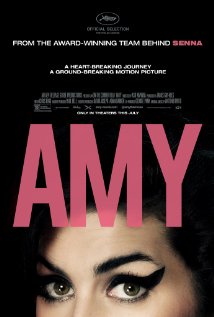
Greetings again from the darkness. Some may know Amy Winehouse as the Grammy award winning singer, while others may know of her as the drug-addled target of the paparazzi who died from alcohol poisoning 4 years ago. Still others may be asking “Amy who?” Director Asif Kapadia (Senna, 2010) delivers a film that doesn’t shy away from the brutally tough “down” times, but also shines a light on the “up” times for this suburban Northern London Jewish kid who was simply unable to manage her rare musical talent, profound personal weaknesses, and the relentless media pressure.
Did you know Amy played guitar? Kapadia includes film of her crafting songs while strumming, and also early performance clips of her on stage with her Stratocaster. It’s these rarely seen film clips … some home movies, some phone videos from fans, and some from other photographers … that provide the leave-no-doubt proof of Amy’s musical genius – both as a vocal artist and a songwriter. Some of the clips provide a glimpse of her charm and sense of humor and desire for normalcy, while others show the bulimic, strung-out party girl mixed up with the wrong guy. We see her casually hanging out with her childhood friends, and later slurring words and staggering through the strobing flashbulbs. The contrast is heartbreaking.
While the typical documentary approach of “talking heads” is almost non-existent, we get plenty of insight from sources such as: her two closest friends, producer Mark Ronson, husband and enabler Blake Fielder-Civil, friend and first manager Nick Shymansky, music executive Lucian Grainge, and fellow artist Mos Def/Yasiin Bey. Amy’s longtime keyboardist Sam Beste cuts right to the bone when he says she “needed music”. That insight when combined with her childhood issues really bring into focus what allowed Amy to live, and then what snatched joy right away from her.
Even from a young age … we see her at 16 … Amy was an old soul, seemingly born into the wrong era. The music erupted from a place very few have. The number of performance clips are limited, but there is one when she is 20-21, and when she sings the word “emulate”, it takes on meanings not yet defined by Webster’s. Contrasting that with the legendary Tony Bennett coaxing her through a recording session is painful to watch, while simultaneously providing a front row seat to musical genius.
Director Kapadia shines a certain light on Amy’s dad Mitch, her husband Blake, and others that were close to her. It’s Sam Beste’s frustration at failing on that first attempt at rehab that brings the biggest “what if?” Of course, that failure led to her biggest recording success with “Rehab” (no, no, no), but might it have also cost Amy her happiness and possibly even her life? The final Belgrade concert was one month prior to her joining the 27 Club, and perhaps it’s just further proof that Amy simply “can’t be that thing” that the fans and media tried to turn her into. Whether you are an Amy fan or not, this is a gut-wrenching look at how a talented artist struggled with life and fame … until the struggles won out.
Greetings again from the darkness. The tragic death of Robin Williams last year left a void in the world of comedy, and his absence is also felt on the big screen where his dramatic skills were often underappreciated. His final non-comedic role comes courtesy of a film that is probably not worthy of his talents, but leaves us with a reminder of what a skilled actor he was.
The premise feels at once a bit dated and also timely. Williams plays Nolan, a 60 year old man who works at his comfortable bank job (of 26 years), goes home each day to his comfortable suburban home, to a comfortable marriage to his wife (Kathy Baker) with whom he no longer shares a bed or much of anything else. He also periodically stops off to put a straw in the ginger ale for his near comatose father with whom he has never had much of a relationship. His entire life is a façade of comfort and life lived well enough.
“Are you happy?” That seemingly odd and innocent question from his boss sets Nolan off on a path of awakening. It turns out that since he was 12 years old, Nolan has suppressed his true identity as a gay man. A spontaneous u-turn on the titular Boulevard sends Nolan on a collision path with Leo (Roberto Aguire), a young male prostitute with whom he quickly bonds … through only talking and self-identification.
It’s this awakening that brings a level of modern-timeliness as Nolan’s story is not so different from that of Bruce/Caitlyn Jenner who has dominated the recent media with the late-in-life shift in persona. They are sixty-plus year old men who have evidently each lived a lie for much of their lives. It’s difficult for many of us to relate to, but clearly it’s a real thing, and director Dito Montiel and writer Douglas Soesbe capitalize.
The best and most uncomfortable scenes occur with Ms. Baker and Mr. Williams avoiding the issue through years of practice, and also the scenes with Mr. Williams and Bob Odenkirk who plays his long-time friend and confidant. These are three strong actors who work well with each other.
There is really nothing wrong with the film … it’s slow pace designed to match that of Nolan’s life … but the Nolan and Leo segment just never clicked, leaving me struggling with a third of the story. It’s about a man who is totally not comfortable in his own skin, and lives a somber and unfulfilled life right up until the point where he takes a leap. It’s not that he takes a leap, but rather the specific leap he takes that just didn’t click for me. Still, it’s a performance from Williams that is worth watching – in fact, must be watched if you are a Robin Williams fan.
Greetings again from the darkness. Complexity of characters, action sequences and plot twists are so common in movies these days that a simple story told in a straight-forward manner can catch us a bit off-guard. Such is the case with this latest from writer/director Ami Canaan Mann (Michael Mann’s daughter, and known for Texas Killing Fields).
A romantic drama usually leans heavily on the strength of its leads, and the teaming of Katherine Heigl and Ben Barnes normally wouldn’t instill much hope. Don’t expect this one to linger in your thoughts much after you have left the theatre, but most will find it pleasant enough to watch … if for no other reason than the interesting songs written by Nick Hans and sung by Barnes. And yes, Heigl sings a bit too … but not much considering her character supposedly had a successful singing career in years gone by.
There is an air of familiarity to the story as Barnes plays a free-willed musician who travels by train and performs in the streets of the towns he visits. Circumstances occur that bring Barnes and Heigl together, and soon enough romance is in the air. Heigl and her daughter (Emily Alyn Lind) live with her mom (Sheryl Lee), and Barnes hangs around for awhile to fix the roof … and other things. Indie favorite Clea DuVall has a small role that adds a bit of interest, but mostly this one hinges on Barnes and Heigl.
If you are one of the many who have grown tired of Heigl’s big screen career, you might be a bit surprised here as she struggles to raise her daughter while going through a nasty divorce. Barnes has also done little (since his posturing in The Chronicles of Narnia: Prince Caspian) to lead up to his more gritty and somewhat likeable role. Again, not much here will stick, but it’s pleasant enough to watch.
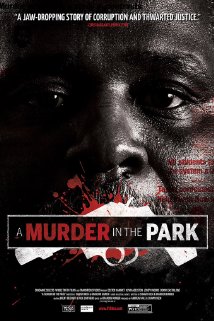
Greetings again from the darkness. The concept of “the scales of justice” refers to what is right and just. It’s a lofty and worthy goal, and one that we U.S. citizens grow up learning is the foundation of our legal system. Sometimes, however, the wheels fall off and the system gets off-track. Co-directors Shawn Rech and Brandon Kinder explore one such quite infamous case.
Here’s a quick synopsis: Cops arrest suspect for a double murder (1982). Suspect found guilty and sentenced to death (1983). Just prior to execution, additional information is submitted and the suspect is freed (1999). Another suspect is charged, found guilty and sent to prison. Fifteen years later, charges against the second man are dropped and he is released from prison. Evidence points to original suspect, who has been pardoned and cannot be re-tried.
The above phrase “additional information” is the key to the film. Northwestern University Professor David Protess and a group of his journalism students, working under the auspice of the “Innocence Project”, set out to cast doubt on the guilt of Anthony Porter – the prisoner just days from execution. The students’ work with Private Investigator Paul Ciolini yields contradictory witnesses and a confession from another man, Alstory Simon. The result of their findings gets Porter released and turns him and themselves into media stars, while also leading to the state of Illinois banning the death penalty.
The film is exceedingly well documented and researched, and provides interviews from detectives, lawyers and Mr. Simon, among others. It’s a procedural documentary that questions the very procedures of the justice system … shooting holes and raising red flags on the steps and a multitude of people involved with the cases over the years. Unfortunately, we don’t get any account directly from Professor Protess (since released by Northwestern), but that’s likely due to the inexcusably shoddy work from his group and his endless grandstanding since getting Porter released.
We all know there are truth-minded journalists, but it’s quite frightening when those on the other end of the spectrum can so easily gain power and influence … especially when teamed up with a less-than-scrupulous private investigator who proudly spouts that the rules don’t apply to him.
This is a very interesting and detailed look at different personality types, legal procedures, media influence and the role of truth and justice. The film begins with a very unusual disclaimer stating the film studio “does not guarantee the accuracy of the content”. The name of the studio? Whole Truth Films.
Greetings again from the darkness. For kindergartners, making friends is as easy as a bag of gummy worms on the playground. For adults, it’s a bit more complicated. According to writer/director Patrick Brice (Creep, 2015) making adult friends can involve rectum paintings and penis prosthetics … at least after a lot of wine and too many bong hits. While this is not my wheelhouse for humor, it’s clearly a bold cinematic step and pushes the boundaries even further than other recent Duplass Brothers projects (they are Producers here).
Emily (Taylor Schilling) and Alex (Adam Scott) have recently moved to L.A. from Seattle with their young son. Emily and Alex are good parents, good people, and a solid couple – except for some sexual incompatibility. While at the park, their son (and his gummy worms) befriends the son of Kurt (Jason Schwartzman), one of the endless oddballs that populate L.A. Kurt charms Emily and Alex into visiting his home for an adult dinner party/kid playdate.
Greeted at the door of the mansion by Kurt’s French wife Charlotte (Judith Godreche), Emily and Alex are clearly wooed by the worldliness and sophistication of their new friends. Kurt is a bit of a renaissance man and he and Charlotte also appear to be a solid couple … though as the evening unfolds, we soon enough discover their own sexual incompatibility. And therein lies the core and conflict of the film – relationship dynamics impacted by sexual tension explored through raunchy humor.
It’s interesting to compare Brice’s film with Paul Mazursky’s 1969 Bob & Carol & Ted & Alice, and analyze the cultural and cinematic differences brought on by the 46 year difference. What was shocking then, is nothing compared to what this film has us believe that most young adult couples are struggling with now. Emily and Alex spend the evening exploring their boundaries as individuals and as a couple, while being softly pushed by the more adventurous Kurt and Charlotte. Were it not so raunchy, the theme would be more interesting … though significantly less appealing at the box office.
All four lead actors are strong, but Schwartzman and Scott handle the more challenging roles with aplomb. Given my preferences, I could have used a safe word on a couple of occasions, but the real test will be whether audiences find the film a bold step forward, or whether it is judged to be shock for shock’s sake.
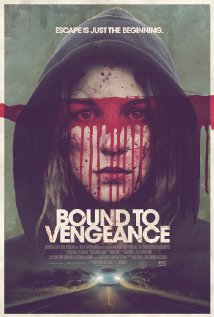
Greetings again from the darkness. In the 1980’s this could have been the second film of a drive-in theatre double feature. In the 1990’s, Richard Tyson could have been cast as the bad guy. Well, it’s 2015 and one of those things has happened anyway (not the one where you sit in your car). It’s a low-budget direct-to-video thriller that would easily fit in with the numerous ‘hot girl kidnapped’ movies over the years – except for one very welcome change: this girl rampages like Charles Bronson.
Tina Ivlev plays Eve, a girl chained in the basement of a house and held hostage by Richard Tyson’s Phil. One evening, Eve greets Phil with a brick upside the head, and just like that, the tables are turned … Eve takes off on a combined mission of revenge and rescue. See, Phil has been the leader of a group of kidnappers and sex traffickers, and Eve wants to track down the others and set them free.
The movie starts with some joyous smart phone video footage of Eve, her apparent boyfriend and another girl whose identity is not discovered until late in the story. This footage is interspersed throughout the film as Eve makes her way between the various locations. It’s an interesting touch by director JM Cravioto and adds a little complexity to what could have been a straightforward movie featuring Eve’s journey.
We have seen Beatrix Kiddo and her mission of revenge in the Kill Billmovies, but of course, it’s more common to see the victimized girl being rescued by a strong and do-goody man. That man doesn’t exist in this world. It’s all up to Eve, whose sword play may be non-existent, but her desire to kick ass is as strong as any other on screen character, including The Bride.
Greetings again from the darkness. “Glory Days, well they’ll pass you by” is a familiar line sung by Bruce Springsteen, and writer/director Noah Buschel brings that New Jersey sentiment to his latest film. We follow the travails of a former boxer struggling with the faded spotlight and his perceived lack of respect, while also seemingly oblivious to the maintenance his personal relationship requires.
Corey Stoll (familiar to “House of Cards” fans) plays Bud “The Saint” Gordon, a retired boxer whose self-named local neighborhood hangout recently closed its doors. Bud is trying to figure out how to reclaim the good life afforded by his boxing winnings, and is opposed to his girlfriend Ellen (Marin Ireland) taking a waitress job to help out. He agrees to train a young up-and-coming boxer prepare for a fight, while also agreeing to work with a shady shyster named J.J. (Billy Crudup). Bud and J.J. have a history, and it’s soon pretty clear that J.J. is some type of offbeat (he owns a snow leopard) kingpin or mobster, who finds a financial and psychological edge in all dealings.
Yul Vazquez plays J.J.’s lead henchman and has the “flashiest” (his character name is Flash) role in the film, although Crudup’s character could have been even more fun if allotted more screen time. Also making brief appearances are Kelly Lynch, Katherine Waterston, and David Johansen. Of course, Mr. Johansen is a former member of The New York Dolls, and their song “Trash” plays a key role in one of Bud’s earliest scenes working with Flash.
There is an unmistakable class theme – the have’s vs the have-nots. The two sides are clear in Manhattan vs. New Jersey, and J.J. vs. Bud. The most interesting part of the story is with Bud’s attempt to figure out the harsh ways of life, even as we viewers recognize he requires no shades for his future. Although both themes are pretty familiar in the movie world, Mr. Buschel opts to only scratch the surface on both the faded hero and the mob world. Instead, it’s more of a dialogue-driven drama that questions where the line in the morality sand is drawn.
 Greetings again from the darkness. It’s the era of angry cinematic women, and this time we get Viola Davis and Jennifer Lopez as mothers who go on a rampage of violence to gain vengeance for the murders of their sons. In 1991 Thelma & Louise tried to teach abusive and pig-headed men a lesson, and now Lila & Eve face off against neighborhood gangbangers.


 Posted by David Ferguson