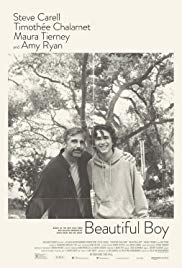
Greetings again from the darkness. There is absolutely nothing that compares to being a parent. Sorry, pet lovers, it’s not even close. And I’m not referring to the romantic notion of having one’s DNA live on as legacy. Rather, nothing compares to the weight of never-a-break responsibility felt in keeping a helpless newborn alive and properly nourished. And later, teaching the right life lessons so that it’s not your kid who bullies others in school, or steals, or damages the property of others. Someone’s kid is going to do those things, and most of us try our darndest to prevent it from being our kid. The reality is, that even the most attentive and best-intentioned parents can sometimes fall victim to a force beyond their control. Such is the situation in writer-director Felix Van Groeningen’s film (co-written with Luke Davis) based on the two memoirs penned by father and son David and Nic Sheff.
We open on David (Steve Carell) disclosing to a physician (Timothy Hutton) that his son Nic (Timothee Chalamet) is addicted to crystal meth, and asking two questions: 1. What is it doing to him? 2. What can I do to help him? The quiet desperation and pain is plainly evident on David’s face. We know immediately that this Steve Carell movie won’t be packed with laughs.
What follows is the harsh reality of drug addiction. Rehab – Relapse – Repeat. Much of the story is dedicated to David’s struggle and devotion to helping his son Nic in any way possible. He’s a helpless father who refuses to give up on his son, despite the constant desperation and frustration. Every glimmer of hope is soon crushed by yet another lie and more drugs. The film is such a downer that it makes LEAVING LAS VEGAS look like an old Disney classic.
Bouncing between timelines is a device that works for many stories, but here it seems to take away some of the poignancy and depth of some scenes. Just as we are being absorbed into a crucial moment, the film often breaks away to an earlier or later time. This is effective in getting the point across about the never-ending struggles, but we lose momentum on particular segments.
Supporting work comes courtesy of 4 talented actresses: Amy Ryan (as Nic’s mother and David’s ex-wife), Maury Tierney (as David’s current wife), Kaitlyn Dever (Nic’s girlfriend), and LisaGay Hamilton (involved in rehab). It’s a bit odd to see the mini-reunion of Ms. Ryan and Mr. Carell from their time on “The Office”, but mostly the on screen time is pretty limited for all four women. The reason this film works is the devastating work of two fine actors – Steve Carell and Timothee Chalamet. We never doubt dad’s commitment, just as we never doubt son’s helplessness in getting clean.
The soundtrack acts as a boost to the dialogue with such songs (perhaps a bit too convenient and obvious) as John Lennon’s “Beautiful Boy”, Neil Young’s “Heart of Gold”, and Perry Como’s “Sunrise, Sunset”. It’s debatable whether it’s possible for a movie to look “too good”, but it’s a bit off-putting to admire the camera work while someone is struggling on screen with drug addiction. The downward spiral of drug addiction feeds on the misery, and while we all enjoy beautiful cinematography, this is the rare time that it’s distracting – possibly preventing viewers from going all in. The inherent lesson here is that we can’t always save people from themselves. Knowing what to do isn’t always possible, and sometimes there is simply no right answer … even with “Everything”.
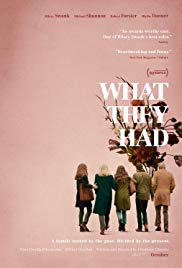
Greetings again from the darkness. “Til death do us part.” Only far too often, long term marriages are not broken by death, but instead by memories being cruelly erased through disease. Alzheimer’s and Dementia are dreadful diseases, even in the early stages. Writer-Director Elizabeth Chomko uses her feature film debut not to analyze the specifics of these diseases, but instead to focus on the incredibly personal and emotional fallout they produce.
At first glance, Bridget (Hilary Swank) seems to have figured things out in life. She’s a California career woman married to a successful man (Josh Lucas), and their daughter Emma (Taissa Farmiga) is a college student. Slowly, the truth is unfurled – much of it after she receives a frantic call from her brother Nick (Michael Shannon) back home in Chicago. Their mother (Blythe Danner) is missing, having wandered out into a snow storm wearing her pajamas. Bridget and her daughter Emma hop on a plane and land in the middle of a huge family ordeal. See, Nick is exhausted from being the caregiver, and believes the best thing for their mother (and for him) is to move her into an extended care facility. Dad (Robert Forster) is adamant that she remain home with him, where she (and he) are most comfortable.
Of course, the turmoil doesn’t end there. Bridget is in a loveless marriage. Emma has been evicted from her dorm for drinking. Nick’s long-time girlfriend has booted him to the backroom of the bar he owns. Bert, the father, is unwilling to accept or even discuss surrendering the life he’s known for decades. Ruth, the mom, is as apt to make a move on her son as to remember her daughter’s name. Contrasting personalities abound in this house. Despite having power of attorney, Bridget is still intimidated by her bullying father, and seems to have no empathy for the burden carried by Nick. It’s all very messy – just like a real family, and filmmaker Chomko revels in it.
It’s so wonderful to see Robert Forster in such a hefty role. These days, he’s typically relegated to a tertiary character where he mostly frowns and grunts. Not this time. He is at once a bullying force within the family, and an elderly man treading on fragile ground. He belittles his grown kids by calling his bar owner son a “bartender”, and having coerced his daughter into marrying a man for security. Mr. Forster nails the role, as does Michael Shannon as his irksome son. Shannon is one of the best actors working today and he is mesmerizing with his snap backs – sometimes funny, sometimes mean, sometimes both.
There is some horrible relationship advice served up. The family philosophy is “pick somebody you can stand, and make a commitment”, as there’s no such thing as “bells and whistles”. It’s not the romantic chatter most movies provide, but it plays to the complicated bond between parents and kids (of all ages). Director Chomko brilliantly and accurately handles the gut-wrenching effects of Alzheimer’s. She embraces laughter as a coping mechanism, and reminds us to enjoy the rare moments of clarity – those times a parent can remember who you are. There are a few cringe-inducing moments of mushy melodrama, but for the most part, Ms. Chomko delivers.
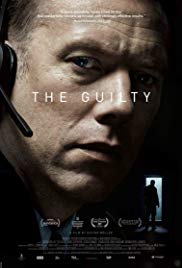
Greetings again from the darkness. Some people prefer their movies to be light-hearted escapes from the real world – two hours of mindless entertainment that distract from real life responsibilities. Then there are the rest of us: the movie-goers who thrive on having our emotions and nerves mangled and twisted, leaving us drained and strained as we stumble from the theater after the closing credits. For those in the second group, meet Danish writer/director Gustav Moller.
It’s a remarkable first feature film, and Mr. Moller shares screenwriting credit with Emil Nygaard Albertsen, and it’s what we might call a one-room or confined-space thriller. Others in this claustrophobic category would include the classic 12 ANGRY MEN (1957) and more recent films like BURIED (2010), the underrated LOCKE (2013), and the Oscar nominated ROOM (2015). Most, if not all, of the action in these films takes place in a single setting, and the filmmakers creatively use that limited space in a way that elevates the story and tension.
Jakob Cedergren is stunning as Asger Holm, an officer frustratingly on “desk duty” at the emergency dispatch center. Asger has been so assigned due to an unspecified internal investigation, and he takes out some of his irritation on callers he quickly judges to be responsible for their own situation – drunken brawlers and those looking to exchange commerce for companionship (wink-wink). However, a breathy call from a woman who claims to be kidnapped immediately ignites Asger’s instincts and street smarts.
Iben (the voice of Jessica Dinnage) informs Asger, through a series of yes-no questions that her ex-husband has kidnapped her, stranding her two young children home alone. Asger cleverly uncovers that Iben is being transported via white van on a major highway. It’s at this point that he remains calm and reassuring to Iben, while expertly juggling other phone calls for assistance: dispatch, highway patrol, even his somewhat intoxicated and disinterested former partner. Rather than route this call per protocol, Asger takes control with technology, experience and instincts as his only tools … likely sensing both the need for urgency and his shot at redemption.
The film is mostly just a series of phone conversations, yet somehow my stomach was tied up in knots! The isolation and desperation is evident on both ends of the line between Asger and Iben, and some outstanding sound design with ambient noise provides our only other link outside the barren walls of the call center. Cinematographer Jasper Spanning makes creative use of cameras to enhance the claustrophobic setting and story – often using tight shots and close-ups of Asger’s remarkable face. Every viewer is likely to jump to conclusions without having full details, emphasizing human nature’s quick trigger for assumptions. Still, in only 85 minutes, we experience a tension-packed, nerve-wracking, yet artistic presentation … one that leaves us in awe of Jakob Cedergren’s performance and Gustav Moller’s future.
Greetings again from the darkness. It makes perfect sense when you think about it. After three artsy prestige projects (CALL ME BY YOUR NAME, A BIGGER SPLASH, I AM LOVE), Oscar nominated Italian filmmaker Luca Guadagnino decides to let his freak flag fly. And what better way than to pay homage to his fellow countryman Dario Argento’s 1977 surreal cult classic that featured a blinding color palette, obtuse camera angles, and enough schlock-horror (in a good way) to remain a midnight movie favorite for more than 40 years? While both movies are B**S**T crazy, we can’t help but think a filmmaker of Mr. Guadagnino’s caliber should have done better.
Dakota Johnson (FIFTY SHADES OF GREY) stars as Susie, a Bambi-eyed self-trained dancer raised in Ohio by her Mennonite parents. Following her dream, she shows up for an audition at the world renowned Markos Dance Company in Berlin. The film is set in 1977 (the same year as the original was released) and Susie sufficiently impresses the company director Madame Blanc (Tilda Swinton) to be invited to join.
A title card informs us that we are about to undertake “Six Acts and an Epilogue set in divided Berlin”. It should have added the run time of two-and-a-half hours (it seemed longer). For those of us who would pay to watch Tilda Swinton in any role, this one does deliver bonus value. The enormously talented actress who has disappeared into numerous characters over the years, plays two other roles here – disguised by heavy make-up in both. The trade-off is that Ms. Johnson is the lead, so not only are we subjected to the limitations of her acting, but also camera-trickery when it comes to her dance scenes. A bushy bushy red hairdo conceals her face during the most physically demanding dance sequences … think Cousin It from “The Addams Family”.
An almost entirely female cast features some interesting choices from across generational and geographical boundaries. Angela Winkler and Ingrid Caven have long been familiar faces on the big screen, and Mia Goth and Chloe Grace Moretz are fine choices for the younger company members. As an added bonus, Jessica Harper appears in one segment towards the end. Ms. Harper played the lead role of Suzy in the original. Other fun comparisons between the two films are the original score by Goblin compared to the updated (and more serene) score by Thom Yorke of Radiohead, and the muted color palette chosen by Guadagnino and cinematographer Sayombhu Mukdeeprom for this updated version.
The reason there is an open spot in the company for Susie is that Patricia (Chloe Grace Moretz) has disappeared after unloading her ‘coven of witches’ theory on an aged psychiatrist Dr. Josef Klemperer. Dr. Klemperer initially thinks the hysterical Patricia is delusional, and would prefer to wallow in his grief over his beloved wife Anke – missing since WWII. When Susie gets her shot at the lead in what is to be the company’s final performance of its most famous dance piece Volk, we get the film’s best sequence and one of a few WTF moments. A mirrored dance studio is the site of unexplained violence, and some terrific editing shoots us back and forth between art and mayhem. It’s difficult to watch but exceedingly well done.
Unfortunately, the truly bizarre and horrific moments are much too rare. In fact, some of the segments come off as unintentionally funny, which is not a good thing for a horror flick. The primal dancing never seems sensual, the bloodbath finale is too far over the top, and the political subtext with the Baader-Meinhof terrorist group just never seems to fit. While watching this, a few films came to mind: BLACK SWAN, THE WICKER MAN, MOTHER!, and ROSEMARY’S BABY, though this one doesn’t reach the level of any of those. Sometimes a movie just doesn’t lend itself to analysis or review, and it comes down to whether this is your cup of tea.
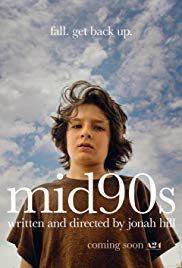
Greetings again from the darkness. It’s a shame that many will immediately write off this as just another ‘skateboard movie’. While it’s true that the characters spend a good deal of each day skating, talking about skating, or hanging out in a local skate shop, a more accurate description would be: life lessons presented from a street level view. Remarkably, this is Jonah Hill’s directorial debut. We all know Mr. Hill and his raunchy sense of humor from his acting in such movies as KNOCKED UP, SUPERBAD, and THE WOLF OF WALL STREET, and here he flashes an intimate knowledge of what it’s like to be an outsider … those on the fringes of mainstream society.
Stevie (Sunny Suljic from THE KILLING OF A SACRED DEER) is a junior high kid (slightly built for his age) who gets regularly pounded by his older brother (yet another excellent turn from Lucas Hedges). Their single mother (Katherine Waterston) is more concerned with her own life and mostly clueless as to what goes on with her boys, both inside the house and out.
As one who doesn’t really fit in at school, Stevie happens to notice a group of skaters trash-talking and seemingly having a good old time. He quietly starts hanging around the group, absorbing the nuances of their (mostly) good natured put-downs, and gazing in awe at their skating abilities. Stevie begins the painful and slow process of teaching himself how to skate – one fall at a time. A montage of nasty spills in the driveway make the point that bruises, blood and frustrations are just part of the process.
This group of older boys consists of the leader Ray (Na-Kel Smith, a professional skateboarder and musician), party animal and aptly nicknamed F**KS**T (Olan Prenatt), filmmaker wannabe and also aptly nicknamed Fourth Grader (Ryder McLaughlin), and Ruben (Gio Galicia), the youngest who is only a year or two older than Stevie. We quickly learn the personality type of each. Ray is working towards skating professionally and escaping the hood. F**KS**T simply loves having fun chasing girls, partying, and hanging with friends. Fourth Grader always has his camera and has enough vision to know he wants to make a movie, while young Ruben is insecure and confused about what makes a man – probably the most tragic of all.
As Stevie learns the ropes, we see he is constantly smiling – just happy to finally be a part of something. His fearlessness and ability to absorb pain (thanks to his brother) allow him to be quickly accepted and guided by the guys … some of it good, some of it a bit questionable. The language throughout is more realistic than what we’ve become accustomed to. There are plenty of slurs and profanity-laced trash-talking that wouldn’t pass today’s PC auditors, but director Hill pulls no punches.
One of the downsides is that Lucas Hedges isn’t given much to do here – though he is spot on with the type of bully we all recognize. Instead, the story is a skate movie only to the extent that the sub-culture can be a haven where outsiders come together. Although the film is set 20 years ago, it’s quite interesting to see how these outsiders are so similar regardless of the era. Everyone needs to connect with others, whether they be band members, athletes, or skaters.
Hill has created a spontaneous, quasi-documentary feel thanks to his filming techniques and by using only 3 real actors (young Suljic is outstanding). Trent Reznor and Atticus Ross deliver a terrific score, and there are a couple of beautiful shots of the boys freewheeling down the middle of a busy road with a colorful sky as backdrop. We can’t help but notice some similarities to SKATE KITCHEN, KIDS, LORDS OF DOGTOWN, and even CLERKS, and Hill’s debut is less a story, than a snapshot for those who tend to look past the fringes.
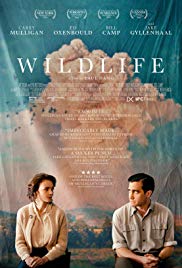
Greetings again from the darkness. Actors becoming directors is a Hollywood tradition going back many years, although it seems to be quite the trend these days. Just within the past 3 weeks, there have been feature film directorial debuts from Bradley Cooper, Jonah Hill, and now Paul Dano. You surely know Mr. Dano from his work as the uber-quiet brother from LITTLE MISS SUNSHINE, his dual role in THERE WILL BE BLOOD, and his turn as the early years’ Brian Wilson in LOVE & MERCY. He’s a talented actor who now flaunts a near-master’s grasp of filmmaking.
It’s Montana in 1960 when we meet the Brinsons, a typical family of dad Jerry (Jake Gyllenhaal), mom Jeanette (Carey Mulligan), and 14 year old son Joe (Ed Oxenbould). Jerry is a gregarious golf course employee, Jeanette is a former substitute teacher – now stay at home mom, and Joe is a mostly normal teenager who only attempts to play football in order to make his dad proud, and needs his mom’s help on his math homework. Jerry drinks a few beers each night and Jeanette cooks a nice family dinner. Nothing to see here.
This idyllic world is shaken to its core when Jerry gets fired from his job for not respecting the boundaries with club members (not what you’re thinking), and his manly pride won’t allow him to return to the job when the club reconsiders. Jeanette does what moms do – she takes a job as a swim teacher at the local YMCA to tide them over until Jerry can find a new job. It’s at this point when we realize son Joe has extraordinary observation skills for a teenage boy, and he has a front row seat to a disintegrating marriage. Bearing the shame and frustration of a man in this era who can’t provide for his family, Jerry abruptly leaves to go fight an out of control forest fire in the mountains. Joe longs for normalcy – the only life he had known to this point.
Joe watches in quiet confusion as his mother evolves from doting housewife and caring mother to something and someone he doesn’t recognize. She changes how she talks, how she dresses and how she acts. Jeanette is experiencing the contradiction of knowing she needs a man, and not liking that feeling one bit. She latches on to a local car dealer named Warren Miller (Bill Camp). Miller is basically a master-predator seizing on his injured prey through the power of money and promise of stability, and this makes for some uncomfortable situations both for us as viewers and for Joe watching his mom.
This is a family drama that doubles as insight into the changing times – what defines happiness, what role to women play, how involved are kids in household. Based on a book by Richard Ford, the screenplay is co-written by director Dano and his long-time girlfriend Zoe Kazan (RUBY SPARKS, 2012). The story is one part feminist, one part coming-of-age, and one part societal shift. These are fully drawn, complex individuals that walk, talk and react like people tend to.
As Jerry, Jake Gyllenhaal is excellent in his limited scenes, and Ed Oxenbould is an intriguing young actor and captures the essence of young Joe – especially that moment when kids realize their parents are individuals, not just devices put on earth to serve kids. This is Joe’s story, but it’s Mulligan’s film. What a terrific performance she delivers, which is not surprising, given her track record. Here she makes us feel everything Jeanette feels, and though this isn’t the kind of movie to reach out and grab you, Ms. Mulligan’s performance likely will. There is an expressive score, heavy on the woodwinds, from David Lang; and the cinematography from Diego Garcia is also spot on for era – as is the authentic set design. Mr. Dano has delivered an exceptional piece of filmmaking for what will likely be a very limited audience. Those that seek it out will be rewarded.
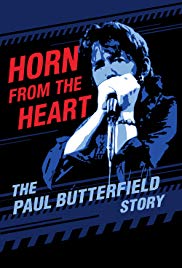
Greetings again from the darkness. Even the grainy concert footage and somewhat muffled audio of the opening clip do nothing to offset the raw energy and power of Paul Butterfield and his blues harp. If you are a blues lover, you are already familiar with his music, and you’ll likely learn more about the man. If the blues aren’t your thing, it’s still fascinating to see someone so talented and committed to their art.
Documentarian John Anderson does a nice job of blending interviews from family members and band members with video clips and historical data, mostly in chronological order. Mr. Anderson also acted as editor of “The Super Bowl Shuffle” video of the 1985 Chicago Bears, as well as numerous projects with Brian Wilson of The Beach Boys. This time out, he captures the essence of a musical genius not nearly enough people have tuned in to.
Broken into segments (1942-65, 1966-71, 1972-1987), the film takes us through Butterfield’s childhood in the Hyde Park area of Chicago, and through his final on stage appearance just a couple of weeks before his death. Along the way, we hear from bandmates like Elvin Bishop and Nick Gravenites, Paul’s two sons and his brother Peter, as well as his former wife Kathryn, who describes him as the love of her life. One of Paul’s sons shows us the now-vacant lot where the club once stood in which a teenage Paul played with the likes of Howlin’ Wolf. It helps us understand where his love for the blues developed, how he formed one of the earliest integrated bands (with Jerome Arnold and Sam Lay), and how the great Muddy Waters became his life-long mentor and friend.
We get to hear the earliest known recording of Butterfield from 1962, and then footage of him at Newport Folk Festival in 1965, Monterrey Pop Festival in 1967 (where he debuted a horns section), and of course, Woodstock in 1969. It’s the 1965 story that is perhaps the most interesting, as it took an impassioned plea from Peter Yarrow (of Peter, Paul, and Mary) to get Butterfield a spot in the festival, and then he and his band electrified (pun intended) the folk audience with powerhouse blues. This is the same festival where Bob Dylan shocked the audience by “going electric” (with Butterfield’s band as back-up). The music landscape shifted from the messages of folk music to a more rebellious and harder sound.
Other interviews include David Sanborn, Al Kooper and Bonnie Raitt … each more effusive than the other when discussing Butterfield’s talent and stage presence. We see Butterfield’s own high school yearbook quote, “I think I’m better than those trying to reform me”, and we hear a clip from his “Blues Harmonica Master Class” recorded in 1984 (released in 1997). It was 1976 when Butterfield joined The Band’s farewell concert for “The Last Waltz” (movie and album), and we hear about Paul’s continued and numerous efforts to find the right sound and band in the second half of his career.
Legendary Producer Paul Rothchild, known for his work with The Doors and Janis Joplin, certainly recognized greatness in Butterfield and helped with some of his best recordings. Sadly, the 1980’s brought about severe peritonitis which led to various stomach and intestinal surgeries for Butterfield, which in turn, led to alcoholism and drug abuse. We get a clip of Butterfield on stage with Stevie Ray Vaughan in 1987, mere days before Paul died of a heroin overdose at age 44. Fortunately for us, the musical recordings live on for a man often described as a force of nature on the blues harp.
Greetings again from the darkness. I believe the term is ‘full circle’. It was 1978, and I vividly recall waiting anxiously for the opening night start of John Carpenter’s HALLOWEEN. Now, 40 years later, I’ve just watched what is likely (hopefully!) the final entry of a franchise that spans between 9 and 12 movies, depending on which ones you count (although, apparently we are only supposed to count the first one and this latest). Carpenter’s original film gave us the backstory of 6 year old Michael Myers killing his sister Judith in 1963, and subsequently being confined to a sanitarium before showing up on All Hallows Eve in 1978 for what is now referred to as The Babysitter Murders.
Writer/director David Gordon Green (STRONGER, 2017) and co-writers Danny McBride and Jeff Fradley make it clear from the start that this is a direct sequel (ignore the others!) to the 1978 original, although having a sequel and its original share the same title is itself a bit confusing. For anyone unfamiliar with Carpenter’s original classic (the one that kicked off an entire genre of slasher films), the filmmakers offer up a couple of fame-seeking British podcasters (Rhian Rees, Jefferson Hall) to spell out the history and gory details of Michael Myers and Haddonfield, Illinois. Michael has been institutionalized for four decades, never uttering a single word to his doctors … neither the now-deceased Dr. Loomis nor his protégé Dr. Sartain (Haluk Bilginer mimicking some of Donald Pleasance’s oratory style). Thanks to a not-unexpected bus wreck, and the amateurish prank of the podcasters, Michael Myers is reunited with his William Shatner mask (looking a bit rough these days) and sets off to kill innocents and track down his nemesis, Laurie Strode.
The challenges of filmmakers in 2018 versus those in 1978 aren’t just limited to disposing of podcasters and teenager’s cell phones. They must also be cautious about treating women as victims, and here Laurie Strode is anything but. She has spent these years preparing herself and training her now-grown daughter Karen (Judy Greer) what to do once (not if) Michael Myers returns. Mother and daughter are now somewhat estranged, connected mostly by Laurie’s granddaughter Allyson (newcomer Andi Matichak). It’s kind of clever how the filmmakers empower the three generations so that together they may face off against the evil that has haunted their family for so many years.
The film has a retro 1970’s look and feel, and it is well-served as a tribute/follow-up to the original. Some familiar shots are mirrored and references to the original are noted through the dialogue … though some of the humor seems a bit forced (specifically young Jibrail Nantambu who is being babysat). The opening credit sequence makes good use of the same font and color scheme from 40 years ago, and the rotten jack-o-lantern coming back to life is a nice touch.
The return of Jamie Lee Curtis as Laurie is what completes this haunting circle. Carpenter’s HALLOWEEN was her big screen debut, and though she still tends to go over the-top at times, this obviously would not have worked without the daughter of Tony Curtis and Janet Leigh. In fact, this story is mostly focused on the psychology of Laurie and her PTSD, as we never learn much about what makes Michael Myers do what he does. Others returning from the original film include Nick Castle as The Shape (though James Jude Courtney shares the role this time), and PJ Soles in an all-too-brief and quite memorable appearance. As a veteran cop, and described as the first officer on the scene 40 years ago, Will Patton’s character appears to want to be anywhere but where he is (side note: Mr. Patton looks almost identical to Paul Simon these days).
Huge carving knives gleaming (despite the low light) make several appearances, and many of Michael’s grisly murders are handled off camera. But don’t mistake that for a lack of violence or gore – there is an abundance. Keep in mind that the film is positioned as a direct sequel to the 1978 film, and fans of that classic should be quite satisfied. Even the iconic 1978 theme song is re-worked by John Carpenter, his grandson Cody Carpenter and musician Daniel A Davies. The recognizable notes are a bit slower and bulked up through synth. As with most horror films, it would be pretty easy to point out the flaws, inconsistencies and necessary assumptions, but it’s one of the few that actually works if you avoid thinking too much and just “enjoy” the mythology and horror.
Greetings again from the darkness. It’s been 6 years since Scott Martin directed his last feature film, and most of his credits are as a producer. This time out, the Texas filmmaker proves his love of the western genre, and he’s so committed to the cause that he dons many Stetsons for the project: writer, director, producer, editor, and one of the lead actors. We always admire those who overcome obstacles and see their vision become a reality. Every movie doesn’t need to be a classic … it’s a Herculean task just to get a film made, and hopefully it provides some entertainment value (which this one does).
Mr. Martin plays Jake, who along with his friend Travis (Clint Hummel) travels the old west countryside finding trouble and making waves at every turn. Jake is the sharpshooter, while Travis is the ladies’ man. Neither seem to have any marketable skills, other than the knack for staying alive – which is an accomplishment given that they seem to be shot at quite frequently and run out of every place they ride into … even Mexico!
The opening shootout sets the mood for us, as it comes across as tongue-in-cheek, with just enough realism to let us know danger exists. Danny Trejo has an entrance worthy of his cult status as Mexican General Morales … a man very displeased with Jake and Travis. An annoying electronic score accompanies a chase scene that crosses the border and ends at a Cavalry outpost run by a Colonel played by the great Michael Pare (EDDIE AND THE CRUISERS), whose two scenes are over far too quickly.
Jake and Travis accompany city slicker Jim Andrews (Christoph Sanders) on a road trip via horseback to Big Kill, Arizona … a town Jim’s brother has promised him is booming. A recurring punchline of “Never heard of it” adds some levity every time Big Kill is mentioned. Instead of a lucrative silver mining town, they find a once boom town gone bust, and now the town is run by the most unethical “Preacher” (steely-eyed and square-jawed Jason Patric) that one is likely to find. The preacher is aided by his muscle: quick-draw Johnny Kane (Lou Diamond Phillips in a gaudy red suit and evil grin) and Stephanie Beran as a knife toting Felicia Stiletto – just one of the character names pulled straight out of the comic book universe.
Jim’s brother (played by KC Clyde) is located, and though Jim begins the courting process with local girl Josie Strong (a standout Elizabeth McLaughlin), the troubles and violence and literal backstabbing in town soon draws the boys into the fracas. Much of the film has the look of kids playing dress up, but as a tongue-in-cheek western, there is enough entertainment value to hold our interest for 2 hours. Fortunately music director Kays Al-Atrakchi resorts to more traditional trumpet-based western music after that opening chase. Most of the shootouts provide some humor, whether intended or not, but we can be sure the cast had a grand time making this one … that shines through loud and clear – especially in a town where the undertaker is named Digger.
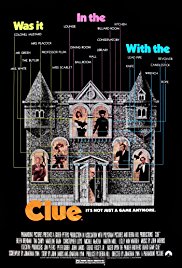
Greetings again from the darkness. All movie watchers have at least two categories of films: those they will watch any time of any day, even if they can only catch a few minutes; and those they can’t imagine ever watching again since the first time through was so painful/miserable/boring/unentertaining. Now you may have other sub-categories as well, but you likely have at least those two. For me, the first category (the good one) includes both GODFATHER movies, PULP FICTION, THE RIGHT STUFF, DOUBLE INDEMNITY, JAWS, THE PRINCESS BRIDE, REAR WINDOW, and well … there are actually far too many to list! The second category is comprised of: THE BOUNTY HUNTER, PROBLEM CHILD, BORAT, TORCHLIGHT, DEATH BECOMES HER, CADDYSHACK 2, just about every Jerry Lewis movie without Dean Martin, and well … there are plenty more, but I’m getting a bit nauseous thinking about this.
The point is that for 33 years, CLUE has been on my ‘never-watch-again’ list. All these years later, I’m unable to provide any specifics about my initial viewing experience, other than it featured Martin Mull (never been a fan) and was entirely too silly and over-the-top for my ‘highly refined’ tastes (although I like “The Three Stooges” and Peter Sellers’ “Pink Panther movies) A friend, whose movie judgment I trust, has been encouraging/goading me into giving CLUE another try … to the extreme that she recently gifted me the DVD, thereby removing inconvenience as an excuse for avoiding it any longer. Anyone familiar with my “revisited” blog entries will know that what follows won’t be a traditional movie review. Expect some scattershooting.
So here I sit, pondering the movie universe and the ramifications of my having very much enjoyed this second viewing of CLUE – laughing many times and making note of just how clever it is … even amidst the packaging of silliness and slapstick in which it comes wrapped. There are, as you might imagine, some odd things associated with the film. First of all, it’s based on a Parker Brothers (now Hasbro) board game. Would you be excited about a Checkers movie? How about Yahtzee or Candyland? Doubtful. Next, few films have a writer/director like Jonathan Lynn. Mr. Lynn is Cambridge educated, has written best-selling books, is known for a popular British TV series, produced and directed many stage plays, is an accomplished actor – he even played Hitler on stage (in a comedy), and has directed other comedy films such as MY COUSIN VINNY (1992) and THE WHOLE NINE YARDS (2000) . In yet another odd twist, Mr. Lynn co-wrote the CLUE screenplay with John Landis, who of course, directed the comedy classics ANMAL HOUSE (1978) and THE BLUES BROTHERS (1980).
Set in a creepy New England mansion on a stormy 1954 evening – replete with on-cue thunder and lightning – the twice Oscar nominated composer John Morris (he co-wrote the BLAZING SADDLES theme with Mel Brooks) greets us with a tongue-in-cheek score seemingly sampled from every late night horror movie from the 1950’s. A group of splendidly dressed guests are arriving for a dinner party after each received a mysterious and provocative letter from the evening’s anonymous host. We soon learn that the letters’ connective tissue is that each of these folks are somehow associated with … GASP … the government! Even in 1985, this was a sure-fire way to characterize people as villainous.
It doesn’t take long for the first murder to occur, and other dead bodies are soon to follow – each in mysterious ways – leaving much doubt, and no shortage of suspects, as to the identity of the culprit. In fact, no one is to be trusted (other than possibly those already murdered). The confined environment of the mansion adds to the suspense, confusion, and comedy of the proceedings – as does a stellar cast of actors who know how to be funny in a serious kind of way.
Tim Curry stars as Wadsworth, who we assume is the butler and the fast talker and walker who seems to be running the show for the unknown host. Mr. Curry, of course, is forever enshrined in midnight movie lore as Dr. Frank-N-Furter in THE ROCKY HORROR PICTURE SHOW (1975). Wadsworth is assisted in the evening’s affairs by Yvette, played with jiggly wonder by Colleen Camp in a French maid uniform barely able to contain her assets. Ms. Camp has been a hard working actress since the 1970’s, was a two-time Razzie nominee in the 90’s, and can also be seen in this year’s THE HOUSE WITH A CLOCK IN ITS WALLS. The guests include Mrs. Peacock, played by Eileen Brennan, best known as the sadistic Drill Instructor in PRIVATE BENJAMIN (1980) and the heart-of-gold waitress in THE LAST PICTURE SHOW (1971); the dressed in black Mrs. White, played by comedy giant and two-time Oscar nominee Madeline Kahn, so terrific in her memorable roles in BLAZING SADDLES and YOUNG FRANKENSTEIN; Mr. Plum, played by Christopher Lloyd, his shock of white hair highlighting the BACK TO THE FUTURE franchise; Mr. Green, played by Michael McKean who only the year before was David St Hubbins in THIS IS SPINAL TAP, has been recently seen as savant lawyer Chuck McGill on “Better Call Saul”, and is likely the only relative of a signer of the Declaration of Independence in the movie; Colonel Mustard, played by the aforementioned Martin Mull whose career covers stand-up comedy, songwriting, TV series, movies, pro football, and his love of art; Miss Scarlet, played Lesley Ann Warren, nominated the previous year for her role in VICTOR VICTORIA, the star of one of my favorite offbeat 80’s films CHOOSE ME, and whose ex-husband John Peters was executive producer on CLUE; and finally, Mr. Boddy played by Lee Ving, known best for his punk rock band Fear. There are also a few cameos worth noting: Howard Hesseman from “WKRP in Cincinnati” appears as The Chief; Jane Wiedlin, a founding member of the band The Go-Gos who had a mega-hit with “Vacation” has a brief appearance as The Singing Telegram Girl; and Bill Henderson appears as a cop – this after a jazz singing career that crossed paths with the likes of Dizzy Gillespie, Frank Sinatra, Quincy Jones and others. Sharp-eyed viewers might also recognize the stranded motorist as actor Jeffrey Kramer, seen in JAWS as the deputy putting out ‘Beach Closed’ signs.
Filmmakers Lynn and Landis drew inspiration not just from the board game, but also such films as Neil Simon’s MURDER BY DEATH (1976, with Eileen Brennan), Agatha Christie’s AND THEN THERE WERE NONE (1945) and MURDER ON THE ORIENT EXPRESS (1974), TEN LITTLE INDIANS (1965, based on Ms. Christie’s stage version), and William Castle’s classic horror film HOUSE ON HAUNTED HILL (1959). CLUE has a very theatrical look and feel, as something that would work equally well on stage as on screen. The strong presence of Tim Curry almost forces us to notice some similarities to THE ROCKY HORROR PICTURE SHOW, though CLUE offers no musical interludes – other than the exceptional use of the song “Life is But a Dream”.
As far as I know, CLUE was the first film to be distributed to theatres with three different endings (quite a feat for a murder mystery). With the initial release, you were likely to see a different ending than someone at a theatre across town. Fortunately, the Blu-Ray version provides all three – none more likely or reasonable than the other (that’s part of the gag). Fox recently announced a remake of CLUE starring Ryan Reynolds is in the works. Expect it to look much different than the 1985 version. Many of the jokes from the film wouldn’t be acceptable or tolerated in this current age of political correctness, yet Madeline Kahn, with her impeccable comedic delivery offers up the timeless line: “Life after death is as improbable as sex after marriage”. Yes, the film is campy and screwball and filled with slapstick. However, it may also be described as a crackling-dialogue-driven, whip-smart whodunit movie dressed up as an outrageous slapstick comedy … something I failed to recognize on my first viewing more than 30 years ago. Consider that mistake corrected.
 Greetings again from the darkness. There is absolutely nothing that compares to being a parent. Sorry, pet lovers, it’s not even close. And I’m not referring to the romantic notion of having one’s DNA live on as legacy. Rather, nothing compares to the weight of never-a-break responsibility felt in keeping a helpless newborn alive and properly nourished. And later, teaching the right life lessons so that it’s not your kid who bullies others in school, or steals, or damages the property of others. Someone’s kid is going to do those things, and most of us try our darndest to prevent it from being our kid. The reality is, that even the most attentive and best-intentioned parents can sometimes fall victim to a force beyond their control. Such is the situation in writer-director Felix Van Groeningen’s film (co-written with Luke Davis) based on the two memoirs penned by father and son David and Nic Sheff.


 Posted by David Ferguson