Greetings again from the darkness. We get our first glimpse of Alice Lamb as an older woman in 1975 pounding away on her Royal typewriter before abruptly and rudely shooing neighborhood kids away from her door. We then flashback thirty-something years to World War II, and find a younger version of Alice still clacking away on the same Royal and still chasing off the local youngsters. Segments with the older Alice bookend the film, but most of our time is spent with the younger Alice in the first feature film from writer-director Jessica Swale, a renowned playwright.
Gemma Arterton (QUANTUM OF SOLACE, 2008) plays younger Alice, a writer and researcher based in the countryside of Kent. She’s not just a reclusive writer, but we learn she’s holding a grudge against the world ever since she was denied true love while at University. The townspeople view her as antisocial, while the local kids refer to as a witch. When the local school Headmaster (Tom Courtenay) refers to her “stories”, she quickly corrects him to “Academic Thesis.” It’s no wonder she’s earned the label, “Beast on the Beach.”
During the German Blitz, many London families sent their kids to live with families in the much safer countryside. One day an official brings young Frank (Lucas Bond) to Alice’s home for temporary guardianship, and she responds “I don’t want him” … yes, in front of the boy. Frank’s father is fighting during the war, while his mother is working with the ministry. Of course, we know that Alice’s iceberg of a heart will eventually thaw, and it begins when Frank expresses an interest in the legends and folklore at the center of Alice’s research. Of particular interest to Frank is Summerland, the pagan term for afterlife, and the corresponding images.
As an evacuee, Frank is a bit of an outsider at school, but he makes friends with Edie (Dixie Egerickx, THE LITTLE STRANGER, 2018), a spirited young lady who, like most kids, doesn’t much trust Alice. It’s interesting to watch as Frank and Alice reluctantly grow closer, but this is war time, and joy is sometimes difficult to come by. However, this odd couple seem good for a life lessons to the other.
Penelope Wilton plays the older Alice and Gugu Mbatha-Raw lights up the screen in only a few scenes, and it’s Ms. Arterton’s best work since TAMARA DREWE (2010). Young Alice experiences visions and memories of a past life not meant to be. The twist is quite obvious, yet no less effective. Ms. Swale’s film is sentimental and melodramatic, and probably employs a few too many clichés. Yet, although predictable, it does offer hope; and given the times we are in, a hopeful message is quite welcome – as is the reminder that “stories have to come from somewhere.”
IFC will release the film VOD/Digital on July 31, 2020
Greetings again from the darkness. It’s November 8, 2018 and the film opens with the daily weather report. For the residents of Paradise, California, this will forever be their worst nightmare: ‘Camp Fire’, the deadliest and most destructive fire in the state’s history. The first 9 minutes of film shows harrowing footage captured by dash cam, helmet cam, smart phones, news footage, and drones. As it begins, one resident says, “Honey, there’s stuff falling out of the sky.” Soon after, we hear a firefighter state “we are 100% surrounded by fire”, and as we ride in the car with a frantic family trying to escape, we hear their relief in the “clear skies” they finally glimpse.
This is a National Geographic production and it’s directed by 2-time Oscar winner Ron Howard. Mr. Howard is best known for his popular films like CINDERELLA MAN (2005), APOLLO 13 (1995), and yes, BACKDRAFT (1991). In the past few years, he’s directed documentaries on Luciano Pavarotti and The Beatles, but as best I can tell, REBUILDING PARADISE is his first step into Cinema Verite – letting the moments of reality unfold while capturing it with mostly handheld cameras.
By 11:38 am, the only light in the skies of Paradise is coming from the glow of the massive and intense fire. The aftermath can only be described as total destruction. Paradise is in ashes. We see the desperate attempt by first responders to ensure that all citizens are evacuated, and then we witness the search for bodies. Camp Fire killed 85 people and displaced 50,000 people, including all of Paradise (80 miles north of Sacramento). The challenges included finding shelter for residents, keeping folks out of town while the fire smolders, and figuring out what the next steps might be.
Director Howard structures the film with visits every 3 months, and to make it personal, a handful of folks are selected. These include Woody Culleton, a man who rose from self-professed town drunk to town mayor (now ex-Mayor), Police Officer Matt Gates, School Superintendent Michelle John, and School Psychologist Carly Ingersoll. Each of these people have their own personal struggles due to the fire, but they are also focused on assisting others, and helping the town of Paradise plan for the future.
It’s a full month before residents are allowed back to salvage anything possible from the ashes. At three months, activist Erin Brockovich gives a speech about the possible liability of PG&E and their equipment from 1921, while a logjam of dump trucks is used to clear debris from town. At six months, the high school seniors are given a graduation ceremony they will never forget, and at 9 months, healing and rebuilding is underway. We gain some insight into the struggles with FEMA and city government, and yet mostly what we witness is a community dedicated to remaining a community.
Mr. Howard chooses to end the movie with clips and warnings about global climate change, which may fit in a larger discussion, but here, the most effective segments are moments with folks simply trying to put their lives back together. That’s more powerful than anything else we can witness.
National Geographic is releasing this in Virtual Cinema and Digital on July 31, 2020
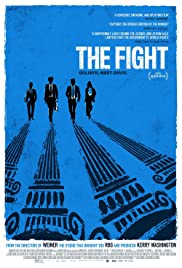
Greetings again from the darkness. The American Civil Liberties Union has been around since 1920. That’s 100 years of striving to be the stewards of our nation’s liberties. Eli B Despres, Josh Kriegman, and Elyse Steinberg are the three credited directors who bring us a behind-the-curtain look at the dedicated and hard-working ACLU attorneys in the New York office.
The film picks up on January 27, 2017, just seven days after President Trump’s inauguration and subsequent immigration order, also known as the “Muslim ban.” We are shown a sea of volunteer attorneys set up to assist affected immigrants – especially those seeking asylum. The basic premise of the movie is to provide a glimpse of the challenges faced by the ACLU against the Trump administration.
Since there have been approximately 140 lawsuits filed since this President took office, the filmmakers wisely focus on four specific cases, along with the assigned attorneys: Garza v Hargan, which involves the right to an abortion for an immigrant minor; Stone v Trump, the administrations military ban of transgenders; Department of Commerce v New York, dealing with the “citizenship” question proposed for the U.S. census; and Ms. L vs ICE, a family separation case tied to a child taken from her mother at the border.
The cases are presented in an easy-to-follow manner, and we get to know each of the attorneys and their individual challenges, both with their specific case and their own personal or family life. Each of the attorneys provide their unique “tour” of the ACLU offices, and we quickly understand how they are focused on their own specialties, rather than the organization as a whole. One of them remarks that there are more tattoos and piercings present than at the DOJ, which underscores not just the age difference, but also the attitudes of these crusaders.
A very brief history of the ACLU informs us that their mission dictates they support civil rights for all, which means not just the 1967 interracial marriage of Richard and Mildred Loving, but also the Charlottesville Rally which resulted in the death of Heather Heyer. In keeping with protecting ‘everyone’s rights’, the organization has even defended the rights of Nazis. Still, it’s obvious where the organization stands when Brett Kavanaugh’s nomination for the Supreme Court is discussed … the attorneys admit it will make their jobs that much more difficult.
Despite attorney Lee Gelernt’s middle-age struggles with technology (somehow the dude can’t keep his cell phone charged), the dedication and commitment of these folks is on full display (they even celebrate with “train wine”). Court cases, by definition, have two sides, and since we aren’t allowed in the actual courtroom to witness the cases being presented, this film focuses on one side. Because of that, it often plays like a fundraising or recruiting video for the ACLU. Still, the behind-the-scenes view of what these attorneys go through to fight for liberty is fascinating and worthwhile.
Magnolia Pictures and Topic Studios will release the film VOD on July 31, 2020
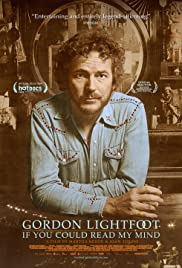
Greetings again from the darkness. We realize very quickly that octogenarian Gordon Lightfoot isn’t about to cater to co-documentarians Martha Kehoe and Joan Tosoni, or establish a new reputation as being a sweetheart at this stage of life. Instead he is filmed with his third wife Kim, watching clips of young Gord singing “(That’s What You Get) For Loving Me”. Despite his singing it with Johnny Cash, or having the song covered by Peter, Paul and Mary, Waylon Jennings, and many others, Lightfoot cringes and says. “I hate that song.” That’s what we get here – a man who speaks directly about his regrets, yet one who is appreciative of his life.
Lightfoot is thought of as Canadian Royalty, and is often referred to as the best ever Canadian singer-songwriter. He certainly played a key role in the popularity of folk music in the 1960’s, and we hear about his influence from many important Canadian musicians, including: Geddy Lee, Sarah MacLachlan, Tom Cochrane, Ronnie Hawkins, Burton Cummings and Anne Murray. For some inexplicable reason, the filmmakers include an interview with actor Alec Baldwin, who is neither Canadian, nor a musician – though at least he does seem to be a fan of Gordon Lightfoot.
The profile skips over much of his personal life to focus on the music. In fact, initially it seems like Gord is going to walk us through his songbook, one by one. With “Early Morning Rain”, we learn it was not only a hit for Lightfoot, but covered by others such as Judy Collins, Elvis Presley, Neil Young, and even Ian and Sylvia (a successful Canadian folk duo). It’s also at this point when Burton Cummings explains that it was Lightfoot’s songs that inspired The Guess Who to write their own songs. We also see a clip of a young Lightfoot being interviewed by an even younger DJ named Alex Trebek!
Anne Murray and Sarah MacLachlan discuss “Song for a Winter’s Night”, and Lightfoot explains how he isolates to write songs …and he “waters” his guitars (something that makes more sense seeing than reading). Gordon tells the story of how he quit a promising career in banking to take a chance on performing, and he relates how growing up in the country helped him when he moved to the city. He also tells the fascinating “behind the scenes” story of how the record company changed the name of his first album after “If You Could Read My Mind” became a hit on the radio. By the way, that song has been recorded by a slew of artists – so many that the filmmakers offer up a slide show to make the point.
Photographs give us a taste of some of Lightfoot’s infamous parties attended by various celebrities. It was this partying lifestyle that led to drugs and alcohol abuse, as well as his weight gain. Lightfoot talks about his 3 year affair/relationship with Cathy Evelyn Smith, a name you might recognize as the woman who injected John Belushi with the lethal “speedball” that killed him. It was his severe jealousy over Ms. Smith that led Lightfoot to write his biggest U.S. hit “Sundown.” There is also an entire segment on Bob Dylan, and how much respect each of the songwriters had/have for each other.
Yet another “behind-the-scenes” moment occurs when one of Lightfoot’s band members recollects the time they recorded “The Wreck of the Edmund Fitzgerald.” They had never even rehearsed the song, and yet it was the first take in the studio that ended up being the hit version. Also included is a segment where Lightfoot reminisces about his childhood in Orillia, and we get a brief clip of his mom and dad. Even more shocking is the included recording of Lightfoot as a kid, singing with the church choir. The high pitched soprano voice bears little resemblance to the soothing tones of an older Gordon.
As a poet-singer-songwriter, few have been better or had more success than Gordon Lightfoot. The film skims over much of his personal life and his severe health issue in 2002, but focusing on the music is what his fans want – and it’s a treasure trove of early performances, clips, and photographs. He’s now 81 years old, and the filmmakers don’t shy away from contrasting his singing voice on “If You Could Read My Mind” with a ‘then and now’ edit. Lightfoot admits to regrets, and also states “I appreciate having been alive.” Still sporting that renowned attitude, he undoubtedly enjoys hearing Diana Krall and Sara MacLachlan open the film with the titular song. A Canadian national hero indeed. As a bonus, we southerners finally learn the meaning of “Gitche Gumee.”
Greetings again from the darkness. This is another addition to my “revisited” series where I re-watch and then write about a classic movie. Why are “creature features” so appealing, and why was Universal so good at producing these movies that mesmerized me during childhood (and yes, still to this day)? The Universal Monsters of the 1930’s and 1940’s included such classics as Dracula, Frankenstein, The Mummy, The Wolf Man, The Invisible Man, and The Phantom of the Opera. Many cinematic iterations of these characters/creatures exist including sequels, remakes and contemporary re-boots, and there is something magical about the mystique and legend and lore behind each of the monsters. By the 1950’s, Universal was looking to revive the genre.
William Alland is credited with the idea for CREATURE FROM THE BLACK LAGOON. It’s a twist on the 1740 fantasy classic “Beauty and the Beast” from French novelist Gabrielle-Suzanne Barbot de Villeneuve. Mr. Alland is the film’s Producer, and years earlier he played reporter Jerry Thompson in Orson Welles’ CITIZEN KANE (1941). Maurice Zimm is credited with the story, and the screenplay was co-written by Harry Essex (IT CAME FROM OUTER SPACE, a Ray Bradbury story) and Arthur A Ross (an Oscar winner for BRUBAKER, 1980).
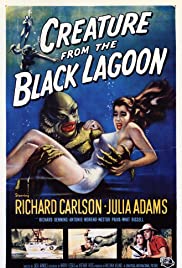
Quite similar to KING KONG, the story from Edgar Wallace and Merian Cooper, this movie follows a scientific expedition down the Amazon River where a prehistoric “Gill-man” (half man, half amphibian) is discovered and captured. The creature seems enraptured by Kay, the fiancé of one of the scientists – much like Kong was drawn to Ann Darrow. There is the expected battle between science and commerce: the value of marine life research vs the chance to make a pot of money. The feuding scientists also have to remain focused on the ongoing concern for the safety of those on the expedition … especially Kay.
Jack Arnold is remembered today as one of the great sci-fi movie directors of the 50’s. His work included THE INCREDIBLE SHRINKING MAN (1957), IT CAME FROM OUTER SPACE (1953) TARANTULA (1955), and the excellent Audie Murphy western NO NAME ON THE BULLET (1959). He also directed many episodes of some of the top TV shows of the1950’s, 60’s, 70’s, and 80’s. For this one, he deserves a great deal of credit for generating sympathy for the creature, by positioning him, not as the villain, but rather as the victim of a home invasion by the humans. Director Arnold also does a nice job early on of teasing us with footprints and fossils, and letting us hear about the legend, prior to actually seeing the creature.
For a movie that spends most of its time on a small boat named Rita, the cast is deep and talented. Richard Carlson (LITTLE FOXES, 1941) plays David Reed, the scientist engaged to Kay. Mr. Carlson dreamed of being a playwright, and had many guest starring roles on TV; however, “I Led 3 Lives” was his only starring role in a successful series. It was reportedly Lee Harvey Oswald’s favorite show. Co-starring here was Julie Adams (billed as Julia at the time) as Kay Lawrence, personal favorite of both David and creature. In the film she is stalked by the creature, even while she’s out for a leisurely swim in the Amazon (not recommended). Ms. Adams was a favorite on the cult movie circuit, and she died in 2019 at age 92. Having been crowned Miss Little Rock at age 19, she acted regularly into her 80’s, and even had a role at age 91, the year before she passed.
Richard Denning plays Mark Williams, the money man behind the expedition, and David’s boss and nemesis. He’s the one who sees dollar signs while capturing the creature. Mr. Denning served on a submarine in the US Navy during WWII. He starred with Cary Grant and Deborah Kerr in AN AFFAIR TO REMEMBER (1957), and then in the late 1960’s took an acting job as Governor on the original “Hawaii Five-0”, since he already lived in Hawaii. Mr. Denning’s wife, actress Evelyn Ankers, was known as “Queen of the Screamers” for her work as damsel in distress in many thrillers in the 1940’s (Wolfman, Frankenstein, Dracula movies).
Other cast members include familiar face Whit Bissell as Dr. Thompson. Mr. Bissell was a frequently working character actor from 1940 -1984 in TV and movies. He had over 300 credits, including I WAS A TEENAGE WEREWOLF (1958) with Michael Landon. Nestor Paiva plays Lucas, the Captain of the Rita, as a kind of Walter Brennan type. Mr. Paiva also appeared in more than 300 projects, and his wife was once employed as personal secretary to Howard Hughes. Antonio Moreno plays Carl Maia. Mr. Moreno had a huge career from 1912 to 1959, and was a rival of Rudolph Valentino for many “Latin lover” roles. The film’s narrator, Art Gilmore, became known for his narration and voice acting in shows such as “Dragnet”, “The Waltons”, “Adam-12”, “The Red Skelton Hour”, “The Roy Rogers Show”, and many more.
Of course everyone who watches the movie wants to know more about the creature. Well, two actors were involved. Ben Chapman, who was a Marine during the Korean War, played the creature on land, while Ricou Browning played the Gill-man we see in the water. Mr. Browning was also the co-creator of the popular TV series “Flipper” (1964-67), and directed the iconic underwater scenes in the James Bond classic THUNDERBALL (1965). Also involved here were a young Henry Mancini as uncredited composer and cinematographer William E Snyder. Mr. Mancini was a 4 time Oscar winner best known for his iconic “Pink Panther” theme, and Mr. Snyder achieved 3 Oscar nominations
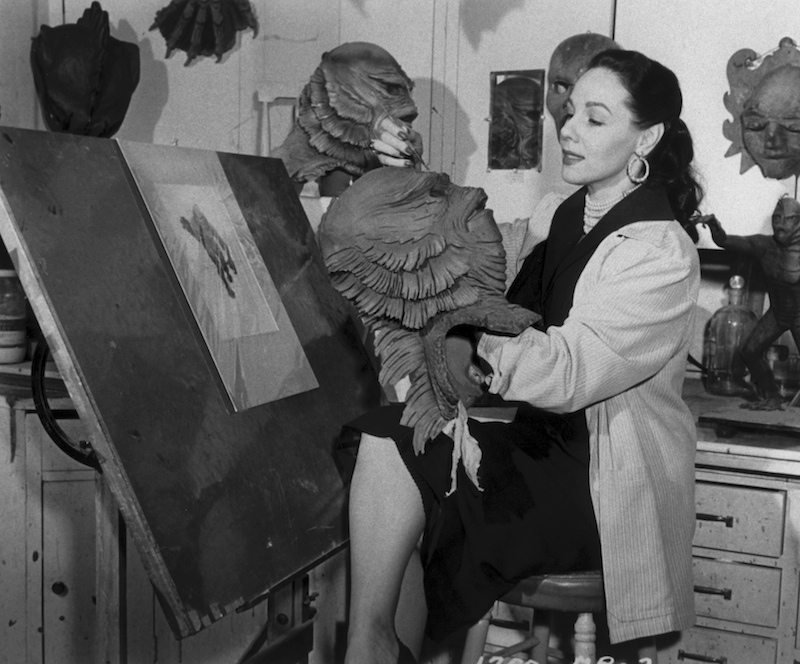
Director Arnold insisted on shooting the film in 3-D, despite its low budget, and over the years, it became quite a cult classic (with its’ own festivals). There is even a scandal associated with the film. For many years, Hollywood make-up legend Bud Westmore took credit for the design of the creature. It took more than 50 years, but Mallory O’Meara’s book, “The Lady from the Black Lagoon: Hollywood Monsters and the Lost Legacy of Millicent Patrick”, finally allowed Ms. Patrick (pictured, left) to receive due credit for her design work. Sequels to the film included: REVENGE OF THE CREATURE (1955), and THE CREATURE WALKS AMONG US (1956), but it was perhaps director Guillermo del Toro’s stunning THE SHAPE OF WATER (2017) winning the Oscar for Best Picture, that brought CREATURE FROM THE BLACK LAGOON back into prominence. This allowed a new generation of movie lovers to behold the classic sequence of the creature’s synchronized swimming just below Kay in the murky Amazon water. What a sight!
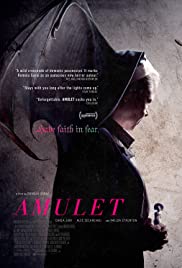
Greetings again from the darkness. Horror films tend to serve up relatively simple plot points so that viewers are controlled by emotions rather than deep thinking. The exceptions typically use multiple story lines and atmosphere to build up suspense that often ends with a twist or surprise ending. You might recognize Ramola Garai as an actress from SUFFRAGETTE (2015) or the TV series “The Hour”, and this is her first feature film as writer-director. She definitely chose the latter plot path, and the result is likely a film that will be divisive amongst the horror crowd.
Tomaz (Alec Secereanu, GOD’S OWN COUNTRY) is a former soldier with such a horrid case of PTSD that he must bind his own hands when he sleeps. He’s now homeless and adrift, merely surviving day-to-day. We see flashbacks to his time as a soldier working a checkpoint deep in the forest. The war is never identified, but one day he decides to help a frantic woman (Angelika Papoulia) rather than shoot her (as we assume his orders dictate). This story and their time together pop up periodically through the movie to the point where we start to believe we have an understanding of Tomaz’s background.
While squatting with other homeless folks, the building where they sleep catches fire, and soon after Tomaz is taken in by Sister Claire (Imelda Staunton), a caring nun who gives him a purpose – helping out a woman who is dealing with a sick, elderly mother. Magda (Carla Juri, BLADE RUNNER 2049 seems withdrawn and initially not particularly happy that Tomaz is living in her house. And, oh my, that house. Dilapidated is too kind as a description. So in addition to a bed, and Magda’s cooking, Tomaz begins repairing the house. And while you may have your own renovation stories to tell, did you ever pull an albino bat out of the toilet? Tomaz has.
Magda does not allow Tomaz to see her mother. He (and we) only hear the confrontations and see the bite marks on Magda’s arms. Clearly something is amiss. The flashbacks to Tomaz as a soldier with Miriam make for a stark contrast between the forest and Magda’s creepy house. It’s in the forest where Tomaz finds the titular amulet buried. If you’ve always thought of an amulet as a good luck charm, your definition will likely change.
It’s interesting to watch the shifts in the relationship between Tomaz and Magda, culminating with a night out dancing, where she reminds us a bit of Elaine Benis at the company party … although Magda’s is a pure emotional release, rather than a comedic effect. As you might expect, the film is at its best when Imelda Staunton is on screen. Unfortunately, these moments are too rare. The “old school” gothic graphics for the opening credits do make for a terrific stage-setter. While Magda’s locked-away mother provides some mystery, the tension of the story never really matches the creepy atmosphere of the house. Ms. Garai includes some excellent moments of horror images, but the deliberately slow pace doesn’t deliver a satisfying payoff.
Greetings again from the darkness. There can never be enough movies made or books written about remarkable people with incredible accomplishments. Marie Curie was certainly a remarkable woman and her accomplishments were such scientific break-throughs that we are still using them today. Director Marjane Satrapi’s (Oscar nominated for PERSEPOLIS, 2007) film is based on the 2010 book “Radioactive: Marie & Pierre Curie: A Tale of Love and Fallout” by Lauren Redniss, and the screenplay was adapted by Jack Thorne (THE AERONAUTS, 2019).
The film opens in 1934 Paris, and we see an enfeebled Marie Curie (Rosamund Pike) collapse and get rushed to hospital – a sequence used by director Satrapi as a framing device. The film quickly flashes back to 1893 when a headstrong and brilliant twenty-something Marie Salomea Sklodowska gets kicked out of her laboratory for being … well … a bit too headstrong for the times. Soon she meets an equally headstrong and also brilliant scientist named Pierre Curie (Sam Riley). Pierre recognizes the potential if they combine forces, while Marie initially demands her independence, having never found another scientist worthy of the efforts required for collaboration.
The initial flirtations between brainy scientists is as clumsy and awkward as one might expect. In general, the film struggles with how to best address Curie’s personal life with her professional life and the challenges she faced as a brilliant woman in an era when male scientists didn’t much appreciate a woman scientist telling them they have “misunderstood the atom”, as she and her husband announce the discovery of not one, but two new elements: radium and polonium. Romance and science and equality are a lot for one film to tackle, and this one flounders a bit.
As the film and science progress, director Satrapi intersperses flash-forward vignettes to show how Curie’s discovery of radioactivity is used in the future for both good and not so good. These dropped-in segments include cancer treatment for a little boy in 1957, the Enola Gay bombing Hiroshima in 1945, the Atomic Bomb test in 1961 Nevada, and of course, the 1986 Chernobyl disaster. The segments aren’t always a smooth transition from Curie’s story, but they make the point of how scientists don’t always have control over how their discoveries are applied. There is even a scene where Pierre shows Marie some comical uses entrepreneurs found of trying to capitalize on their discovery, and how their work might factor in to everyday life.
As a biography or profile of Marie Curie’s life and accomplishments, the film hits the high notes, though we do wish it dug a bit deeper. The gender prejudices of the times are somewhat underplayed, and even Marie herself claims lack of funds and the fact that she wasn’t a natural born Parisian held her back more than the roadblocks she faced as a female scientist. It would seem reasonable that those issues were likely tied together and should not be separated. She lashes out at Pierre regarding the Nobel committee initially keeping her name off the submission, but of course this anger is misplaced, as Pierre demanded she be included.
The historical aspect of her winning two Nobel Prizes is not treated as the astonishing accomplishment it is, but time is spent on a personal scandal that occurred after Pierre’s death. We do see Marie sleeping with a sample of her radioactive uranium, and watch her slow physical deterioration, including an incessant cough and damaged skin. Late in the film, Anya Taylor-Joy plays her daughter Irene, and we see the two of them head onto the battlefield to provide mobile x-ray devices for injured soldiers. The Curie family tree is filled with renowned scientists (Irene and her husband Frederick jointly won the Nobel Prize in 1935 for artificial radioactivity), and some of these discoveries literally changed the world – including cancer treatments. Perhaps it’s unrealistic to expect any movie to capture the historical importance of Marie Curie, but we are somehow left feeling she deserved better.
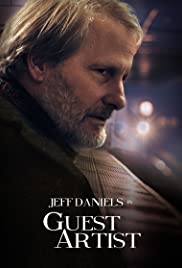
Greetings again from the darkness. “Based on an incident which became a play which became a movie.” It’s with this note, the film version of Jeff Daniels’ 2006 play begins. Daniels also stars as (fictional) playwright Joseph Harris, who won a Pulitzer Prize, an achievement he rarely lets anyone forget. Harris’ success seems to have left him tormented and blocked, as he hasn’t written anything “readable” in 20 years … a tidbit we learn from his agent (Erika Slezak, more than 2200 episodes of “One Life to Live”). The two meet for “coffee”, which is literary code for early drinking … a hobby Harris seems dedicated to during all waking hours.
That scene with Mr. Daniels and Ms. Slezak is one of the two best in the film – the other being near the end. The two long time collaborators wage a war of words – some offensively, others defensively – and the agent gives as good as she receives. When he claims to hate television, and proclaims “I’m a playwright”, she counters with “You’re a dinosaur.” We learn much about the Joseph Harris character in this sequence. While it’s easy to label him a burnout, we sense there is something deeper that has him dreading the trip from New York City to Michigan to fulfill a contractual obligation with a local theater group.
Once Harris arrives in small town Michigan, the vast majority of the rest of the film is shot inside the quaint train depot … a station that most of the passing trains don’t even slow down for. Over-eager playwright-wannabe Kenneth Waters (played by newcomer Thomas Macias) is late to meet his hero, and for that, he is subjected to mounds of verbal abuse from Harris, who can barely maintain consciousness over inebriation. Despite his love for the bottom of bottles, Harris proves always capable of a vicious diatribe directed at easy target Kenneth. However, periodically mixed in with the poison, are some words of wisdom for the young man.
The bulk of the film is a competition between Harris and Kenneth. Can the young local theater apprentice convince the washed up legend to stay in town and fulfill his theatrical duty? Adding spice to the proceedings is the train master (played by Richard McWilliams), who not only wields a wicked baseball bat, but he also sees, hears, and judges everything that happens in his station.
As part of the ongoing negotiations, Harris agrees to read the first play Kenneth has written. The young man eagerly awaits the insightful feedback from his idol, but the moment becomes a lesson in worshipping heroes … they are just as human as us. Mr. Macias does manage to mostly hold his own in what easily could have been a one-man show, if not for Harris’ need for someone at whom to direct his rants. We half expect Kenneth to mutter, “I’m your number one fan!” as he absorbs the insults and takes in the life lessons.
The backstory for this one is pretty interesting. Mr. Daniels admitted in an interview that he wrote the story based on actual events in the theater many years ago involving playwright Larnford Wilson, who might not view that as a compliment, were he still alive. This is also the first film under Grand River Productions, a joint venture of Mr. Daniels, Tim Busfield (who directs the film), and Mr. Busfield’s wife, actress Melissa Gilbert (“Little House on the Prairie”). It was shot mostly in Chelsea, Michigan where Mr. Daniels lives, and where he founded his Purple Rose Theater Company. And the homegrown aspect goes even deeper. Busfield’s son Wilson Coates Busfield is the DP, while Daniels’ son Ben did the composing.
It seems obvious that Daniels learned some lessons on structuring dialogue from his time on “The Newsroom” with Aaron Sorkin. We hear it in such lines as “I’m a playwright. I’m eternally serious”, as well as the ongoing battle between hope and cynicism. Typing out the opening credits is a nice tough for a movie featuring a writer, but the “I’m not sorry” bits are overplayed. As mentioned previously, the two best sequences are that opening in NYC, and the scene outside the depot near the end, when Harris comes clean on what he’s written and why – a scene that also includes the best and most heart-breaking line in the film. It may not be “The Great American Play”, but there is plenty here to take in and think about. Sorry, not sorry.
Digital HD on Tuesday, July 21 viaApple TV, Google Play, Prime Video, FandangoNOW and more.
Greetings again from the darkness. Polish-American writer Jerzy Kosinski’s 1965 novel “The Painted Bird” has one of the strangest and most controversial histories of any book. Initially celebrated as an extraordinary piece on the Holocaust era, the novel was banned in Poland, and author Kosinski was accused of falsifying claims of it being an autobiographical work. Later he was accused of plagiarism for this book and his 1970 book “Being There” (adapted into a 1979 movie starring Peter Sellers). This story of a young Jewish boy, abandoned by his parents and traveling the Eastern Europe countryside during WWII, is now accepted as a blend of fiction and his friend (director) Roman Polanski’s experiences. Czech filmmaker Vaclav Marhoul has turned the book into a stunning viewing experience.
First time actor Petr Kotlar is extraordinary as the unnamed (until the end) Jewish boy on a journey that might be entitled Dante’s Circle of Abuse or Homer’s Odyssey of Misery. This is a young boy in need of kindness from strangers, but unable to find much. The film opens with the boy running through the woods carrying what appears to be his pet ferret. He’s being chased by a group of sadistic Anti-Semite bullies. It’s a chase that doesn’t end well. We learn the boy is living with his “Auntie” Marta (Nina Sunevic) on her rundown farm, and we intuit that his parents thought he would be safer here than with them. When the woman dies suddenly and unexpectedly, the boy accidentally burns the house down, kicking off his walk across the countryside. Almost inexplicably, this is the most upbeat segment of the film.
Director Marhoul divides the film into 9 chapters, each named after the person the boy meets and lives with temporarily. I’ll recap the following eight chapters with a focus on not giving away too much … just know that this film is unrelenting in its brutality and bleakness. After Marta’s death, the boy stumbles into a village where he is considered cursed and labeled a vampire. The witch doctor Olga (Ala Sakalova) enslaves him until he escapes down river, where he is rescued by a mill worker. The head miller (Udo Kier) is a frightening man who takes exception with his worker (not the boy) gazing lustfully at his wife. Kier’s eyes manage to burn right through the black and white film, and soon he turns exceedingly violent towards his wife and the worker, leaving us with an unforgettable visual.
The boy then finds himself at the home of Lekhi (Lech Dyblik) who captures wild birds and regularly hooks up with Ludmila (Jitka Cvancorova), a wild woman who lives in the forest. The boy witnesses two horrific deaths, but not before the sequence which gives the film its title and ensures we understand what happens to outcasts – those who are different. At about the one hour mark, the boy finds an injured horse and walks it into the local village. It’s at this point where we hear him speak (kind of) for the first time. A violent Russian invasion of the village results in the Cossacks offering the bound and gagged Jewish boy to the German soldiers as a “gift”. Stellan Skarsgard is the veteran soldier who draws the assignment of taking the boy into the woods to shoot him.
When the soldier sends him on his way, a sickly Catholic Priest (Harvey Keitel) takes the boy under his wing and trains him to be an altar boy. All is fine until a parishioner (Julian Sands) with despicable intentions agrees to take the boy in and provide for him. This segment has what may be the most cringe-inducing death scene in the film, after which we find the boy trudging through snow and falling through ice, and crawling towards a cabin where Labrina (Julia Valentova) and a sickly old man live. The boy faces more abuse as he’s incapable of pleasing Labrina, which leads to situations he’s much too young to understand. Traumatized, the boy’s personality takes a turn.
In his next village, an attack by Germans puts the boy in contact with Russian sniper Mitka (Barry Pepper), who leaves him with the real life advice of, “an eye for an eye, and a tooth for a tooth.” Having only recently lost his innocence, the advice hits home for the boy. He ends up in an orphanage where a surprise occurs that causes the boy to lash out in anger … at least until he observes something that makes him understand the world has been cruel to others, not just him.
Normally, I wouldn’t recap or outline the segments of a movie in this manner, but it’s crucial to understand what you are about to watch. It’s a nearly 3 hour epic of human cruelty and survival instinct. Young Petr Kotlar spends much of the movie taking and witnessing abuse while his face is near emotionless (save for a couple of extremes). Joy is elusive, if not non-existent. The film shows us not all Holocaust horrors occurred in death camps. The atrocities of war and the cruelty of humans result in a film that is beyond bleak at times, but also makes a clear point about how differently people treat those not “like” us, regardless who the “us” is. This point is as evident today as it was during WWII.
Director Marhoul excels in showing, rather than telling … there is almost no ‘telling’ throughout the film. Cinematographer Vladimir Smutney makes expert use of the 35mm black & white film to provide images that are stark and brutal like the world the boy sees. The Production Design from Jan Vlasak puts us right in the muck, while the Sound from Jakub Cech is crucial to every scene.
The film is a joint project of Czech Republic, Slovakia, and Ukraine, as Poland refused to participate. It had quite the festival run last year, including some high profile walk-outs during the Venice Film Festival. It’s one of the rare movies that every cinephile is thankful to have seen, yet as human beings, we would likely never want to watch again. Murder, abuse, suicide, torture, bestiality, rape, violence, cruelty, slaughter, pedophilia, incest, war atrocities … these aren’t topics we typically seek out, and they thankfully aren’t topics that all show up in a single movie very often! There are a few moments of compassion if you watch closely, but mostly it’s a reminder of the cruelty of humans when the structure of society collapses, and hope is hard to come by. As Edwin Starr sang in his number one hit in 1970, “War, good God. What is it good for? Absolutely nothing.”
Greetings again from the darkness. The journey to find one’s self is not unique to artists, but for some reason, it’s more cinematically appealing when an artist is involved. In this quirky film from director David Wnendt, with a screenplay Rebecca Dinerstein Knight adapted from her own novel, artists (of varying types) are everywhere. Of course finding one’s self usually involves making peace with this quagmire we call life.
Frances (Jenny Slate, OBVIOUS CHILD, 2014) watches as three snooty art critics denigrate her latest work to the point of humiliation. Her long-time boyfriend dumps her, and she returns home to her parents, both artists. Instead of sympathy from the family, she’s bombarded with news that her sister Gaby (Elise Kibler) is engaged to a man her father loathes, and to top off the family dinner, her parents (Jessica Hecht, David Paymer) announce they are separating. Rather than deal with any of this head-on, Frances accepts an apprenticeship with an artist in north Norway. “Norway, Norway”. Where the sun never sets.
Nils (Fridtjov Saheim) is the personality opposite to talkative, upbeat Frances. He grumps around while escorting her to the trailer she’ll stay in for the summer. The project, seemingly uninspiring, is to paint a local dilapidated barn yellow – inside and out. Nils is under a tight deadline to finish the barn so it (and he) can earn a spot on the map of cultural sites. Close by is a Viking museum and community, where the folks, led by their Chief (Zach Galifianakis), re-create Viking life for tourists (or mostly themselves).
One day Yasha (Alex Sharp, HOW TO TALK TO GIRLS AT PARTIES, 2017) shows up. He’s arranging a ceremonial Viking funeral for his beloved father (Olek Krupa). Father and son worked together daily in their bakery and developed a close bond. Sasha’s mother (Gillian Anderson), who left them years ago, unexpectedly shows up for the funeral, hoping to lure him to live with her.
Frances compares everyone she meets to subjects in famous works of art. It’s her way of connecting art to the real world, as well as helping her find a place for people in her world of art. Frances and Yasha are drawn together in their search for direction and meaning, and we are led to believe this connection, no matter how brief or random their crossing of paths might be, helps her in her personal quest.
The cinematography from Martin Ahlgren captures this rarely seen top-of-the-world wonderland, and the landscape is truly something to behold. Ms. Slate is once again top notch in her role. She’s likable and relatable, traits some actors struggle with, but which apparently come natural to her. And while we expect lives to be messy and complicated, we hope for a bit more from our movies. Frances’ home life is drawn straight out of a TV sitcom, and the whole Viking village never really makes sense. It seems Frances is short-changed on all of her relationships here, yet the trip still manages to help her discover something in her art. And that’s just about how life works – really messy right up until something clicks, and then back to messy.
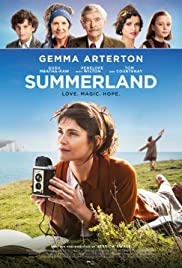 Greetings again from the darkness. We get our first glimpse of Alice Lamb as an older woman in 1975 pounding away on her Royal typewriter before abruptly and rudely shooing neighborhood kids away from her door. We then flashback thirty-something years to World War II, and find a younger version of Alice still clacking away on the same Royal and still chasing off the local youngsters. Segments with the older Alice bookend the film, but most of our time is spent with the younger Alice in the first feature film from writer-director Jessica Swale, a renowned playwright.


 Posted by David Ferguson




 Movie Reviews from the Dark